
- LOGIN
- MemberShip
- 2026-06-10 16:16:04
- Company
- Yuhan’s gains Phase I approval for returned MASH candidate YH25724
- by Lee, Seok-Jun Jun 01, 2026 09:04am
- Yuhan Corp announced on the 29th that it has received approval from the Ministry of Food and Drug Safety to conduct a domestic Phase I trial of its metabolic dysfunction-associated steatohepatitis (MASH) treatment candidate ‘YH25724.’YH25724 is a novel biologic candidate that combines dual mechanisms targeting fibroblast growth factor 21 (FGF21) and glucagon-like peptide-1 (GLP-1). The candidate incorporates Yuhan’s proprietary protein engineering technology together with Genexine’s long-acting antibody fusion platform, HyFc.Preclinical studies have confirmed that the dual action of FGF21 and GLP-1 improves steatohepatitis, exerts anti-fibrotic effects, and reduces hepatocyte damage and liver inflammation.This Phase 1 trial marks the first clinical study of YH25724 in Korea. The study consists of a single-dose part and a 12-week multiple-dose part involving healthy adult participants. Yuhan plans to evaluate safety, tolerability, pharmacokinetics (PK), and pharmacodynamics (PD).Yeol-Hong Kim, Head of R&D at Yuhan Corp, stated, “We plan to evaluate safety and tolerability across various dose levels in Korean participants and explore preliminary proof-of-concept potential based on pharmacodynamic markers. We plan to start recruitng subjects within this year.”The YH25724 pipeline was originally licensed out to Boehringer Ingelheim in 2019 but was returned in 2025. Since then, Yuhan has resumed in-house development of the candidate.Prior to the return of the program, Boehringer Ingelheim had conducted three Phase I clinical trials evaluating the safety, tolerability, pharmacokinetic, and pharmacodynamic characteristics of YH25724.

- Company
- Lorviqua shows sustained beneift in 7-year follow up
- by Son, Hyung Min Jun 01, 2026 09:04am
- Pfizer’s non-small cell lung cancer (NSCLC) treatment Lorviqua has demonstrated efficacy in a 7-year follow-up study, confirming its potential for long-term disease control.According to industry sources on the 30th, Pfizer presented 7-year follow-up results from the Phase III CROWN study of Lorviqua (lorlatinib), a targeted therapy for ALK-positive NSCLC, at the 2026 American Society of Clinical Oncology (ASCO) Annual Meeting.ALK-positive NSCLC is a rare genetic subtype accounting for approximately 3–5% of all NSCLC cases. It tends to affect younger patients and is characterized by a high incidence of central nervous system (CNS) metastases during the course of the disease. As a result, long-term disease control and prevention of brain metastases are considered key measures of treatment success.Targeted oral therapies for ALK-positive lung cancer include Pfizer’s first-generation Xalkori (crizotinib), second-generation therapies such as Alecensa (alectinib) and Takeda’s Alunbrig (brigatinib), and third-generation Lorviqua.The global CROWN study directly compared Lorviqua and Xalkori in 296 treatment-naïve patients with advanced ALK-positive NSCLC. Participants were randomly assigned to receive either Lorviqua 100 mg once daily or Xalkori 250 mg twice daily.‘Lorviqua,’ treatment for ALK-positive NSCLCSeven-year follow-up results showed that the median progression-free survival (PFS) in the Lorviqua group remained not reached (NR), while the median PFS in the Xalkori group was 9.1 months. This indicates that more than half of patients treated with Lorviqua maintained treatment benefit without disease progression throughout the follow-up period.At 7 years, progression-free survival rates were 55% in the Lorviqua group versus 3% in the Xalkori group, demonstrating a substantial difference.In particular, for patients who showed no disease progression up to 24 months after receiving Lorviqua, the probability of surviving without disease progression at the 7-year mark was estimated to be 79%.Lorviqua also demonstrated a pronounced benefit in preventing brain metastases. No new cases of intracranial disease progression were reported after 30 months of treatment. The median time to intracranial progression was not reached in the Lorviqua group, compared with 16.4 months in the Xalkori group.Given that ALK-positive NSCLC carries a high risk of brain metastases from early stages and CNS progresses frequently during treatment, durable CNS control is considered highly meaningful in clinical practice.In terms of safety, the adverse event profile remained comparable with the previously reported 5-year follow-up data. Grade 3 or 4 adverse events occurred in 77% of patients receiving Lorviqua and 57% of those receiving Xalkori. However, permanent treatment discontinuation due to treatment-related adverse events (TRAEs) was relatively low at 5% and 6%, respectively. Furthermore, no new treatment-related permanent discontinuations were reported after 26 months in the Lorviqua group.Overall survival (OS), however, has not yet reached the pre-specified analysis threshold, and additional follow-up is ongoing. Accordingly, while these results are significant in that they strengthen the evidence for the potential for long-term disease control, further data will be needed to confirm the ultimate survival benefit.
- Policy
- Govn’t seeks to upgrade 'Overseas AE safety monitoring network’
- by Lee, Jeong-Hwan Jun 01, 2026 09:04am
- The Korean government plans to strengthen Korea’s national and public support policies to resolve frequent drug shortages caused by production or supply discontinuation from poor profitability. At the same time, it intends to modernize the system for collecting overseas safety information on imported medicines through the Korea Orphan & Essential Drug Center (KODC).As the government expands administrative measures that provide essential medicines not supplied or manufactured by domestic private pharmaceutical companies through the KODC, it aims to ensure that information regarding adverse events and side effects associated with overseas medicines can be identified and addressed more rapidly and accurately.On May 31, the Ministry of Food and Drug Safety (MFDS) announced plans to establish a system for collecting safety information and building a database for medicines supplied through the KODC, while also securing a framework for analyzing and reviewing overseas drug safety information.The MFDS will also assess the level of human and material resources required to build and operate a database covering overseas medicines imported through KODC.In Korea, when the supply of a drug manufactured or imported by a private pharmaceutical company is discontinued, or when marketing authorization is withdrawn and no domestic alternative is available, the MFDS uses its emergency import program through the KODC to directly purchase and supply overseas medicines and support patient-specific imports for self-treatment purposes.The Lee Jae-myung administration has been promoting policies to expand emergency-import medicines this year in order to address essential medicine supply disruptions and recurring shortages. As a result, the proportion of medicines supplied through public channels via the KODC is expected to continue to increase.Accordingly, the need to establish a system for collecting, analyzing, and rapidly responding to overseas safety information on medicines distributed by the KODC has become increasingly important.The MFDS will launch a policy research project to establish the scope and methodology for gathering information on medicines supplied through the KODC. The study will examine regulatory approvals, safety information, recalls, and sales suspensions from advanced regulatory agencies such as the US FDA, the European Medicines Agency (EMA), and Japan’s Pharmaceuticals and Medical Devices Agency (PMDA).The ministry will also conduct research on creating a database capable of accumulating, managing, and utilizing overseas safety information, while developing a user-friendly system designed to maximize accessibility and practical use.In addition, it plans to establish update cycles, standards, and data display methods to ensure rapid mutual sharing of overseas safety information and real-time incorporation of the latest safety updates.To establish an advisory and review framework for overseas safety information, the MFDS will develop a process for collecting opinions from medical and pharmaceutical experts regarding whether the supply of a medicine should be continued when safety concerns arise.The MFDS intends to define the requirements for expert consultation, develop standardized advisory forms incorporating those requirements, identify appropriate academic societies and organizations to participate, and establish formal consultation procedures.In effect, Korea will be building a physician-pharmacist advisory panel system to enhance domestic responses when overseas drug safety issues emerge.Based on the results of this consultation, a review process will be established to determine whether to continue supply, analyze potential measures such as the emergency introduction of alternative products or suspension of supply.To identify the human and material resources necessary for these new responsibilities, the MFDS will analyze comparable overseas cases and assess its current staffing structure. It will then calculate the appropriate workforce size and personnel costs required for the new tasks and define the roles of individual staff members.An MFDS official explained, “We need a process to collect and build a database of drug safety information originating from overseas regarding medicines supplied and supported by KODC, and to establish measures for gathering expert advice and taking action when issues arise. At the same time, we will identify the human and material resources necessary to carry out these functions.”

- InterView
- "Diagnostics offer an opportunity…'Tevimbra' for gastric cancer"
- by Son, Hyung Min Jun 01, 2026 09:03am
- The treatment landscape for metastatic gastric cancer is rapidly shifting toward a biomarker-driven precision medicine era. While treatment previously centered on cytotoxic chemotherapy, the recent advancements in which therapeutic strategies diverge based on diverse biomarkers, such as HER2, PD-L1, Claudin 18.2, and FGFR, has highlighted the importance of patient-tailored, personalized medicine.With the introduction of immuno-oncology (IO) agents and targeted therapies, the diagnostic process (identifying 'which type of patient' it is, as much as 'which drug to use') has entered a stage where it dictates the success or failure of treatment. As treatment options vary depending on HER2 positivity, PD-L1 expression levels, and Claudin 18.2 expression status, diagnostic accuracy and turnaround time are directly linked to therapeutic opportunities.DailyPharm met with Professor Min-hee Ryu and Professor Jaewon Hyung of the Department of Oncology and Professor Young Soo Park of the Department of Pathology from the Stomach Cancer Multidisciplinary Team at Asan Medical Center to discuss shifting therapeutic strategies driven by the expansion of precision diagnostics in gastric cancer, the clinical implications of Tumor Area Positivity (TAP)-based evaluation, and the evolving immuno-oncology landscape, including 'Tevimbra (tislelizumab)'.The Stomach Cancer Center's Multidisciplinary Team at Asan Medical Center. From left, Professor Min-hee Ryu of the Department of Oncology, Professor Young Soo Park of the Department of Pathology, and Professor Jaewon Hyung of the Department of Oncology As biomarkers expand, the testing and interpretation processes are becoming increasingly complex. In particular, since gastric cancer is recognized as a relatively fast-progressing malignancy, concerns are being raised that a prolonged diagnostic process may delay the optimal initiation timing for first-line therapy.Consequently, the importance of a multidisciplinary approach, in which multiple companion diagnostics (CDx) are performed concurrently at initial staging and the departments of pathology, medical oncology, surgery, and radiology collectively deliberate on the treatment direction, is growing. Asan Medical Center also operates a Stomach Cancer Center Multidisciplinary Team involving multiple clinical specialties, primarily focusing on patients with advanced gastric cancer to formulate optimal therapeutic strategies.In the cancer immunotherapy landscape, PD-L1 evaluation methodology has also become a new point of discussion. While the current domestic reimbursement environment is centered on Combined Positive Score (CPS)-based evaluation, certain recently introduced therapies use a Tumor Area Positivity (TAP)-based approach, raising the possibility that both assessment modalities will coexist in clinical practice for a period. In particular, the TAP-based SP263 assay is attracting attention for its real-world clinical utility and interpretive efficiency, as it is performed on automated platforms that enable a relatively rapid turnaround time.Tevimbra is also a therapeutic agent that uses TAP-based evaluation, and discussions suggest it could serve as a novel alternative for diagnostic efficiency while maintaining continuity with existing CPS-based checkpoint inhibitors. Furthermore, it demonstrated survival benefits in the first-line treatment of HER2-negative metastatic gastric cancer through the RATIONALE 305 study and is included in the US NCCN Guidelines as a recommended first-line treatment option (Category 2A) for patients with HER2-negative, PD-L1-expressing gastric and gastroesophageal junction (GEJ) cancers.In certain patient subgroups with high PD-L1 expression levels (CPS ≥ 5), Tevimbra is recommended as a preferred regimen (Category 1), and its potential is demonstrated in subgroup analyses of patients with peritoneal metastasis, which is also highlighted as a key point of interest.Experts assess that gastric cancer management is moving beyond simply adding new agents and is undergoing a rapid restructuring of the entire diagnosis-to-treatment process. They explain that the expansion of biomarker testing has heightened the clinical significance of pathological interpretation and that multidisciplinary collaboration has become a virtual necessity to avoid missing the critical window for treatment initiation. Q. Why is multidisciplinary care essential in gastric cancer?Professor Min-hee Ryu Professor Ryu: While some gastric cancer patients undergo only surgery or receive only systemic chemotherapy, the majority undergo surgery and chemotherapy either sequentially or concurrently. In the multidisciplinary team, we discuss the sequencing of modalities or, when a diagnosis is challenging, synthesize the opinions of pathology and radiology specialists to establish the diagnostic and therapeutic pathway.Furthermore, there are instances where the presence or absence of metastasis is ambiguous, making it difficult for a single clinical specialty to determine a treatment plan independently. In cases where multiple modalities must be introduced sequentially, discussions are necessary to clarify the treatment order or resolve any diagnostic ambiguity.Professor Park: The significant advantage of multidisciplinary care is that it provides a one-stop solution, rather than forcing patients to navigate multiple departments to gather separate opinions as they did in the past.As the life expectancy of cancer patients extends, we are seeing more patients presenting with multiple malignancies. For example, when a gastric tumor is detected in a patient who had lung cancer five years ago, multiple specialties convene to deliberate on whether to treat it as a primary gastric cancer or evaluate it as a metastasis from the previous malignancy. Consequently, it takes less time to establish a therapeutic strategy compared to the past, and the selected strategies are far more precise.Professor Hyung: Cancer treatment methods are diverse, including chemotherapy, radiation therapy, and surgical resection. In the case of metastatic cancer, systemic chemotherapy is not the sole mandate; instead, various departments collaborate to consider clinical intervention methods, and there are cases where the treatment prognosis improves when an intervention is introduced at the optimal timing. These aspects represent the advantages of the Asan Medical Center's Stomach Cancer Center Multidisciplinary Team.Q. With various therapeutic agents, such as immuno-oncology products and ADCs, recently introduced for gastric cancer, how have treatment goals or patient management approaches shifted following their introduction?Professor Ryu: Recently, as the efficacy of targeted therapies and immunotherapies has been validated in gastric cancer alongside cytotoxic agents, the importance of companion diagnostics to determine patient eligibility has grown substantially. While therapies were previously deployed uniformly without patient stratification, the paradigm has shifted toward screening and selecting patients who are highly likely to derive clinical benefit based on diagnostic readouts, driving improvements in therapeutic outcomes.Professor Hyung: For a long period following the ToGA trial, novel treatment options for gastric cancer remained limited, but the recent introduction of checkpoint inhibitors has dramatically altered the therapeutic landscape. In particular, the implementation of companion diagnostic concepts linked to PD-L1 expression has enabled personalized care, and the efficacy of immuno-oncology combination regimens is being validated. Furthermore, whereas we previously relied on a limited number of assays focused on HER2, we now consider a diverse array of biomarkers concurrently, such as Claudin 18.2, enabling tailored therapy to be far more sophisticated. Durable long-term responses are also being observed in some patients, which I view as a clinically profound shift.Professor Park: It is not that gastric cancer lacks biomarkers; various indicators such as EBV and MMR already existed alongside HER2 and PD-L1, and with the recent addition of novel targets like Claudin 18.2, biomarkers are becoming increasingly segmented. However, in the case of PD-L1, because different antibody clones, such as 22C3, 28-8, and SP263, are paired with distinct therapeutic agents, there is a logistical burden of performing multiple assays concurrently. In this regard, gastric cancer remains a malignancy where immunohistochemistry (IHC)-based testing plays a pivotal role.Q. What are TAP and CPS, and how do these PD-L1 evaluation methodologies differ?Professor Young Soo ParkProfessor Park: TAP is a methodology that determines positivity or negativity based on an area concept rather than a numerical count. Conversely, CPS is a numbers-based evaluation. While both serve as criteria to evaluate PD-L1, their analytical approaches differ.TAP measures the surface area of positively stained cells within the total tumor area, whereas CPS is a calculated ratio based on the raw count of positive cells. To date, the TAP method is generally known to demonstrate slightly higher concordance and reproducibility compared to CPS.In large tertiary hospitals with high daily case volumes, the difference in interpretation time between CPS and TAP may not be substantial, given extensive experience with CPS scoring. However, for pathologists who are initially adopting the workflow or in institutions with lower sample volumes, I believe TAP offers distinct advantages.In particular, because TAP is an area-based measurement, it possesses high potential for integration with AI-driven interpretation or deep learning-based analytics in the current environment, where slide scanning and digital pathology workflows are expanding.Professor Ryu: Because immune-checkpoint inhibitors are linked to companion diagnostics, regulatory approvals and reimbursements are structured around the specific assay methodologies and scoring criteria used for each agent. Currently, Opdivo and Keytruda are reimbursed based on the CPS criteria used in their registrational trials. At the same time, Tevimbra was developed using TAP, requiring ongoing discussions about how its reimbursement criteria will be established. In South Korea, HIRA tends to enforce criteria identical to those used in regulatory approval trials; therefore, it is highly likely that clinicians will continue to use the exact testing methodology aligned with each therapeutic agent. It appears that the two evaluation systems will co-exist for a certain period, aligned to their corresponding drugs.Professor Hyung: While there is a global trend toward a more flexible application by acknowledging a degree of interchangeability between diverse assays, South Korea maintains relatively stringent companion diagnostic standards, meaning that the diversity of testing modalities will likely be directly reflected in clinical practice. Ultimately, in real-world settings, an approach that synthesizes the patient's performance status and biomarker profiles to select the therapeutic option that best matches each metric will become critical.Q. What shifts do you anticipate new evaluation methodologies like TAP will bring to therapeutic strategies, clinical decision-making, and the future trajectory of PD-L1 assessment?Professor Park: Rather than an entirely unprecedented concept, TAP extends existing PD-L1 evaluation methodologies, such as CPS. However, its area-based approach makes it more intuitive and accessible. Due to the structure in South Korea, in which the exact assays and scoring criteria from pivotal trials are strictly applied, selective CPS and TAP utilization depending on the therapeutic agent will persist.Another critical aspect is the operational difference between the assays. The SP263 clone used for TAP is deployed on fully automated instrumentation enabling same-day staining. In contrast, the 22C3 or 28-8 pharmDx assays utilized for CPS rely on semi-automated platforms that can be more time-consuming or necessitate send-out testing to external reference labs. Taking these factors into account, the adoption of TAP should be viewed not as a matter of absolute superiority, but as a choice reflecting real-world clinical utility and accessibility.Professor Ryu: In clinical oncology, therapeutic decisions are based on pathology reports, making interpretive consistency and reproducibility paramount. Data to date suggest that TAP and CPS exhibit a substantial correlation. I believe both modalities are viable. However, when considering workflow convenience, staining intensity, crispness, and adaptability for digital pathology or AI-driven scoring, TAP may offer a slight competitive edge. In particular, SP263-based TAP is known to yield relatively distinct staining, which holds promise for practical clinical implementation.Professor Hyung: Because manual single-cell counting is highly labor-intensive, rapid and consistent interpretation will become increasingly critical moving forward. In that respect, the TAP method offers distinct advantages. Furthermore, given the growing trend toward digital pathology and AI-driven analytics, the area-based approach is technically easier to integrate, underscoring its strong future utility.Q. Multiple immune-checkpoint inhibitors have recently been introduced into the metastatic gastric cancer treatment landscape. In what ways do you think Tevimbra, as a later entrant to the market, distinguished from existing therapeutic options?Professor Jaewon Hyung Professor Hyung: Although Tevimbra has entered real-world clinical use, our institutional experience remains early, and without head-to-head comparative data, any definitive conclusions must be drawn cautiously. However, since a statistically significant improvement in overall survival (OS) was reported in its clinical trials and major guidelines like the NCCN recommend it on par with other checkpoint inhibitors, it is highly likely to deliver a comparable level of therapeutic efficacy.Notably, in gastric cancer, numerous observational data indicate that the efficacy of checkpoint inhibitors is relatively diminished in patients presenting with concurrent peritoneal metastasis and malignant ascites. There is anticipation that Tevimbra could serve as a valuable therapeutic agent, demonstrating added potential to address this specific area of high unmet medical need.Professor Ryu: Another frequently discussed aspect regarding Tevimbra is the peritoneal metastasis cohort. Historical data for conventional immune checkpoint inhibitors have indicated relatively limited efficacy in patients with peritoneal disease; conversely, subset analyses of Tevimbra have suggested signal activity and efficacy even in this cohort. Granted, variations in sample size exist, and whether these subgroup data can be directly generalized remains a separate issue. Nevertheless, demonstrating a potential therapeutic signal in peritoneal metastasis, setting it apart from legacy checkpoint inhibitors, is clinically noteworthy.Q. What are your perspectives on the current reimbursement criteria for immune-checkpoint inhibitors and the necessity of securing reimbursement for Tevimbra moving forward?Professor Ryu: From a clinician's perspective, expanding the therapeutic arsenal is inherently beneficial for patients. Furthermore, I believe institutional equity is crucial in this domain. While immune-checkpoint inhibitors generally share a similar mechanism of action, Tevimbra is characterized by its demonstrated potential for efficacy even in patients with peritoneal metastasis, as previously discussed. Therefore, Tevimbra must be integrated into the system as a therapeutic option on par with Opdivo or Keytruda. If one agent is reimbursed while another remains non-reimbursed, real-world clinical prescribing will inevitably lean heavily toward the insurance-covered medication.Professor Hyung: Diversifying therapeutic options yields clear advantages for both patients and treating physicians. Particularly in gastric cancer, the prevalence of peritoneal metastasis is substantial, and patients with metastasis have a poor prognosis. Consequently, if a treatment offers even a slight therapeutic advantage in this patient group, it would be highly beneficial in real-world clinical practice.

- Company
- Korean companies pursue tailored and muscle-preserving strategies
- by Cha, Ji-Hyun May 29, 2026 09:14am
- Korean pharmaceutical and biotech companies are steadily producing tangible results in obesity and metabolic disease. Rather than simply chasing Novo Nordisk and Eli Lilly, which dominate the global market, domestic firms are drawing attention with differentiated development strategies ranging from GLP-1 therapies tailored to Koreans to muscle-preserving obesity drugs and histology-improving MASH therapies.D&D Pharmatech achieves all three key mash biopsy endpoints…positive signal for global partneringAccording to the pharmaceutical and biotech industry on the 29th, D&D Pharmatech presented 48-week biopsy results from the U.S. Phase II trial of its MASH candidate “zabopegdutide” (DD01) at the EASL Congress 2026 held in Barcelona, Spain, on the 27th (local time).In this study, DD01 met all three key efficacy endpoints required for MASH treatment approval. The proportion of patients achieving “MASH resolution without fibrosis progression” reached 62.5%, far exceeding the placebo group’s 5.3%. The proportion achieving “fibrosis improvement without worsening MASH” was 50.0%, outperforming placebo by 34.2 percentage points (placebo: 15.8%). The composite endpoint achieving both criteria simultaneously was also significantly higher at 37.5% versus 5.3% in the placebo group.DD01 is a dual agonist targeting both the GLP-1 receptor, which promotes insulin secretion and appetite suppression, and the glucagon receptor, which increases energy metabolism. It is being developed as a once-weekly subcutaneous injection. Earlier interim 12-week results already showed that 75.8% of treated patients achieved at least a 30% reduction in fatty liver, meeting the primary endpoint. The latest results also confirmed improvement in actual liver tissue.Overview of D&D Pharmatech’s MASH candidate “zabopegdutide” (DD01) (Source: D&D Pharmatech)This announcement is considered medically and commercially meaningful because DD01 demonstrated histological evidence of fibrosis improvement rather than merely reducing liver fat. In MASH development, liver fat reduction serves as an early signal of efficacy, but biopsy data showing resolution of steatohepatitis and fibrosis improvement are more important for approval and licensing.Notably, DD01 reduced intrahepatic fat by 37.0% at Week 12, even among patients with body weight reductions of less than 5%. This has led to interpretations that DD01’s effect may not simply be a secondary effect of weight loss but may also involve direct hepatic metabolic improvement through glucagon receptor stimulation. In obesity drug candidates, a key differentiator for MASH expansion potential is whether the drug itself improves liver metabolism beyond weight reduction, and these results are viewed as evidence supporting DD01’s direct metabolic effect on the liver.Industry expectations are also rising for a large-scale licensing deal for DD01. Competition among big pharma companies to secure MASH pipelines has intensified globally. Last year, Roche acquired 89bio for up to USD 3.5 billion to obtain the MASH candidate pegozafermin, while Novo Nordisk acquired Akero Therapeutics for up to USD 5.2 billion to secure efruxifermin.GlaxoSmithKline (GSK) also invested up to USD 2 billion to acquire rights to Boston Pharmaceuticals’ FGF21-based MASH candidate efimosfermin alfa. Efimosfermin alfa failed to achieve statistical significance in the composite endpoint, simultaneously measuring MASH resolution and fibrosis improvement, yet still resulted in a major deal, making it a comparison case that highlights DD01’s asset value.D&D Pharmatech was co-founded in 2014 by Professor Seulgi Lee of Johns Hopkins University School of Medicine and others. The company develops therapies for obesity, MASH, and neurodegenerative diseases based on GLP-1 peptide technologies. It also possesses ORALINK, a platform for converting injectable drugs into oral formulations, as well as PEGylation technology. In May 2024, the company successfully listed on Korea’s KOSDAQ market through a technology-special listing.D&D Pharmatech has also attracted market attention after its partner company was acquired by a global big pharma company. In April 2023, D&D signed a technology transfer agreement with U.S. obesity treatment developer Metsera for an oral obesity treatment candidate, establishing a global development partnership. Metsera was later acquired by Pfizer in November last year and became a wholly owned subsidiary, with its obesity pipeline integrated into Pfizer’s portfolio. For D&D Pharmatech, the partnership established with an early-stage biotech effectively became linked to a global big pharma development network.Beyond DD01, D&D Pharmatech also possesses oral obesity treatment pipelines. Using its ORALINK peptide oral delivery platform, the company is developing oral GLP-1 obesity candidate “DD02S” and oral GLP-1/GIP/glucagon triple agonist candidate “DD03.” DD02S is currently being developed by Metsera as MET-224, and first patient dosing in a North American Phase I/II trial has already been completed. DD03 became part of Pfizer’s portfolio as an oral triple agonist candidate, though its specific development stage has not been disclosed.Hanmi seeks approval for efpeglenatide…also reveals muscle-increasing novel obesity drugHanmi Pharmaceutical recently unveiled its second muscle-increasing obesity drug candidate. The company plans to present 8 research results related to its next-generation obesity candidates ‘HM17321’ and ‘HM500197’ at the American Diabetes Association (ADA 2026) meeting to be held in New Orleans from June 5 to 8.Newly disclosed HM500197 is a peptide-based candidate that inhibits myostatin. Myostatin is a protein that suppresses muscle growth, and Hanmi believes controlling it could increase muscle mass and improve muscle function. Unlike existing myostatin inhibitors developed mainly as antibodies or Fc fusion proteins, Hanmi designed the candidate as a peptide-based therapy to increase the potential for combination or fixed-dose therapies.Hanmi is also developing another muscle-increasing obesity candidate, HM17321. Rather than targeting incretin receptors such as GLP-1, HM17321 is a urocortin-2 (UCN2) analog selectively targeting the corticotropin-releasing factor receptor 2 (CRF2 receptor). Hanmi believes HM17321 can simultaneously induce weight loss and muscle gain, addressing the muscle loss limitations often associated with existing GLP-1 obesity therapies.Hanmi Pharmaceutical's major pipeline overview (Source: Hanmi Pharmaceutical)Hanmi is accelerating new drug development in obesity and metabolic disease. The company has branded its obesity initiative as ‘H.O.P’ (Hanmi Obesity Pipeline) and is rapidly building a customized obesity and metabolic disease portfolio unique to Hanmi. The goal is to establish differentiated obesity drug pipelines using its proprietary long-acting LAPSCOVERY platform and next-generation peptide design capabilities.Currently, Hanmi Pharmaceutical has established a related obesity and metabolic disease pipeline, which includes HM500197 and HM17321, as well as ▲ the GLP-1 agonist ‘Epfeglenatide’ ▲ , the next-generation triple-action agent ‘HM15275’, which simultaneously targets GLP-1, GIP, and glucagon, and ▲a combination therapy of HM15275 and HM17321.Among these, efpeglenatide is the most advanced asset in development. Efpeglenatide is a long-acting GLP-1 therapy utilizing Hanmi’s LAPSCOVERY technology and is being developed for both obesity and diabetes indications.Hanmi is specifically positioning efpeglenatide as a “Korean-style GLP-1 obesity drug” tailored to Korean obesity patients, who generally have a lower prevalence of severe obesity compared with Western populations. In a domestic Phase III trial involving 448 obese adults without diabetes, efpeglenatide achieved an average body weight reduction of 9.8% at week 40, compared with 1.0% in the placebo group. The proportion of patients achieving at least 5% weight loss was 79.4% versus 14.5% in placebo, while rates of at least 10% and 15% weight loss were 46.0% and 19.9%, respectively.Based on these Phase III results, Hanmi filed a marketing authorization application for Hanmi Efpeglenatide Auto Injector last December with the Ministry of Food and Drug Safety. Last month, it launched the company-wide “EFPE-PROJECT-Seosa” task force to unify development, clinical, manufacturing, and distribution strategies for commercialization. On the 18th, Hanmi also began dosing the first patient in a domestic Phase III trial aimed at expanding indications into diabetes treatment.The obesity drug war shifts to metabolic disorders and muscle preservation, with Korean latecomers joining the frayThe global market for metabolic disease treatments is rapidly restructuring around GLP-1 agonists, intensifying competition. While Novo Nordisk’s ‘Wegovy’ and Eli Lilly’s ‘Zepbound’ lead the obesity treatment market, competition is expanding beyond single-mechanism GLP-1 agonists to include dual- and triple-action agents that target GIP and glucagon.Eli Lilly’s triple-action drug ‘Retatrutide’ demonstrated an average weight loss of 28.3% over 80 weeks in Phase III clinical trials, re-emphasizing the direction for next-generation obesity drug development. According to global market research firm Research and Markets, the global obesity treatment market is projected to grow at an average annual rate of 22% from USD 12.8 billion (KRW 18 trillion) last year to reach USD 100 billion (KRW 130 trillion) by 2030.Against this backdrop, Korean companies are increasingly raising expectations for licensing deals and commercialization by generating concrete clinical results in obesity and metabolic disease. Notably, Korean firms are not simply attempting to imitate leading global products but are differentiating their strategies through Korean-specific GLP-1 therapies, muscle-preserving obesity drugs, histology-improving MASH therapies, oral peptides, and long-acting formulations.In addition to Hanmi and D&D Pharmatech, pipelines from other domestic latecomers are also drawing attention.MetaVia, the U.S. subsidiary of Dong-A ST, is developing ‘DA-1726,’ a dual agonist simultaneously targeting GLP-1 and glucagon receptors. MetaVia recently presented additional Phase I data at EASL Congress 2026. In a multiple-dose escalation study conducted in healthy obese adults, the DA-1726 48 mg group showed an average weight loss of 6.1% at Day 26 and 9.1% at Day 54, with waist circumference reductions of 5.8 cm and 9.8 cm, respectively.No serious adverse events or treatment discontinuations occurred, and no clinically meaningful changes were observed in cardiovascular indicators such as heart rate and QTcF. Non-invasive liver assessments also showed improvements in CAP, VCTE, and FAST scores, suggesting potential applications for obesity-related liver disease and MASH. MetaVia is currently conducting Phase I Part 3 to optimize safety and tolerability at higher doses. The company is also collaborating with ImmunoForge on developing a once-monthly long-acting formulation of DA-1726.ProGen is also considered one of the major players in the multi-agonist competition. Its candidate “PG-102” is a dual agonist targeting both GLP-1 and GLP-2 receptors. In addition to weight-loss effects through GLP-1, the therapy aims to leverage GLP-2’s role in intestinal mucosal recovery and nutrient absorption to promote healthy weight loss without muscle loss.Overview of Yuhan’s oral GLP-1 receptor agonist candidate ‘YH-GLP-1RA’ (Source: Yuhan Corp)Yuhan Corp has also entered the obesity and metabolic disease treatment race. The company has outlined three pillars for its obesity treatment development strategy: ▲ ultra-long-acting injectables ▲ oral synthetic new drugs ▲ next-generation mechanisms. The company states that it has confirmed superior oral bioavailability, as well as greater food intake reduction and weight loss effects compared to competitor drugs in an obese mouse model using its oral GLP-1 receptor agonist candidate ‘YH-GLP-1RA.’ Yuhan Corp aims to begin preclinical studies of this candidate in the third quarter of this year and enter Phase 1 clinical trials by the end of next year.Formulation technology companies are also moving quickly. As the obesity market shifts beyond simple weight-loss efficacy toward long-term maintenance and dosing convenience, once-monthly long-acting formulations are emerging as a major focus.Peptron signed a technology evaluation agreement with Eli Lilly in 2024 regarding its drug delivery platform ‘SmartDepot.’ Although the specific target products were not disclosed, the collaboration reportedly involves applying Peptron’s long-acting technology to Lilly’s peptide drugs.G2GBio plans to present preclinical data at the ADA meeting for one-month sustained-release formulations of CagriSema, tirzepatide, and retatrutide developed using its proprietary “InnoLAMP” platform. Although G2GBio has not directly signed a co-development agreement with Lilly, it aims to demonstrate platform competitiveness by using globally leading obesity candidates as validation models. Meanwhile, Inventage Lab is developing one-month sustained-release injections ‘IVL3021’ based on semaglutide and ‘IVL3024’ based on tirzepatide together with Yuhan.An industry official explained, “Competition in the obesity drug market is shifting from simple weight-loss rates toward safety, durability, muscle preservation, and improvement of accompanying metabolic diseases. Domestic companies are securing differentiated strengths such as MASH histological improvement and long-acting formulations, so future clinical results and partnering outcomes will be critical.”

- InterView
- [Reporter's View] Disparity btwn approval·reimb criteria for cancer drugs
- by Son, Hyung Min May 29, 2026 09:14am
- Recently, there has been a discrepancy between the scope of approval and health insurance reimbursement criteria in cancer treatment. Consequently, there are growing cases in which patients who are technically eligible for treatment under the approved indication are unable to achieve therapeutic benefits.Critics point out that the widening gap among global clinical guidelines, real-world clinical practice, and domestic regulatory approval and reimbursement criteria is becoming yet another barrier to patient care.The aims of regulatory approval and reimbursement are inherently different. Approval is a process of evaluating therapeutic viability based on safety and efficacy, whereas reimbursement evaluates both cost-effectiveness and clinical necessity within a constrained healthcare budget. Consequently, the criteria of these categories are different. However, instances where the approved label, global guideline recommendations, and actual reimbursement scope diverge are increasingly common, aggravating confusion in clinical settings.One of these examples is the treatment of advanced renal cell carcinoma (RCC).Global clinical guidelines offer a broader range of therapeutic choices following first-line immuno-oncology therapy for RCC.Major international guidelines, including the National Comprehensive Cancer Network (NCCN), European Society for Medical Oncology (ESMO), and European Association of Urology (EAU), recommend various targeted therapies as key subsequent lines of therapy after immuno-oncology combination therapies. In particular, certain agents are highlighted as preferred choices after first-line therapy, suggested as a flexible, sequential treatment strategy depending on patient status and therapeutic response.However, real-world clinical practices in South Korea are quite different. The approved scope for several subsequent treatment options is limited to prior exposure to VEGF-targeted therapy. Consequently, for patient cohorts who received first-line immuno-oncology combination therapy, utilization is restricted, and reimbursement is entirely unavailable. While global guidelines are expanding therapeutic choices, a restrictive structure remains, where approval and reimbursement criteria narrow down the eligible patient population.This gap is also evident in the treatment of metastatic gastric cancer. Based on evidence of survival benefits, immune-oncology combination therapy has recently become a key pillar of treatment, with some agents securing regulatory approval for an all-comer patient population. At the reimbursement stage, however, the target patient population is redefined by reflecting the biomarker thresholds based on PD-L1 expression levels, such as Combined Positive Score (CPS) or Tumor Area Positivity (TAP).As a result, certain eligible patients are excluded from reimbursement coverage. In real-world clinical practice, even when a physician determines a clear clinical necessity for treatment, considering patients whose biomarker scores are near the cut-off threshold or who have an overall poor performance status, therapeutic choices are limited by rigid reimbursement rules. This indicates that the discrepancy between regulatory approval and reimbursement guidelines directly lead to disparities in patient access to treatments.Of course, it is challenging to extend reimbursement coverage to every therapy based on its approved scope. Balancing fiscal sustainability and cost-effectiveness in the national health insurance budget is necessary.Selecting specific patient populations and establishing prioritization within limited financial resources are necessary steps. The critical issue, however, is the degree of the gap between these criteria and actual clinical practice. If global guidelines and regulatory frameworks are designed to expand access to treatment while reimbursement criteria remain anchored in outdated patient-selection frameworks, the lag between shifting therapeutic paradigms and institutional policies will inevitably widen.If regulatory approval is the process of unlocking therapeutic potential, reimbursement is the process that translates that potential into clinical reality. A certain degree of variance between the two criteria can exist. However, when the gap widens to the point of gauging patient access to life-saving treatments, it is time to re-evaluate what the system is missing.

- Policy
- Lilly’s Verzenio passes CDDC review for reimbursement
- by Jung, Heung-Jun May 29, 2026 09:14am
- Eli Lilly Korea’s Verzenio Tab (abemaciclib) passed the Cancer Drug Deliberation Committee (CDDC), moving one step closer toward expanded reimbursement coverage for early breast cancer.Meanwhile, Curocell’s CAR-T therapy ‘Rimqarto Inj’ (anbalcabtagene autoleucel), which had attracted significant attention, failed to secure reimbursement criteria.On the 27th, the Health Insurance Review and Assessment Service released the results of the 5th Cancer Drug Deliberation Committee meeting. The committee reviewed reimbursement decisions and the expansion of reimbursement criteria for a total of 5 products. Among them, two products passed the initial reimbursement hurdle.AbbVie Korea’s ovarian cancer therapy ‘Elahere Inj’ (mirvetuximab soravtansine) was the only new drug to receive reimbursement criteria.The criteria apply to adult patients with folate receptor alpha (FRα)-positive, platinum-resistant high-grade serous epithelial ovarian cancer, fallopian tube cancer, or primary peritoneal cancer who have previously received one to three systemic therapies.Lilly Korea’s Verzenio Tab was approved for reimbursement expansion for use ‘in combination with endocrine therapy as adjuvant treatment in adult patients with hormone receptor (HR)-positive, human epidermal growth factor receptor 2 (HER2)-negative, lymph node-positive early breast cancer at high risk of recurrence.’Outcomes diverged for early breast cancer reimbursement expansion. Novartis Korea’s Kisqali Tab (ribociclib succinate) attempted to expand reimbursement for HR-positive, HER2-negative Stage II and III early breast cancer patients at high risk of recurrence, but reimbursement criteria were not established.Roche Korea’s Alecensa Cap (alectinib hydrochloride) also attempted reimbursement expansion as adjuvant therapy following tumor resection in ALK-positive non-small cell lung cancer patients, but failed to pass the CDDC review.Among the new drugs, Curocell’s CAR-T therapy ‘Rimqarto Inj’ failed to establish secure reimbursement coverage for the treatment of adult B-cell lymphoma patients, leaving the company seeking reimbursement again in the future.

- Company
- 'Latest data on anticancer drugs to be unveiled'…ASCO
- by Son, Hyung Min May 29, 2026 09:14am
- Major studies on next-generation oncology treatment strategies, including targeted therapies, antibody-drug conjugates (ADCs), and bispecific antibodies, will be unveiled at the world's largest cancer conference.At the American Society of Clinical Oncology Annual Meeting (ASCO 2026), which will be held in Chicago, USA, for five days starting on the 29th of this month, the latest data on various novel anticancer drugs will be presented, including long-term survival and treatment optimization data for the 'Leclaza (lazertinib)' + 'Rybrevant (amivantamab)' combination therapy, cancer type expansion strategies for TROP2-targeted ADCs, and novel bispecific antibody-based therapeutic approaches.With research presentations in gastric, liver, breast, and head and neck cancers involving Korean researchers scheduled, the role of Korean researchers will be confirmed as well as global trends in cancer treatment.At this year's ASCO, the attention in oncological strategies appears to be shifting beyond therapeutic efficacy competition toward long-term survival, convenience of administration, biomarker-based patient selection, and novel platform battles. In particular, EGFR-mutated lung cancer and the TROP2 ADC field are considered the most fiercely competitive arenas for next-generation treatment strategies.Leclaza and Rybrevant, from long-term survival to SC conversionNon-small cell lung cancer treatments Leclaza and RybrevantJanssen will present multiple studies on the Leclaza + Rybrevant combination strategy at this conference. In particular, the company will present full life-cycle data spanning long-term survival outcomes, subcutaneous (SC) conversion, adverse event management strategies, and cost-effectiveness, moving beyond mere improvements in historic therapeutic outcomes.Leclaza is a novel EGFR-positive non-small cell lung cancer drug developed by Yuhan Corp. This drug is a third-generation tyrosine kinase inhibitor (TKI) targeting exon 19 deletions and exon 21 (L858R) mutations.Janssen has secured the global commercial rights to Leclaza and has been conducting clinical studies evaluating its efficacy in combination with Rybrevant. This targeted therapeutic option targets exon 20 insertion and MET mutations. This combination therapy previously demonstrated the longest overall survival (OS) outcomes in the Phase III MARIPOSA study.At this year's conference, results from the CHRYSALIS-2 study will be unveiled. This clinical trial analyzed the long-term OS outcomes of the Leclaza/Rybrevant combination in patients with advanced non-small cell lung cancer harboring atypical EGFR mutations.Considering that patients with atypical EGFR mutations have been classified as a poor-prognosis subgroup with relatively low response rates to conventional EGFR-targeted therapies, these data will serve as a benchmark to assess the potential expansion of the scope of combination therapy.Furthermore, findings from the COPERNICUS study, which evaluated the initial safety of the Rybrevant SC and Leclaza combination, will be presented. The core focus is determining the extent to which administration time, infusion-related reactions (IRRs), thromboembolism, and dermatological toxicities (previously flagged as burdens in intravenous-based therapy) can be mitigated under concurrent prophylactic skin toxicity management and anticoagulation therapy. A key point is whether converting Rybrevant to a subcutaneous formulation can enhance treatment sustainability and patient convenience.For EGFR-positive lung cancer targeted therapies, most approved options, including Leclaza, 'Tagrisso (osimertinib)', and 'Giotrif (afatinib)', are oral medications, whereas Rybrevant is an injectable. This explains why focus is being placed on the commercialization of the Rybrevant SC formulation, which significantly reduces administration time.Furthermore, an economic analysis comparing the cost-effectiveness against Tagrisso-based therapeutic strategies will be disclosed. This research explores which strategy will provide a competitive edge, accounting for treatment costs and healthcare expenditures alongside clinical efficacy.TROP2 ADC competition intensifies following Trodelby…Expanded indication acceleratesView of ASCO 2025 (Source: ASCO).Competition among TROP2-targeted ADCs is also a key topic at ASCO. With Gilead's 'Trodelby (sacituzumab govitecan)' and Daiichi Sankyo·AstraZeneca's 'Datroway (datopotamab deruxtecan)' having preempted the market, MSD, Astellas, and Chinese biotechs are accelerating the development of next-generation candidates.MSD will present a digital pathology-based biomarker study for its TROP2-targeted ADC, 'sacituzumab tirumotecan'. The research explores whether using artificial intelligence (AI) can enhance the predictability of treatment response compared with legacy TROP2 expression assessment methodologies, suggesting the potential refinement of future patient stratification strategies.Currently, sacituzumab tirumotecan is being evaluated across a total of 17 global Phase III programs, including endometrial cancer, lung cancer, breast cancer, gastric cancer, cervical cancer, ovarian cancer, and bladder cancer. Among these, 10 Phase III trials are ongoing in gynecological and breast malignancies areas.Recently disclosed non-small cell lung cancer (NSCLC) data are regarded as a key example demonstrating the expansion potential of sacituzumab tirumotecan.According to the abstract released at ASCO, the combination of sacituzumab govitecan and Keytruda reduced the risk of disease progression or death by 65% compared with Keytruda monotherapy in treatment-naïve, PD-L1-positive advanced non-small cell lung cancer patients in the Chinese OptiTROP-Lung05 study.Additionally, move toward expanding scope of applicable cancer types are anticipated. With research analyzing TROP2 expression and exploring therapeutic targeting viability in metastatic anal cancer, where subsequent treatment options are highly constrained, being unveiled, attention is focused on whether TROP2 ADCs can expand beyond breast and lung cancers into orphan malignancies. In thyroid cancer, research on TROP2-based PET imaging technology will be presented, demonstrating potential expansion into the diagnostic realm.Platform competitions among latecomers are also intensifying. Astellas will present initial clinical data for 'ASP2998', a TROP2 ADC conjugated with a stimulator of interferon genes (STING) agonist payload, showcasing a next-generation ADC strategy. Alphamab Oncology, a Chinese biotech, plans to present data on its TROP2·HER3 bispecific ADC (JSKN016), highlighting its potential to target HER2-negative breast cancer. The competitive landscape is broadening beyond cytotoxic payload delivery toward dual-targeting and immune-activation strategies.Presentations by several Korean researchers...Unveiling research in major solid tumorsNumerous presentations involving Korean researchers are also scheduled.Professor Hong Jae Chon of Bundang Cha Medical Center will unveil the first clinical data for BeOne Medicines' GPC3 × 4-1BB bispecific antibody 'BGB-B2033', which is currently under development primarily for hepatocellular carcinoma (HCC). The core endpoints focus on initial safety profiles and anti-tumor activity signals in a liver cancer cohort with limited options following prior immune checkpoint inhibitor therapy.Professor Sun Young Ra of Yonsei Cancer Hospital will present the PD-L1 subgroup analysis results of a BeOne Medicines' 'Ziihera (zanidatamab)'-containing combination therapy in the first-line treatment of HER2-positive advanced gastric cancer. This research examines whether the clinical benefit is sustained regardless of PD-L1 expression status, which could inform potential future expansions of the target patient population.Ziihera is a bispecific antibody that simultaneously binds to two distinct domains of the HER2 receptor, developed to enhance signal blockade and immune response induction concurrently compared to legacy monospecific antibodies.In particular, this strategy has the potential combination with BeOne Medicines' immuno-oncology agent, 'Tevimbra (tislelizumab)'. The approach aims to maximize therapeutic efficacy by proposing a triplet regimen combining HER2-targeted therapy and immune checkpoint inhibition.Professor Yeon Hee Park of Samsung Medical Center will present clinical outcome analysis based on treatment durability and response of an 'Enhertu (trastuzumab deruxtecan)' combination therapy. Professor Hye Ryun Kim of Yonsei Cancer Hospital will present a combination strategy combining Tiumbio's TGFβRI/VEGFR2 dual inhibitor 'tosposertib' with an immune checkpoint inhibitor. Lastly, Professor Han Sang Kim of Yonsei Cancer Hospital will introduce a study examining the predictability of biomarker-based response in second-line treatment for metastatic colorectal cancer.

- Company
- Korean firms circumvent 1 patent on neuropathic pain drug Taleaje
- by Kim, Jin-Gu May 29, 2026 09:14am
- Generic drug makers have succeeded in circumventing the salt and composition patent protecting the neuropathic pain treatment Taleaje Tab (mirogabalin). If they also succeed in bypassing the formulation patent they are separately challenging, they may be able to move the generic launch timing forward to June 2031.According to the pharmaceutical industry on the 28th, the Korean Intellectual Property Trial and Appeal Board ruled in favor of Huons, Dong-A ST, and JW Pharmaceutical in their passive scope confirmation trial against Daiichi Sankyo regarding Taleaje’s salt and composition patent (10-2142257).Taleaje is protected by 3 patents: a substance patent (10-1335784) expiring in June 2031, a salt and composition patent expiring in April 2034, and a formulation patent (10-2425821) expiring in 2036.Generic companies filed passive scope confirmation trials against the salt/composition patent in May last year. In addition to the 3 companies that won the first ruling, Kyongbo Pharmaceutical, Samjin Pharmaceutical, BC World Pharm, Dongwha Pharm, Daewoong Pharmaceutical, and HK inno.N also filed similar challenges. These companies additionally challenged the formulation patent as well.Among the challengers, BC World Pharm, Dongwha Pharm, and HK inno.N voluntarily withdrew their trials and exited the patent challenge race. The remaining 6 companies continue their challenges. Following the recent favorable ruling, the industry expects KyungDong Pharmaceutical, Samjin Pharmaceutical, and Daewoong Pharmaceutical to succeed in bypassing the salt/composition patent.If they additionally succeed in circumventing the formulation patent following their success with the salt and composition patents, the generic launch timing could be advanced to June 2031 when the substance patent expires.Taleaje is used for neuropathic pain treatment. Daiichi Sankyo received approval for four dosage strengths (2.5mg, 5mg, 10mg, and 15mg) in January 2020.However, the product failed to secure coverage under the National Health Insurance. It is currently being sold as a non-reimbursed medication. As of 2024, its sales revenue stood at approximately KRW 3.7 billion. Given that the product generates significant sales even without insurance coverage, analysts believe it is well worth the challenge for generic drug manufacturers.If companies challenging the patent successfully obtain generic approval and secure insurance coverage, they are expected to compete in the neuropathic pain treatment market against pregabalin (brand name Lyrica) and gabapentin (brand name Neurontin).Pregabalin and gabapentin are already covered by national health insurance and are reported to form a market worth KRW 200 billion annually. Additionally, potential competition exists with COX-2 inhibitor analgesics such as celecoxib (brand name Celebrex) and SNRI antidepressants such as duloxetine (brand name Cymbalta).
- Company
- Amvuttra listed for reimbursement in Korea
- by Son, Hyung Min May 28, 2026 10:28am
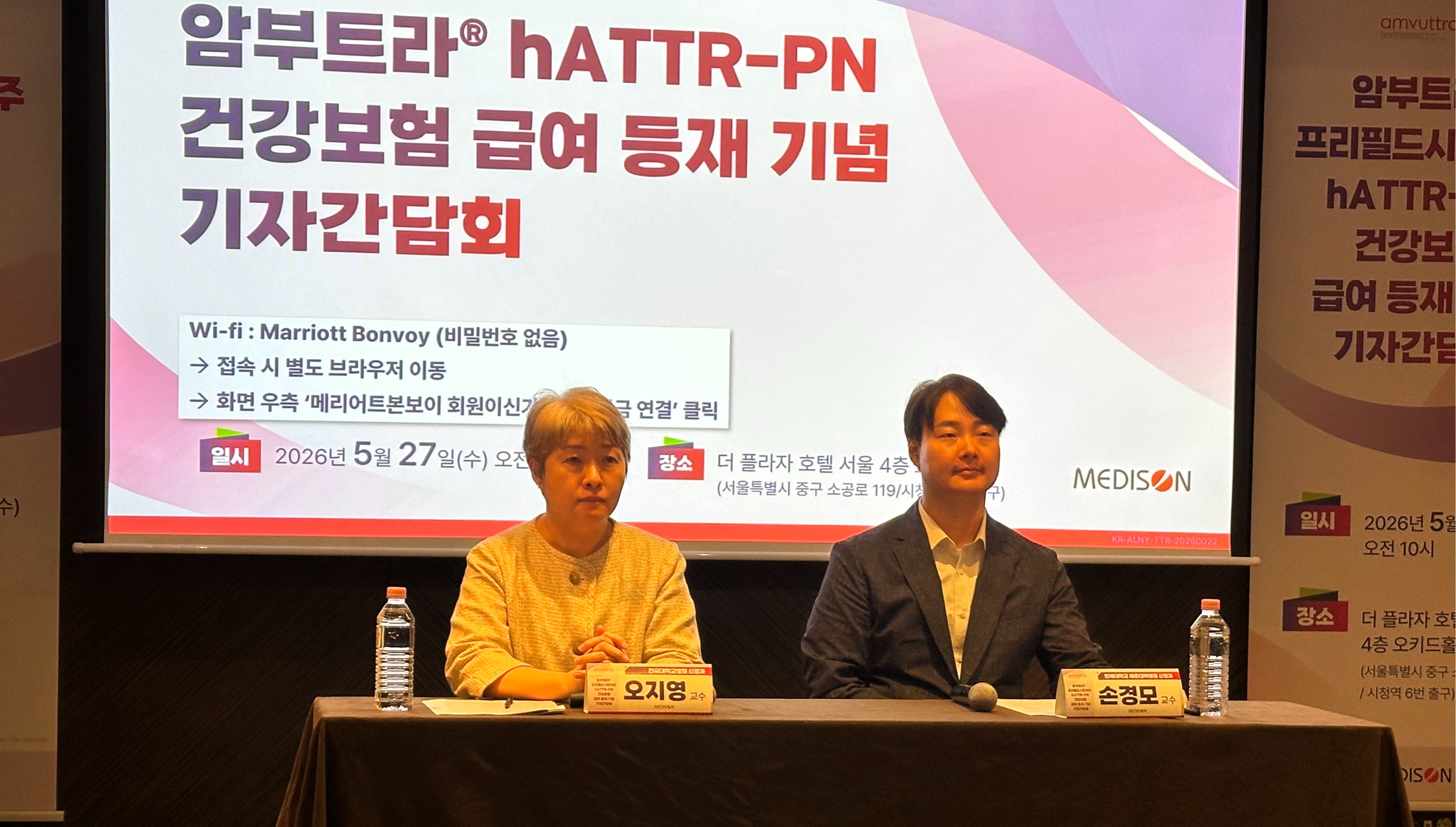
- The treatment landscape for hereditary transthyretin amyloid polyneuropathy (hATTR-PN), a rare inherited disease, is beginning to show signs of change.Given the nature of the disease, which takes several years from symptom onset to diagnosis and leads to rapid functional decline, the importance of early diagnosis and intervention is growing. Expectations are also rising for improved treatment access following reimbursement coverage for the RNA interference (RNAi)-based therapy ‘Amvuttra (vutrisiran).’On the 27th, Medison Pharmaceuticals held a press conference at the Plaza Hotel in Jung-gu, Seoul, to commemorate the domestic launch of Amvuttra for the treatment of hATTR-PN.(From left: Professor Jeeyoung Oh (Department of Neurology, Konkuk University Hospital), and Professor Gyeongmo Sohn (Department of Neurology, Haeundae Paik Hospital)Hereditary transthyretin amyloid polyneuropathy (hATTR-PN) is a rare disease in which structurally abnormal transthyretin (TTR) proteins transform into amyloid forms and accumulate in various organs, including peripheral nerves, autonomic nerves, and the heart, causing nerve damage and organ dysfunction.This disease is characterized by a complex combination of systemic symptoms, including not only peripheral sensory and motor neuropathy but also autonomic dysfunction, cardiovascular abnormalities, and gastrointestinal symptoms. A substantial number of Korean patients reportedly present with mixed phenotypes involving both neurologic and cardiac symptoms.Delayed diagnosis is considered one of the biggest challenges. Early symptoms such as numbness in the hands and feet, sensory abnormalities, and gastrointestinal symptoms are relatively nonspecific and are often mistaken for other diseases. In Korea, the average time from symptom onset to diagnosis is reported to be 3.7 years.Professor Gyeongmo Sohn of Haeundae Paik Hospital said, “hATTR-PN often begins with early sensory abnormalities, gastrointestinal problems, or weakness of finger muscles. It is important to recognize so-called ‘red flags’ such as family history, vitreous opacity, carpal tunnel syndrome (CTS), and autonomic symptoms at an early stage.”He continued, “Autonomic symptoms such as dizziness caused by orthostatic hypotension, gastrointestinal motility disorders, and sexual dysfunction often appear even before motor nerve damage occurs. Early suspicion and diagnosis have a significant impact on patient prognosis.”The disease also progresses rapidly. According to Professor Sohn, the median survival after diagnosis for hATTR-PN patients is approximately 4.7 years, shortening to about 3.4 years when cardiomyopathy is present.RNAi-based Amvuttra added to reimbursement list… “Goal is to suppress disease progression”Treatment of hATTR-PN in Korea broadly involves gene silencers and protein stabilizers. Currently approved treatments include the RNAi-based gene silencer Amvuttra and Pfizer’s TTR stabilizer Vyndamax (tafamidis).Amvuttra is a therapy that suppresses the production of abnormal TTR proteins via RNA interference. It is considered a disease-modifying treatment because it fundamentally lowers production of the disease-causing protein and slows disease progression. Another key feature is that it can be administered as a subcutaneous injection once every three months.After receiving Korean approval in November 2024, Amvuttra additionally gained approval in March this year for reducing cardiovascular death, hospitalization, and urgent heart failure visits in adult patients with wild-type or hereditary transthyretin amyloid cardiomyopathy (ATTR-CM).Furthermore, as of April 1, health insurance coverage was extended to include Stage 1 patients with hATTR-PN for whom Vyndamax was insufficiently effective or difficult to administer, as well as all Stage 2 patients regardless of prior treatment status.Amvuttra’s clinical efficacy was confirmed through the global Phase III HELIOS-A study. This study was conducted on 164 hATTR-PN patients across 22 countries.Trial results showed that at 18 months, the Amvuttra treatment group exhibited a 0.46-point reduction in the Modified Neuropathy Impairment Score +7 (mNIS+7) compared to baseline, whereas the external placebo control group showed a 28.1-point increase.Improvements were also observed in the quality of life and physical function. The treatment group showed statistically significant improvements in the Norfolk Quality of Life-Diabetic Neuropathy (Norfolk QoL-DN) score compared to the external placebo group, and preservation of function was also seen in the 10-meter walk test assessing ambulatory ability.Professor Jeeyoung Oh, Department of Neurology at Konkuk University Hospital, said, “Amvuttra has demonstrated data showing improvements in neurologic function and quality of life in clinical studies. Because both physicians and patients have long faced significant unmet needs due to limitations in treatment accessibility, we hope reimbursement coverage will allow patients to receive treatment benefits at more appropriate stages.”
