
- LOGIN
- MemberShip
- 2026-09-11 01:51:14
- Policy
- MOHW has announced potential regulations concerning 'OTC overdose'
- by Lee, Jeong-Hwan Sep 10, 2026 08:44am
- Amid growing societal concern over adolescents overdosing on over-the-counter (OTC) drugs to achieve hallucinogenic effects, South Korea's Ministry of Health and Welfare (MOHW) has drawn the pharmaceutical industry's attention by announcing plans to overhaul the dispensing and distribution oversight system for OTC products in community pharmacies.In a written response to a legislative inquiry submitted by Representative So Byung-hoon of the Democratic Party to the National Assembly’s Health and Welfare Committee on the 1st, the MOHW stated that it agrees on the necessity of establishing safeguards within the pharmacy retail system to prevent adolescents from intentionally overdosing on specific OTC products for recreational or hallucinogenic purposes.Under the current Pharmaceutical Affairs Act, OTC medicines may be purchased without a prescription. However, Article 6 of the Enforcement Rule of the Pharmaceutical Affairs Act (Code of Ethics for Pharmacists and Oriental Herbal Pharmacists) strictly prohibits selling quantities exceeding an appropriate therapeutic dosage to minors or other individuals when there is a risk of misuse or abuse. Violations can result in administrative sanctions, including the suspension of a pharmacist's professional license.To terminate adolescent OTC overdoses, the MOHW has stepped up proactive surveillance by requesting formal cooperation from the Korean Pharmaceutical Association (KPA) on two separate occasions, in January and March of this year.Specifically, these administrative measures included ▲issuing directives to verify the intended indication of drugs carrying hallucinogenic risks while enforcing rigorous medication counseling (issued in January by the Mental Health Policy Division) ▲restricting excessive sales of abuse-prone medicines to adolescents and mandating strict compliance with ethical dispensing standards (issued in March by the Division of Pharmaceutical Policy).The MOHW plans to formulate actionable regulatory measures aligned with the legislative intent of the Pharmaceutical Affairs Act amendment bill introduced by Representative So.Representative So’s proposed amendment centers on mandating pharmacist medication counseling for OTC products susceptible to misuse or abuse, legally prohibiting the dispensing of quantities exceeding standard therapeutic regimens to minors, and requiring pharmacists to verify purchaser personal details and maintain transaction logs.An official from the MOHW’s Division of Pharmaceutical Policy stated, "The MOHW will comprehensively evaluate the positions of the primary regulatory authority, the Ministry of Food and Drug Safety (MFDS), and pharmacies represented by the KPA," and emphasized that "The ministry will establish a workable, pharmacy-level OTC management framework."While concurring with the legislative intent behind mandating OTC medication counseling, the MFDS pointed out that the bill partially conflicts with the nation’s existing pharmaceutical classification framework.Under Korea’s current regulatory system, the "drugs subject to misuse·abuse control" designation is applied exclusively to prescription-only medicines (ethical pharmaceuticals, or ETCs). Products with low potential for abuse are categorized as OTCs. Consequently, statutory provisions authorizing the MFDS Minister to designate a separate subset of OTCs as drugs subject to misuse or abuse create structural friction with the binary ETC/OTC classification system.The proposed measure cited the Pharmaceutical Affairs Act as the statutory basis, which legally defines OTC drugs as therapeutics with a low risk of misuse or abuse and that can be expected to demonstrate safety and efficacy even when administered without a physician's prescription.The MFDS stated, "Mandating the Minister to designate specific OTC drugs vulnerable to misuse or abuse warrants careful legal review, Rep. So's proposal diverges from the drug classification criteria established under the same statute," and concluded, "However, defining conditions for repeated OTC purchases by minors and prescribing pharmacist counseling standards fall within the administrative jurisdiction of the MOHW. The ministry will actively cooperate on necessary regulatory follow-ups."
- Policy
- Lipitor and Plavix face 51% price cuts next year
- by Jung, Heung-Jun Sep 10, 2026 08:44am
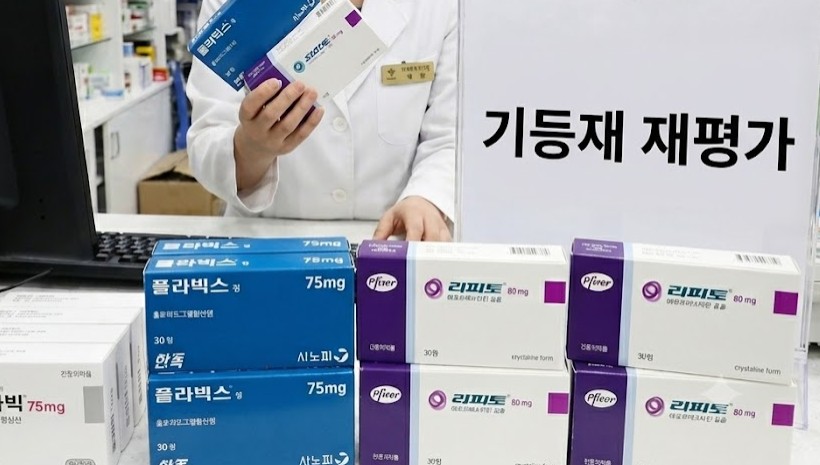
- A large number of major products, including Lipitor and Plavix, have been included in the first round of reassessment of previously listed drugs. Beginning with a reduction to 51% next April, reimbursement price ceilings will be lowered in stages, leaving even long-established blockbuster drugs exposed to price cuts.According to the first-round reassessment list released by the Health Insurance Review & Assessment Service (HIRA) on Sept. 8, a total of 12,437 products are currently included without exception.Hanmi Pharmaceutical and Chong Kun Dang each have more than 200 products classified for the first round of reassessment. Around 40 companies have at least 100 products on the list, including Daewoong Bio, Hutecs Korea, Hana Pharm, Reyon Pharmaceutical, Shin Poong Pharmaceutical, Myung In Pharm, Dongkook Pharmaceutical, Hanlim Pharm and Yuhan Corporation.More important than the number of products, however, is their sales volume. Price cuts imposed on one or two blockbusters with annual prescription sales exceeding KRW 100 billion could have a far greater impact on a company's actual revenue than dozens of low-sales products.Products in the first round of reassessment will initially be subject to a 51% price ceiling next year, followed by phased reductions to 45% by 2030. AI-generated imageNotable products included in the first round are Viatris' hyperlipidemia treatment Lipitor, Handok's antiplatelet drug Plavix, Daewoong Bio's cognitive function enhancer Gliatamin and Chong Kun Dang's cognitive function enhancer Gliatilin.According to pharmaceutical market research firm UBIST, all of these products have consistently generated annual sales exceeding KRW 100 billion.Viatris has only 36 products subject to the first reassessment after those marked as exempt are excluded, but all four strengths of its high-grossing Lipitor—10 mg, 20 mg, 40 mg and 80 mg—are included on the list. Lipitor is a major product with annual sales exceeding KRW 170 billion.Because the adjustment will be based on the highest price among identical formulations on the September reimbursement list, Lipitor, whose price has already been lowered, is expected to see only a modest reduction next April. The amount reduction will become greater from 2028, however. For Lipitor 10 mg, the current price of KRW 638 will fall to KRW 631 next year and KRW 607 in 2028.The outlook was mixed for Hanmi Pharmaceutical's major products. Amozaltan was included in the first round of reassessment, while Rosuzet, which generates more than KRW 220 billion in annual sales, was assigned to the second round.The government will use the September 2026 highest price for identical formulations, currently set at 53.55% of the reference price, as the basis for adjustments. For ordinary companies, the reimbursement ceiling will then be lowered in stages to 51% in 2027, 49% in 2028, 47% in 2029 and 45% in 2030. However, if a product's current ceiling price is already below the adjusted price for a given year, no additional reduction will be made that year.As a result, some blockbuster products may avoid a price cut next year because their prices are already low. Daewoong Bio's Gliatamin is included in the first round of reassessment, but its price has already fallen to around the 49% level, meaning its next reduction will likely begin in 2029.An industry official said, “It is difficult to simply compare the impact on individual companies based on the number of products alone. The reassessed prices of each company's key products need to be compared individually to gauge the actual impact.”
- Policy
- First Edarbi generic emerges, ahead of patent expiry next March
- by Lee, Tak-Sun Sep 09, 2026 12:26pm
- Korea's first generic for the domestic market has finally emerged in the market for Edarbi (azilsartan medoxomil potassium), an angiotensin II receptor blocker (ARB) hypertension drug that generates more than KRW 10 billion in annual prescriptions.According to the Ministry of Food and Drug Safety (MFDS), Huons received marketing authorization on Sept. 7 for Hudarbi Tab. 80 mg, a generic version of Edarbi. Whanin Pharmaceutical previously obtained approval for an export-only product in 2024, but Huons is the first company to secure approval for an azilsartan generic intended for sale in the Korean market.Edarbi was developed by Takeda Pharmaceutical and approved in Korea in May 2017. The drug gained a foothold in the market by emphasizing its strong blood pressure-lowering effect as well as low blood pressure variability, allowing stable blood pressure control throughout the day.After Celltrion acquired the Asia-Pacific commercial rights from Takeda, Celltrion Pharm has been responsible for distribution. Following a previous co-promotion arrangement with Dong-A ST, Daewon Pharmaceutical joined the co-promotion effort this year to further expand sales. According to pharmaceutical market research firm UBIST, annual outpatient prescriptions for Edarbi amount to approximately KRW 11 billion.While the latest approval has opened the door to generic competition, a full commercial launch is expected only next spring, as the patent covering “benzimidazole derivatives and uses thereof” listed for Edarbi is set to expire on March 26, 2027. Industry observers expect Huons to commercialize its product upon patent expiry in an effort to secure an early foothold in the market.Korea's hypertension drug market, estimated at around KRW 2.5 trillion, is highly competitive as prescriptions increasingly shift toward fixed-dose combination therapies. Until now, however, no same-ingredient generic has been available in the azilsartan monotherapy market, leaving little room for follow-on competitors.An industry official said, “Edarbi is a solid product that has maintained stable prescription sales as a monotherapy. Now that Huons has opened the field by securing the first approval for a domestic-market generic, more Korean pharmaceutical companies are likely to enter the race to develop generic and combination products as the patent expiration approaches.”
- Policy
- GLP-1 misuse/abuse drug designation delayed into 2H
- by Lee, Tak-Sun Sep 09, 2026 12:26pm
- AI-generated imageThe designation of glucagon-like peptide-1 (GLP-1) obesity treatments as drugs of concern for misuse or abuse, which was expected to be completed by the end of August, has been pushed into September and is now facing regulatory review.The Ministry of Food and Drug Safety (MFDS) is currently undergoing a regulatory review by the Regulatory Reform Committee under the Office for Government Policy Coordination. It plans to complete the revision of the relevant notification within this month.However, pharmaceutical companies and medical professionals are strongly opposing the move, warning that higher prescribing hurdles and greater psychological barriers could create a “balloon effect,” driving patients back to more addictive psychotropic obesity drugs or toward illegally distributed and counterfeit medicines online.From CPAC review to June advance notice…internal review completed, now to be submitted to the Regulatory Reform CommitteeThe process of designating GLP-1 obesity drugs as drugs of concern for misuse or abuse gained momentum in April this year. At the time, the MFDS Central Pharmaceutical Affairs Council endorsed the designation, citing soaring demand for major obesity drugs including Wegovy (semaglutide), Mounjaro (tirzepatide) and Saxenda (liraglutide), as well as a concentration of supplies in areas exempt from Korea's prescription-dispensing separation system.The MFDS subsequently issued an advance administrative notice from June 5 to 26 on a proposed partial revision to the “Regulations on the Designation of Drugs of Concern for Misuse or Abuse.” The proposal calls for newly designating products containing three active ingredients, liraglutide, semaglutide and tirzepatide, for obesity treatment as drugs of concern for misuse or abuse.Once designated, the products would be required to carry the wording “drug of concern for misuse or abuse” on their containers and packaging. Pharmacies in areas exempt from the prescription-dispensing separation system would also be prohibited from dispensing or selling the products without a physician's prescription.The MFDS regulatory impact assessment originally set Aug. 31, 2026, as the start of the regulatory review period, leading to widespread expectations that the notification would be revised and take effect immediately by the end of August. However, the target has since been pushed back to September as the government's regulatory review process has taken longer than expected.The proposal is currently under review by the Regulatory Reform Committee under the Office for Government Policy Coordination. Responding recently to questions from pharmaceutical trade media, the MFDS said, “We have completed the regulatory review by our internal regulatory review committee, and the proposal is currently under review by the Regulatory Reform Committee under the Office for Government Policy Coordination. We are proceeding intending to revise the notification in September, depending on the regulatory review schedule.”However, the agency declined to disclose the number of comments submitted by pharmaceutical companies, importers and medical groups during the advance-notice period or the specific issues raised. “We are reviewing the matter while taking the submitted opinions into comprehensive consideration, and it is difficult to provide detailed responses at this stage.”The MFDS intends to maintain the scope of products covered under the original advance notice. Regarding Mounjaro in particular, which is approved for both diabetes and obesity, the agency clarified that “products containing the three ingredients for obesity treatment will be required to display the wording ‘drug of concern for misuse or abuse’ on their containers and packaging.”The MFDS also emphasized the need for tighter distribution controls in prescription-dispensing exemption areas: “In joint inspections with local governments during the first quarter of this year covering 632 sites, we identified six violations, including four pharmacies in exemption areas that sold drugs without prescriptions and two medical institutions where medicines were used by physicians themselves.”Industry warns “designation could stigmatize drugs and restrict treatment opportunities”On the other hand, the pharmaceutical industry and related academic groups are strongly opposing the regulation, arguing that it could distort the obesity treatment environment and lead to unintended consequences.One of the industry's biggest concerns is a potential “balloon effect” toward conventional psychotropic obesity drugs. If GLP-1 therapies are stigmatized by a regulatory label associated with “misuse and abuse” and access to prescriptions becomes more restricted, patients could turn back to controlled appetite suppressants such as phentermine and phendimetrazine, which are relatively inexpensive and easier to obtain. They say this would create a contradiction in which excessive restrictions are imposed on newer drugs with comparatively well-established safety profiles even though psychotropic drugs carry substantially greater risks, including dependence, hallucinations and cardiovascular adverse effects due to their stimulant effects on the central nervous system.Concerns that tighter access through legitimate channels could fuel the distribution of “counterfeit drugs” and drive the market underground are another major argument against the measure. Counterfeit injections have already circulated through social media and illicit markets worldwide amid surging demand for Wegovy and Mounjaro, prompting warnings from the World Health Organization. The industry warns that placing misuse and abuse warnings on packaging and raising barriers to legitimate prescriptions could drive patients toward overseas online purchases or underground distribution channels, potentially resulting in serious safety incidents involving unverified counterfeit medicines.Critics also argue that the measure would stigmatize obesity treatment and restrict patient access in Korea, running counter to global guidelines that regard obesity as a “chronic metabolic disease requiring lifelong management.”With the MFDS seeking to push through the notification revision in September, attention is now focused on how the Regulatory Reform Committee will balance health authorities' argument that the designation is needed to block prescription-free sales in exemption areas against industry warnings that it could drive patients back to psychotropic drugs and expand the black market for counterfeit medicines.

- Policy
- Mifegyne approval gains momentum... initial in-hospital dispensing
- by Lee, Jeong-Hwan Sep 08, 2026 09:01am
- The domestic approval and prescribing of Mifegyne, a medication used for pregnancy termination, appears to be drawing closer, with President Jae-myung Lee laying out a detailed roadmap for its introduction in Korea.According to the roadmap, the drug would initially be prescribed and dispensed within hospitals for 2 years following approval by the Ministry of Food and Drug Safety (MFDS). After the 2 years, the system would shift to hospital prescribing and dispensing at community pharmacies.The government is now moving toward establishing an approval and safety management framework for Mifegyne, after Lee went beyond his public directive in July to actively consider introducing the drug and specified how it should be prescribed and dispensed, as well as the timing of the transition.Still, several issues remain unresolved, including the continued legislative vacuum surrounding pregnancy termination and persistent opposition from some political and religious groups.According to political sources on the 7th, Lee recently addressed the introduction of Mifegyne during a meeting with civil society representatives at the presidential office. He said, “The Ministry of Health and Welfare and women's groups are discussing the matter, and the general direction is to have the drug prescribed and dispensed in hospitals for 2 years, followed by hospital prescribing and dispensing at outside pharmacies thereafter.”Under this approach, prescriptions and dispensing would initially take place entirely within medical institutions to strengthen safety management. Once the system is established, patients would receive prescriptions from physicians and have them filled at community pharmacies, as is generally the case with prescription medicines.During a Cabinet meeting on July 14th, Lee had previously instructed relevant ministries to actively consider introducing Mifegyne to Korea.The intention was to stop overlooking the current situation in which unapproved abortion pills are purchased through unofficial channels overseas, and devise a way to ensure safe use of the drug within Korea’s medical system. The Ministry of Health and Welfare, the Ministry of Gender Equality and Family, and the MFDS have been discussing potential approaches to introducing the drug thereafter.With the president outlining a specific prescribing and dispensing model, as well as a timeline for the transition thereafter, momentum toward its introduction has accelerated further.Despite the government's increasingly clear intention to introduce Mifegyne, a legislative vacuum remains, as follow-up legislation has yet to establish matters such as the gestational age limit for pregnancy termination, permitted methods and procedures for medication abortion.This has also been one reason the MFDS has maintained a cautious stance on approving abortion medications. In addition to reviewing Mifegyne itself for safety and efficacy, authorities must establish safety management standards governing issues such as the gestational age through which it may be used, which medical institutions and healthcare professionals may prescribe it, and how patients would be linked to medical care in the event of adverse outcomes such as bleeding or incomplete abortion.The president's proposal to require in-hospital prescribing and dispensing for the first 2 years after approval before transitioning to community-pharmacy dispensing also appears intended to address these safety concerns. Under the approach, the drug's use and adverse events could initially be managed within medical institutions, with dispensing later expanded outside hospitals once a safety management system has been established.Although Lee has proposed 2 years of in-hospital prescribing and dispensing following approval, opposition lawmakers have argued that approving an abortion medication before a complete legal framework is in place would be irrational.It also remains unclear whether Lee’s timeline has been finalized among the relevant government ministries or whether the proposal is directly linked to the abortion medication currently under review by the MFDS."Arbitrarily discussing its use while the legal grounds for the prescription, dispensing, and post-use safety management of abortion pills are not yet complete can be unreasonable. There is also no precedent for specifying the approval method and prescription/dispensing methods for prescription drugs based solely on a presidential directive."
- Policy
- Xeljanz frequently granted off-label use in lupus and dermatomyositis
- by Jung, Heung-Jun Sep 07, 2026 08:59am
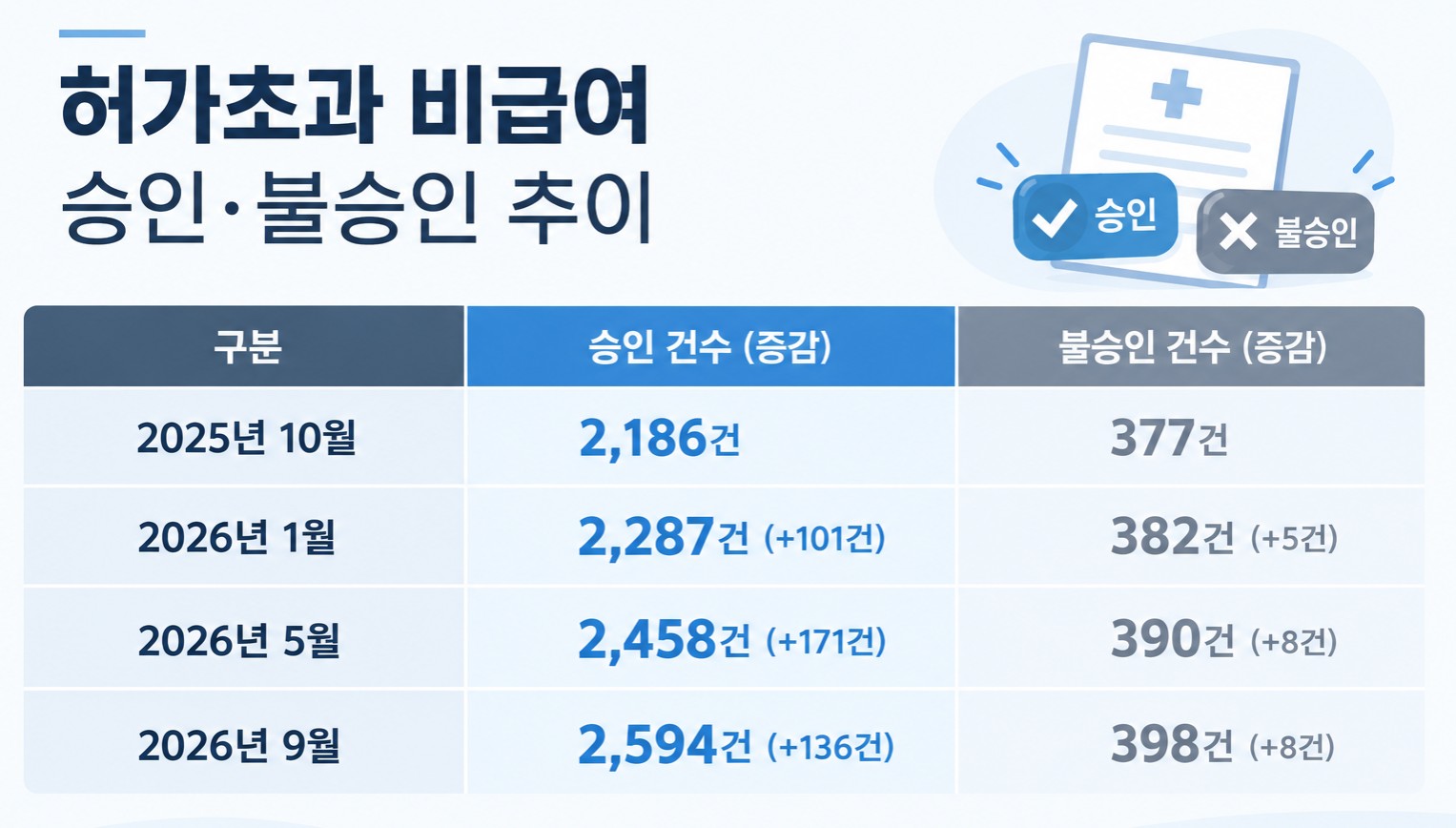
- With the number of approved non-reimbursed off-label drug use applications increasing to 136 since the previous tally, Xeljanz (tofacitinib) was found to have been frequently approved for conditions including refractory dermatomyositis.Although Xeljanz is approved for rheumatoid arthritis and ulcerative colitis, it is also used in practice as salvage therapy for severe autoimmune diseases.According to HIRA’s data on ‘Approved and rejected applications for non-reimbursed off-label drug use’ that was issued on the 7th, a total of 2,594 cumulative applications have been approved as of this month.Since HIRA began disclosing the figures in October last year, 408 additional applications have been approved over approximately 1 year. Rejections increased by only 21 during the same period, putting the approval rate at approximately 95%.Since HIRA began disclosing the figures in October last year, 408 additional applications have been approved over approximately 1 year. AI-generated imageThe low rejection rate is interpreted as applications having already secured supporting evidence through review by hospital institutional review boards (IRBs) or medical societies.This month’s tally included 136 more approvals than the previous count in May. Xeljanz (tofacitinib) accounted for 11 of them, a particularly notable increase.Xeljanz is currently indicated for ulcerative colitis, rheumatoid arthritis, psoriatic arthritis and ankylosing spondylitis, among other conditions. Its approved off-label uses include treatment of patients with refractory dermatomyositis or systemic lupus erythematosus who have failed to respond to existing therapies.The cumulative number of approvals for Xeljanz has risen from 3 as of October last year to 20 this month.Plasma-derived products also continue to show frequent off-label use. GC Biopharma’s IV-Globulin SN Injection and SK Plasma’s Liv-Gamma SN Injection received 11 additional off-label approvals compared with May.The products are approved for ▲hypo- or agammaglobulinemia, ▲use in combination with antibiotics in severe infections, ▲idiopathic thrombocytopenic purpura, ▲Guillain-Barré syndrome and ▲Kawasaki disease.In clinical practice, they are prescribed off-label mainly for complications following organ transplantation and severe autoimmune diseases, generating continued demand.However, an application to use the products in patients with postural orthostatic tachycardia syndrome, which is not an autoimmune disease, was rejected due to insufficient medical evidence.
- Policy
- Shing Poong Pharm’s Prolia biosimilar approved in Korea
- by Lee, Tak-Sun Sep 04, 2026 08:47am
- Shin Poong Pharm has secured marketing authorization for Denovon, a biosimilar version of Amgen’s blockbuster osteoporosis treatment Prolia (denosumab), bringing the product one step closer to launch. Given the usual timetable for health insurance pricing and listing, Denovon is expected to enter the market around the end of the year.With 7 Prolia biosimilars now approved in Korea, competition in the market is expected to intensify further.On the 3rd, the Ministry of Food and Drug Safety approved Shin Poong’s Denovon Prefilled Syringe Injection, a denosumab treatment for osteoporosis.Denovon is supplied as a 60 mg/1 mL prefilled syringe formulation. Like the reference product Prolia, it is indicated for ▲the treatment of osteoporosis in postmenopausal women, ▲increasing bone mass in men with osteoporosis, ▲glucocorticoid-induced osteoporosis, and ▲bone loss in patients with nonmetastatic prostate cancer or breast cancer. Shin Poong acquired exclusive rights to develop and market the product in Korea from India’s Enzene Biosciences in 2021.Seven biosimilars vie for market…first 4 biosimilars already secure reimbursement listingThe approval of Denovon brings the total number of Prolia biosimilars authorized in Korea to seven. Shin Poong is the latest company to join a field that already includes Celltrion, Samsung Bioepis, LG Chem, HK inno.N, Daewon Pharmaceutical and Alvogen Korea.Four of the products have already secured reimbursement and are competing in the market. According to the national health insurance reimbursement list, four 60 mg Prolia biosimilars – Samsung Bioepis’ Obodence, Celltrion’s Stoboclo, HK inno.N’s Izambia and Daewon Pharmaceutical’s Junode – are already listed and are being sold in Korea.Samsung Bioepis (Xbryk), Celltrion (Osenvelt) and HK inno.N (Denbrace) have also received reimbursement approval for their biosimilar versions of Xgeva 120 mg, which is used to treat skeletal complications in patients with cancer.Shin Poong’s newly approved Denovon will now undergo the reimbursement process alongside LG Chem’s Jubbonti and Alvogen Korea’s Ducolia, neither of which has yet been listed.Late entrants seek foothold in KRW 170 billion blockbuster marketAmgen’s ProliaThe Korean Prolia market generates approximately KRW 170 billion in annual prescriptions, making Prolia the largest product in the osteoporosis treatment market. Its convenient once-every-six-month dosing regimen and continued coverage under national health insurance criteria have helped it establish a solid prescription base.In the existing market, early biosimilar entrants are leveraging approvals from drug committees at hospitals and clinics to carve out market share against the sales force of Chong Kun Dang, which holds the domestic marketing rights to the originator Prolia.Later entrant Shin Poong recently revised its agreement with originator Enzene to strengthen its competitive position. Ahead of the launch, Shin Poong secured ▲adjusted the supply price, ▲added sublicensing rights, and ▲a technology transfer option to the agreement.The adjusted supply price is expected to improve both pricing competitiveness and distribution margins. The sublicensing rights also open the door to co-promotion partnerships with pharmaceutical companies that have strong sales networks among local clinics (orthopedics, obstetrics and gynecology, and internal medicine), which account for a large share of prescriptions.An industry official said, “Four biosimilars have already secured reimbursement and are moving to establish an early lead, so an attractive price and a comprehensive sales network encompassing local clinics will be essential for any later entrant. With Shin Poong gaining greater flexibility by restructuring its agreement, the key question will be what kind of partnership it uses to establish itself in the market after securing reimbursement, which is expected around the end of the year.”
- Policy
- “Drug pricing reform relies on collaboration btwn Korea-multinational companies”
- by Jung, Heung-Jun Sep 04, 2026 08:47am
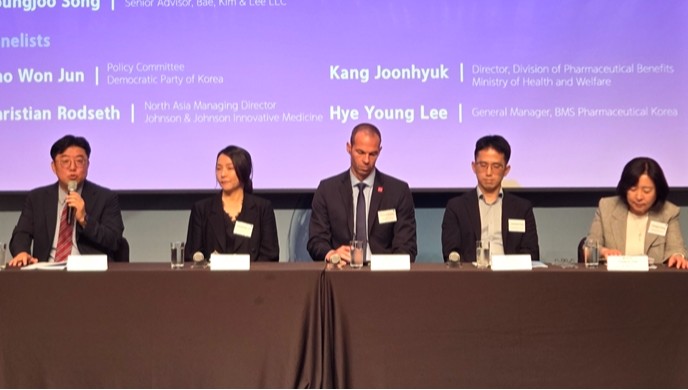
- From left, Policy Director of the Democratic Party of Korea, Hye Young Lee, Country Manager of BMS Korea, Christian Rodseth, Managing Director of Johnson & Johnson Korea, Kang Joonhyuk, Director of the Division of Pharmaceutical Benefits at the Ministry of Health and Welfare, Youngjoo Song, Senior Advisor at Bae, Kim & Lee LLC.The National Assembly and the Ministry of Health and Welfare (MOHW) evaluated that an innovation alliance between multinational and domestic pharmaceutical companies will determine the success of the drug pricing system reform.This indicates that outcomes from innovation must accumulate for the drug pricing reform, primarily pursued to restructure the domestic generic-centric pharmaceutical industry, to advance to its next phase.At the Healthcare Innovation Seminar hosted by the American Chamber of Commerce in Korea (AMCHAM) at the Shilla Hotel on the 3rd, Cho Won Jun, Policy Director of the Democratic Party of Korea, and Kang Joonhyuk, Director of the Division of Pharmaceutical Benefits at the Ministry of Health and Welfare (MOHW), emphasized the importance of fostering an innovation ecosystem.Cho stated, "From the perspective of domestic companies, because the National Health Insurance pie is fixed, there is a negative perception that expanding access to new drugs might reduce their own profits," adding, "Civil society organizations also harbor skepticism over whether profits are appropriately reinvested domestically. We can only move toward the next innovation when perceptions change in favor of shared value".Director Cho stated, "When the perception spreads that both sides are creators of shared profit through innovation and joint global expansion, the relationship inevitably becomes interdependent," and emphasized the importance of open innovation, "Trust is essential for policy shifts. We can only move forward once concerns over polarization diminish. We must forge an innovation alliance."Multinational pharmaceutical companies also agreed on the growth potential of the Korean market. However, they pointed out that the policies aimed at expanding drug access contained within the pricing reform must take firm root to create a predictable business environment.Furthermore, their position is that shared performance target metrics between the government and industry, alongside the swift expansion of drug access, are critical.Christian Rodseth, Managing Director of Johnson & Johnson Korea, positively evaluated the access expansion measures, remarking, "Initiatives such as the ICER threshold and flexible drug pricing agreements are outstanding because their purpose is to reward innovation".However, Rodseth added that the actual implementation of the institutional reform is crucial. Rodseth stated, "What matters is whether the reform plan is clear, whether it is genuinely implemented, and whether companies have experienced tangible benefits from it."Hye Young Lee, Country Manager of BMS Korea, emphasized performance measurement metrics, rapid expansion, and consistent execution through communication.Lee stated, "In the United Kingdom, a policy target was established to double expenditure on innovative new drugs from 0.3% to 0.6% of GDP. Having clear indicators enables transparent monitoring," adding, "Moreover, the fast-track listing pilot program is being implemented within a limited scope. While we agree with the necessity of a pilot project, a swift expansion is needed."Lee further stated, "If the government and industry fail to reach consensus on ambiguous areas or differing perspectives regarding policy interpretation, it could become a roadblock to execution and goal attainment," and suggested active communication.The government noted that it is deliberating on how to implement new drug access expansion measures while addressing regulatory gaps, and requested industry cooperation to ensure the completeness of the drug pricing system reform.Kang Joonhyuk, Director of the Division of Pharmaceutical Benefits at the Ministry of Health and Welfare, stated, "The system reform was conducted in a way that adjusts generics, which account for the largest share of pharmaceutical expenditures, to appropriate price levels while expanding access to innovative new drugs. We are finding a balance between appropriately rewarding the value of new drugs and maintaining the fiscal soundness of National Health Insurance".Kang continued, "There are various opinions regarding the expansion of flexible pricing agreements and institutionalizing the fast-track listing pilot program," and "We view policies concerning new drugs in the second half of the year as critically important."Lastly, Director Kang stressed industry efforts, stating, "The pharmaceutical industry is a vital partner in expanding policies with speed. Fast-track listing also requires the active participation of many companies," concluding that "Companies that have relied primarily on generics lack significant know-how in new drug development. We hope to see many collaboration models emerge with multinational pharmaceutical companies."
- Policy
- No cap set for semi-innovative pharma company designations
- by Lee, Jeong-Hwan Sep 04, 2026 08:47am
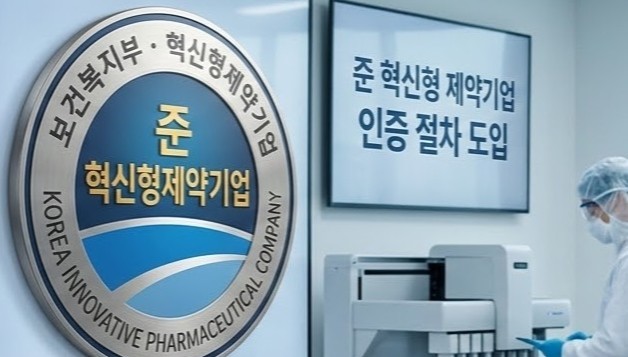
- The Ministry of Health and Welfare plans to designate an unlimited number of semi-innovative pharmaceutical companies, provided they meet the required ratio of research and development investment and are not subject to any disqualifying conditions.Like innovative pharmaceutical companies, semi-innovative companies will be designated through an absolute assessment rather than ranked against other applicants.Some pharmaceutical companies had questioned whether the ministry might impose an overall cap—such as 60 companies—on the combined number of innovative and semi-innovative pharmaceutical companies, given that 47 companies currently hold innovative pharmaceutical company certification. Such questions were resolved, as the ministry has formally confirmed that applicants will be assessed against fixed criteria with no numerical cap on designations.“A ministry official told Dailypharm by phone, ‘As with innovative pharmaceutical companies, there will be no cap on the number of semi-innovative companies certified, provided they meet the R&D investment thresholds and have no grounds for disqualification, such as illegal rebates.’”MOHW held the inaugural meeting of the Public-Private Council for Pharmaceutical Industry Innovation on the 2nd to discuss how the semi-innovative pharmaceutical company certification program will be established and operated.The ministry aims to create a growth ladder under which pharmaceutical startups can receive government support as they progress through semi-innovative and innovative status and ultimately grow into globally competitive pharmaceutical companies.It plans to establish the necessary legal basis by November and begin accepting applications for the new designation in December.To qualify as a semi-innovative pharmaceutical company, an applicant must meet the ministry’s required ratio of R&D expenditure to pharmaceutical sales.Companies with average annual sales of less than KRW 100 billion over the preceding three years must maintain an R&D-to-sales ratio of at least 7% and invest at least KRW 5 billion in R&D.The required ratio is at least 5% for companies with sales of KRW 100 billion or more and at least 3% for companies meeting cGMP or EU GMP standards.Each threshold is 2 percentage points lower than the corresponding requirement for innovative pharmaceutical company certification. To qualify for an innovative status, companies with sales below KRW 100 billion must invest at least 9% of sales and a minimum of KRW 7 billion in R&D. The required ratios are 7% for companies with sales of KRW 100 billion or more and 5% for companies meeting cGMP or EU GMP standards.In addition to meeting the R&D requirements, applicants must also be free of disqualifying conditions such as illegal pharmaceutical rebates and unethical conduct by executives or employees.A company will be disqualified over rebates if it has received two or more administrative sanctions or if the amount provided was at least KRW 5 million. However, violations that occurred more than five years before the assessment will be excluded. Also, cases in which a director or auditor receives a criminal fine or a more severe penalty for offenses such as embezzlement, breach of trust, stock price manipulation, assault, or sexual crimes will be disqualified.Like innovative pharmaceutical companies, semi-innovative companies will receive preferential pricing for both newly listed and already-listed generics. Specifically, new generics will be eligible for a price level of 50% for an initial one-year period plus an additional three years. Already-listed drugs will be allowed to retain a price level of 47% for three years when they undergo reassessment.The ministry categorizes innovative pharmaceutical companies as “leading” companies and semi-innovative pharmaceutical companies as “growth” companies. Under the detailed certification assessment, companies scoring at least 65 points, which is the minimum passing score set in the ministry’s public notice, will receive leading-company certification, while those scoring below 65 will be certified as growth companies. Because quasi-innovative companies will be assessed only on basic eligibility requirements, including their R&D investment ratio and the absence of disqualifying conditions, they will not be required to submit documentation for a separate detailed assessment.The ministry does not plan to limit the number of innovative or semi-innovative pharmaceutical companies certified, to encourage greater R&D investment across the industry. In effect, drug pricing incentives will be awarded through an absolute assessment rather than a competitive ranking.Pharmaceutical companies seeking either innovative or semi-innovative status will therefore need to prepare sufficient evidence to fully satisfy the ministry’s documentation requirements.
- Policy
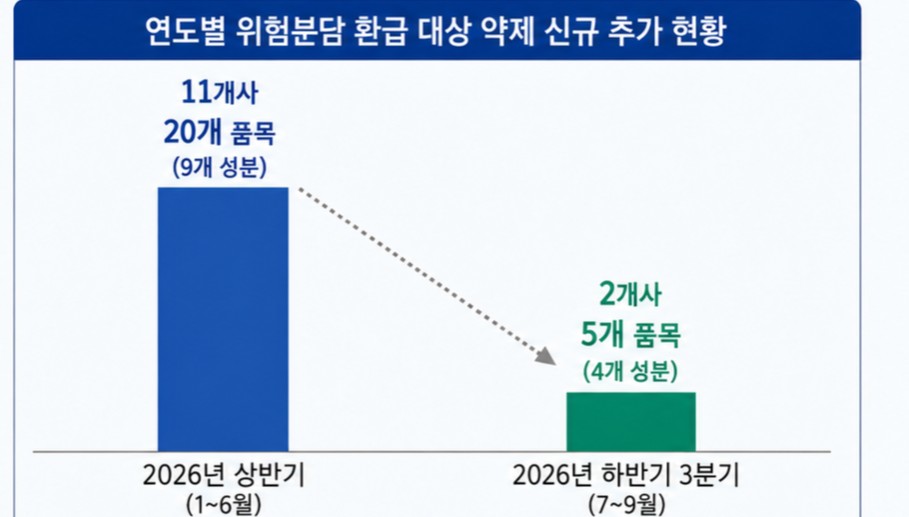
- 'Tecentriq' has been added to the RSA-type refund
- by Jung, Heung-Jun Sep 03, 2026 04:49pm
- Roche Korea's immuno-oncology agent 'Tecentriq Inj (atezolizumab)' has been added to the list of pharmaceuticals eligible for Risk-Sharing Agreement (RSA) refunds. A total of 27 products across 12 active ingredients were added as refund-eligible drugs from the first quarter to the third quarter of this year. Additions slowed in the third quarter after the flexible pricing agreement system was implemented in June.According to the list of pharmaceuticals subject to RSA refunds released by the National Health Insurance Service (NHIS) on the 1st, only Roche's Tecentriq Inj was newly added this month.While refund-eligible pharmaceuticals expanded by 20 products (9 active ingredients) across 11 pharmaceutical companies in the first half of the year, additions in the third quarter totaled 5 products (4 active ingredients) across 2 companies.Since June 2026, the implementation of the flexible pricing agreement system has shifted contract types from Risk-Sharing Agreement (RSA) refunds to flexible pricing agreements. The number of newly added RSA refund-eligible drugs decreased from 20 items for 11 companies in the first half of 2026 to 5 items from two companies in Q3 of the second half of 2026: Kadcyla Inj, Perjeta Inj, and Tecentriq Inj from Roche, as well as Boryung's Xpovio Tab.In the third quarter, products from Roche Korea accounted for the majority of new additions, including two dose strengths of Kadcyla Inj, Perjeta Inj, and Tecentriq Inj from Roche, as well as Boryung's Xpovio Tab.The slowdown in new refund-eligible drug additions in the second half, compared with the first half, is due to the flexible pricing agreement system implemented in June.In June, Astellas Pharma Korea's Xtandi Cap was removed from the refund-eligible drug list after the company transitioned the product to the flexible pricing agreement system when its RSA contract expired.Under the flexible pricing agreement system, the actual contract price is used rather than the published list price, eliminating the need for a separate refund process.While conventional refund-eligible drugs posed administrative burdens, such as processing patient co-payment refunds, the newly implemented flexible agreement system offers the distinct operational advantage of bypassing these procedures.Furthermore, because a flexible pricing agreement can only be secured after terminating an existing RSA contract, products cannot be enrolled under both mechanisms at the same time.For products newly listed this month, including Roche Korea's Polivy, UCB's Fintepla, and AstraZeneca's Breztri Aerosphere, the respective pharmaceutical companies all secured flexible pricing agreements.More pharmaceutical companies are opting for flexible pricing agreements during negotiations with the NHIS. Due to the new regulatory framework, this trend is expected to persist through the fourth quarter and beyond.
