- LOGIN
- MemberShip
- 2026-09-06 23:16:44
Top Head
Headline
- Policy
- Shing Poong Pharm’s Prolia biosimilar approved in Korea
- by Lee, Tak-Sun Sep 04, 2026 08:47am
- Shin Poong Pharm has secured marketing authorization for Denovon, a biosimilar version of Amgen’s blockbuster osteoporosis treatment Prolia (denosumab), bringing the product one step closer to launch. Given the usual timetable for health insurance pricing and listing, Denovon is expected to enter the market around the end of the year.With 7 Prolia biosimilars now approved in Korea, competition in the market is expected to intensify further.On the 3rd, the Ministry of Food and Drug Safety approved Shin Poong’s Denovon Prefilled Syringe Injection, a denosumab treatment for osteoporosis.Denovon is supplied as a 60 mg/1 mL prefilled syringe formulation. Like the reference product Prolia, it is indicated for ▲the treatment of osteoporosis in postmenopausal women, ▲increasing bone mass in men with osteoporosis, ▲glucocorticoid-induced osteoporosis, and ▲bone loss in patients with nonmetastatic prostate cancer or breast cancer. Shin Poong acquired exclusive rights to develop and market the product in Korea from India’s Enzene Biosciences in 2021.Seven biosimilars vie for market…first 4 biosimilars already secure reimbursement listingThe approval of Denovon brings the total number of Prolia biosimilars authorized in Korea to seven. Shin Poong is the latest company to join a field that already includes Celltrion, Samsung Bioepis, LG Chem, HK inno.N, Daewon Pharmaceutical and Alvogen Korea.Four of the products have already secured reimbursement and are competing in the market. According to the national health insurance reimbursement list, four 60 mg Prolia biosimilars – Samsung Bioepis’ Obodence, Celltrion’s Stoboclo, HK inno.N’s Izambia and Daewon Pharmaceutical’s Junode – are already listed and are being sold in Korea.Samsung Bioepis (Xbryk), Celltrion (Osenvelt) and HK inno.N (Denbrace) have also received reimbursement approval for their biosimilar versions of Xgeva 120 mg, which is used to treat skeletal complications in patients with cancer.Shin Poong’s newly approved Denovon will now undergo the reimbursement process alongside LG Chem’s Jubbonti and Alvogen Korea’s Ducolia, neither of which has yet been listed.Late entrants seek foothold in KRW 170 billion blockbuster marketAmgen’s ProliaThe Korean Prolia market generates approximately KRW 170 billion in annual prescriptions, making Prolia the largest product in the osteoporosis treatment market. Its convenient once-every-six-month dosing regimen and continued coverage under national health insurance criteria have helped it establish a solid prescription base.In the existing market, early biosimilar entrants are leveraging approvals from drug committees at hospitals and clinics to carve out market share against the sales force of Chong Kun Dang, which holds the domestic marketing rights to the originator Prolia.Later entrant Shin Poong recently revised its agreement with originator Enzene to strengthen its competitive position. Ahead of the launch, Shin Poong secured ▲adjusted the supply price, ▲added sublicensing rights, and ▲a technology transfer option to the agreement.The adjusted supply price is expected to improve both pricing competitiveness and distribution margins. The sublicensing rights also open the door to co-promotion partnerships with pharmaceutical companies that have strong sales networks among local clinics (orthopedics, obstetrics and gynecology, and internal medicine), which account for a large share of prescriptions.An industry official said, “Four biosimilars have already secured reimbursement and are moving to establish an early lead, so an attractive price and a comprehensive sales network encompassing local clinics will be essential for any later entrant. With Shin Poong gaining greater flexibility by restructuring its agreement, the key question will be what kind of partnership it uses to establish itself in the market after securing reimbursement, which is expected around the end of the year.”

- Opinion
- ADC option for HR+ breast cancer...'Datroway' garners attention
- by Son, Hyung Min Sep 04, 2026 08:47am
- Which therapeutic options to choose from following CDK4/6 inhibitor treatment in the course of hormone receptor-positive (HR+)/HER2-negative (HR-) metastatic breast cancer treatment is becoming a major issue.The establishment of a combination therapy of endocrine therapy and a CDK4/6 inhibitor as the first-line standard therapy has significantly improved early-stage therapeutic outcomes and quality of life. However, therapeutic options that secure both therapeutic effects and tolerability are relatively limited when drug resistance occurs.Professor Kyung Hwa Park of the Division of Medical Oncology at Korea University Anam Hospital In South Korea, due to limited follow-up endocrine-based therapeutic options, patients whose disease has progressed often move on to chemotherapy. Industry experts view this process as increasing patient burden, such as hair loss, accumulated toxicity, and daily life struggles.'Datroway (datopotamab deruxtecan),' a TROP2-directed antibody-drug conjugate (ADC) recently approved in South Korea, is drawing attention as a novel treatment option distinct from conventional chemotherapy for patients with HR+/HER2- metastatic breast cancer.In a recent interview with Daily Pharm, Professor Kyung Hwa Park of the Division of Medical Oncology at Korea University Anam Hospital stated, "Patients treated with CDK4/6 inhibitors have high expectations for maintaining a high quality of life and sustaining daily routines for a prolonged period," and added, "However, patients feel frustrated because there are not enough subsequent treatment options to continue that."Professor Park continued, "In this situation, the approval of Datroway and availability of a new ADC treatment option is highly meaningful, as it allows patients to expect a relatively long progression-free survival (PFS) while maintaining their quality of life."Shortened survival following CDK4/6 inhibitor use… Subsequent treatment is not availableFor HR+/HER2- metastatic breast cancer, combination therapy of endocrine therapy and a CDK4/6 inhibitor is generally used as first-line treatment.The issue arises after resistance develops. Among patients whose disease progressed after CDK4/6 inhibitor use, the median PFS is less than 4 months;. In comparison, median PFS with chemotherapy is 6.4 months in the first-line setting, but drops to about 4.1 months in the third-line setting. In practice, only 31% of all patients proceeded to third-line therapy.Professor Park pointed out that this issue can be even more pronounced in Korea's domestic treatment landscape.Professor Park stated, "In Korea, subsequent endocrine therapies that can realistically be used are limited to fulvestrant monotherapy or the combination of everolimus plus exemestane," adding, "For patients with ESR1 gene mutations, there are no available drugs, leaving them at a stage where they must consider participating in clinical trials."Ultimately, a substantial number of patients transition to chemotherapy, but the reluctance felt by patients is considerable.Professor Park added, "Rather than financial reasons, many patients who have maintained their daily lives while undergoing treatment with CDK4/6 inhibitors do not want to switch to chemotherapy, which causes hair loss and makes daily living difficult."Datroway improves PFS… Safety is the benefitLast March, Datroway was approved in Korea for the treatment of patients with HR+/HER2- metastatic breast cancer who have received prior endocrine-based therapy and systemic chemotherapy in the advanced setting.In the TROPION-Breast01 study, the basis for approval, Datroway reduced the risk of disease progression or death by 37% compared with investigator's choice of chemotherapy.The median PFS was 6.9 months in the Datroway group and 4.9 months in the control group, with a hazard ratio (HR) of 0.63. The objective response rates (ORR) were 36.4% and 22.9%, respectively.The therapeutic effect demonstrated a consistent pattern regardless of prior lines of therapy, prior CDK4/6 inhibitor use, or HER2-low versus IHC 0 status.Professor Park viewed this as a case where, rather than focusing solely on the absolute PFS difference of two months, one must consider the limitations of existing therapies alongside patient characteristics.Professor Park noted, "While it is a difference of about two months, a PFS of approximately seven months is a considerably meaningful figure," adding, "Even when cytotoxic chemotherapies are effective, it can be difficult to maintain treatment for a long time due to cumulative toxicities such as peripheral neuropathy, hand-foot syndrome, and edema."Professor Park further added, "A major advantage of ADCs is that patients can sustain treatment with a relatively lower burden of cumulative toxicity."Considering both quality of life and Toxicity… "Maintaining daily life Is also a treatment outcome"In TROPION-Breast01, differences from conventional chemotherapy were also confirmed in terms of patient-reported outcomes (PROs) and safety.Analysis of time to confirmed deterioration showed a time to deterioration in quality of life of 9 months in the Datroway arm versus 4.8 months in the control group. Time to pain deterioration also differed, at 9 months versus 5.5 months, respectively.The incidence of Grade 3 or higher treatment-related adverse events was 20.8% in the Datroway group and 44.7% in the control group. Neutropenia was recorded in 1.1% and 30.8% of patients, respectively.Professor Park said, "Previsously, what mattered to metastatic cancer patients was how many more months they could live, but nowadays they ask whether they can travel abroad or go to a swimming pool during treatment," adding, "As more patients view cancer as a condition to live with while receiving treatment, maintaining quality of life and extending meaningful time have become essential."While adverse events such as stomatitis and ocular toxicities can occur with Datroway treatment, Professor Park's view is that many of them are preventable and manageable.Based on Professor Park's involvment in clinical trials, she explained, "There were low-grade cases of stomatitis that were managed using steroid mouthwashes, and patients with blurred vision were managed without major issues through appropriate ophthalmologic care and treatment," adding, "The incidence of high-grade adverse events that lead patients to visit hospitals or emergency rooms due to neutropenia or interstitial lung disease was very low."Switching to an ADC considering tumor burden and comorbiditiesThen, which HR+/HER2- patients should clinicians consider first for Datroway?Professor Park identified patients whose disease progresses rapidly despite CDK4/6 inhibitors, or those unlikely to respond to subsequent endocrine therapy, as primary candidates.She said, "Some patients experience disease progression within six months of using first-line therapies. For such patients, switching promptly to an ADC can be considered as the next treatment," adding, "The same applies to patients whose disease was controlled for a relatively long period with CDK4/6 inhibitors, but who have a high tumor burden or lack suitable subsequent endocrine therapy."Switching to an ADC can also be considered when targeted therapies such as PI3K or AKT inhibitors are difficult to use because of the patient's physical condition or underlying comorbidities.Patients with HER2 IHC (immunohistochemistry) 0 are also a population for whom Datroway can be considered. This is because they can leverage TROP2 as an independent target, even when existing HER2-targeted ADCs are restricted.Professor Park suggested, "Datroway can be considered for patients with HER2 0 status, patients who have HER2-low disease but face difficulties using HER2 ADCs due to cardiac function or other comorbidities, and vulnerable patients for whom safety is paramount.""Diversity of treatment options is crucial for patients"However, the issue of insurance reimbursement remains to enhance real-world access to treatment in Korea.Aside from clinical need, Professor Park anticipated that securing reimbursement for Datroway will not be simple. This is because evaluation standards have been raised as other ADCs demonstrated high clinical achievements and even improvements in overall survival (OS).Nevertheless, Professor Park emphasized the need to secure treatment options with diverse mechanisms and modes of administration, as every patient differs in organ function, comorbidities, susceptibility to toxicity, and hospital accessibility.Professor Park stated, "From a clinician's perspective, because each patient's condition, comorbidities, and organ function status are entirely different, it is essential to secure diversity in treatment options in terms of toxicity and tolerability."In conclusion, Professor Park said, "Continuing treatment while maintaining quality of life is an extension of meaningful time that is hard to measure in monetary terms," emphasizing that "As patients with metastatic breast cancer can maintain their daily routines and sustain their roles in their families and society while undergoing treatment, such benefit must also be viewed as an important aspect of care."
- Policy
- “Drug pricing reform relies on collaboration btwn Korea-multinational companies”
- by Jung, Heung-Jun Sep 04, 2026 08:47am
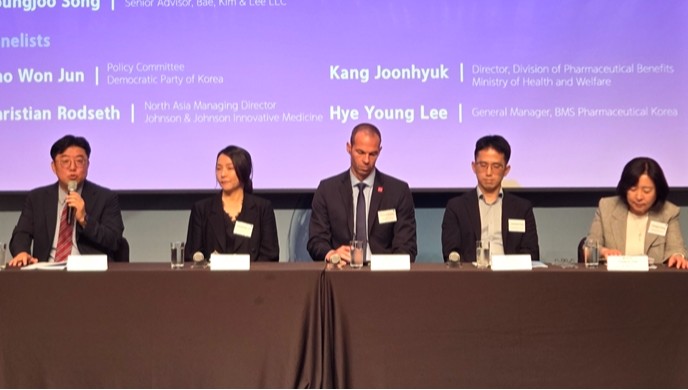
- From left, Policy Director of the Democratic Party of Korea, Hye Young Lee, Country Manager of BMS Korea, Christian Rodseth, Managing Director of Johnson & Johnson Korea, Kang Joonhyuk, Director of the Division of Pharmaceutical Benefits at the Ministry of Health and Welfare, Youngjoo Song, Senior Advisor at Bae, Kim & Lee LLC.The National Assembly and the Ministry of Health and Welfare (MOHW) evaluated that an innovation alliance between multinational and domestic pharmaceutical companies will determine the success of the drug pricing system reform.This indicates that outcomes from innovation must accumulate for the drug pricing reform, primarily pursued to restructure the domestic generic-centric pharmaceutical industry, to advance to its next phase.At the Healthcare Innovation Seminar hosted by the American Chamber of Commerce in Korea (AMCHAM) at the Shilla Hotel on the 3rd, Cho Won Jun, Policy Director of the Democratic Party of Korea, and Kang Joonhyuk, Director of the Division of Pharmaceutical Benefits at the Ministry of Health and Welfare (MOHW), emphasized the importance of fostering an innovation ecosystem.Cho stated, "From the perspective of domestic companies, because the National Health Insurance pie is fixed, there is a negative perception that expanding access to new drugs might reduce their own profits," adding, "Civil society organizations also harbor skepticism over whether profits are appropriately reinvested domestically. We can only move toward the next innovation when perceptions change in favor of shared value".Director Cho stated, "When the perception spreads that both sides are creators of shared profit through innovation and joint global expansion, the relationship inevitably becomes interdependent," and emphasized the importance of open innovation, "Trust is essential for policy shifts. We can only move forward once concerns over polarization diminish. We must forge an innovation alliance."Multinational pharmaceutical companies also agreed on the growth potential of the Korean market. However, they pointed out that the policies aimed at expanding drug access contained within the pricing reform must take firm root to create a predictable business environment.Furthermore, their position is that shared performance target metrics between the government and industry, alongside the swift expansion of drug access, are critical.Christian Rodseth, Managing Director of Johnson & Johnson Korea, positively evaluated the access expansion measures, remarking, "Initiatives such as the ICER threshold and flexible drug pricing agreements are outstanding because their purpose is to reward innovation".However, Rodseth added that the actual implementation of the institutional reform is crucial. Rodseth stated, "What matters is whether the reform plan is clear, whether it is genuinely implemented, and whether companies have experienced tangible benefits from it."Hye Young Lee, Country Manager of BMS Korea, emphasized performance measurement metrics, rapid expansion, and consistent execution through communication.Lee stated, "In the United Kingdom, a policy target was established to double expenditure on innovative new drugs from 0.3% to 0.6% of GDP. Having clear indicators enables transparent monitoring," adding, "Moreover, the fast-track listing pilot program is being implemented within a limited scope. While we agree with the necessity of a pilot project, a swift expansion is needed."Lee further stated, "If the government and industry fail to reach consensus on ambiguous areas or differing perspectives regarding policy interpretation, it could become a roadblock to execution and goal attainment," and suggested active communication.The government noted that it is deliberating on how to implement new drug access expansion measures while addressing regulatory gaps, and requested industry cooperation to ensure the completeness of the drug pricing system reform.Kang Joonhyuk, Director of the Division of Pharmaceutical Benefits at the Ministry of Health and Welfare, stated, "The system reform was conducted in a way that adjusts generics, which account for the largest share of pharmaceutical expenditures, to appropriate price levels while expanding access to innovative new drugs. We are finding a balance between appropriately rewarding the value of new drugs and maintaining the fiscal soundness of National Health Insurance".Kang continued, "There are various opinions regarding the expansion of flexible pricing agreements and institutionalizing the fast-track listing pilot program," and "We view policies concerning new drugs in the second half of the year as critically important."Lastly, Director Kang stressed industry efforts, stating, "The pharmaceutical industry is a vital partner in expanding policies with speed. Fast-track listing also requires the active participation of many companies," concluding that "Companies that have relied primarily on generics lack significant know-how in new drug development. We hope to see many collaboration models emerge with multinational pharmaceutical companies."

- Policy
- No cap set for semi-innovative pharma company designations
- by Lee, Jeong-Hwan Sep 04, 2026 08:47am
- The Ministry of Health and Welfare plans to designate an unlimited number of semi-innovative pharmaceutical companies, provided they meet the required ratio of research and development investment and are not subject to any disqualifying conditions.Like innovative pharmaceutical companies, semi-innovative companies will be designated through an absolute assessment rather than ranked against other applicants.Some pharmaceutical companies had questioned whether the ministry might impose an overall cap—such as 60 companies—on the combined number of innovative and semi-innovative pharmaceutical companies, given that 47 companies currently hold innovative pharmaceutical company certification. Such questions were resolved, as the ministry has formally confirmed that applicants will be assessed against fixed criteria with no numerical cap on designations.“A ministry official told Dailypharm by phone, ‘As with innovative pharmaceutical companies, there will be no cap on the number of semi-innovative companies certified, provided they meet the R&D investment thresholds and have no grounds for disqualification, such as illegal rebates.’”MOHW held the inaugural meeting of the Public-Private Council for Pharmaceutical Industry Innovation on the 2nd to discuss how the semi-innovative pharmaceutical company certification program will be established and operated.The ministry aims to create a growth ladder under which pharmaceutical startups can receive government support as they progress through semi-innovative and innovative status and ultimately grow into globally competitive pharmaceutical companies.It plans to establish the necessary legal basis by November and begin accepting applications for the new designation in December.To qualify as a semi-innovative pharmaceutical company, an applicant must meet the ministry’s required ratio of R&D expenditure to pharmaceutical sales.Companies with average annual sales of less than KRW 100 billion over the preceding three years must maintain an R&D-to-sales ratio of at least 7% and invest at least KRW 5 billion in R&D.The required ratio is at least 5% for companies with sales of KRW 100 billion or more and at least 3% for companies meeting cGMP or EU GMP standards.Each threshold is 2 percentage points lower than the corresponding requirement for innovative pharmaceutical company certification. To qualify for an innovative status, companies with sales below KRW 100 billion must invest at least 9% of sales and a minimum of KRW 7 billion in R&D. The required ratios are 7% for companies with sales of KRW 100 billion or more and 5% for companies meeting cGMP or EU GMP standards.In addition to meeting the R&D requirements, applicants must also be free of disqualifying conditions such as illegal pharmaceutical rebates and unethical conduct by executives or employees.A company will be disqualified over rebates if it has received two or more administrative sanctions or if the amount provided was at least KRW 5 million. However, violations that occurred more than five years before the assessment will be excluded. Also, cases in which a director or auditor receives a criminal fine or a more severe penalty for offenses such as embezzlement, breach of trust, stock price manipulation, assault, or sexual crimes will be disqualified.Like innovative pharmaceutical companies, semi-innovative companies will receive preferential pricing for both newly listed and already-listed generics. Specifically, new generics will be eligible for a price level of 50% for an initial one-year period plus an additional three years. Already-listed drugs will be allowed to retain a price level of 47% for three years when they undergo reassessment.The ministry categorizes innovative pharmaceutical companies as “leading” companies and semi-innovative pharmaceutical companies as “growth” companies. Under the detailed certification assessment, companies scoring at least 65 points, which is the minimum passing score set in the ministry’s public notice, will receive leading-company certification, while those scoring below 65 will be certified as growth companies. Because quasi-innovative companies will be assessed only on basic eligibility requirements, including their R&D investment ratio and the absence of disqualifying conditions, they will not be required to submit documentation for a separate detailed assessment.The ministry does not plan to limit the number of innovative or semi-innovative pharmaceutical companies certified, to encourage greater R&D investment across the industry. In effect, drug pricing incentives will be awarded through an absolute assessment rather than a competitive ranking.Pharmaceutical companies seeking either innovative or semi-innovative status will therefore need to prepare sufficient evidence to fully satisfy the ministry’s documentation requirements.
- Policy
- 'Tecentriq' has been added to the RSA-type refund
- by Jung, Heung-Jun Sep 03, 2026 04:49pm
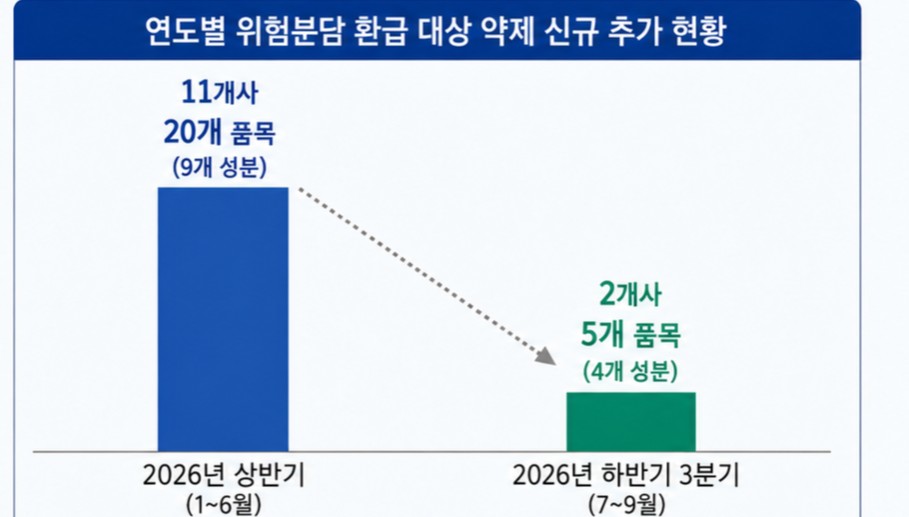
- Roche Korea's immuno-oncology agent 'Tecentriq Inj (atezolizumab)' has been added to the list of pharmaceuticals eligible for Risk-Sharing Agreement (RSA) refunds. A total of 27 products across 12 active ingredients were added as refund-eligible drugs from the first quarter to the third quarter of this year. Additions slowed in the third quarter after the flexible pricing agreement system was implemented in June.According to the list of pharmaceuticals subject to RSA refunds released by the National Health Insurance Service (NHIS) on the 1st, only Roche's Tecentriq Inj was newly added this month.While refund-eligible pharmaceuticals expanded by 20 products (9 active ingredients) across 11 pharmaceutical companies in the first half of the year, additions in the third quarter totaled 5 products (4 active ingredients) across 2 companies.Since June 2026, the implementation of the flexible pricing agreement system has shifted contract types from Risk-Sharing Agreement (RSA) refunds to flexible pricing agreements. The number of newly added RSA refund-eligible drugs decreased from 20 items for 11 companies in the first half of 2026 to 5 items from two companies in Q3 of the second half of 2026: Kadcyla Inj, Perjeta Inj, and Tecentriq Inj from Roche, as well as Boryung's Xpovio Tab.In the third quarter, products from Roche Korea accounted for the majority of new additions, including two dose strengths of Kadcyla Inj, Perjeta Inj, and Tecentriq Inj from Roche, as well as Boryung's Xpovio Tab.The slowdown in new refund-eligible drug additions in the second half, compared with the first half, is due to the flexible pricing agreement system implemented in June.In June, Astellas Pharma Korea's Xtandi Cap was removed from the refund-eligible drug list after the company transitioned the product to the flexible pricing agreement system when its RSA contract expired.Under the flexible pricing agreement system, the actual contract price is used rather than the published list price, eliminating the need for a separate refund process.While conventional refund-eligible drugs posed administrative burdens, such as processing patient co-payment refunds, the newly implemented flexible agreement system offers the distinct operational advantage of bypassing these procedures.Furthermore, because a flexible pricing agreement can only be secured after terminating an existing RSA contract, products cannot be enrolled under both mechanisms at the same time.For products newly listed this month, including Roche Korea's Polivy, UCB's Fintepla, and AstraZeneca's Breztri Aerosphere, the respective pharmaceutical companies all secured flexible pricing agreements.More pharmaceutical companies are opting for flexible pricing agreements during negotiations with the NHIS. Due to the new regulatory framework, this trend is expected to persist through the fourth quarter and beyond.

more articles