
- LOGIN
- MemberShip
- 2026-04-28 20:54:52
- Company
- Reimb of polycythemia vera drug 'BESREMi' likely in Sept
- by Eo, Yun-Ho Aug 21, 2025 06:06am
- The polycythemia vera treatment 'BESREMi' is expected to be listed on the national health insurance list. The National Health Insurance Service (NHIS) and PharmaEssentia Korea have recently reached a final agreement on the drug price negotiation for BESREMi (ropeginterferon alfa-2b). As a result, if it passes the Health Insurance Policy Review Committee, it can be officially listed in September. BESREMi's company had previously proceeded with the reimbursement process for hydroxyurea-refractory or intolerant polycythemia vera in March 2023. It failed to pass the Health Insurance Review & Assessment Service (HIRA)'s Cancer Disease Review Committee in July of the same year. At that time, the Cancer Disease Review Committeedetermined that there was insufficient evidence to judge the clinical utility of BESREMi as a second-line treatment. PharmaEssentia subsequently supplemented the evidence for this drug's efficacy as a second-line therapy by adding domestic clinical data. It resubmitted the reimbursement application in March of last year, passed the Cancer Disease Review Committee in July of the same year, passed the Drug Reimbursement Evaluation Committee in May, and has now completed the negotiation stage. BESREMii is a next-generation interferon that selectively eliminates the JAK2 mutant gene, which is the cause of polycythemia vera. It was developed to improve the purity and tolerability of existing interferons, allowing for once-every-two-week administration for the initial 1.5 years and once every four weeks thereafter. BESREMi is currently recommended in the National Comprehensive Cancer Network (NCCN) and European LeukemiaNet (ELN) guidelines for the treatment of polycythemia vera, regardless of prior treatment history. Meanwhile, polycythemia vera is a rare blood cancer in which a somatic mutation in the bone marrow abnormally activates bone marrow function, leading to excessive production of red blood cells. According to HIRA data, the number of prevalent patients in Korea is around 5,000, and hydroxyurea is primarily used for more than half of these patients. However, the currently reimbursed drugs are not a fundamental treatment. For patients who fail hydroxyurea treatment, there is no new alternative, making it a disease with high unmet needs.
- Company
- Viatris signs exclusive sales and distribution deal for Brid
- by Whang, byung-woo Aug 21, 2025 06:05am
- Pic of Bridion Viatris Korea announced on the 20th that it has signed an exclusive domestic promotion and distribution agreement for the general anesthesia reversal agent Bridion (Sugammadex) through a strategic partnership with MSD Korea. Under the agreement, Viatris Korea officially took over the domestic promotion and distribution of Bridion as of the 7th of this month Bridion is a general anesthesia reversal agent developed by MSD, which was approved by the Ministry of Food and Drug Safety in October 2012 and launched in Korea in February 2013. Over the past decade, Bridion has established itself as a treatment option that enables rapid and predictable muscle relaxation recovery in clinical settings. Through this strategic partnership, Viatris Korea plans to expand its product portfolio into anesthesia in Korea, enhance patients' access to treatment, and strengthen its market leadership by leveraging its robust sales and marketing capabilities in the general hospital sector. Bill Schuster, Country Manager of Viatris Korea, said, “We are very pleased to add Bridion, MSD's general anesthesia reversal agent that has made many innovative marks in the anesthetic field, to our portfolio. This agreement will further solidify the partnership between the two companies and enable us to better provide treatment access to patients in need of Bridion amid rapidly changing market conditions.” He added, “As a company that empowers people to live healthier lives at every stage of life, Viatris Korea will continue to strive to provide healthcare professionals and patients with more effective and safer treatment options.” Bridion is a rapid and predictable neuromuscular blocking agent reversal drug that selectively reverses the effects of rocuronium or vecuronium, neuromuscular blocking agents used during anesthesia. It completely reverses neuromuscular blockade within an average of three minutes, enhancing the safety and efficiency of anesthesia recovery. Albert Kim, Managing Director of MSD Korea, said, “We expect that surgeons and patients in Korea will be able to continue to benefit from Bridion through our exclusive agreement with Viatris Korea, a company with strong expertise in the field of chronic diseases. Based on our trusted partnership, both companies will do their utmost to ensure a stable supply of Bridion in Korea.”

- Company
- Generics challenge the patent of mkt leading 'Rinvoq'
- by Kim, Jin-Gu Aug 21, 2025 06:05am
- Product photo of Rinvoq The patent challenges by generics targeting AbbVie's Janus kinase (JAK) inhibitor' Rinvoq (upadacitinib)' have begun. The pharmaceutical industry anticipates that patent challenges will further expand as Rinvoq strengthens its monopolistic position in the JAK inhibitor market, which is valued at approximately KRW 62 billion annually. Chong Kun Dang Files Invalidation Trial for Rinvoq's Methods of Manufacture…More Companies Expected to Join According to the pharmaceutical industry on the 20th, Chong Kun Dang filed a petition for trial to confirm the scope of rights against AbbVie on the 19th regarding Rinvoq's manufacturing method patent. This is the first patent challenge against Rinvoq. Rinvoq is a JAK inhibitor used to treat autoimmune diseases, including rheumatoid arthritis and atopic dermatitis. Its mechanism of action inhibits the production of inflammatory cytokines, thereby blocking inflammation, pain, and cell activation. After Xeljanz was launched in 2015, Olumiant and Rinvoq joined the competition in 2019 and 2021, respectively. Cibinqo and Jyseleca joined in 2023. Rinvoq has two registered patents: a substance patent expiring in May 2032 and a method of manufacture patent expiring in October 2036. It is expected that companies will first circumvent the patent expiring in 2036 and then launch their generics early, around the time of the expiration of the substance patent in 2032. The pharmaceutical industry expects that more companies will challenge Rinvoq's manufacturing method patent, following Chong Kun Dang. This is because the JAK inhibitor market is experiencing rapid growth, and Rinvoq is strenthening its monopolistic position. JAK Inhibitor According to pharmaceutical market research firm UBIST, the outpatient prescription sales of JAK inhibitors in the first half of this year were KRW 38.6 billion. This represents a 40% increase from the previous year, compared to KRW 27.5 billion in the first half of last year. JAK inhibitors are showing rapid growth in the autoimmune disease treatment market, driven by the convenience of their oral formulation. The JAK inhibitor market, which was KRW 18.7 billion in 2020, grew by 36% to KRW 25.5 billion the following year. The market size expanded with the addition of Rinvoq in 2021. Subsequently, it grew significantly each year, reaching KRW 35.5 billion in 2022, KRW 40 billion in 2023, and KRW 62.2 billion in 2024. During this period, the reimbursement expansion of key products drove market growth. An analysis suggests that the growth rate accelerated further after October 2024, when inter-class switching between JAK inhibitors for rheumatoid arthritis was approved for reimbursement. Rinvoq Strengthens Market Monopoly…H1 Market Share at 43% While the market has expanded, Rinvoq has further strengthened its monopolistic position. In the first half of this year, Rinvoq's prescription sales reached KRW 16.7 billion, a 49% increase from KRW 11.2 billion in the same period last year. Although prescription sales for other major JAK inhibitors also increased, their growth was not as rapid as Rinvoq's. Olumiant, the second-leading product in the market, saw a 26% increase from KRW 8 billion in the first half of last year to KRW 10.1 billion in the first half of this year. Xeljanz grew by 3% from KRW 6.9 billion to KRW 7.1 billion. Cibinqo and Jyseleca recorded prescription sales of KRW 3.2 billion and KRW 1.6 billion, respectively, in the first half of this year. As of the first half of this year, Rinvoq's market share in the JAK inhibitor market reached 43%. Compared to its 19% market share in the first half of 2022, this represents a 24 percentage point increase in three years. At the same time, Rinvoq, which was the third-largest player after Olumiant and Xeljanz, rose to the top spot in the market from the first half of 2024. Quarterly Sales Performance of Major JAK Inhibitors (unit: KRW 100 million, source: UBIST). GREEN-Rinvoq, SKY BLUE-Olumiant, BLUE-Xeljanz The rapid increase in Rinvoq's prescription sales is attributed to its having the most indications in Korea. Rinvoq holds indications for: ▲rheumatoid arthritis ▲psoriatic arthritis ▲ankylosing spondylitis ▲atopic dermatitis (adults and adolescents aged 12 and older) ▲ulcerative colitis and ▲Crohn's disease. Competing drug Olumiant has indications for: ▲rheumatoid arthritis ▲atopic dermatitis (adults and children aged 2 and older) ▲alopecia areata and ▲polyarticular juvenile idiopathic arthritis (pJIA). Xeljanz has indications for: ▲rheumatoid arthritis ▲psoriatic arthritis and ▲ankylosing spondylitis. Cibinqo has secured an indication for atopic dermatitis in adults and adolescents aged 12 and older, while Jyseleca has indications for rheumatoid arthritis and ulcerative colitis. A variable in this market is the launch of Xeljanz generics. The Xeljanz substance patent is set to expire in November this year. The crystal form patent, which expires in 2027, has been overcome by generic companies through numerous invalidation and circumvention trials. This means that Xeljanz generics are expected to launch all at once after November this year. Currently, 58 companies have obtained product approvals for 67 generic items and are ready for launch. Xeljanz generics are expected to be launched simultaneously without priority sales rights. This is because generic companies' victories in invalidation trials led to the deletion of the listed patents, making it impossible to acquire priority sales rights.
- Opinion
- [Desk View] Can NHI alone cover the costs of cancer drugs?
- by Lee, Tak-Sun Aug 20, 2025 06:23am
- The reimbursement claim amount submitted for anti-cancer drugs has been increasing robustly every year. According to the '2024 Pharmaceutical Reimbursement Claims Data' published by the Health Insurance Review & Assessment Service, drug expenditure for cancer diseases in 2024 amounted to KRW 4.1372 trillion, a 7.4% increase from KRW 3.8506 trillion in 2023. The rate of increase in cancer drug expenditures is steeper than the 4.5% increase for overall drug expenditures (KRW 26.9897 trillion). These data indicate that the costs of anti-cancer drugs are rising with the emergence of expensive drugs like immunotherapies and targeted therapies. The problem lies in what comes next. If the anti-cancer drugs currently awaiting reimbursement approval are approved, an additional KRW 2-3 trillion is expected to be added soon. The national health insurance, which is accumulating financial deficits, may no longer be able to cover these rising costs of anti-cancer drugs. Global pharmaceutical companies are increasingly combining new anti-cancer drugs or expanding investments in more expensive first-line treatments. As a result, cancer treatment is evolving. However, the latest high-cost anti-cancer drugs are waiting in a long queue for reimbursement, putting a burden on national health insurance finances. Some are suggesting that the 5% patient co-payment rate for anti-cancer drugs should be slightly increased. However, adjusting a patient's co-payment rate once it has been lowered is not an easy task. The government and politicians probably refrain from such a move, as it could cost them votes. For this reason, there is a growing argument that South Korea should also establish a separate fund for anti-cancer or rare disease drugs, similar to the UK, to save national health insurance finances and improve access to new drugs. However, the government does not seem to be acknowledging the seriousness of this issue yet. During the candidacy confirmation hearing, Jeong Eun Kyeong, Minister of Health and Welfare, expressed the view that expanding reimbursement coverage should be prioritized over creating a separate fund for patients with rare and severe diseases. The issue of national health insurance drug expenditures is not new, but the current instability differs from past patterns. In particular, merely adjusting the prices of drugs with expired patents, as in the past, has limited effectiveness in alleviating the financial pressure caused by the entry of high-cost drugs, such as innovative new anti-cancer drugs. It is also difficult for the government not to permit the entry of new, more effective anti-cancer drugs. The financial losses caused by these innovative anti-cancer drugs are, therefore, unavoidable. In this situation, it isn't easy to solve both financial stability and access to new drugs with past methods of drug cost reduction or reimbursement expansion. We hope that the new government realizes the seriousness of the cancer drug expenditure problem and prioritizes its policies.
- Opinion
- [Reporter's View] Innovation exists in treating all diseases
- by Eo, Yun-Ho Aug 20, 2025 06:23am
- When discussing Korea’s insurance reimbursement system, the qualifier “life-threatening” has long been a source of frustration. It is no exaggeration to say that, for the pharmaceutical industry, this phrase has been the number one target for removal since the very beginning. This was the case in determining eligibility for the Risk Sharing Agreement (RSA) and the exemption from pharmacoeconomic evaluation, and recently, even the preferential treatment for innovative drugs that allow the application of a flexible ICER threshold—another long-standing aspiration—has seen the phrase “life-threatening” implicitly applied in a different form. However, it is now necessary to question the very notion that a disease must be life-threatening to be considered serious. In particular, new drugs for chronic diseases, which are indirect causes of death for a large number of people due to comorbidities and complications, have long been left neglected in Korea’s reimbursement system. Although there are already many old drugs on the market and the number of new drugs being developed has decreased, the new drugs that represent a paradigm shift are being neglected. The breast cancer treatment Trodelvy was the first innovative drug to receive preferential treatment and ICER benefits, and was added to the reimbursement list in June. According to reports, the threshold for Trodelvy was set at KRW 70 million. This is an unprecedented amount. The Health Insurance Review and Assessment Service has stated that it does not use explicit thresholds, but it is well established that since the pharmacoeconomic evaluation system was first introduced in 2007 that the ICER threshold has been set at KRW 25 million for general drugs and KRW 50 million for anticancer drugs, based on the per capita GDP of KRW 25 million at the time, and has remained since for 18 years. In fact, according to HIRA's announcement last year, the ICER values for drugs submitted for pharmacoeconomic evaluation from 2019 to 2023 ranged from KRW 12.06 million to KRW 36.1 million for general drugs and KRW 25.88 million to KRW 47.92 million for anticancer drugs. This is why Trodelvy’s reimbursement listing is a significant milestone. However, such milestones should not become extremely rare cases. Providing benefits that cannot be applied in real life is meaningless. The criteria for receiving ICER benefits include three requirements, one of which states, “Significant clinical improvement must be recognized in final outcome measures such as extended survival.” Although the term “survival” implies “life-threatening,” it was not explicit. And in November last year, Kook-Hee Kim, Director of the Pharmaceutical Management Division at HIRA, said, “If innovativeness of a drug needs to be recognized in consideration of the severity of the disease and the social burden of the disease, the ICER threshold can be raised even if all three requirements are not met,” suggesting the possibility of flexible screening. In July, Minister Eun-kyung Jeong, who was appointed as the new Minister of Health and Welfare under President Jae-myung Lee’s administration, also mentioned the case of Trodelvy during her confirmation hearing in the National Assembly and expressed her agreement with the need for policy changes to recognize innovation. Under these circumstances, Mounjaro, which has been attracting public attention as a treatment for obesity, recently submitted a reimbursement application for its diabetes indication. While its weight-loss effect is well-known, Mounjaro's achievements in the diabetes field are also significant. Beyond blood sugar control targets, 6 out of 10 patients achieved normal blood sugar levels without an increased risk of hypoglycemia, reaching the ultimate treatment goals of preventing cardiovascular complications and reducing mortality. It even demonstrates the potential for “remission” in diabetes. However, assuming that the normal listing process is followed, it seems extremely unlikely that Mounjaro will be granted reimbursement for diabetes. As mentioned earlier, chronic diseases are already mainly treated with off-patent drugs. Given that these drugs are the comparators, it is difficult to predict a bright future for the entry of a new biopharmaceutical in the area. New drugs and drug prices are currently facing a critical turning point. Amidst the Trump administration's pressure on South Korea's drug pricing policy and the flood of high-priced drugs, concerns about “Korea passing” are growing, and future policy directions could have a significant impact on public health. With Korea already a foot into a super-aged society, it is crucial to make policy decisions from a long-term perspective to build a sustainable society capable of overcoming future health crises. We place our hopes in the Lee administration's pledge to “create a country where no one worries about illness.”
- Company
- Expanded patent dispute over cancer drug 'Xtandi'
- by Kim, Jin-Gu Aug 20, 2025 06:22am
- Product photo of Xtandi The number of companies challenging the patent for Astellas' prostate cancer treatment, 'Xtandi (enzalutamide)', has expanded to six. Attention has been drawn to the fact that major pharmaceutical companies, such as Chong Kun Dang, Hanmi Pharmaceutical, and JW Pharmaceutical, have joined this latest patent challenge. According to the pharmaceutical industry on August 19, Hanmi Pharmaceutical filed a petition for trial to confirm the scope of rights against Astellas for Xtandi's composition patent on August 18. As a result, the total number of companies that have filed circumvention trials against Xtandi's composition patent has increased to six. Earlier, Alvogen Korea was the first to file the trial on the 1st of this month, followed by Chong Kun Dang, JW Pharmaceutical, GL Pharma, and Kuhnil, where all filed the same trial. The pharmaceutical industry is paying attention to the fact that major pharmaceutical companies, such as Chong Kun Dang, Hanmi Pharmaceutical, and JW Pharmaceutical, have successively joined this patent challenge. This is because there have not been many cases where major pharmaceutical companies have simultaneously challenged patents for anti-cancer drugs. Typically, there is a high preference for prescribing original anti-cancer drugs, especially in large hospitals. Domestic pharmaceutical companies, which have strong sales capabilities for chronic disease treatments in clinics, have been hesitant to challenge patents for anti-cancer drugs for this reason. Furthermore, even if they succeeded in a patent challenge and launched a generic, the profits generated were not significant, making major pharmaceutical companies even more reluctant. There have been cases of patent challenges for liver cancer treatments like 'Lenvima (lenvatinib),' 'Cabometyx (cabozantinib),' and breast cancer treatment 'Ibrance (palbociclib).' However, these were sporadic challenges primarily led by Boryung, which has a separate oncology business unit, or Samyang Biopharm, which specializes in the generic oncology business. In the case of the oncology drug patent, Hanmi Pharmaceutical was the only company challenging the 'Nexavar (sorafenib) patent.' Meanwhile, in the patent challenge for the prostate cancer treatment Xtandi, major pharmaceutical companies like Chong Kun Dang, Hanmi Pharmaceutical, and JW Pharmaceutical have successively filed trials. If they win this trial, generic competition is expected to intensify after the substance patent expires in June 2026. Xtandi is Astellas' prostate cancer treatment, protected by two patents: a substance patent that expires in June 2026 and a composition patent that expires in September 2033. The plan for the generic companies is to circumvent the composition patent, which expires in 2033, and then launch their generics early around the expiration of the substance patent in 2026. Astellas received approval for Xtandi Soft Cap in 2013. Last year, it added two dosages of Xtandi tablets. Xtandi competes with Janssen's 'Erleada (apalutamide)' and 'Zytiga (abiraterone)' in the first-line prostate cancer treatment market. Recently, 'Akeega (abiraterone·niraparib),' a new first-line treatment, was launched. Akeega is a drug that combines Zytiga with Takeda's Zejula (niraparib). Recent trends indicate that while Zytiga's sales are declining following the launch of generics, Xtandi and Erleada are on an upward trend. According to pharmaceutical market research firm IQVIA, Xtandi's sales increased by 1.9 times in four years, from KRW 23 billion in 2019 to KRW 43.2 billion in 2023. It is estimated to have generated sales of around KRW 50 billion last year.
- Policy
- MFDS's bill on stable supply of essential drugs in review
- by Lee, Jeong-Hwan Aug 20, 2025 06:22am
- A bill to add “medicines that are essential for healthcare and require stable supply” and “medicines with similar therapeutic effects with no alternative treatments” to the list of national essential medicines, thereby resolving the issue of unstable supply of medicines, is likely to pass the Health and Welfare Committee's legislative subcommittee. At the subcommittee meeting held on the morning of the 19th, the subcommittee members and the Ministry of Food and Drug Safety agreed on the intent of the legislation, but there were some disagreements over the specific wording that should be used to codify the definition, so the subcommittee agreed to pass the bill after going through the amendment process on the same day. The subcommittee members and the MFDS also agreed to accept a provision to revise the designation method for essential medicines to be designated by the Minister of Health and Welfare and the Minister of Food and Drug Safety after consultation with the National Essential Medicine Stable Supply Council. The bill also includes provisions to include “linking drug distribution information” in the scope of the Comprehensive Drug Management Center's duties and to allow the MFDS director to request the Drug Management Information Center to provide and link drug distribution information. On the morning of the same day, the subcommittee members decided to merge the bills proposed by Representative Sun-min Kim of the People Power Party and Representative Mi-hwa Seo of the Democratic Party of Korea and continue deliberations. However, as further discussions on the bill are scheduled at the afternoon subcommittee meeting, there is a possibility that it could pass the subcommittee on the same day if an agreement is reached between the government and the subcommittee members. The bill expands and revises the definition and scope of essential medicines and establishes a legal basis for managing distribution information to contribute to the stable supply of essential medicines. Expanding the definition of essential medicines to strengthen management of drugs with unstable supply The current law defines essential medicine as “medicines that are essential for health and medical care, such as disease control and radiation disaster prevention, but whose stable supply is difficult to ensure through market functions alone, and which are designated by the Minister of Health and Welfare and the Minister of Food and Drug Safety in consultation with the heads of relevant central administrative agencies.” Rep. Sun-min Kim's bill proposed revising the definition of essential medicines to “drugs that are essential for maintaining the national health system, such as disease control and radiation disaster prevention, or that are essential for health and medical care and require a stable supply, as designated by the Minister of Health and Welfare and the Minister of Food and Drug Safety in consultation with the National Essential Medicine Stable Supply Council.” Representative Mi-hwa Seo's bill proposed amending the definition to “medicines that are essential for health and medical care, such as disease control and radiation disaster prevention, but whose stable supply is difficult to ensure through market functions alone, or drugs for which there are no substitutes with similar therapeutic effects, as designated by the Minister of Health and Welfare and the Minister of Food and Drug Safety after consultation with the National Essential Medicine Stable Supply Council pursuant to Article 83-4, Paragraph 3.” The MFDS agreed to reflect both Kim and Seo’s bills and submitted a proposed amendment to the relevant clause. The MFDS proposed to revise the bill so that essential medicines would be designated by the Minister of Health and Welfare and the Minister of Food and Drug Safety after consultation with the National Essential Medicine Stable Supply Council, and to define essential medicine as drugs that are essential for maintaining the national health system, drugs that are essential for health care but difficult to supply stably through market forces alone, and drugs for which there are no substitutes with similar therapeutic effects. The members of the subcommittee raised the need to define essential medicines in one line rather than listing them individually as proposed in the MFDS amendment, and requested a further amendment. The subcommittee is expected to resume its review of the bill in the afternoon based on the amendment. Distribution information linkage included in the scope of the Integrated Pharmaceutical Management Information Center’s duties The MFDS agreed to add “distribution information linkage” to the scope of the Integrated Pharmaceutical Management Information Center’s duties and to allow the MFDS Minister to request the provision and linkage of distribution information in consultation with the director of the information center. The MFDS also accepted provisions to add “drugs that are not designated as essential medicines but require stable supply due to temporary increases in demand” to the scope of drugs managed by the National Essential Medicine Stable Supply Council and to add monitoring of essential drug supply and demand trends to the duties held by the Minister of Health and Welfare and the Minister of Food and Drug Safety. The MFDS also expressed its opinion regarding the provision to specify the composition of the National Essential Medicine Stable Supply Council in the law. Under the current law, the council is composed of 20 government members, including one chairperson, with the remaining details to be specified in the implementing regulations. Rep. Sun-min Kim’s proposal stipulates that the council shall consist of 30 members, including two chairpersons, with government and private-sector members, and that private-sector members shall constitute a majority. Rep. Mi-hwa Seo's proposal stipulates that the council shall consist of 30 members, including one chairperson, with government and private-sector members. The MFDS proposed a council composition similar to Rep Kim’s proposal, consisting of 30 members, including two chairpersons, but added patient group representatives as recommended by Rep Seo. The subcommittee plans to resume deliberations in the afternoon, as it believes that there has not been sufficient discussion on the details of the bill.
- InterView
- Dong-A ST launches Sterlara biosimilar Imuldosa in the US
- by Cha, Jihyun Aug 20, 2025 06:22am
- Dong-A ST (CEO: Jae-Hoon Jeong) announced on the 19th that the company has launched IMULDOSA (project name DMB-3115, active ingredient ustekinumab), a biosimilar version of Stelara, in the US through its partners, multinational pharmaceutical companies Intas Pharmaceuticals and Accord Biopharma. IMULDOSA is biosimilar version of Janssen’s Stelara that is indicated for the treatment of inflammatory conditions such as plaque psoriasis, psoriatic arthritis, Crohn's disease, and ulcerative colitis. Stelara has generated global sales of approximately USD 21.552 billion (IQVIA 2024 cumulative revenue). IMULDOSA has been launched in 14 countries, including Germany, the United Kingdom, and Spain, and has obtained marketing authorization in the MENA region, including Saudi Arabia, Qatar, and the United Arab Emirates. A representative from Dong-A ST stated, “With the launch of IMULDOSA in the United States following its introduction in Europe, our global market expansion is gaining momentum. We will strive to ensure that IMULDOSA becomes an effective treatment option for patients worldwide.” IMULDOSA was jointly developed by Dong-A Socio Holdings and Meiji Seika Pharma since 2013. In July 2020, the rights for development and commercialization were transferred to Dong-A ST to facilitate efficient global project execution, and the two companies have since continued joint development. In July 2021, a global license-out agreement for IMULDOSA was signed with the multinational pharmaceutical company Intas Pharmaceuticals. Intas is commercializing IMULDOSA through its global subsidiaries, including Accord BioPharma in the U.S. and Accord Healthcare in Europe, the UK, and Canada.
- Company
- Dapa N with Forxiga's indication leads the mkt by surprise
- by Kim, Jin-Gu Aug 20, 2025 06:22am
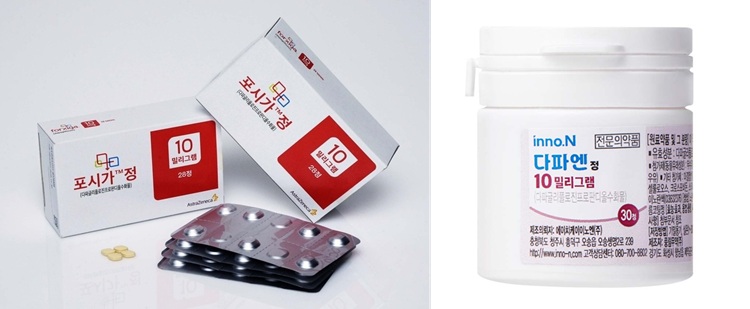
- Product photo of Forxiga and Dapa N Prescription sales of HK inno.N's 'Dapa N,' which received transfer of Forxiga indications, have surged in the SGLT-2 inhibitor diabetes treatment market. It has risen to the top of the dapagliflozin monotherapy market. Analysis suggests that this success is attributed to Dapa N's transition in indications, including chronic heart failure, following the withdrawal of the former market leader, Forxiga, from the Korean market. With the reimbursement scope for chronic kidney disease recently expanded in the second half of the year, Dapa N's upward trend is expected to continue for some time. HK inno.N's Dapa N Prescription Sales Jump from KRW 300 Million → KRW 2.5 Billion in a Year According to the pharmaceutical market research firm UBIST on August 18, HK inno.N's Dapa N recorded prescription sales of KRW 2.5 billion in Q2, a significant increase from KRW 300 million in the same period last year. Dapa N showed sluggish performance in its early launch, with sales remaining below KRW 500 million for six consecutive quarters after its release in Q2 of 2023. Notably, even after Forxiga's indications were transferred to Dapa N in April of last year, it did not immediately lead to an increase in prescription sales. At that time, AstraZeneca Korea withdrew Forxiga's product approval while simultaneously granting clinical data, thereby transferring Forxiga's indications to Dapa N. Quarterly Prescription Sales Performance by Key Dapagliflozin Monotherapies (unit: KRW 100 million, source: UBIST) Index: RED-HK inno.N However, an analysis shows that Dapa N's growth has become steep since Q4 of last year. Its prescription sales, which were below KRW 500 million, surged to KRW 1.2 billion in Q4 of last year, KRW 2.3 billion in Q1 of this year, and KRW 2.5 billion in Q2. This is analyzed as a shift in the focus of prescriptions towards Dapa N, as the distribution volume of Forxiga gradually decreased in Korea. After deciding to withdraw Forxiga from Korea at the end of 2023, AstraZeneca Korea halted the supply of new inventory in the second half of last year, only distributing existing stock domestically. Dapa N Leads After Forxiga's Departure… Will Upward Trend Continue with Expanded Reimbursement? During this process, Dapa N became the leader in the dapagliflozin monotherapy market. In Q1, with Forxiga completely withdrawn, Dapa N recorded KRW 2.3 billion in prescription sales, surpassing Boryung's Trudapa (KRW 1.3 billion) to take the lead. In Q2, it further widened the gap with Trudapa. The pharmaceutical industry expects Dapa N's growth momentum to continue for some time, as its reimbursement scope was expanded to include chronic kidney disease last month. As of July 1, the government expanded Dapa N's reimbursement to patients with non-diabetic chronic kidney disease. The conditions for reimbursement are: concurrent administration with other standard kidney disease treatments for patients ▲Who have been stably treated with an ACE inhibitor or Angiotensin II receptor blocker at the maximum tolerated dose for at least 4 weeks ▲Who have an eGFR of 20–75ml/min/1.73㎡ ▲Who have a positive urine dipstick test (1+ or more) or a uACR of 200mg/g or more. The key factor is the performance of other dapagliflozin monotherapies. The fact that the reimbursement scope for 15 products from 9 pharmaceutical companies has become identical to Dapa N's since last month is expected to be a significant factor. Previously, Dapa N was the only one to hold indications for chronic heart failure and chronic kidney disease, in addition to diabetes. Starting last month, products from 9 companies, including ▲Boryung's Trudapa ▲Hanmi Pharmaceutical's Daparon ▲KyungDong Pharmaceutical's Dapajin ▲Chong Kun Dang's Exiglu ▲Daewon Pharmaceutical's Dapawon ▲Dong-A ST's Dapapro ▲Samik Pharmaceutical's Difaglu ▲Daewoong Bio's Forxidapa ▲Nex Pharm Korea's Floga, now have the same indications as Dapa N. SGLT-2i Monotherapy Market Has Expanded 3%...Jardiance 25%↑·Envlo 16%↑ The SGLT-2 inhibitor monotherapy market, including Dapa N, grew by 3% from KRW 40.5 billion in Q2 of last year to KRW 41.8 billion in Q2 of this year. Boehringer Ingelheim's Jardiance (empagliflozin) and Daewoong Pharmaceutical's Envlo (inavogliflozin) performed well. Jardiance's prescription sales increased by 25% over one year, rising from KRW 16.1 billion to KRW 20.1 billion. Envlo's sales increased by 16% in the same period, from KRW 2.5 billion to KRW 2.9 billion. It appears that the market gap left by Forxiga has been filled by Jardiance, Envlo, and Forxiga's generics. Quarterly Prescription Sales Performance by Key Dapagliflozin Monotherapies (unit: KRW 100 million, source: UBIST) Index: BLUE-AstraZeneca This market is expected to shift again in October of this year when Jardiance's substance patent expires. Currently, around 50 pharmaceutical companies have received approval for Jardiance generics and are ready for launch. The industry anticipates a repeat of the fierce generic competition in the diabetes treatment market.
- Company
- Reimb for 'Padcev' combo as a 1st-line treatment reapplied
- by Whang, byung-woo Aug 19, 2025 06:12am
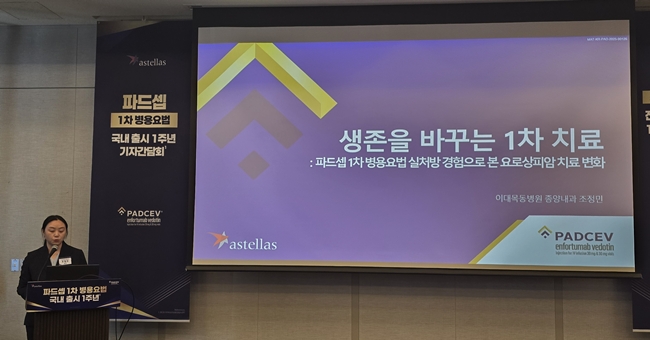
- Will 'Padcev+Keytruda' combination therapy overcome the reimbursement hurdle in the area of metastatic urothelial cancer, where the first-line treatment option had not been available? In terms of treatment effectiveness, there is no disagreement among experts that, in the long term, it is a first-line standard treatment option. With Astellas now taking proactive steps, reimbursement entry will ultimately be the key factor. Astellas Pharma Korea held a press conference on August 18 to celebrate the first anniversary of the domestic approval of Padcev (enfortumab vedotin) in combination therapy for first-line metastatic urothelial carcinoma Astellas Pharma Korea held a press conference on August 18 to celebrate the first anniversary of the domestic approval of Padcev (enfortumab vedotin) in combination therapy for first-line metastatic urothelial carcinoma and shared its future strategy. The Padcev + Keytruda combination therapy was approved by the Ministry of Food and Drug Safety (MFDS) last July for the first-line treatment of locally advanced or metastatic urothelial carcinoma. The basis for the approval was the Phase 3 KEYNOTE-A39/EV-302 clinical trial. The results, which evaluated the efficacy of the Padcev + Keytruda combination therapy in patients with previously untreated locally advanced or metastatic urothelial carcinoma, showed that it approximately doubled both the overall survival (OS, 31.5 months) and the progression-free survival (PFS, 12.5 months) compared to platinum-based chemotherapy. Professor Jeong Min Cho of the Department of Oncology at Ewha Womans University Mokdong Hospital explained, "Metastatic urothelial carcinoma is a type of cancer with a very low survival rate of 14.3%, giving it a poor prognosis similar to highly fatal lung cancer." She added, "Due to its aggressive nature and the high proportion of elderly patients, the patient's condition often deteriorates rapidly during the early stages of treatment." Professor Jeong Min Cho of the Department of Oncology at Ewha Womans University Mokdong Hospital Professor Cho continued, "The Padcev first-line combination therapy has been confirmed to show therapeutic effects similar to those in clinical studies in clinical practice, establishing itself as an option that can provide a powerful treatment response in the early stages of treatment." A year after its approval, the demand from the field for the Padcev + Keytruda combination therapy is for expanded access through reimbursement. On this day, Professor Cho said, "In clinical practice, we are constantly getting inquiries from patients about whether it's covered by insurance." In addition to the drug's efficacy, hurdles such as the cost burden create apparent limitations in treatment access. Professor Cho emphasized, "It is often difficult to recommend to patients due to the high cost burden, and I feel heavy-hearted that we cannot provide the best treatment opportunity on time." She stressed, "As Padcev is recommended as the top first-line option in major global guidelines, institutional support is urgently needed in Korea as well." Currently, Astellas has reportedly re-applied to the health authorities for reimbursement for both the Padcev + Keytruda combination therapy and Padcev monotherapy for first-line and later treatment of metastatic urothelial carcinoma. It is also known to have proactively submitted a proposal for sharing financial burdens. This is interpreted as a move to secure reimbursement for both combination therapy and monotherapy simultaneously, in preparation for submission to the upcoming Cancer Disease Review Committee in September. However, a view exists that a company's strategy is crucial because it is a combination of two new drugs still acts as a stumbling block. Baek So-young, Managing Director of Medical Affairs at Astellas, stated, "One might think that reimbursement would be faster for second-line or later treatments, but in reality, it takes a long time to get cancer drug reimbursement in Korea." She explained, "We applied for first-line reimbursement because we believe it provides an opportunity to save more patients." Baek added, "In terms of opening a new path for combination therapy of new drugs, the company is open to all options," and concluded, "If there is a will to reimburse Padcev, a methodological agreement can be reached through negotiation. As of now, the company has not set any restrictions."
