
- LOGIN
- MemberShip
- 2026-05-05 23:17:29
- Company
- Yuhan’s Leclaza enters US 6yrs after signing licensing deal
- by Chon, Seung-Hyun Aug 22, 2024 05:50am
- Yuhan Corp’s new anticancer drug Leclaza has successfully entered the U.S. market. The drug has reached the commercialization stage 6 years after licensing out its technology to Janssen. As a result, the company will receive USD 60 million as a milestone payment with Leclaza’s approval in the U.S. The company has earned nearly KRW 300 billion in technology fees since licensing out Leclaza’s technology. Yuhan Corp headquartersAccording to industry sources on the 21st, Yuhan Corp’s new anticancer drug Leclaza received marketing authorization from the U.S. Food and Drug Administration (FDA) on the 20th. The U.S. Food and Drug Administration (FDA) has approved Yuhan Corporation’s Leclaza in combination with Johnson & Johnson’s Rybrevant for the first-line treatment of adult patients with locally advanced or metastatic NSCLC with epidermal growth factor receptor (EGFR) exon 19 deletions or exon 21 L858R substitution mutations, as detected by an FDA-approved test. As a result, Leclaza became the first domestically developed cancer drug to receive U.S. approval. Leclaza, which was approved as the 31st domestically developed new drug in January 2021, is an NSCLC treatment. The company succeeded in entering the U.S. market 6 years after licensing out Leclaza to Janssen Biotech in November 2018. With the FDA approval of Leclaza, Yuhan secured additional milestone payments. The FDA approval milestone for Leclaza was set at USD 60 million (around KRW 80 billion). This is more than the company's operating profit of KRW 56.8 billion last year. In November 2018, the company received a USD 50 million upfront payment for Leclaza. In April 2020, the company received a USD 35 million milestone payment from Janssen. Johnson & Johnson paid the additional milestone to the company after initiating a clinical trial for the Rybrevant and Leclaza combination. In November 2020, Johnson & Johnson paid an additional milestone of USD 65 million to Yuhan Corp as it began recruiting subjects for the trial. Additional milestone payments followed upon successful completion of the trial and FDA approval. In total, Yuhan Corp has earned a total of USD 210 million in technology fees since licensing out Leclaza’s technology. Of the total technology fee revenue, 40% is to be paid to the original developer, Oscotec. In 2016, the company acquired the rights to develop the preclinical drug Leclaza from Oscotec and its subsidiary Genosco. The total value of the agreement had been KRW 1.5 billion. Of the amount, KRW 1 billion was set to be paid within 30 days of the signing of the agreement and KRW 500 million was to be paid after the approval of Phase I clinical trials. Since exporting Leclaza’s technology, the drug settled as Yuhan’s stable cash cow. From 2020 to Q2 this year, the company has recognized a total of KRW 253.8 billion as technology fee revenue. Quarterly saels of Leclaza (Unit: KRW 100 million, Source: IQVIA) Leclaza has already successfully settled in the domestic market. According to drug research institution IQVIA, sales of Leclaza reached KRW 22.6 billion last year, up 40.3% year-on-year. The year after its launch, Leclaza’s sales surpassed the KRW 10 billion mark and recorded KRW 16.1 billion, then exceeded KRW 20 billion last year. Demand in Korea has surged since the drug was granted first-line treatment status this year. Initially, Leclaza was approved for the second-line treatment of locally advanced or metastatic NSCLC with a specific gene (T790M) resistance after receiving first- or second-generation epidermal growth factor receptor (EGFR) tyrosine kinase inhibitors (TKIs). In June last year, the MFDS approved the marketing authorization expansion for Leclaza to ‘first-line treatment of NSCLC.’ The MOHW approved the drug’s reimbursement expansion to first-line this year. In Q1, Leclaza reported sales of KRW 18.9 billion, up 269.9% year-on-year from the KRW 5.1 billion in Q1 the previous year. Leclaza’s revenues more than tripled in the first quarter compared to the previous quarter. Since its launch in South Korea, the company's cumulative sales of Leclaza through the first quarter totaled to KRW 61.7 billion. Together with the technology fee revenue, the company earned more than KRW 300 billion with Leclaza alone. According to MFDS, Leclaza's production performance was KRW 112.2 billion last year. Leclaza generated its first production revenue of KRW 9.8 billion in 2021, which soared to KRW 39.3 billion in 2022. Last year, the company's production scale exceeded KRW 100 billion for the first time. The increase in domestic sales and the acceleration of global clinical trials led to a rise in production performance. Leclaza, which is produced and supplied by Yuhan, is being used in global clinical trials. Therefore, the faster the global clinical trials progresses, the more the production of Leclaza increases. The MOHW analyzed that reimbursement of Lexarza as a first-line treatment will cost an additional KRW 88.1 billion. Based on Q1 sales of Leclaza and the reimbursement expansion, Leclaza’s sales will likely exceed KRW 100 billion this year.
- Company
- Bavencio shows clear benefit in urothelial cancer
- by Hwang, Byung-woo Aug 22, 2024 05:50am
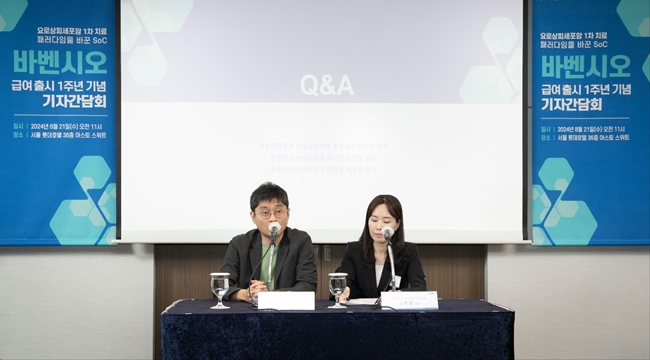
- The treatment landscape for metastatic urothelial cell carcinoma has changed after Bavencio (avelumab) was granted reimbursement as a first-line maintenance therapy in Korea. Bavencio addressed the high unmet need that had remained for a maintenance therapy option on site, rapidly changing the prescribing pattern. (From the left) Inho Kim, Professor of Oncology at Seoul St. Mary Merck Biopharma Korea held a press conference celebrating the first anniversary of the reimbursed launch of its Bavencio in Korea, highlighting the changes in Korea’s prescribing environment and Bavencio’s clinical value. The indication for the anti-PD-L1 immuno-oncology drug was expanded in August 2021 to include first-line maintenance therapy for patients with metastatic urothelial cell carcinoma whose disease has not progressed following chemotherapy, then reimbursed for the indication in August last year. Bavencio’s reimbursement for first-line maintenance therapy was significant because it allowed the drug to be covered for patients who previously had no available treatment options following first-line therapy. For example, if there were 10 patients with urothelial carcinoma, 3-4 would progress to second-line treatment, while the remaining 6-7 whose disease had not progressed would maintain their state without receiving further treatment. In this regard, experts have positively evaluated Bavencio’s reimbursement expansion as later lines of therapy were only conducted if the prognosis worsened after 3-4 months of non-treatment. “Personally, I think it's useful because it treats patients well,” said Dr. Inho Kim, Professor of Oncology at Seoul St. Mary's Hospital. Kim explained that there is no reason not to proceed to maintenance therapy if the patient's condition does not worsen after chemotherapy. Kim added, “In Korea, reimbursement is always an important factor, so patients who respond to first-line treatment will likely use the reimbursement maintenance therapy with Bavencio. In terms of treatment convenience, patients have been experiencing the benefits of the immuno-oncology drug.” Bavencio’s efficacy was confirmed through the long-term follow-up Phase III JAVELIN Bladder 100 trial, which involved 700 patients with locally advanced or metastatic urothelial cancer in 29 countries, including Korea, for over 38 months. The trial results showed a median OS of 29.7 months with Bavencio+maintenance therapy, which was over 9 months longer than the 20.5 months found in the maintenance monotherapy arm. The drug has been increasing its presence after confirming its effect in the real world among Koreans through the early access program (EAP). Patients using Bavencio through the EAP showed a median progression-free survival (PFS) of 7.9 months after starting treatment with Bavencio, which is higher than the 5.5 months reported in the long-term follow-up of the global JAVELIN Bladder 100 (JB 100) trial. Min Jung Koh, Country Medical Director at Merck Biopharma Korea, said, “These results are the first real-world data (RWD) that confirms the clinical effectiveness and safety of Baevncio in the Korean population, demonstrating Bavencio’s consistent benefits in Korea as in global clinical trials.” However, the changing urothelial cancer treatment landscape remains a challenge on the company’s part. While not yet reimbursed, the growing number of first-line treatment options may change Bavencio’s position as a first-line maintenance therapy in the future. “Other drugs like Padcev have shown good results recently, and I think each drug has its pros and cons. Cost is also a consideration, and as we gain more prescription experience and accumulate more information on the patients’ conditions, we will be able to set guidelines for this.”
- Company
- MET-targeting anticancer drug 'Tepmetko' prescribed at Big 5
- by Eo, Yun-Ho Aug 22, 2024 05:50am
- Product photo of The MET-targeting anticancer drug 'Tepmetko' is now available for prescription at general hospitals. Sources said that Merck Korea's Tepmetko (tepotinib), a treatment for patients with topically advanced or metastatic non-small cell lung cancer (NSCLC) harboring mesenchymal-epithelial transition factor gene exon 14 (METex14) skipping mutations, has passed the drug committees (DC) of 'Big 5' tertiary general hospitals, including Samsung Medical Center, Seoul University Hospital, Seoul St. Mary's Hospital, Asan Medical Center in Seoul, and Sinchon Severance Hospital, and 30 medical centers nationwide. However, Tepmetko is non-reimbursable. This drug failed to set the insurance reimbursement criteria twice, including the past Cancer Disease Review Committee review of the Health Insurance Review and Assessment Service (HIRA) in March. Afterward, the company voluntarily withdrew from the reimbursement process and reapplied for reimbursement last month. Tepmetko received domestic approval in 2021 at the same time as 'Tabrecta (capmatinib),' a drug with the same mechanism of action as Tepmetko, and proceeded with the reimbursement process. However, no MET anticancer drugs have yet been listed for reimbursement in South Korea. NSCLC accounts for 80% of all lung cancer diagnosis. METex14 skipping occurs in 3-4% of patients with NSCLC. Based on the diagnosis of 1020 patients with NSCLC in South Korea, 1.9% of patients were confirmed to have METex14 skipping. The effectiveness of Tepmetko was evaluated through the VISION study, which enrolled the largest number of participants than any other clinical trials that enrolled patients with NSCLC harboring METex14 skipping mutations. Based on the clinical results, patients treated with the drug had a median progression-free survival (PFS) of 15.3 months and an objective response rate (ORR) of 56.8%, demonstrating significant life extension effects. The median duration of response (DOR) was 46.4 months, and overall survival was 25.9 months, demonstrating long-term and continued anti-tumor activity. During the international conference of the Korean Association for Lung Cancer (KALC), Professor Han Ji-Youn, Division of Hemato-Oncology of the Center for Lung Cancer at the National Cancer Center, presented analysis outcomes of 79 Asian patients enrolled in the clinical trial for Tepmetko. Based on the results, the ORR was substantially high, with 66.7%. The second round of patients treated with the drug showed a 48.1% ORR. In the Phase 3 VISION follow-up study, Tepmetko also showed significant results in analyzing Asian patients. The analysis showed that Tepmetko-treated patients had an ORR of 56.6%, a median DOR of 18.5 months, a PFS of 13.8 months, and a median OS of 25.5 months. In particular, Asian patients with no prior therapy experience had an ORR of 64.0%, reconfirming the previous study results that the drug is effective in the first round of treatment. 39.6% of patients experienced adverse reactions over Grade 3, indicating that the safety-related issue has not been found.

- Policy
- Preferential pricing delayed for homegrown new drugs
- by Lee, Tak-Sun Aug 22, 2024 05:50am
- The delay in issuance of a revised draft that includes preferential drug pricing measures for domestic new drugs is raising concerns in the pharmaceutical industry. This month, a revised draft that reflects the innovative value of new drugs was released by the Health Insurance Review and Assessment Service, but the revision lacked a measure for homegrown new drugs. The preferential treatment for such homegrown new drugs was expected to be included in the amendment to the Ministry of Health and Welfare’s “Criteria for Decision or Adjustment on Drugs,” but it is difficult to predict when the notification of the amendment will be issued due to the recent change in the Director Division of Pharmaceutical Benefits at MOHW. On the 8th, HIRA issued an amendment to the "Criteria for Detailed Evaluation of Drugs Subject to Negotiation, such as New Drugs" upon DREC deliberations. The amendment included: ▲ New criteria for flexible ICER threshold evaluation; ▲ Addition of severe diseases to the risk-sharing agreement scheme; ▲ Omission of the Drug Evaluation Committee review when expanding the reimbursement range of RSA drugs that claim less than KRW 1.5 billion; ▲ New conditions that require submission of clinical evidence such as RWD and RWE when renewing RSA schemes. However, the draft did not include preferential treatment of domestically developed drugs, which raised questions in the industry. The plan to apply preferential measures for homegrown new drugs was already included in the ‘2024 Implementation Plan for the 2nd Comprehensive National Health Insurance Plan’ in April. The plan contained preferential drug pricing measures for companies that lead healthcare innovation through R&D investment, supply of essential drugs, job creation, and stable supply and plans to expand the scope of new drugs eligible for preferential pricing and risk-sharing agreement to include those made by pharmaceutical companies with a high R&D ratio. It also included content that generic drugs that contain ingredients designated as national essential drugs will be given higher drug prices than other generics if they newly registered the drug after using domestic ingredients. The Ministry of Health and Welfare announced that it would revise the criteria for determining and adjusting drug prices by the first half of this year. However, the amendments have not been made two months into the first half of the year, raising concerns among some in the industry that it will become a non-event. In particular, the Director of the Division of Pharmaceutical Benefits of MOHW, who is in charge of the work, was replaced last month, making the timing of the amendment less predictable. The MOHW changed the Director of the Division of Pharmaceutical Benefits from Chang-hyun Oh (currently the Director of the Division of Health Industry Promotion) to Yang-soo Song on March 29th. The new director Song is an administrative officer who past the 50th Public Administrative Examination and has served as the head of the research and planning department at the Korea Centers for Disease Control and Prevention's Korea National Institute of Health. An industry insider said, “There is also talk that the new head, Song, is reviewing the preferential pricing treatment for homegrown new drugs again. At first, The amendment was expected to be released in the first half of the year, but no news has been heard on its issuance even after HIRA issued an amendment to the ‘Criteria for detailed evaluation of drugs subject to negotiation, such as new drugs.’” HIRA and the NHIS are having difficulty giving a clear answer on when the measure will be implemented, except that the MOHW is reviewing it. The new Director Song is reportedly revisiting major issues of industry interest, from preferential drug pricing for homegrown new drugs to raising the maximum reduction rate for Price-Volume Agreement drugs, to external reference pricing reevaluations. As such, there is talk that the review and outcome may differ from the new review. In particular, as the price of homegrown new drugs that are currently being reviewed for reimbursement by HIRA may change depending on Song’s review, the industry is eyeing its outcome. Another industry official said, “There are many areas that need to be addressed through notification, such as RSA for domestic non-inferior new drugs. There are also drugs that are currently under review that are applicable, which is why the pharmaceutical industry is eagerly awaiting MOHW’s notification.”
- Policy
- Takeda receives P3T approval for TAK-861 in Korea
- by Lee, Hye-Kyung Aug 21, 2024 05:48am
- The Japanese pharmaceutical company Takeda Pharmaceuticals will enter Phase III clinical trials for TAK-861, its new drug candidate for narcolepsy, in Korea. On the 20th, the Ministry of Food and Drug Safety (MFDS) on Tuesday approved a randomized, double-blind, placebo-controlled Phase III clinical trial to evaluate the efficacy and safety of TAK-861 for the treatment of narcolepsy with cataplexy (narcolepsy type 1). The Phase III trial will be conducted at Seoul National University Hospital, St. Vincent's Hospital, and Keimyung University Dongsan Medical Center. Narcolepsy is a neurological disorder and sleep disorder characterized by episodic drowsiness during daily life. Narcolepsy is categorized into two types: Type 1 narcolepsy, which is characterized by cataplexy or a cerebrospinal fluid hypocretin level of 110 pg/mL or less; and Type 2 narcolepsy, which is characterized by a hypocretin level of 110 pg/mL or higher without cataplexy or no measure. TAK-861 is being developed for the treatment of patients with Type 1 narcolepsy, as stimulation of orexin receptor 2 in patients with Type 1 narcolepsy may restore orexin signaling by targeting the underlying pathophysiology of the disease. According to data presented by Takeda at SLEEP 2024 in June, which outlined the results of the company’s clinical trial evaluating 112 patients with type 1 narcolepsy, TAK-861 demonstrated statistically significant and clinically meaningful improvements compared to placebo in objective and subjective measures of wakefulness, including the primary endpoint, the Maintenance of Wakefulness Test (MWT) at week 8. Consistent statistically significant and clinically meaningful improvements were also observed in secondary endpoints, including the Epworth Sleepiness Scale (ESS) and Weekly Cataplexy Rate (WCR), Products available in the domestic narcolepsy treatment market include JW Pharmaceuticals' Provigil, Hanmi Pharmaceutical's Modanil, and Handok Teva's Nuvigil, all of which contain modafinil. Mitsubishi Tandabe’s Wakix is a pitolisant hydrochloride drug used for narcolepsy in adults with or without cataplexy. Wakix is the only product approved in Korea for the treatment of narcolepsy with cataplexy, which is defined as a sudden loss of muscle tone provoked by strong emotion.
- Company
- SCLC drug tarlatamab may soon be introduced in KOR
- by Eo, Yun-Ho Aug 21, 2024 05:48am
- Amgen is preparing to introduce its new small cell lung cancer drug tarlatamab in Korea. According to industry sources, Amgen Korea has submitted an application for tarlatamab, its bispecific antibody for small cell lung cancer, to the Ministry of Food and Drug Safety and is undergoing review. The drug was designated the first orphan drug of the new year in January and received accelerated approval from the U.S. FDA in May. Tarlatamab is a bispecific antibody that recognizes antigens in both tumor cells and T cells (immune cells). This allows for the drug to induce T cells to attack tumor cells even when the tumor cells try to avoid them. The drug’s efficacy was demonstrated in the Phase II DeLLphi-301 trial. The trial evaluated the efficacy of tarlatamab in patients with SCLC who had failed two or more prior lines of treatment. The patients that enrolled in the trial received tarlatamab 10 mg every two weeks. The team recruited and randomized 220 patients who had failed first-line treatment for small cell lung cancer at 56 centers in 17 countries around the world, with the goal of finding a new treatment strategy that would maximize the effectiveness of tarlatamab, which is currently under development, while maintaining patient safety. Results showed that the group of subjects who received tarlatamab 100 mg every two weeks achieved an objective response rate of 40%, with a median response duration of 9.7 months. The median overall survival was 14.3 months. The U.S. product label for tarlatamab also includes a boxed warning for neurotoxic adverse events, including cytokine release syndrome (CRS) and immune effector cell-associated neurotoxicity syndrome (ICANS). Also, the label includes warnings and precautions for cytopenias, infections, hepatotoxicity, hypersensitivity, and embryo-fetal toxicity.
- Policy
- Orphan drug 'Jaypirca' for Mantle Cell Lymphoma wins nod
- by Lee, Hye-Kyung Aug 21, 2024 05:47am
- Product photo of Lilly The BTK inhibitor Jaypirca (pirtobrutinib) has been approved in South Korea. The Ministry of Food and Drug Safety (MFDS) announced on August 19th that it approved Jaypirca, an orphan drug for treating Mantle Cell Lymphoma (MCL). Lilly Korea imports the drug. Jaypirca works by binding with Bruton's tyrosine kinase (BTK), which is involved in tumor cell proliferation, and inhibiting the BTK activation. Because the drug binds to BTK by mechanism different from existing treatments, it is expected to provide a new treatment opportunity for patients with MCL. The MFDS designated Jaypirca as the 17th Global Innovative products on Fast Track (GIFT) in September last year and quickly reviewed it to make the drug available to clinical practices. Jaypirca is garnering attention as the first irreversible BTK inhibitor, and it is to be used an alternative to reversible BTK inhibitors like 'Imbruvica (ibrutinib)' and 'Brukinsa (zanubrutinib).' After receiving expedited approval from the U.S. Food and Drug Administration (FDA) as a BTK inhibitor in January last year, Jaypirca also received expedited approval for its indication to treat Chronic lymphocytic leukemia (CLL) and small lymphocytic lymphoma (SLL) in December of the same year. In South Korea, the Phase 3 trial for patients with CLL/SLL is in progress since 2021. The Central Pharmaceutical Affairs Council (CPAC) review conducted in July decided on conditional marketing approval under the condition of submitting technical documents detailing therapeutic confirmation. Although there were reports of 0.6% deaths from fatal adverse reactions (4 cases) in the safety assessment of the Phase 2 clinical trial document, the opinion is that drug-associated adverse reactions can be managed by discontinuing the use or reducing dosage. Furthermore, the study showed that the treatment had a 57.8% tumor response rate in patients with R/R MCL who have received prior therapy, including BTK inhibitors. The drug-related adverse reactions occurred in 20.6% that are adverse reactions over Grade 3, which were commonly decreased neutrophil counts and manageable.
- Policy
- Reevaluation of foreign drug price comparisons
- by Lee, Tak-Sun Aug 21, 2024 05:47am
- HIRA President Jung-Gu Kang The Health Insurance Review and Assessment Service (HIRA) announced that drug prices will be adjusted in the second half of next year by reevaluating foreign drug price comparisons. This year, an announcement about reevaluation will be made, and the HIRA will conduct the evaluation in the first half of next year. On August 20th, President of the HIRA Jung-Gu Kang announced this during a meeting with journalists. Kang said, "We have had ten meetings so far to discuss about detailed criteria related to the reevaluation of foreign drug price comparisons with the pharmaceutical industry." Kang explained, "Based on discussions, the final plan for reevaluation will be shared with the industry when prepared." The plan for reevaluation of foreign drug price comparisons is under review after the tenth meeting on August 5th. The products to be compared in the first year include 6467 items, including gastrointestinal medications, hypertension medications, and antibiotics. The average adjusted price, excluding the highest and the lowest, from A8 countries (U.S., U.K., France, Germany, Japan, Italy, Switzerland, and Canada) will be used as the reference price. The pharmaceutical company has suggested taking a 50% reduction from the drug price reduction portion and excluding Germany and Canada, which employ reference-pricing systems. Whether the final plan would reflect the industry's opinion garners attention. Kang said, "There will be a reevalutation this year." Kang added, "After the final evaluation, drug price adjustments will be implemented in the second half of next year." He drew a line to further delays in reevaluating foreign drug price comparisons. Kang explained the new drug innovative value revisions reflected in the recent Drug Reimbursement Evaluation Committee (DREC) review on August 8th. He stated, "The risk-sharing agreement (RSA) scope has been expanded to include drugs used for severe, difficult-to-treat diseases. Additionally, when expanding the reimbursement criteria for RSA-designated drugs, if the additional claim amount is less than KRW 1.5 billion, the evaluation by the DREC can be waived, allowing for faster reimbursement processing." Additionally, "The scope and criteria for assessing 'innovativeness,' which is one of the ICER value evaluation factors, will be specified for drugs that 'cannot be substituted or have no therapeutic equivalent products or treatments available. We have also clarified the process for evaluating the clinical value of drugs receiving RSA of outcome-based and reimbursable type." In answering the maximum ICER value to be applied, Kang said, "We will consider the individual drug's nature, and the maximum price has not been set." Regarding the second round of the pilot project for concurrent approval-reimbursement evaluation-drug price negotiations, Kang explained that the selection of drugs for the second round of the pilot project would be based on careful consideration of disease severity, the availability of alternative treatments, and treatment efficacy. This process will involve discussions with the government agencies (Health Insurance Review & Assessment Service (HIRA), the Ministry of Health and Welfare (MOHW), the Ministry of Food and Drug Safety (MFDS), and the National Health Insurance Service (NHIS)), as well as consultations with experts. The first round of the pilot project included Bilberry capsule and Qarziba, which are under review for reimbursement evaluation. However, the drug price listing of Qarziba has been delayed due to receiving the non-reimbursement decision from the DREC review in August. Kang explained, "There have been achievements such as reduced supplementary periods," and added, "Although there had been variables, we will make efforts to expedite the timing of reimbursement listings through concurrent evaluations by the MFDS, the HIRA, and the NHIS." Meanwhile, the HIRA plans to strengthen the DUR service for the safe use of narcotic drugs. Information on 471 narcotic drugs has been provided already, and the HIRA has expanded the assessment of the use of propofol overuse and antidepressants beyond the specified period. Kang said, "To solve issues related to long-term administration and overdose of narcotic drugs, we plan to improve the system by asking for the reasons for prescribing and dispensing that exceed the maximum dosage or duration limits," and explained, "The DUR should be mandatory for narcotic and antidepressant drugs, and we will continue to manage these drugs to resolve drug safety issue." This implies that the HIRA will make efforts to ensure that the mandatory DUR legislation passes the National Assembly."

- Policy
- MFDS reviews COVID-19 drugs Xocova and Lagevrio
- by Lee, Hye-Kyung Aug 21, 2024 05:47am
- Amid the resurgence of the COVID-19 pandemic, The food and drug authorities in Korea have been taking steps to approve COVID-19 treatments. According to the Ministry of Food and Drug Safety (MFDS) on the 19th, the agency began reviewing Ildong Pharmaceutical's ‘Xocova’ and MSD Korea’s ‘Lagevrio,' which the companies have submitted applications for approval in Korea. “Currently, three drugs are licensed or approved for emergency use in Korea - the oral drugs 'Paxlovid' and ‘Lagevrio’ and the injectable drug ‘Veklury.’” said an MFDS official, ”and we are reviewing the applications of additional products that have applied for marketing authorization thereafter.” Paxlovid and Veklury are officially approved in Korea, while Lagevrio, which was used under the Emergency Use Authorization, is undergoing a formal approval process. In the case of Xocova, the company hasn't even been approved for emergency use, according to an MFDS official, who added, “Emergency use approval requires close communication with the Korea Disease Control and Prevention Agency due to regulations.” Xocova is an oral COVID-19 treatment co-developed by Ildong Pharmaceutical and Japan's Shionogi Pharma. The companies applied for Xocova’s domestic marketing authorization in December last year, but the application is still stuck in the review stage. In Japan, it was granted emergency approval in November 2022 and received full approval from the Ministry of Health, Labor and Welfare in March this year. Xocova is regarded to have provided improved convenience for patients as patients only need to take Xocova once daily for 5 days as a single tablet compared to other conventional treatments that are administered twice a day. Ildong Pharmaceutical completed the technology transfer and trial production of Xocova last year and will be able to proceed with production and supply once the authorities grant domestic approval. Meanwhile, the number of hospitalized COVID-19 patients increased 5.1 times from 91 in the first week of July to 465 in the fourth week, according to data submitted by KDCA to the office of Representative Ye-ji Kim of the People's Power Party. Also, the weekly usage of COVID-19 drugs increased about 32 times from 1,272 doses in the fourth week of June to over 42,000 doses in the fifth week of July. However, as of the 9th, only 70,557 doses of COVID-19 treatments - 41,790 doses of Lagevrio and 28,767 doses of Paxlovid - were available in stock in Korea.
- Company
- Celltrion Pharm announces vision to become ‘Top 5'
- by Kim, Jin-Gu Aug 20, 2024 06:34am
- On the 19th, Celltrion Pharm announced its 'Vision 2030,’ which outlines the company’s vision to become one of the top five pharmaceutical companies in Korea by 2030. Until recently, Celltrion Pharm was promoting a merger with Celltrion, but the plan was reviewed again due to shareholder opposition, upon which the final decision was made not to merge on the 16th. Vision 2030 is the first mid- to long-term established for Celltrion Pharm since the cancellation of the merger. In Vision 2030, Celltrion Pharm presented detailed projects for each of the following sectors: ▲manufacturing, ▲R&D, and ▲sales as a comprehensive pharmaceutical company that manufactures and sells chemical and biological drugs. In manufacturing, the company will expand its production capacity around its core facility, its Cheongju Plant. The Cheongju plant is the company’s core production base for chemical drugs and has obtained GMP certification from international organizations including the United States, Europe, Japan, and Brazil. It also has an annual production capacity of 16 million prefilled syringes (PFS). The company plans to accelerate its growth by gradually increasing the proportion of PFS-type biopharmaceuticals that the company has started full-scale commercial production this year. To preemptively respond to the rapidly growing demand for PFS formulations, the company plans to build an additional production line utilizing its 13,500㎡ spare lands at its Cheongju plant. Upon completion of the expansion, the company’s production capacity will increase up to threefold. The company is also planning to expand its global CMO business. In the R&D sector, Celltrion Pharm plans to strengthen its capabilities by adding specialized personnel and developing ADC (antibody-drug conjugate) anticancer drugs and new drug platform technologies in earnest. To this end, Celltrion Pharm raised the status of its R&D organization in Cheongju last year to report directly to the CEO. It also expanded and reorganized the organization and relocated it to the Songdo Global Biotech Research Center in Songdo, Incheon. Through the reorganizations, Celltrion Pharm plans to become a drug development company that develops not only new drug platform technologies but also innovative new drugs to increase sales by licensing out technologies. In sales, the company will actively expand the range of its chemical and biological drug products. It plans to significantly expand the production of its biosimilar products, from the 6 it currently produces, including Celltrion's 'Remsima' and ‘Yuflyma,’ to a total of 22 products by 2030. The launch of its autoimmune disease treatment 'Stekima', eye disease treatment ‘Eydenzelt,’ and allergic asthma treatment ‘Omlyclo,’ which have received domestic approval, is also imminent. In the case of chemical drugs, the company's strategy is to secure additional high-value-added products through in-house development and active licensing-in activities and to expand its product portfolio to gain differentiated competitiveness. An official from Celltrion Pharm said, “We have achieved about twofold growth in sales over the past 5 years with even growth across all our business segments. As a comprehensive pharmaceutical company with a diversified portfolio and sales structure, we aim to continue this growth trend and do our best to achieve our goal of becoming one of the top five domestic companies by 2030.”
