
- LOGIN
- MemberShip
- 2026-05-05 23:17:28
- Company
- ‘Lilly will reapply for Retevmo’s reimbursement in Korea’
- by Eo, Yun-Ho Aug 26, 2024 05:46am
- “We will do our best to receive reimbursement for Retevmo in Korea. However, the will of the health authorities is as important” The company has expressed its will to list a RET-targeted therapy option in Korea. The question that remains now is when. Lilly's RET inhibitor Retevmo (selpercatinib) remains non-reimbursed since the company’s pricing negotiations with the National Health Insurance Service broke down last year There are only two RET-targeted therapies - ‘Gavreto (pralsetinib),’ which Roche Korea introduced from Blueprint Medicines, and ‘Retevmo (selpercatinib)’ by Lilly Korea – currently approved in Korea. Of the two, it would be hard for Gavreto to be listed for reimbursement in Korea as Roche gave up rights to the drug. The situation is not so better off for Retevmo either. Retevmo, which was approved in Korea in March 2022, failed to pass the Health Insurance Review and Assessment Service Cancer Disease Review Committee (CDDC) review in May of the same year, but then passed CDDC review in November and finally passed the Drug Reimbursement Evaluation Committee in May last year. After passing the DREC review, the company entered into drug price negotiations with the National Health Insurance Service in June, raising expectations on Retevmo’s reimbursement. However, the two ultimately failed to reach an agreement. In fact, it was the only news of a drug pricing negotiation failure reported in the past year. Retevmo was granted marketing authorization under the condition of conducting a Phase III trial, so it had trouble during the reimbursement listing process as the authorities requested the company for data equivalent to a Phase III trial to accommodate for the lack of its Phase III trial data. At the time, this led to criticism about the reimbursement evaluation criteria for conditionally approved drugs that were granted fast-track review. The reimbursement of Retevmo, which applied for fast-track status under the approval-reimbursement evaluation linkage system, had been in discussions for about a year and a half, but to no avail. But it now has additional results from a proper Phase III trial. Now it's a matter of Lilly and the government’s willingness to bring RET drugs to the market. Results from Phase III trials on Retevmo - LIBRETTO-431 and LIBRETTO-531 - were presented at the European Society for Medical Oncology Annual Congress (ESMO 2023) last year. The results were published in the internationally recognized New England Journal of Medicine (NEJM) along with the congress presentation. The LIBRETTO-431 trial presented at the meeting compared Retevmo with platinum-based chemotherapy±pembrolizumab as a first-line treatment in patients with advanced or metastatic RET fusion-positive NSCLC. Key findings in the trial showed that in the ITT-pembrolizumab population, the median progression-free survival (PFS) by an independent centralized review committee (BICR) was 24.8 months in the Retevmo arm, and 11.2 months in the control arm, with a hazard ratio of 0.465. The overall response rate (ORR) by BICR was 83.7% in the Retevmo arm, which was statistically significantly higher than the 65.1% in the control arm. “Lilly intends to reapply for reimbursement of Retevmo,” said a Lilly representative. However, for us to quickly reapply for reimbursement, not only the company's efforts but also discussions with health authorities are required. So we cannot provide a specific timeline for the reapplication yet. We remain committed to improving access to Retevmo for cancer patients with RET gene mutations in Korea.” In 2020, Retevmo was approved as the first treatment option for cancer patients with RET alternations in the US after the FDA reviewed the drug through the Accelerated Approval and Priority Review pathway and granted the Breakthrough Therapy & Orphan Drug Designation.
- Policy
- Eliquis generics re-enter the market, 35 reimbursed drugs
- by Lee, Tak-Sun Aug 26, 2024 05:46am
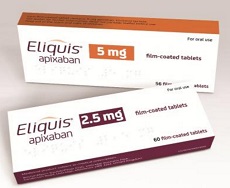
- Product photo of the original drug Eliquis. Drugs that are generic versions of the coagulant agent Eliquis (apixaban) will re-enter the market three and five months after discontinuing sales due to a failing patent nullification challenge. It is because the original drug's substance patent is set to expire on September 9th. According to sources on August 23rd, generics containing apixaban will be listed for reimbursement on September 10th. 18 drugs from 35 pharmaceutical companies will be reimbursed. The following companies will be launching their products in the market: Kyongbo Pharmaceutical, Medica Korea, Boryung, Vivozon Pharmaceutical, Ilhwa, Chong Kun Dang Pharmaceutical, Huvist Pharmaceutical, Huons, Daewoong Bio, Dong Kwang Pharmaceutical, Dongkook Pharmaceutical, Samjin Pharmaceutical, Shinil Pharma, Alicon Pharmaceutical, Genuone Sciences, Hana Pharm, Hutecs Korea Pharmaceutical, and Hanlim Pharmaceutical. Eliquis generics have been on the market since June 2019 after the Supreme Court decision. Generics won the substance patent nullification trial and the Supreme Court trial. However, the situation reversed. In April 2021, the Supreme Court ruled against the previous decision and destroyed the case in favor of the original company. Consequently, products that could potentially infringe on the patent were withdrawn from the market in two years. The original Eliquis' price was restored. Chong Kun Dang Pharmaceutical's Liquisia recorded KRW 4.1 billion (based on UBIST) in outpatient sales during the sales. Chong Kun Dang Pharmaceutical's Liquisia aims to regain the market presence. The price of drugs meeting the requirement criteria and receiving 59.5% credit as first generics are set as KRW 633 per tablet. Drugs meeting only one requirement criteria are set as KRW 484, which is 45.52% of the highest price. Boryung's Viala Fix will be listed as KRW 724, a 68%, credited as the innovative drug. Products that are set for listing have been previously launched. Some are new products. A pharmaceutical industry official said, "Eliquis was worth KRW 50 billion when listed in 2020. After generics withdrew from the market due to the Supreme Court ruling in 2021, Eliquis' price was restored. Therefore, it became the blockbuster drug with KRW 77.3 billion in prescription sales last year, based on UBIST," and added, "The market is expected to grow when new anticoagulants become prescribed in private practices. As a result, Korean pharmaceutical companies will actively pursue sales and marketing."
- Company
- Colorectal cancer drug Fruzaqla may be introduced in H2
- by Eo, Yun-Ho Aug 26, 2024 05:46am
- A new treatment option is expected to emerge in the field of colorectal cancer later this year. According to industry sources, the final review is underway for the approval of Fruzaqla (fruquintinib), which was designated as a Global Innovative products on Fast Track (GIFT) by the Ministry of Food and Drug Safety in November last year. Fruzaqla was designated as an orphan drug in Korea in February and was granted priority review by the U.S. FDA in May last year and received final approval in November of the same year. In addition to the U.S. FDA approval in November last year, the drug recently received final approval from the European Commission. Fruzaqla is specifically indicated for the treatment of adult patients with metastatic colorectal cancer (mCRC) who have been previously treated with fluoropyrimidine-, oxaliplatin-, and irinotecan-based chemotherapy, an anti-VEGF treatment, and if RAS wild-type, an anti-EFGR treatment (RAS); and at least one of trifluridine plus tipiracil or regorafenib treatment. Fruzaqla (fruquintinib) is a VEGFR-1, -2, -3 receptors inhibitor that Takeda Pharmaceutical acquired the rights to from Hong Kong Hutchmed. Fruzaqla’s approval was supported by the FRESCO trial, which was conducted in China and published in JAMA, and the global FRESCO-2 trial that was published in LANCET. Both studies compared Fruzaqla combination therapy (best supportive care (BSC)) to placebo combination therapy in previously treated mCRC patients. The results showed that both FRESCO and FRESCO-2 studies met their primary and important secondary endpoints and showed consistent benefits in a total of 734 patients treated with Fruzaqla. In the FRESCRO-2 clinical trial, the fruquintinib-treatment group yielded a median overall survival (OS) of 7.4 months, versus 4.8 months for the placebo group. In the FRESCO clinical trial, the fruquintinib-treatment group yielded a median OS of 9.3 months, versus 6.6 months in the placebo group. The MFDS grants the GIFT designation to ▲ drugs aimed at treating serious life-threatening diseases such as cancer or rare diseases ▲ drugs aimed at preventing or treating infectious diseases that may cause serious harm to public health, such as bioterrorism infectious diseases or pandemics, ▲ new drugs developed by Korea Innovative Pharmaceutical Companies designated by the Ministry of Health and Welfare, ▲ drugs used in combination with medical devices subject to expedited review. Drugs subject to GIFT can receive various support that accelerates commercialization, including: ▲support for regulatory approval, ▲rolling review, ▲close communication between the reviewer and developer through product presentation and supplementary briefing sessions, and ▲expert consulting by regulation experts.
- Policy
- Hanmi faces competition from cheaper Zytiga generic drug
- by Lee, Tak-Sun Aug 26, 2024 05:45am
- Product photos of Janssen A new competing drug has entered the 'Zytiga' generic market, where Hanmi Pharmaceutical was the only company to launch a product last year. Ace Pharmaceutical has introduced a drug imported from India to the South Korean market. While Hanmi Pharmaceutical is strengthening its market presence by recently launching a combination drug, the new generic entry garners attention due to its impact on market competition. According to industry sources on August 25th, Ace Pharmaceutical listed 'Aviron Tab 500 mg (abiraterone acetate)' for reimbursement. The drug has the same active ingredient as Janssen Korea's Zytiga. Zytiga is an anticancer used in treating three types of prostate cancer: ▲patients with asymptomatic or mildly symptomatic metastatic castration-resistant prostate cancer (mCRPC), ▲patients with mCRPC previously treated with docetaxel, ▲patients newly diagnosed with hormone-sensitive metastatic prostate cancer (mHSPC) in combination with androgen deprivation therapy (ADT) plus prednisolone. The drug is expected to be used more as the patient burden decreases with the transition from selective reimbursement coverage (30% co-payment rate) to essential reimbursement coverage (5% co-payment rate). It generated KRW 19 billion last year, down -13%p year over year (YoY), based on IQVIA. Such a decrease in Zytiga's sales may be due to the generic entry. Hanmi Pharmaceutical launched 'Abiteron Tab 500 mg,' the first Zytiga generic in South Korea, last October. Last month, Hanmi Pharmaceutical launched a combination drug, 'Abiterone Duo Tab,' a combination of Zytiga and prednisolone. The company developed the product after noting that reimbursable Zytiga therapy can be combined with prednisolone. The industry draws attention to whether Hanmi Pharmaceutical can establish a presence in the market for anticancer agents with its proprietary combination drug. However, the company encountered a surprise. Ace Pharmaceutical, which imports foreign anticancer agents to South Korea, has recently introduced Zytiga generic. Ace Pharmaceutical has recently distributed 'Actepa Inj (thiotepa),' used as a conditioning regimen for allogeneic or autologous stem cell transplantation before the treatment of adult lymphoma and pediatric neuroblastoma or retinoblastoma, to Asan Medical Center. Therefore, the company demonstrated competitiveness in the market for anticancer agents. Aviron Tab's drug price is less expensive than 'Abiteron.' It was listed for reimbursement as KRW 8,498 per tab, which is lower than the calculated drug price. Aviron Tab's drug price is lower than KRW 8,537 for Abiteron tab and substantially differs from the original Zytiga tab (KRW 11,746). While original drugs show a strong presence in the market for anticancer agents, the competition in the market sized KRW 20 billion is expected to heat up after the entries of the first generic, Hanmi Pharmaceutical's combination drug, and a new generic.
- Company
- Expansion of newly launched Kerendia underway in KOR
- by Moon, sung-ho Aug 23, 2024 06:18am
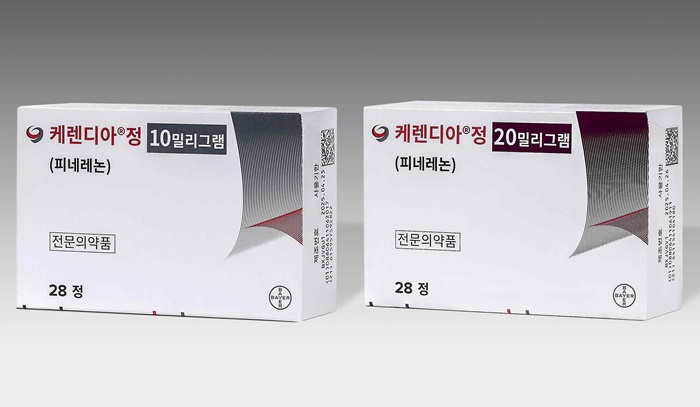
- Since early this year, Kerendia has been covered by reimbursement in clinical practices in South Korea. Kerendia's indication may expand to hypertension as it becomes available for prescriptions at clinical practices. Product photos of Kerendia. According to the pharmaceutical industry on August 13th, Kerendia (finerenone) is now being used in clinical practices after obtaining reimbursement coverage in February for adult patients with chronic kidney disease who have type 2 diabetes. Kerendia is the first non-steroidal, selective mineralocorticoid receptor antagonist and a novel therapeutic approach targeting inflammation and fibrosis in adult chronic kidney disease patients with type 2 diabetes. As a result, Kerendia has been prescribed this year in the departments of internal medicine and nephrology at medical centers in South Korea. Sung Hee Choi, Professor of the Department of Internal Medicine at Seoul National University Bundang Hospital, said "There is no drug like Kerendia that could directly suppress chronic suppression or kidney fibrosis. New treatment options that can directly target should be welcomed, and this could be an important part of changing the therapeutic strategy." Professor Choi explained, "I think we must consider the possibility that the drug could slow the progression of kidney disease when used early in diabetes patients and try to use it as early as possible." However, Kerendia is not actively prescribed because it is still in the early stages of its launch in South Korea. According to the medical market research firm UBIST, Kerendia generated approximately KRW 1 billion in prescription sales in the first half of this year. Considering that the government assigned KRW 9.95 billion for finance expenses in a year during the reimbursement process, it is still too early to determine if Kerendia is established in the market. Based on UBIST, the prescription amount for Kerenia is on the rise monthly, which suggests that the drug is expanding in clinical practices. Additionally, Bayer recently added Kerendia to treat patients with reduced left ventricular ejection fraction (LVEF) or preserved ejection fraction (HFpEF). The results met the primary endpoint of the Phase 3 FINEARTS-HF clinical trial, which evaluated the efficacy and safety of the drug compared to placebo. In the Phase 3 FINEARTS-HF clinical trial, the composite endpoints of heart failure events (including initial and recurrent events), defined as cardiovascular death and hospitalizations or emergency visits due to cardiovascular deaths and heart failure, demonstrated statistically and clinically significant risk reduction. As a result, Bayer is preparing to submit market authorization and expand the indication based on the clinical study. If realized, this would expand prescriptions across all areas, including endocrinology, nephrology, and cardiology. At the same time, it is expected to enable Bayer to actively target the market alongside its existing heart failure treatment lineup, including Verquvo (vericiguat). JinA Lee, CEO of Bayer Korea, explained, "Kerendia, which is now used for treating chronic kidney disease accompanying type 2 diabetes, has been shown to suppress additional chronic kidney disease progression and to show cardiovascular benefits when used in combination with standard therapy. It is expected to provide effective management and treatments for patients who need the new treatment option." Lee said, "In addition to Kerendia's role in treating chronic kidney disease accompanied by type 2 diabetes in South Korea, we will strive to provide better treatment benefits for patients with hypertension who have limited treatment options."
- Opinion
- [Reporter’s View]Gov’t disappointing response to COVID-19
- by Son, Hyung-Min Aug 23, 2024 06:18am
- COVID-19 is spreading rapidly in Korea. Currently, the variant leading the COVID-19 pandemic is KP.3 of the Omicron family. The spread of COVID-19 has been in full swing since the end of June, and the number of hospitalized patients in the 2nd week of this month reached 1,366, recording the highest this year. In the last four weeks, the number of hospitalized COVID-19 cases in 220 hospital-level surveillance centers nationwide was 226 in the 3rd week of July, 474 in the 4th week, 880 in the 1st week of August, and 1,366 in the 3rd week. The Korea Disease Control and Prevention Agency (KDCA) has stated that the KP.3 variant is highly contagious but has a low severity and fatality rate, making it manageable at current levels. Despite the government's opinion that it is manageable, there is much confusion at the point of care. Pharmacies are reportedly experiencing stockouts of cold medicines and diagnostic kits, and are having difficulty securing COVID-19 drugs. Relevant government agencies have been scrambling to come up with countermeasures. The Ministry of Health and Welfare has announced that it will start reimbursing COVID-19 treatments in October to ease the shortage. The Ministry of Food and Drug Safety has begun reviewing the approval of new COVID-19 drugs. After COVID-19 had turned into an endemic, the government has been lukewarm about approving and reimbursing COVID-19 drugs. Last year, public opinion had been formed on the need to introduce the major COVID-19 treatments that demonstrated clinical effectiveness and public opinion. Still, the KDCA delayed approving new COVID-19 drugs, citing the sufficient quantity of existing COVID-19 drugs. The reimbursement for the COVID-19 drug Paxlovid is also making little progress. Pfizer applied for reimbursement coverage of Paxlovid in October last year, but the application is yet to be reviewed by the Drug Reimbursement Committee. This is not unlike the situation at the height of the COVID-19 pandemic. Back then, the government struggled to secure COVID-19 vaccines and treatments. There were also shortages of acetaminophen-based antipyretic analgesics and non-steroidal anti-inflammatory drugs (NSAIDs), which can reduce the symptoms of COVID-19. Under the banner of securing vaccine sovereignty and treatment sovereignty, various government policies were launched, including the K-Bio Vaccine Fund and the establishment of a control tower for the pharmaceutical and biotech industry. However, since then, no domestic pharmaceutical or bio company has succeeded in receiving approval for new COVID-19 vaccines or treatments. Various domestic companies have taken up the challenge, but as the number of COVID-19 cases decreased, interest in vaccines and treatments faded. Some companies have applied for marketing authorization and reimbursement, but have not been approved. Like the rise of the KP.3 variant, there is a high probability that COVID-19 will resurface. While the KP.3 variant, like the Omicron variant, has lower rates of severity and fatality, no one can predict how or when it will spread. The COVID-19 pandemic and endemic have made the procurement of various treatments imperative. Rather than relying on the fact that there are enough existing treatments to keep the field on track, we need to proactively identify and acquire new treatments to ensure their availability when needed. There are still many areas that need to be addressed, including treatments, vaccines, healthcare infrastructure, staffing, facilities, and equipment. We should not forget the lessons we learned during the COVID-19 pandemic, including quarantines, the waiting lines for masks, the vaccine reservation rush, and cold medicine shortages.
- Company
- Will the SGLT-2i Jardiance be reimb for CKD in 2H?
- by Eo, Yun-Ho Aug 23, 2024 06:18am
- Attention is focused on whether the SGLT-2 inhibitor Jardiance can settle as a reimbursed prescription option for chronic kidney disease in the second half of the year. According to industry sources, the Health Insurance Review and Assessment Service is currently reviewing the reimbursement expansion of Boehringer Ingelheim and Lilly Korea’s Jardiance (empagliflozin). After the pharmaceutical companies submitted their applications in the first half of the year, HIRA began discussions in earnest after collecting expert opinions from relevant academic societies. The drug is for reducing the risk of progression of kidney disease or death from cardiovascular disease, regardless of the presence of type 2 diabetes, and the drug was approved for additional indication in Korea in October last year. As a result, Jardiance is now approved as a treatment for 3 conditions - diabetes, chronic heart failure, and chronic kidney disease. Chronic kidney disease is estimated to affect one in every 9 adults in South Korea. Patients with CKD are known to have 7.2 times higher the risk of death than those without chronic kidney disease. If not treated appropriately in the early stages, patients can progress to end-stage kidney disease (ESKD), which increases the risk of death. This is why the treatment of CKD is primarily aimed at delaying the progression of the disease, ultimately reducing progression to end-stage kidney disease. Jardiance’s efficacy in CKD was demonstrated through the Phase III EMPA-KIDNEY study, a large-scale SGLT-2 inhibitor clinical trial that was conducted on a broad patient population. The EMPA-KIDNEY trial included 6,609 participants with chronic kidney disease, many with comorbidities across the spectrum of cardiovascular, kidney, or metabolic conditions, regardless of Type 2 diabetes. Unlike previous SGLT-2 inhibitor studies, which focused specifically on patients with urinary albumin-to-creatinine ratios (UACRs), this study included patients with low UACR as well. The study met its primary endpoint, demonstrating a significant 28% reduction in the relative risk of kidney disease or cardiovascular death compared with placebo, and the effect was consistent across subgroups stratified by UACR, confirming a consistent treatment effect in patients with and without albuminuria The results also showed a statistically significant reduction in all-cause hospitalizations (14%) compared with a placebo, which was one of the pre-specified key secondary confirmatory endpoints, reducing the burden of hospitalization for CKD patients. Overall safety results were similar to the previously recognized safety profile. Meanwhile, Jardiance is expected to become the only original SGLT-2 inhibitor produced by a multinational pharmaceutical company in the country. Following AstraZeneca Korea's decision to withdraw Forxiga (dapagliflozin) from the market last December, Astellas Pharma Korea also recently announced the discontinuation of Suglat (ipragliflozin) in Korea.
- Policy
- DREC to review the COVID-19 drug Paxlovid a week earlier
- by Lee, Tak-Sun Aug 23, 2024 06:17am
- Product photo of Paxlovid. The Drug Reimbursement Evaluation Committee (DREC) of the Health Insurance Review and Assessment Service (HIRA) will convene a week earlier than scheduled. The DREC review evaluates the appropriateness of new drugs for reimbursement. Industry analysis suggests that the schedule has changed to quickly list the COVID-19 treatment 'Paxlovid (nirmatrelvir·ritonavir, Pfizer Korea)' for reimbursement. Previously, Minister of Health and Welfare Cho KyooHong stated that, due to the COVID-19 resurgence, Paxlovid will be reimbursed beginning in October. According to industry sources on August 22nd, the 9th DREC review for 2024 will convene on August 29th, a week earlier than the initially planned date of September 5th. The date change to the DREC review is likely due to hastening reimbursement process for Paxlovid. There is not much window of time to implement reimbursement by October, as Director Cho suggested. Typically, even if the duration it takes to negotiate with the National Health Insurance Service (NHIS) can be shortened by prior agreement, it takes 30 days to reach the drug price agreement after a drug passes the DREC review. If the drug were to pass the DREC review in early September as initially scheduled, it would be uncertain whether an agreement could be completed before the late September reporting session of the Ministry of Health and Welfare (MOHW)'s Health Insurance Policy Review Committee. As a result, it appears that an earlier DREC review date was set to provide more time for negotiation. Sources said that NHIS and Pfizer have begun discussing a prior agreement for drug price negotiation. During the COVID-19 spread, the government purchased Paxlovid so patients could use it for free. Since May, patients must pay KRW 50,000, which is approximately 5% of the drug price. It is a temporary measure before the implementation of reimbursement. However, due to the recent COVID-19 resurgence, demand for Paxlovid surged beyond the volume purchased by the government, so the drug is not being delivered to patients on time. As a result, the government aims to proceed with the reimbursement process quickly so that patients with severe diseases can receive medications properly. However, some argue that such a measure is inappropriate because once the reimbursement is applied, the co-payment would be much higher than the current KRW 50,000. Seo Youngseok, a member of the Democratic Party of Korea, criticized, " If Paxlovid price were to be set as KRW 700,000 and with 30% co-payment applied, patient's co-payment will be approximately KRW 200,000," and added, "What it means is that the National Insurance finance and patients will have to bear the financial burden of medication. In other words, the Korea Disease Control and Prevention Agency (KDCA) would fail to fulfill its job." Youngmee Jee, Commissioner of the KDCA, said, "Most countries have listed COVID-19 oral treatments for reimbursement, providing the treatments covered by insurance," and added, "Patient co-payments can be adjustable. We will minimize the financial burden on patients." Some expect Paxlovid's co-payment rate to be further reduced from 30%.
- Company
- Yungjin applies for approval of its Ofev generic
- by Hwang, Byung-woo Aug 23, 2024 06:17am
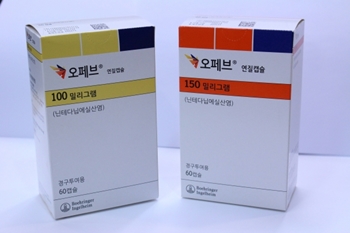
- Pic of Boehringer Ingelheim Yungjin Pharmaceutical announced on the 22nd that it has completed the license application for a generic version of Boehringer Ingelheim's ‘Ofev Soft Cap (Ofev)’ that it had developed by changing the original drug’s soft capsule formulation into a tablet. As a global blockbuster product, Ofev (nintedanib) is widely used in combination with pirfenidone to delay the decline in lung function in patients with idiopathic pulmonary fibrosis. Despite being a non-reimbursed drug in Korea, Ofev generated sales of around KRW 6 billion last year and is in such high demand that a petition is underway for its reimbursement. Yungjin Pharmaceutical was the first Korean pharmaceutical company to complete bioequivalence testing administration of its generic version of Ofev in March and recently completed submitting an application for its marketing authorization with the Ministry of Food and Drug Safety. The company had made the quickest progress among domestic pharmaceutical companies involved in the development of Ofev generics. Unlike Ofev soft capsules, it was developed as a tablet formulation, and it has a reduced size compared to the original, improving the convenience of intake for the patients. In addition, Yungjin Pharmaceutical has also succeeded in synthesizing the nintedanib raw material and is expected to become the only Korean pharmaceutical company to produce a finished product with its raw material. “Yungjin Pharmaceutical exports finished and raw pharmaceutical products to Japan and overseas based on production technology and facilities that meet global GMP standards,” said Ki-Su Lee, CEO of Yungjin Pharmaceutical. “We look forward to becoming the first to launch an Ofev generic in Korea with excellent raw materials and formulation technology to help reduce the suffering of pulmonary fibrosis patients and improve their convenience of administration.”
- Policy
- Ildong to continue oral 'GLP-1 receptor agonist' trial
- by Lee, Hye-Kyung Aug 22, 2024 05:55am
- Ildong Pharmaceutical will conduct an additional round of Phase 1 clinical trial for its proprietary new drug candidate, 'ID110521156,' for the treatment of type 2 diabetes. The drug, by the development code ID110521156, is an oral new drug targeting type 2 diabetes and obesity. On August 20th, the Ministry of Food and Drug Safety (MFDS) approved a 'Randomized, double-blind, placebo-controlled, multiple-ascending oral dose Phase 1 study of ID110521156 in healthy adults to evaluate the safety, tolerability, and pharmacokinetic and pharmacodynamic characteristics of the drug,' which has been submitted by Unovia. Unovia is an independent company established through a simple asset split by Ildong Pharmaceutical to spin off its R&D division. Ildong Pharmaceutical holds 100% of Unovia's shares as the parent company. The Phase 1 trial for ID11052115 was conducted from September 2023 to February 2024 in South Korea. The previous goal was to study 'single oral administration,' but this time, the study will evaluate the drug's safety by multiple-dose administration of ID110521156. When the clinical trial is completed successfully, Ildong Pharmaceutical plans to develop the new drug candidate as an oral new drug targeting type 2 diabetes and obesity. ID110521156 is a type of glucagon-like peptide-1 receptor agonist, and it works as an analog of GLP-1 hormone that induces insulin secretion in the body and regulates blood sugar levels. GLP-1 hormone is synthesized in the beta cells of the pancreas. It is known to be involved in insulin synthesis and secretion in the body, reducing blood sugar levels, regulating gastrointestinal movement, and suppressing appetite. ID110521156 is a small-molecule compound with the same function as GLP-1 hormones. It is structurally more stable and has a longer plasma half-life than peptide-based biological agents. The company explained that ID110521156's efficacy and toxicity evaluations using disease animal models have demonstrated significant effectiveness in insulin secretion and blood glucose control and superior safety compared to competing drugs in the same class. The company has already registered the candidate's substance patent in countries including South Korea, the United States, China, Japan, India, and Australia. Ildong Pharmaceutical's official stated, "We have evaluated the efficacy and toxicity profile of ID110521156 using disease animal models and have confirmed its effectiveness in insulin secretion, blood glucose control, and safety," and added, "We are currently in discussions with several global pharmaceutical companies regarding licensing and partnerships."
