- LOGIN
- MemberShip
- 2026-10-13 11:13:50
- Government to keep generic drug '1+3 rule'
- by Lee, Jeong-Hwan | translator Alice Kang | 2026-10-13 08:45:11
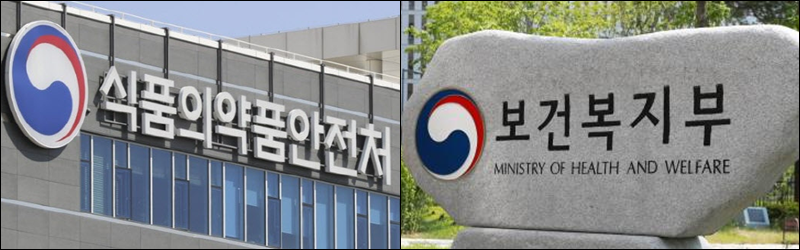
The Ministry of Food and Drug Safety (MFDS) has no administrative plans to tighten, abolish or retroactively apply changes to the existing “shared bioequivalence testing 1+3 rule” for generic drugs.
The ministry intends to maintain the current framework, under which one pharmaceutical company conducting a bioequivalence study may share the resulting approval data with up to three other companies, allowing multiple virtually identical generic products (“twin products) to enter the market.
The position is likely to draw criticism that the MFDS is allowing the proliferation of generics to continue, given persistent concerns over the dozens or even hundreds of generic products available for some individual active ingredients in Korea.
The Ministry of Health and Welfare (MOHW), while emphasizing that the shared bioequivalence testing system falls under the MFDS's jurisdiction, said it would cooperate with the regulator to encourage more generic manufacturers to conduct their own studies.
The positions were outlined in responses submitted by the two ministries to the office of People Power Party lawmaker Jong-heon Baek and other National Assembly members on the 12th.
Under Article 31, Paragraphs 12 and 13 of the current Pharmaceutical Affairs Act, a company may consent to the use of bioequivalence data for approval of up to three additional generic products identical to the one for which the data were generated. These provisions form the legal basis of the 1+3 rule, which has been in effect since 2021.
Some pharmaceutical industry participants argue that the rule should be strengthened or abolished to further reduce the number of generic products, citing the continued proliferation of generics despite the restrictions and the introduction of another round of across-the-board generic price cuts, 14 years after the previous reform in 2012.
Others have suggested reviewing whether the shared-testing restrictions should be eased for incrementally modified drugs that require more expensive Phase III clinical trials.
MFDS rules out changes...MOHW “MFDS decision comes first”
Against this backdrop, the MFDS said it has not considered revising or abolishing the 1+3 rule.
The ministry said, “When the legislation was proposed in November 2020, the National Assembly introduced the measure to strengthen the competitiveness of the pharmaceutical industry by limiting the number of products approved using the same bioequivalence data. The MFDS is not currently considering any revision or abolition of the system.”
The MOHW, meanwhile, stated that when calculating generic drug prices, it encourages pharmaceutical companies to conduct their own bioequivalence studies through a differential pricing policy based on compliance with benchmark criteria (submission of in-house bioequivalence test data and use of MFDS-registered active pharmaceutical ingredients), and has tightened the drug price reduction rate for non-compliant companies from the previous 85% to 80% under the revised drug pricing system.
Regarding the possible abolition of the shared bioequivalence testing rule, the MOHW stated that the matter “needs to be reviewed primarily by the MFDS,” emphasizing that the MFDS, rather than the MOHW, is the responsible regulatory authority.
Nevertheless, the MOW said, “We will cooperate with the MFDS to promote independent bioequivalence testing. Also, when we further prepare drug pricing reform plans, we will share the direction with the MFDS and cooperate to expand independently conducted bioequivalence studies. If additional institutional reforms, including abolition of shared bioequivalence testing, are developed in the future, we will also consider drug pricing measures to prevent disruptions to the supply of essential medicines.”
In effect, the MOHW appears unlikely to pursue related pricing reforms unless the MFDS first moves to revise or abolish the shared-testing framework.
Years after implementation, 80% still fall under '1+4 or more'… No retroactive application leaves generic proliferation unchecked.
The problem is that, although roughly six years have passed since the restrictions intended to limit generic proliferation were introduced, contract-manufactured generics based on shared bioequivalence data continue to account for a substantial portion of the market.
The persistent proliferation of generics is particularly concerning because it could encourage aggressive competition through illegal rebates rather than fair pharmaceutical sales and promotion.
In fact, generics manufactured by a single contract manufacturer for more than 11 client pharmaceutical companies account for approximately 47% of all contract-manufactured generics.
At the same time, around 80% of generics using shared bioequivalence data fall into arrangements involving one testing company and at least four other companies, categorized as “1+4 or more.”
This largely reflects the fact that the 1+3 restrictions were not applied retroactively to generic products that had already received approval or completed their approval applications before the amended Pharmaceutical Affairs Act took effect.
One possible reason for the MFDS's reluctance to revise the system is the prospect of conflict with pharmaceutical companies that would oppose its abolition or the retroactive extension of restrictions to previously approved products.
The ruling Democratic Party is understood to have recognized the need to rationalize the shared bioequivalence testing framework following the implementation of drug pricing reform centered on generic price cuts, as part of broader efforts to support Korea's pharmaceutical industry and move away from excessive competition among generic manufacturers.
An official from a Democratic Party lawmaker's office on the National Assembly Health and Welfare Committee said, “Improving the 1+3 shared bioequivalence testing policy is one of the measures that should be considered following the implementation of drug pricing reform. Given the policy's significant impact on the domestic pharmaceutical industry, we will examine whether changes to the system are necessary.”
-

- 0
댓글 운영방식은
댓글은 실명게재와 익명게재 방식이 있으며, 실명은 이름과 아이디가 노출됩니다. 익명은 필명으로 등록 가능하며, 대댓글은 익명으로 등록 가능합니다.
댓글 노출방식은
댓글 명예자문위원(팜-코니언-필기모양 아이콘)으로 위촉된 데일리팜 회원의 댓글은 ‘게시판형 보기’와 ’펼쳐보기형’ 리스트에서 항상 최상단에 노출됩니다. 새로운 댓글을 올리는 일반회원은 ‘게시판형’과 ‘펼쳐보기형’ 모두 팜코니언 회원이 쓴 댓글의 하단에 실시간 노출됩니다.
댓글의 삭제 기준은
다음의 경우 사전 통보없이 삭제하고 아이디 이용정지 또는 영구 가입제한이 될 수도 있습니다.
-
저작권·인격권 등 타인의 권리를 침해하는 경우
상용 프로그램의 등록과 게재, 배포를 안내하는 게시물
타인 또는 제3자의 저작권 및 기타 권리를 침해한 내용을 담은 게시물
-
근거 없는 비방·명예를 훼손하는 게시물
특정 이용자 및 개인에 대한 인신 공격적인 내용의 글 및 직접적인 욕설이 사용된 경우
특정 지역 및 종교간의 감정대립을 조장하는 내용
사실 확인이 안된 소문을 유포 시키는 경우
욕설과 비어, 속어를 담은 내용
정당법 및 공직선거법, 관계 법령에 저촉되는 경우(선관위 요청 시 즉시 삭제)
특정 지역이나 단체를 비하하는 경우
특정인의 명예를 훼손하여 해당인이 삭제를 요청하는 경우
특정인의 개인정보(주민등록번호, 전화, 상세주소 등)를 무단으로 게시하는 경우
타인의 ID 혹은 닉네임을 도용하는 경우
-
게시판 특성상 제한되는 내용
서비스 주제와 맞지 않는 내용의 글을 게재한 경우
동일 내용의 연속 게재 및 여러 기사에 중복 게재한 경우
부분적으로 변경하여 반복 게재하는 경우도 포함
제목과 관련 없는 내용의 게시물, 제목과 본문이 무관한 경우
돈벌기 및 직·간접 상업적 목적의 내용이 포함된 게시물
게시물 읽기 유도 등을 위해 내용과 무관한 제목을 사용한 경우
-
수사기관 등의 공식적인 요청이 있는 경우
-
기타사항
각 서비스의 필요성에 따라 미리 공지한 경우
기타 법률에 저촉되는 정보 게재를 목적으로 할 경우
기타 원만한 운영을 위해 운영자가 필요하다고 판단되는 내용
-
사실 관계 확인 후 삭제
저작권자로부터 허락받지 않은 내용을 무단 게재, 복제, 배포하는 경우
타인의 초상권을 침해하거나 개인정보를 유출하는 경우
당사에 제공한 이용자의 정보가 허위인 경우 (타인의 ID, 비밀번호 도용 등)
※이상의 내용중 일부 사항에 적용될 경우 이용약관 및 관련 법률에 의해 제재를 받으실 수도 있으며, 민·형사상 처벌을 받을 수도 있습니다.
※위에 명시되지 않은 내용이더라도 불법적인 내용으로 판단되거나 데일리팜 서비스에 바람직하지 않다고 판단되는 경우는 선 조치 이후 본 관리 기준을 수정 공시하겠습니다.
※기타 문의 사항은 데일리팜 운영자에게 연락주십시오. 메일 주소는 dailypharm@dailypharm.com입니다.

- [Reporter’s View] Rebate investigation expertise must survive system overhaul
- Reporter's view | Kim, Jin-Gu


-

- "Besremi garners attention as a long-term treatment option for PV"
- Professor Dae-young Kim of the Department of Hematology-Oncology at CHA Bundang Medical Center