- LOGIN
- MemberShip
- 2026-10-13 11:11:52
- Global pharmas move new drug development partnerships earlier
- by Hwang, byoung woo | translator Alice Kang | 2026-10-13 08:45:25
Global pharmaceutical companies are moving the start of drug development partnerships to well before a deal is signed. The companies are increasingly identifying external technologies at the earliest stages of research and assessing potential collaborations alongside biotech companies' development and financing strategies.
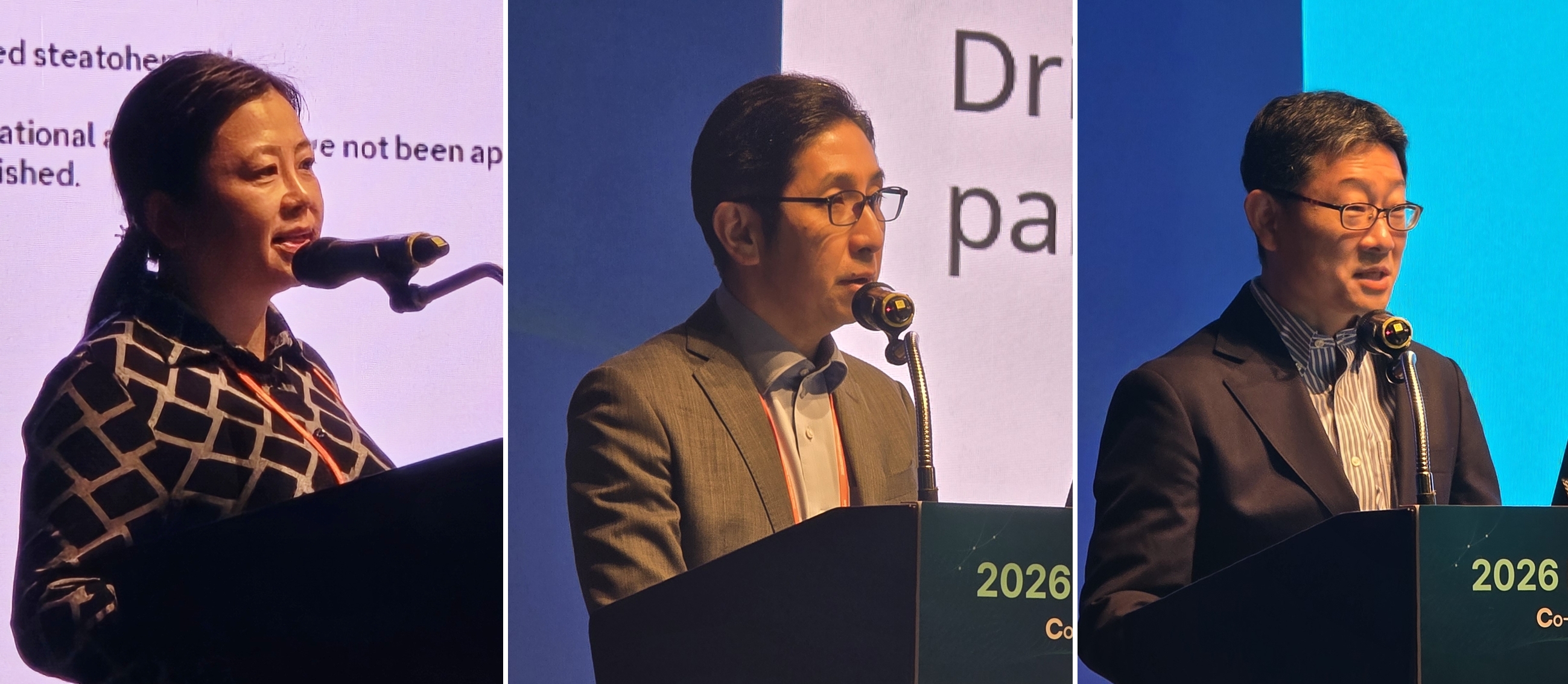
At the 2026 KDDF CPG Symposium hosted by the Korea Drug Development Fund (KDDF) on Oct. 12, Boehringer Ingelheim, Astellas and Bayer outlined their approaches to external innovation.
While their partnership models differ, all three companies emphasized the importance of identifying promising technologies early and building relationships over time.
Building connections from early research...investment and partnerships forged before licensing
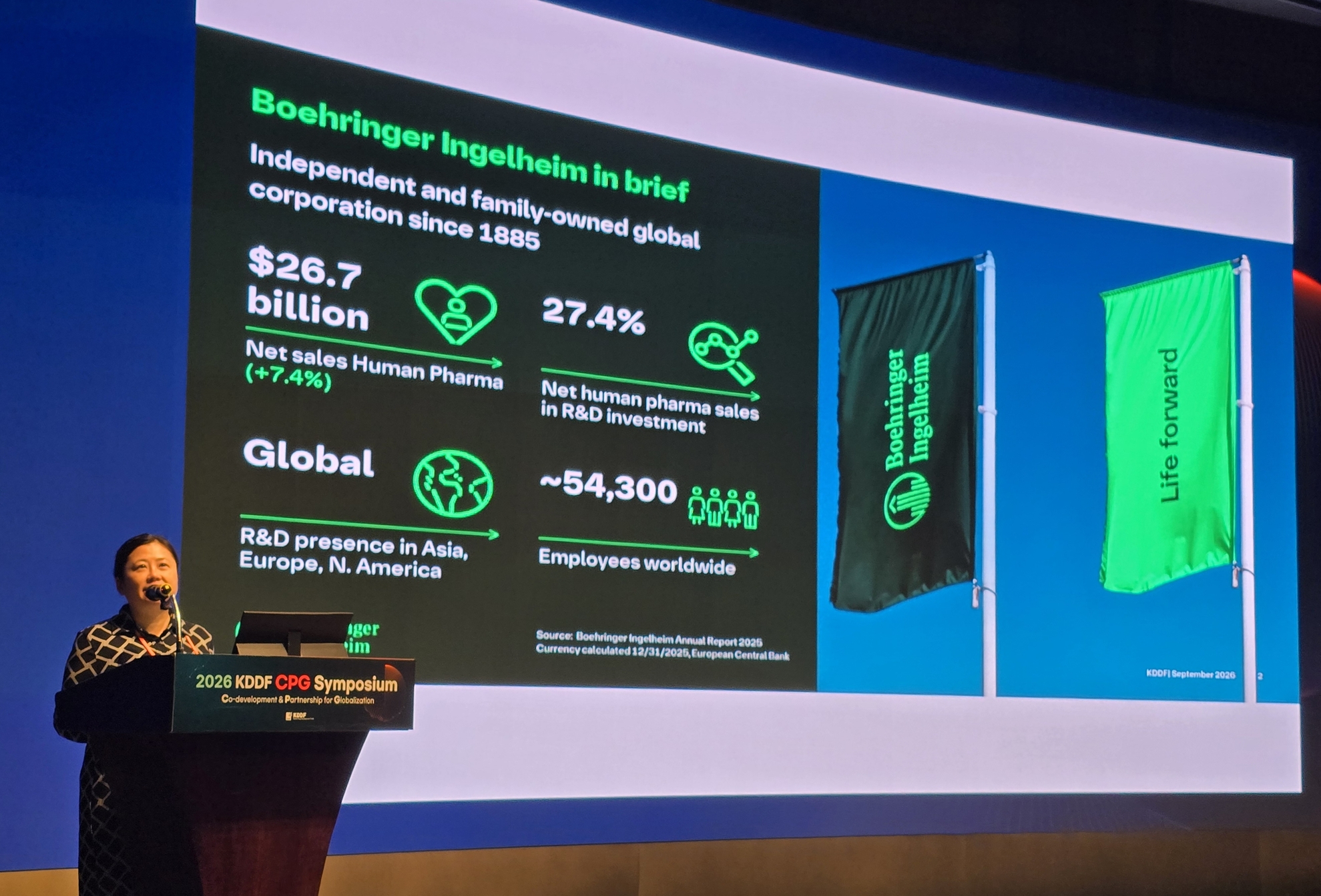
Fei Shen, Head of Business Development and Licensing USA and Global Therapeutic Area Inflammation Strategic Partnership at Boehringer Ingelheim, said approximately 50% of the company's pipeline is based on external innovation. The company draws on both its business development organization, which licenses drug candidates, and its venture arm, which invests in early-stage companies, to access external technologies.
Shen said, “We use multiple approaches to bring external innovation into the company.” The venture arm participates in company formation and seed-stage financing through minority equity investments, while the business development and licensing team seeks preclinical and clinical assets that complement Boehringer Ingelheim's pipeline.
Another avenue for collaboration is opnMe, a platform through which the company makes internally characterized compounds available to external researchers. Researchers can use these compounds in their own work or explore joint research opportunities with Boehringer Ingelheim.
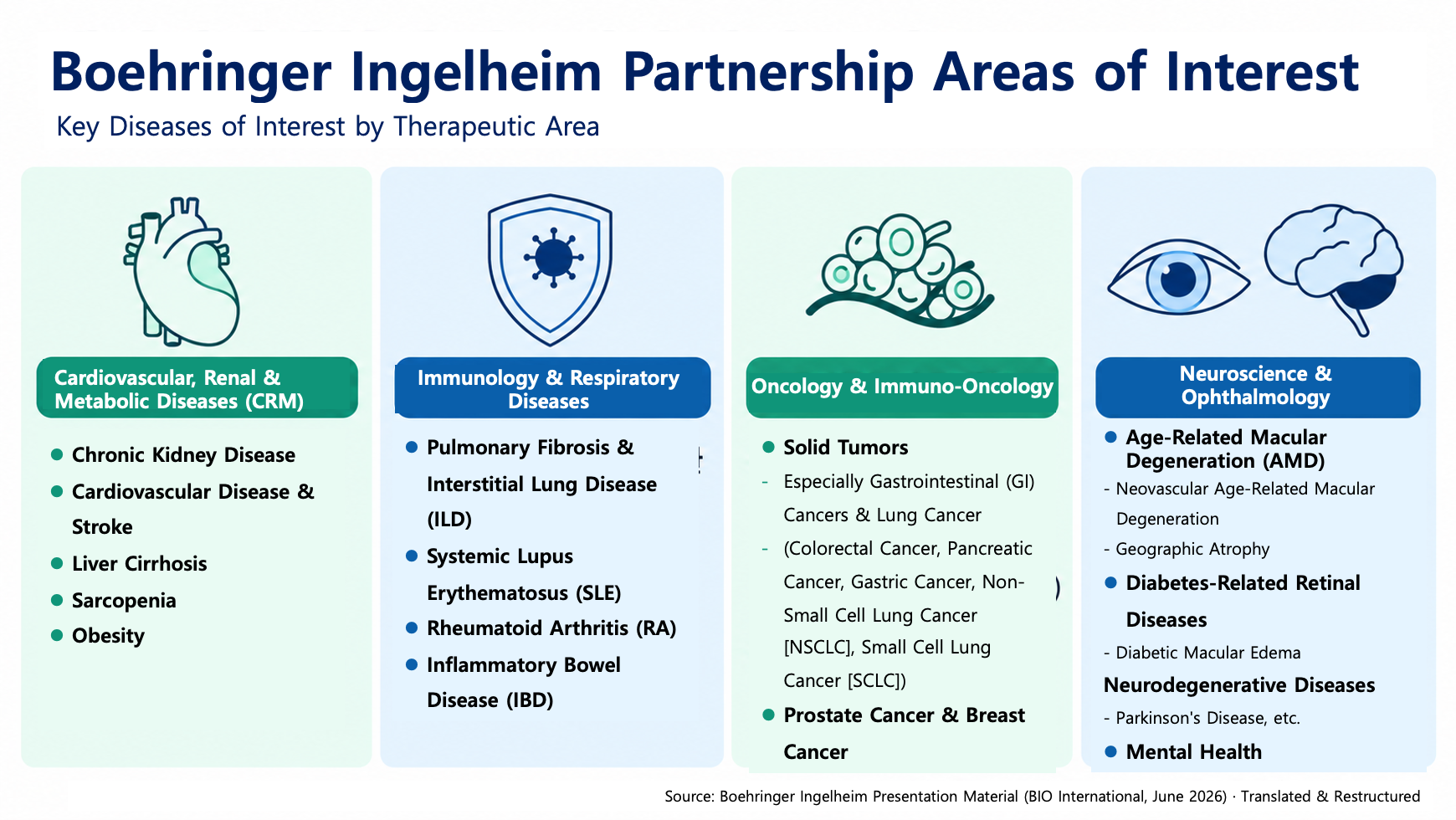
Shen cited the company's antibody-drug conjugate (ADC) collaboration with Korea's AimedBio as an example of licensing external technology. Last year, Boehringer Ingelheim signed a co-development and licensing agreement with AimedBio for an ADC candidate. Shen said AimedBio's technology aligned with the company’s direction of ADC research.
Shen said, “We believe science knows no borders. We are seeking partners in Korea and other regions.” The emphasis, she explained, is on the scientific potential of a technology and its relevance to the company's research needs, rather than where it originates.
Astellas, meanwhile, highlighted the alignment between external technologies and its research priorities. Minoru Kameda, Scouring & Transaction Lead of the Business Development division at Astellas, said the company identifies development opportunities by bringing together an understanding of disease biology, therapeutic technologies and unmet patient needs.
Kameda said, “We start by understanding the biology of a disease and its impact on patients' lives. We then combine therapeutic technologies with disease insights to identify promising treatments.”
In other words, Astellas looks beyond whether a technology is novel to consider which patients it could benefit and how it might change treatment outcomes. The company also highlighted its ability to offer partners capabilities spanning R&D, medical affairs, manufacturing and commercialization.
The company stated that deal terms will be tailored to each individual partnership. Kameda said, “We are ready to adapt deal types, terms and timelines to our partners' needs, without being constrained by existing transaction structures or precedents.” The structure of an agreement may therefore vary according to a technology's stage of development and the objectives of the collaboration.
Beyond technology value, development and funding plans must stand up to scrutiny
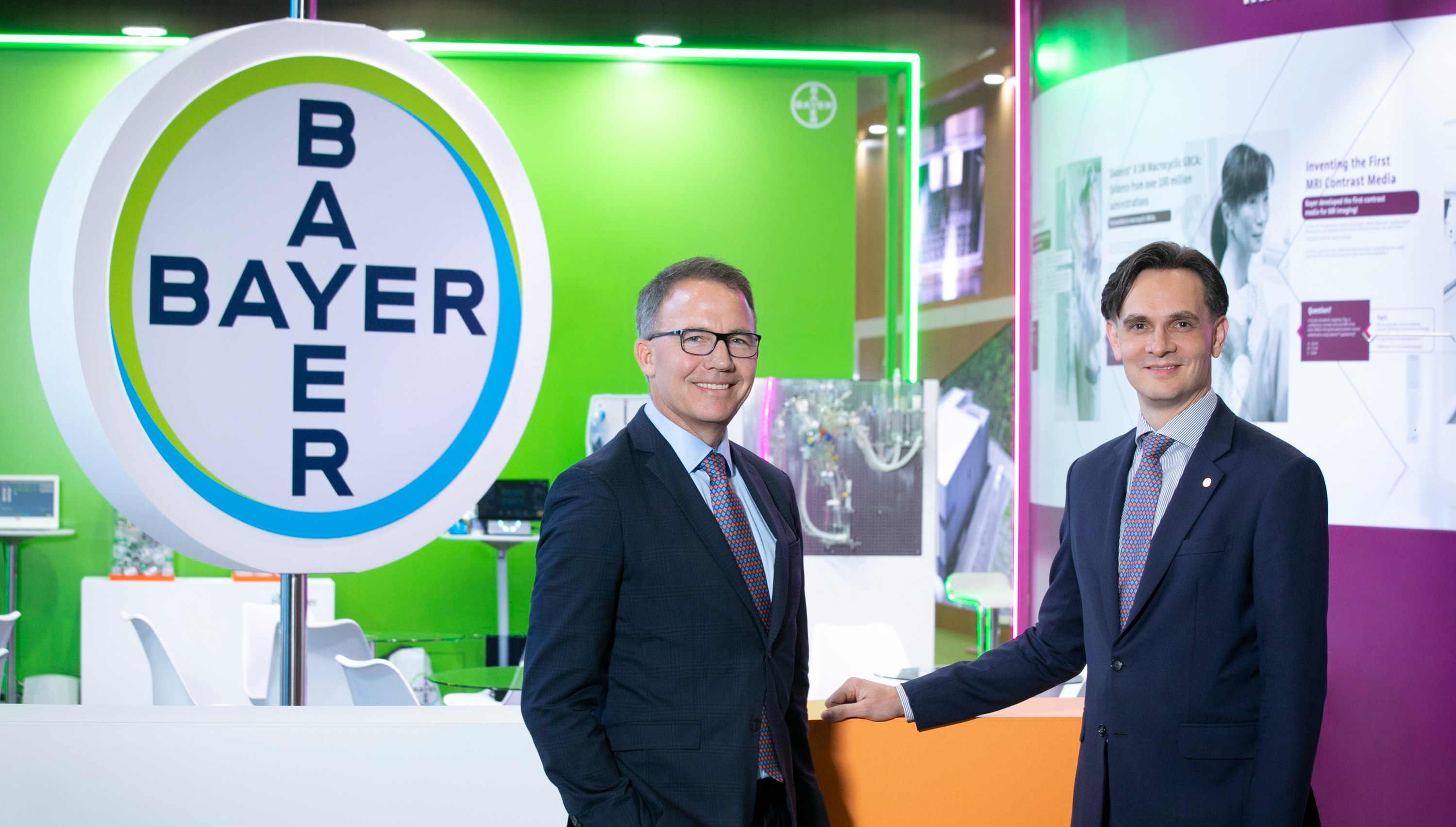
Nobu Kazama, Head of Collaborate to Cure Japan Hub at Bayer, focused on what Korean biotech companies should prepare before approaching global partners. Kazama noted that licensing discussions are moving toward earlier stages of development, while acquisitions increasingly focus on more advanced assets with lower development risk.
Even companies built around platform technologies need a lead development program that demonstrates the platform's potential, he said. They should be able to present clear development objectives and explain how funding will be allocated so that prospective partners and investors can evaluate the opportunity.
Kazama said, “Platform companies need a lead program and a plan for how they will use their funding. Demonstrating value through that lead program can support broader partnerships down the road.”
He also encouraged biotech companies to engage with global experts early to refine their plans. Clinical experts can help assess whether a technology's differentiation is meaningful for patient care, while investors can evaluate the credibility of funding plans and development milestones. Discussions with pharmaceutical companies can also help identify the evidence needed for future partnerships in advance.
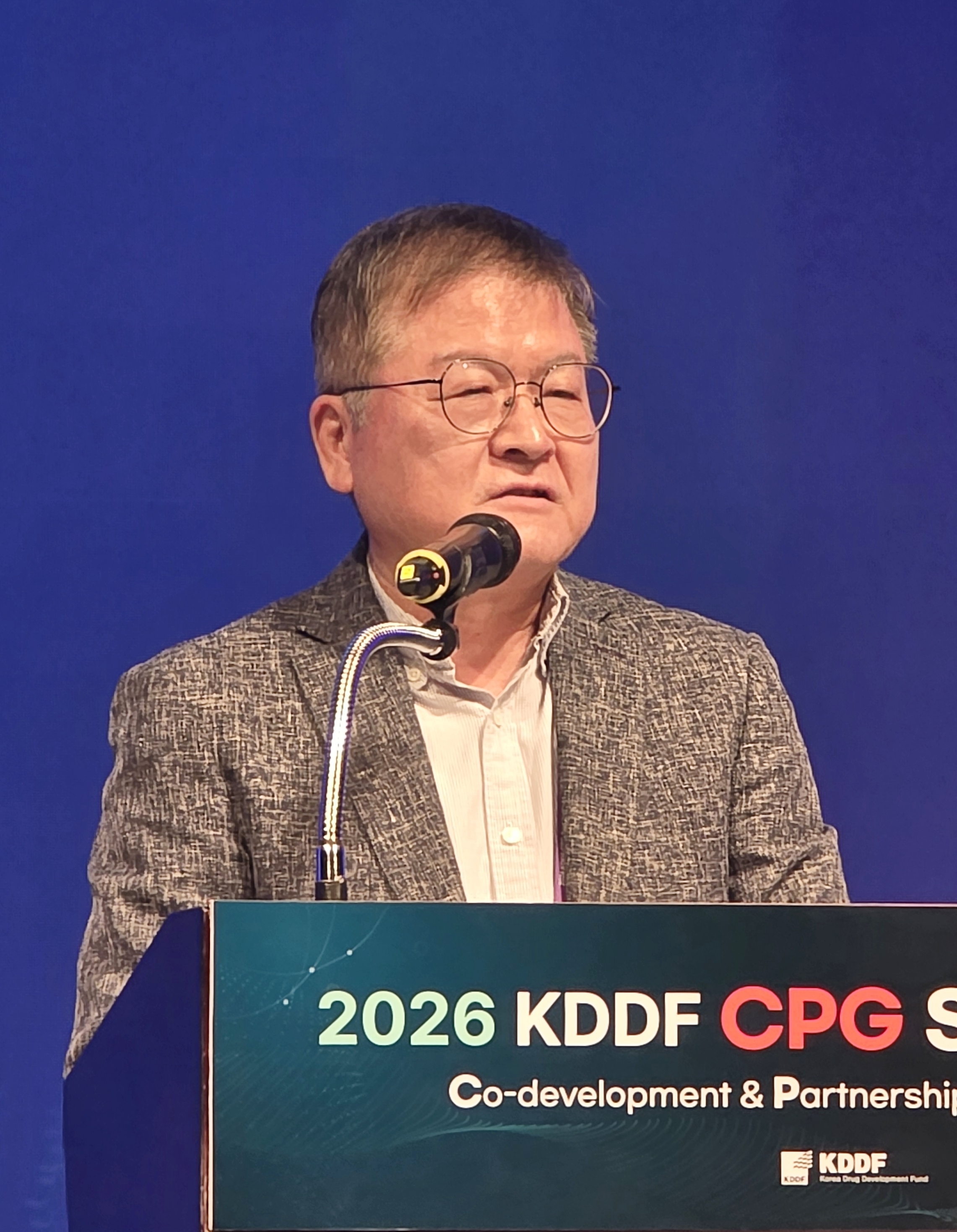
Kazama said, “Conversations with global experts help companies test their assumptions. They should use that feedback to refine development priorities and funding plans, generate new evidence, then return for further discussions.”
Bayer's Co.Lab Connect Seoul, launched in Korea this year, was presented as one program designed to facilitate such exchanges. It allows early-stage Korean biotech companies to present their research and development strategies to Bayer's global R&D experts and investors and receive feedback. Kazama emphasized that relationships initiated in Korea could eventually extend to other Bayer locations worldwide.
Kazama said, “The best conversations begin before a formal deal becomes necessary. Prepare for partnerships early and start talking well before you need a transaction.”
In his opening remarks, KDDF CEO Young-Min Park stressed the importance of global collaboration in translating research achievements into actual drug development. Park said, “Turning promising science into successful medicines requires strong global partnerships and capabilities. I hope these discussions will deepen understanding between Korean biotech companies and global partners, leading to new partnerships and tangible outcomes.”
-

- 0
댓글 운영방식은
댓글은 실명게재와 익명게재 방식이 있으며, 실명은 이름과 아이디가 노출됩니다. 익명은 필명으로 등록 가능하며, 대댓글은 익명으로 등록 가능합니다.
댓글 노출방식은
댓글 명예자문위원(팜-코니언-필기모양 아이콘)으로 위촉된 데일리팜 회원의 댓글은 ‘게시판형 보기’와 ’펼쳐보기형’ 리스트에서 항상 최상단에 노출됩니다. 새로운 댓글을 올리는 일반회원은 ‘게시판형’과 ‘펼쳐보기형’ 모두 팜코니언 회원이 쓴 댓글의 하단에 실시간 노출됩니다.
댓글의 삭제 기준은
다음의 경우 사전 통보없이 삭제하고 아이디 이용정지 또는 영구 가입제한이 될 수도 있습니다.
-
저작권·인격권 등 타인의 권리를 침해하는 경우
상용 프로그램의 등록과 게재, 배포를 안내하는 게시물
타인 또는 제3자의 저작권 및 기타 권리를 침해한 내용을 담은 게시물
-
근거 없는 비방·명예를 훼손하는 게시물
특정 이용자 및 개인에 대한 인신 공격적인 내용의 글 및 직접적인 욕설이 사용된 경우
특정 지역 및 종교간의 감정대립을 조장하는 내용
사실 확인이 안된 소문을 유포 시키는 경우
욕설과 비어, 속어를 담은 내용
정당법 및 공직선거법, 관계 법령에 저촉되는 경우(선관위 요청 시 즉시 삭제)
특정 지역이나 단체를 비하하는 경우
특정인의 명예를 훼손하여 해당인이 삭제를 요청하는 경우
특정인의 개인정보(주민등록번호, 전화, 상세주소 등)를 무단으로 게시하는 경우
타인의 ID 혹은 닉네임을 도용하는 경우
-
게시판 특성상 제한되는 내용
서비스 주제와 맞지 않는 내용의 글을 게재한 경우
동일 내용의 연속 게재 및 여러 기사에 중복 게재한 경우
부분적으로 변경하여 반복 게재하는 경우도 포함
제목과 관련 없는 내용의 게시물, 제목과 본문이 무관한 경우
돈벌기 및 직·간접 상업적 목적의 내용이 포함된 게시물
게시물 읽기 유도 등을 위해 내용과 무관한 제목을 사용한 경우
-
수사기관 등의 공식적인 요청이 있는 경우
-
기타사항
각 서비스의 필요성에 따라 미리 공지한 경우
기타 법률에 저촉되는 정보 게재를 목적으로 할 경우
기타 원만한 운영을 위해 운영자가 필요하다고 판단되는 내용
-
사실 관계 확인 후 삭제
저작권자로부터 허락받지 않은 내용을 무단 게재, 복제, 배포하는 경우
타인의 초상권을 침해하거나 개인정보를 유출하는 경우
당사에 제공한 이용자의 정보가 허위인 경우 (타인의 ID, 비밀번호 도용 등)
※이상의 내용중 일부 사항에 적용될 경우 이용약관 및 관련 법률에 의해 제재를 받으실 수도 있으며, 민·형사상 처벌을 받을 수도 있습니다.
※위에 명시되지 않은 내용이더라도 불법적인 내용으로 판단되거나 데일리팜 서비스에 바람직하지 않다고 판단되는 경우는 선 조치 이후 본 관리 기준을 수정 공시하겠습니다.
※기타 문의 사항은 데일리팜 운영자에게 연락주십시오. 메일 주소는 dailypharm@dailypharm.com입니다.
- [Reporter’s View] Rebate investigation expertise must survive system overhaul
- Reporter's view | Kim, Jin-Gu


-

- "Besremi garners attention as a long-term treatment option for PV"
- Professor Dae-young Kim of the Department of Hematology-Oncology at CHA Bundang Medical Center