- LOGIN
- MemberShip
- 2026-09-11 06:14:10
- "100-day health insurance listing period for rare disease drugs"
- by Lee, Jeong-Hwan | translator Hong, Ji Yeon | 2026-06-26 09:45:27
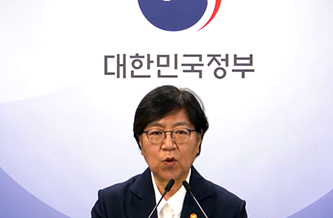
The Ministry of Health and Welfare (MOHW) will substantially shorten the health insurance listing period for rare disease therapeutics and will establish a "Korea-centric primary care model" where local clinics assume full responsibility for patient prevention and management.
On June 25, the MOHW convened the 12th Health Insurance Policy Review Committee to deliberate on and discuss the ▲Implementation of the expedited listing pilot program for rare disease therapeutics and ▲Revised plan for the community primary care innovation pilot program.
With this decision, therapeutic access for patients with severe and rare diseases will be significantly improved, and the primary care sector anticipates a shift in the reimbursement framework from being disease treatment-centric to "management-centric."
'100-Day Fast-Track Listing' for rare disease novel drugs...underperforming drugs face price cuts or delisting after 5 years
Instead of drastically shortening the health insurance listing period for rare disease therapeutics, the MOHW will implement a "conditional reimbursement" system that rigorously evaluates real-world clinical performance within 5 years post-listing to adjust drug prices. Commonly referred to as the "List-First, Evaluate-Later" policy, this mechanism grants reimbursement proactively, but revokes reimbursement if clinical efficacy or health insurance efficiency cannot be verified during post-marketing assessments.
The intent behind this administrative action is to enhance patient access through expedited listings while ensuring the fiscal efficiency of the national health insurance fund through rigorous post-marketing management.
The core of the policy involves applying a mandatory five-year post-marketing evaluation cycle and differentially adjusting drug prices, ranging from maintaining the price to enforcing full out-of-pocket patient payment, depending on therapeutic performance outcomes.
According to the detailed plan disclosed, rare disease therapeutics subject to expedited listing will be managed under a "conditional reimbursement" form, undergoing post-marketing evaluation and reimbursement adjustments within five years.
Years 1 to 3 represent the data collection period. Led by the Health Insurance Review and Assessment Service (HIRA), a domestic real-world data (RWD) registry will be established to generate real-world evidence (RWE).
Year 4 begins the post-marketing evaluation period. The evaluation will focus primarily on HIRA's RWE, along with a comprehensive review of domestic and international clinical trials and real-world evidence materials submitted by the pharmaceutical company. Economic evaluations will also accompany the process for drugs amenable to such analysis or upon the manufacturer's request.
Year 5 is when the reimbursement adjustment takes place. Reimbursement will be adjusted based on the clinical outcome evaluation or economic evaluation results, followed by negotiations with the National Health Insurance Service (NHIS).
Notably, the criteria for reimbursement adjustments based on post-marketing evaluations are classified into four tiers and applied very strictly.
The condition for maintaining the drug price applies only to Grade 1 cases, where definitive superiority is proven across key clinical endpoints, resulting in recognition of "substantial or significant improvement."
A 10% price reduction is applied to Grade 2 cases in which only "general improvement" is confirmed, such as significant improvement in surrogate endpoints, a reduction in common adverse events, or significant improvement in convenience, or when the size of the benefit cannot be quantified due to statistical limitations.
A 20% price reduction, or a similar adjustment, applies to Grade 3 cases that receive a "no improvement (non-inferiority)" determination due to clinical utility comparable to alternative therapies; these will be adjusted to the weighted-average price of alternative therapies or reduced by 20%.
Transitioning to full out-of-pocket payment applies to Grade 4 cases, which are determined to have "inferior" clinical utility due to lower clinical efficacy or a higher risk of adverse events compared to alternative therapies; these will be excluded from reimbursement status and shifted entirely to full patient self-pay.
A refund procedure will also be established for any additional financial expenditures incurred after the conditional reimbursement window (from listing up to 5 years) to account for potential evaluation or negotiation delays.
Pilot program to launch in the second half…clinical evidence expected to be accumulated by 2027
The "Expedited Listing Pilot Program for Rare Disease Therapeutics," which applies this post-marketing evaluation framework, will be rapidly advanced starting in the second half of this year. While the specific budget has not yet been finalized as target candidate drugs are currently being selected, the projected financial impact per therapeutic asset will be submitted for the Committee's review in the near future.
The detailed timeline for plans includes a public notice of target candidate drugs for the pilot program between July and August of this year.
In September, applications will be reviewed for eligibility to select the final target drugs, and starting in October, legal agreements will be established with participating medical institutions to officially drive the expedited listing process forward.
From 2027 to 2032, clinical evidence data will be accumulated over the next five years, followed by the execution of post-marketing evaluations and reimbursement adjustment procedures.
The government intends to establish policy grounds based on the operational status and performance analysis of this first pilot phase and, if necessary, launch a second pilot program in sequence. A "utility-centered" operation of the NHI fund, which significantly broadens access to novel drugs directly linked to patient survival while decisively offloading therapies lacking proven clinical efficacy, is anticipated to face a critical testing ground.
Total 1.6% increase in clinic-level medical fees for 2027..."Concentrating compensation on essential healthcare"
The 2027 conversion factor (medical fee) growth rate for clinic-level providers, which had previously fallen through during negotiations with the National Health Insurance Service in May, has been finalized at 1.6%.
However, the increase will not be applied uniformly. The MOHW decided to reflect only 0.9% of the total 1.6% directly into the conversion factor adjustment (setting the unit price per point at KRW 96.5), while allocating the remaining 0.7% to increase the Relative Value Units (RVUs) for essential healthcare and undervalued medical acts, such as basic consultation fees. The detailed plan for this relative value adjustment will be finalized through a subsequent Health Committee session.
An official from the MOHW explained, "By linking the conversion factor with relative value modifications, we can enhance policy acceptance at the clinical site and ensure appropriate compensation is funneled directly into critically needed areas of essential medicine."
Clinic-centered Korea-centric primary care physician...introduction of 'Integrated Medical Fee System'
The "Community Primary Care Innovation Pilot Program," which enables patients with multiple comorbidities to receive structured health management services at local clinics, will enter full implementation in September.
The defining characteristic of this pilot program is the introduction of an "Integrated Medical Fee System." Deviating from the traditional "Fee-for-Service" model, where consultations, laboratory tests, and procedures are billed individually, a comprehensive, integrated bundled fee will now be applied based on Hierarchical Condition Category (HCC) risk adjustment scores, accounting for the patient's age, sex, and underlying comorbidities.
Korea-centric Primary Care: A multidisciplinary team of physicians, nurses, physical therapists, and others delivers comprehensive health management services (prevention, education, counseling, and care coordination).
Optional compensation will also follow. Medical institutions can choose between the integrated medical fee system and the existing fee-for-service model based on their operational capacity. Clinics selecting the integrated medical fee path will be granted additional financial incentives, such as premium fee markups and performance rewards. Furthermore, even if the hospital reimbursement model changes, the patient's out-of-pocket copayment structure will remain unchanged from the legacy system.
"Anticipating a Structural Transformation in Primary Care"
The MOHW expects this pilot program to transform the current fragmented clinical culture, which focuses heavily on episodic disease treatment, into an approach centered on prevention and longitudinal management. The ministry plans to call for institutional applications between July and August, with selected clinics officially deploying services starting in September.
Meanwhile, during the session, the Health Committee finalized the 2027 clinic-level National Health Insurance reimbursement cost growth rate, agreeing to tie a portion of the financial allocation to enhanced compensation for essential medical sectors.
A ministry official stated, "Beyond simple disease management, we will solidify the institutional foundations to ensure citizens can access high-quality primary care directly within their local communities. We will gather extensive feedback from the field to guide stable policy establishment."
-

- 0
댓글 운영방식은
댓글은 실명게재와 익명게재 방식이 있으며, 실명은 이름과 아이디가 노출됩니다. 익명은 필명으로 등록 가능하며, 대댓글은 익명으로 등록 가능합니다.
댓글 노출방식은
댓글 명예자문위원(팜-코니언-필기모양 아이콘)으로 위촉된 데일리팜 회원의 댓글은 ‘게시판형 보기’와 ’펼쳐보기형’ 리스트에서 항상 최상단에 노출됩니다. 새로운 댓글을 올리는 일반회원은 ‘게시판형’과 ‘펼쳐보기형’ 모두 팜코니언 회원이 쓴 댓글의 하단에 실시간 노출됩니다.
댓글의 삭제 기준은
다음의 경우 사전 통보없이 삭제하고 아이디 이용정지 또는 영구 가입제한이 될 수도 있습니다.
-
저작권·인격권 등 타인의 권리를 침해하는 경우
상용 프로그램의 등록과 게재, 배포를 안내하는 게시물
타인 또는 제3자의 저작권 및 기타 권리를 침해한 내용을 담은 게시물
-
근거 없는 비방·명예를 훼손하는 게시물
특정 이용자 및 개인에 대한 인신 공격적인 내용의 글 및 직접적인 욕설이 사용된 경우
특정 지역 및 종교간의 감정대립을 조장하는 내용
사실 확인이 안된 소문을 유포 시키는 경우
욕설과 비어, 속어를 담은 내용
정당법 및 공직선거법, 관계 법령에 저촉되는 경우(선관위 요청 시 즉시 삭제)
특정 지역이나 단체를 비하하는 경우
특정인의 명예를 훼손하여 해당인이 삭제를 요청하는 경우
특정인의 개인정보(주민등록번호, 전화, 상세주소 등)를 무단으로 게시하는 경우
타인의 ID 혹은 닉네임을 도용하는 경우
-
게시판 특성상 제한되는 내용
서비스 주제와 맞지 않는 내용의 글을 게재한 경우
동일 내용의 연속 게재 및 여러 기사에 중복 게재한 경우
부분적으로 변경하여 반복 게재하는 경우도 포함
제목과 관련 없는 내용의 게시물, 제목과 본문이 무관한 경우
돈벌기 및 직·간접 상업적 목적의 내용이 포함된 게시물
게시물 읽기 유도 등을 위해 내용과 무관한 제목을 사용한 경우
-
수사기관 등의 공식적인 요청이 있는 경우
-
기타사항
각 서비스의 필요성에 따라 미리 공지한 경우
기타 법률에 저촉되는 정보 게재를 목적으로 할 경우
기타 원만한 운영을 위해 운영자가 필요하다고 판단되는 내용
-
사실 관계 확인 후 삭제
저작권자로부터 허락받지 않은 내용을 무단 게재, 복제, 배포하는 경우
타인의 초상권을 침해하거나 개인정보를 유출하는 경우
당사에 제공한 이용자의 정보가 허위인 경우 (타인의 ID, 비밀번호 도용 등)
※이상의 내용중 일부 사항에 적용될 경우 이용약관 및 관련 법률에 의해 제재를 받으실 수도 있으며, 민·형사상 처벌을 받을 수도 있습니다.
※위에 명시되지 않은 내용이더라도 불법적인 내용으로 판단되거나 데일리팜 서비스에 바람직하지 않다고 판단되는 경우는 선 조치 이후 본 관리 기준을 수정 공시하겠습니다.
※기타 문의 사항은 데일리팜 운영자에게 연락주십시오. 메일 주소는 dailypharm@dailypharm.com입니다.