
- LOGIN
- MemberShip
- 2026-05-11 14:34:43
- Policy
- Generics for Forxiga will be released simultaneously on the
- by Lee, Tak-Sun Apr 06, 2023 05:53am
- Chong Kun Dang, Hanmi, Donga ST, Jeil, Boryeong, Daewon, etc. new products launched As generics of the SGLT-2 diabetes treatment drug Forxiga (Dapagliflozin, AstraZeneca) were released simultaneously on the 8th, the related market is expected to intensify. Last year, outpatient prescription sales of Xigduo, a single drug combining Forxiga and Metformin, were 91.4 billion won (Forxiga's sales were 48.5 billion won, Xigduo's sales were 42.9 billion won), and a large market is forming. From the 8th, a total of 149 items (89 single drugs, 60 complex drugs) of Dapagliflozin will be covered by insurance, and fierce competition will unfold for the 90 billion won market. According to the industry on the 5th, the Ministry of Health and Welfare announced that 149 dapagliflozin diabetes treatment drugs would be added to the benefits list from the 8th. Including the two items of Dong-A ST Dapapro, which were on the existing list, a total of 151 Dapagliflozin active ingredient drugs are covered by health insurance. As the market size is large, generics include many large companies. Chong Kun Dang, Hanmi Pharm, Jeil Pharm, Boryung, and Daewon Pharm, which introduced salt-altering drugs, including Dong-A ST, which entered the market first through prodrugs last December, will enter the market. As Forxiga is the first original drug in the SGLT-2 series whose patent has expired, and Daewoong Pharmaceutical, which owns Envlo, is the only domestic company that owns SGLT-2, it is analyzed that large companies have also participated en masse in the generics market. The drugs entering the market this time include 5mg and 10mg of single active ingredients of Dapagliflozin, Metformin 1000mg + Dapagliflozin 10mg, Metformin 500mg + Dapagliflozin 10mg, Metformin 500mg + Dapagliflozin 5mg, and Metformin 1000mg + Dapagliflozin 5mg. Dapagliflozin 5mg is a drug for which the original drug is also registered for reimbursement. Therefore, it is expected that the effect of increasing the market size will be large with the introduction of generics. The upper limit is 262 to 342 won for Dapagliflozin 5mg and 334 to 514 won for 10mg. The highest price of Dapagliflozin 5mg is Dong-A ST Dapapro 5mg. The highest price of 10mg includes Dong-A ST Dapapro 10mg, Hanmi Pharmaceutical Dapalon 10mg, Boryung Trudapa 10mg, Kyungdong Pharmaceutical Dapazin 10mg, Sinil Foxigly 10mg, Han Wha Posilozin 10mg, KUKJE PHARM Focidi 10mg, Daewon Dapaone 10mg, etc. The most expensive drugs are prodrugs or salt-altering drugs, priced at 70% of the original upper limit. On April 8 next year, the additional price will end, and the drug prices will all be the same at 53.55% of the highest price. In the case of a single agent, 5mg is 262 won, and 10mg is 393 won. An official from the pharmaceutical industry explained, "As Forxiga accounts for a large portion of the diabetes treatment market, and since the combination of SGLT-2 drugs has been expanded since April, expectations for generics are also high."
- Company
- Patients and policy are trending in the pharma industry
- by Eo, Yun-Ho Apr 06, 2023 05:53am
- The opening of new positions that didn’t exist before indicates the considerable need for the positions. Recently, Korean subsidiaries of multinational pharmaceutical companies that mainly supply new drugs have opened up two new positions - GA (Government Affairs) and PA (Patient Advocacy). The changes seem to be in line with the trend in the new drug industry. In the era of ‘high-priced new drugs,’ the government and pharmaceutical industries are having difficulty seeing eye-to-eye when setting the drug price, and the reimbursement listing of new drugs has become the factor that determines the success or failure of a new drug. Issues that cannot be resolved through direct communication with ‘relevant ministries’ have been accumulating,, and pharmaceutical companies have been searching for new methods of communication like the National Assembly. As a result, the need to connect with the National Assembly, patients, the government (other than directly related ministries), and the media has risen. ◆External affairs personnel increased by 1.6 times during the past 5 years...18 people were newly hired So how many have actually increased? According to Dailypharm's coverage, the GA and PA personnel at 15 major multinational companies increased by 158% over the past five years. The number, which had been 31 people in 2018 became 49 as of 2023. 9 companies have increased recruitment during the period, and one company had newly established a department. Companies including Novartis, Takeda Pharmaceutical, Sanofi, Astellas Pharma, Amgen, and Janssen have all more than doubled their relevant workforce. MSD has the most related personnel of 7 , followed by Janssen (6), Novartis (5), AstraZeneca (5), and Pfizer (5). More specifically, the 15 companies had 20 GA and 16 PA managers in total. Also, more than half of the multinational pharmaceutical companies had personnel in charge of the GA and PA tasks combined, a choice that the companies may have made due to the size of the company. Whatever the reason, the choice also reflects the fact that the two positions are closely related to each other. Among the 6 companies that showed no changes in the number of personnel in the area, 3 are planning to recruit more personnel this year. An executive from multinational pharmaceutical company A said, “Most of the companies had no GA or PA representatives 5 years ago. Usually, the MA representatives took care of the entire external affairs tasks. Considering the size of the Korean subsidiaries of multinational pharmaceutical companies, the number of people in the area has been increasing rapidly.” The official added, "Our company also has a small number of employees dealing with external affairs, but we have decided to hire two new people this year. Just as the MAs had in the past, we expect the roles of GA and PA will become increasingly important." ◆KRPIA organizes a separate committee...to increase patient focus The Korean Research-based Pharmaceutical Industry Association (KRPIA) is also focusing on its ‘Policy’ committee that focuses on government affairs. The Healthcare Policy Committee had been originally concurrently run by MA managers, and there was not much activity. But the times have changed. The committee is now receiving support from its board of directors which consists of multinational pharmaceutical company CEOs. A member of the board of directors at KRPIA said, "In addition to patients, the public's interest in new drugs has been increasing. Due to the rising interest, the association’s need to communicate with the National Assembly, civic groups, and patient groups has also increased. In order to reflect these needs, the KRPIA’s Healthcare Policy Committee needs to also increase its activity. This is a big agenda that the KRPIA is concentrating on these days.” A separate committee has not yet been established for patients. However, a separate task force in charge of ‘patients’ has been established and is active under KRPIA’s Public Affairs & Communications Committee. A KRPIA official said, “With the new drug reimbursement environment becoming increasingly difficult and patients' voices for rapid reimbursement of new drugs rising, pharmaceutical companies are seeking to find a win-win solution through communication and cooperation with the government and patients.” The official added, “The involvement of patient associations or patient groups is a basic consideration in most stages from the development of new drugs by pharmaceutical companies to the policy decision-making process of the government in the United States and Europe. The process of how well we work with the government and patients will become ever more important in drawing a social consensus."

- Policy
- Government's drug pricing policy
- by Lee, Jeong-Hwan Apr 05, 2023 05:48am
- The Ministry of Health and Welfare revealed its will to create a specific preferential drug price policy for innovative new drugs and essential drugs, and at the same time, it revealed a policy to use generic drugs by reducing drug prices, attracting attention. Recently, in the process of reviewing the amendment to the Special Act on the Promotion of the Pharmaceutical Industry, which was proposed by Rep. Jeong-sook Seo of the National Assembly’s Health and Welfare Committee, the 1st Bill Subcommittee of the National Assembly, 2nd Vice Minister of Welfare Park Min-soo revealed the direction of the operation of the drug price policy. The key to the bill proposed by Rep. Seo Jeong-sook is to convert the arbitrary regulations on preferential drug prices for drugs made by innovative pharmaceutical companies into mandatory regulations. The Ministry of Health and Welfare expressed difficulties with the provision and virtually opposes it while promising to make a specific provision that can give preferential treatment to innovative pharmaceutical companies through consultation with the pharmaceutical industry and discussions at the National Assembly. Rep. Seo Jung-sook and Democratic Party lawmaker Nam In-soon expressed doubts about the position of the Ministry of Health and Welfare but decided to believe it. Rep. Seo said, "If you look at the administrative flow of the Ministry of Health and Welfare if you say 'can do', will it be possible to support innovative pharmaceutical companies to the extent of sending a message?" Rep. Nam, who introduced a bill with an arbitrary clause giving preferential treatment to innovative pharmaceutical companies four years ago, pointed out the administration of the Ministry of Health and Welfare, which had not enacted sub-statutes, and even checked whether the WTO complaint problem was resolved. Rep. Nam said, “Is there any problem with the WTO complaint that I was concerned about? Vice Minister Park Min-soo said that he actively sympathized with the legislation that converts the preferential drug price provisions for drugs made by innovative pharmaceutical companies from voluntary regulations to mandatory regulations, but appealed that even if the amendments to mandatory regulations are ineffective. Vice Minister Park’s position was that the Ministry of Health and Welfare would come up with a specific drug price preferential policy through communication with the pharmaceutical industry even if the law was not changed due to the enforcement of preferential drug prices. In addition, he said that the drug price preferential policy for innovative pharmaceuticals was announced several times and the pharmaceutical industry was already aware of it and that the drug price preferential policy reflecting this was being communicated with the pharmaceutical industry. Vice Minister Park said, "There are few legislative precedents that revise the law to make it mandatory by saying that drug prices should be given preferential treatment. As the Ministry of Health and Welfare has already expressed its willingness to policy, if you keep an eye on it, we will come up with a policy plan by materializing the presidential decree and improving the health insurance drug pricing system." “It is a burden to do it as a duty,” he added. Vice-Minister Park said, "Even if the law is revised as 'must', even if the current drug price preferential system is not changed even one person, the revised law will not be violated." "For effectiveness, the government's will and policy direction must be firmly established. I raised the price of the drug I was using to 89 won. The preferential price for innovative drugs is steadily preparing and I have a firm will.” Vice Minister Park said, "In terms of WTO issues, most of the (preferential) targets are likely to become global companies if they are innovative pharmaceutical companies. The government's idea is to foster the domestic industry, but there was a dilemma in going global." are doing," he said. Regarding generic drug prices, it was clear that the system would be revamped in the direction of cutting. He is determined to operate the system so that pharmaceutical companies will no longer be seen engrossed in generic marketing competition rather than innovation, such as new drug discovery and research and development. Vice Minister Park said, "There has been a preference for generics so far, and now generics are being cut down mechanically and step by step in the order they come in." We just put in our effort," he said. "It is the Ministry of Health and Welfare's idea that this behavior should disappear from the industry and we will take action,” he added.
- Policy
- Countdown to initial non-face-to-face treatment
- by Lee, Jeong-Hwan Apr 05, 2023 05:48am
- Member of People’s Power Kim Seong-won (Photo: Congressman Kim Seong-won’s office blog)The Power of the People Together with Rep. Kim Seong-won, Democratic Party Rep. Kang Hoon-sik co-represented the National Assembly's startup research group'Unicorn Farm', which plans to propose a bill to amend the Medical Act to allow non-face-to-face treatment from the first visit on the 3rd. The representative initiative of the bill is Kim Seong-won (Dongducheon-si, Gyeonggi-do, Yeoncheon), and Rep. Kang Hoon-shik is listed on the list of co-sponsors. Rep. Kim Seong-won is active in the Industry, Trade, and Energy Small and Medium Venture Business Committee of the National Assembly. Rep. Kang Hoon-shik is the secretary of the Democratic Party of the Health and Welfare Committee. The core of the bill is to allow non-face-to-face treatment for patients specified by the Ordinance of the Ministry of Health and Welfare, regardless of whether they are first or re-examinations if it is possible to improve medical accessibility without harming the patient's health. The bill stipulates the scope of non-face-to-face treatment as continuous observation of health and disease, diagnosis, consultation, hospital visit guidance, and prescription. On this day, an official from Unicorn Farm explained in a phone call with Daily Farm, “There have been complaints from non-face-to-face treatment platform companies such as the Telemedicine Industry Council (hereinafter referred to as Wonsanhyup), and we will propose a bill for non-face-to-face treatment for first-time patients soon.” The official explains that the first-time non-face-to-face treatment bill is being legislated at the level of Unicorn Farm, a startup research group. Rep. Kim Seong-won, a member of the ruling party and a co-representative of Unicorn Farm, said that he agreed with the complaints regarding the non-face-to-face treatment regulation of Wonsanhyup, a member of which includes Dr. Rep. Kang Hoon-sik, a member of the opposition party, is also known to be in the position that, as a co-representative of Unicorn Farm, it is necessary to discuss and review the bill for first-time non-face-to-face treatment in the National Assembly. However, Rep. Kang Hoon-sik, secretary of the opposition party of the Welfare Committee, is fully aware of the fact that first-time non-face-to-face treatment is strongly opposed by the healthcare community, so he plans to put it on the discussion table to collect and deliberate various opinions from doctors, pharmacists, platform companies, and patients. Previously, Congressman Kang proposed a unicorn farm-level bill as a representative on the 13th of last month. The medical advertisement platform proposal, such as Gangnam Unni, was the starting point, and the amendment to the Medical Act that allows the Ministry of Health and Welfare to intervene in the review standards of the Medical Advertisement Deliberation Committee, which is composed of functional groups such as doctors, oriental doctors, and dentists, is that. This time, following Rep. Kang, Rep. Kim Seong-won accepted the proposal of a non-face-to-face treatment platform such as Wonsanhyup and introduced a bill to allow first-time non-face-to-face treatment. The first non-face-to-face treatment bill, which Congressman Kim is about to propose, allows non-face-to-face treatment from the first visit, except in cases where there are special restrictions. It is a legislative measure to address concerns that platform companies will go bankrupt if non-face-to-face treatment is allowed only for returning patients, and the scope of non-face-to-face treatment is specified in a negative regulatory manner rather than a positive regulation. When Kim's bill is proposed, for the first time, the National Assembly will review a first-time non-face-to-face treatment bill. All four non-face-to-face treatment bills proposed so far are bills centered on returning patients that do not allow first visits. Democratic Party lawmakers Kang Byung-won, Choi Hye-young, and Shin Hyun-young and People’s Power Congressman Lee Jong-seong have each proposed a representative initiative. An official from Unicorn Farm said, "It is a bill that allows non-face-to-face treatment for patients specified by the Ordinance of the Ministry of Health and Welfare if it can increase medical access without harming the patient's health." The scope of non-face-to-face treatment includes continuous observation of disease, diagnosis, consultation, hospital visit guidance, and prescription.” Meanwhile, the research purpose of Unicorn Farm, a research group of the National Assembly, is regulation rationalization, policy development, and related legislative measures to support the growth of startups and venture companies.
- Product
- Prescription of flu Txs rise with the spread of influenza A
- by Kang, Hye-Kyung Apr 05, 2023 05:48am
- Pharmacies are busy dispensing treatments due to the resurgence of influenza A, which has become prevalent again after December last year. Although a flu outbreak in March, the start of the new school year, is common, due to the lifting of the mask-wearing regulation and the varying temperature in the spring season, the adeno, rhino, paraviruses, and pneumonia are spreading at the same time, and turning into a full-blown epidemic. Flu prescriptions have been increasing with the spread of influenza A According to the pharmaceutical industry, prescriptions for flu treatments (oseltamivir phosphate) have been increasing with the resurgence of influenza A. In addition, the number of patients visiting hospitals for colds and high fevers has also increased, leading to an increased number of prescriptions and dispensing for those patients. Pharmacist A who owns a pharmacy near an otolaryngology hospital said, “We started to receive flu prescriptions one by one since last week, and the number of prescriptions has been increasing. There are cases where 4-5 students from one class is being diagnosed with the flu. So we are using the flu treatments that I had set out to one side to return.” According to the pharmacist, patients are being prescribed oseltamivir alone or with cold medicines. The pharmacist said, “Although some of the suspension powders are out of stock, we have stockpiled some drugs during the flu epidemic last year, and we also have 30mg and 45mg formulations in stock, so I don’t think there will be a stock shortage situation.” Another pharmacist, B, said, “This season’s flu is characterized by chills, headache, muscle pain, cough, sore throat, etc. along with high fever. I think respiratory diseases are spreading due to the lifting of the mask-wearing regulation and the varying temperature in the spring season. In addition to the flu, the adeno, rhino, parainfluenza viruses, and pneumonia are also spreading.” According to the Korea Disease Control and Prevention Agency, the proportion of suspected influenza patients (patients with suspected symptoms) was 13.2 per 1,000 outpatients, which is an increase from 11.7 in the previous week, and 2.7 times higher than the epidemic standard of 4.9. Also by pathogen detection rates, 4.9% of the patients were detected with influenza, 16.4% with rhinovirus, and 10.4% with the respiratory syncytial virus (RSV). Among hospital inpatients with acute respiratory infections, 31.9% were reported with rhinovirus, 27.9 with RSV, and 15.9% with parainfluenza virus. New patients with severe acute respiratory infections also increased, with influenza at 3.5% and pneumonia at 52.1%. Care Insight (www.careinsight.co.kr), an on-site pharmacy data analysis service, analyzed the number of flu prescriptions from March 26th to April 1st this year and found that the amount increased by 3.3% compared to the previous week. Pharmacist B said, “Students from the same class are leaving early or submitting a leave of absence due to the flu, and the wait time at otolaryngology clinics increased to exceed an hour in general.” Due to this spread of respiratory diseases in schools, local governments have been recommending influenza vaccination to children and pregnant women "Children that go to school as well as pregnant women who may have an increased risk of complications such as premature birth and childbirth of underweight infants with infection, should be vaccinated. Children aged 6 months to 13 and pregnant women are eligible for free vaccinations by April 30, therefore, if you are eligible, it’s not too late. Visit a designated medical institution and get vaccinated."
- Product
- No. of Paxlovid prescriptions drop at pharmacies
- by Jung, Heung-Jun Apr 05, 2023 05:47am
- Contrary to the government’s plans to expand the number of pharmacies in charge of COVID-19 treatments to 6,000, the number has not increased from 4,000 due to reduced prescriptions. Moreover, pharmacies handling the COVID-19 treatments are predicting that more pharmacies would be applying to cancel their designation from the second half of the year. As the disease control and prevention authorities plan to stop providing free COVID-19 treatments in the first half of next year, pharmacies that currently supply the drugs will also have to set up an exit strategy. Pharmacy A from Seoul said, “Prescriptions are at most 1-2 a day. In the meantime, the government increased the number of pharmacies, and hospitals reduced their prescriptions. So there is no reason to increase the number of pharmacies. Some pharmacies may wish to immediately drop their supply, but many are keeping their stockpile just in case patients come.” The proportion of COVID-19 patients over the age of 60 who are eligible to use oral treatments has also been gradually decreasing. According to Korea Disease Control and Prevention Agency, the daily average number of confirmed COVID-19 cases remained in the 10,000 range, and the proportion of confirmed patients over the age of 60 decreased from 26.2% in the first week of March to 21.7% in the fourth week. Both the number of confirmed cases and the proportion of patients over the age of 60 are declining (Source: KDCA) 7,981 patients over the age of 60 were prescribed oral COVID-19 treatments in the second week of this month. When making simple calculations and dividing it by the 4,000 pharmacies, this is equivalent to each pharmacy dispensing two courses of oral COVID-19 treatments a week. With the prescription rate not rising as expected, there have been talks about providing incentives to prescribing doctors. In March, Gi-Seok Jeong, Director-General of the Special Response of the Central Disaster and Safety Countermeasure Headquarters, requested the government to consider providing a separate fee for COVID-19 prescriptions. Although the degree may vary depending on the pharmacy, pharmacies have been experiencing a sharp drop in prescriptions of COVID-19 treatments in general. Pharmacy B in Gyeonggi Province said, “In the past, patients from far away came or reached me for prescriptions, but due to an increase in pharmacies that supply the treatments, I haven’t seen any patients for quite some time.” Pharmacy C in Seoul said, “The number of prescriptions decreased much and is rare these days. With the number of contraindicated drugs increasing, hospitals now do not seem to be actively prescribing them if they are not necessary, he said. "However, no pharmacy in our region has canceled their designation yet." The treatment will be supplied free of charge until this year. Patients will be charged a fee from the first half of next year. (Source: KDCA) Also, the authorities recently announced their plan to offer free treatment only until the second half of this year under a phased program. Under the program, COVID-19 treatments will be applied health insurance from the first half of next year. However, since oral COVID-19 drugs are expensive and cost around KRW 900,000, the key question is how much of the actual cost should be borne by the patients. Pharmacies expect a steeper drop in prescriptions when free supply is discontinued. Pharmacy A said, "An increasing number of pharmacies will stop supplying them before an insurance copayment rate is set, and I expect that will be around the end of the year."
- Company
- Active M&A for global cell and gene therapy
- by Hwang, Jin-joon Apr 05, 2023 05:47am
- OVIS BCMA CAR-T, KyuloselIn the field of cell and gene therapy, which is considered a next-generation drug, an M&A worth 3.4 trillion won was completed. Domestic biopharmaceutical companies are conducting R&D in the field of cell and gene therapy as a future food source. CDMO companies are entering the CDMO business for cell and gene therapy through M&A and factory expansion. ◆ 3.4 trillion won worth of M&A According to the industry on the 4th, Sartorius, a German-based global biopharmaceutical company, announced on the 31st of last month (local time) that it would acquire French Polyplus, a producer of raw materials for cell and gene therapy, for 2.4 billion euros (approximately 3.4 trillion won). Sartorius carried out this M&A to strengthen its capabilities in the field of cell culture medium portfolio and key material provision services related to cell gene therapy. The M&A will be conducted through Sartorius Stedim Biotech, a Sartorius subsidiary in France. The acquisition process is expected to be completed in the third quarter of this year. Expectations for the growth potential of the cell and gene therapy market are high. According to pharmaceutical market research firm Evaluate Pharma, the global cell and gene therapy market grew at an average annual rate of 49.1% from $7.47 billion in 2021. Yes, it is expected to grow to 55.59 billion dollars by 2026. During the same period, it is expected to show higher growth compared to the average annual growth rate of 5.7% for chemically synthesized drugs and 5.2% for antibody drugs. ◆Domestic pharmaceuticals are also interested in the field of cell and gene therapy Domestic biopharmaceutical companies have selected the field of cell and gene therapy as one of their new growth engines and are conducting R&D. Chong Kun Dang established 'Gen2C', a gene therapy research center, in the Omnibus Park of Seoul St. Mary's Hospital last year. It is a strategy to strengthen expertise in the field of gene therapy and establish itself as a leading company centered on Gen2C. Centered on researchers in the field of gene therapy at Hyojong Research Institute, the company plans to develop rare and incurable treatments for undruggable targets, which have high unmet needs and have been difficult to develop with existing methods. Chong Kun Dang also signed an MOU with CDMO, a cell gene therapy product, and ENCell, a next-generation stem cell therapy development company, for strategic investment and joint research on cell and gene therapy products. It plans to accelerate joint R&D and production processes for advanced biopharmaceuticals. Since last year, LG Chem has been concentrating its capabilities on advancing the establishment of an innovative cell therapy platform technology. LR19023, a next-generation CAR-T cell therapy, is under development. In the preclinical stage, the effect is confirmed through cancer model animal tests. LG Chem plans to develop LR19023 as a solid cancer treatment. HK inno.N paid attention to cell therapy products such as CAR-T and CAR-NK as future growth engines in 2020 and built a cell and gene therapy platform in Hanam, Gyeonggi Province. Currently, four CAR-T and CAR-NK cell therapies are being developed with the Bio Research Center as the main focus. To increase the success rate of treatment development and speed up market entry, technology for blood cancer and solid cancer treatment was transferred from global companies. For the localization of the technology, it is also researching CAR-T and CAR-NK cell therapy products on its own. Earlier this year, GC Cell transferred the technology of 'AB-205', a drug candidate for T-cell lymphoma, to Artiva Biotherapeutics, a US affiliate. This is an allogeneic umbilical cord blood-derived NK cell therapy using CAR that targets CD5 expressed in T-cell lymphoma. GC Cell will work with Artiva Biotherapeutics to lead a phase 1 clinical trial that meets domestic and US Food and Drug Administration (FDA) guidelines. GC Cell and Artiva Biotherapeutics plan to jointly develop drugs by conducting phase 2 clinical trials in the Asian and North American markets, respectively. CDMO companies such as SK Pharmteco, Samsung Biologics, and Lotte Biologics are accelerating their entry into the field of cell and gene therapy. Based on its localization strategy in 2021, SK Pharmteco entered the CDMO business, mainly in the US and Europe. By acquiring Yposkesi in France in 2021, it began targeting the cell and gene therapy CDMO field. Last year, it became the second largest shareholder of CBM, an American cell and gene therapy CDMO company. Samsung Biologics plans to start a business in the CDMO field of next-generation medicines, such as cell and gene therapy, through the establishment of the fifth plant. Samsung BioLogics CEO John Lim said, "We will continue to expand production capacity by promoting the establishment of the 2nd Bio Campus in Songdo, Incheon" after the board of directors' resolution in March. We plan to build facilities and research facilities to nurture next-generation drug technology.” Lotte Biologics entered the pharmaceutical CDMO field by acquiring BMS' Syracuse plant in the US in January. The Syracuse plant plans to make additional investments to strengthen its capabilities, including new product orders and process development. In addition to the antibody-drug CDMO, the facility is planned to be converted so that it can produce finished drugs (DP) and cell and gene therapies.
- Company
- Celltrion discloses interim results of global phase 3 Eylea
- by Hwang, Jin-joon Apr 05, 2023 05:45am
- Researchers at Celltrion are researching candidate materials. (Photo by Celltrion)On the 3rd, Celltrion disclosed the interim results based on the 24th week of the global phase 3 clinical trial of CT-P42, an eye disease treatment Eylea biosimilar. Celltrion is conducting clinical trials for 52 weeks on 348 DME patients in 13 countries, including Germany and Spain. The interim results released this time are the results of clinical progress up to 24 weeks. Celltrion is conducting clinical trials by dividing it into two groups: the CT-P42 administration group and the original drug administration group. The primary endpoint is the change in BCVA value measured at week 8 from baseline. As a result of the measurement, CT-P42 satisfied the predefined equivalence criteria. Secondary evaluation indicators, such as efficacy, safety, and immunogenicity evaluation, showed similar trends to the original drugs. Celltrion plans to complete the remaining phase 3 clinical trials and apply for CT-P42 approval to major countries such as the US and Europe within this year. Eylea, the original drug of CT-P42, is a blockbuster eye disease treatment developed by Regeneron in the US. It is used as a treatment for DME and wAMD. Eylea's material patent is set to expire in June this year in the US and in May 2025 in Europe. As of last year, Eylia's global sales were $9.75699 million.
- Company
- CHMP gave a positive opinion on the approval of Soliris
- by Jung, Sae-Im Apr 05, 2023 05:44am
- On the 31st of last month, Samsung Bioepis announced that it had obtained a positive opinion for the item approval of 'EPYSQLITM (Eculizumab)', a treatment for rare diseases, from the Committee for Medicinal Products for Human Use (CHMP) under the European Medicines Agency (EMA). EPYSQLITM is a biosimilar of Alexion's paroxysmal nocturnal hemoglobinuria (PNH) treatment 'Soliris'. It is an expensive drug with annual treatment costs of hundreds of millions of won, and its annual global sales reached 3.762 billion dollars (approximately 4.7 trillion won) last year. EPYSQLITM is the first product developed by Samsung Bioepis in the field of hematology. It is expected that it will be able to obtain official sales permission after the final review by the European Commission (EC), which usually takes about 2 to 3 months. Samsung Bioepis has currently commercialized a total of six biosimilar products in the European market. With the recommendation of EPYSQLITM permission, it has been able to diversify its business portfolio into hematology following autoimmune, oncology, and eye disease treatments. The company demonstrated pharmacokinetic equivalence between EPYSQLITM and the original drug through a phase 1 clinical trial conducted on healthy volunteers from November 2018 to March 2019. Then, from August 2019 to October 2021, a phase 3 study was conducted on patients with PNH to confirm clinical equivalence with the original drug. Samsung Bioepis has also carried out an extended supply of SB12 free of charge for up to two years to patients participating in the clinical trial, considering the burden of drug price for PNH treatment. An official from Samsung Bioepis said, "EPYSQLITM is a drug that can realize the essential meaning of biosimilar development by enabling improved patient accessibility of ultra-high-priced biopharmaceuticals," adding, "Providing more treatment opportunities for patients suffering from rare diseases. I will try to do it," he said.
- Company
- Hanmi internationally introduces 7 new drug candidates
- by Hwang, Jin-joon Apr 04, 2023 05:53am
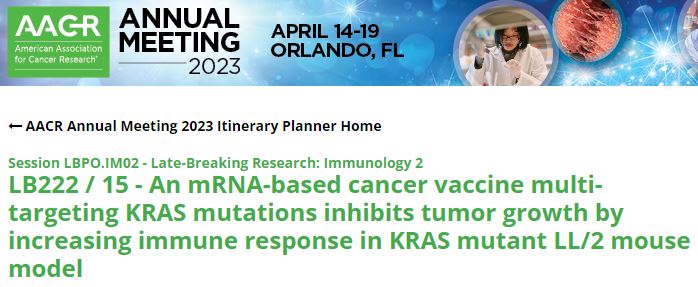
- Hanmi Pharmaceutical unveils mRNA cancer vaccine and new targeted anticancer lead compound at AACR2023. (Photo AACR) Hanmi Pharmaceutical is revealing its messenger ribonucleic acid (mRNA) cancer vaccine and new targeted anticancer lead compounds. The company reinforced its anticancer pipeline by adding next-generation anticancer drug technologies and targets to its existing major anticancer drug pipeline that has been making smooth progress in preclinical trials. According to industry sources on the 2nd, Hanmi Pharmaceutical will be presenting 7 abstracts related to its anticancer pipeline at the American Association for Cancer Research (AACR) Annual Meeting 2023 held in Orlando, Florida from the 14th (local time) to the 19th. At AACR 2023, the company will unveil abstracts about 2 lead compounds in its new anticancer pipeline. One will be about enhancing antitumor activity by inhibiting the YAP/TAZ-TEAD that targets the Hippo pathway, and the other is about an mRNA cancer vaccine. Also, Hanmi Pharmaceutical will be making abstract presentations on how its novel SOS1 inhibitor, HM99462, demonstrates antitumor activity against KRAS-mutant cancers, how its EZH1/2 dual inhibitor HM97662 demonstrates antitumor activity in T-cell lymphoma, the effect of combining use of HM97662 with an immune checkpoint inhibitor, the antitumor effect of its IL-2analog, HM16390, and how BH3120, a bispecific antibody that targets the G-1BB and PD-L1 simultaneously, stimulates T cells in tumor tissue preferred manner. The published abstracts showed that Hanmi’s lead compounds that target the Hippo pathway exhibited dose-dependent growth inhibitory effects in Hippo pathway-altered cancer cell lines. Its safety profile was also confirmed in vitro. Hanmi’s lead compounds that target the Hippo pathway also showed effective tumor growth inhibition activity within tolerable doses in cancer cell xenograft mouse models. The company plans to initiate preclinical studies after establishing a candidate substance for a preclinical study. In addition to the lead compound for the new anticancer drug that targets the Hippo pathway, Hanmi Pharmaceutical also disclosed the results of preclinical studies related to 4 candidates in its major pipeline through abstracts in advance. According to the abstracts, the SOS1 inhibitor HM99462 showed effective tumor growth inhibition activity within tolerable doses when administered alone in cancer cell xenograft mouse models harboring various KRAS mutations. Also, the combination of HM99462 with KRAS G12C or MEK inhibitors led to synergistic anti-tumor activity in both in vitro and in vivo models. HM99462 is currently in IND enabling GLP-toxicity studies and is palnning to initiate a clinical study in early 2024. At the meeting, Hanmi Pharmaceutical also disclosed the antitumor activity of HM97662 in T-cell lymphoma. The enhancer of zeste homology 2 (EZH2) and its homolog EZH1 are types of enzymes known to induce solid cancers like blood cancer. Hanmi confirmed the tumor growth inhibition effect of oral administration of HM97662 in EZH1/2 co-expressed lymphoma cell mouse xenograft model. The company also presented two papers on preclinical studies conducted on its IL-2 analog, HM16390. After administering HM16390 once a week for two weeks in mouse models with melanoma, complete response (CR) was observed in 89% and 100% of the mice at 2.1mg/kg and 8.5 mg/kg, respectively. The median overall survival was also dose-dependently prolonged median overall survival from 15 to 38 days at the dose range of 0.34 to 42 mg/kg. Also, in mouse models with melanoma, the combined use of HM16390 with PD-1 targeted immune checkpoint inhibitors once a week for 4 weeks, CR was increased from 22% with monotherapy to 88% with combination therapy. In addition, Hanmi’s Chinese subsidiary, Beijing Hanmi Pharm disclosed preclinical study results of its bispecific antibody that is designed to target two different targets imultaneously with the Pentambody™ platform. Pentambody is a next-generation, bispecific antibody platform technology that allows one antibody to bind to two different targets simultaneously. Beijing Hanmi Pharm confirmed that BH3120 showed strong antitumor efficacy in multiple tumor models, and that the combination of BH3120 with a PD-1 antagonist showed synergic effects of continuing to activate the T-cells while reducing immune-related side effects. In he toxicology studies conducted so far with cynomolgus monkeys, the No Observed Adverse Effect Level (NOAEL) of BH3120 was determined to be 200 mg/kg. Abstracts of preclinical studies related to mRNA cancer vaccines have not yet been published. The contents that will soon be disclosed are the preclinical results of a clinical study suppressing tumor growth in a KRAS mutant LL/2 mouse model using a multi-target mRNA-based cancer vaccine. Previously, Hanmi Pharmaceutical announced that it had successfully developed its own mRNA platform at the JP Morgan Healthcare Conference 2022 held in January last year. In addition to developing a COVID-19 vaccine, the company has been promoting the application of the mRNA platform in the fields of metabolic diseases, anticancer, cardiovascular and renal diseases, enzyme replacement therapy, etc.
