
- LOGIN
- MemberShip
- 2026-05-11 13:24:52
- Company
- Will reimb limitations for Xospata be resolved this time?
- by Eo, Yun-Ho Apr 24, 2023 05:52am
- Whether Xospata will be able to produce results and receive reimbursement extensions this time is gaining attention. Dailpharm’s coverage showed that the agenda on expanding reimbursement standards for Xospata will likely be deliberated by the Health Insurance Review and Assessment Service(HIRA) Cancer Disease Deliberation Committee. The drug had been first approved for reimbursement in March of last year, but demand had been rising for its improvement due to the low effectiveness of the set standards. The drug is indicated for the treatment of patients with relapsed or refractory acute myeloid leukemia (AML) with an FLT3 mutation (FLT3mut+). However, only patients who received allogeneic hematopoietic stem cell transplantation are eligible for reimbursement for up to 4 cycles. It has been pointed out that there were insufficient medical grounds to say that patients with a large therapeutic benefit were first offered benefits due to limited NHI finances, and various voices of concern followed immediately after the reimbursement was applied. As an acute disease, the current benefit restriction has been pointed to as an issue that needs to be addressed to save patients from missing real treatment opportunities. The current best option for a cure in AML patients is hematopoietic stem cell transplantation, but this is accompanied by a high risk of recurrence, and transplantation is not an option for the large number of elderly AML patients that exist. Therefore, there is no suitable treatment alternative other than Xospata available for patients who cannot undergo hematopoietic stem cell transplantations, and these patients are still using the chemotherapy that was developed over 40 years ago due to ineligibility for reimbursement of Xospata. Also, Xospata can offer an opportunity for a complete cure in patients who cannot receive transplantation from their initial treatment stage, but the limited reimbursement standards are depriving patients of the opportunity to start their initial treatment with Xospata. Therefore, it remains to be seen whether Xospata’s reimbursement extension will be deliberated in the upcoming CDDC meeting and produce positive results. Xospata targets both types of FLT3 mutations, FLT3-ITD and FLT3-TKD, and may be self-administered at home as a single oral tablet once daily without frequent hospital visits. Also, Xostapa has improved efficacy compared with existing chemotherapy.
- Company
- Hanmi Pharm, leading the outpatient prescription market
- by Chon, Seung-Hyun Apr 24, 2023 05:52am
- Hanmi Pharmaceutical continued its strong performance in the outpatient prescription market. With self-developed new complex drugs such as Rosuzet and Amosartan, it has been at the forefront of domestic and foreign pharmaceutical companies. Chong Kun Dang and Daewoong Pharmaceutical took the lead with high growth, while Daewoong Bio showed a steep rise. According to UBIST, a pharmaceutical research institute, on the 24th, Hanmi Pharm raised the highest outpatient prescription amount of 219 billion won in the first quarter, taking the lead among domestic and foreign pharmaceutical companies. It rose 7.0% from the previous year, predicting the lead for six consecutive years. Hanmi Pharmaceutical ranked first in prescription performance for the first time in 2018, and has been ranked first for five consecutive years until last year. Hanmi Pharmaceutical continued its leadership in the prescription drug market with new combination drugs. Rosuzet, a combination drug for hyperlipidemia, recorded W41.5bn in prescriptions, up 13.1% YoY in 1Q. Among all pharmaceuticals, it ranked second after Lipitor. Launched at the end of 2015, Rosuzet is a combination drug for hyperlipidemia consisting of Rosuvastatin and Ezetimbibe. Rosuzet is experiencing rapid growth thanks to market dominance and the popularity of its statin-ezetimibe complex. Rosuzet exceeded 100 billion won in prescriptions for three consecutive years from 2020. Rosuzet has been recording more than 10 billion won in prescriptions for 25 consecutive months from March 2021. Although domestic pharmaceutical companies are entering the statin/ezetimibe market in droves and competing overheated, Rosuzet has continued to grow rapidly based on its accumulated reliability. Amosartan also showed off its health. Along with Amosartan, Hanmi Pharmaceutical is selling Amosartanplus, Amosartan Q, and Amosartan XQ. Amosartan prescriptions increased 3.6% YoY to W22.1bn in the first quarter. Amosartanplus posted KRW 7.6 billion, up 6.5% YoY, and Amosartan XQ recorded KRW 2.3 billion, more than doubling from 1Q last year. Chong Kun Dang and Daewoong Pharmaceutical showed high growth and chased the leader. Chong Kun Dang's outpatient prescriptions in the first quarter were 172 billion won, up 14.9 percent from the previous year, ranking second. Chong Kun Dang ranked second in prescription performance for five consecutive years from 2018 to last year. Chongkundang Gliatirin, a brain function enhancer containing choline alfoscerate, recorded KRW 26.9 billion in prescriptions in the first quarter, up 13.7% from the previous year. Emorton, an osteoarthritis treatment, recorded KRW 14.4 billion in prescriptions in the first quarter, up 15.9% from the previous year. Imotun is an OTC made from extracts of 'Avocado-Soya Unsaponifiables'. As a result of the re-evaluation of benefits, the health authorities concluded at the end of last year that Emorten's benefits were appropriate, and it escaped from the danger of deleting benefits and its prescription performance increased further. Chong Kun Dang's new combination drug, Telminuvo, recorded KRW 13.4 billion in prescriptions, up 8.5% YoY in 1Q. Telminuvo is a combination drug combining Telmisartan and S-Amlodipine. Daewoong Pharmaceutical recorded KRW 137.6 billion in outpatient prescriptions in the first quarter, up 16.4% from the previous year. A new drug, Fexuclue, has been newly added. Fexuclue recorded KRW 10.8 billion in outpatient prescriptions in the first quarter. Fexuclue is a P-CAB class drug for the treatment of gastroesophageal reflux disease. Fexuclue received marketing permission from the Ministry of Food and Drug Safety in December 2021 and started selling in earnest as it was listed on the health insurance reimbursement list in July of last year. Fexuclue recorded KRW 3.3 billion in prescriptions in January, and expanded its prescription volume to KRW 3.6 billion and KRW 4 billion in February and March, respectively. Daewoong Bio showed the highest growth rate among major pharmaceutical companies. Daewoong Bio's first quarter prescriptions increased by 24.7% year-on-year to KRW 100.9 billion. Prescriptions for gliatamine, a component of choline alfoscerate, increased 25.8% from the previous year to KRW 37.1 billion in the first quarter.
- Company
- Dong-A ST, preclinical results for immuno-cancer drugs
- by Kim, Jin-Gu Apr 23, 2023 09:44pm
- Dong-A ST announced on the 20th that it announced the results of a preclinical study of the immuno-cancer drug candidate "DA-4505" at the American Association for Cancer Research, AACR) 2023 held in Orlando, Florida from the 14th to the 19th. The American Cancer Research Association is called the world's top three cancer societies, and is an annual academic conference where pharmaceutical bio companies from 120 countries participate to share cancer-related knowledge and research results. At the conference, Dong-A ST announced the "anti-tumor effect of DA-4505, a new aryl hydrocarbon receptor antagonist as an immune treatment in a tumor microenvironment," and "improving the efficacy of anticancer surgery and chemotherapy through the anti-tumor effect of a new AhR antagonist DA-4505. DA-4505 is an aryl hydrocarbon receptor (AhR) antagonist. AhR is a factor that regulates the immune system and plays a role in suppressing the immune response and preventing tumor cells from being attacked. Preclinically, DA-4505 has been shown to restore the inhibited immune response in the tumor microenvironment by inhibiting AhR. It has also been observed that stimulating immune cells such as dendritic cells and T cells are activated and cancer cells inhibit immunity. The improved tumor suppression effect was confirmed through preclinical comparison with AhR antagonists under development by global pharmaceutical companies. In addition, the increased tumor suppression effect was confirmed through the combination of DA-4505 and global pharmaceutical companies' anti-PD-1 immune checkpoint inhibitors. Global pharmaceutical companies are competing to develop AhR antagonists with new mechanisms of anticancer drugs, said Park Jae-hong, president of the R&D division of Dong-A ST. "We plan to apply for phase 1 clinical IND of DA-4505 in the second quarter of this year," he said.
- Policy
- The price of Envlo is 611 won & Qtern is 833 won per tab
- by Lee, Tak-Sun Apr 23, 2023 09:42pm
- Leading diabetes treatments such as Daewoong Pharmaceutical's new SGLT2i diabetes drug Envlo and AstroGeneca's SGLT2i+DPP4i complex Qtern will be poured out at once in May. In line with the expansion of the Forxiga patent expiration and diabetes drug combined salary standards this month, the application of new product benefits was concentrated in May. According to the industry on the 20th, Daewoong Pharmaceutical's salary will be applied to 611 won per table of 0.3mg per table on the 1st of next month. Envlo is known to have been determined at less than 90% of the price of existing SGLT2i drugs. It is lower than the existing SGLTi treatment Jardiance 10mg 660 won, Sugar 50mg 685 won, and Steglatro 5mg 666 won. The price of Envlo is higher than that of Forxiga, because at the time of calculating the Envlo price, Forxiga was before the patent expired. Forxiga 10mg will be reduced from 734 won to 514 won from May. Hanall Biopharma, an affiliate of Daewoong Pharmaceutical Co., Ltd. with Envlo, Eaglex and Daewoong Bio Benavo's price is the same. The SGLT2i+DPP4i compound will be reimbursed for the first time. Korea's AstraZeneca Qtern 5/10mg, Korea's Beringer Ingelheim's Esglito 10/5mg, Korea's MSD's "Stegluzan 5/100mg" and LG Chem's Zemidapa will be on the list in May. Qtern costs 833 won per tablet, Esglito costs 755 won for 10/5mg, Stgluzan costs 846 won, and Zemidapa costs 940 won per tablet. Chong Kun Dang Exiglu-S will also be on the list in May. It will be four months ahead of the expiration of the Sitagliptin material patent (September 1), drawing keen attention to Chong Kun Dang's strategy. The Dapagliflozin+Sitagliptin combination licensed by domestic companies is expected to be listed after September. These SGLT2i+DPP4i combination are only eligible for benefits in the third system combined with metformin according to the standard. It is on the list for 677 won per tablet, with Hutecs Korea Pharmaceutical's "Gluxiga 10/4mg," Jinyang Pharmaceutical's "Dapagreen-G 10/4mg," Kyungdong Pharmaceutical's "Dapamepi 10/4mg," and Mothers Pharm's Pharmaceutical's "Xig Double M 10/4mg."
- Company
- Patent dispute for Soliris faces 2nd trial/original company
- by Kim, Jin-Gu Apr 23, 2023 08:22pm
- SolirisThe dispute over Soliris patents between Samsung Bioepis and Alexion will be dealt with in the second trial. According to the pharmaceutical industry on the 19th, Alexion recently filed a lawsuit against Samsung Bioepis to cancel the trial decision. Alexion registered two Soliris patents. However, among the two patents, the composition patent expired in July 2015. The remaining patents are patents for use that expire in 2025. In June last year, Samsung Bioepis filed a request for invalidation of the patent for use. In February this year, Samsung Bioepis won the first trial. Samsung Bioepis qualified for the release of the Soliris biosimilar by winning the first trial. However, there is a possibility that a reversal ruling will be made in the second trial, so the product release is burdensome. Samsung Bioepis completed Phase 3 clinical trials for Soliris biosimilar in October 2021. He then applied for an item license to the Ministry of Food and Drug Safety in July last year. In November last year, it applied for and registered trademarks under the names of EPYSQLI and EPIZQA. If the patent dispute with Alexion is resolved and the item is approved, the product can be released. Soliris is a rare disease treatment developed by Alexion in the United States. It is known to be an ultra-high-priced drug with an annual drug cost of 500 million won. In Korea, AstraZeneca Korea is in charge of sales. In January 2010, it was approved in Korea as an indication of PNH. Since then, indications have expanded to atypical uremic syndrome, systemic septal work force, and optic nerve ulcer. The pharmaceutical industry is paying attention to the timing of Samsung Bioepis' release of the Soliris biosimilar. This is because Soliris is rapidly being replaced by Ultomiris, a follow-up drug. According to IQVIA, a pharmaceutical market research firm, Soliris' sales were 10.1 billion won last year. It decreased by one-third from 31.1 billion won in 2021. Ultomiris, on the other hand, increased 2.2 times from 19.5 billion won to 43.2 billion won during the period.
- Company
- Pfizer Launches 'Pfizer Pro', a Customized Digital Platform
- by Eo, Yun-Ho Apr 23, 2023 07:48pm
- Pfizer Pharmaceutical Korea (CEO Oh Dong-wook) announced on the 12th that it has launched an integrated digital platform "Pfizer PRO" for health and medical experts to strengthen its Omni-Channel strategy. Pfizer Pro can be easily subscribed to by any health care professional and provides optimal content according to the preferred channel and format. Users can receive various pharmaceutical-related data, including the latest updates on Pfizer products, related disease information, and overseas treatment trends, and will be able to check product-related events and conference information and apply for participation right away within Pfizer Pro. Virtual Connect (VCC), a video meeting with a professional representative, can also be conveniently applied on the platform. Virtual Connect is a one-on-one video meeting held with professional managers on desired devices such as mobile, desktop, and tablet PCs at any time and place desired by medical staff. Pfizer Pro is an integrated customer communication channel prepared at the global level, has the same design and format around the world, and can be used intuitively with a UI configuration based on customer convenience. This is part of Pfizer's strategy to strengthen omnichannel, which puts customer-centered communication and experience first, and has been transformed into an integrated platform at the enterprise level by expanding the existing digital channels operated by each business unit. In the future, functions tailored to the needs of health care experts, such as communication channels, will be continuously developed and strengthened. Oh Dong-wook, CEO of Pfizer, said, "Pfizer is using bold investments and strategies that prioritize customer-centered innovation to provide the optimal customer experience in a rapidly changing market. We will not stop at the launch of this platform, which will play a pivotal role as a hub for various channels to communicate with customers, but will continue to lead various challenges and innovations according to customer needs."
- Policy
- CPAC 'Reducing PMS cases for Zerbaxa deemed valid'
- by Lee, Hye-Kyung Apr 21, 2023 05:56am
- Experts in Korea have agreed that it is valid for MSD Korea to change its post-marketing surveillance plan for ‘Zerbaxa inj (ceftolozane/tazobactam),’ which is used to treat severe multidrug-resistant Pseudomonas aeruginosa infections, in consideration of its usefulness and usage. The biggest reason was due to the company’s difficulty in collecting cases for surveillance caused by its low use due to long-term out-of-stock status, reimbursement restrictions after receiving marketing authorization, and a voluntary recall measure. According to the minutes of the Central Pharmaceutical Affairs Council that was recently disclosed by the Ministry of Food and Drug Safety, the CDDC decided to reduce the required number of cases from 3,000 to 460, and change the surveillance period from 6 years to '6 years + 4 years'. The minutes showed that one committee member said, “The drug is an essential medicine that is necessary for the treatment of carbapenem-resistant patients, and its reason for the sluggish collection of surveillance cases is reasonable. The company's PMS plan that was submitted includes efforts to collect cases in the future, therefore it is deemed appropriate for the council to allow the company to reduce the number of required surveillance cases.” Another member said, “ceftolozane and tazobactam formulations had been voluntarily recalled for a considerable amount of time. Considering its narrow scope of reimbursement and indication, I agree on changing its PMS plan." MSD Korea had previously recalled its products as a precautionary measure due to the non-conformity of sterility tests before shipping them to overseas manufacturing plants in 2020. Also, the drug was granted reimbursement approval only in October 2022, although it was approved in 2017. One committee member said, “I agree on the usefulness of the drug as a national essential drug used to treat patients with multidrug-resistant bacteria. I also agree that the sluggish case collection rate is attributable to the low prevalence rate of its indication, supply disruptions, and non-reimbursement matters.” In other words, experts saw that it was necessary to adjust the drug’s PMS plan and order the collection of 460 cases and extend the surveillance period by 4 years, and wait for the company’s efforts on the low prevalence and supply disruption part. In response, the CPAC said due to its non-reimbursement until recently and out-of-stock issue, it was difficult to report 3,000 cases of Zerbaxa use in the current 6-year period and agreed that around 100 patients commonly register in trials for efficacy evaluation, etc. for ceftolozane and tazobactam use.
- Company
- Piqray to soon be deliberated by CDDC for reimb
- by Eo, Yun-Ho Apr 21, 2023 05:55am
- Whether reimbursement discussions for the PIK3CA gene-targeting anticancer drug ‘Piqray’ will make progress is gaining attention. According to industry sources, Novartis Korea’s Piqray (alpelisib) is expected to be deliberated at the coming Health Insurance Review and Assessment Service’s Cancer Disease Deliberation Committee meeting. The drug had been unable to pass deliberations from the same committee in February last year and had refiled an application for reimbursement at the end of last year. However, based on CDDC’s A8 country assessment results that were disclosed after the meeting, reimbursement standards discussed this time will be narrowed to PIK3CA mutation-positive patients whose tumor had progressed after being treated with CDK4/6 inhibitor·aromatase inhibitor combination therapy. Currently, Piqray is being reimbursed in HTA countries including the UK and Canada. What kind of results Piqray and its narrowed reimbursement standards will produce this time remains to be seen. Piqray, which was approved in Korea in May 2021, is a PIK3Caα inhibitor that blocks the overactivation of the PI3K pathway by inhibiting the over-activation of PI3K-α caused by a mutation of a PIK3CA gene. The targeted therapy is prescribed in combination with ‘Faslodex (fulvestrant)’ for patients with HR+/HER2- metastatic or advanced breast cancer who have progressed on or after prior therapies. Meanwhile, the efficacy of Piqray was demonstrated in the SOLAR-1 trial, a study on 572 men and postmenopausal women with HR-positive, HER2-negative, advanced or metastatic breast cancer whose cancer had progressed while on or after receiving an aromatase inhibitor. Results showed that Piqray, when used in combination with Faslodex, improved the median PFS (Progression- Free survival) of cancer patients with the PIK3CA mutation from 5.7 months to 11 months. The objective response rate (ORR) that shows the proportion of patients whose tumor size had reduced by 30% or more was 35.7% in the combination therapy group, which was over a twofold difference from the 16.2% in the monotherapy group. Although the secondary endpoint, overall survival (OS) in the PIK3CA-mutated cancer group was 39.3 months in the combination therapy group, 8 months longer than the 31.4 months in the monotherapy group, the results were not statistically significant.
- Product
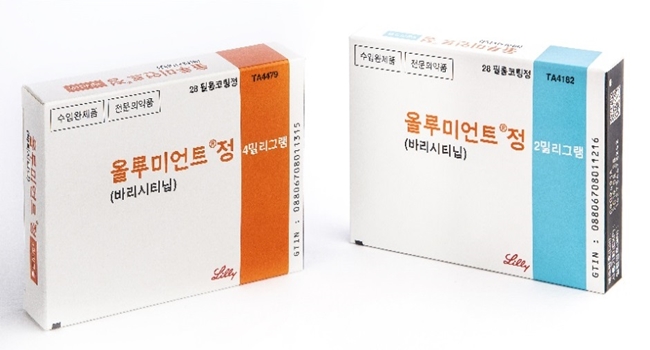
- Olumiant set the first milestone for circular hair loss
- by Hwang, byoung-woo Apr 20, 2023 05:58am
- As Olumiant is listed as a treatment for severe alopecia areata in adults for the first time in Korea, expectations are growing as to how much impact it will have. Experts say that there are many positive factors, such as increased interest in hair loss disease, as it is a treatment that has already been in high demand. However, some point out that future tasks such as a clear distinction between mild and severe in alopecia areata and the establishment of guidelines must be preempted in order for new indications to quickly take root. According to the pharmaceutical industry on the 4th, the Ministry of Food and Drug Safety approved Lilly's oral JAK inhibitor Olumiant as the first treatment for severe alopecia areata in adults in Korea. A specific target is severe alopecia areata in adult patients aged 18 years or older. It is true that there was no approved treatment for alopecia areata before the approval of Olumiant. Previously recommended treatments had limited evidence to support their effectiveness. Professor Kim Moon-beom (Pusan National University Hospital, Dermatology), president of the Korean Hair Society, said, "Severe alopecia areata has suffered from treatment limitations due to the low public awareness of alopecia areata and the absence of approved drugs for patients with alopecia areata." The society has already started efforts to improve the treatment environment for patients with severe alopecia areata through the revision of the treatment guidelines since last year.” Won Jong-hyeon, public relations director of the Hair Society (Seoul Asan Medical Center, Dermatology Department) said, "It is a drug that has been in standby demand for patients with severe hair loss, so it is expected that prescriptions and intake will become active with approval." It is positive that it has become a new hope for hair loss patients or patients who have experienced side effects for which the existing immunosuppressive treatment was not easy.” Olumiant's approval for severe alopecia areata in adults was based on the randomized, double-blind, placebo-controlled Phase 3 clinical trials BRAVE-AA1 and BRAVE-AA2. Both studies included Korea. The primary endpoint of the BRAVE-AA1 and BRAVE-AA2 studies was the proportion of patients achieving a SALT score of 20 or less (more than 80% hair-covered scalp) at week 36. Olumiant 2mg and 4mg showed superiority to placebo in terms of hair regrowth effect at 36 weeks. In BRAVE-AA1, the rates of achieving a SALT score of 20 points or less at week 36 of the Olumiant-administered group were 38.8% (4mg) and 22.8% (2mg), which were statistically significantly higher than 6.2% of the control group (placebo). If so, can Olumiant's indication for severe alopecia areata in adults leads to immediate prescription as long as there was a waiting demand? In the clinical field, in order for new drugs to take root more quickly, it is the view that a clear distinction between severe and mild conditions in alopecia areata and the establishment of a treatment guide should be given priority. According to the guideline for the treatment of alopecia areata published last year by the Hair Society, oral JAK inhibitors are systemic immunosuppressive agents (systemic steroid ± oral cyclosporine therapy) or diphenylcyclopropenone, DPCP and It is recommended as a first-line treatment agent. Regarding this, PR director Won said, "For future prescriptions, it is expected that the risk of side effects, including age, tumor occurrence, and presence of comorbidities, will be considered." The aspect of being able to do so will also be a consideration in the prescription,” he explained.
- Company
- Expansion of reimbursement for DM drugs
- by Moon, sung-ho Apr 20, 2023 05:58am
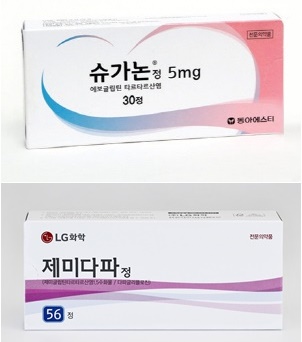
- Donga ST Suganon and LG Chem Zemidapa Amid the expansion of reimbursement criteria between diabetes treatments by class from April, attention is focused on the expansion of the two-drug combination of SGLT-2 inhibitor and DPP-4 inhibitor. This is because pharmaceutical companies are waiting for a reimbursement after receiving approval for a combination of DPP-4 inhibitor + SGLT-2 inhibitor. According to the pharmaceutical industry on the 11th, HIRA recently provided guidance through Q&A on matters to be aware of when prescribing medical institutions in accordance with the expansion of the reimbursement standard for diabetes treatment by category. First of all, since April, the number of subjects for the three-drug therapy has also increased. If the HbA1C is 7% or higher even if the two-drug regimen is administered for more than 2 to 4 months, combination therapy with one diabetes drug of a different mechanism added is acceptable. For the three-drug regimen, reimbursement standards for the combination of 'metformin + SGLT-2 inhibitor + DPP-4 inhibitor' and 'metformin + SGLT-2 inhibitor + Thiazolidinediones' have been set. However, combinations of drugs that are not recognized in the two-drug regimen should not be included. Among them, Steglatro has been excluded from the combination of metformin + SGLT-2 inhibitor + TZD. What is noteworthy is that the two-drug combination of 'SGLT-2 inhibitor and DPP-4 inhibitor', which was highly demanded in the April reimbursement standard expansion, was not included. Pharmaceutical companies are competitively launching 'SGLT-2 inhibitor and DPP-4 inhibitor' combination drugs. Recently, Dong-A ST obtained approval for Sugadapa, a combination drug of the SGLT-2 inhibitor family, and announced the release. Sugadapa is a combination drug that combines Evogliptin, the main ingredient of the DPP-4 inhibitor diabetes treatment 'Suganon' developed by Dong-A ST, and Dapagliflozin, an SGLT-2 inhibitor. Ildong Pharmaceutical is also actively conducting academic marketing for Qtern, which was introduced from AstraZeneca and released as a non-reimbursement, while LG Chem recently launched Zemidapa, a new diabetes combination drug based on Zemiglo. Zemidapa is also a combination drug that combines Gemipliptin, a DPP-4 inhibitor, and Dapagliflozin, an SGLT-2 inhibitor. Dong-A ST made it official that "Sugadapa will go through the health insurance registration process when the combined benefit is expanded after the release of non-coverage." The pharmaceutical industry evaluated that the two-drug regimen between SGLT-2 + DPP-4 inhibitors is also busy, as it is about to be reimbursed. An official from the pharmaceutical industry, who requested anonymity, said, "Since the two-drug regimen between SGLT-2 + DPP-4 is also scheduled to be reimbursed, pharmaceutical companies are also conducting various sales and marketing activities to preoccupy the market." There are concerns that it may not be able to preoccupy its position in the clinical field due to the expansion of reimbursement standards and the pouring in of numerous generic items,” he expressed regret. He said, “We are looking forward to clinical site launches according to reimbursement application within the first half of the year.” “Since it is a newly approved item, it seems to have been excluded from the reimbursement standard revision because it is necessary for the reimbursement application process such as drug price setting. I have no choice but to," he said.
