
- LOGIN
- MemberShip
- 2026-05-11 11:24:41
- Company
- RWD results reaffirm Leclaza’s efficacy in practice
- by Chon, Seung-Hyun May 23, 2023 05:54am
- Professor Lim Sun Min (right) and Professor Beung-Chul Ahn (left) are presenting Leclaza study results Study results that confirm the efficacy and safety of Yuhan Corp's new anticancer drug ‘Leclaza’ in the real world has been released. Lim Sun Min, Professor of Oncology at Yonsei Cancer Center, and Beung-Chul Ahn, Professor of Oncology at the National Cancer Center, met with reporters at the Korea Pharmaceutical and Bio-Pharma Manufacturers Association head office in Seocho-gu, Seoul on the 22nd to introduce the real-world data (RWD) that confirms the efficacy and safety of Leclaza in practice. This was the first-ever real-world study results announced since Leclaza’s approval, and was published in the journal, Lung Cancer. Leclaza is an NSCLC treatment that was approved as the 31st homegrown novel drug in January last year. It is a 3rd generation EGFR TKI that inhibits the proliferation and growth of lung cancer cells. It is currently approved as a treatment for patients with locally advanced or metastatic NSCLC who developed resistance after being previously treated with 1st generation or 2nd generation EGFR-TKIs. The research team conducted a retrospective study on 103 patients with EGFR T790M mutation-positive NSCLC patients who developed resistance after being previously treated with EGFR-TKI that received Leclaza from January 2021 to August 2022 at Yonsei Cancer Center and the National Cancer Center. 90 of the 103 patients received Leclaza as a second- or third-line treatment. The patients’ primary efficacy endpoint in the study, median progression-free survival (mPFS), was 13.9 months. This was consistent with the mPFS of 11.1 months confirmed in LASER201, the study that became the basis of Leclaza’s approval. The objective response rate (ORR) was 62.1%, slightly higher than the 55.3% observed in the LASER201 study. In terms of safety, the drug was also well-tolerated, similar to previous studies. The research team explained, “ The real-world study reaffirmed the consistent effect and efficacy of Leanza as a second-line treatment for EGFR T790M mutation-positive NSCLC patients in practice.” Leclaza also showed similar efficacy in patients with the Exon19 deletion mutation (Exon19del) and the L858R substitution mutations (L858R), and the team saw no decrease in efficacy in patients whose dose was reduced. Professor Lim said, “The study holds significance for being results from the first real-world study that confirmed the efficacy and safety profile of Leclaza in NSCLC patients in Korea’s actual prescription environment.“ Lim added, “Study results showed consistent data with LASER201, the trial that was conducted for Leclaza’s approval. Along with other clinical data, these RWD results will be actively used as grounds for prescribing Leclaza to patients in practice.” In the study, Leclaza’s treatment effect was also significant in patients with brain metastasis as in the LASER201 study. The mlPFS (median intracranial progression-free survival) was 17.1 months, and ORR was 57.6%. Professor Ahn said, “Brain metastasis is found in about 25% of NSCLC patients upon diagnosis, and the condition is so common that 50% of patients eventually experience brain metastases as the condition progresses. This is why a drug’s effect in NSCLC with brain metastasis is a very important consideration in prescribing drugs for NSCLC in the field.” Professor Ahn added, "In the real-world study, Leclaza has consistently demonstrated its antitumor effect in NSCLC patients with brain metastases, and we are thus accumulating evidence to further prescribe Leclaza for those patients in Korea.”
- InterView
- The use of HTN combi tx in Korea is the highest in the world
- by May 23, 2023 05:53am
- Park Chang-kyu, Chairman of the Society of Hypertension (Korea University Guro Hospital) (photo by Dailypharm) Korea is the best in the world for complex drugs related to hypertension and hyperlipidemia. The drugs prescribed for each patient’s condition will change, but recently there is a growing trend to use complex drugs that are convenient to take.” Park Chang-gyu, chairman of the Society for Hypertension (Professor, Cardiovascular Center, Korea University Guro Hospital, 64), met with Dailypharm at the '2023 Korean Society of Hypertension Spring Conference' held at Exco in Daegu on the 20th and said this. Park Chang-gyu, president of the Society, graduated from Korea University College of Medicine and received a master's degree from the graduate school. He received a doctorate in internal medicine from Korea University School of Medicine. He was an exchange professor at the University of Ottawa, Canada. Since 2014, he has been the head of the cardiovascular center, the head of internal medicine, and the chairman of the faculty council at Korea University Guro Hospital. Since last year, he has been serving as the president of the Hypertension Society. Hypertension is one of the chronic diseases that most require lifelong treatment. This disease can lead to a healthy life through management and treatment. If it is judged asymptomatic and not treated, it can lead to fatal complications. Essential hypertension occurs in 90% of hypertensive patients. It is a disease that is difficult to treat because the cause is unknown. Efforts to control blood pressure to normal should be made for the rest of pt's life. "The trend of prescribing high blood pressure drugs has changed to prescribing a combination drug rather than giving individual drugs such as ARB or CCB," said Park. "It has already been published in papers that the combination drug is beneficial for patient treatment," Park said. Park also presented his opinion on areas where pharmaceutical companies can secure competitiveness in the complex drug market where competition is overheated. “To strengthen the competitiveness of complex drugs, first of all, the scientific basis for the treatment effect or safety is the most important,” said Chairman Park. There will be," he said. Park also said, "Some companies can coat drugs well so that side effects such as gastrointestinal disorders do not appear, and some companies can develop improved formulations for drugs that are weak to moisture and can show reasonable drug prices by improving the production process." "Considering various factors such as technology and price competitiveness, we will be able to secure the competitiveness of high blood pressure combination drugs," he said. With an increasing number of young hypertensive patients, “We will engage in community education and exchanges with global societies” Park also introduced that the number of young hypertensive patients is increasing and that active management and treatment are needed, as well as strengthened treatment guidelines. According to HIRA's health care big data, hypertensive patients aged 20 to 29 increased from 29,123 in 2017 to 42,048 in 2021, a 44.4% increase. During the same period, the number of hypertensive patients aged 30 to 39 increased by 26.6% from 166,644 to 210,890. Park plans to further publicize the revised treatment guidelines in November last year for the increasing number of young hypertensive patients and health care at the age of 100 years old. The revised 2022 hypertension treatment guidelines recommended lowering the target blood pressure to 130. The target blood pressure was lower than the previous guideline. The Society of Hypertension also gave a recommendation grade for the appropriate use of combination drugs through an amendment. This means that it is recommended to consider treatment more actively than before. Park said, “Now, except for simple hypertension, most hypertension meets the enhanced blood pressure standard.” “It was announced in November 2022, but education that introduces the reason for lowering the standard and research needs to be known more starting this year.” "he said.
- Policy
- Domestic DM combi drugs selected for market competitiveness
- by Lee, Tak-Sun May 23, 2023 05:50am
- LG Chem and Dong-A ST are attracting attention by listing their DPP4i+SGLT2i combination as benefits, lowering the amount added. It is interpreted as being conscious of price competitiveness. According to the industry on the 22nd, Dong-A ST Sugadapa set the upper limit lower than the formula based on addition. This drug is an improved new drug combination, so it was able to receive a drug price that combines 59.5% of the individual ingredients. If there is no addition, you will receive the sum of 53.5% of the individual ingredients. For example, 434 won, 59.5% of 730 won for Evogliptin 5mg and 393 won, 59.5% of 734 won for Dapagliflozin 10mg, was the amount Sugadapa could receive. Dong-A ST decided to list it at 799 won, lower than the formula. As a result, it became the product with the lowest upper limit than the SGTL2!+DPP4i complex, which was released first last month. For the same reason, LG Chem's Zemidapa was also listed lower than the added amount. Zemidapa was able to receive the sum of 68% of the individual ingredients as an innovative new drug complex. The sum of 509 won, or 68% of 749 won for Gemigliptin 50mg and 499 won, or 68% of 734 won for Dapagliflozin 10mg, was able to receive 1,008 won. Zemidapa was also listed at a lower price of 940 won. However, even though the price of Zemidapa has been lowered, the upper limit is higher than that of competing drugs. After one year, the price of the two drugs will drop to the sum of 53.55% of the individual ingredients. Sugadapa is 784 won, and Zemidapa is 794 won. In any case, this is because a lower addition than the existing formula was applied. The low pricing of the two pharmaceutical companies is attracting attention in that they usually try to get a higher upper limit. This can be interpreted as an intention to induce the market to settle down by lowering the price, as metformin + SGLT2i + DPP4i has been covered by reimbursement since April, and the SGLT2i + DPP4i combination was released for the first time in May. Moreover, it seems to be aware of the competition as not only the two domestic products but also four other complexes were released.

- Company
- SGLT2 lowers BP, but more evidence is needed to use it alone
- by Hwang, Jin-joon May 23, 2023 05:50am
- Professor Cho Ik-Seong of Severance Hospital is giving a presentation (photo by Dailypharm) There was an opinion that there is still insufficient evidence for the use of the sodium-glucose cotransporter-2 (SGLT-2) inhibitor, a treatment for type 2 diabetes and heart failure, for the treatment of hypertension. It can be expected to lower blood pressure in patients with heart failure or diabetes, but it is difficult to use it alone for the treatment of hypertension. Professor Cho Ik-Seong of Severance Hospital held a hypertension drug treatment update session at the '2023 Korean Society of Hypertension Spring Conference' held at EXCO in Daegu on the 20th and said, "SGLT-2 inhibitors are a drug that is attracting attention in the field of diabetes and heart failure. · For patients suffering from high blood pressure, it can act as a weak blood pressure drug," he said, "but more data are needed to use it only for high blood pressure." Famous drugs for SGLT-2 inhibitors include AstraZeneca's 'Forxiga' and Eli Lilly/Boehringer Ingelheim's 'Jardiance'. Recently, Daewoong Pharmaceutical's 'Envlo', Donga ST's 'Sugadapa', LG Chem's Zemidapa, and Chong Kun Dang's Exiglu M have been released, causing a sensation in the diabetes treatment market. SGLT-2 inhibitor drugs are evaluated as next-generation treatments globally because they have not only blood sugar-lowering effects but also cardiovascular disease prevention, weight loss, and blood pressure-lowering effects. According to the 2021 Diabetes Guidelines, in the case of type 2 diabetes accompanied by heart failure, treatment with proven cardiovascular benefit is considered first. Even in the presence of atherosclerotic cardiovascular disease, SGLT-2 inhibitors are used in combination therapy. The Korean Heart Failure Association completely revised the guidelines last year and recommended the administration of SGLT-2 inhibitors to reduce hospitalizations or cardiovascular deaths due to heart failure, regardless of diabetes mellitus. The fact that SGLT-2 inhibitors have the effect of lowering blood pressure can be confirmed through various studies. According to the 'phase 3 study on the blood pressure and blood sugar lowering effect of dapagliflozin versus placebo on antihypertensive combination therapy in patients with type 2 diabetes' published in the international journal The Lancet, the SGLT-2 inhibitor Dapagliflozin-administered group had lower blood pressure than the placebo control group. The Hypertension Society also acknowledges that SGLT-2 inhibitors lower blood pressure. In the hypertension treatment guidelines, SGLT-2 inhibitors have a blood pressure-lowering effect, so care should be taken to see if the dose of antihypertensive drugs needs to be adjusted. Professor Ik-Sung Cho explained, "In patients without heart failure but with diabetes and high blood pressure, the use of SGLT-2 inhibitors lowered SBP by about 8 compared to placebo." Professor Cho continued, "Looking at the results of studies on patients suffering from both diabetes and heart failure, SGLT-2 inhibitors can lower SBP by 4 to 7 and diastolic blood pressure (DBP) by 1.5 to 2." -2 inhibitors are effective in lowering blood pressure, but it seems difficult to use them only for hypertension.”
- Company
- AZ runs a neurofibromatosis disease awareness campaign
- by Jung, Sae-Im May 22, 2023 05:42am
- AstraZeneca Korea announced on the 18th that it had conducted the 'Twinkling a Light for NF-1 Campaign' for its executives and employees to support domestic neurofibromatosis patients in celebration of 'World Neurofibromatosis Awareness Day'. The Children's Cancer Foundation designated May 17 every year as World Neurofibromatosis Awareness Day to raise social interest in neurofibromatosis. Worldwide, various activities are conducted every year to increase treatment access for patients with neurofibromatosis and support their overcoming disease. AstraZeneca Korea held in-house lectures, disease infographic exhibitions, etc. to better understand pediatric patients with neurofibromatosis in Korea, and executives and employees carried out a campaign to deliver messages of hope and commitment to improve the domestic treatment environment. Neurofibromatosis is a rare disease that causes developmental abnormalities in the nervous system, bones, and skin due to genetic mutations. The cafe-au-lait-spot is characteristic, and axillary/inguinal spots and Leish nodules, which are small hamartomas, appear on the iris. Accurate clinical diagnosis of neurofibromatosis type 1 can usually be made before the age of 10, and symptoms tend to intensify with age. About 20 to 50% of patients with type 1 neurofibromatosis experience plexiform neurofibroma, which can occur anywhere in the body except for the brain and spinal cord. Depending on where it occurs, it causes pain as well as various body deformities or damage to vision, hearing, and cognitive abilities. Surgical resection was the only fundamental treatment for neurofibromatosis. In the case of plexiform neurofibroma, it appears in various irregular shapes and is difficult to completely remove, leaving the risk of tumor recurrence even after surgery. AstraZeneca Korea received approval for Koselugo, the first type 1 neurofibromatosis treatment in Korea, in May 2021. Koselugo, the only treatment for neurofibromatosis type 1 to date, reduced the tumor size by more than 20% in 68% (34 out of 50) of patients administered in global clinical studies, and among them, 82% (28 patients) showed a response of more than 12 months. showed lasting results. Cheol-Woong Kim, Executive Director of AstraZeneca Korea's Rare Disease Division, said, "Through the Neurofibromatosis Awareness Day event, it was an opportunity to properly understand neurofibromatosis disease and think about what AstraZeneca Korea executives and employees can do for patients." said.
- Company
- Hana Pharm, signed a sub-license agreement for Byfav
- by Lee, Seok-Jun May 22, 2023 05:42am
- Hana Pharm announced on the 18th that it had signed a sub-license contract with Hyphens Pharma of Singapore for the exclusive rights to Byfavo 20mg, an anesthetic new drug. This contract is the first achievement of local partnering while Hana Pharm received licenses for six Southeast Asian countries from German PiON in 2020 and was in the process of obtaining licenses for each country. Byfavo 20mg has indications for surgical sedation that can be used for endoscopic sedation in addition to induction and maintenance of general anesthesia, which is the indication for 50mg. Hyphens Pharma of Singapore is a major pharmaceutical company in Singapore with branches in five major Southeast Asian countries and about 500 employees. Choi Tae-hong, CEO of Hana Pharm, said, "Partnering was made with Hyphens Pharma, which has excellent capabilities in the gastroenterology market in Singapore. We will accelerate the timing of approval and release in Singapore as much as possible and use it as a bridgehead to enter the Southeast Asian endoscopic sedation market."
- Policy
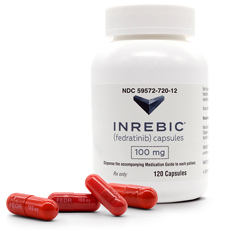
- Myelofibrosis tx BMS Inrebic to be covered from June
- by Lee, Tak-Sun May 22, 2023 05:42am
- BMS Korea's myelofibrosis drug Inrebic will be covered from June. This drug is expected as a second-line treatment option for myelofibrosis patients, of which there are about 1,700 in Korea. According to the industry on the 19th, Inrebic will be listed as a salary at 39,520 won per capsule for the maximum amount from June 1st. Inrevic Capsule is indicated for the treatment of splenomegaly or symptoms associated with the following diseases in adult patients previously treated with Ruxolitinib (Brand Name: Jakavi). The following diseases are ▲primary myelofibrosis, ▲myelofibrosis after polycythemia vera, ▲and myelofibrosis after essential thrombocythemia. In February, it passed the HIRA Cancer Disease Review Committee and the Pharmaceutical Reimbursement Evaluation Committee, and after negotiations with the NHIS, it was listed as reimbursement in June. Inrebic is the first medicine to treat myelofibrosis in 10 years. Myelofibrosis is a rare hematological cancer in which normal hematopoietic function is impaired along with the excessive fibrotic proliferation of the bone marrow. Patients experience symptoms that affect their quality of life, including an enlarged spleen, fatigue, itchiness, weight loss, night sweats, fever, and bone pain. Until now, patients with myelofibrosis had no alternative when treatment with the JAK inhibitor Jakavi failed, but with the release of Inrebic, a second treatment option was created. Jakavi is a blockbuster drug with global sales of $388 million last year.
- Company
- New formulations for schizophrenia are being commercialized
- by Eo, Yun-Ho May 22, 2023 05:42am
- According to related industries, new long-acting formulations of existing schizophrenia treatment drugs, such as Abilify and Invega, are being released one after another. Lundbeck and Otsuka Pharmaceutical obtained US FDA approval for Abilify Asimtufii, which is administered once every two months, last month. Abilify Asimtufii confirmed its efficacy through a clinical study comparing 266 patients with schizophrenia to Abilify Maintena. In pharmacokinetic analysis, Abilify Asimtufii induced plasma aripiprazole concentrations similar to those of once-monthly Abilify Maintena. Janssen's Invega Hafyera is a 6-month long-acting drug that is commercialized more quickly. After obtaining US FDA approval in 2021, the drug was approved in Korea in 2022, and insurance benefits were applied from this month. Invega Hafyera is eligible for reimbursement only when patients have been treated with Invega sustenna for at least 4 months or with Invega Trinza for at least one cycle. Invega Hafyera, which is administered every six months, has confirmed its safety and tolerability profile through PSY3015 clinical trials. Professor Kim Se-hyeon of the Department of Psychiatry at Seoul National University Hospital said, "We expect that patients with schizophrenia will be able to enjoy the benefits of returning to society and restoring confidence in life by continuing treatment with stable drug compliance and convenience through long-acting injections." said.

- Company
- “Need to increase support for new AI drugs in Korea”
- by Jung, Sae-Im May 22, 2023 05:42am
- “Although artificial intelligence (AI) new drug development ecosystem is being created in Korea, there are still many areas that we are lacking at a global level in terms of manpower or investment scale. Chinese companies that were established around the same time received more than KRW 500 billion in investments, while Korean companies only received KRW 87.8 billion, which delayed their growth. It's time to make efforts to expand this ecosystem while building success stories through step-by-step collaboration.” Wooyeon Kim, Head of Korea Pharmaceutical and Bio-Pharma Manufacturers Association (KPBMA)’s AI New Drug Development Support Center stressed so at the ‘Pharmaceutical-Bio AI Innovation Forum’ that was held at Lotte Hotel Seoul in Sogong-dong on the 19th. Wooyeon Kim, Head of the AI New Drug Development Support Center At the event, which was hosted by KPBMA, Kim explained that Korea’s AI drug development market has grown steadily over the past 5 years, forming a virtuous cycle ecosystem. Companies and research centers are actively collaborating with AI new drug development companies. There were 88 cases of such collaborative efforts being made for drug repositioning, target discovery, and candidate substance discovery including partnerships between ▲ Boryung Pharmaceutical - Oncocross ▲ Samsung Seoul Medical Center - NetTargets ▲ Dong-A ST - Pharos iBio, etc. The government has also been continuing its efforts. Ministry of Science and ICT has been investing a total of KRW 18 billion for the discovery of innovative new drugs using AI for 5 years since 2022. The Ministry of Health and Welfare is also planning to build a Korean-style Rosetta Fold (an AI-applied protein structure prediction and analysis platform) next year and promote technology matching between pharmaceutical companies and AI companies. In addition, supports for projects such as medical big data construction and AI-based new drug development education are also being carried out. However, Korean AI drug development companies are still experiencing difficulties in securing talent and attracting investment. The stark difference stands out when compared to the global environment. Kim cited the cases of Standigm, a Korean company, and XtalPi, a Chinese company. Although the two companies were founded at a similar foundation time and owned similar levels of technology. However, Standigm had received KRW 87.8 billion in investments while XtalPi attracted 6 times as much, which was KRW 533.8 billion. XtalPi has 700 professionals, which is 10 times more than the 54 experts at Standigm. On this, Kim said, “Although the two companies were established at a similar period, XtalPi has achieved far much on the global stage due to its overwhelming investment and manpower over Standigm. In this graph that shows the growth rate of each company, XtalPi has shown faster growth.” In order to revitalize the ecosystem, Kim saw the need to accumulate successful collaboration cases in each stage of development, and encouraged research on matching supply and demand in the area. "There should be more cases that show companies that drug development can be accelerated and efficiency increased through the use of AI in the industry." Kim added, "This difference is more due to the difference in investment and manpower rather than technology. Although the AI drug development ecosystem in Korea has grown considerably, we are still lacking in many, many areas.” Kim also asked for the government’s closer attention in the field as global competition is taking place. He said, "A lot of investment is being made, mainly in the US and China, for the development of new AI drugs. Korea should also make bold investments and accumulate results step by step." Kim stressed that Korea should also strive to nurture convergent talents that understand AI. Kim said, "Demand for talent training is very high. More than 3,800 people attended the 385 hours of lectures that were conducted at our center. In particular, as convergence is very important in this field, we need to establish a system that continues to nurture convergent talent."
- Policy
- Vemlidy’s price 4.7% ↓...Vemliver’s voluntarily 12.6% ↓
- by Kim, Jung-Ju May 22, 2023 05:42am
- Gilead’s adult chronic hepatitis B treatment, ‘Vemlidi Tab (tenofovir ala fenamide) will be subject to Price-Volume Agreement price cuts and be sold at a 4.7% lower price starting next month. Daewoong Pharmaceutical opted to reduce the price of its latecomer Vemliver Tab by 12.6%. According to industry sources on the 21st, the Ministry of Health and Welfare (MOHW) ‘Amendment to the drug reimbursement list and reimbursement ceiling price table’ contains the abovementioned changes that will become effective as of the 1st of next month. ◆Price cut for PVA drugs = The PVA price cut will be applied to two products next month, and the two drugs underwent PVA negotiations with the National Health Insurance Service, one as a Price-volume agreement type ‘A’ and the other as a Price-volume agreement type ‘B’ drug. First, the drug that completed negotiations as a PVA Type A drug was Abbvie’s Rinvoq (upadacitinib), and its price will be reduced by 0.9%. Among new drugs listed as negotiable after the introduction of the drug price negotiation system, the government applies PVA A type to drugs whose claims amount in the same product category exceeds the expected claims amount by over 30%. By same product category, drugs that have the same company name, route of administration, ingredient, and formulation are classified as drugs of the same product category.’ The drug subject to ‘Type B’ price reduction was Gilead’s Vemlidy Tab, and its price was cut by 4.7%. The government applies PVA Type B and reduces the price of drugs ▲whose price ceiling had been already adjusted according to Type A, ▲ whose claims amount increased by over 60% from the previous year without undergoing Type A negotiations, or 4 years after receiving Type A negotiations, or ▲ has increased by over 10% but the increased amount exceeds KRW 5 billion and does not fall under PVA Type A. ◆Products that submitted voluntary price cuts= Five products in total decided to make voluntary price cuts. When a pharmaceutical company submits a request to lower its drug price to an amount lower than the ceiling price set for the product, the government adjusts the insurance drug price of the product to the requested amount. One voluntary price cut for a latecomer drug was made in line with the PVA price cut of Vemlidy. Daewoong Pharmaceutical opted to make a double-digit reduction in the price of its latecomer Vemliver Tab, by 12.6%. BMS Korea decided to make a price cut in the 1% range for each of its dosage strengths of Baraclude (entecavir). Janssen Korea’ made a voluntary price cut of 0.5% each for its Tremfya Prefilled Syringe (guselkumab) and Tremfya Autoinjection Inj.
