
- LOGIN
- MemberShip
- 2026-05-17 00:50:41
- Policy
- Ahn to tap on “domestic production of Paxlovid generic”
- by Lee, Jeong-Hwan Mar 24, 2022 05:54am
- Transition Committee Chair Cheol-Soo Ahn (Source: National Assembly Picture Corp) President-elect Suk-Yeol Yoon’s transition committee is pursuing the manufacture of a generic version of the oral COVID-19 treatment, Paxlovid. The government plans to ask Pfizer whether it would be possible to produce generic copies of Paxlovid in exchange for royalties. At a press conference of the transition team that was held in Samcheong-dong Seoul on the 22nd, transition committee chair Cheol-Soo Ahn said, “Although it is unprecedented, there is a need to review the possibility of domestically manufacturing generic COVID-19 pills by making a deal with pharmaceutical companies for their patents in exchange for a royalty." Such a decision is interpreted as one of the changes that Chairman Ahn is preparing after criticizing the current government's COVID-19 measures as political and announcing policy reorganization for scientific quarantine at a meeting of the Special Committee for the Emergency Response to COVID-19 the day before (21st). Ahn said, “We are experiencing a severe shortage of Paxlovid and other oral COVID-19 treatments, and may completely run out of stock by April. So we need to do our best to secure oral pills to minimize those who die due to lack of treatments.” Ahn also announced his idea of conducting a public survey to investigate the rate of positive antibodies in the general public. Ahn said, “Although the confirmed cases amount to 300,000 cases a day, we estimate that the actual number of those infected is around twice that due to those who are unaware of their condition or uncounted for in the statistics. If we regularly investigate the positive rates among the general public, we can better grasp how much of the public was infected and is recovering, based on which we can establish a more accurate quarantine policy by age and region.” Regarding vaccinations and the vaccine pass system, Ahn believes it is appropriate to maintain the current measures as is, and that it is reasonable to allow people to decide upon themselves to receive vaccinations Ahn said, “although vaccinations are not mandatory even now, we all saw consensus on the fact that it should be left to the decision of individuals and parents. Some have also discussed the use of vaccine passes, but the passes have already been discontinued by the present administration, and we believe it is no longer necessary.” Meanwhile, Ahn presented 7 recommendations regarding the COVID-19 response to the government that included: ▲ Face-to-face treatment at local clinics ▲ Fast track treatment of high-risk confirmed patients ▲ Transparent disclosure of vaccine’s side effects and confirmed patient data ▲ Voluntary vaccination for 5-11 years old ▲ Procurement of oral COVID-19 treatments ▲ Extension of small business loans and deferment.
- Policy
- The price of Biktarvy will be lowered next month through PVA
- by Lee, Jeong-Hwan Mar 24, 2022 05:54am
- Gilead Science Korea's HIV treatment drug Biktarvy will be reduced by signing PVA negotiations. The price will be adjusted from 24,631 won to 23,900 won and the new drug price is expected to take effect from April 1. According to the industry on the 21st, the MOHW is pushing for a "revision of the drug benefit list and upper limit table" with such contents. The PVA adjustment item, Biktarvy, is a new drug registered as a drug negotiation, up more than 30% from the expected amount of drug negotiations, making it the subject of negotiations. The company and the NHIS will negotiate drug prices to agree on a reduction rate within up to 10% below the current upper limit. Biktarvy is leading the HIV treatment market with annual sales exceeding 10 trillion won last year. Biktarvy's price will be applied in April based on the results of PVA negotiations.

- Company
- Why Vemlidy's patent dispute took 3 years to win the 1st tri
- by Kim, Jin-Gu Mar 24, 2022 05:54am
- Generics, which challenged the patent of Gilead Science's hepatitis B treatment Vemlidy (Tenofovir Alafenamide HemiFumarate), won the first trial in about three years. According to the pharmaceutical industry on the 21st, Intellectual Property recently made a "claim establishment" trial on the passive scope of the Vemliddy salt patent filed by Dong-A ST, Daewoong Pharmaceutical, and Chong Kun Dang against Gilead. The patent expires in August 2032. Pharmaceutical companies that won the first trial have been qualified to release generic products after September, when Vemlidy's PMS period expires. Attention is drawn to this by the referee. Dong-A ST and others requested a trial in December 2018. It took more than three years for the decision to be reached. Generics usually apply for a "priority trial" at the same time when requesting a trial, so it is unusual for the decision to take three years. ◆The conclusion was reached 3 years after the request for trial The pharmaceutical industry explains that Vemlidy's remaining PMS expiration period had a decisive impact on the prolonged dispute. Vemlidy's PMS expires on September 12. As of December 2018, when generics requested a trial, Vemlidy's PMS expiration date was about three years and nine months away. However, Intellectual Property did not immediately look into the incident. This is due to Intellectual Property's regulations on preferential trials. Article 31 of the Administrative Rules of Intellectual Property's "Patent Trial Handling" stipulates that the claimant's application for a priority trial must be judged before other cases.This regulation stipulates that "the trial case for patent rights related to drugs whose expiration date of the retrial period is one year after the date of application for priority trial is excluded." When generics filed a patent trial in 2018, Vemlidy's PMS did not expire within a year, so it was excluded from the priority trial, and only recently, when the PMS expiration date was within a year. An official from the pharmaceutical industry explained, "With the implementation of the patent-approval linkage system, there have been more requests for patent trials by generics to accept generic for exclusivity, and I understand that Intellectual Property has set these regulations to prioritize." He said, "Under this regulation, hearings have not been conducted for a while since the request for a trial, but only recently have the Patent Tribunal begun to look into the case," adding, "The rest of the Vemlidy salt patents that have yet to be concluded are expected to come out soon." Vemliddy is another hepatitis B drug from Gilead, generic for Viread. The active ingredient is Tenofovir Disoproxil Fumarate, but Gilead has newly developed the drug in pro-drug form. This improved drug resistance and kidney toxicity side effects. Vemlidy is rapidly replacing existing Viread in the hepatitis B treatment market. According to IQVIA, pharmaceutical market research firm, Vemlidy's sales surged in four years from 500 million won in 2017 to 28 billion won last year, the first year of its launch. During the same period, Viread's sales fell nearly half from 129.3 billion won to 63.1 billion won.
- Policy
- EUA of Lagevrio imminent…interest focused on its treatment
- by Lee, Jeong-Hwan Mar 23, 2022 05:51am
- Whether the US company Merck (MSD)’s oral COVID-19 treatment Lagevrio (molnupiravir) will settle in Korea as an alternative to Paxlovid (nirmatrelvir, ritonavir) is gaining attention. The company had applied for the emergency use authorization of molnupiravir to the Ministry of Food and Drug Safety in November last year but has not been granted EUA as of yet. On the reason for the delay, some had evaluated that the delay was due to the lower efficacy of Lagevrio, whose rate of preventing hospitalization and deaths is 30% as compared to the 88% demonstrated by Paxlovid. The MFDS had announced that it will decide upon Lagevrio’s EUA by 24th at the latest. However, as the disease control and prevention authorities had already announced that it will bring in 100,000 courses of Lagevrio within the week, the prevailing view is that Lagevrio will be granted EUA. Lagevrio is an RSA analog containing molnupiravir that induces virus deaths by being inserted in the place of the normal ribonucleic acid needed in the viral replication process. Four 200mg capsules (800mg) of Lagevrio are to be taken twice a day for 5 days, totaling up to 40 capsules. As for the period of administration, the drug is used in patients with mild symptoms of COVID-19, within 5 days of symptom onset. The FDA had announced in December last year that Lagevrio’s rate of preventing hospitalization and deaths was 30%. The drug is contraindicated in pregnant women, and some leukemia treatments are known to cause drug-drug interactions. In the current situation, whether Lagevrio can show practical effect in treating COVID-19 as a substitute to Paxlovid in the case of its shortage is gaining attention. The authorities believe that Lagevrio can be useful as Paxrovid, which is currently used in patients of all ages over 60, the immunocompromised, and those over 40 with underlying diseases, has many contraindications and is difficult to use in patients with impaired renal and liver function. Eun-Kyeong Jeong, the commissioner of the Korea Disease Control and Prevention Agency (KDCA), had said, “The National Infectious Disease clinical committee had discussed on the need to introduce Lagevrio in patients that are ineligible for Paxlovid. The WHO had also authorized limited use of Lagevrio in patients who cannot be prescribed Paxlovid.” Although Lagevrio’s prevention rate of hospitalization and deaths is at 73% that of Paxlovid,’ the need for its introduction has been growing due to the upsurge of new confirmed COVID-19 cases and the strict conditions required for Paxlovid’s administration. The need for an alternative to Paxlovid has been increasing with the rising demand for oral tablets due to the upsurge of new COVID-19 cases in the medical field. In particular, compared to Lagevrio, which is only contraindicated in pregnant women, and some leukemia treatments, the use of Paxlovid is much more restricted. Paxlovid in patients with severe renal, liver impairment, and not allowed for use with 23 medicinal products including hypertension drugs, analgesics, angina drugs, arrhythmia drugs, gout drugs, sedatives, anticancer drugs, anticonvulsants, and some antifungal drugs. The fact that one of the main ingredients of Paxlovid, ritonavir, has many contraindications and drug-drug interaction has affected the change in attitude towards Lagevrio. As a result, after the Ministry of Food and Drug Safety decides on the emergency use of Lagevrio, how the drug will be used is expected to be determined according to the trend of new COVID-19 patient development and the prescription and medication status of Paxrovid. Whether Lagevrio can broaden the range of options for patients who cannot take Paxlovid is also expected to affect the response of confirmed COVID-19 patients in the medical field. The government has already signed an advance purchase agreement for 242,000 courses of Lagevrio.
- Opinion
- [Reporter's view] Our attitude toward personalized txs
- by Eo, Yun-Ho Mar 23, 2022 05:51am
- These drugs such as HER2, ALK, EGFR, and ROS1 are keywords that appear more frequently in recent articles related to anticancer drugs Effective treatments for patients vary depending on what genetic mutations the patient has. Starting with treatment HER2, ALK, EGFR, etc., which show excellence in patients in certain conditions, drugs targeting gene mutations such as ROS, NTRK, and RET are now emerging. Advances in precision medicine now herald a shift in prescription standards for drugs from disease to genetic. The era of customized medical care has arrived. Can the Korean system handle these drugs that are effective if genetic mutations are identified regardless of cancer species? It is not easy to expand salaries for target anticancer drugs and cancer immunotherapy that have already been registered. Although drug prices are expensive, valuation should be carried out again as the use increases. This is also the basis for supporting health insurance system. One of the characteristics of these new drugs is that the number of patients corresponding is very small. In other words, there are not many subjects who can prescribe new drugs. The rare type of patient is less than 1%, and the diagnostic efficiency is less than 200. Moreover, doctors explain that this type of patient does not work well with typical standard treatment (existing drugs). The time has come to think about benefit track based on precision medicine. It does not seem to ignore our system, but it seems necessary to prepare a situation-appropriate benefit screening standard for the benefits of treatments regardless of cancer. One more goal of precision medicine is to realize personalized treatment for patients. For customized treatment, tests that can apply the latest research are essential. To this end, it is time to reconsider whether it is necessary to expand essential genes for patient treatment, and to consider improving NGS-based panel tests.
- Company
- Samsung Bioepis makes ₩847 billion expanding overseas
- by Chon, Seung-Hyun Mar 23, 2022 05:51am
- Samsung Bioepis made a new sales record last year. With the global expansion of its biosimilars well on track, the company had made over ₩800 billion last year. According to the Korea Financial Supervisory Service, Samsung Bioepis’s sales recorded ₩847 billion last year, a 9.0% increase from the previous year. This is the largest record ever since the company was established in 2012. Sales have increased 129.7% in just 3 years from ₩368.7 billion in 2018, and have been breaking its sales record ever since. Annual Sales of Samsung Bioepis (Unit: million won, Data: Financial Supervisory Service) After recording ₩765.9 billion in sales in 2019, the company’s growth rate had fallen to 1.5% the next year. The reduced growth has been due to the temporary market contraction that occurred in the early stages of the COVID-19 crisis. The company’s quarterly performance had then showed ups and downs with preorders from hospitals and wholesalers in Europe to secure a supply. However, the company’s recovered growth last year was driven by the increased sales of biosimilars in the US and Europe. Samsung Bioepis’ sales are mostly generated by overseas sales of biosimilars that were developed by the company. Samsung Bioepis had succeeded in commercializing biosimilars of 6 products - Enbrel, Remicade, Herceptin, Humira, Avastin, and Lucentis. All 6 products were approved in Europe, and 5 products less the Avastin biosimilar achieved marketing authorization in the US. The five biosimilars from the company had recorded $1,255,100,000 (approx. ₩1.5 trillion) in overseas sales last year. This is an 11% increase and a new record from the $1,125,800,000 it made in 2020. Samsung Bioepis’ biosimilar is sold abroad by its partners Biogen and Organon. Biogen sells the company’s biosimilars of Enbrel, Remicade, Humira for autoimmune diseases in Europe. Organon sells the mentioned products in countries other than Europe and Korea, and the Remicade biosimilar in the US. Organon is also in charge of overseas sales of Samsung’s two anticancer drugs, the biosimilars of Herceptin and Avastin. Last year, Biogen’s sales of Samsung Bioepis’ biosimilars recorded $831,100,000 (approx. ₩1 trillion), which was a 4% increase from the previous year. Organon’s sales of Bioepis’ products also increased 28% from the previous year to record $424,000,000 (approx. ₩500 billion). Also, the approval of the biosimilars abroad has added new milestones. In August last year, the company’s Lucentis biosimilar ‘Byooviz’ that it developed received marketing authorization from the European Commission (EC) and the U.S. Food and Drug Administration (FDA) a month later. Samsung Bioepis will be converted into a wholly-owned subsidiary of Samsung Biologics. At the time of its establishment, Samsung Bioepis was established as a joint venture between Samsung Biologics and Biogen. Samsung Bioepis was launched in February 2012 with a capital of ₩164.7 billion, and Biogen initially invested 15% of the capital, 24.7 billion won. With Biogen only partially participating in the paid-in capital increase, its share fell to 5.4% in 2017. In 2018, Biogen had exercised its call option over Samsung Epis and increased its shares to 50%. Previously, the company had signed a call option agreement under which the company may acquire ‘50% less 1 share’ of Bioepis’s stock by June 29th, 2018. And upon the date of expiry, Biogen decided to acquire the stocks. In June 2018, the company acquired 9,226,068 of the 19,567,921 shares of Bioepis that were owned by Samsung Biologics for $700 million (₩748.6 billion). In January, Samsung Biologics decided to acquire 10,341,852 shares (50% stake) of Samsung Bioepis that was owned by Biogen for ₩2.765 trillion. Samsung Biologics plans to pay the remaining amount of the acquisition price in installments over the next two years. After the acquisition, Samsung Biologics will own 100% of Samsung Bioepis’s shares.
- Company
- Gov purchased ₩200 billion worth of COVID-19 vaccines
- by Chon, Seung-Hyun Mar 23, 2022 05:51am
- The COVID-19 vaccine, which incorporates technology from domestic bio companies, will be supplied for the first time in Korea. SK Bioscience announced on the 21st that it has signed a pre-purchase contract with the KDCA for the COVID-19 vaccine worth 200 billion won. The contract volume is 10 million inoculations, and SK Bioscience will sequentially supply the amount according to the Korea Centers for Disease Control and Prevention's inoculation plan when the development of GBP510 is completed. GBP510 is a candidate substance for the COVID-19 vaccine jointly developed by SK Bioscience with IPD. GSK's immune-enhancing technology was also used. Phase 3 clinical trials are currently underway. SK Bioscience self-evaluated, "Korea's No. 1 COVID-19 vaccine, which checks the safety and effectiveness of Phase III clinical trials including Koreans, will be supplied in Korea." SK Bioscience independently produces and supplies two of the five major COVID-19 vaccines licensed in advanced countries such as the United States and the EU (AstraZeneca and Novavax) in Korea. SK Bioscience began consignment production of the undiluted and finished product of the COVID-19 vaccine AZD1222 developed by AstraZeneca last year, and this year, it supplied Nuvaxovid, a synthetic antigen-type COVID-19 vaccine with high safety and proven efficacy. GBP510 was selected for the Wave2 project of the international organization CEPI and is undergoing clinical trials with a total development cost of $213.7 million. In the first half of this year, it is planning to obtain a domestic item license, the WHO emergency license, and the EUA by overseas country. Recently, Rolling Review documents have been submitted to the MHRA for prompt approval. Ahn Jae-yong, president of SK Bioscience, said, GBP510 is the result of SK technology, the government's willingness to leap forward as a biopower, and the cooperation of global organizations supporting vaccine development for public health rights." Starting with GBP510, we will develop products to prepare for various viral infectious diseases and establish ourselves as a leading company in the global vaccine market, he said.
- Product
- Butterfly effect caused by brand name purchase
- by Kim JiEun Mar 23, 2022 05:50am
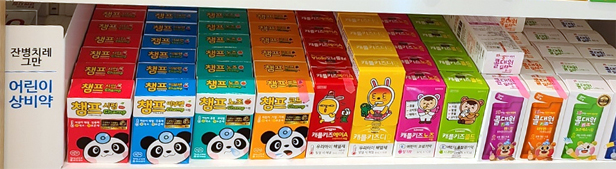
- From Rx drugs to OTC drugs, front-line pharmacies have recently had much time since the outbreak of COVID-19. Some say that pharmacy sales are also the biggest boom since the division of labor. Obviously, sales of generic drugs for certain diseases in most pharmacies have increased. However, pharmacists point out that there are concerns about the current situation as sales increase due to increased OTC sales. From Rx to OTC Pharmacists are most concerned about the increased demand for OTC centered on consumers' specific brand name. Due to the incident that began with Director Jeong Eun-Kyeong's remarks, patients visited various pharmacies, so there was no stock of Tylenol. Nine months have passed since the outbreak in June last year, inventory of Tylenol has not been available at front-line pharmacies. Cold drugs Coldaewon, Theraflu, Cough syrup, Eunkyosan Ext., Pueraria Root have driven consumer demand. Due to the influence of SNS or online, demand has increased because a list of essential OTC drugs for COVID-19 home treatment has been shared on SNS or online. An official from a pharmacy chain said, "These days, consumers tend to stick to certain products or ingredients regardless of their diseases because they have such a strong belief in information they have encountered through the Internet or SNS." The official said, "In a series of situations, starting with the Tylenol crisis, followed by Coldaewon, Theraflu, Cough syrup, Eunkyosan Ext., and Pueraria Root, patients' unilateral nominations are prioritized over pharmacists' consultation and choice. I can recommend drugs depending on the patient's personal disease or condition through consultation with a pharmacist, but such an opportunity has disappeared." Accelerated cold-drug out of stock Butterfly effect brought about by demand for product name Some analysts say that the rapid influx of demand for certain generic drugs in the early stages of home treatment is the beginning of the current massive shortage of generic drugs related to colds. The demand for certain cold medicines has driven pharmacists to become anxious to secure inventory. They say that certain products are not easily purchased at pharmacies, stimulating consumer anxiety, leading to excessive demand for cold medicine. Pharmacists said that if the pharmacist had been able to choose and recommend products to suit the patient's symptoms or needs at a time when demand for cold medicine soared, the cold medicine shortage could have been less situation or delayed. A pharmacist in Seoul said, "Currently, there is generally no stock of products to sell when patients visit cold medicines, effects, or oriental medicine. Of course, demand has soared and this is the root cause of the cold medicine shortage crisis. However, it is true that it accelerated the shortage because it preferred certain products and certain ingredients." Pharmacist Lee said, "If the pharmacist had been able to combine or distribute drugs based on ingredients according to the patient's personal situation or disease, the current situation could have been further delayed." Pharmacist Lee added, "As demand is focused on Rx drugs and this leads to sold out, it has caused excessive demand due to anxiety."
- Policy
- Rozlytrek & Vitrakvi are likely to be listed in April
- by Lee, Tak-Sun Mar 22, 2022 05:54am
- Bayer Korea's Vitrakvi and Roche Korea's Rozlytrek completed drug price negotiations and are likely to register their benefits in April. Both drugs are used to treat solid cancer in adults and children with confirmed NTRK gene fusion. If NTRK gene fusion is confirmed, it can be administered regardless of cancer. According to the industry on the 21st, the two drugs are likely to complete drug price negotiations with NHIS and register their benefits in April. Rozlytrek and Vitrakvi were granted permission in April 2020 and May 2020, respectively. Rozlytrek and Vitrakvi are equally used in adult and pediatric solid cancer treatments with neurotic tyrosine receptor kinase (NTRK) gene fusion. Rozlytrek also has a local progressive or metastatic non-small cell lung cancer indication that is positive for ROS1 in adults. Rozlytrek showed 56.9% ORR in a clinical trial (STARTRK-2) conducted in patients with solid cancer positive for the NTRK fusion gene. More than half of the subjects were confirmed to have decreased tumors. Vitrakvi also showed 75% ORR in clinical trials of 55 people whose NTRK gene fusion was confirmed. The two drugs passed the HIRA's Cancer Disease Review Committee in May last year and were reviewed by the Drug Benefit Assessment Committee in November of the same year. As a result of the deliberation, Vitrakvi recognized the appropriateness of the benefit, but in the case of Rozlytrek, the appropriateness was recognized if the conditions for an additional drug reduction and an appropriate refund rate were accepted. Vitrakvi was also recognized for adequacy, but there was also a clue that Rozlytrek's cost-effectiveness evaluation results need to be further considered. The two drugs with the same efficacy were simultaneously placed on the same line and the evaluation was conducted. Since then, the two drugs have been negotiated with NHIS. However, they failed to reach a conclusion within 60 days, the deadline for negotiations, and began additional negotiations. The NHIS posted on its website that negotiations on the two drugs have been completed. An industry official said, "As announced by NHIS, negotiations on the two drugs have been completed and we understand that they will be reimbursed in April." If the two drugs are reimbursed, it is expected that new treatment benefits will be given to cancer patients whose NTRK gene fusion has been confirmed.
- Company
- Seqirus 'will introduce the first adjuvanted flu vaccine'
- by Mar 22, 2022 05:53am
- A multinational pharmaceutical company has bravely thrown its hat into the domestic influenza vaccine ring that is led by Korean companies such as GC Pharma and SK Bioscience, etc. The company, named Seqirus, is attempting to enter the Korean market equipped with the solid technology it accumulated through its sole focus on influenza vaccines. Seqirus is a vaccine company specializing in influenza vaccines that became the company it is after the influenza department of the Australia-based pharmaceutical company CSL acquired Novartis’s influenza vaccine business. The company has pursued vaccines, only influenza vaccines for over a century, and is known for its extensive influenza vaccine portfolio that covers a wide range of egg-based, cell culture-based, and adjuvanted vaccines. Its annual sales amount to ₩2 trillion. Seqirus's entrance into the Korean market was prompted by the rise of the COVID-19 pandemic after the sole manufacturer of cell-based vaccines in Korea, SK Bioscience, was unable to manufacture its influenza vaccines due to its manufacture of consigned COVID-19 vaccines. Thus, the Korean government granted emergency use authorization for Seqirus's cell culture-based flu vaccine ‘Flucelvax’ in Korea. Also, using the opportunity as momentum, Seqirus made the decision to start the direct supply of its egg-based Afluria that had been marketed through Boryung Biopharma until then. During an interview with Dailpharm, Jonathan Anderson, Medical Head of the International Region of Seqirus, said, “Although there are many excellent companies in Korea that already focus on the development and manufacture of influenza vaccines, Seqirus has strengths of owning various platforms in the area. As a research-based company, we are developing technology for cell culture-based vaccines, adjuvanted vaccines, and self-amplifying mRNA vaccines.” [Interview] Jonathan Anderson Medical Head of the International Region of Seqirus Among its various products, Seqirus has high expectations for its adjuvanted influenza vaccine ‘Fluad’ General flu vaccines can be less effective in immunocompromised elderly, or when the vaccine strain does not coincide with the epidemic, or due to egg-adaptations, etc. In such cases, adjuvanted flu vaccines can improve immune reaction and increase prevention. The ‘MF59’ used in Fluad is an adjuvant that had also been used in 2009 during the swine flu. ‘MF59’ is made using squalene that is produced in the liver, which induces an immune response in the injection site and promotes antigen uptake to increase immune response by activating T cells and B cells. In other words, the adjuvanted vaccine can achieve a strong antibody response even with a small amount. Anderson said, “Real-world results showed that the adjuvanted vaccine showed a better effect in elderly patients over the age of 65.” He added, “Many still get infected with influenza during the influenza season and progress to hospitalization or even death. With the social burden still high for influenza, adjuvanted vaccines could rise as a new alternative.” Anderson added that in terms of safety, the adjuvanted vaccine showed a higher rate of local reactions such as injection site pain than general vaccines, but the reactions were mostly mild or moderate and were resolved naturally over time. Based on its efficacy and safety data, Fluad was approved in 2020 in the US as the world’s first adjuvanted influenza vaccine allowed for use in people aged 65 years or older. Seqirus’s Korea, the Korean subsidiary of Seqirus is working to speed up the introduction of Fluad in Korea. As no adjuvanted flu vaccine exists in the Korean market yet, Fluad's approval by the MFDS is expected to change the domestic flu vaccine market. As Fluad has been introduced to Korea in the past, no separate clinical trial will be required for its introduction to Korea. Anderson said, “Seqirus plans to promptly introduce its vaccine portfolio to Korea. We will make the most effort to fully explain our data through close discussions with the healthcare authorities.
