
- LOGIN
- MemberShip
- 2026-05-15 22:34:47
- Opinion
- [Reporter's view] Only 2% of patients
- by Eo, Yun-Ho Jun 23, 2022 05:50am
- #Will the new EGFR Exon 20 Insertion-Mutated Non-Small-Cell Lung Cancer treatment, which was useless for existing TKI, be able to receive insurance benefits? It's all the same cancer, but it's different. Cancer species such as liver cancer, stomach cancer, and lung cancer, which we call, are only a simple category, and in fact, they are classified in detail. Even if tumors originate from the same organ, the difficulty of treatment varies according to this detailed classification and the number of patients also varies. For example, EGFR Exon 20 Insertion-Mutated Non-Small-Cell Lung Cancer is so rare that only 2% of EGFR mutated non-small cell lung cancer patients in Korea are identified. Until now, there has been no suitable treatment for the treatment of this disease, and the NCCN guidelines have also recommended platinum-based anticancer therapy. Even this is subject to reduction in Korea. Lung cancer is not a rare disease, but EGFR Exon 20 Insertion–Mutated Non–Small-Cell Lung Cancer can be a rare cancer. EGFR Exon 20 Insertion–Mutated Non–Small-Cell Lung Cancer has a 75% higher risk of death compared to common EGFR mutated non-small cell lung cancer, a 5-year survival rate of 8% and patient life expectancy of less than 2 years. In this situation, the anticancer drug Rybrevant, which targets EGFR Exon 20 Insertion-Mutation, will be submitted to the HIRA Cancer Disease Review Committee on the 29th to register insurance benefits. This drug, well known as Leclaza's combination therapy partner, was approved in Korea in February this year as the first targeted treatment for EGFR Exon 20 Insertion-Mutated Non-Small-Cell Lung Cancer treatment. Rybrevant confirmed the overall response rate (ORR) of 40% through a CHRYSALIS clinical study, with 4% of patients achieving CR and 36% achieving PR. In recognition of its value as a treatment for rare carcinomas, it was quickly approved by the U.S. FDA in May last year with only the results of phase 1 clinical trials, and was designated as a subject for rapid review in Korea before obtaining permission. The question is whether or not value is recognized in the benefit evaluation. As it is a drug licensed as a single-Arm clinical data without a control group, the key is whether the value of Rybrevant, which should take the PE system, can be recognized as rare cancer, not just lung cancer. The new government, which was launched last month, promised to promote a rapid registration system for anticancer drugs and treatments for severe rare diseases without alternative drugs. It remains to be seen whether the speed of registration of rare disease and rare cancer drugs in Korea can be improved in the future.
- Company
- LG Chem’s Zemiglo+Forxiga combo Zemidapa is approved
- by Chon, Seung-Hyun Jun 23, 2022 05:50am
- LG Chem made a public announcement on the 22nd that the company had received marketing authorization for its type 2 diabetes treatment ‘Zemidapa Tab’ from the Ministry of Food and Drug Safety. The drug is a fixed-dose combination of the antidiabetic drug gemigliptin and dapagliflozin. Gemigliptin is an active ingredient of "Zemiglo," a new DPP-4 inhibitor antidiabetic that was developed by LG Chem. Dapagliflozin is the generic name of AstraZeneca’s SLGT-2 inhibitor, "Forxiga." Zemidapa is the third combination drug made using Zemiglo. LG Chem also owns two other drugs, including ‘Zemimet’ which combines Zemiglo with the antidiabetic drug metformin, and ‘Zemiro’ which combines Zemiglo with the hyperlipidemia drug rosuvastatin, in the market. LG Chem said, “We expect to continue on our current leadership in the diabetes treatment market in Korea with the development of a gemigliptin and dapagliflozin combination that improves the convenience and medication compliance of patients who used to take the two drugs separately as a combination therapy.”
- Company
- Hyundai Introduces Estrogen-Free Contraceptives
- by Jun 23, 2022 05:50am
- Hyundai Pharmaceutical (CEO Lee Sang-joon) announced on the 21st that it has signed an exclusive license agreement with Asuka Pharmaceutical in Korea for the oral contraceptive Slinda"with Drospirenone only. Slinda is a product developed by Exeltis, a women's medical brand division in Insud Pharma, Spain. Unlike the existing fourth-generation complex oral contraceptives, they do not contain Estrogen, so there is less concern about related side effects. Slinda is licensed to sell in the United States and Europe, and Aska has development rights in Korea and Japan. Under this contract, Hyundai Pharmaceutical will have the right to exclusive development and commercialization of Slinda in Korea. An official from Hyundai Pharmaceutical said, "We expect the addition of Slinda to further solidify its position in the domestic contraceptive market."
- Product
- Approval of OTC teleconference bending machine project
- by Kang, Shin-Kook Jun 23, 2022 05:49am
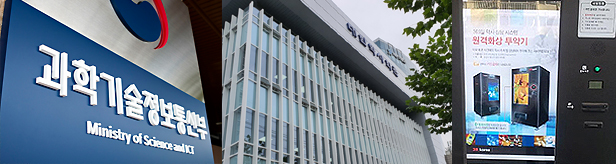
- OTC teleconference bending machine issue, which has been on hold for 10 years, has secured a bridgehead for entering the market under the new government deregulation stance. The Ministry of Science and ICT held an ICT regulatory sandbox review committee on the 20th and approved the OTC teleconference bending machine based on the MOHW's conditional acceptance opinion as an empirical special project. The OTC teleconference bending machine has long been an issue. When the issue of selling OTC at supermarkets occurred in 2012, the Gyeonggi Pharmaceutical Association voluntarily discussed the introduction of the OTC teleconference bending machine in the name of preventing it. Since then, in 2016, during Park government, the "Amendment to the Pharmaceutical Affairs Act" to introduce the OTC teleconference bending machine was pushed in the form of government legislation, but pharmacists opposed it. As the amendment to the Pharmaceutical Affairs Act was automatically scrapped at the end of the term of the National Assembly, it was a good opportunity for OTC teleconference bending machine companies. This is because of the regulatory sandbox introduced by Moon's government. Regulatory sandboxes are a system that exempts or suspends existing regulations for a certain period of time when new products and services are released in new industries and new technologies. The system was first launched in the UK to foster the fintech industry and was adopted by Moon's government as one of the regulatory reform measures. In the end, the Ministry of Science and ICT held a meeting to allow regulatory sandboxes for OTC teleconference bending machines in 2019, and it was likely to pass. At that time, the Pharmaceutical Association withheld deliberation, but the attempt continued. There was a second attempt to enter the regulatory sandbox in 2020. Moon's government received much help from pharmacists about public masks. It was not easy for Moon's government, which was well aware that innocent pharmacists suffered from public criticism due to public mask issues, to blindly push ahead with video medication machines. According to a statement from the Pharmaceutical Affairs Association at the time, "Pharmacists are doing their best to supply public masks in pharmacies, which has an unprecedented role in supporting the national public health and medical functions." To push ahead with the OTC teleconference bending machine demonstration special, which 80,000 pharmacists across the country oppose, just as they brutally trample on the efforts of these pharmacists, is a one-sided example of administration with no minimum form and common sense." In 2021, the Ministry of Science and Technology tried to deliberate on the OTC teleconference bending machine again, but it was put on hold again and it was handed over to the new government and Choi Kwang-hoon executive. However, Yoon's administration recognized deregulation as the top national task. The new government's economic policy was also focused on regulatory innovation. It was also a negative factor for the pharmaceutical society that Jeon Hye-sook, Kim Sang-hee, and Seo Young-seok, who were former pharmacists, became opposition lawmakers in the ruling party, making it difficult to exert power on the government. On top of that, unlike Moon's government, Yoon's government had no debt to the pharmaceutical society. The MOHW, which was skeptical of the OTC teleconference bending machine, also seems to have been forced to jump on the new government's regulatory innovation stance. On top of that, there is an analysis that the situation in which the MOHW is for nothing and it has also expanded the scope of the Ministry of Science and Technology. In the end, the OTC teleconference bending machine, which had been seeking to enter pharmacies for 10 years, began to enter the long-awaited pharmacy market after meeting the new government's market economy policy, and the pharmacist society, which resisted by even opening-air meeting, fell into despair. The problem is that open-air meeting is the beginning of deregulation. There is a possibility that the expansion of safety emergency medicine items at convenience stores and the permission of non-face-to-face treatment and drug delivery may also be a second open-air meeting. The government has already announced the formation of a task force for regulatory innovation in health care, and two important issues, economic revitalization and national health, have been forced to continue to collide.
- Policy
- Kadcyla to recieve reimb in early breast cancer from July
- by Lee, Tak-Sun Jun 22, 2022 05:59am
- Roche Korea’s Kadcyla inj. (ado-trastuzumab emtansine) is expected to additionally receive insurance benefits for early breast cancer in Korea. Kadcyla, a breast cancer treatment that Roche released to succeed Herceptin, has been limitedly used in patients with locally advanced or metastatic breast cancer in Korea until now. The Health Insurance Review and Assessment Service announced that it will conduct an opinion inquiry on the revision of the ‘notice on pharmaceuticals prescribed and administered to cancer patients’ that contains the reimbursement standards for Kadcyla in early breast cancer until the 27th. Its expected implementation date is July 1st. The revision contains the addition of a reimbursement standard for Kadcyla to be administered as ‘a single agent for the adjuvant treatment of patients with HER2-positive early breast cancer who have residual invasive disease after neoadjuvant taxane and trastuzumab-based treatment.’ The drug is administered for a total of 14 cycles. The revision also recognizes the use of trastuzumab as monotherapy for the remaining period of cycles if continuous administration of Kadcyla is rendered impossible due to the occurrence of adverse events. Also, co-administration with endocrine therapy is allowed for eligible hormone receptor-positive patients. Kadcyla was approved for insurance benefit through the risk-sharing assessment (RSA) scheme in 2017 for the ‘treatment of patients with HER2-positive, unresectable, locally advanced or metastatic breast cancer who have failed after receiving trastuzumab and a taxane.’ Its reimbursement price cap is set at ₩2,081,200/vial for Kadcyla 100mg injection, and at ₩3,118,000/vial of Kadcyla 160mg injection. Based on IQVIA results, its sales amounted to ₩52.7 billion last year. The reimbursement expansion is expected to further increase Kadcyla’s annual performance this year.
- Company
- The third challenge of Imbruvica's primary therapy
- by Eo, Yun-Ho Jun 22, 2022 05:59am
- BTK inhibitor Imbruvica will take on its third challenge to expand insurance benefits. According to related industries, the first-line therapy indication of Chronic Lymphocytic Leukemia (CLL)/Small Lymphocytic Lymphoma (SLL) in Imbruvica will be presented again to the HIRA Cancer Disease Review Committee on the 29th. Imbruvica's first-line therapy indication failed to cross the threshold of cancer screening in two challenges, including October last year. Through the PE special system, the benefit was expanded to secondary therapy after registration, but it seems to have faced difficulties in primary therapy. As a result, it remains to be seen what kind of adjustment Janssen will have to discuss expanding benefits. Imbruvica is the first oral BTK (Bruton's Tyrosine Kinase) inhibitor developed once a day, suggesting the advantage of outpatient treatment unlike existing treatments. In Korea, since it was registered in April 2018, it has been prescribed for the second round of ▲ recurrent and refractory chronic lymphocytic leukemia. In addition, it has ▲ indications of Gazyva combination therapy in patients with chronic lymphocytic leukemia who are 65 years of age or older or have a comorbid disease or have a high risk of being treated before, and ▲ treated for chronic lymphocytic leukemia patients who have comorbid diseases over the age of 65 and have never been treated before. Imbruvica proved its survival benefits in CLL patients as a first-line monotherapy through phase 3 studies 'RESONATETM' and 'RESONATETM-2'. All three clinical trials were sponsored by NCI under NIH, and 354 patients with no previous anticancer treatment experience under the average age of 70 were registered in the clinical trial. As a result of 48 months of follow-up observation, 73% of the Imbruvica combined patients continued the Imbruvica treatment for 43 months. In particular, in the Imbruvica combination group, the risk related to PFS was reduced by 61% compared to the current chemotherapy, and the risk was significantly reduced by 66% in OS benefits.

- Policy
- Alecensa's price cut 4.5%, Remodulin 4% due to excess sales
- by Kim, Jung-Ju Jun 22, 2022 05:59am
- Roche Korea’s non-small cell lung cancer treatment Alecensa 150mg Cap. (alectinib hydrochloride) became subject to negotiations under the Price-Volume Agreement (PVA) and will be supplied at a 4.5% discounted price starting next month. Price of Remodulin Inj. (treprostinil) that is used to treat patients with pulmonary arterial hypertension will also be discounted 4% for each strength. Also, premium pricing on Daewon Pharmaceutical’s Pelubi S Tab. (pelubiprofen tromethamine) will expire on August 1st, after which its price will fall 23.2%. According to industry sources on the 20th, the Ministry of Health and Welfare planned an ‘Amendment to the drug reimbursement list and reimbursement ceiling price table’ that contains the changes mentioned above for application on July 1st. ◆PVA negotiation results= The government and the National Health Insurance Service conduct PVA negotiations with pharmaceutical companies after classifying drugs with increased claims by each type, then discount each drug’s price according to the negotiation results. As a result, six items will receive price cuts after completing negotiations. Price of Roche Korea’s Alecensa 150mg Cap. (alectinib hydrochloride) has been cut by 4.5%, and the price of each strength of Antereogen’s Remodulin Injection was cut by 4%. Lilly Korea’s diabetes treatment supplement Trulicity 0.75mg/0.5ml (dulaglutide) disposable pen will be supplied at a 3% reduced price. ◆Preimimum pricing expiry and ex-officio adjustments = The premium pricing provided for Daewon Pharmaceutical’s Pelubi S Tab will expire as of August 1st, and its price will be reduced by 23.3%. The government applies premium pricing for first generics for 1 year since its date of listing. After the period expires, the drug’s price is automatically discounted to 53.55% of the original drug's price under the drug price reduction system. As a result, a total of two items received price cuts through ex-officio adjustments. The government makes ex-officio adjustments to the price ceiling of the first listed drug and the other product with the same administration route, ingredient, and formulation when the second product becomes listed. The drugs subject to price cuts under the system are two strengths of GE Healthcare AS’s Visipaque 270mg Injection (Iodixanol). The price of the 50mL strength is reduced by 2.6%, and the 100mL strength reduced by 0.1%. The price cuts will be applied as of July 1st. ◆Drugs designated for preservation of production cost prevention and price ceiling adjustments under the drug shortage prevention program = One drug received ‘mandatory designation’ and was designated for the preservation of production cost. The drug is Yuyu Pharm’s Allopurinol tablet, and its price ceiling will be set at ₩70 for supply. Two items have received ex-officio adjustments after being designated for the preservation of production cost. The drugs, Samil Pharmaceutical’s Zyloric (allopurinol)’s price ceiling was increased from ₩70 to ₩72, and Access Pharma’s Tuberculin PPD AJV from ₩23,760 to ₩26,554. Also, two other drugs received an increase in their price ceiling to preserve production costs. The price ceiling of Ildong Pharmaceutical’s Ativan 4mg/1mL Injection (lorazepam) will be increased from ₩612 to ₩804, and the 2mg/0.5mL strength will be increased from ₩574 to ₩782. The new drug price will be applied as of the 1st of next month.
- Company
- K-botulinum products are expanding globally
- by Jun 22, 2022 05:59am
- Hugel Botulex (Letybo) Domestic botulinum toxin is entering various parts of the world. Feeling limited in the domestic market, developers are targeting the U.S., Europe, and China, which are the largest markets in the world, while expanding their scope to countries such as Australia and the Middle East. ◆ Hugel is targeting Europe and North America, and China is expanding its market According to the pharmaceutical industry on the 20th, Hugel won the license for the botulinum toxin drug Letybo developed in Canada on the 16th. It is Hugel's first North American entry. According to Hugel, the Canadian botulinum toxin market is estimated to be worth 180 billion won as of last year. Starting with Southeast Asia, Hugel has attempted to enter Botulinum overseas in earnestly. It is understood that the license registration has been completed in about 40 countries so far. Last year, it applied for permission for Botulinum in the U.S. and Canada to target North America. In particular, the United States is one of the largest botulinum toxin markets worth about 2 trillion won. The U.S. approval, which was originally expected to be approved at the end of March, is expected to take place at the end of this year or early next year. Starting in February, news of Letybo continued in Europe, starting with France. In January, HMA issued a permit recommendation for botulinum. The HMA receives individual decisions in each country after the recommendation for approval, so the date of approval varies. Letybo has obtained product permits from 10 countries, including key European countries such as France, the United Kingdom, Germany, and Italy. ◆Daewoong Nabota Launches Third Quarter in Europe. U.S. Sales Close to 300 Billion Daewoong Pharmaceutical's botulinum toxin drug Nabota is doing good performance in the North American market, which was the first to enter. Nabota posted nearly $100 million in sales last year, up 77.3% from the previous year. This is the result of the North American sales of Daewoong Pharmaceutical's U.S. partner Evolus. Nabota's cumulative sales, which were approved by the U.S. in February 2019, amounted to $223.04 million. In the first quarter of this year, Nabota has continued its upward trend, recording $33.23 million (42.5 billion won), up 171.5% from the previous year. Nabota In the third quarter, Nabota is also set to enter Europe, the second largest market in the world. Evolus, a U.S. partner, will be in charge of sales. Previously, Evolus obtained an item license from the European Commission (EC) in October 2019 under the name Nuceiva. Nuceiva can be sold in 28 countries in the European Union and a total of 31 European countries, including the UK and Switzerland. Daewoong Pharmaceutical recently expanded its scope to Eastern Europe and the Middle East. It has obtained Nabota permission from Saudi Arabia, one of the largest markets in the Middle East, and Ukraine, the representative country of Eastern Europe. Its goal is to expand its market share in the Middle East and Eastern Europe starting with Saudi Arabia and Ukraine. In December last year, Daewoong Pharmaceutical filed an application for permission for Nabota with the NMPA. While Hugel and Daewoong Pharmaceutical are expanding their market to one item developed by themselves, Medy Tox is trying to diversify its products. It was the first in Korea to commercialize botulinum toxin preparations and enter the development of next-generation toxin preparations early. Meditoxin is exported to more than 30 countries around the world under the name Neuronox. However, exports have been decreasing every year since 2019. Overseas exports of Medy Tox, which were 133.3 billion won (including filler products) in 2018, decreased to 120.6 billion won in 2019 and 89.8 billion won in 2020. It recorded 70.6 billion won last year. Neuronox Newlux, which applied for item permission from the MFDS in May, is a new product that Medy Tox applied the latest process to reduce the possibility of contamination by impurities. Medy Tox is also speeding up its overseas licensing work for Newlux exports.
- Policy
- The benefit discussion for Steglatro was excluded
- by Lee, Tak-Sun Jun 22, 2022 05:58am
- While the HIRA is discussing the standard for combination therapy benefits for SGLT-2-suppressing diabetes treatments, only Steglatro (MSD Korea) has been excluded from the combination of TZD affiliates, drawing attention. While the combination of DPP-4 inhibitors between families is recognized, the combination between TZD families is differentiated by component. Kim Ae-ryeon, head of the HIRA Pharmaceutical Management Office, said at a briefing with the Korea Special Press Association on the 14th that she is conducting a financial impact analysis after reviewing the benefit criteria for Metformin + SGLT-2 inhibitor + DPP-4 inhibitor and Metformin + SGLT-2 inhibitor. The HIRA plans to review the pharmaceutical company's financial impact analysis, academic societies, and expert opinions, and then review the Drug Reimbursment Evaluation Committee within the processing deadline to complete the standard change and drug price evaluation. As a result, standards are expected to be prepared at least within this year. However, MSD's Ertugliflozin was excluded from the discussion in the combination of Metformin+SGLT-2+TZD among the three-drug therapy. It is different from the fact that Metformin+SGLT-2+DPP-43 drugs recognized combination between series regardless of ingredients. An official from the HIRA explained, "It reflected the approval of the MFDS." The efficacy set by the MFDS for SGLT-2 drugs only broadly define monotherapy and combination therapy for adult type 2 diabetes patients, but did not present specific ingredients. This is a simplification of the MFDS' permission to prepare a combined benefit standard for diabetes treatments. However, unlike other SGLT-2 inhibitors, only Steglatro does not have the results of combined clinical trials with the TZD family in the information for experts in the permit. However, clinical trial information with DPP4 inhibition such as Sitagliptin is provided. In the end, drugs that have not been verified for combined effect through clinical trials are believed to have been excluded from the discussion on standards. Metformin+SGLT2+DPP43 drug therapy seems to be possible because all of the SGLT-2 drugs (Forxiga, Jardiance, Suglat, and Steglatro) on the market in Korea have proven their efficacy through DPP-4 combined clinical trials. Steglatro has the lowest domestic market share compared to other SGLT-2 drugs. Another weakness is that it is excluded from the three-drug treatment benefit standard between TZD in the situation of chasing competitors.
- Policy
- Report of severe skin SE such as rash of Phenytoin
- by Lee, Hye-Kyung Jun 21, 2022 05:55am
- Precautions for severe skin abnormalities will be newly established in the anticonvulsant Phenytoin. The Drug Safety Evaluation Division of the MFDS has prepared a change (proposal) in domestic drug permits based on the results of the EMA's review of drug safety information. The changes will be checked by the pharmaceutical industry and others until the 29th under the terms of "careful administration", "general caution", "Adverse reaction" and "interaction" of the precautions for use. As a result of the EMA safety information review, severe skin adverse reactions such as deprivation dermatitis, dermal mucosal eye syndrome (Stephens-Johnson syndrome), and toxic epidermal necrosis (Lyell's syndrome) may occur in phenytoin preparations. Severe skin reactions occur without warning, but patients should be warned about signs or symptoms of hypersensitivity (skin rash, blisters, fever, itching, or other symptoms), and a cautionary phrase is added that medical advice should be sought immediately if significant symptoms or symptoms occur. If a rash appears, the doctor should advise the patient to stop treatment, and if the rash is mild, the treatment can continue after the rash has completely disappeared. If the rash occurs again after re-dosing, additional Phenytoin should not be administered. In addition, holders of impaired CYP2C9*2 or CYP2C9*3 mutants (middle or slow metabolites of the CYP2C9 substrate) may have increased Phenytoin plasma concentration and the resulting toxicity risk. Domestic licensed Phenytoin PO formulations include Bukwang's Phenytoin Cap100mg, Whanin's Hydantoin Tab, Myungin's Penytoin 100mg, Samjin's Penytoin Sodium Injection100mg & 200mg, Hanlim's Peniton, Jeil's Phenytoin Sod 50mg/ml, and Union Korea's Union Phenytoin Sodium.
