- LOGIN
- MemberShip
- 2026-10-07 12:10:54
- MFDS cases find new home...but where will rebate probes go?
- by Jung, Heung-Jun | translator Alice Kang | 2026-10-07 08:52:38
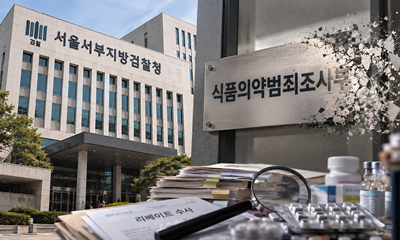
The investigative framework for Korea’s healthcare sector is taking different paths across different areas following the abolition of the Prosecutors’ Office and the launch of the Public Prosecution Service on October 2.
Some ongoing cases have been dispersed to police following the dissolution of joint investigation teams, while in other areas, it remains unclear which body will take over from the specialized investigative units that previously handled them.
Food and drug cases investigated by the Ministry of Food and Drug Safety’s Criminal Investigation Office will now be referred to the Seoul Western District Public Prosecution Service instead of the former Seoul Western District Prosecutors' Office..
For pharmaceutical and medical device rebate cases, however, the successor investigative authority remains unclear following the dissolution of the Food and Drug Crime Investigation Division of the Seoul Western District Prosecutors’ Office, which had previously led such investigations.
A separate joint investigation team focused on illegally operated hospitals and pharmacies operating under borrowed pharmacist licenses has also been disbanded, with its existing cases transferred to different police units.
According to relevant agencies on the 6th, the transition to the new prosecution system and dissolution of the Seoul Western District Prosecutors’ Office’s Food and Drug Crime Investigation Division have also reshaped investigative and prosecutorial functions in food and drug cases.
The referral system for food and drug cases directly investigated by the MFDS Criminal Investigation Office, however, remains largely unchanged.
A Serious Crimes Prosecution Division that has been established within the Seoul Western District Public Prosecution Service will handle food- and drug-related cases. As a result, cases completed by the MFDS unit will continue to be referred to the Seoul Western District Prosecution Service.
An MFDS Criminal Investigation Office official said, “The Seoul Western District Public Prosecution Service has established a Serious Crimes Prosecution Division, and its responsibilities include food and drug cases. As before, all cases investigated by our unit will be referred to the Seoul Western District Public Prosecution Service.”
The official added, “Since we previously referred all food and drug cases investigated by the unit to the Seoul Western District Prosecutors’ Office, there is little practical change on our part.”
The greater uncertainty surrounds investigations into pharmaceutical and medical device rebates. These had largely been conducted through joint investigations led by the Food and Drug Crime Investigation Division of the Seoul Western District Prosecutors’ Office, with police, the Ministry of Health and Welfare, the MFDS and other agencies providing personnel and specialized information under prosecutor-led investigations.
The Seoul Western District Public Prosecution Service is still determining how individual cases previously handled by the Food and Drug Crime Investigation Division will be reassigned.
An official from the Seoul Western District Public Prosecution Service said. “The work previously handled by the Food and Drug Crime Investigation Division is expected to fall under the Serious Crimes Prosecution Division, but the division of responsibilities has not yet been fully settled.”
Regarding where cases from the former investigative areas would be transferred, the official said, “Cases are being handled individually, so it is difficult to provide details on the specific transfers.”
The Serious Crimes Prosecution Division is responsible for indictments and maintaining prosecutions in food and drug cases but does not conduct investigations itself.
The police can investigate rebate cases, while the Serious Crimes Investigation Agency may also become involved depending on the nature of a case. However, it remains unclear whether the dedicated investigative framework previously led by the Food and Drug Crime Investigation Division will be maintained.
The joint investigation team on illegally operated hospitals and license-lending pharmacies, established at the Seoul Western District Prosecutors’ Office in May, was also disbanded ahead of the launch of the new prosecution system.
The task force was dissolved as of the 1st, and personnel seconded from agencies including the Ministry of Health and Welfare, the National Health Insurance Service and HIRA have returned to their respective organizations.
An official from the task force said, “The team was disbanded as of Oct. 1, and all seconded personnel returned to their original organizations,”.
Cases being investigated by the team were also transferred to police. “We handed existing cases over to the police, including some that went to the Seoul Metropolitan Police Agency. Previously, cases were consolidated in one place for investigation, but they have now been split up.”
Investigations into illegally operated hospitals and license-lending pharmacies have therefore shifted from a centralized model that brought personnel together in a single task force to a decentralized, police-led system.
For areas such as rebates, illegally operated hospitals and license-lending pharmacies, where investigations had been led jointly by prosecutors and other agencies, maintaining specialized investigative capabilities and continuity hereon will be a key challenge under the new system.
Meanwhile, the Prosecutors’ Office, which had held both investigative and prosecutorial authority, closed after 78 years, with the Serious Crimes Investigation Agency and Public Prosecution Service launched on the 2nd of this month. The change marks a major restructuring of Korea’s criminal justice system, with investigative and prosecutorial functions formerly exercised by prosecutors now assigned to separate agencies.
Under the revised Criminal Procedure Act, Public Prosecution Service Act, and Serious Crimes Investigation Agency Act that took effect on Oct. 2, police are responsible for investigating general criminal cases, while the Serious Crimes Investigation Agency handles serious crimes. The Public Prosecution Service will determine whether to indict cases referred by investigative agencies and conduct prosecutions in court. As a result, criminal complaints and accusations can no longer be filed with the Public Prosecution Service. General cases must be filed with police, while crimes under the jurisdiction of the Serious Crimes Investigation Agency must be filed with that agency.
The Serious Crimes Investigation Agency investigates major crimes including corruption, economic crimes, defense procurement offenses, narcotics, national security offenses, cybercrime and abuse of law. It also conducts supplementary investigations into seven categories of crimes involving socially vulnerable victims, including child abuse, domestic violence and sexual offenses. Crimes committed by senior public officials in connection with their duties remain under the jurisdiction of the Corruption Investigation Office for High-ranking Officials.
With the abolition of the Prosecutors’ Office, cases previously investigated by prosecutors are also being transferred to the Serious Crimes Investigation Agency or police according to jurisdiction. Prosecutors at the new Public Prosecution Service may, however, continue investigating certain cases for up to 90 days when the statute of limitations is approaching or when consistent handling is required for matters such as warrant applications.
-

- 0
댓글 운영방식은
댓글은 실명게재와 익명게재 방식이 있으며, 실명은 이름과 아이디가 노출됩니다. 익명은 필명으로 등록 가능하며, 대댓글은 익명으로 등록 가능합니다.
댓글 노출방식은
댓글 명예자문위원(팜-코니언-필기모양 아이콘)으로 위촉된 데일리팜 회원의 댓글은 ‘게시판형 보기’와 ’펼쳐보기형’ 리스트에서 항상 최상단에 노출됩니다. 새로운 댓글을 올리는 일반회원은 ‘게시판형’과 ‘펼쳐보기형’ 모두 팜코니언 회원이 쓴 댓글의 하단에 실시간 노출됩니다.
댓글의 삭제 기준은
다음의 경우 사전 통보없이 삭제하고 아이디 이용정지 또는 영구 가입제한이 될 수도 있습니다.
-
저작권·인격권 등 타인의 권리를 침해하는 경우
상용 프로그램의 등록과 게재, 배포를 안내하는 게시물
타인 또는 제3자의 저작권 및 기타 권리를 침해한 내용을 담은 게시물
-
근거 없는 비방·명예를 훼손하는 게시물
특정 이용자 및 개인에 대한 인신 공격적인 내용의 글 및 직접적인 욕설이 사용된 경우
특정 지역 및 종교간의 감정대립을 조장하는 내용
사실 확인이 안된 소문을 유포 시키는 경우
욕설과 비어, 속어를 담은 내용
정당법 및 공직선거법, 관계 법령에 저촉되는 경우(선관위 요청 시 즉시 삭제)
특정 지역이나 단체를 비하하는 경우
특정인의 명예를 훼손하여 해당인이 삭제를 요청하는 경우
특정인의 개인정보(주민등록번호, 전화, 상세주소 등)를 무단으로 게시하는 경우
타인의 ID 혹은 닉네임을 도용하는 경우
-
게시판 특성상 제한되는 내용
서비스 주제와 맞지 않는 내용의 글을 게재한 경우
동일 내용의 연속 게재 및 여러 기사에 중복 게재한 경우
부분적으로 변경하여 반복 게재하는 경우도 포함
제목과 관련 없는 내용의 게시물, 제목과 본문이 무관한 경우
돈벌기 및 직·간접 상업적 목적의 내용이 포함된 게시물
게시물 읽기 유도 등을 위해 내용과 무관한 제목을 사용한 경우
-
수사기관 등의 공식적인 요청이 있는 경우
-
기타사항
각 서비스의 필요성에 따라 미리 공지한 경우
기타 법률에 저촉되는 정보 게재를 목적으로 할 경우
기타 원만한 운영을 위해 운영자가 필요하다고 판단되는 내용
-
사실 관계 확인 후 삭제
저작권자로부터 허락받지 않은 내용을 무단 게재, 복제, 배포하는 경우
타인의 초상권을 침해하거나 개인정보를 유출하는 경우
당사에 제공한 이용자의 정보가 허위인 경우 (타인의 ID, 비밀번호 도용 등)
※이상의 내용중 일부 사항에 적용될 경우 이용약관 및 관련 법률에 의해 제재를 받으실 수도 있으며, 민·형사상 처벌을 받을 수도 있습니다.
※위에 명시되지 않은 내용이더라도 불법적인 내용으로 판단되거나 데일리팜 서비스에 바람직하지 않다고 판단되는 경우는 선 조치 이후 본 관리 기준을 수정 공시하겠습니다.
※기타 문의 사항은 데일리팜 운영자에게 연락주십시오. 메일 주소는 dailypharm@dailypharm.com입니다.
- Entresto patent upheld in US, invalidated in Korea…Approval the next hurdle
- Reporter's view | Kim, Jin-Gu

-

- "Besremi garners attention as a long-term treatment option for PV"
- Professor Dae-young Kim of the Department of Hematology-Oncology at CHA Bundang Medical Center