- LOGIN
- MemberShip
- 2026-09-17 22:12:20
- Will CDK4/6 inhibitors be reimbursed for early breast cancer?
- by Son, Hyung Min | translator Alice Kang | 2026-04-22 08:53:52
Despite significant improvements in survival rates for early-stage breast cancer patients, concerns have been raised about how treatment access to reduce long-term recurrence risk remains limited.
In particular, as the clinical value of CDK4/6 inhibitors has been proven in patients at high risk of recurrence, the treatment strategy is clearly shifting beyond simple treatment toward recurrence prevention, yet it has become increasingly clear that reimbursement is failing to keep pace with these developments.
On the 21st, Rep. Mi-hwa Seo of the People Power Party hosted a policy forum titled “The Era of 300,000 Female Breast Cancer Patients: Current Status and Challenges in Recurrence Management,” and intensively discussed recurrence management and treatment access issues for patients with early breast cancer.
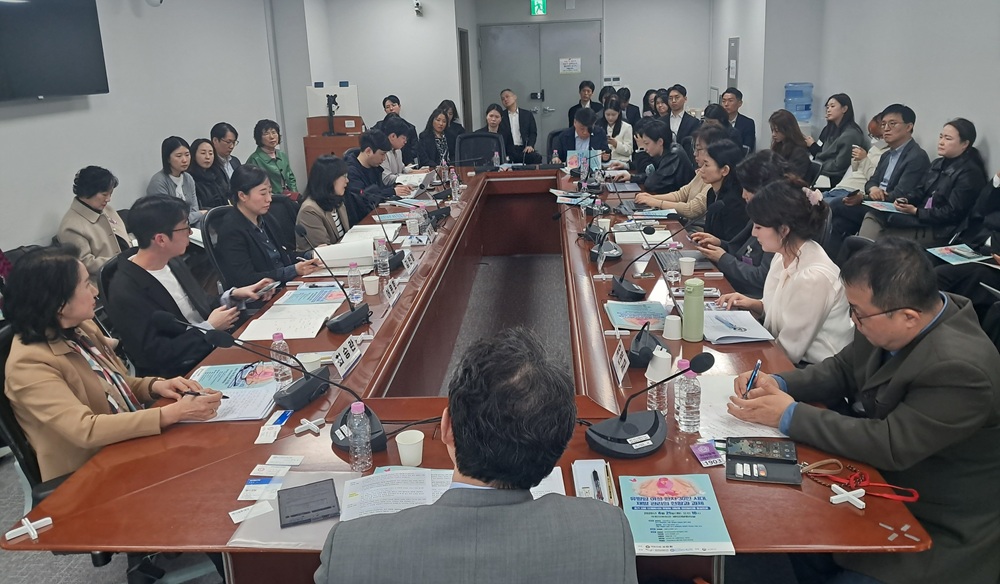
Early-stage breast cancer refers to a condition where cancer cells have not spread beyond the axillary lymph nodes, and accounts for approximately 95% of all breast cancer patients.
The 5-year survival rate is high, at 96.6% for Stage 1 and 91.8% for Stage 2, but the problem raised is that, regardless of survival rates, the risk of recurrence remains considerable. In particular, for hormone receptor-positive (HR+) patients, recurrence can continue beyond 5 years after diagnosis and even up to 20 years, underscoring the need for long-term management.
Over the past 20 years, treatment strategies for early breast cancer have centered on surgery, radiation therapy, chemotherapy, and endocrine therapy. However, limitations regarding the inability to sufficiently reduce recurrence rates have been consistently raised.
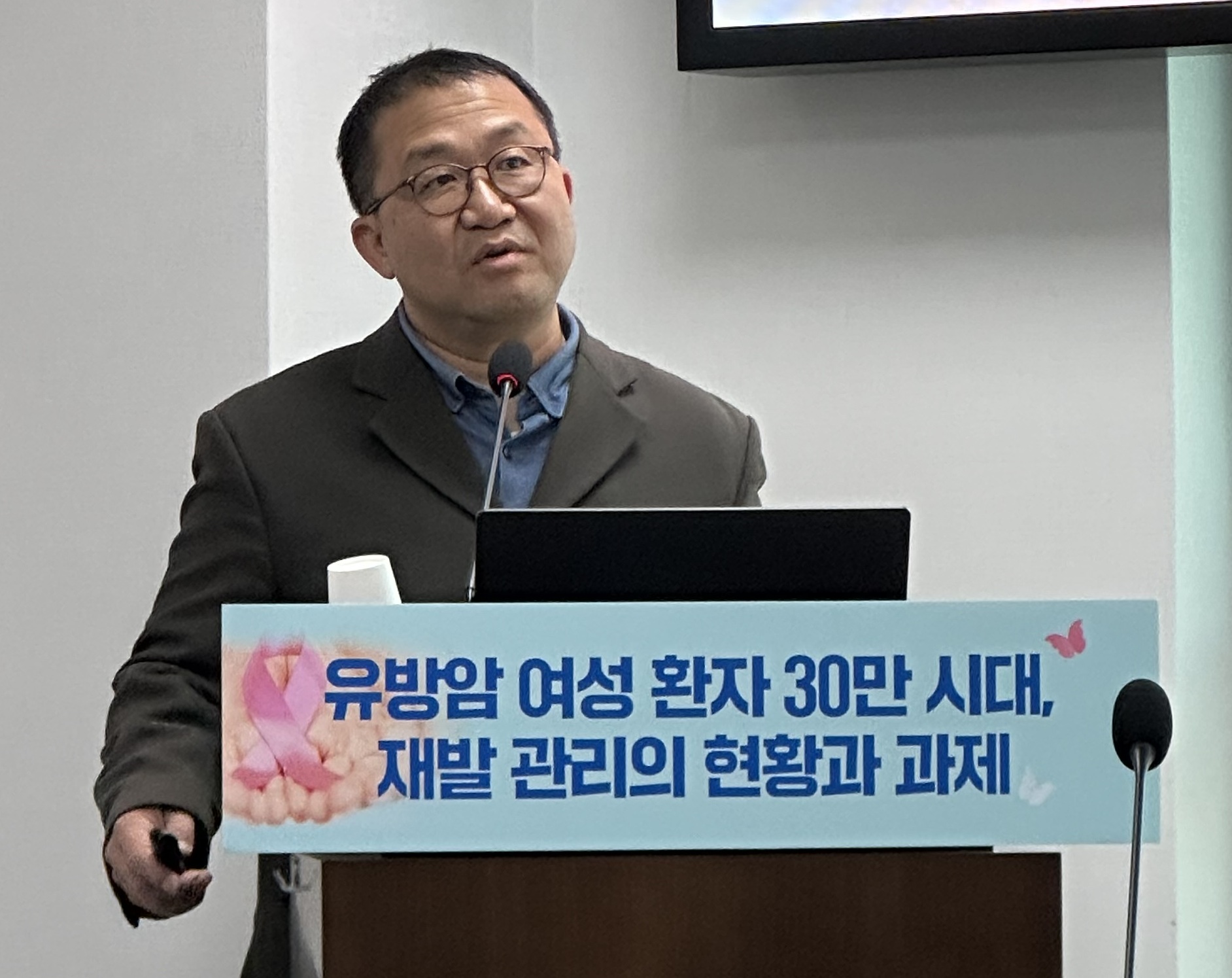
In response, a research team led by Professor Hyun-jae Yoo at Sogang University conducted a study to quantitatively analyze the socioeconomic burden on early-stage breast cancer patients.
The study was conducted using a combination of surveys and expert advisory interviews with 150 patients aged 19 to 60 who had stage 1 to 3 breast cancer.
The analysis revealed that patients who experienced recurrence incurred approximately KRW 29 million more in total economic losses compared to those who did not.
In particular, indirect medical costs were found to increase by more than KRW 13.3 million on average, and the burden of indirect costs in recurrent patients was confirmed to be about 1.8 times higher.
Professor Yoo explained, “Breast cancer is not a disease that simply ends with treatment, but a disease that affects overall quality of life and social roles after treatment. A treatment strategy that prevents recurrence has important meaning not only for the individual but also from the perspective of social cost.”
Need for treatment centered on high-risk recurrence groups… “unmet need remains”
Given that the risk of recurrence does not completely disappear even in early breast cancer, there is a growing consensus that more aggressive treatment strategies are needed, particularly for high-risk groups.
In particular, it has been pointed out that in patient groups with a high risk of recurrence due to lymph node metastasis or tumor size, such as some late Stage 2 or Stage 3 patients, existing treatment alone has limitations.
In this field, CDK4/6 inhibitor-based therapies are emerging as a new alternative. Novartis’ ‘Kisqali (ribociclib)’ and Lilly’s ‘Verzenio (abemaciclib)’ have demonstrated their efficacy in reducing the risk of recurrence through clinical trials.
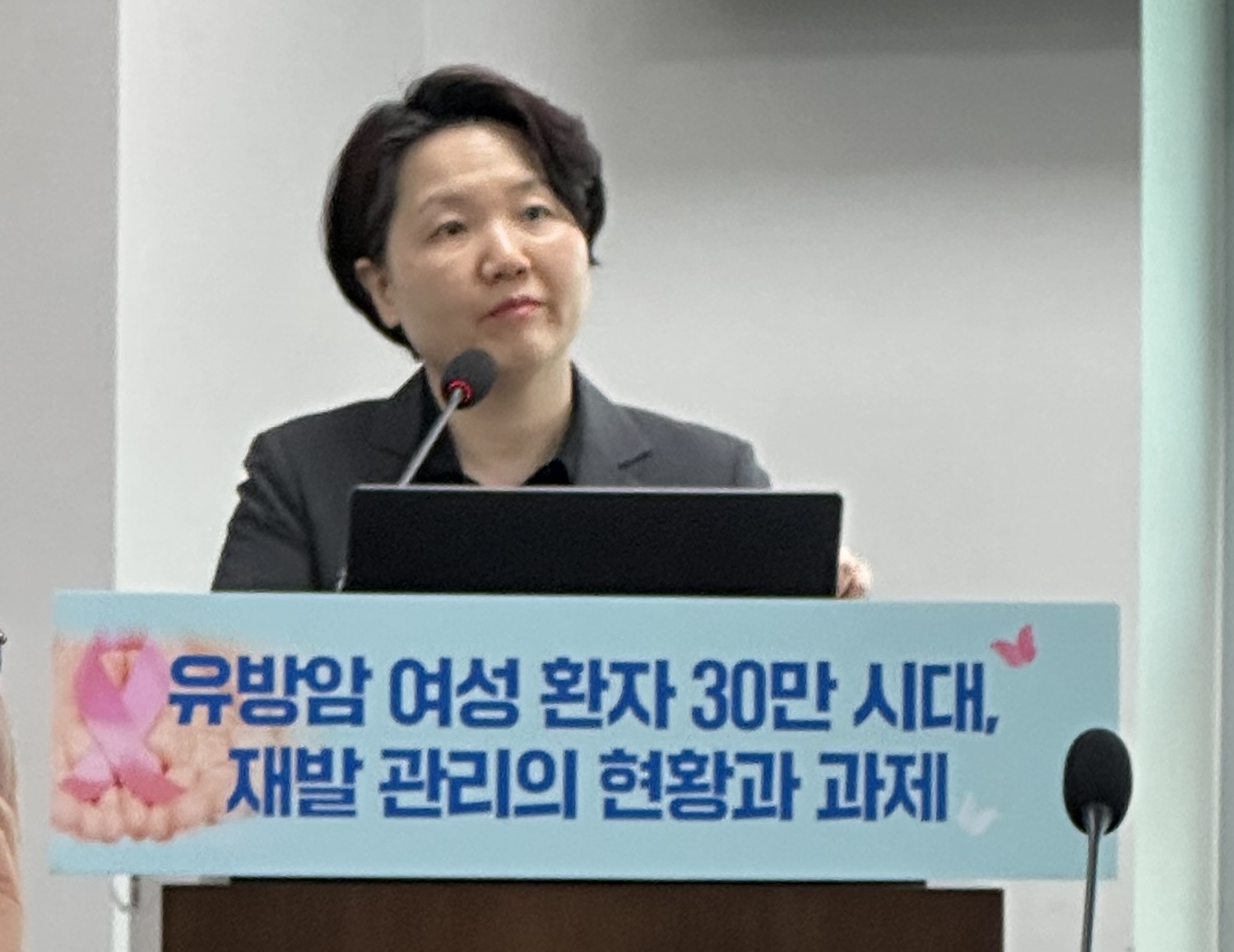
Professor Ji-hyun Kim of Seoul National University Bundang Hospital emphasized, “CDK4/6 inhibitors are treatments whose efficacy in reducing recurrence and clinical utility have already been confirmed through large-scale clinical trials. They should be considered as a new standard of care for high-risk patients with early-stage breast cancer.”
The problem is that these treatments are not being fully utilized in actual clinical practice.
Although CDK4/6 inhibitors have been approved in Korea, reimbursement is not applied in adjuvant therapy for early breast cancer, forcing patients to bear the full cost of these expensive drugs.
In contrast, Verzenio is already covered by national health insurance in major countries such as the United Kingdom, Australia, Canada, France, Germany, Italy, China, and Singapore, ensuring access to treatment.
Professor Ji-hyun Kim added, “From the perspective of an individual patient, one would want to try every possible treatment, but in terms of national finances, there is the difficulty of balancing resources across various diseases. There needs to be a social discussion on how to rate the value of therapies that prevent recurrence in advance.”
“Financial resources and equity are variables”… attention on government’s judgment over reimbursement criteria
In the panel discussion that followed, policy issues surrounding access to new drugs for early breast cancer were intensively discussed.
Professor Seong-bae Kim of Asan Medical Center in Seoul, who moderated the discussion, emphasized, “While triple-negative breast cancer is generally known to be more aggressive, some hormone receptor-positive breast cancers also present a higher risk of recurrence. It is important to identify high-risk groups and apply appropriate treatments.”
He added, “The efficacy of CDK4/6 inhibitors has already been clinically proven. The issue lies in reaching a social consensus on how to apply this in actual clinical practice and which patient groups should be prioritized within limited financial resources.”
Professor In-Hae Park of Korea University Guro Hospital said, “Even in high-risk patients, there are cases in which it is difficult to actively explain or recommend treatment because of the economic burden. The reality itself, in which treatment strategy must be adjusted in consideration of the patient’s financial situation, places a burden on medical staff as well.”
The panelists also pointed out that the threshold for reimbursement has risen as the weight of financial impact assessments has increased in recent Cancer Disease Deliberation Committee meetings.
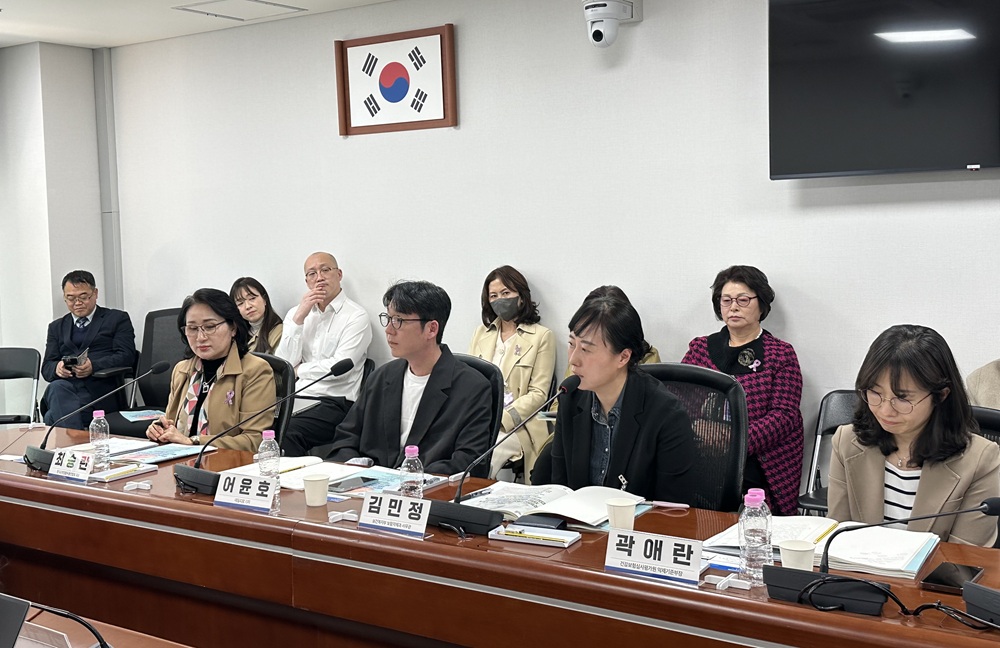
Yoon-ho Eo, a reporter for Daily Pharm, stated, “Currently, the results of reimbursement reviews are structured such that only the decision to approve or deny coverage is disclosed, lacking transparency regarding the basis for the judgment. There is a need to strengthen the transparency and flexibility of the evaluation process.”
The government maintains a cautious stance but intends to continue related discussions.
Min-jung Kim, an official at the Division of Pharmaceutical Benefits at the Ministry of Health and Welfare, stated, “Reimbursement applications for Verzenio and Kisqali have been submitted, and discussions are expected to proceed in the Cancer Disease Deliberation Committee within the first half of the year. We plan to conduct a fair review by comprehensively considering clinical utility, patient access, and the impact on National Health Insurance finances.”
She continued, “In line with the recent trend toward strengthening coverage for anticancer drugs, the scope of reimbursement has been continuously expanding. Since equity must be maintained within limited financial resources, careful review of the patient group setting and the scope of application is necessary.”
The Health Insurance Review and Assessment Service presented a similar position.
Ae-ran Park, Director of the Pharmaceutical Benefits Standards Division at HIRA, explained, “We are fully aware of the clinical necessity and field demands for preventing early recurrence of breast cancer. The demand to apply follow-up treatments at an early stage is a trend common not only in breast cancer but across various cancer types.”
Park added, “While expanding treatment accessibility based on clinical utility is important, we must also consider the balance with the sustainability of the National Health Insurance finances. Setting the criteria for which patient groups should be prioritized is the key task.”
-

- 0
댓글 운영방식은
댓글은 실명게재와 익명게재 방식이 있으며, 실명은 이름과 아이디가 노출됩니다. 익명은 필명으로 등록 가능하며, 대댓글은 익명으로 등록 가능합니다.
댓글 노출방식은
댓글 명예자문위원(팜-코니언-필기모양 아이콘)으로 위촉된 데일리팜 회원의 댓글은 ‘게시판형 보기’와 ’펼쳐보기형’ 리스트에서 항상 최상단에 노출됩니다. 새로운 댓글을 올리는 일반회원은 ‘게시판형’과 ‘펼쳐보기형’ 모두 팜코니언 회원이 쓴 댓글의 하단에 실시간 노출됩니다.
댓글의 삭제 기준은
다음의 경우 사전 통보없이 삭제하고 아이디 이용정지 또는 영구 가입제한이 될 수도 있습니다.
-
저작권·인격권 등 타인의 권리를 침해하는 경우
상용 프로그램의 등록과 게재, 배포를 안내하는 게시물
타인 또는 제3자의 저작권 및 기타 권리를 침해한 내용을 담은 게시물
-
근거 없는 비방·명예를 훼손하는 게시물
특정 이용자 및 개인에 대한 인신 공격적인 내용의 글 및 직접적인 욕설이 사용된 경우
특정 지역 및 종교간의 감정대립을 조장하는 내용
사실 확인이 안된 소문을 유포 시키는 경우
욕설과 비어, 속어를 담은 내용
정당법 및 공직선거법, 관계 법령에 저촉되는 경우(선관위 요청 시 즉시 삭제)
특정 지역이나 단체를 비하하는 경우
특정인의 명예를 훼손하여 해당인이 삭제를 요청하는 경우
특정인의 개인정보(주민등록번호, 전화, 상세주소 등)를 무단으로 게시하는 경우
타인의 ID 혹은 닉네임을 도용하는 경우
-
게시판 특성상 제한되는 내용
서비스 주제와 맞지 않는 내용의 글을 게재한 경우
동일 내용의 연속 게재 및 여러 기사에 중복 게재한 경우
부분적으로 변경하여 반복 게재하는 경우도 포함
제목과 관련 없는 내용의 게시물, 제목과 본문이 무관한 경우
돈벌기 및 직·간접 상업적 목적의 내용이 포함된 게시물
게시물 읽기 유도 등을 위해 내용과 무관한 제목을 사용한 경우
-
수사기관 등의 공식적인 요청이 있는 경우
-
기타사항
각 서비스의 필요성에 따라 미리 공지한 경우
기타 법률에 저촉되는 정보 게재를 목적으로 할 경우
기타 원만한 운영을 위해 운영자가 필요하다고 판단되는 내용
-
사실 관계 확인 후 삭제
저작권자로부터 허락받지 않은 내용을 무단 게재, 복제, 배포하는 경우
타인의 초상권을 침해하거나 개인정보를 유출하는 경우
당사에 제공한 이용자의 정보가 허위인 경우 (타인의 ID, 비밀번호 도용 등)
※이상의 내용중 일부 사항에 적용될 경우 이용약관 및 관련 법률에 의해 제재를 받으실 수도 있으며, 민·형사상 처벌을 받을 수도 있습니다.
※위에 명시되지 않은 내용이더라도 불법적인 내용으로 판단되거나 데일리팜 서비스에 바람직하지 않다고 판단되는 경우는 선 조치 이후 본 관리 기준을 수정 공시하겠습니다.
※기타 문의 사항은 데일리팜 운영자에게 연락주십시오. 메일 주소는 dailypharm@dailypharm.com입니다.


-
- "Leclaza, the best first-line option…expanded reimb will increase accessibility"
- PALOMA-2 recorded an objective response rate (ORR) of 90 and the 3-year overall survival (OS) rate of 70%…mOS has not yet been reached