- LOGIN
- MemberShip
- 2026-07-27 19:04:56
- "Joint bioequivalence licensing system is driving abundant generics"
- by Lee, Jeong-Hwan | translator Hong, Ji Yeon | 2026-03-31 08:45:53
While the government announced plans to divert from the multi-item generic structure and improve the pharmaceutical industry’s trend by focusing on new drugs through drug pricing reforms, criticism has emerged that there is a need to innovate by diagnosing blind spots in the "approval system" beyond pricing alone.
In Korea, it has been pointed out that the so-called '1+3 system,' under which the government grants marketing authorization for generics based on a single joint bioequivalence (BE) study conducted by one contract manufacturer and up to three consigned pharmaceutical companies, must be discarded.
Furthermore, it has been suggested that, for the long-term development of the domestic pharmaceutical industry, the government must make a policy decision to allow South Korea's world-class clinical physician workforce to enter new drug development.
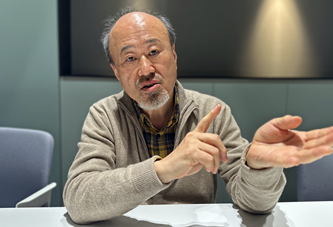
In an interview on the 29th at the Sungkyunkwan University Center for Pharmaceutical Regulatory Sciences in Yeongdeungpo, Seoul, Director Lee Jae Hyun (Professor at Sungkyunkwan University College of Pharmacy) emphasized, "Why we are seeing hundreds of generics for a single active ingredient today is not due to high drug prices, but because of the joint bioequivalence licensing system."
Regarding the '1+3 system,' which grants generic marketing authorization even to companies that did not conduct in-house BE tests but instead outsourced them to a contract manufacturer, Lee evaluated it as a "policy with no global precedent."
Lee questioned whether a company can truly be called a "pharmaceutical company" if it simply purchases BE test data conducted by others, obtains authorization for identical twin generics, and profits by releasing them to the market after merely changing the brand name and packaging.
Lee noted, "Although it was reduced to '1+3' (from the previous unlimited structure), the concept of joint BE licensing is preposterous. Even a '1+1' system, where only one consigned license is granted per contract manufacturer, makes no sense. Lee stated, "This is the fundamental cause of generic proliferation, which undermines the fundamentals of regulatory science. Why do drugs with identical shapes, ingredients, and dosages have different manufacturers, brand names, and packaging?"
Lee emphasized, "If one set of BE data exists, marketing authorization should be granted only to that specific pharmaceutical company. As long as this joint BE licensing system remains in place, a structure in which generic substitution is hindered, and generics proliferate, will persist. We should not allow companies to outsource production just by hanging up a 'pharmaceutical company' sign. We must abolish these mismanaged licensing and joint BE policies."
Lee explained, "If the licensing policy is corrected, drug price management can also be designed much more rationally. A policy could be designed that grants 'branded generic' rights only to the original and the first generic, while all other generics are authorized as 'no-brand generics' using the ingredient name rather than a brand name," adding, "Policies to increase generic utilization could become possible, and the controversy over INN (International Nonproprietary Name) prescribing would disappear, as the product name itself would be authorized as the ingredient name."
Director Lee also believes that to develop Korea-Blockbuster new drugs, Korea’s abundant clinical physician workforce must be funneled into new drug development, where basic science is essential.
While the stages of new drug development include discovery, demonstrating efficacy and safety through clinical trials, and obtaining marketing authorization, Lee suggests establishing policies to recruit physicians, one of Korea's greatest strengths, in the actual development of new drugs.
Director Lee suggested, "New drugs are not developed by government pricing policies or pharmaceutical companies. They emerge from the advancement of a country's life sciences and the continuous increase in research on new drug substances," adding, "I believe the cultivation of talent for developing new drugs ultimately lies in the utilization of the physician workforce. Implementing administration that actively utilizes Korea's globally powerful resource in the clinical trial field is the shortcut to becoming a powerhouse in new drugs."
Lee stated, "We must allow doctors to engage in new drug activities through policies such as designating university hospitals as new drug development centers, providing military service benefits to participating doctors, and expanding national-level support for new drug ventures and startups within those institutions. It is difficult to develop new drugs solely within the pharmaceutical industry or regulatory science. A policy decision is needed to use doctors as the foundation for blockbuster new drugs."
Lee added, "Furthermore, we need to consider amending the outdated Pharmaceutical Affairs Act. Korea's Pharmaceutical Affairs Act has not been changed from a generic-centered legal structure since the 1950s. While a pharmaceutical company is defined as one that manufactures and produces drugs, there is no system where a new drug developer can receive product approval as a pharmaceutical company."
Lee concluded, "We need to create a Pharmaceutical Affairs Act to manage pharmaceutical personnel, have a Drug Safety Management Act handle synthetic drugs and new drug approvals, and separate biological products from synthetic drugs through a "Biopharmaceutical Act" or an "Advanced Biologics Act," adding, "This is a matter that requires a shift in the government's regulatory paradigm. It is time to consider shifting the manufacturer-centered Pharmaceutical Affairs Act into a basic act and separately operating laws for drug distribution management, synthetic drug licensing, and biological products."
-

- 0
댓글 운영방식은
댓글은 실명게재와 익명게재 방식이 있으며, 실명은 이름과 아이디가 노출됩니다. 익명은 필명으로 등록 가능하며, 대댓글은 익명으로 등록 가능합니다.
댓글 노출방식은
댓글 명예자문위원(팜-코니언-필기모양 아이콘)으로 위촉된 데일리팜 회원의 댓글은 ‘게시판형 보기’와 ’펼쳐보기형’ 리스트에서 항상 최상단에 노출됩니다. 새로운 댓글을 올리는 일반회원은 ‘게시판형’과 ‘펼쳐보기형’ 모두 팜코니언 회원이 쓴 댓글의 하단에 실시간 노출됩니다.
댓글의 삭제 기준은
다음의 경우 사전 통보없이 삭제하고 아이디 이용정지 또는 영구 가입제한이 될 수도 있습니다.
-
저작권·인격권 등 타인의 권리를 침해하는 경우
상용 프로그램의 등록과 게재, 배포를 안내하는 게시물
타인 또는 제3자의 저작권 및 기타 권리를 침해한 내용을 담은 게시물
-
근거 없는 비방·명예를 훼손하는 게시물
특정 이용자 및 개인에 대한 인신 공격적인 내용의 글 및 직접적인 욕설이 사용된 경우
특정 지역 및 종교간의 감정대립을 조장하는 내용
사실 확인이 안된 소문을 유포 시키는 경우
욕설과 비어, 속어를 담은 내용
정당법 및 공직선거법, 관계 법령에 저촉되는 경우(선관위 요청 시 즉시 삭제)
특정 지역이나 단체를 비하하는 경우
특정인의 명예를 훼손하여 해당인이 삭제를 요청하는 경우
특정인의 개인정보(주민등록번호, 전화, 상세주소 등)를 무단으로 게시하는 경우
타인의 ID 혹은 닉네임을 도용하는 경우
-
게시판 특성상 제한되는 내용
서비스 주제와 맞지 않는 내용의 글을 게재한 경우
동일 내용의 연속 게재 및 여러 기사에 중복 게재한 경우
부분적으로 변경하여 반복 게재하는 경우도 포함
제목과 관련 없는 내용의 게시물, 제목과 본문이 무관한 경우
돈벌기 및 직·간접 상업적 목적의 내용이 포함된 게시물
게시물 읽기 유도 등을 위해 내용과 무관한 제목을 사용한 경우
-
수사기관 등의 공식적인 요청이 있는 경우
-
기타사항
각 서비스의 필요성에 따라 미리 공지한 경우
기타 법률에 저촉되는 정보 게재를 목적으로 할 경우
기타 원만한 운영을 위해 운영자가 필요하다고 판단되는 내용
-
사실 관계 확인 후 삭제
저작권자로부터 허락받지 않은 내용을 무단 게재, 복제, 배포하는 경우
타인의 초상권을 침해하거나 개인정보를 유출하는 경우
당사에 제공한 이용자의 정보가 허위인 경우 (타인의 ID, 비밀번호 도용 등)
※이상의 내용중 일부 사항에 적용될 경우 이용약관 및 관련 법률에 의해 제재를 받으실 수도 있으며, 민·형사상 처벌을 받을 수도 있습니다.
※위에 명시되지 않은 내용이더라도 불법적인 내용으로 판단되거나 데일리팜 서비스에 바람직하지 않다고 판단되는 경우는 선 조치 이후 본 관리 기준을 수정 공시하겠습니다.
※기타 문의 사항은 데일리팜 운영자에게 연락주십시오. 메일 주소는 dailypharm@dailypharm.com입니다.


- Samoh Pharm’s expansion after Voxzogo reimb…orphan drug portfolio
- Reporter's view | Hwang, byoung woo