- LOGIN
- MemberShip
- 2026-09-14 02:49:12
- Pharma exports surpassed $10 billion threshold
- by Lee, Jeong-Hwan | translator Hong, Ji Yeon | 2026-03-04 17:41:26
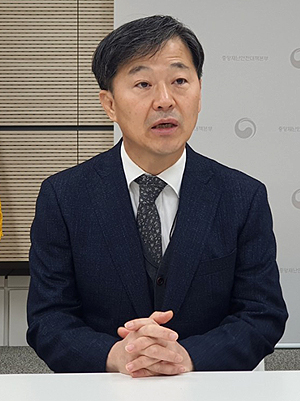
In 2025, South Korea's bio-health industry export sales reached a record high of KRW 27.9 billion. The Ministry of Health and Welfare (MOHW) met with exporting companies to listen to industry voices and gather opinions on support measures.
Notably, pharmaceutical exports surpassed the $10 billion threshold for the first-time last year, recording $10.4 billion.
This figure represents an approximately ten-fold increase over the past ten years as biopharmaceuticals, which account for 62.6% of pharmaceutical exports, expanded their export markets, focusing on the United States and Europe.
Lee Hyung-hoon, Second Vice Minister of MOHW, held a corporate briefing on the activation of bio-health industry exports at City Tower in Seoul at 2:00 PM on the 3rd. Lee encouraged the efforts of export company officials and promised to strengthen support.
After sharing industry trends, Vice Minister Lee sought government support measures by listening to difficulties in the field.
Among pharmaceutical companies, Samsung Biologics, GC Biopharma, HK inno.N, and Alteogen attended. In the medical device field, CGBio, Vuno, Meerecompany, and Wontech attended.
The briefing began with presentations on the 2026 outlook and export activation support plans, followed by officials from each exporting company presenting the difficulties they face and proposed policy improvement measures. It concluded with a free discussion for all attendees.
◆2025 export performance=Last year, the export value of the bio-health industry, including pharmaceuticals, biotech, medical devices, and cosmetics, reached $27.9 billion, an increase of 10.3% compared to the previous year, despite uncertain conditions such as tariffs. This recorded an all-time high and ranked 8th among South Korea's major industries.
Specifically, in terms of last year's performance by major industry, semiconductors ranked first with $173.4 billion, followed by automobiles at $72.0 billion, general machinery at $46.9 billion, petroleum products at $45.5 billion, petrochemicals at $42.5 billion, ships at $31.8 billion, steel at $30.3 billion, and bio-health at $27.9 billion.
Notably, pharmaceuticals surpassed $10 billion for the first time, recording $10.4 billion in exports and achieving their highest-ever performance.
This is the result of biopharmaceuticals, which account for 62.6% of pharmaceutical exports, expanding their markets in the United States and Europe and increasing approximately tenfold over the past decade.
By country, the United States, Switzerland, and Hungary were the major countries for exports, accounting for 39.5% of total exports and showing steady increases centered on advanced markets.
The export value of biopharmaceuticals grew from $670 million in 2015 to $3.49 billion in 2020, and further increased approximately tenfold to $6.52 billion last year.
Medical devices, including in-vitro diagnostic devices, shifted back into a recovery trend, and general medical devices also made progress with steady growth. By country, the United States, China, and Japan accounted for 33.1% of total exports, maintaining the top three positions.
◆2026 export outlook=The MOHW announced an export target for the bio-health industry of $30.4 billion, a 9.1% increase compared to last year.
This year's goals are $11.7 billion for pharmaceuticals (+12.4%), $6.2 billion for medical devices (+2.7%), and $12.5 billion for cosmetics (+9.5%).
In pharmaceuticals, domestic biopharmaceuticals are expected to lead export growth, driven by the global expansion of the biopharmaceutical market and South Korea's position as the world's number one in Contract Development and Manufacturing Organization (CDMO) capacity.
This is the outcome of the current status for biosimilar development following the patent expirations of 58 original biopharmaceuticals through 2032, and the encouragement of biosimilar prescriptions in the United States and the EU.
In medical devices, export expansion is expected in advanced and emerging markets for ultrasound imaging diagnostic devices and X-ray equipment incorporating AI technology, as they increase diagnostic accuracy and efficiency, in line with trends in aging populations and the AI transition.
To support export activation, the MOHW will invest KRW 233.8 billion, a 3.5-fold increase from last year, to overcome export uncertainties and actively foster the bio-health industry through investment promotion, supply chain strengthening, overseas regulatory response, consulting, marketing, and the establishment of local bases.
◆Pharmaceutical and bio field=The MOHW will strengthen competitiveness by creating an investment environment.
Based on industry suggestions and analysis of past performance, the ministry will promote improvements to the innovative pharmaceutical company certification system for companies with excellent R&D investment and continue to form a KRW 1 trillion mega-fund to ensure that domestic drug pipeline-based new drugs reach global commercialization.
Specifically, a new specialized fund of KRW 150 billion will be established this year to support Phase 3 clinical trials, which require the most capital during new drug development, and more than KRW 1 trillion in national health and medical R&D will catalyze expanding private R&D investment.
The MOHW will also revitalize the industrial ecosystem by strengthening the pharmaceutical supply chain.
To prepare for supply chain crises, the ministry will prepare an integrated stabilization response system, including securing raw materials and parts, supporting production facilities for drugs with unstable supply, and supporting the stockpiling of core medicines.
First, it will support the stabilization of new biomaterials) and expand support for diversifying new raw material purchases (10 companies, KRW 1.5 billion).
It will also support the production of drugs with unstable supply (4 companies, KRW 3.8 billion), the stockpiling of new core medicines (5 companies, KRW 500 million), and the advancement of manufacturing for new promising export medicines (15 companies, KRW 8.1 billion).
To strengthen support for global entry and export diversification, the goal is to move beyond the generic and biosimilar stages that have been the center of the pharmaceutical industry and enter the global market, with a focus on innovative new drugs.
The ministry plans to strengthen full-cycle support, including 'open innovation' based on cooperation, 'consulting,' the operation of domestic accelerator programs (inbound), and key global market entry (outbound).
The "K-Biopharma Next Bridge" project will be introduced to facilitate collaboration between domestic companies with promising technologies and global leading companies with high interest in the Korean market. Open innovation growth programs will be operated one-by-one, and the provision of information on regulatory changes by country and consulting for patent, legal, tax, customs, and distribution channel diversification will be strengthened.
Domestically, an accelerator program will be operated to increase the commercialization success rate of technology-based startups, support for companies occupying the Boston CIC to establish a bridgehead for US market entry will be expanded from 30 to 40 companies, and various networking activities to secure global sales channels will be strengthened through export consultations, the dispatch of market pioneer groups, and support for participating in global medical societies.
◆Medical device =An innovation ecosystem will be created to strengthen competitiveness, centered on the Medical Device Comprehensive Support Center, which covers the entire cycle from R&D to commercialization and overseas entry.
Utilizing the Medical Device Comprehensive Information System and MDCC, the MOHW will strengthen customized consulting support for companies and provide more professional information.
The Medical Device Consulting Council (MDCC) consists of 202 external experts in eight fields, including licensing and systems, R&D and clinical trials, overseas entry, commercialization, and legal and accounting.
Furthermore, the ministry will strengthen technology verification and market linkage for domestic companies through the global open innovation program "New Impact Korea," which promotes cooperation with global companies, hospitals, and investment institutions.
By holding "MedTech Insight," which systematically provides industry trends, regulations, and market information, the ministry will support the development of strategies aligned with field demand and lay the foundation for sustainable growth in the domestic medical device industry.
To increase the export potential of the domestic medical device industry, new projects to strengthen competitiveness will be expanded.
Support will be provided for the commercialization of innovative technologies and the strengthening of the competitiveness of the next-generation surgical robot industry, including support for the rapid commercialization of AI-applied products and the construction of an AI-based surgical robot innovation lab from 2026 to 2030.
Additionally, the MOHW will support clinical trials and real-world evaluations through professional consulting and medical staff matching by operating six hospital-based demonstration support centers this year, thereby facilitating the acquisition of clinical evidence and market entry in domestic and overseas markets.
To strengthen market-tailored export support, specialized support for major overseas markets will be increased. To facilitate local-based global entry cooperation, the ministry will support 10 companies in the US bio cluster in Houston with company occupancy and provide up to KRW 200 million per company annually to cover regulatory response costs essential for overseas market entry.
The MOHW will also help secure stable sales channels by supporting marketing and auxiliary export costs amid uncertainties in the international supply chain.
Furthermore, from this year, the "Medical Device Global Education and Training Support" project for overseas medical staff will be promoted to expand experience with key Korean products through linked education with overseas medical institutions, training facilities, and international medical societies, thereby strengthening product reliability and the foundation for market expansion.
-

- 0
댓글 운영방식은
댓글은 실명게재와 익명게재 방식이 있으며, 실명은 이름과 아이디가 노출됩니다. 익명은 필명으로 등록 가능하며, 대댓글은 익명으로 등록 가능합니다.
댓글 노출방식은
댓글 명예자문위원(팜-코니언-필기모양 아이콘)으로 위촉된 데일리팜 회원의 댓글은 ‘게시판형 보기’와 ’펼쳐보기형’ 리스트에서 항상 최상단에 노출됩니다. 새로운 댓글을 올리는 일반회원은 ‘게시판형’과 ‘펼쳐보기형’ 모두 팜코니언 회원이 쓴 댓글의 하단에 실시간 노출됩니다.
댓글의 삭제 기준은
다음의 경우 사전 통보없이 삭제하고 아이디 이용정지 또는 영구 가입제한이 될 수도 있습니다.
-
저작권·인격권 등 타인의 권리를 침해하는 경우
상용 프로그램의 등록과 게재, 배포를 안내하는 게시물
타인 또는 제3자의 저작권 및 기타 권리를 침해한 내용을 담은 게시물
-
근거 없는 비방·명예를 훼손하는 게시물
특정 이용자 및 개인에 대한 인신 공격적인 내용의 글 및 직접적인 욕설이 사용된 경우
특정 지역 및 종교간의 감정대립을 조장하는 내용
사실 확인이 안된 소문을 유포 시키는 경우
욕설과 비어, 속어를 담은 내용
정당법 및 공직선거법, 관계 법령에 저촉되는 경우(선관위 요청 시 즉시 삭제)
특정 지역이나 단체를 비하하는 경우
특정인의 명예를 훼손하여 해당인이 삭제를 요청하는 경우
특정인의 개인정보(주민등록번호, 전화, 상세주소 등)를 무단으로 게시하는 경우
타인의 ID 혹은 닉네임을 도용하는 경우
-
게시판 특성상 제한되는 내용
서비스 주제와 맞지 않는 내용의 글을 게재한 경우
동일 내용의 연속 게재 및 여러 기사에 중복 게재한 경우
부분적으로 변경하여 반복 게재하는 경우도 포함
제목과 관련 없는 내용의 게시물, 제목과 본문이 무관한 경우
돈벌기 및 직·간접 상업적 목적의 내용이 포함된 게시물
게시물 읽기 유도 등을 위해 내용과 무관한 제목을 사용한 경우
-
수사기관 등의 공식적인 요청이 있는 경우
-
기타사항
각 서비스의 필요성에 따라 미리 공지한 경우
기타 법률에 저촉되는 정보 게재를 목적으로 할 경우
기타 원만한 운영을 위해 운영자가 필요하다고 판단되는 내용
-
사실 관계 확인 후 삭제
저작권자로부터 허락받지 않은 내용을 무단 게재, 복제, 배포하는 경우
타인의 초상권을 침해하거나 개인정보를 유출하는 경우
당사에 제공한 이용자의 정보가 허위인 경우 (타인의 ID, 비밀번호 도용 등)
※이상의 내용중 일부 사항에 적용될 경우 이용약관 및 관련 법률에 의해 제재를 받으실 수도 있으며, 민·형사상 처벌을 받을 수도 있습니다.
※위에 명시되지 않은 내용이더라도 불법적인 내용으로 판단되거나 데일리팜 서비스에 바람직하지 않다고 판단되는 경우는 선 조치 이후 본 관리 기준을 수정 공시하겠습니다.
※기타 문의 사항은 데일리팜 운영자에게 연락주십시오. 메일 주소는 dailypharm@dailypharm.com입니다.