- LOGIN
- MemberShip
- 2026-09-11 08:01:33
- ‘LEO Pharma serves as a KOR–DEN healthcare bridge’
- by Son, Hyung Min | translator Alice Kang | 2026-02-20 10:04:33
Korea and Denmark share similarities. Both nations operate universal healthcare systems and face the dual challenges of introducing innovative treatments while maintaining fiscal sustainability. The policy environment in both countries shares the dilemma of preserving public value while promoting research and development.
Building on these shared priorities, the two nations have expanded multilayered partnerships involving governments, companies, and research institutions across various healthcare fields, including infectious disease response, aging populations, digital health, and chronic disease management.
Established in 2011, LEO Pharma Korea has served as a bridge within the Korea–Denmark healthcare collaboration framework, particularly in dermatology. Through close engagement with Korean clinicians and evidence-based medical research, the company has executed a patient-focused innovation strategy while functioning as a strategic hub connecting the results to the Danish market.
Against this backdrop, Frederik Kier, Executive Vice President of International Operations at LEO Pharma, who was appointed in June last year, recently visited Korea. His visit focused on reviewing the Korean subsidiary's strategy and discussing the direction of Korea–Denmark pharmaceutical and biotech collaboration with Mikael Hemniti Winther, Ambassador of Denmark to the Republic of Korea.
Dailypharm recently met with Ambassador Winther and Executive Vice President Kier at the Danish Ambassador's residence in Seongbuk-dong, Seoul, to discuss bilateral healthcare cooperation, Korea’s strategic role, and the practical implementation plans for patient-focused innovation.
“Designing public value and innovation together”… Emphasizing Korea-Denmark healthcare cooperation
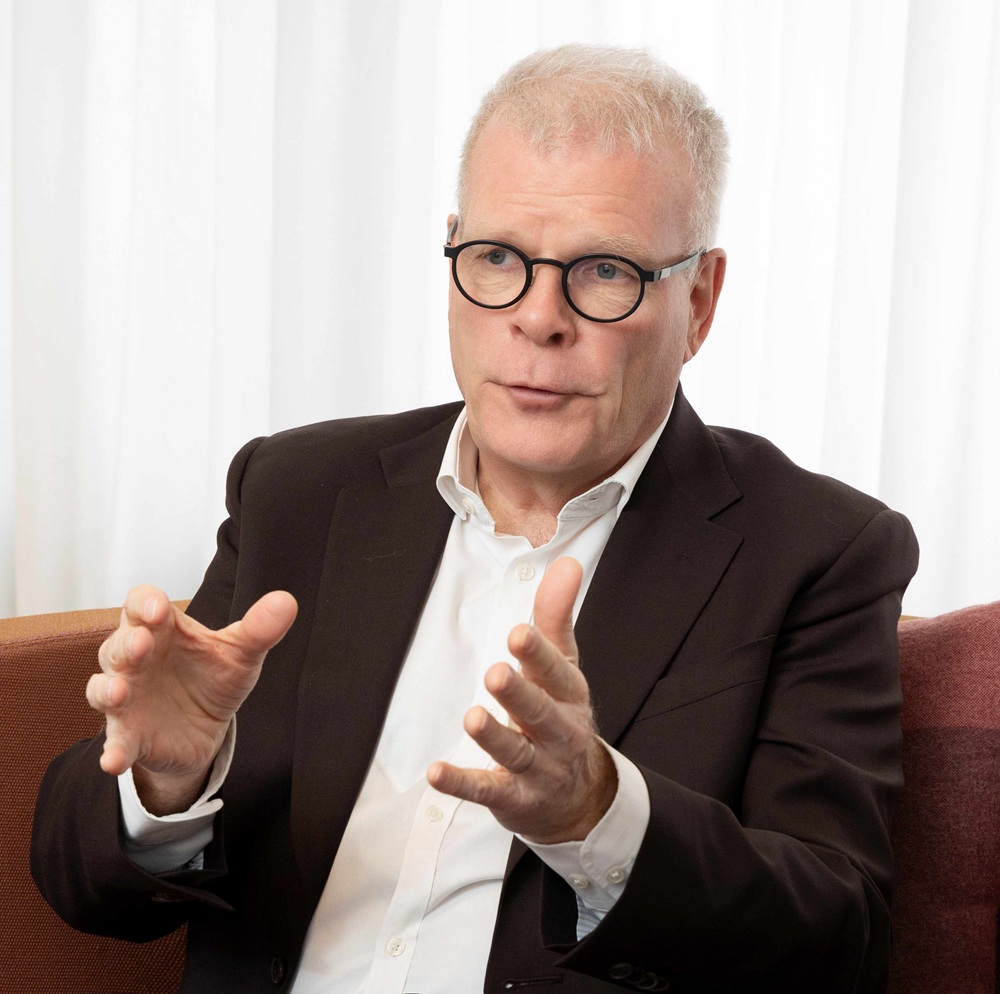
Ambassador Winther identified how Korea and Denmark's commonality lies not just in systems but in values. He emphasized that both nations have democratic systems and operate their healthcare systems on the basis of social agreement on welfare and public responsibility.
Ambassador Winther said, “The Danish government views patients not as customers but as individuals for whom it bears responsibility. Policies are designed around that responsibility.”
Denmark established a universal healthcare system early and has operated a healthcare infrastructure centered on public hospitals. Within this structure, pharmaceutical companies have served as a vital link, acting as a critical link that translates public research outcomes into real-world therapies beyond mere supply.
He explained, “Denmark has pursued a welfare society relatively early on. Health insurance and the healthcare system serve as its core pillars. The system functions only when high-quality treatments are available for the patients. To achieve this, the government and pharmaceutical companies need to collaborate toward common goals.”
He added, “The welfare system entails enormous costs. The key challenge is how to design incentives that encourage innovation while maintaining competition and transparency.”
He also emphasized the culture of cooperation between the government and pharmaceutical companies. In Denmark, public research institutes, universities, hospitals, and companies are organically connected, and industry opinions are partially reflected in the system design process.
He explained that cooperation between Korea and Denmark can also be understood within this context. The two countries continue policy exchanges across various fields, including infectious disease response, aging populations, and digital health. The embassy regularly communicates with Danish companies operating in Korea.
Ambassador Winther stated, “Currently, Danish companies are actively collaborating not only in the pharmaceutical sector but across diverse industries, sharing the fundamental values Denmark upholds. I believe there remains substantial potential for expanded collaboration going forward.”
LEO Pharma's execution strategy… Securing leadership in ‘medical dermatology’

EVP Kier described Korea’s importance from an industry perspective. LEO Pharma, he noted, has dedicated more than 115 years to dermatology, defining its mission as leadership in Medical Dermatology.
EVP Kier stated, “LEO Pharma aims to become a global leader in dermatology and is offering a broad range of treatment options for patients with skin conditions in Korea. Our existing portfolio includes diverse product lines, from acne therapies to treatment for psoriasis and atopic dermatitis.”
Marking its 15th anniversary in Korea, the company has expanded its presence in recent years. One prime example is its atopic dermatitis treatment ‘Adtralza (tralokinumab)’, which received domestic approval in 2023 and was added to the national health insurance reimbursement list in 2024.
The EVP explained that Adtralza has secured differentiated data in improving lesions on exposed areas like the head and neck and hands, establishing itself as a meaningful option in clinical practice.
EVP Kier said, “The Korean market already has various atopic dermatitis treatment options. Nevertheless, Adtralza deserves attention for its superior efficacy on exposed areas like the head, neck, and hands. These areas are known to be challenging to treat, and it is precisely in these areas that we believe Adtralza provides tangible and meaningful benefits to Korean patients.”
LEO Pharma has also secured Korean approval for ‘Anzupgo Cream (delgocitinib),’ a topical pan-JAK inhibitor targeting chronic hand eczema, and added it to its dermatology portfolio. Anzupgo is a topical formulation that inhibits JAK1, JAK2, JAK3, and TYK2 and was developed for patients who do not respond sufficiently to existing therapies.
EVP Kier explained, “Chronic hand eczema is an inflammatory disease that persists for more than 3 months or recurs frequently, with a significant patient population not responding adequately to existing topical treatments. It represents a clear area of unmet medical need. Anzupgo Cream demonstrated strong clinical efficacy and was shown to improve multiple eczema symptoms. We are currently in the final stages of preparation for its official launch in Korea.”
LEO Pharma is also preparing reimbursement procedures for Spevigo (spesolimab), a treatment for acute exacerbations of generalized pustular psoriasis (GPP). The company recently acquired commercialization rights through a licensing agreement with Boehringer Ingelheim.
EVP Kier described the developments as part of building an end-to-end portfolio spanning mild localized diseases to severe and rare dermatologic conditions.
EVP Keir specifically highlighted the Korean market as a strategic operational base in Asia. In his view, Korea is not merely a sales market, but an operational hub for data generation through clinical trials involving Koreans and a joint promotional base for raising awareness on the necessity of long-term treatment among healthcare professionals.
EVP Keir stated, “Chronic skin diseases are not conditions resolved with short-term prescriptions. Both clinicians and patients must share a common understanding of the need for long-term management.”
He added, “LEO Pharma views providing therapies for diseases with significant unmet medical needs as its most important contribution. To further establish leadership in dermatology, we will continue developing new candidates and treatment options within these disease areas.”
“Healthcare as both industry and diplomacy”… the need for government–private collaboration
The significance of the discussion extended beyond introducing LEO Pharma’s corporate strategy. Its weight lay in the shared recognition, based on the common ground that both Korea and Denmark are welfare states operating public healthcare systems, of how to design and implement healthcare as a pillar of national strategy.
Ambassador Winther said, “Denmark holds Korea's healthcare system in high regard. To address common challenges like aging populations and fiscal burdens, cooperation between the government and private sectors will become increasingly vital going forward. Healthcare is not merely an industry but a policy domain that the state must shoulder responsibility for. We need a structure where intergovernmental policy dialogue and corporate activities are discussed together.”
EVP Kier echoed this perspective. “Korea possesses an advanced healthcare system, and its medical professionals demonstrate high understanding and implementation capabilities regarding innovative therapies. LEO Pharma seeks to act not merely as a supplier but as a long-term partner aligned with Korean healthcare professionals.”
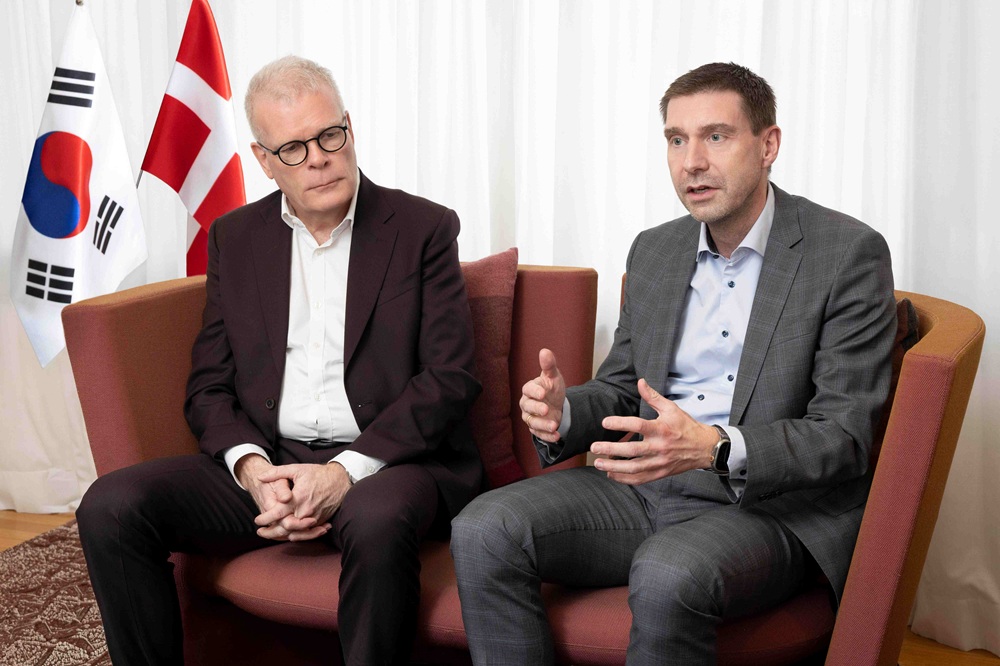
Another key theme emerging from this discussion was LEO Pharma's expansion of its domestic communication scope.
EVP Kier stated, “While engagement previously centered on patient groups in the past, it has recently expanded to include academic exchanges and clinical discussions with Korean medical professionals, broadening the scope of collaboration. This expansion of domestic communication contributes to enhancing understanding within the healthcare field and strengthening the practical implementation capabilities for innovative therapies.”
EVP Kier also added that certain skin conditions significantly impact patients' social lives and work performance. He remarked, “These conditions require greater attention from the medical community and society at large. LEO Pharma will continue being committed to introducing innovative new drugs to Korea.”
Ambassador Winther said, “Korea and Denmark face significant demographic and economic challenges. Through close cooperation among health authorities, governments, and the private sector, both nations can share experience and deliver greater benefits to patients,” he stated.
He concluded, ”The values shared by companies rooted in Denmark are reflected not only in LEO Pharma's treatments but also in the overall operations of Danish companies in Korea. We hope LEO Pharma's activities will contribute positively to Korean society.”
-

- 0
댓글 운영방식은
댓글은 실명게재와 익명게재 방식이 있으며, 실명은 이름과 아이디가 노출됩니다. 익명은 필명으로 등록 가능하며, 대댓글은 익명으로 등록 가능합니다.
댓글 노출방식은
댓글 명예자문위원(팜-코니언-필기모양 아이콘)으로 위촉된 데일리팜 회원의 댓글은 ‘게시판형 보기’와 ’펼쳐보기형’ 리스트에서 항상 최상단에 노출됩니다. 새로운 댓글을 올리는 일반회원은 ‘게시판형’과 ‘펼쳐보기형’ 모두 팜코니언 회원이 쓴 댓글의 하단에 실시간 노출됩니다.
댓글의 삭제 기준은
다음의 경우 사전 통보없이 삭제하고 아이디 이용정지 또는 영구 가입제한이 될 수도 있습니다.
-
저작권·인격권 등 타인의 권리를 침해하는 경우
상용 프로그램의 등록과 게재, 배포를 안내하는 게시물
타인 또는 제3자의 저작권 및 기타 권리를 침해한 내용을 담은 게시물
-
근거 없는 비방·명예를 훼손하는 게시물
특정 이용자 및 개인에 대한 인신 공격적인 내용의 글 및 직접적인 욕설이 사용된 경우
특정 지역 및 종교간의 감정대립을 조장하는 내용
사실 확인이 안된 소문을 유포 시키는 경우
욕설과 비어, 속어를 담은 내용
정당법 및 공직선거법, 관계 법령에 저촉되는 경우(선관위 요청 시 즉시 삭제)
특정 지역이나 단체를 비하하는 경우
특정인의 명예를 훼손하여 해당인이 삭제를 요청하는 경우
특정인의 개인정보(주민등록번호, 전화, 상세주소 등)를 무단으로 게시하는 경우
타인의 ID 혹은 닉네임을 도용하는 경우
-
게시판 특성상 제한되는 내용
서비스 주제와 맞지 않는 내용의 글을 게재한 경우
동일 내용의 연속 게재 및 여러 기사에 중복 게재한 경우
부분적으로 변경하여 반복 게재하는 경우도 포함
제목과 관련 없는 내용의 게시물, 제목과 본문이 무관한 경우
돈벌기 및 직·간접 상업적 목적의 내용이 포함된 게시물
게시물 읽기 유도 등을 위해 내용과 무관한 제목을 사용한 경우
-
수사기관 등의 공식적인 요청이 있는 경우
-
기타사항
각 서비스의 필요성에 따라 미리 공지한 경우
기타 법률에 저촉되는 정보 게재를 목적으로 할 경우
기타 원만한 운영을 위해 운영자가 필요하다고 판단되는 내용
-
사실 관계 확인 후 삭제
저작권자로부터 허락받지 않은 내용을 무단 게재, 복제, 배포하는 경우
타인의 초상권을 침해하거나 개인정보를 유출하는 경우
당사에 제공한 이용자의 정보가 허위인 경우 (타인의 ID, 비밀번호 도용 등)
※이상의 내용중 일부 사항에 적용될 경우 이용약관 및 관련 법률에 의해 제재를 받으실 수도 있으며, 민·형사상 처벌을 받을 수도 있습니다.
※위에 명시되지 않은 내용이더라도 불법적인 내용으로 판단되거나 데일리팜 서비스에 바람직하지 않다고 판단되는 경우는 선 조치 이후 본 관리 기준을 수정 공시하겠습니다.
※기타 문의 사항은 데일리팜 운영자에게 연락주십시오. 메일 주소는 dailypharm@dailypharm.com입니다.