
- LOGIN
- MemberShip
- 2026-05-21 01:11:54

- Policy
- 4200 items subject to ATP-based price reduction by 1%
- by Lee, Hye-Kyung Nov 15, 2019 06:28am
- Korean regulators have decided to reduce drug prices of about 4,200 items based on actual transaction price (ATP) from Jan. 1 next year. Until Nov. 11, Health Insurance Review and Assessment Service (HIRA) informed details of price reduction to pharmaceutical companies with already-listed drugs subject to the reduction, and allowed them to visit and confirm the result. HIRA plans to accept their appeals until the end of the month, and to start re-evaluating the items from Nov. 30. The updated lists of reimbursed drugs and their upper limit price are to be in effect from Jan. 1, 2020. At a correspondent’s workshop held on Nov. 14, Director of Pharmaceutical Management Department at HIRA, Kim San stated, “Except for the exempted 4,398 items, weighted average price of 17,702 items, out of 21,732 reimbursement listed drugs, has been calculated. According to the first result, average reduction rate is about 1.3 percent, and it would be modified down to around 1 percent after the appeal review”. “Last year’s overall drug expenditure reached about 17.8 trillion won, and the figure would be decreased by around 90 billion to 100 billion won with price reduction rate around 1 percent. To provide reduced drug price from the beginning of next year, the span of National Health Insurance (NHI) benefit claim bill collection was shortened from three months to two months,” Director Kim added. This year’s ATP survey delved into NHI benefit claim made from July 1 of 2018 to June 30 of 2019, but 3,773 public healthcare institutes, four special veteran hospitals, and 40 military hospitals were excluded from 94,183 subject healthcare institutes. Price reduction subject drugs are to determine weighted average price based on healthcare institutes’ NHI reimbursement claim made on 17,702 listed drugs to HIRA during the surveyed period. Total of 4,398 items are exceptions to the upper limit price adjustment, which consists of 1,167 low-priced drugs, 638 shortage prevention drugs, 394 narcotics and orphan drugs, and 1,837 drugs newly listed during the survey period. Last year, overall 3,619 items had their prices lowered by average rate of 1.3 percent due to ATP-based price reduction, which apparently saved 80.8 billion won of drug coverage expenditure.

- Company
- XOSPATA , AML Medicine landing soon in Korea
- by Eo, Yun-Ho Nov 15, 2019 06:28am
- It is anticipated that new AML (acute myeloid leukemia) drugs which are lack of the treatment will be approved . According to the related industry on the 15th, Astellas Pharmaceuticals is in the process of approving from MFDS for 'Acute myeloid leukemia (AML) drug named Xospata (Gilteritinib). The drug is already approved in 2018 in the US and Japan and received European EMA approval last month. The efficacy of Xospata has been demonstrated in phase 3 clinical ADMIRAL studies. XOSPATA delivered superior survival with a median OS(Overall Survival) of 9.3 months vs 5.6 months with salvage chemotherapy during the ADMIRAL trial. XOSPATA more than doubled the 1-year survival rate compared with salvage chemotherapy. The one-year survival rate was 17% with salvage chemotherapy and 37% with XOSPATA. Adverse reactions occurred in more than 10% of patients receiving XOSPATA for 30days were anemia, increased ALT and AST, febrile neutropenia, thrombocytopenia, constipation, fever, and fatigue. AML is the most common form of leukemia, accounting for about 65% of adult acute leukemia. As you get older, the incidence increases. AML is first treated with a combination of two or three drugs such as Anthracycline. The problem is that even after the first chemotherapy, the leukemia cells fall to less than 5% and the degree of complete perception reaches 50-70%, but up to 50% of these relapse. As a result, many big Pharmacuticals are eager to develop new drugs. An official of the Korean Society of Hematology said, "AML is important to reduce cancer cell numbers in the beginning. We look forward to the appearance of options for prescribing older patients and patients who are unable to apply induction therapy." Meanwhile, Janssen's Decitabine named Dacogen has been prescribed as a primary treatment for older AML patients.

- Policy
- Pharmaceutical spending structure needs to be reorganized
- by Lee, Jeong-Hwan Nov 14, 2019 05:40pm
- We need to increase the expenditure of new drugs in drug costs far more than now. Patent expiration drugs must be left out of the market and replaced by generics for health insurance to be kept. However, since the structure could not be broken, the reform of the generic drug price system, which is a transitional measure, has started. It is solved only by redrawing the spending structure itself. There is often a conflict between estimating drug pricing and increasing reimbursement reflecting the social value of expensive innovative new drugs and the rational expenditure and management of limited health insurance financing. The government is trying to come up with a variety of tools to evaluate the value of innovative new drugs, but it is not easy to close the gap between regulators and profit-generating companies. Eventually, it was the government and experts' view that a massive restructuring of the financial spending structure in health insurance would be necessary to resolve this conflicting agenda. At the National Assembly Library on Nov 7, experts from the government, industry, and patients organization gathered in an open policy debate to solve the difficult task of balancing new drug?s social values and health finances. A panel discussion was held after the presentation of JiHong Bu, senior vice president of IQVIA Korea, which aims to increase the supply of new drugs by regulating the excessive use of chronic disease drugs. The discussion was attended by Myungseop Kwak, Director of insurance and pharmaceutical affairs at MOHW, Jinok Byun, director of the Center for Institutional Finance Research, Korea Institute for Health Insurance Policy, Prof.Lee, Wonbok, Graduate School of Law, Ewha Womans University, Sungjoo Kim, a member of Lee & Ko, and Representative Kijong Ahn , Korea alliance of patients organization ▲ Professor Wonbok Lee (left), Director of Jinok Byun he discussion was based on whether it would be reasonable to create a health budget for new drug benefits by regulating the use of mild and chronic disease drugs, and how to improve the expenditure structure of drugs cost. Prof. Lee, Wonbok, school of law of Ewha Womans University pointed to the lack of statistical or objective evidence that reducing the use of mild and chronic diseases and increasing new drug benefits would contribute to health and financial health. In particular, he introduced many cases where the cost-effectiveness of treatment for severe rare diseases was low and mentioned the risk of unconditional expansion of new drug benefits. Prof. Lee said, "Because the high-income countries except Japan and Korea are spending aggressively on new drugs, there is no justification for the expansion of new drug benefits." Prof. Lee said, "It must be accompanied by practical evidence. We need to provide quantitative indicators of what will help us in terms of health finance and public health." In particular, if the new cap expenditures are unconditionally increased due to the fiscal cap, there is a need for a solution to the backlash against the decrease in stakes in other sectors. � Jinok Byun, head of the Korea Institute for Health Policy Research, said people should not misunderstand that the government will not save or use health finances. Health insurance finances, after all, exist in order to be well spent, explaining that they are doing their best to meet the characteristics of medicines. In particular, the initial drug pricing negotiation of the original new drug is important in terms of financial financing. "The chronic leukemia drug Gleevec was the first targeted drug, called magic bullet because of its superior effect. When it was first introduced, the number of patients was 500," she said. "We have tens of thousands of patients a year and the Gleevec market is still active.� "This is the hallmark of the innovative new drug market. It is the case that Gleevec?s reimbursement was not stopped even after the Novatis?s rebate is caught." "If the new drug lie Gleevec is not managed by the government, it becomes a problem. It is the decision or adjustment process on drugs to agree on a reasonable basis for price in terms of overall price management." ▲ Sungjoo Kim (left) and Myungseop Kwak Sung-Joo Kim, Expert in Lee & Ko , said that the level of drug prices in Korea is not high compared to overseas, and that the application of innovative new drugs should be expanded quickly. "I agree with the significant improvement in the new drug registration rate, but the reimbursement approval is still limited. Cancer immunotherapy is a good example of this, we need to increase reimbursement level and expand the reimbursement drugs" said Kim. Mr. Kim said, ?In particular, we have to worry about creating surplus in financial fields other than pharmaceutical expenses. According to the analysis of the Health Insurance Review & Assessment Service bill data, The number of visits by the most visited clinics in Korea for one year was 300 times. It means that the patient went to clinics more than once per day, so we need to improve the efficiency of health finance. " Myungseop Kwak, the ministry's director of welfare, said that the drug expenditure structure should be redesigned for the social value of new drugs and sustainable health finance. The purpose of this study is to analyze the current spending structure and to rationalize as soon as possible to spend more on new drugs and to reduce the amount of money spent on patent expiration drugs and generics to secure sustainability of health and financial finance. However, since it is virtually impossible to break the spending structure at once, it is implementing measures that can be reformed, such as the reform of the generic drug system, which is a transitional stage. He said, ?Patients and the industry do not require reimubursement for patent expiring drugs. We pay only for new drugs.??We have established a rationalization plan and started research on expenditure structure analysis. We initiated expenditure structure analysis research, results will be released in the first half of next year.� He also said, "If you don't change the expenditure structure in the end, the answer will be microscopic. It's difficult to solve it without drawing a new macroscopic cost chart and digging into the details one by one." Sustainability can only be achieved if the patent expiry is released from the market and generics are replaced. " ?We started with the reorganization of the generic drug pricing system, which is a transitional measure because it is difficult to realize in the five-year health insurance guarantee plan. We plan to use the resources obtained through the reevaluation of patent expired drugs and non-payment drugs for high-cost anticancer drugs, rare incurable diseases treatments, and serious treatments."
- InterView
- I know CRA grievances better than anyone else
- by Lee, Tak-Sun Nov 14, 2019 09:59am
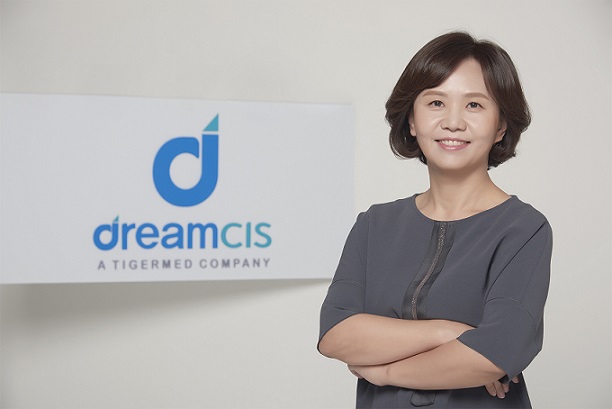
- For CRA(Clinical Research Associate), it is very hard to communicate with many professional people. It's even harder if you don't have expertise. I wish my juniors would work with proud. I would like to have the pride of being an expert that communicates effectively with clinical expertise, monitors clinical practice, and leads clinical practice overall. Kyungsun Kong(52 years old), CEO of dreamCIS knows CRA grievances better than anyone else. The core of the CRO(Clinical Research Organization) is often called CRA. However, CRAs have a lot of work and are irregular, so they often move over. when working as a clinical monitoring agent, you may get hurt by professional experts, such as doctors and nurses. However, the power of the CRA may gaurantee clinical trial quality. It's no wonder that pharmaceutical companies are rushing to many CROs with competent CRAs. CEO Kong was also one of the most competent CRAs. In 1995, she began to work clinical trials as a clinical nurse (CRC) at SMC. The CRC is responsible for coordinating communication between subjects and researchers. In 2003, she conducted clinical trials for 25 years, including Wyeth, Parexel and YUHAN. She worked as a PM managing CRA at Parexel, and she took care of the clinical trial of Lasertinib, a lung cancer drug as a clinical development team leader at Yuhan. CEO Kong is probably the only one who started as a CRC and experienced various duties in the clinical field and became the head of the domestic CRO. This is because most domestic CROs maintain owner representative system. About the reason why she joined dreamCIS last April,“I wanted to try new experience and challenge, CEO Gong said. dreamCIS is an important global CRO since it was acquired by Tigermed in China in 2015. It was the first domestic CRO to undergo preliminary screening. By the end of this month, it will be decided. CEO Gong said, "The goal is to stably grow dreamCIS as a global CRO and It is very symbolic to have listed stocks as a leading company in the industry. It is expected in many ways.“ In recent years, dreamCIS has been gradually increasing global challenges in cooperation with Tigermed. 20-25% of current projects are global. Most of them carry out clinical tasks in China and Korea. CEO Gong said, “Chinese pharmaceutical companies are also growing so much that there is an increasing demand to conduct simultaneously clinical trials in Korea and Japan because the data is mutual recognition.” She said, "Since the merger of Taigermed, the progress of global tasks has been increasing considerably, and there are many opportunities for domestic companies to enter China." I want to contribute to the successful entry of Korean companies to China. ” CEO Gong plans to carry out his management philosophy with a focus on improving clinical quality. She said, “The important thing is clinical quality and I pay much attention to education and talent Recruitment.” Speaking as CRO, It is the key to have good talented CRA. Especially good CRAs control clinical quality. More than 50% of the 200 employees are CRAs in the company, and 80% of them are women. CEO Gong plans to devote herself to building a good company for women to work.“There are many benefits according to the number of women, and many of our employees are working from home and flexible, and I will continue to encourage them.” "I have experienced various companies as a female representative and also as a working mom, but I think that the diverse and flexible culture and system of dreamCIS provide more opportunities for competent working moms and young women focusing on their work creatively", she added. While working as a CRA, she had a lot of hard work, but much experience brought her here with pride. She advised, "To work with professionals such as nurses, pharmacists, doctors or nurses, you need expertise in the clinical field you are in charge of, and you need to communicate based on that knowledge. I wish our staff, as well as juniors working in the clinical industry, would be proud to work with them. ” “Global CROs are starting from the CRA and going up to the country head as they build up their careers, and I also have come to this position as I build up my career from the CRAs." I think it will be a good model for new emloyees and juniors to work” she said. CEO Gong concluded that she is planning a multi-faceted business after the IPO and plans to focus on a business based on the CRO.
- Policy
- Zejula max reimbursed price 76,400 won from Dec. 1
- by Kim, Jung-Ju Nov 14, 2019 09:08am
- From December, Takeda Pharmaceutical Korea’s ovarian cancer treatment, Zejula 100mg capsule (niraparib) would be on the insured drug list at a price of 76,400 won. Although it is more cost-effective than the alternative option Lynparza, Zejula received the same price cap because Lynparza was listed via pharmaceoeonomics (PE)-exempted risk sharing agreement (RSA). Zopista would also be listed from next month at a price of 108 won per 1mg tablet. Health Insurance Policy Deliberation Committee (HIPDC) convened a meeting on Oct. 30, and decided to revise the list of reimbursed drug and upper limit reimbursement rates. Ministry of Health and Welfare (MOHW) explained the reimbursement listing schedule reflects the actual supply schedule of each listed drug, for instance, Zopista from Nov. 1, Zejula from Dec. 1 and Velphoro chewable tablets (sucroferric oxyhydroxide) from Jan. 1, 2020. ◆ Zejula 100mg capsule: Zejula 100mg capsule was approved as an oral maintenance therapy for platinum-sensitive adult patients with recurrent epithelial ovarian, fallopian tube, or primary peritoneal cancer, who are in a complete or partial response to platinum-based chemotherapy. Reaching an agreement with National Health Insurance Service (NHIS) on drug pricing negotiation, Zejula’s reimbursed price was set at 76,400 won per capsule. The drug was passed with expenditure cap as its alternative drug Lynparza was passed with a case of PE-exempted expenditure cap type RSA. Takeda released Zejula in Korean market after Ministry of Food and Drug Safety (MFDS) approved it on Mar. 22. On Mar. 25, the company submitted an insurance reimbursement listing application. The application was deliberated by Severe and Cancer Disease Deliberation Committee and Drug Reimbursement Evaluation Committee on June 12 and July 25, respectively, and the drug’s price was negotiated from Aug. 13 to Oct. 10. MOHW official explained patient’s burden on the drug is expected to be lowered significantly as the drug’s daily cost for patient reimbursement the cost is now at 7,640 won, whereas without reimbursement was at 152,800 won before. ◆ Velphoro chewable tablet: Velphoro is a new drug used to control serum phosphorus levels in patients with chronic kidney disease on dialysis, and HIPDC passed the drug at a reimbursed price of 1,697 won per tablet. The tablet was approved by MFDS on Mar. 20 last year, and it applied for reimbursement on Oct. 24 the same year. DREC deliberated and passed the drug on Apr. 25 this year, and NHIS conducted a pricing negotiation from May 22 to July 19. ◆Zopista tablet: An insomnia treatment, Zopista was approved by MFDS on last May 3, and it applied for reimbursement on May 31. The treatment was passed by DREC on Aug. 29 and reached an agreement with NHIS on pricing negotiation from Sept. 24 to Oct. 21. The tablet’s reimbursed cap price was set to 108 won, 162 won and 203 won for 1mg, 2mg and 3mg tablets, respectively. Director Kwak Myeong-Seop of Pharmaceutical Benefits Division stated “The updated reimbursed drug list has expanded insurance coverage on recurrent ovarian cancer treatment, and accordingly enhanced treatment access but lessened patient’s financial burden. The updated list would be officially in effect from Dec. 1, providing National Health Insurance reimbursement on newly added Zejula, Velphoro and Zopista”.
- Policy
- 62 DI including Belviq® and CONTRAVE®,added to DUR
- by Lee, Tak-Sun Nov 14, 2019 09:07am
- The MFDA(Ministry of Food and Drug Safety) has announced additional contraindicated DI(Drug Interaction) medicines that will be updated in the DUR (Drug Utilization Review). Especially, one of the antiobesity medicines, Contrave®(Bupropion-Naltrexone) is contraindicated with Belviq® (Locaserine HCl), and , Cough®, one of expectorants was added Category X which means highly unsafe in pregnant woman. MFDA announced on Nov 11 the partial amendment proposal of 'Regulations on Designation of Contamination of etc.'. This amendment will be implemented immediately after the opinion submission period and will be reflected in the DUR. The revised contents includes 62 DI medicines including Bupropion & Naltrexone-Locaserin, which are considered necessary for contraindication DI. The Bupropion / Naltrexone preparations are generic for Contrave® recently approved. It was added to DUR not to take with Belviq®. Also Belviq® is anti-obesity medicine. 42 contraindicated drugs for pregnany women including Dihydrocodein tartrate was added to DUR, too. Cough® and Codaewon-Forte® are the main medicines including Dihydrocodein tartrate. Remarks have been changed and added to Fentanyl and other ingredient, which are designated as category X. Fosfomycin, on the other hand, was lifted from category X. 10 contraindicated drugs for certain age criteria like Atomoxetine added age-specific contraindications and dosage forms. In addition, the age criteria for 4 ingredients including Bicalutamide were changed. The ingredient name and dosage forms for 4 components including Mesalazine were changed. MFDA officer said, “This amendment will be implemented after the opinion submission period and will be reflected in the DUR immediately” and added “ The amendment was based on the information in the drug insert".
- Company
- Samsung Bioepis CEO notes 3 reasons why CAR-T struggles
- by Kim, Jin-Gu Nov 14, 2019 09:07am
- Ko Hang-Seung, CEO of Samsung Bioepis Co., picked three reasons CAR-T cell therapy (“CAR-T”) is struggling – price, patient size and productivity. On Nov. 12, CEO Ko shared his opinions about CAR-T and other next generation treatment options during his keynote speech at BIOplus 2019 in COEX, Seoul. “Data was fairly good when CAR-T first came about. The U.S. Food and Drug Administration (FDA) approved the treatment only with a handful of data. But never did we think that it would be so unprofitable. Apparently, Novartis is making about one-third of initially projected sales,” said CEO Ko. As the first reason, Ko pointed out the existing alternative option. Among others, rituximab (brand name Mabthera) is the most famous case. He explained CAR-T is vulnerable in price competition with rituximab out in the market. “When first rituximab was release, many commented how extremely expensive it was. But the price got notably lower after CAR-T was launched. CAR-T is inevitably expensive due to its production process. The manufacturer has to extract a patient’s blood sample and reprogram extracted T-cell first to finally infuse it back to the patient.” The second reason is limited patient size. The approved indication of CAR-T at the moment is limited to patients with hematologic malignancies. But as patient size of the cancer is significantly smaller than that of solid cancer, CAR-T sales figures are also low. Small patient size also negatively affects clinical trials. This also includes price issues. The CEO commented, “Clinical trial for CAR-T is full of obstacles as it has small patient size and its production cost is off the chart. This adds to the issue of generating statistically meaningful evidence for another indication and having it approved”. The third reason is productivity. Ko claimed “Some think pharmaceutical manufacturing is the easy part of the drug development. But mass manufacturing of a product in consistently satisfying quality is easier said than done”. “Production is one of the reasons Novartis is struggling with CAR-T. As the treatment is based on individually customized production, mass manufacturing is impossible and consistent quality control is difficult”, said the CEO. Lastly, he noted “Circumstances are quite similar with cell therapy and gene therapy sector that many of startups are jumping into these days. If they don’t tackle the quality control aspect in manufacturing stage fast, the market would unlikely to grow further”.

- Company
- Merck Korea vs GM employee feud sees no end
- by An, Kyung-Jin Nov 14, 2019 09:07am
- KDPU Merck Korea chapter picketing during morning rush hour After licensing out antihypertensive and anti-diabetic treatments, Merck Korea is finally, and completely, shutting down its General Medicine (GM) division. However, an intense conflict with labor union has deepened as more than a half of the employees have not reached an agreement with the company’s management. The company offering early retirement program (ERP) became highly controversial as it technically asked a certain group of employees to leave the company “voluntarily”. According an industry insider on Nov. 13, imminent shutdown of Merck Biopharma Korea’s GM division is causing increasingly heated labor-management strife with the GM division employees. Merck Korea has officially announced the closing of the GM division by the end of this month as it has sold off local sales rights of two prescription drugs to Korean pharmaceutical companies within a month. On Oct. 11, the company closed a deal with GC Pharma to sell the sales right in Korea for an anti-diabetic drug, Glucophage. And shortly after on Nov. 5, the company and Daewoong Pharmaceutical signed a deal over a sales right of an antihypertensive drug Concor. The signed deals provide Merck Biopharma Korea to maintain the item permit, while GC Pharma and Daewoong Pharmaceutical would initiate marketing and sales activities of the products from the beginning of next year. The decision was made based on the Merck headquarters’ intention to focus on accelerating growth of specialty care sector. “Merck now has a new aim to strengthen specialty care pipelines on oncology, infertility and neurology sectors to become a global specialty innovator. By supplying Merck’s drug products to GC Pharma and Daewoong Pharmaceutical, we would continue to contribute in improving lives of Korean patients,” said Merck Biopharma Korea General Manager Javed Alam. The GM division has about two weeks left to complete the closing, but more than a half of employees and Merck Korea have not settled on a middle ground for their employment condition. Representative of Merck Korea chapter of Korea Democratic Pharmaceutical Union (KDPU) informed that the management has offered ERP compensation to pay out eight month’s wage, in addition to two month’s wage times by a number of years of service. Including a manager-level employee, nine out of 35 employees from GM division have applied for ERP, and other 26 are demanding the management to provide more options of employment security, such as reassignment of position. According to the division shutdown schedule, offices in Gwangju, Daejeon, Daegu, Busan and other regions are also preparing to shut down and reassigning employees to Seoul office from next month, regardless of their unimaginable intercity commute. Merck Korea plans to offer the employees an ERP package, and also to provide opportunities to transfer position within or out of the company. Moreover, the management is offering financial support of maximum 40 million won for up to two-year MBA or master’s degree graduate school programs, and it informed there would be another call for ERP applicant. However, the union claims the management asking one specific department to apply for early retirement is not so far off from them picking on a particular group of employees. The union explains the ERP should be offered to everyone in the company and employees who wish to stay should get a chance to be reassigned to another department. Beginning from Sept. 30, Merck Korea’s labor union has been protesting against the management’s decision to downsize in front of their office building. And to this date, the union members are picketing during the busy commuting time every morning. Head of Merck Korea chapter of KDPU, Cho Young-seok reproached, “The union has attempted to convince the management to postpone the sales right deal and to seek mutually sustainable means for the both parties, but our proposition has been denied. Besides the sales license, the company should at least give employment opportunities to those who want to stay. Relocating employees from closed regional offices to Seoul office is technically pushing them over to the edge to leave the company”. About the issues addressed, Merck Biopharma Korea official stated, “As GM division’s regional offices are closing down soon, their employees have been reassigned to Seoul office. The headquarters’ intention is to discuss various options including ERP. Although the feasible number of employees cannot be specified at this moment, we plan to offer opportunities for them apply for transition to Korean pharmaceutical companies with the sold drug sales rights, or even to other divisions in the company”.

- Company
- Rolontis®to get ₩11.6 billion upon FDA's approval
- by An, Kyung-Jin Nov 14, 2019 03:25am
- The royalty scale of Rolontis® was first revealed. Hanmi Pharmaceuticals will receive rayalty of nearly ₩ 12 billion upon final FDA approval. After the release, Hanmi Pharmaceuticals will also likely receive a certain percentage of revenue annually, depending on sales. Spectrum Pharmaceuticals, Hanmi Pharmaceutical’s partner, recently filed quarterly report SEC. Spectrum Pharmaceuticals noted in its report that it has completed reauthorization application process on Oct 24. The company rescinded its initial BLA for the reason of the FDA’s request for more CMC data in March. The company resubmitted the biologics license applications (BLA) for Rolontis® to the FDA after 7 months. Spectrum pharmaceuticals said with confidence ,“Rolontis® demonstrated safety and efficacy in 643 early breast cancer patients with neutropenia following myelosuppressive chemotherapy. The two phase III clinical trials showed non-inferiority in terms of the duration of neutropenia compared with Pegfilgrastim during the four cycles of chemotherapy.”It expects to enter the Pegfilgrastim market generating $ 4 billion in revenue annually, if approved. According to the report, Spectrum pharmaceuticals agreed to pay $ 10 million milestones to Hanmi Pharmaceuticals upon FDA’s approval. After launch, Spectrum pharmaceuticals will pay a certain percentage of royalties annually based on the net sales. Rolontis® is a biological new drug with long-acting that utilizes Hanmi’s Labscovery platform technoloy. In 2012, Hanmi Pharmaceuticals signed a licensing agreement with Spectrum Pharmaceuticals, giving the global rights for Rolontis® except for Korea, China and Japan. Hanmi Pharmaceuticals and Spectrum Pharmaceuticals did not disclose the total contract size, including the upfront fee and the technology at the time of contract. According to Spectrum Pharmaceuticals, a certain deposit was paid to Hanmi Pharmaceuticals when they signed the contract initially. In September 2014, after confirming the positive phase II clinical results and deciding to proceed with phase III clinical trials, they said the terms of the contract, such as milestones and sales royalties were modified. Spectrum Pharmaceuticals first paid Hanmi Pharmaceuticals $1.9 million milestones when it started the ADVANCE study in the first quarter of 2016. Spectrum pharmaceuticals issued 318,750 common shares for Hanmi pharmaceuticals in April of the same year. Considering the stock price at that time, it was worth $ 2.3 million in cash. , Currently, Hanmi pharmaceuticals owns 0.29 percent of Spectrum pharmaceuticals shares. Joseph W. Turgeon, CEO of Spectrum, who attended the conference call on July 7, said, “Spectrum pharmaceuticals submitted theRolontis®BLA to the FDA last month with a strategic decision considering management priorities.” We plan to introduce the Rolontis® Phase III clinical integration data which was released at the 2019 ASCO conference, at the San Antonio Breast Cancer Symposium (SABCS) in Texas, USA next month“.

- Policy
- Ultomiris®, follow-up Soliris® to set with clinical trial
- by Lee, Tak-Sun Nov 14, 2019 03:21am
- Follow-up medicine after Soliris® which is a very expensive Orphan drug and ₩40 billion sales in domestic market reached out the end of clinical trials. That’s what the medicine named Ultomiris®, and Phase III clinical trials was approved for PNH and Myasthenia gravis patients. There is high probability of becoming available in the domestic market the end of next year. The MFDS(Ministry of Food and Drug Safety) approved Ravulizumab’s (generic for Ultomiris®) multi-state models in clinical trials. The Clinic trial is proceeded in SNUH, Severance Hospital, SMC. And, The test client is INC Research. Domestic subjects are 8 patients, and it will progress clinical test on until next September. Prior to this, multi-state models in clinical trials for myasthenia gravis patients without administering C5 complement inhibitor evaluating saftey and efficacy in was approved. Domestic subjects are 7 patients, and the Clinic trial is proceeded in 6 medical institutions including SMC. Handok retains the reimbursement and dometic approval for Ultomiris®. Also, the company imports and sell Soliris®, PNH treatment. Alexion, original developer is targeting domestic approval of Ultomiris® by the end of next year. Alexion received FDA approval forUltomiris® last December, and EMA approval this July, too. Ultomiris® improved medication compliance compared to Soliris®. Ultomiris® is injected every 8 weeks, while Soliris® is injected every 2weeks. Soliris®is very expensive, and the RSA(Risk Sharing Agreement) was ended in last October. The pharmaceutical price is ₩5,130,000 per 300mg /30ml bottle. It costs ₩5 billion annually per patient, and IQVIA’s Standard sales was ₩41.5 billion last year. It seems that they put a high price on Ultomiris®. Reimbursement negotiation is expected to be the key to market release.
