
- LOGIN
- MemberShip
- 2026-05-16 03:41:29
- Policy
- New guidelines for Lagevrio & Paxlovid have been released
- by Kim, Jung-Ju Jun 02, 2022 05:58am
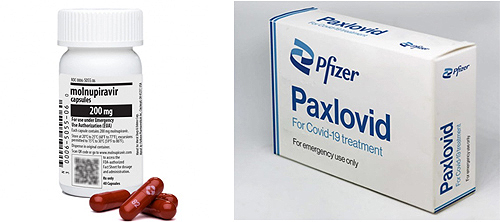
- (from left) Lagevrio and PaxlovidNew clinical guidelines for Lagevrio and Paxlovid's administration of COVID-19 patients have been released. Lagevrio considers medication if it is difficult to use other treatments among confirmed patients with mild and severe symptoms over the age of 18, and Paxlovid considers patients aged 12 or older who weigh more than 40kg. Eight member societies of the National Evidence-based Healthcare Collaborating Agency (Director Han Kwang-hyeop) and the Korean Academy of Medical Sciences (Chairman Jung Ji-tae) announced additional clinical treatment guidelines for the diagnosis and treatment of COVID-19. This guideline reflects the results of a comprehensive review of papers published around the world with the participation of the National Evidence-based Healthcare Collaborating Agency, a specialized research institute under the MOHW, and the COVID-19 diagnosis and treatment. The eight member societies are the Korean Academy of Medical Sciences, the KSID, the Korean Academy of Tuberculosis and Respiratory Diseases, the KSPID, the Korean Society of Radiology, the KSEM, the Korean Society of Critical Care Medicine, the KSLM, and the KSCM. The National Evidence-based Healthcare Collaborating Agency explained that COVID-19 new mutations are continuously occurring and that the administration of oral treatments has been clinically safe and effective in preparation for the re-pandemic this fall. Looking at the details, first of all, Lagevrio has a risk factor for severity among mild or moderate COVID-19 confirmed patients aged 18 or older, but if it is difficult to use other COVID-19 treatments, medication is considered and recommended to be used within 5 days after symptoms occur. The risk factor refers to immunodeficiency or underlying disease patients known to have a high risk of severe COVID-19 progression or low vaccination effect, and if it is difficult to use other treatments, it refers to cases where monoclonal antibodies, including Paxlovid and Remdesivir, are difficult to use. In the case of Paxlovid, medication is considered for COVID-19 infections aged 12 or older with a mild or moderate weight of 40Kg or more, and it is recommended to use it within 5 days after symptoms occur. This clinical treatment guideline was developed by applying the GRADE methodology. The National Evidence-based Healthcare Collaborating Agency searches and reviews the latest evidence every month, and if it is deemed necessary to revise the recommendations quickly, it is revised and announced every three to four months after discussion by the Committee of Medical Guidelines composed of representatives of the Association. Anyone can download this recommendation from www.neca.re.kr, Research Information >> COVID-19 Living Guideline. Han Kwang-hyeop said, "The number of COVID-19 confirmed cases is gradually decreasing, but COVID-19 new mutations continue to appear, so it is important to prepare through scientific evidence." He said, "In the future, the National Evidence-based Healthcare Collaborating Agency plans to continue to develop clinical care guidelines based on the latest evidence in cooperation with the government and the medical community."
- Policy
- The GMP reinforcement bill passed the plenary session
- by Lee, Jeong-Hwan Jun 02, 2022 05:58am
- Sustainable Support for New Drug Development Pharmaceutical Companies Increasing Punishment for Violations of GMP A bill to extend special cases for innovative pharmaceutical companies and a bill to significantly strengthen the level of GMP regulatory management compared to the previous one passed the plenary session of the National Assembly on the night of the 29th. With the revision of the Special Act on the Promotion and Support of the Pharmaceutical Industry, the deadline for special provisions on the construction of research facilities for innovative pharmaceutical companies and exemption from various levies will be extended to March 30, 2032. It is expected that it will continue to support innovative pharmaceutical companies that lead the development of new drugs in the future and boost investment in the biohealth industry. The level of regulation will increase as the National Assembly passes the revision of the Pharmaceutical Affairs Act, which promotes the improvement of the quality of domestic distributed drugs by strengthening the standards for drug manufacturing and quality management. The standards for drug manufacturing and quality management are strengthened to secure the effectiveness of the system and strengthen the international competitiveness of products, ▲ upgraded the basis for determining compliance with drug manufacturing and quality control standards (GMPs) to the law, ▲ establishment of sanctions standards for serious violations, such as being judged to be suitable for GMP by false or illegal means, ▲ appointment of GMP investigators and grounds for entry, and ▲preparation of the basis for publication of the details of disposition to drug-related business operators whose administrative disposition has been confirmed. Currently, in order to manufacture and sell medicines, the MFDS stipulates that they are suitable for GMP by formulation or manufacturing method, but it was raised to the law to strengthen the management of serious violations related to GMP. Sanctions standards have been established for serious violations related to GMP-related violations, punitive fines, and penalties of up to 5 years or 50 million won. In order to increase the administrative efficiency of GMP investigation and evaluation work, GMP education and training were appointed as manufacturing and quality control investigators for medicines, etc., and provided a basis for entry and investigation. The head of the MFDS has prepared a basis for informing the public of the violation and the details of the disposition to those whose administrative disposition has been confirmed.
- Company
- Commercialization of ADC Enhertu is imminent in Korea
- by Eo, Yun-Ho Jun 02, 2022 05:58am
- The HER2-directed antibody-drug conjugate (ADC) ‘Enhertu’ is expected to be commercialized in Korea soon. According to inducts sources, Daiichi Sankyo Korea and AstraZeneca Korea’s human epidermal growth factor receptor 2 (HER2)-directed antibody-drug conjugate (ADC) ‘Enhertu (trastuzumab deruxtecan),’ is expected to be approved within this year. Enhertu, which has indications for breast and gastric cancer, was jointly developed by AstraZeneca and Daiichi Sankyo and was first approved for the treatment of recurrent metastatic HER-positive breast cancer in the U.S. in 2019. Afterward, Enhertu was additionally approved in the US for the treatment of locally advanced or metastatic HER2-positive gastric or gastroesophageal junction (GEJ) adenocarcinoma who have received prior standard treatment with ‘Herceptin(trastuzumab).’ The drug was also granted the Breakthrough Therapy Designation (BTD) in the US, and is referred to as a second-generation ADC. As Roche’s ADC ‘Kadcyla (trastuzumab emtansine)’ failed to demonstrate its efficacy in gastric cancer, the expectations in the field have been rising on the possibility of prescribing Enhertu in gastric cancer. Although HER2 protein is generally expressed in breast cancer, it is also found in some other types of cancer. One out of five gastric cancer patients in the U.S. is diagnosed with advanced HER2-positive gastric cancer. The efficacy of Enhertu in gastric cancer was demonstrated through the Phase II DESTINY-Gastric01 trial. In the study, 26 patients were randomly assigned to receive Enhertu or the investigator’s choice of chemotherapy (paclitaxel or irinotecan) that was administered by intravenous infusion every 3 weeks. The clinical trial on gastric cancers was conducted on patients with HER2-positive locally advanced or metastatic gastric or gastroesophageal junction cancer whose disease had progressed after he/she had received at least two previous regimens including Enhertu and fluoropyrimidine-based chemotherapy. Results showed that the median overall survival (OS) in the Enhertu group was 12.5 months, which was superior to 8.4 months in patients that received the investigator’s choice of therapy. The Objective Response Rate (ORR) was 40.5% in the Enhertu group and 11.3% in the paclitaxel or irinotecan group. The median duration of confirmed objective response was 11.3 months in the Enhertu group, demonstrating its efficacy compared to the 3.9 months in the group that received the investigator’s choice of therapy. Meanwhile, the Ministry of Drug and Food Safety is reviewing the results of the DESTINY-Breast01 trial that evaluated the drug’s efficacy in the third or later line treatment of metastatic stage patients, and expansion of Enhertu’s approval in the second line will take place in the future.
- Policy
- 22nd new homegrown drug Acelex adds side effect after PMS
- by Lee, Hye-Kyung May 31, 2022 06:06am
- Crystal Genomics’ ‘Acelex Tab (polmacoxib)’ that was approved as the 22nd homegrown new drug in Korea will be adding ‘strokes, etc’ to its list of adverse events. The Ministry of Food and Drug Safety announced that it had completed the opinion review for the Change in Acelex's Indications based on Reevaluation Results (draft) and will be reflecting the changes in the indication from August 26th. Acelex was approved on February 5th, 2015 as an anti-inflammatory analgesic to relieve the symptoms of osteoarthritis patients. The drug was also designated the 22nd new homegrown drug to receive marketing authorization in Korea. The drug has been supplied to large general hospitals and university hospitals through Dong-A ST since September 2015, and Crystal Genomics also signed a joint marketing agreement for its sale with Daewoong Pharmaceuticals in March 2018. The post-marketing surveillance on Acelex was conducted for 6 years on 3,289 patients for the MFDS reevaluation in Korea. The PMS results showed that the incidence of adverse events regardless of their causality was 7.66% (252 of 2289 patients, 285 cases). Among these adverse events, one serious adverse drug reaction whose causal relationship with the drug could not be ruled out, a stroke, was reported with an incidence rate of 0.03%. The incidence rate of unexpected drug adverse events whose causal relationship with the drug could not be ruled out was 0.43% (14 of 3289 patients, 14 cases), where rare cases of stroke, paresthesia, hypoesthesia, rash, drug rash, skin erosion, tachycardia, conjunctival congestion, gastrointestinal disorders, abdominal distension, decreased appetite, daydreams, and difficulty urinating were reported. The MFDS said “We ask relevant groups to be aware of the change and to disseminate the news to their member and non-member companies. Also, institutions involved in pre-or post-management of pharmaceuticals should use the changed order for the review of civil documents such as marketing authorization of pharmaceuticals as well as for pharmaceutical surveillance monitoring-related tasks such as post-management of labels.
- Company
- Evusheld to be introduced in Korea
- by Eo, Yun-Ho May 31, 2022 06:06am
- The introduction of the COVID-19 prevention drug Evusheld in Korea has been confirmed. The KDCA supplementary budget of 4.9083 trillion won was confirmed yesterday (29th), which includes securing a shortage of living support, paid vacation expenses, quarantine hospitalization, and home treatment expenses due to a surge in confirmed cases. The government has decided to spend 39.6 billion won of the budget to introduce a new 20,000 doses of Evusheld by AstraZeneca, an antibody treatment for the purpose of preventing COVID-19 infection and severe immunity. As a result, Evusheld, the first antibody complex for preventing the COVID-19 in Korea, is expected to be prescribed to immunodeficiency patients. However, it is believed that the subject of administration will be limited. The government limited Evusheld to patients undergoing severe immunosuppressive treatment who necessarily needed preventive antibody treatments. Those with a history of COVID-19 confirmation were also excluded. As a result of the report, it was confirmed that the health authorities expressed their intention to discuss increasing the use of reserve funds in consideration of the future epidemic situation and the need to expand the number of subjects and re-administration. The U.S. FDA approved Evusheld last December. European EMA confirmed its introduction in March. In addition, France, Australia, and Singapore have completed pre-purchase contracts for Evusheld for the purpose of preventing COVID-19. An official from AstraZeneca said, "We hope it will help immunodeficiency patients such as blood cancer and organ transplant patients who were in the blind spot of COVID-19 prevention, and we will continue to do our best to provide smooth domestic supplies." Through various studies published in Nature Medicine, it has been confirmed that Evusheld is the only anti-antibiotics that maintain neutralization activity against omicron mutations. As a result of phase 3 PROVID study, Evusheld reduced the risk of symptomatic COVID-19 infection by 77% compared to placebo in the first analysis, and the risk was reduced by 83% in 6-month follow-up. During the 6-month follow-up period, there were no severe or fatal cases in the Evusheld medication group. More than 75% of the subjects who participated in the study had comorbid diseases that are likely to develop into severe diseases in the event of COVID-19, such as weakened immune systems at the time of baseline or did not show sufficient immune response to vaccination.
- Company
- Handok to “speed up global P2T for its BTC candidate"
- by Kim, Jin-Gu May 31, 2022 06:05am
- Handok Pharmaceuticals announced on the 30th that it had recently received approval to change the clinical trial protocol for its candidate, 'ABL001(CTX-009),' which the company is developing as a treatment for biliary tract cancer, to expand the trial overseas into a global clinical trial. ABL001 is a next-generation anticancer drug that was developed using a bispecific antibody platform technology. Handok has signed a licensing agreement with ABL Bio and owns the domestic rights for the drug. The company has been concentrating on studying the ABL001's efficacy on biliary tract cancer since February 2021 and led Phase II trials for the drug in Korea. Handok explained that it has established the grounds for global expansion in its domestic clinical trial. Handok’s affiliate, the US bioventure Compass Therapeutics, had received FDA approval on its IND to initiate a Phase II trial on ABL001 based on the clinical trial results from Korea in January this year. The two companies plan to work together on the Phase II trial that will be conducted in the US under the same protocol as the trial being progressed in Korea. The Phase II trial on ABL001 studies the coadministration of ABL001 and paclitaxel in patients with biliary tract cancer. Patients who have unresectable advanced, metastatic or recurrent biliary tract cancer who underwent two lines of systemic chemotherapy were enrolled in the trial. Young-Jin Kim, CEO of Handok Pharmaceuticals, said, “During our trial, we secured significant data on the partial remission and tumor reduction effect of ABL001. With the global clinical trial of ABL001 beginning in earnest, we will make our best efforts to bring ABL001 into the market as a new alternative for patients in need."

- Company
- PalPal's sales are 5.1 billion won
- by Kim, Jin-Gu May 31, 2022 06:05am
- Hanmi PharmaceuticalHanmi Pharmaceutical is about to win the market for erectile dysfunction treatments. While "PalPal," the No. 1 item in the existing market, was leading, third-place Gugu chased second-place Chong Kun Dang's Cendom. According to IQVIA, a pharmaceutical market research institute, on the 28th, the domestic erectile dysfunction treatment market in the first quarter was 27.7 billion won. It increased by 9% compared to 25.4 billion won in the first quarter of last year. Most of the major products also saw their sales increase year-on-year. Hanmi Pharmaceutical's PalPal, which maintains its market lead, increased 2% from 5 billion won in the first quarter of last year to 5.1 billion won in the first quarter of this year. PalPal is Viagra's generic. Chong Kun Dang's Cendom, the second-largest product in the market, increased 6% from 2.5 billion won to 2.7 billion won during the same period. The third-largest product, Hanmi's Gugu, rose 22% from 2.1 billion won to 2.5 billion won. In the case of Gugu, sales growth is the largest among products with quarterly sales of more than 1 billion won. Cendom and Gugu are Lilly's generic for Cialis. With the rapid growth of Gugu, the gap with Cendom has also narrowed significantly. Three years ago, in the first quarter of 2019, the gap between Cendom and Gugu reached 1 billion won, 2.7 billion to 1.7 billion won, but the gap between the two decreased to 200 million won as Gugu quickly expanded its influence. Last year, Cendom and Gugu posted sales of 10.8 billion won and 9.1 billion won, respectively. If Gugu overtakes Cendom and rises to the second-largest product, Hanmi Pharmaceutical will be the company with both the first and second-largest products in the erectile dysfunction treatment market. Hanmi Pharmaceutical will dominate generics for Viagra and Cialis markets. Hanmi released PalPal shortly after the expiration of its Viagra patent in 2012. PalPal has maintained its lead for six years since it surpassed Viagra in the second quarter of 2013 and Cialis in the fourth quarter of 2015. Since the expiration of patent of Cialis in 2015, Gugu has been growing rapidly. Gugu surpassed Cialis in the second quarter of 2019, and overtook Viagra in the second quarter of last year. Following this, it is closely chasing Cendom, the existing second-largest product. Original products are struggling as generic is doing well around PalPal and Gugu. Viagra recorded 2.3 billion won in sales in the first quarter of this year. Compared to 2.5 billion won in the first quarter of 2019, which was three years ago, it is estimated to have decreased by 8%. Cialis also saw its sales fall 14% from 1.7 billion won to 1.5 billion won in three years.
- Policy
- President Visited KDCA to Strengthen Bio-Health Investment
- by Lee, Hye-Kyung May 31, 2022 06:05am
- President Yoon Seok-yeol visited the KDCA in Osong at 2 p.m. today (26th) to emphasize strengthening investment in key infrastructure in the bio-health industry. On this day, President Yoon discussed with experts how to promote scientific quarantine to prepare for the COVID-19 re-pandemic in autumn and winter at the KDCA Emergency Situation Center, and inspected the BioBank of the National Institute of Health. President Yoon said, "We should thoroughly prevent the disease so that the public does not worry. We need to establish a reliable scientific quarantine system for the people as soon as possible, he said. "As we always emphasized the importance of an expert-centered scientific quarantine system based on data, a balanced approach is needed so that people can continue their economic activities without any inconvenience." After arriving at the KDCA Emergency Center, President Yoon listened to a briefing on the response to the COVID-19 crisis and held an expert video conference attended by Baek Kyung-ran, KSID Chairman Kim Nam-joong, Gachon University Professor Chung Jae-hoon, and IVI Deputy Secretary-General Song Man-ki. At the meeting, President Yoon listened to experts' opinions after receiving a report from Commissioner Baek on the progress of upgrading the quarantine system. After the expert meeting, President Yoon moved to BioBank of the National Institute of Health. The progress of the national bio big data construction project was checked by looking around the storage where blood, cells, and DNA were stored. President Yoon said, "BioBank is a core infrastructure for the bio-health industry, and the government will reduce the burden of research and development costs on companies by increasing investment in core infrastructure in the bio-industry." He said, "The KDCA hopes to push ahead with big data construction projects so that genetic information can be used as a valuable resource for the development of biohealth industry technology, such as vaccine development, and actively improve related systems and regulations." Meanwhile, BioBank is also playing a key role in in the development of in vitro diagnostics and treatments by distributing human resources for infectious diseases held in emergency situations such as COVID-19. With the aim of starting the project in 2024 to promote precision medical care through the establishment and opening of health and medical big data, the MOHW, the Ministry of Science and ICT, the Ministry of Trade, Industry and Energy, and the Korea Centers for Disease Control. The KDCA expects to boost the growth of the bio-health industry ▲ through new technologies and bio-big data, such as analyzing and designing drug structures combining bio-big data and artificial intelligence technology, ▲in the past, as the data-based health care paradigm shifts from empirical and intuitive medical care, the development of customized disease prevention, diagnosis, and treatment technologies for each patient is activated, and ▲ improving treatment efficiency through new drug-responsive drugs tailored to patients than current standard, universal, and empirical treatments.

- Company
- Obesity treatment market expands 66% in 4 yrs
- by Chon, Seung-Hyun May 30, 2022 05:42am
- The obesity treatment market continues to grow with the launch of new products. The size of the new market has expanded by more than 60% over the past four years. According to IQVIA, a pharmaceutical research institute, on the 29th, the size of the obesity treatment market in the first quarter was 35.7 billion won, up 11.3% year-on-year. The domestic obesity treatment market is continuously on the rise, growing 66.4% in four years from 21.4 billion won in the first quarter of 2018. Quarterly obesity treatment market size (left) and sales of Saxenda/Qsymia (right) trend (unit: 100 million won, data: IQVIA) The recent growth of the obesity treatment market is driven by new products Saxenda and Qsymia. Saxenda, which was released in Korea in 2018, is the world's first obesity treatment approved as a GLP-1 (Glucagon-Like Peptide 1) similar. The ingredients are the same as those prescribed for type 2 diabetes patients, but only the usage and dose are different. Saxenda ranked first in the obesity treatment market with sales of 5.6 billion won in the fourth quarter of 2018. Then Saxenda is leading the way for 14 consecutive quarters until the first quarter. Sales rose 54.7% to 10.4 billion won in the first quarter. Growth has slowed somewhat since hitting 10.9 billion won in the fourth quarter of 2019, but it has recently risen sharply again, surpassing 10 billion won in quarterly sales in nine quarters. The perception that Saxenda is relatively safe was formed because it acts as the same mechanism as GLP-1 in the human body to suppress appetite and reduce weight. Qsymia, which was released at the end of 2019, is combination of Pentermine and Topiramate that Alvogen Korea secured domestic copyright from Vivus in 2017. Alvogen Korea signed a joint sales contract with Chong Kun Dang at the end of 2019 and started selling it in Korea in earnest. Qsymia has recorded more than 5 billion won in sales since the third quarter of 2020. Sales reached 6.3 billion won in the first quarter, up 7.1% from the previous year. Qsymia analyzed that Alvogen Korea and Chong Kun Dang's sales power, which have a wide sales network in the domestic obesity treatment market through sales experience such as Furing and Furimin, quickly penetrated the market. Even though it is a PO formulation, the fact that it has relatively low psychotropic drug content and can be prescribed for a long time is also considered a success factor. Qsymia once closely pursued Saxenda and established a two-way system in the obesity drug market. Qsymia's sales in the first quarter of last year were 5.9 billion won, with a gap of only 800 million won from Saxenda. The gap between the two products is widening as Saxenda has recently recorded rapid growth again. The gap between Saxenda and Qsymia widened to 3 billion won in the second quarter of last year and further widened to 4.1 billion won in the first quarter of this year. Saxenda accounted for 29.1% of the total obesity treatment market in the first quarter, up 8.1% from 21.0% a year earlier. Qsymia market share fell to 17.8% from 18.4% in the first quarter of last year. Daewoong Pharmaceutical's two products, Dietamin and Hutermin, exceeded 1 billion won in sales in the quarter. Dietamin and Hurtamin recorded 1.9 billion won and 1.2 billion won in sales in the first quarter, respectively, showing a decline compared to the previous year.
- Policy
- Will Dukarb Plus next month rise as Boryung’s savior?
- by Lee, Tak-Sun May 30, 2022 05:42am
- Picture from the Dukarb Plus launch symposium that was held on the 25th at Shilla Hotel Seoul A product that uses the antihypertensive ingredient fimasartan (Kanarb) that Boryung Pharmaceutical developed will be released next month. The product, Dukarb Plus, is a fixed 3-drug combination of fimasartan, amlodipine, and hydrochlorothiazide. Dukarb Plus will be listed for insurance benefit as of June 1st. The release of Dukarb Plus has been receiving attention due to the imminent expiration of the substance patent for Kanarb. Boryung Pharmaceutical is hoping Dukarb Plus will act as a savior against the flood of generics set to enter with Kanarb’s patent expiry. 3 doses of Dukarb Plus that were approved on March 31st are set to receive insurance benefits only 3 months since their approval. Dukarb Plus tab 30/5/12.5mg will be listed at ₩668, Dukarb Plus tab 60/5/12.5mg at ₩809, and Dukarb Plus tab 60/10/12/5mg at ₩880. The drug is used to treat patients with essential hypertension whose blood pressure is not adequately controlled with fimasartan+amlodipine combination therapy. By their indication, the drug’s use is expected to be limited to those who do not respond to Kanarb (fimasartan potassium) or Dukarb (fimasartan potassium+ amlodipine) In other words, with Dukarb Plus, the company may be able to retain the patients that use Kanarb or Dukarb. This is important as Boryung’s Kanarb and Dukarb are soon to be challenged by the entry of their generics as their substance patent will expire next year. Generic companies are busy developing generic versions of the two drugs in line with the substance patent expiry of Kanarb and Dukarb due on February 1st, 2023. Although a composition patent that lasts until August 8th, 2031 remains for Dukarb, generic companies are making efforts to invalidate or avoid the patent and launch latecomers after its substance patent expiry on February 1st, 2023. One relief on Boryung’s part is that the trial filed to avoid the composition patent filed by the generic companies had been turned down in March. However, the possibility remains for their entry as the generic companies immediately filed an appeal to the Patent Court of Korea. Market sharing is inevitable if generics pour into the market that had been monopolized by Kanarb and Dukarb. As the price of the originals is discounted upon the generics’ entry, this is expected to directly affect the sales of originals. Therefore, the performance of Dukarb Plus is ever more important to make up for the lost performance of the originals. If Dukarb Plus settles in the market, it may also be used as a later-line drug of Kanarb and Dukarb generics. One factor in favor of Dukarb Plus is that the share of three-drug combination therapies is increasing in the antihypertensive drug market. The market size has continued to increase since the first three-drug combination Sevikar HCT (olmesartan medoxomil+ amlodipine+hydrochlorothiazide, Daiichi Sankyo Korea) was released to exceed ₩100 billion last year. In other words, market size had increased fourfold in the past 5 years. In addition to Sevikar HCT, blockbuster drugs such as Amosartan Plus (Losartan+ amlodipine+chlorthalidone, Hanmi Pharmaceutical) and True Set (telmisartan + amlodipine+ chlorthalidone) were born in the increased market. Being the first three-drug combination that contains the ARB class fimasartan ingredient, the industry expects Dukarb Plus to follow the road to success taken by Sevikar HCT and Amosartan Plus. Based on UBIST last year, outpatient prescriptions of Sevikar HCT reached ₩34.8 billion, Amosartan Plus ₩28.2 billion, and Ture Set ₩15 billion. In the same period, Boryung’s fimasartan monotherapy Kanarb recorded ₩51.9 billion, and two-drug combo Dukarb ₩41.1 billion.
