
- LOGIN
- MemberShip
- 2026-05-12 22:59:55
- Policy
- NHIS President “will improve the PVA system"
- by Lee, Tak-Sun Feb 17, 2023 05:49am
- NHIS President Do-Tae Kang is explaining NHIS Do-Tae Kang, President of the National Health Insurance Service expressed plans to continue managing pharmaceutical expenditures by preparing a plan to improve the price-volume agreement (PVA) negotiation system within the year. Also, Kang added that the NHIS will be applying the refund type of the performance-based risk-sharing agreement (RSA) system that was applied to Kymriah and Zolgensma to high-priced drugs that cost over KRW 300 million and reduce the reimbursement negotiation period for new anticancer or severe and rare disease drugs. At a new year’s roundtable meeting with industry journalists that was held at a Korean-Chinese restaurant in Mapo-gu on the 16th, Kang explained that he would promote such policies this year as part of HIRA’s plan to manage drug expenditures. Kang said, “Our research service results showed that the PVA system has produced great outcomes in reducing NHIS’s drug expenditures and had a positive impact from a social and industrial aspect. Based on the results, we will work with pharmaceutical companies and the working group to prepare improvement plans to continue managing pharmaceutical expenditures this year by adjusting the maximum discount rate, improving the negotiation reference formula, and deriving a plan to expand the exclusion criteria, etc.” The refund type of the performance-based RSA system is expected to be mainly used as a measure to manage high-priced new drugs. Kang said, “Drug expenditures have been soaring every year in line with the rising social demand for high-priced new drugs. However, the mechanism for predicting and controlling drug expenditures is yet inadequate. We plan to apply the ‘expenditure cap type’ and ‘performance-based refund type’ RSA to new drugs with high prices that were recently developed and have unverified treatment efficacy and cost-effectiveness to consider both the accessibility to essential drugs and fiscal health of Korea’s national health insurance.” He added, “We introduced a ‘performance-based refund type’ of RSA where pharmaceutical companies bear a portion of the expenditures according to treatment performance to reimburse the ultra-high-priced drugs Kymriah and Zolgensma. This year, we plan to expand the performance-based refund type RSA to drugs that cost over KRW 300 million and shorten the negotiation period for anticancer drugs or new severe or rare disease drugs for prompt listing.” The NHIS also plans to prepare a plan to improve the fee negotiation system and find the right balance between the parties. Kang said, “Despite the difficult economic situation, Korea’s national health insurance finances are expected to see a surplus for the second year in a row, therefore fee negotiations are expected to be quite difficult this year. While the subscribers are expected to request a minimum raise in fees, the suppliers are expected to demand a bigger raise in fees as a compensatory measure in consideration of the companies’ management difficulties." He added, “As NHIS is in charge of managing NHI finances, we will comprehensively consider the fiscal soundness, essential medical reinforcement policies, and the subscribers’ insurance premium level to find a reasonable balance between parties. Based on the results of the research service, we will conduct a multilateral analysis and discuss with the ‘system development consultative body' that subscribers and suppliers are involved in to prepare an agreeable model and apply it to fee negotiations." NHIS will also continue to manage chronic diseases and promote the big data business this year. Kang said, “We have been promoting a 'Pilot project on primary care for chronic disease', which provides annual care plans and services for patients with hypertension and diabetes in neighborhood clinics and have advanced the chronic disease management model by managing service quality and improving the project participation process. This year, we will consult with stakeholders and the government to reach an agreement on the appropriate fee level and copayment rate, conduct a pilot project, and then promote its conversion to a main project." Regarding the big data business, the NHIS has been providing customized health information for individuals on their health status and life cycle through mobile apps and will develop a new personal health record (PHR) service to promote public health and manage the disease with a ‘QR Electronic Prescription System’ among others in the future. Also, as a data integration institution, the NHIS will develop a guideline for the provision of combined data and expand the analysis center to promptly provide data necessary for drug development and research. Kang said, “The health insurance finances are being stably operated so far. We expect a current account surplus that exceeds what was made in 2021 to occur in 2022." “However, fiscal expenditures are continuing to increase due to the aging population and the introduction of new health technologies. Therefore, we will do our best to responsibly carry out key tasks by independently operating the 'fiscal consolidation promotion team,’ and find new tasks to pursue in line with the mid-term fiscal consolidation plan.” On this, the NHIS opened a ‘Proposal and report center to protect the fiscal soundness of NHI finances’ in December last year to reinforce the management of financial leakage factors by directly collecting public opinion. After the operation of the report center, reports were filed on illegal medical institutions and unfair claims, for which an investigation is underway. Lastly, regarding the embezzlement of its employee last year, “Many people must have been shocked and disappointed by the disreputable incident. The NHIS announced comprehensive measures last November to fundamentally prevent the recurrence of such events, and consulting with external specialized institutions is currently underway for a more professional inspection. After the consultations are complete, we will prepare improvement plans for each work type and implement them immediately.” He added, "In addition, we plan to support insurance premiums for the low-income and the vulnerable class whose insurance premiums are significantly less likely to be collected, by using donations voluntarily collected from NHIS executives and staff.”
- Company
- Samsung Bioepis Soliris patent partially invalidated
- by Kim, Jin-Gu Feb 16, 2023 05:52am
- SolirisSamsung Bioepis succeeded in partially invalidating the 'Solaris patent. A blue light has been turned on for the release of the Soliris biosimilar this year. According to the pharmaceutical industry on the 13th, the Korean Intellectual Property Tribunal ruled in favor of Samsung Bioepis and ruled in favor of Samsung Bioepis in the invalidation trial filed in the Soliris usage patent. Soliris is a rare disease treatment developed by Alexion in the U.S. It is known to be an ultra-high-priced drug with an annual drug cost of 500 million won. Handok is in charge of sales in Korea. In January 2010, PNH was approved in Korea as an indication. Since then, the indications have expanded to the atypical uremic syndrome, systemic severe work history, and optic nerve scoliosis. In Korea, Samsung Bioepis is challenging the development of Soliris biosimilars. Phase 3 clinical trials were completed in October 2021. In July last year, the Ministry of Food and Drug Safety applied for an item license. It then applied for and registered trademarks named "EPYSQLI" and "EPIZQA." At the same time, the Soliris patent was requested to be invalidated. Soliris has two patents registered. However, among the two patents, the patent for "a method for treating glomerulonephritis and other inflammatory diseases and a composition for treatment" expired in July 2015. The remaining "how to treat hemolytic diseases" patents expire in February 2025. However, as Samsung Bioepis succeeded in partially invalidating the patent, the possibility of releasing related biosimilars within this year has increased. The pharmaceutical industry is paying attention to the timing of the release of the Soliris biosimilar. This is because Soliris is rapidly being replaced by Ultomiris, a follow-up drug. According to IQVIA, an actual drug market research firm, Soliris' cumulative sales in the third quarter of last year were KRW 7.7 billion, down a quarter from 28.4 billion won a year earlier. Ultomiris, on the other hand, increased 3.7 times from 8.9 billion won to 32.7 billion won during the period. Samsung Bioepis should release the product as soon as possible. Soliris should be administered daily for the first four weeks and then administered with a retention dose every two weeks thereafter. On the other hand, Ultomiris can be administered once every 8 weeks from 2 weeks after the initial dose administration.
- Product
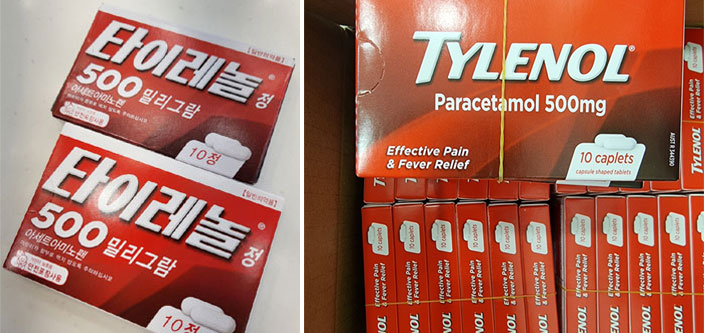
- Australian supply of Tylenol 500 mg is embarrassing
- by Kang, Hye-kyung Feb 16, 2023 05:52am
- 500mg of existing Tylenol and 500mg of Australian Tylenol supplied to pharmacies Pharmacists seem to be confused as 500mg of Tylenol products arrive one after another at pharmacies that ordered 500mg of Tylenol at the end of January due to supply increase issues. Pharmacists who bought the product before the price hike responded that the newly distributed Tylenol is expected to cause confusion among pharmacists as well as ordinary consumers as it has different packaging and ingredient names from existing products. Pharmacist A said, "I ordered a completely different product when I heard that the supply price of all Tylenol products will increase by 18% from March. The problem is consumer resistance. Although it is said to be an emergency drug for the smooth supply of antipyretic analgesics in Korea, it is greatly different from existing products, and the ingredient name is also specified as paracetamol, which is feared to cause resistance from consumers. Pharmacist A said, "I have to explain it to consumers, but I don't know how to understand that acetaminophen and paracetamol are the same ingredients," adding, "I'm worried that consumers will resist." Since the efficacy and effect are also specified as "Effective Pain & Fever Relief," some say that it should be written manually or attached to a notice. Pharmaceutical company A said, "The expiration date is also May 2024, which is shorter than the existing products (2025), so caution is required when selling them, and there are places that inevitably consider returning them." Johnson & Johnson Korea is an Australian product that urgently introduced Tylenol, which arrived at the pharmacy, and explains that it has the same ingredients and contents as existing products. An official from a pharmaceutical company said, "It is an Australian product that was urgently introduced by the Tylenol brand with approval from the Ministry of Food and Drug Safety and the KODC for smooth supply of antipyretic painkillers in Korea." The official said, "Australian Tylenol has the same expiration date of 36 months as the existing Tylenol 500mg. Johnson & Johnson Korea is making many efforts to supply Tylenol stably in the market in line with changing domestic market demand."
- Company
- Open Innovation Trend
- by Jung, Sae-Im Feb 16, 2023 05:52am
- China is pushing for a policy to restrict its biopharmaceutical technology from escaping abroad. In the pharmaceutical industry, where open innovation has become a trend, the U.S. and China are taking the opposite step by fighting for technological supremacy. According to a report published by the Bioeconomic Research Center of the Korea Bio Association on the 14th, China's Ministry of Commerce recently collected public opinions on revising its export-restricted technology catalog. The notice posted on China's commerce ministry's website calls for revising the list of technologies that will restrict exports based on the Foreign Trade Act and the Technology Import and Export Management Regulations with the Ministry of Science and Technology. The technology export referred to here refers to the transfer of technology from China to overseas through the transfer of patent rights or patent application rights, patent enforcement permits, technology secret transfer, and technology services. In the revision of the list of technology export restrictions, technologies such as the Internet, solar and new energy, autonomous driving, and biopharmaceuticals that have made rapid progress in China in recent years have been raised. Biopharmaceutical technology includes human-related cell cloning and gene editing technology, CRISPR gene editing technology, and synthetic biology technology. In particular, gene editing and synthetic biology are areas that are actively being studied around the world. Genetic editing technology refers to deleting or rewriting genetic information by cutting a specific part of DNA for the purpose of treating or preventing diseases. Reproductive cell editing is strictly limited to ethical issues and potential risks, so most companies use patient somatic cells. Synthetic biology technology is a technology that redesigns biological systems such as enzymes, biosynthetic pathways, and cells to create biological systems with new functions. China is promoting innovation in synthetic biology technology and applying it to a wide range of areas such as new drug development and resource supply through the 14th Five-Year Bio-Economic Development Plan. While open innovation, which is jointly conducted by multinational pharmaceutical companies, is actively carried out, the battle for supremacy between China and the United States over innovative technologies continues. Earlier, the U.S. strengthened its trading monitoring for fear of China taking biotechnology away. In 2018, the Foreign Investment Risk Review Modernization Act (FIRMA) was enacted, which could restrict foreign investors such as China from accessing the U.S. market. This is to strengthen transaction monitoring on Chinese capital, from simple license transactions to M&A transactions. Recently, the government is also pushing for the enactment of the National Core Capacity Defense Act (NCCDA), which regulates investment and transaction activities in overseas concerned countries such as China. In addition to semiconductors, batteries, artificial intelligence, and quantum technologies, pharmaceuticals and bioeconomics were included in the technologies subject to national core competencies. China's push to restrict exports of biopharmaceutical technology is seen as a countermeasure to the U.S. move. It also shows confidence that China is not behind the U.S. in gene editing technology and synthetic biology. The report said, "China's recent attempt to designate bio-medicine-related technologies such as gene editing technology and synthetic biology as export-restricted technologies are believed to be on par with the U.S. in this technology field."
- Opinion
- [Reporter's view]National Security & the Price Policy
- by Lee, Jeong-Hwan Feb 16, 2023 05:52am
- Second Vice Minister of Health and Welfare Park Min-soo reaffirmed that the pharmaceutical bio-industry is directly related to national security and expressed his belief to support the pharmaceutical bio-industry by reorganizing the drug price system. It said it will give some form of benefit to pharmaceutical companies that make medicines using domestic raw materials and pharmaceutical companies that are reluctant to make due to their low profitability, and actively operate a public-private consultative body to effectively work on new drug preferential laws developed by innovative pharmaceutical companies. Expectations from the domestic pharmaceutical industry have also swelled due to Vice Minister Park's clear willingness to improve the drug price system. The expressions of pharmaceutical companies, which have expressed the need to improve the reasonable drug price system toward the government every year, seem to be brightening due to Vice Minister Park's blueprint for drug price policy. In the end, among pharmaceutical raw materials and national essential medicines imported in large quantities from China and India, drug price measures are likely to become visible soon for items that require self-sufficiency through domestic production. It is time for raw material companies and essential drug manufacturers to read the needs of ingredients or items the government believes are urgently needed for self-sufficiency in Korea. The Ministry of Food and Drug Safety, KPBMA, KODC, and pharmaceutical experts have already started to list domestic self-sufficiency materials and items, and according to Vice Minister Park's policy, the policy to strengthen domestic self-sufficiency is expected to continue to expand in the future. The National Assembly's special law on the pharmaceutical industry, which has been pointed out for years, is likely to materialize the preferential treatment of new drug prices for innovative pharmaceutical companies soon. Attention is focusing on whether legislation that stipulates the national compensation system for innovative new drugs as the Pharmaceutical Affairs Act can be realized. At a meeting of the government-run public-private consultative body, pharmaceutical organizations such as KPBMA need to actively submit their opinions to create reasonable drug-friendly measures. The Ministry of Health and Welfare should drastically improve the supply of essential drugs or out of stock, and design a drug price policy that can speed up the development of new drugs in global blockbusters. "I don't even want a drug preference. We should think about improving the drug price system so that does not recur in frustration of some pharmaceutical circles, saying, "We hope that the government will actively introduce a policy to exempt or suspend the follow-up management mechanism for drugs that have contributed to reducing health insurance finances." As COVID-19 has been prolonged for more than three years, the pharmaceutical bio-industry has soon become a national security industry. These days, the COVID-19 virus, which has persistently plagued mankind, is finally slowing down. Advanced overseas countries such as the World Health Organization (WHO), the United States, and Japan are assessing whether they will be able to lift the international public health emergency caused by COVID-19 as of May. It is feared that the government's perception of national security and willingness to improve the drug price system, which has grown further due to COVID-19, will be shaken along with the downward revision of the crisis stage. Only when the Pandemic crisis caused by the new virus recurred in the near future should we not rush to supply and demand essential drugs to cope with infectious diseases necessary for national quarantine. It is hoped that the domestic pharmaceutical bio-industry and the government will agree to prepare a reasonable drug price environment to create a worry-free country for any type of national security crisis in the future.
- Company
- Sorrento Theraputics Inc. filed for bankruptcy protection
- by Hwang, Jin-joon Feb 16, 2023 05:51am
- Sorrento Theraputics Inc. researchers are studying candidate materialsSorrento Theraputics Inc., a U.S. bio company invested by Yuhan Corporation, filed for bankruptcy protection in the Southern Texas Bankruptcy Court. Bankruptcy protection is a system similar to Korean court receivership. Sorrento Theraputics Inc. recently lost a damage suit worth 222 billion won, resulting in a short-term cash liquidity crisis. Its subsidiary Sciplex plans to continue its business regardless of Sorrento Theraputics Inc.'s bankruptcy protection procedures. According to industries on the 14th, Sorrento Theraputics Inc. filed for bankruptcy protection with the bankruptcy court in accordance with Chapter 11 of the U.S. Bankruptcy Act the previous day. Sorrento Theraputics Inc. is a new antibody drug development bio company listed on the Nasdaq. In 2016, 12.1 billion won was invested by Yuhan Corporation in the name of simple investment. Yuhan Corporation's stake in Sorrento is 0.6%. Through a joint venture, the two companies also established ImmuneOncia, a bio company specializing in developing new drugs specializing in immuno-cancer drugs. Chapter 11 of the Bankruptcy Act, which Sorrento filed with the Bankruptcy Court, is a system that seeks corporate rehabilitation by conducting restructuring procedures under the supervision of the Bankruptcy Court. It can be seen as similar to domestic court management. Unlike liquidation, which closes its business after clearing assets and liabilities, bankruptcy protection is a way to revive companies through government support and debt restructuring while carrying out projects such as R&D and investment attraction. Earlier, United Airlines, General Motors, and Chrysler revived through Chapter 11. The bankruptcy court accepts the Chapter 11 application if it deems it more economically profitable to normalize a company by means of cancellation or suspension of repayment of some or all of its liabilities. However, if the bankruptcy court determines that the rehabilitation plan is inappropriate, it may proceed with liquidation in accordance with Chapter 7 of the Bankruptcy Act. Sorrento filed for bankruptcy protection due to a short-term cash liquidity crisis. Sorrento explained that as of the date of filing for bankruptcy protection, it has more than 1.2685 trillion won in assets, including 158.6 billion won in damages against NantPharma and others, regarding the dispute over the right to sell the anticancer drug Cynviloq. During the same period, the debt was 298.1 billion won. The cash liquidity crisis occurred when Sorrento filed a lawsuit with Nant Pharma and others. NantPharma introduced the North American copyrights and pipelines of the anti-cancer drug Sinbilock, which was introduced by Samyang Holdings in 2015, with an advance of 114.2 billion won. The maximum contract amount, including technical fees according to the development stage, is 1.6491 trillion won. NantPharma has not released Sinviloc in the North American market. Sorrento filed a lawsuit, claiming that Patrick Sunxion, chairman of Abraxis Bioscience, who had a relationship with NantPharma for not releasing Sinviloc, introduced competitive drugs to protect the market status of Abraxane, an anticancer drug, in the early stages of its launch. The court recently ruled that Sorrento should compensate NantPharma subsidiary Nantcell for 222 billion won worth of damage. Of the total, 158.6 billion won was suspended for 70 days, but 63.4 billion won was decided to be immediately enforceable. If not implemented, the interest rate is 9%. After the results of the lawsuit were announced, Sorrento's stock price fell 72% from $0.94 the previous day to $0.26. Sorrento explained that it submitted an application for bankruptcy protection to protect the company, judging that the business operation and development of new drugs could be suspended due to the cash liquidity crisis following the result of the damage suit. As of the third quarter of last year, Sorrento's cashable assets are worth 88.8 billion won. Sorrento Theraputics Inc. also stressed that it will continue to develop new drugs in connection with the bankruptcy protection filing.
- Company
- Exports of Dong-A ST’s anemia biosimilar exceed KRW 10 bil
- by Chon, Seung-Hyun Feb 16, 2023 05:51am
- The first biosimilar developed by Dong-A ST has made over KRW 10 billion in exports for 2 consecutive years. The cumulative export sales amount of the drug reached KRW 35.6 billion only 3 years after the drug entered the Japanese market. According to Dong-A ST on the 1st, the overseas sales of ‘Darbepoetin-α’ last year recorded KRW 13.3 billion, a 6.4% increase from KRW 12.5 billion in 2021. Darbepoetin-α is a biosimilar of the second-generation anemia treatment ‘Nesp (darbepoetin-α)’ that was co-developed by Amgen and Kyowa Kirin. The erythropoietin (EPO) in the drug accelerates red blood cell production by stimulating the erythroblasts and is used to treat chronic kidney disease or anemia in patients who receive chemotherapy. Annual exports of Darbepoetin-α (Unit: KRW 100 million, Data: Dong-A ST The overseas sales of ‘Darbepoetin-α’ solely depend on the drug’s exports to Japan. After conducting the Phase 1 clinical trial on’ Darbepoetin-α,’ Dong-A ST signed a licensing-out agreement on the development and sale of its drug to Sanwa Kagaku Kenkyusho (SKK). Based on a Phase III trial conducted in Japan to compare the efficacy and safety of ‘Darbepoetin-α’ to the original ‘Nesp,’ SKK received marketing approval from Japan's Ministry of Health, Labor and Welfare the drug in September 2019, and launched the drug for sale in November of the same year. Since then, Dong-A ST has been exporting the finished product to SKK, which was produced by STGen Bio, a biosimilar company under Dong-A Socio Group, with SKK responsible for its local sales. After generating KRW 1 billion in exports in Q4 2019, the drug sold KRW 8.8 billion and KRW 12.5 billions' worth each in exports in 2020 and last year, respectively. In Q4 last year, exports amounted to KRW 35.6 billion. By last year, the cumulative exports of Darbepoetin-α were found to be 35.6 billion won. The rise in sales is analyzed to be connected to the increase in reliability based on accumulated use experience in the field. Following Japan, Darbepoetin-α is now set to be introduced to the Turkish market. Dong-A ST singed signed a licensing and supply deal with the Turkish pharmaceutical company Polifarma in November last year, Under the agreement, Dong-A ST will transfer the exclusive development and marketing rights to Darbepoetin-α in Turkey, Brazil, and Mexico to Polifarma. Under the deal, Dong-A ST will receive an upfront payment and milestone payments for each stage of development and commercialization while being in charge of the exclusive supply of finished products. Polifarma is a Turkish pharmaceutical company that owns a global sales network in over 50 countries. The company has experience exporting more than 500 drugs to the United States, Europe, Brazil, and Mexico, among other countries, and accumulated relevant approval experience.
- Policy
- Rebamipide eye drops will be reimb next month
- by Lee, Tak-Sun Feb 16, 2023 05:51am
- Mucosta ophathalmic solution (Rebamipide) being currently sold in Japan Whether the reimbursement of Samil Pharmaceutical and Kukje Pharma’s rebamipide eye drop solutions that were developed as a treatment for dry eye will reorganize the artificial tears market is gaining attention. In particular, with reimbursement reevaluations set to be conducted for hyaluronic acid eye drops that occupy the largest share of the artificial tears market this year, the possibility of changes made in the market share and rank has also been raised. On the 15th, the Ministry of Health and Welfare issued an administrative notice of an amendment to newly establish a reimbursement standard for Rebamifide 0.1/5ml. The drugs subject to the amendment are Samil Phamraceutical’s ‘Reva-K Eye Drops’ and Kukje Pharma’s ‘Reba-eye Eye Drops 2%.’ The Health Insurance Review and Assessment Service decided to approve the drugs for reimbursement within its approved indication, for the ‘improvement of corneal and conjunctival epithelial damage in adult patients with dry eye syndrome.’ However, its combined administration with mucin secretagogue (diquafosol sodium) will not be allowed reimbursement. The reimbursement will be add a rebamipide option to the dry eye treatment market. Rebamipide eye drops have already been released in Japan in 2012 by Otsuka Pharmaceutical as 'Mucosta ophthalmic suspension UD 2%', but Samil and Kukje’s products are the first to be introduced to Korea. Rebamipide is known to stabilize the tear film by increasing ocular mucin secretion and contribute to the improvement of corneal and conjunctival epithelial damage to improve dry eye symptoms. Samil and Kukje demonstrated the drug's improved outcomes through a clinical trial. In a clinical trial that was conducted on a total of 220 patients with dry eye symptoms (74 patients in the 2% Rebamipide ophthalmic suspension arm, 74 patients in the placebo arm), patients were administered the drug or placebo in each eye four times (every 4 hours). At week 12, outcomes in the 2% Rebamipide ophthalmic suspension arm were superior to the placebo arm. With the drug demonstrating an effect in improving dry eye syndrome when administered just 4 times a day, Rebamipide has been evaluated to have an improved convenience compared to existing artificial tear products that require administration 5-6 times per day. Reimbursed eye drop options currently in use for dry eye include hyaluronic acid, diquafosol sodium, and cyclosporine. Among the options, hyaluronic acid boasts the largest share in the market, which is estimated to bring in an annual sales of KRW 230 billion. These hyaluronic acid eye drops will be receiving reevaluation on their adequacy of reimbursement this year. According to HIRA, as of January 2022, reimbursement is being applied to 427 items from 51 companies, and the average annual claims amount of the drugs for the past three years was estimated to be around KRW 231.5 billion. Controversy over the reimbursement adequacy of hyaluronic acid eye drops, which were reimbursed since 1997, has been raised for some time. In 2000, the National Evidence-based healthcare Collaborating Agency (NECA) argued for the need to improve the reimbursement standards for dry eye, saying that it was too early to conclude that hyaluronic acid ophthalmic solutions are clinically significantly different from other treatment alternatives. Hyaluronic acid eye drops are currently used both for specialized and general drugs in Korea, however, most are used with a doctor's prescription, putting pressure on Korea’s national insurance finances. On the other hand reimbursement for hyaluronic acid is not applied in major developed countries and is only reimbursed in Japan. If the reevaluation concludes that hyaluronic acid eye drops are not eligible for reimbursement, the artificial tears market will inevitably be reorganized. The analysis is that the existing diquafosol sodium and cyclosporine products will reap reflective benefit, and the rebamipide eye drops that are reimbursed this time may also serve as an alternative. Recently, Daewoo Pharm is also known to be preparing a same-ingredient drug with Samil Pharmaceutical and Kukje Pharma for approval. An industry official said, “Rebamipide eye drops that will be reimbursed this time, developed by Samil and Kukje, have improved marketability. It offers an improvement in the irritability experienced using the original Japanese product. Therefore, I believe the products will settle as new options in the dry eye syndrome treatment market upon release.
- Company
- Will Piqray benefit be successful again?
- by Eo, Yun-Ho Feb 16, 2023 05:50am
- Attention is focusing on whether Piqray, a PIK3CA gene target anticancer drug, can succeed in re-challenge insurance benefits. According to related industries, Novartis Korea's breast cancer treatment Piqray is expected to be presented to the HIRA Cancer Disease Review Committee in March. The drug failed to pass the deliberation committee once in February last year and submitted a re-application at the end of last year. Piqray, approved in Korea in May 2021, is a "PIK3CA억제 inhibitor" that blocks excessive activation of PI3K-의 due to PIK3CA gene mutation and is a target anticancer drug prescribed in combination with Faslodex in patients with HR+/HER2- metastatic and progressive breast cancer who have previously failed treatment. Piqray proved its effectiveness through a SOLAR-1 study conducted in 572 menopausal women and patients with advanced or metastatic breast cancer who were given or received HR-positive, HER2 negative, aromatase inhibitor, or AI. Clinical results showed that when Faslodex and Piqray were used together in tumor patients with PIK3CA mutations, the median progression-free survival (PFS) in patients with PIK3 tumors improved from 5.7 months to 11 months. The objective response rate (ORR), which represents the proportion of patients whose tumor size decreased by at least 30%, was 35.7% in the combination therapy group, more than twice as different as 16.2% in the single therapy group. The secondary evaluation variable, Overall Survival in patients with PIK3CA mutation, was 39.3 months in the combination therapy group, which was about 8 months longer than 31.4 months in the monotherapy group, but was not statistically significant.
- Company
- Astellas Korea appoints Junil Kim as new head
- by Eo, Yun-Ho Feb 15, 2023 05:59am
- Astellas Pharma Korea will now be run by a Korean head. According to industry sources, Junil Kim (50) was appointed to succeed Marker Weber and head the Korean subsidiary of Astellas Pharma. With the appointment, Astellas Korea will be welcoming the first Korean head in 7 years since the resignation of Jung Hae-doh in 2017. After Jung, Astellas Korea maintained a foreign representative system, appointing Takenoya Osamu, Masujima Keita, then Marcus Weber as General Manager of the Korean subsidiary. Junil Kim is a seasoned veteran in the field. After graduating from Chung-Ang University School of Pharmacy, Kim entered the industry as a medical representative for GSK Korea, then held various roles at Bayer Singapore Asia Pacific headquarters, Bayer Korea, Bayer headquarters in Germany, and served as General Manager at Bayer Philippines. Astella Korea's former GM, Marker Weber, was appointed GM of the Korean subsidiary in April 2020. Weber was appointed to head the company's German subsidiary in 2023.
