
- LOGIN
- MemberShip
- 2026-05-12 00:18:38
- Company
- Pfizer pays an average of 1.1 billion won per person
- by Jung, Sae-Im Mar 15, 2023 05:56am
- It was found that Pfizer Korea Pharmaceutical, which implemented an ERP system through organizational reorganization last year, paid 11.5 billion won as compensation for retirement. It is known that about 10 employees applied for voluntary retirement. It is calculated that each person received an average of 1.1 billion won. According to an audit report submitted by Pfizer Pharmaceutical Korea to the Financial Supervisory Service on the 15th, the company paid a total of 17.8 billion won last year as employee severance pay. Retirement benefits are 6.4 billion won and honorary severance pay is 11.5 billion won. The notable part is the honorary severance pay. Retirement pay refers to the severance pay paid by the company upon resignation. Honorary severance pay is in the nature of consolation money. This is an expense paid to employees who applied for voluntary retirement when the company conducts a manpower reduction due to a change in management. Last year, Pfizer Pharmaceuticals Korea conducted an organizational reorganization according to the business environment that changed with Corona 19. As the proportion of digital-centered non-face-to-face sales increases, the direction is to establish a new sales department. As a result, the size of the existing sales team, which was divided into business divisions, was partially reduced. During the reorganization process, the company conducted an in-house 'job posting' to readjust the arrangement of employees who applied for a job transfer and also implemented an early retirement program. About 10 people are said to have left the company due to voluntary retirement. The reorganization was completed in November last year. The total amount of severance pay paid by the company to applicants for voluntary retirement is 11.5 billion won. Although there are variations depending on the number of years of service, each employee received an average of 1.1 billion won as compensation. Pfizer's ERP conditions are not known, but the average condition commonly used in the industry is 2n+8. This means that an additional 8 months' salary is paid for twice the number of years of service. Depending on the company, there are cases where additional special consolation money is paid according to annual leave. This is to induce managers with a long service life to apply for voluntary retirement. The amount of honorary severance pay paid by Pfizer Korea last year was the largest since 2015. Pfizer Korea is often considered a company that implements voluntary retirement programs. In 2013 and 2015, the company paid 18 billion won and 19.2 billion won in honorary retirement benefits, respectively, as a large-scale voluntary retirement program. In 2016, it also spent 6.9 billion won. In 2018, ahead of the spin-off of the out-of-patent drug division (Pfizer Upzone), 9.4 billion won was paid as an honorary severance pay. For 10 years from 2013, the total amount of honorary severance pay paid by Pfizer Korea reached 71.2 billion won. The number of employees is maintained at a similar level by sending out high-ranking managers and recruiting young people. Pfizer Pharmaceuticals Korea, which had about 730 to 750 people before the spin-off of Pfizer Upzone, has grown to 460 people after the separation. Since then, the number has dropped to 406 due to continued voluntary retirement but rose to 420 last year. Recently, it has also started to recruit new sales staff on a large scale. About 10 new employees are selected to be in charge of selling the Corona 19 vaccine and treatment. It is interpreted as a measure to prepare for the private market after the end of the Corona 19 pandemic.

- Policy
- MOHW provides real-time confirmation service
- by Lee, Jeong-Hwan Mar 15, 2023 05:56am
- When the government requests pharmaceutical companies to expand drug reimbursement standards, the government plans to use the information system to provide administrative services to check the progress of evaluation tasks at each stage. Drugs with clear efficacy for survival-threatening diseases will strengthen patient accessibility by implementing a pilot project that simultaneously proceeds with permission from the Ministry of Food and Drug Safety, benefits evaluation by the Health Insurance Review and Assessment Service, and drug price negotiations with the National Health Insurance Corporation. It also announced a plan to legalize public late-night pharmacies that provide pharmacist services to provide counseling for patients with mild symptoms and guarantee access to medicines. On the 9th, the Ministry of Health and Welfare announced a plan to promote health and welfare regulatory reform in 2023. This year, the Ministry of Health and Welfare will promote regulatory improvement in seven key areas, focusing on the regulatory innovation plan for the new health industry. They are innovative medical devices, innovative and essential medicines, digital healthcare, advanced regenerative medicine and advanced biopharmaceuticals, genetic testing, BMI, and infrastructure. In addition, we will continue to discover regulatory improvement tasks such as rapid registration of new drugs. In the health and welfare sector, regulations are improved to allow new industries to enter the market by supporting innovation in the private sector, as population aging and increased demand for health care are expected. Although leasing was prohibited after the sale of land to companies in the high-tech medical complex, various forms of occupancy opportunities were provided, such as allowing leasing only to resident companies in need of leasing, such as conducting joint research with a common goal. We plan to revitalize the complex and improve space utilization. When a pharmaceutical company requests an expansion of reimbursement standards for pharmaceuticals, the process of reviewing reimbursement standards is made transparent and predictability is increased by enabling the information system to check the progress of each evaluation task. When evaluating drugs that are life-threatening and have sufficient improvement effects, a policy to promptly list new drugs is also implemented. A pilot project will be conducted to strengthen patient accessibility by concurrently proceeding with permission from the Ministry of Food and Drug Safety, benefits evaluation by the Health Insurance Review and Assessment Service, and drug price negotiations with the National Health Insurance Corporation. By legalizing public late-night pharmacies that provide counseling for patients with mild symptoms that occur at night and provide pharmacist services to ensure access to medicines, the public health blind spot is eliminated by providing medication counseling and drug use guidance to patients with mild symptoms during night time. Despite changes in the environment of the pharmaceutical industry, the innovative pharmaceutical company certification system maintains its original form when introduced (2012). Minister of Health and Welfare Cho Kyu-hong said, "In accordance with the strong regulatory innovation direction of the Yoon Seok-yeol government, we will continue to create results of regulatory innovation in the health and welfare sector to revitalize new industries and resolve difficulties and public inconvenience while putting top priority on the lives and safety of the people." revealed
- Company
- HPV vaccination for males a necessity rather than an option
- by Whang, byung-woo Mar 14, 2023 05:51am
- Whether the national immunization program (NIP) for the human papillomavirus (HPV) vaccine should be extended to cover males remains a hot issue in Korea. With the NIP applied for its use in girls aged 12 years or older, the government extended the program to include those aged 13 to 17 (born between 2004 to 2008) and low-income women aged 18 to 26. In countries such as the US, male HPV vaccination is also covered through NIP, but the agenda is still under discussion in Korea. However, as President Yoon Suk-Yeol had announced vaccination to males aged 12 years older using NIP as an election pledge, whether this will really be implemented is gathering attention. For this, the Korea Disease Control and Prevention Agency was found to have been carrying out a research project to analyze the cost-effectiveness of extending NIP to HPV vaccinations in adolescent males on the 3rd. Director Geun-Yong Kwon, Division of Immunization, Bureau of Healthcare Safety and Immunization at KDCA, said, “The new government fully agrees on the need for male HPV vaccinations, and we are in the process of securing evidentiary material to support this. We plan to reflect its inclusion in the budget by early next year." However, the conclusion may not be so easily drawn as it would cost a considerable amount. Due to its characteristics and the NIP, HPV vaccines are better known in Korea as a cervical cancer vaccines. However, men also do get infected with HPV, and the most common clinical manifestation is genital warts in men. At a media session that was held by MSD on the 3rd on the 'A to Z of HPV,’ Seung-Ju Lee, President of the Korean Association of Urogenital Tract Infection and Inflammation (Urology, St. Vincent Hospital) stressed the need for male HPV vaccinations. According to Lee, the prevalence of genital warts in Korea had increased threefold over the past decade, from 25,208 patients in 2010 to 65,203 patients in 2019 prior to the pandemic. Also, although the prevalence of genital warts was higher in women than men, it was highest in men 25-29 years of age. In Korea, genital warts occur mainly in the younger age group, and its incidence tended to be higher in men than in women. Also, there were views that it is important to vaccinate men to prevent cervical cancer, for which the NIP is currently applied to HPV vaccinations for women only. With the yearly rise in the HPV vaccination rate, the prevalence of HPV infections are expected to be decline, however, when considering the time required to achieve herd immunity, Lee explained that it would be more effective if both women and men are vaccinated at the same time. According to MSD, its predictive modeling study in Europe and Belgium showed that allowing HPV vaccination for both men and women was expected to be cost-effective in most countries. while allowing the high vaccination rate to be maintained among girls. Lee said, “Although the domestic HPV vaccination rate exceeded 80% for initial vaccinations, the rate becomes lower when taking into account the second vaccinations. Korea is quite new to applying NIP to HPV vaccines yet, therefore, to create herd immunity, it would be much more effective and also better for preventing male diseases to concurrently allow HPV vaccinations for men under NIP as well.” Among the 110 countries that are conducting HPV vaccinations under NIP, 52 countries including the US, UK, Canada, Australia, Switzerland, Italy, and Austria have extended its vaccinated subjects from girls to boys (as of March 2022), therefore, it is not unusual that this discussion is being made in Korea. As the government has also been selected extending eligibility for HPV vaccinations using NIP as its national task, it is true that there are positive forces underway supporting the implementation of the system. However, the issue mentioned above is its cost-effectiveness. The KDCA estimates that a budget of approximately KRW 19 billion won will be required every year if HPV vaccination is expanded to boys. In this sense, the results of KDCA’s research project that will be disclosed in the first half of this year may determine the direction of whether the NIP will be expanded to male HPV vaccination in Korea.
- Company
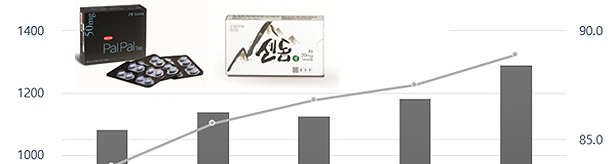
- The erectile dysfunction tx market sales are at an all-time
- by Chon, Seung-Hyun Mar 14, 2023 05:51am
- Hanmi Pharmaceutical PalPal Leads for 7 Consecutive Years. Continuation of Dominant System Last year, the domestic erectile dysfunction treatment market grew to the largest ever. Domestic companies' generic products dominated the market, accounting for nearly 90% of the market. According to IQVIA, a drug research institute on the 8th, the size of the erectile dysfunction treatment market last year was 129.1 billion won, up 9.1% from the previous year. Following 2021, it broke the record for the second consecutive year. After recording 113.9 billion won in 2019, the erectile dysfunction treatment market recorded a downward trend to 112.4 billion won the following year. At the time, it was evaluated that growth was dampened as patients' visits to hospitals and clinics decreased due to the prolonged Corona 19 and restrictions were placed on sales marketing activities. It succeeded in rebounding by 5.2% from the previous year to 118.3 billion won in 2021 and continued to grow last year. Products released by domestic pharmaceutical companies dominated the erectile dysfunction treatment market. Last year, sales of erectile dysfunction treatments by domestic companies totaled 114.7 billion won, up 10.8% from the previous year. It increased by 26.6% over four years from 90.6 billion won in 2018, showing a steady rise. Last year, domestic companies accounted for 88.9% of the erectile dysfunction treatment market. It continued to rise every year from 83.8% in 2018. The multinational pharmaceutical company's erectile dysfunction treatment products are Viagra and Cialis. Generic products released by domestic pharmaceutical companies overwhelm original products. Looking at the sales of major products, Hanmi Pharmaceutical's PalPal still showed off its unrivaled prestige in the market. PalPal is a generic product of Viagra. Last year, PalPal's sales increased by 6.3% year-on-year to 21.8 billion won. PalPal's market share in the entire erectile dysfunction treatment market reached 16.9%, so it was influential in the market. PalPal overtook Viagra in the second quarter of 2013, one year after its release, and surpassed Cialis in the fourth quarter of 2015, becoming the leader in erectile dysfunction treatment sales. PalPal has never fallen from the leading position for seven years from the fourth quarter of 2015 to last year. PalPal more than doubled the sales of the original product Viagra (8.7 billion won). Considering that the price of PalPal is significantly lower than that of Viagra, it is possible to calculate that the prescription volume gap is much larger. Chong Kun Dang's Cendom ranked second with sales of 11.4 billion won last year, up 6.1% from the previous year. Hanmi Pharm's Gugu recorded sales of 11.4 billion won, up 18.5% from the previous year, exceeding 10 billion won in annual sales for the first time. Cendom and Gugu are generics of Cialis. Among all erectile dysfunction drugs, only three products (PalPal, Cendom, and Gugu) exceeded 10 billion won in sales. Released after Cialis' patent expired in September 2015, Cendom gradually expanded its market share, surpassing the original product Cialis in the fourth quarter of 2017. In the fourth quarter of 2018, it maintained its second place since surpassing Viagra. Gugu surpassed Cialis in the second quarter of 2019 and also surpassed Viagra in the second quarter of 2021. Sales of Viagra and Cialis, which had built the two major mountain ranges of erectile dysfunction treatments in the past, have gradually decreased. Viagra's sales last year were 8.7 billion won, down 1.1 percent from the previous year. It decreased by 12.3% in 4 years from 9.9 billion won in 2018. Last year, sales of Cialis recorded 5.7 billion won, down 5.2% from the previous year. It fell 22.8% over four years from 7.4 billion won in 2018.
- Policy
- SGLT2 + DPP4 combi benefit expansion has increased
- by Lee, Tak-Sun Mar 14, 2023 05:50am
- As the insurance authorities decided to expand the combined coverage of major diabetes drugs from April, applications for reimbursement for related complex drugs are continuing. MSD Stegluzan's application for benefits was recently confirmed, and Dong-A ST Sugadapa, which was approved on the 13th, plans to apply for benefits this month. Accordingly, it is understood that a total of five items will be applied for benefits within this month. According to the industry on the 13th, two-dose items of MSD Stegluzan were applied for and the HIRA was calculated. Stegluzan is a combination of the SGLT-2 inhibitory ingredient Ertugliflozin L-pyroglutamic acid and DPP-4 inhibitory ingredient Sitagliptin Phosphate Hydrate. For Ertugliflozin, the original single drug product is Steglatro, and the ingredient Sitagliptin is Januvia. All of these items are owned by MSD and are listed on the list. Stegluzan will be calculated based on the upper limit of Steglatro and Januvia. Prior to this, Boehringer Ingelheim Esglito and AstraZeneca Qtern were also known to have applied for benefits. Since the company that owns the original single drug is launching it on the market as a combination product that combines the single drug, there is no possibility that the market launch will be delayed due to patents. LG Chem is also said to have applied for Zemidapa benefits. Gemigliptin is a DPP-4 inhibitory ingredient developed by LG Chem, and its brand name is Zemiglo. Accordingly, among the SGLT-2+DPP-4 combination drugs, 3 items from foreign companies and 2 items from domestic companies are expected to be reimbursed within the first half of the year. Since the upper limit of the single system is voluntarily lowered according to the April benefit expansion, the upper limit of the combined system is set based on this. LG Chem and Dong-A ST's combination drugs are paying close attention to the voluntary reduction rate of the original Forxiga because Dapagliflozin is combined. Meanwhile, the insurance authorities plan to expand reimbursement for the combined use of drugs between classes, such as Metformin + DPP-4 + SGLT-2, from April.
- Company
- Will the new prostate cancer drug Erleada be reimb in April?
- by Eo, Yun-Ho Mar 14, 2023 05:50am
- Whether the new prostate cancer drug ‘Erleada’ will be listed for reimbursement is gaining industry attention. The drug pricing negotiation period for Janssen Korea’s metastatic hormone-sensitive prostate cancer (mHSPC) treatment Erleada (apalutamide) with the National Health Insurance Service is about to expire this month (March). Erleada had passed deliberation by the NHIS Cancer Disease Deliberation Committee in February and then that of the Drug Reimbursement Evaluation Committee in December of the same year and has started the drug pricing negotiation process for its reimbursement earlier this year. If the pricing negotiations are completed within the set period, the agenda may be presented for review by the Health Insurance Policy Deliberation Committee in March. And if the agenda passes HIPDC review, the drug may be listed for reimbursement in April at the earliest. Erleada is an androgen receptor targeted agent (ARTA) and is a latecomer in the same class of drug as ‘Zytiga (abiraterone),’ or ‘Xtandi (enzalutamide).’ The drug’s efficacy was demonstrated through the Phase III TITAN trial that was conducted on 1,052 patients with mHSPC. Although 40% of the patients that were allocated to the placebo arm continued treatment with Erleada, the risk of death in the Erleada arm was 35% lower than that in the placebo arm. At 48 weeks, overall survival (OS) was 65% in the Erleada arm and 52% in the placebo arm. Also, when excluding the effect of patients who switched from the placebo to Erleada in the placebo arm, the risk of death in the Erleada arm was 48% lower than that of the placebo arm. According to data from the Cancer registration· Statistics Program, 16,815 patients in Korea were diagnosed with prostate cancer in 2020. Among men, prostate cancer is the third most common cancer in Korea, only headed by lung cancer with 19,657 patients and stomach cancer with 17,869 patients and followed by colorectal cancer, which has 16,485 patients. Moreover, among the five most common cancers in men (lung cancer, gastric cancer, prostate cancer, colorectal cancer, liver cancer), only the prevalence of prostate cancer has been increasing at an annual rate that exceeds 5%.
- Policy
- Voluntary withdrawal of reimbursement for Tepmeko
- by Lee, Tak-Sun Mar 14, 2023 05:50am
- It was found that Tepmeko, a MET mutated anti-cancer drug that failed to set reimbursement standards, recently voluntarily withdrew its application for reimbursement. Tepmeko has not been recognized as valid as a result of discussing the reimbursement standard in HIRA. According to the industry on the 10th, Merck announced its intention to voluntarily withdraw Tepmeko's application for drug reimbursement decision to HIRA. Tepmeko is a treatment for locally advanced or metastatic non-small cell lung cancer with confirmed MET exon 14 deletion. In Korea, in November 2021, it was approved simultaneously with Tabrecta, a drug in the same family, and has been undergoing a full-scale reimbursement review since last year. Metastatic non-small cell lung cancer patients with MET mutations, which Tepmeko is targeting, appear in about 3-4% of all non-small cell lung cancer patients. Although the number of patients is small, the prognosis is poor, so a cure is desperately needed. According to a presentation by Prof. Han Ji-yeon, Department of Oncology, Lung Cancer Center, National Cancer Center, at the International Conference of the Korean Lung Cancer Society last year, an analysis of 79 Asian patients who participated in the Tepmeko VISION clinical trial showed a significantly high objective response rate of 66.7%, and the second-line treatment group The response rate was 48.1%. Despite this effectiveness, the non-insured prescription price of Tepmeko in the US reaches 25 million won per month in Korean money. For this reason, patients are eagerly waiting for the application for reimbursement. Tabrecta has also failed to set reimbursement standards, so it will take more time to apply for the benefits. It is not known whether Tepmeko will reorganize its data and apply for benefits. However, since the previous application for benefits was withdrawn, even if you apply again, it will take longer than before to apply for health insurance. Assuming the worst-case scenario, if Tepmeko gives up on the domestic market, there is a possibility that Tabrecta will also be affected. In this case, only the patients are expected to suffer.
- Policy
- Innovative plans for domestic vaccines/txs to face post-pand
- by Lee, Jeong-Hwan Mar 13, 2023 05:53am
- Lim Sook-young, leader The government will promptly import vaccines and treatments for new infectious diseases that will occur in Korea after Corona 19 and improve laws and systems so that domestic products can be produced quickly. For now, only the big direction has been set, and the government plans to announce a comprehensive plan in May after consultations with related ministries and experts to prepare specific countermeasures. Attention is focused on whether government support measures can be prepared to speed up the development of domestic vaccines and treatments. On the 8th, Lim Sook-young, head of the Central Disease Control Headquarters, said at a regular Corona 19 briefing, “The government is establishing a mid-to-long-term plan to prepare for a new infectious disease pandemic that will occur in the future.” Based on the COVID-19 response evaluation over the past three years, Director Lim's will is to establish a mid-to-long-term plan to expand quarantine and medical response capabilities so that vaccines and treatments can be quickly secured and large-scale long-term epidemics can be stably managed. It plans to consult with related ministries in each field, including new infectious disease monitoring, initial response, large-scale epidemic management, daily recovery, research and development of treatments and vaccines, and improvement of laws and systems. She said, "Prevention of new infectious diseases is important first. That is why it is necessary to strengthen the surveillance system." he explained. She added, "When the scale of the epidemic increases, it is necessary to be fully prepared for hospital beds and medical response," adding, "We also need to review the compatibility of social distancing measures and various compensation issues." In particular, he said, "In the next pandemic, we need to develop vaccines and treatments more quickly and respond to infectious diseases with our own vaccines and treatments." She emphasized, “We will discover improvement tasks for each area and announce a comprehensive plan after consulting with related ministries and experts.”
- Company
- Eylea makes sole lead in the ₩100B nAMD Tx market
- by Jung, Sae-Im Mar 13, 2023 05:53am
- (from the left) Eylea, Lucentis, Beovu The sole lead held by ‘Eylea’ in the domestic macular degeneration treatment market has been further solidified last year. Also, Novartis has been aggressively promoting sales of its recently launched new drug ‘Beovu.' With Novartis focusing its sales strategy on Beovu, sales of the company’s lesser priority, 'Lucentis,’ further declined last year. According to the market research institution IQVIA on the 11th, Korea’s macular degeneration treatment market grew by 14% YoY from KRW 111.1 billion the previous year and recorded KRW 126.3 billion last year.. Neovascular (Wet) Age-Related Macular Degeneration (nAMD) is considered one of the 3 major causes of blindness in the elderly aged 65 or older. The risk increases as one grows older. The growth of abnormal blood vessels (neovascular) results in the leakage of blood, lipid, or subretinal fluid, which damage the macula and lead to vision loss. Excluding ‘Avastin,’ which is used off-label, three treatments are available for nAMD in Korea – Bayer’s ‘Eylea (aflibercept),’ Novartis’s ‘Lucentis (ranibizumab)' and ‘Beovu (brolucizumab).’ Lucentis was the first to be approved in 2007, followed by Eylea in 2013. A decade later, Beovu was approved as a new drug. Also, another new drug, Roche’s ‘Vabysmo,’ was approved in January this year. Eylea made a new annual sales record of KRW 80.4 billion last year. This is a 14% YoY increase from KRW 70.5 billion in 2021. Eylea’s strength is that it allows patients to receive customized treatment by offering a broad dosing interval ranging from a minimum of 4 weeks to a maximum of 16 weeks. The drug contributed to the establishment of the treat-and-extend (T&E) regimen in nAMD treatment, where the patients’ dosing interval is regulated after monitoring the patients during the initial 3 months of treatment. Last year, the company introduced a pre-filled syringe formulation that reduces preparation time for drug administration by preparing the accurate dose for single administration in advance. The new formulation improved the convenience of the treatment process. However, sales of Lucentis, which was 2nd place in the market, have been decreasing for 2 consecutive years. Lucentis’s annual sales decreased by 16% from the KRW 35.1 billion to record KRW 29.4 billion last year. Lucentis’s sales have been decreasing continuously after peaking at KRW 37 billion in 2020. The change occurred when Novartis, its seller, received approval for its new nAMD treatment Beovu. Lucentis has been developed by Genentech and marketed by Roche and Novartis. In Korea, Lucentis is being sold by Novartis. Novartis developed its new drug and succeeded in receiving marketing approval for the drug in 2022. The decrease in Lucentis’s sales had been an expected result with Novartis focusing its capabilities on the sales of Beovu. Also, the entry of Lucentis’s biosimilars into the market upon Lucentis’s patent expiry heated up the competition this year. Chong Kun Dang and Samsung Bioepis started selling their Lucentis Biosimilars, ‘LucenBS,' and ‘Amelivu inj’ in January this year. With both drugs listed for reimbursement, Lucentis’s drug price had been reduced by 30% ex officio from February this year. Lucentis’s position as the original drug in the market is expected to weaken further as the companies that own Lucentis biosimilars have been competitively lowering drug prices to gain an advantage earlier in the market. Meanwhile, Novartis’s new drug Beovu’s sales exceeded KRW 10 billion last year. Last year, Beovu’s sales increased 205% YoY from the KRW 5.4 billion in the previous year to record KRW 16.5 billion. Unlike other existing treatments that have dosing intervals of 4-8 weeks, Beovu has a dosing interval of up to 12 weeks (3 months). This was evaluated to have improved patient compliance by reducing the difficulties of patients that had to receive injections into the eye. The low compliance in patients with nAMD had been pointed to as a major issue that reduces the actual treatment effect of the nAMD treatments. Beovu demonstrated its non-inferiority with Eylea with its 12-week administration through a head-to-head trial. The therapeutic effect lasted until week 96. Also, the Beovu-treated group showed superior improvement in intra-retinal fluid and sub-retinal fluid compared to the Eylea-treated group The reason Beovu produces a similar effect despite the longer dosing interval is due to its molecular characteristics. Beovu’s single-chain antibody fragment (ScFv) is engineered to deliver a higher concentration of molecules compared to other treatments with multiple chains. However, HCPs have been showing divided opinions on its use due to its side effect of retinal vasculitis, which is unseen in other existing treatments. In particular, the introduction of Vabysmo, the first bispecific antibody introduced to the field of ophthalmic diseases, is expected to somewhat dilute Beovu’s strengths of 'high efficacy and convenience.’ Vabysmo is the first bispecific antibody that targets both the VEGF which is commonly targeted by existing ocular disease treatments as well as Ang-2 that is considered to be the cause of retinal disease to block both pathways. In particular, it has improved convenience in administration over other existing treatments with a dosing interval of up to 16 weeks (4 months). If listed for reimbursement, Vabysmo is expected to start a full-fledged competition with Beovu.

- Company
- Pharmaceutical companies are fiercely competing to develop
- by Kim, Jin-Gu Mar 13, 2023 05:53am
- In the hyperlipidemia combination drug market of 'statin + ezetimibe', competition to develop a two-drug combination using 'low-dose statin' is intensifying. According to the pharmaceutical industry on the 11th, Yuhan Corporation is developing a combination drug for hyperlipidemia with Ezetimibe added to Atorvastatin 5mg through its subsidiary Addpharma. Yuhan already has three products, including Atovamibe, a two-component complex. The dose of Ezetimibe is the same at 10 mg, and only the doses of Atorvastatin are different at 10 mg, 20 mg, and 40 mg. Yuhan Corporation's plan is to add a combination drug based on the 5mg dose of Atorvastatin. Rosuzet 10/2.5mg, a low-dose hyperlipidemia drug from Hanmi Pharmaceutical According to the original developer, Addpharma, the development of the corresponding dose product is currently in the final stage, and it is expected that it will be possible to apply for product approval as early as this month. If the item is approved by the Ministry of Food and Drug Safety, it will be the first product for hyperlipidemia combined with low-dose atorvastatin. In addition to Addpharma, several companies are said to be developing complex drugs with the same combination of ingredients and doses. This is the background to the prospect that competition in the market for the variety of Atorvastatin 5mg and Ezetimibe will intensify in the future. Hanmi Pharmaceutical opened the door to developing a combination drug for hyperlipidemia based on low-dose statins. In September 2021, Hanmi Pharmaceutical obtained permission for 'Rosuzet 10/2.5mg', in which Ezetimibe was added to Rosuvastatin 2.5mg. It is known that the low-dose product is rapidly increasing prescription performance after the benefit was launched in October of that year. According to UBIST, a pharmaceutical market research institute, the outpatient prescription amount of Rosuzet increased by 14% from the previous year to 140.3 billion won last year. The pharmaceutical industry believes that the addition of low-dose products contributed to the expansion of Rosuzet's overall prescription record. Recently, it is said that the monthly prescription amount has expanded to more than 1 billion won. As low-dose Rosuzet gained market acceptance, other companies jumped into developing low-dose Rosuvastatin-based combinations. Daewoong Pharmaceutical received approval for Crezet 10/2.5mg with the same ingredient and dose combination as Rosuzet in August of last year. Since February of this year, Yuhan Corporation's Rosuvamibe, HK inno.N Rovazet, and GC Pharma Daviduo have also added low-dose Rosuvastatin-based complexes to their product lineups. An official from the pharmaceutical industry said, “The core dose of Rosuvastatin was 5 mg, and Hanmi Pharmaceutical succeeded in increasing the prescription performance of Rosuzet by releasing a low-dose product that halved the dose.” There is a possibility of market success because the product is half the existing core dose (10 mg).”
