
- LOGIN
- MemberShip
- 2026-06-10 18:16:29
- Policy
- Govn’t seeks to upgrade 'Overseas AE safety monitoring network’
- by Lee, Jeong-Hwan Jun 01, 2026 09:04am
- The Korean government plans to strengthen Korea’s national and public support policies to resolve frequent drug shortages caused by production or supply discontinuation from poor profitability. At the same time, it intends to modernize the system for collecting overseas safety information on imported medicines through the Korea Orphan & Essential Drug Center (KODC).As the government expands administrative measures that provide essential medicines not supplied or manufactured by domestic private pharmaceutical companies through the KODC, it aims to ensure that information regarding adverse events and side effects associated with overseas medicines can be identified and addressed more rapidly and accurately.On May 31, the Ministry of Food and Drug Safety (MFDS) announced plans to establish a system for collecting safety information and building a database for medicines supplied through the KODC, while also securing a framework for analyzing and reviewing overseas drug safety information.The MFDS will also assess the level of human and material resources required to build and operate a database covering overseas medicines imported through KODC.In Korea, when the supply of a drug manufactured or imported by a private pharmaceutical company is discontinued, or when marketing authorization is withdrawn and no domestic alternative is available, the MFDS uses its emergency import program through the KODC to directly purchase and supply overseas medicines and support patient-specific imports for self-treatment purposes.The Lee Jae-myung administration has been promoting policies to expand emergency-import medicines this year in order to address essential medicine supply disruptions and recurring shortages. As a result, the proportion of medicines supplied through public channels via the KODC is expected to continue to increase.Accordingly, the need to establish a system for collecting, analyzing, and rapidly responding to overseas safety information on medicines distributed by the KODC has become increasingly important.The MFDS will launch a policy research project to establish the scope and methodology for gathering information on medicines supplied through the KODC. The study will examine regulatory approvals, safety information, recalls, and sales suspensions from advanced regulatory agencies such as the US FDA, the European Medicines Agency (EMA), and Japan’s Pharmaceuticals and Medical Devices Agency (PMDA).The ministry will also conduct research on creating a database capable of accumulating, managing, and utilizing overseas safety information, while developing a user-friendly system designed to maximize accessibility and practical use.In addition, it plans to establish update cycles, standards, and data display methods to ensure rapid mutual sharing of overseas safety information and real-time incorporation of the latest safety updates.To establish an advisory and review framework for overseas safety information, the MFDS will develop a process for collecting opinions from medical and pharmaceutical experts regarding whether the supply of a medicine should be continued when safety concerns arise.The MFDS intends to define the requirements for expert consultation, develop standardized advisory forms incorporating those requirements, identify appropriate academic societies and organizations to participate, and establish formal consultation procedures.In effect, Korea will be building a physician-pharmacist advisory panel system to enhance domestic responses when overseas drug safety issues emerge.Based on the results of this consultation, a review process will be established to determine whether to continue supply, analyze potential measures such as the emergency introduction of alternative products or suspension of supply.To identify the human and material resources necessary for these new responsibilities, the MFDS will analyze comparable overseas cases and assess its current staffing structure. It will then calculate the appropriate workforce size and personnel costs required for the new tasks and define the roles of individual staff members.An MFDS official explained, “We need a process to collect and build a database of drug safety information originating from overseas regarding medicines supplied and supported by KODC, and to establish measures for gathering expert advice and taking action when issues arise. At the same time, we will identify the human and material resources necessary to carry out these functions.”
- Policy
- Lilly’s Verzenio passes CDDC review for reimbursement
- by Jung, Heung-Jun May 29, 2026 09:14am
- Eli Lilly Korea’s Verzenio Tab (abemaciclib) passed the Cancer Drug Deliberation Committee (CDDC), moving one step closer toward expanded reimbursement coverage for early breast cancer.Meanwhile, Curocell’s CAR-T therapy ‘Rimqarto Inj’ (anbalcabtagene autoleucel), which had attracted significant attention, failed to secure reimbursement criteria.On the 27th, the Health Insurance Review and Assessment Service released the results of the 5th Cancer Drug Deliberation Committee meeting. The committee reviewed reimbursement decisions and the expansion of reimbursement criteria for a total of 5 products. Among them, two products passed the initial reimbursement hurdle.AbbVie Korea’s ovarian cancer therapy ‘Elahere Inj’ (mirvetuximab soravtansine) was the only new drug to receive reimbursement criteria.The criteria apply to adult patients with folate receptor alpha (FRα)-positive, platinum-resistant high-grade serous epithelial ovarian cancer, fallopian tube cancer, or primary peritoneal cancer who have previously received one to three systemic therapies.Lilly Korea’s Verzenio Tab was approved for reimbursement expansion for use ‘in combination with endocrine therapy as adjuvant treatment in adult patients with hormone receptor (HR)-positive, human epidermal growth factor receptor 2 (HER2)-negative, lymph node-positive early breast cancer at high risk of recurrence.’Outcomes diverged for early breast cancer reimbursement expansion. Novartis Korea’s Kisqali Tab (ribociclib succinate) attempted to expand reimbursement for HR-positive, HER2-negative Stage II and III early breast cancer patients at high risk of recurrence, but reimbursement criteria were not established.Roche Korea’s Alecensa Cap (alectinib hydrochloride) also attempted reimbursement expansion as adjuvant therapy following tumor resection in ALK-positive non-small cell lung cancer patients, but failed to pass the CDDC review.Among the new drugs, Curocell’s CAR-T therapy ‘Rimqarto Inj’ failed to establish secure reimbursement coverage for the treatment of adult B-cell lymphoma patients, leaving the company seeking reimbursement again in the future.

- Policy
- Fast-track listed rare disease drugs need to demonstrate performance
- by Jung, Heung-Jun May 28, 2026 10:27am
- The government will lower drug prices starting in the fourth year if rare disease treatments fail to meet their targets following post-marketing evaluation, following fast-track listing.Evaluations will be based on real-world evidence (RWE), but if pharmaceutical companies fail to collect and submit the required data, the drugs may be removed from reimbursement coverage altogether.Sook-hyun Lee, Director of New Pharmaceutical Benefits Listing Division at the Health Insurance Review and Assessment Service (HIRA)On the 27th, Sook-hyun Lee, Director of the New Drug Listing Division at the Health Insurance Review and Assessment Service (HIRA), explained specific operational plans for the system during a public hearing on “Fast-Track Listing Strategies to Improve Access to Rare Disease Treatments.”Until now, rare disease treatments underwent a 150-day approval negotiation process at HIRA and a 60-day process at the National Health Insurance Service (NHIS) following approval by the Ministry of Food and Drug Safety (MFDS) before official notification by the Ministry of Health and Welfare.Under the revised drug pricing system, the review periods at both HIRA and the NHIS will be shortened to one month each. Instead, post-listing management will be strengthened through follow-up evaluations after reimbursement listing.A general scope for drugs eligible for the fast-track listing pilot program has also been established. Drugs will be selected based on: ▲availability of alternative treatments ▲severity of the disease ▲need for rapid introduction ▲fiscal impact. The pilot project plans to begin by selecting two to three items based on these criteria.Director Lee explained, “The primary criteria for selecting target drugs are treatments for rare diseases that have already received approval or are listed in at least three of the A8 countries.”A performance-based evaluation model will be operated using real-world evidence (RWE) and linked to electronic medical records (EMR). Before reimbursement, pharmaceutical companies must submit clinical outcome evaluation plans for review by HIRA. The plan must include details such as ▲target patients and drugs ▲outcome measures ▲evaluation cycle and duration ▲reimbursement adjustment plan ▲methods for calculating clinical performance evaluation results ▲data collection procedures and quality control methods.Afterward, pharmaceutical companies will be required to collect annual data during years one through three, and evaluations will be conducted based on those results. The findings will then be reported to the Drug Reimbursement Evaluation Committee.Data collection and validation will continue for three years after fast-track listing, and reimbursement adjustments will begin in year four according to evaluation outcomes. Data collection and verification will be conducted for three years following fast-track listing, and reimbursement will be adjusted starting in the fourth year based on the evaluation results.Lee stated, “If pre-established targets are not achieved, drug prices will be reduced, and if data are not submitted, we are reviewing measures to convert reimbursement to full out-of-pocket payment.” Obligations related to post-evaluation plans and follow-up measures based on results will also be included in fast-track reimbursement contracts.The National Health Insurance Service will apply expenditure cap agreements to fast-track listed drugs. Negotiations will be conducted based on total expenditure figures proposed by pharmaceutical companies, and after one year of listing, actual claims will serve as the benchmark.The expenditure cap mechanism is expected to prevent rapid increases in financial burden caused by the expansion of fast-track reimbursement listings.Pricing standards are expected to be stricter than those applied to drugs exempt from pharmacoeconomic evaluations. Drug prices are expected to be negotiated at around 90% of the lowest price among the A8 countries.
- Policy
- Bayer's new antifungal cream Canesten wins nod…"once-daily"
- by Lee, Tak-Sun May 28, 2026 10:27am
- Bayer Korea is expanding its market presence by introducing a new product projected to shift the over-the-counter (OTC) anti-fungal market in South Korea.In contrast to existing Canesten products, the new product is a topical formulation that requires only once-daily application.On the 27th, Bayer Korea secured marketing authorization from the Ministry of Food and Drug Safety (MFDS) for 'Canesten Once Daily Cream', a once-daily topical anti-fungal. This new product differs from Bayer's existing anti-fungal product, 'Canesten Cream', in both its active pharmaceutical ingredient (API) and its usage.Differentiation from existing products...Re-entering the Korean Market with the API 'bifonazole'The key feature of 'Canesten Once Daily Cream' is its updated API. While existing Canesten products utilize clotrimazole, this new product features bifonazole as its primary API. Although both substances are classified as azole-based anti-fungals, products containing bifonazole have vanished from the domestic market. Bayer's strategy is to successfully re-establish bifonazole in the Korean market through this approval.The usage has also been dramatically improved. While the existing Canesten Cream required application 2 to 3 times a day, the new product is effective with just a single daily application (preferably before bedtime), thinly applied and rubbed onto the affected area.However, a pharmaceutical industry employee said, "Because the name includes 'Once,' it is easy for consumers to confuse it with single-application athlete's foot treatments that have high brand awareness, such as 'Lamisil Once External Solution' (terbinafine hydrochloride)," and added, "'Canesten Once Daily Cream' is not a single-application treatment. It is a product that must be applied consistently once every day throughout the designated treatment duration."Currently, the domestic topical anti-fungal market involves market competition between the traditional powerhouse 'Lamisil' series and 'single-application (Once) formulations' driven by domestic pharmaceutical companies.Amid this competition, Bayer Korea's introduction of 'Canesten Once Daily Cream' is interpreted as a strategic move to aggressively expand the Canesten brand equity into the traditional tinea (dermatomycosis) market. The Canesten brand currently spans vaginal tablets, powders, and other formulations, utilized not only for tinea but also for vulvovaginal candidiasis and vaginitis.In particular, the enhanced convenience of a 'once-daily' application is expected to improve treatment adherence (the degree to which a patient follows prescribed medication guidelines) among busy modern consumers. Analysis suggests that the product has an advantage in capturing male tinea patients, where the penetration rate of existing products has been low.It is important to note that the treatment duration varies depending on the specific clinical indication. For dermatomycosis and cutaneous candidiasis, treatment lasts 2 to 3 weeks, whereas for tinea versicolor and erythrasma, it lasts 2 weeks. Therapy must be continued even if symptoms subside mid-treatment to prevent fungal recurrence.An industry insider stated, "Bayer has reintroduced bifonazole, which had vanished from the domestic market, with its 'once-daily' product. It will be interesting to see whether Canesten, with its powerful brand recognition, can shift the landscape of the domestic tinea treatment market with this new product."
- Policy
- Boehringer begins drug price negotiations for stroke therapy Metalyse
- by Jung, Heung-Jun May 27, 2026 04:10pm
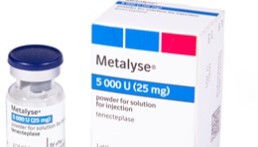
- Boehringer Ingelheim Korea has entered drug price negotiations with the National Health Insurance Service for Metalyse Inj (tenecteplase), a treatment for acute ischemic stroke in adults.In addition, negotiations have also begun for Meditip’s vasculitis treatment Tavneos Cap (avacopan) and Guerbet Korea’s X-ray contrast agent Elucirem Inj (gadopiclenol).According to industry sources on the 26th, Metalyse 25mg, which was recognized as appropriate for reimbursement by the Drug Reimbursement Evaluation Committee in April, has now entered drug price negotiations, bringing it one step closer to reimbursement listing in Korea.Metalyse, a thrombolytic agent, received domestic approval last October. It garnered attention as the first new treatment option for acute ischemic stroke in approximately 20 years following the indication expansion of Actilyse (alteplase).While Actilyse is a second-generation thrombolytic agent, Metalyse is a third-generation thrombolytic agent with PAI-1 resistance, which inhibits thrombolysis.At the end of last year, the National Assembly also raised the need to introduce third-generation thrombolytics that are already reimbursed overseas, specifically mentioning the rapid reimbursement listing of Metalyse.Meditip’s Tavneos Cap 10mg, which was reviewed alongside Metalyse by DREC in April, is also undergoing price negotiation procedures. At the time, the committee determined the drug was appropriate for reimbursement for the ‘treatment of severe granulomatosis with polyangiitis (GPA) and microscopic polyangiitis (MPA).’However, side effects have become a concern following recent reports of deaths and other adverse events overseas. The Ministry of Food and Drug Safety (MFDS) stated that while the product was supplied to some patients prior to market launch, no adverse event reports had been received. Safety management is expected to influence the price negotiation agreement as well.Negotiations are also underway for Guerbet Korea’s X-ray contrast agents Elucirem Inj and Elucirem Prefilled Syringe Injection, as well as Bracco Imaging Korea’s Vueway Inj.These products had previously been recognized as eligible for reimbursement as “MRI contrast agents for adult and pediatric patients aged 2 years and older,” provided they are accepted at or below the assessed price.As the pharmaceutical company has accepted the term, detailed negotiations with the National Health Insurance Service regarding expected claims costs and related matters are expected to take place thereafter.

- Policy
- DPK "Innovation·eradicate rebates"…PPP "Vaccine safety·NIP expansion"
- by Lee, Jeong-Hwan May 27, 2026 04:10pm
- The Democratic Party of Korea (DPK) and the People Power Party (PPP)Ahead of the June 3 local elections, both the ruling and opposition parties have finalized their core healthcare pledges, focusing on fostering the pharma-biotech industry and driving healthcare innovation.The Democratic Party of Korea (DPK) promised to restructure the domestic pharmaceutical industry, which remains centered on generics, by overhauling the drug pricing system with a strong emphasis on innovation and establishing a fair compensation framework for novel drug development.The DPK also pledged to launch a multi-ministerial cooperation system linking the Ministry of Health and Welfare (MOHW) and the National Tax Service (NTS) to eliminate illegal pharmaceutical and medical device rebates at the source.Granting special judicial police authorizations to the National Health Insurance Service (NHIS) to stop leakages in health insurance finances and dismantle fraudulent profit-making structures was also included in the DPK's official campaign pledges.Meanwhile, the People Power Party (PPP) focused its pledges heavily on expanding vaccine infrastructure closely tied to health security. Leading the introduction of novel pneumococcal vaccines and high-immunogenicity influenza vaccines into the National Immunization Program (NIP) is a key area the PPP plans to champion following the local elections.In the health insurance sector, the PPP made its stance clear on tightening post-hoc management and regulatory controls against illegal medical practices and distribution market distortions that cause leakages in national health insurance finances.These analysis have been made based on the May 26thlocal election manifestos of both major political parties regarding the pharma-biotech and healthcare policies.The DPK, Major transformation of the Pharma-Biotech industry...Implementing an official MOHW-NTS rebate eradication task forceThe DPK placed the structural innovation of the domestic pharma-biotech industry at the forefront of its campaign. The party expressed a strong commitment to introducing an innovation-linked drug-pricing overhaul and a fair compensation framework to shift the domestic pharmaceutical ecosystem away from a generic-centric model toward innovative drugs.Furthermore, the DPK promised to build a state-backed supply chain, including a national contract manufacturing framework for essential medicines such as pediatric drugs and antibiotics, as well as modernizing domestic manufacturing facilities for active pharmaceutical ingredients (APIs).To prevent recurring drug shortages, the DPK’s vision is to establish a collaborative network between the government and pharmaceutical companies to ensure a stable supply of essential pediatric drugs, antibiotics, and vaccines, and to immediately allocate national budget resources to achieve self-sufficiency in APIs, which currently rely heavily on overseas imports.The DPK also declared it would drive efforts to eliminate illegalities in the healthcare market and stop health insurance financial leakage by introducing an SJP system for the NHIS to eradicate illegal non-physician-owned hospitals and implementing periodic, concentrated crackdowns on drug and medical device rebates via MOHW-NTS cooperation.Regarding rebates, the core of the DPK’s pledge is to go beyond one-off enforcement and establish a permanent system capable of executing periodic, intensive crackdowns across the entire illicit transaction architecture, including both rebate providers and intermediaries.To reinforce regional, essential, and public healthcare, the DPK plans to redesign region-specific transfer and referral protocols linking emergency fire services and medical institutions on a city-and-province level, while expanding state compensation liabilities for no-fault medical accidents occurring during essential healthcare delivery.The party also announced the creation of a Medical Accident Review Committee to mitigate upfront judicial risks for essential healthcare physicians, establishing a mutually beneficial safety net.The PPP, Enhancing vaccine safety and expanding NIP...eradicating the causes of 'Emergency Room Hopping'The PPP finalized its central healthcare pledges under the core value of welfare for the underprivileged, placing heavy emphasis on narrowing regional healthcare disparities and substantially improving the emergency medical network.First, the PPP plans to strengthen public healthcare by establishing NHIS-directly operated regional insurer hospitals. This plan aims to ensure that vulnerable regions with weak medical infrastructure can successfully deliver essential medical services, including emergency care, trauma care, obstetric care, pediatric care, and infectious disease response.The PPP also stated it would firmly establish a transfer and referral control tower centered around the Central Emergency Medical Center, and eradicate the core causes of "emergency room hopping" by overhauling clear hospital refusal criteria and transfer guidelines.To ensure ambulances do not wander with patients on board, the party will refine hospital selection guidelines and clear parameters for hospital refusal. Concurrently, the party packaged protective measures for emergency medical staff and strategies to boost definitive care capacity (infrastructure for backup surgery and hospitalization) into its campaign promises.The PPP will also drastically expand support for the National Immunization Program (NIP) to deliver tangible benefits to citizens.To alleviate the medical expense burden on the elderly and underprivileged populations and to realize a health-security framework centered on disease prevention, the party will aggressively increase funding for vaccinations.Specifically, a free shingles vaccination program will be introduced. The NIP support for the shingles vaccine, which resonates most deeply among middle-aged and elderly demographics, will be expanded to include all individuals aged 65 and older.The PPP also pledged to upgrade the vaccine lineup. By introducing novel pneumococcal vaccines and high-immunogenicity influenza vaccines into the NIP, the PPP aims to prevent severe respiratory diseases among senior citizens.
- Policy
- Two Prolia biosimilar companies receive reimbursement coverage
- by Jung, Heung-Jun May 26, 2026 03:21pm
- Fierce competition is expected as three biosimilar products referencing Amgen’s osteoporosis treatments Prolia (denosumab) and Xgeva (denosumab) enter Korea’s reimbursement list next month.Because more than four companies will now have reimbursement listings for the same products, reimbursement price premiums previously applied to the original products, Prolia and Xgeva, will end.According to industry sources on the 22nd, Prolia biosimilars by HK inno.N and Daewon Pharmaceutical are set to be listed for reimbursement next month.HK inno.N’s Izambia PFS (60mg/1mL), Denbrayce Inj (0.12g/1.7mL), and Daewon Pharmaceutical’s Junod PFS (60mg/1mL) are expected to be newly listed at the lowest reimbursement price among already listed equivalent products.Previously, only three companies had reimbursement listings for denosumab products: Amgen, Celltrion, and Samsung Bioepis. HK Inno.N and Daewon Pharmaceutical will now join the market simultaneously.Amgen’s Prolia is an osteoporosis treatment administered as a subcutaneous injection once every six months that increases bone density and prevents fractures. In Korea, it generates annual sales of approximately KRW 180 billion through co-promotion with Chong Kun Dang.In 2016, Amgen also launched Xgeva (denosumab), which is used to prevent skeletal complications in cancer patients with bone metastases and to treat giant cell tumors of bone.Competition with biosimilars for Prolia and Xgeva began after their substance patent expired in March last year. Currently reimbursed denosumab products include Celltrion’s Stoboclo and Osenvelt, as well as Samsung Bioepis’ Obodence and Xbryk injections. Celltrion’s Stoboclo is co-promoted by Daewoong Pharmaceutical, while Hanmi Pharmaceutical co-promotes Samsung Bioepis’ Obodence.HK inno.N’s Izambia and Daewon Pharmaceutical’s Junod are expected to enter the market at 1KRW 08,290, matching the lowest price currently held by Stoboclo.Meanwhile, Denbrayce, developed by Spain’s mAbxience and introduced to Korea by HK inno.N, will also be listed at the existing lowest reimbursement price of KRW 129,000.Until now, Prolia had maintained price premiums due to having three or fewer listed manufacturers for the same formulation. However, beginning next month, Prolia’s price will be reduced from KRW 123,760 to KRW 108,290, while Xgeva’s price will fall from KRW 195,525 to KRW 171,084.
- Policy
- Abolishing illegal CSO·rebate…under 'National Normalization Project'
- by Kang, Shin-Kook May 26, 2026 03:21pm
- Shim Jong-seop, Director General for Government Operations at the Office for Government Policy CoordinationThe Korean government is launching comprehensive regulatory reforms and monitoring to eradicate illegal rebates and unlawful Contract Sales Organizations (CSOs), which have long been practiced within the pharmaceutical industry, and to rectify abnormal practices in the healthcare sector, such as fraudulent receipt of medical care benefits.The Office for Government Policy Coordination (Director General, Shim Jong-seop) announced on the 22nd that it has finalized 164 initial tasks under the 'National Normalization Project,' an initiative aimed at rectifying deep-seated, abnormal practices and systems across society, and will begin government-wide structural overhauls.This project was coordinated primarily by the 'National Normalization Task Force,' chaired by the Prime Minister, and includes numerous innovation initiatives in the medical and pharmaceutical sectors, led by the Ministry of Health and Welfare (MOHW) and the Ministry of Food and Drug Safety (MFDS).◇ Transparent illegal CSOs and strengthening penalties for healthcare professionals receiving unlawful benefits...enhancing the effectiveness of punishments for pharmaceutical rebatesThe initiative's most prominent aspect involves measures to ensure transparency in the pharmaceutical distribution market. The government has resolved to eradicate illegal CSOs that have exploited legal loopholes to engage in non-compliant expedience. Under the leadership of the MOHW, institutional gaps will be closed with the mainstream, and transparency will be brought to CSO operations. Notably, the government plans to establish new penal provisions targeting healthcare professionals who accept illicit benefits from CSOs, and to launch a comprehensive, large-scale fact-finding investigation.Concurrently, the MFDS will intensively pursue the task of "eradicating pharmaceutical company rebates." The current system penalizes pharmaceutical companies caught providing rebates by suspending sales operations; however, it has been criticized for being ineffective due to rampant loopholes, such as companies pushing out massive sales volumes right before the suspension takes effect. In response, the government will devise measures to significantly improve the enforcement effectiveness of sales suspensions to block illegal rebating at the source.◇ Introducing special judicial police to the NHIS to detect 'fake treatments'... overhauling the reimbursement fee structure for laboratory testingAdministrative measures will also be strengthened to cut off unfair practices and malpractice at the clinical frontline. The MOHW plans to step up proactive prevention of fraudulent medical care benefit claims while introducing a Special Judicial Police system within the National Health Insurance Service (NHIS) to completely root out the leakage of health insurance funds caused by "fake treatments" and "fake patients."Furthermore, the government will completely overhaul the 'health insurance reimbursement fee structure for outsourced laboratory testing,' which has previously been flagged as a threat to patient safety. New differentiated reimbursement fees for outsourcing and consigned testing institutions will be established. Accreditation standards for consigned laboratories, quality-linked incentive systems, and penalty criteria will be upgraded to enhance testing quality and guarantee patient safety.The Korea Disease Control and Prevention Agency (KDCA) will also target abnormal non-profit organizations that may have suffered from lax oversight, identifying financial vulnerabilities and enhancing accounting transparency by upgrading systems and strengthening the management of secure media and assets.◇ Detecting 'Fake Ambulances' in Real-Time...Introducing GPS-Based integrated management 'Fake ambulances,' which have provoked public outrage due to incidents involving celebrities riding in them or other forms of unauthorized private use, are set to disappear. The government will introduce a GPS-based, real-time integrated operations management system for ambulances and rationalize emergency transport and treatment fees to improve oversight efficiency and establish a stable operational environment.In addition, to ensure the golden-hour for severe emergency patients, the National Fire Agency (NFA) and the MOHW will collaborate to extensively upgrade the patient transfer network between fire services and medical institutions based on regional medical resource availability.Shim Jong-seop, Director General for Government Operations at the Office for Government Policy Coordination, emphasized, "This National Normalization Project is not a one-off event but a systematization of the core duties that the government must perform." Shim added, "We will rigorously manage the process to deliver clear results that the public can see."

- Policy
- CSO 규제 향방은…복지부, 재위탁·수수료율 손질 가능성
- by Lee, Jeong-Hwan May 26, 2026 03:21pm
- [데일리팜=이정환 기자] 보건복지부가 의약품 판촉영업 대행사(CSO) 추가 규제를 통한 의약품 유통 구조 투명성 강화 필요성을에 공감하면서 이어질 정책 방향에 시선이 모인다.제약업계에서 회자되고 있는 규제는 CSO가 다른 CSO에게 의약품 영업판촉 업무를 재위탁하는 행위를 금지하거나 관련 규제 수위를 지금보다 높이는 방식이다.이와 함께 CSO가 제약사에게 요구하는 수수료율의 상한선을 규정하는 등 CSO 수수료에 대한 행정적·법적 제한을 신설하는 규제도 거론되고 있다.25일 제약업계는 복지부가 한국제약바이오협회와 함께 CSO 실태조사에 착수한 만큼 연내 구체적인 규제 방향성을 수립할 것으로 전망중이다.현재 CSO 업계는 제약바이오산업 육성을 위해 CSO도 산업으로 육성할 필요성을 강조하며 복지부를 향해 한국CSO협회의 사단법인 인가를 촉구하는 실정이다.반면 복지부와 국내외 제약사들은 CSO의 사단법인 인가는 아직 시기상조라는 입장이다. CSO 업계가 CSO협회를 조직해 자체적으로 산업 선진화 등 노력을 기울이고 있지만, 여전히 CSO를 활용한 불법이 정화되지 않는 등 사단법인으로서 지위를 인정해주기엔 역부족이라는 평가다.이에 복지부와 제약협회 실태조사 이후 추가 규제가 이뤄져야 논의 가능성이 향상할 것으로 보인다.일단 CSO를 악용한 불법 리베이트의 가장 실질적인 원인으로 꼽히는 '무제한 재위탁'이 규제 사정권으로 분류된다.제약사가 CSO에게 의약품 판촉영업 대행 위수탁 계약을 체결한 이후, 해당 CSO가 다른 CSO와 또 위수탁 계약을 체결하면서 불법 리베이트 진원지를 찾을 수 없는 문제를 해결할 필요가 있다는 게 복지부와 제약업계, 국회의 공감대다. CSO 위탁 계약 원천 금지 규제 가능성이 거론되는 이유다.다음으로는 제약사가 CSO에 지급하는 의약품 판촉영업 수수료 비중을 제한하는 수수료 상한제다. 높은 CSO 수수료는 결국 불법 의약품 리베이트 재원으로 쓰이게 된다는 비판을 법으로 규제하는 차원이다.다만 CSO 수수료 규제는 헌법에 위배될 소지가 있어 복지부와 정치권은 입법에 고심하는 표정이다. 그럼에도 CSO 수수료 제한이 실질적인 리베이트 근절과 투명한 의약품 유통질서 강화 효과가 기대될 경우 간접적으로 CSO 수수료 구조를 투명화하는 행정 규제와 입법이 추진될 공산이 크다.복지부는 일단 이번 실태조사에서 제약사와 CSO, CSO와 CSO 간 위수탁 계약, 재위탁 계약 현황 분석으로 규제 방향성을 수립한다는 방침이다.특히 복지부는 CSO 산업을 육성하는 게 복지부의 주된 업무가 아니라는 입장으로, 공정하고 투명한 의약품 유통질서 확립 즉, CSO 리베이트 근절을 위한 규제 신설을 고민할 것으로 보인다.제약업계 관계자는 "복지부는 CSO 수수료율 규제를 정부가 나서서 추진하는 것에 일부 부담감을 느끼는 동시에 위헌 가능성에 집중하는 분위기"라며 "법으로 CSO 수수료율을 옭아매는 게 무조건 좋은 방법인지 여부에 대한 판단도 안 선 것 같다. 다만 재위탁 문제가 심각해 불법 리베이트 규제 공백을 키우고 있는데 대한 문제의식엔 공감하는 것으로 안다"고 귀띔했다.그러면서 "CSO 수수료 상한제는 제약사들로서는 가장 직접적이고 효율적인 규제 방향일 수 있다. 하지만 법으로 당장 제한하기 어려울 수 있어 간접적으로 CSO가 과도한 수수료를 제약사에 요구하고 정당한 판촉이 아닌 리베이트 영업으로 품목 처방 매출을 유지하는 문제를 막는 방법을 고민할 필요가 있다"며 "CSO 업계 자체도 일단 자정 필요성에 공감은 하고 있는 것으로 안다. 문제는 너무 점 조직으로 구성돼 CSO 업계에 대한 일괄적 규제나 의견 수렴, 통합이 어렵다는 게 문제"라고 말했다.이어 "일단 불법 리베이트 근절에 앞장서고 있는 다수 제약사는 CSO 신고제 시행 2년차를 맞은 지금, 신고제를 넘어선 추가 규제가 필요하다는 의견"이라며 "복지부의 제네릭 약가인하 정책이 예고된 시점과 맞물려 추가 행정이 시급하다"고 덧붙였다.
- Policy
- Korea approves Keytruda SC, developed with Alteogen's technology
- by Lee, Tak-Sun May 21, 2026 10:15am
- Product photo of KeytrudaThe subcutaneous (SC) formulation of 'Keytruda (pembrolizumab),' a global blockbuster immunotherapy for cancer treatment, is set to enter the Korean market after securing marketing authorization from the Ministry of Food and Drug Safety (MFDS). This approval is evaluated as a major achievement for the domestic biopharma industry, as the product integrates Alteogen's platform technology, and Samsung Biologics has been confirmed as part of the global contract manufacturing organization (CMO) lineup.On the 19th, the MFDS granted official marketing authorization for MSD Korea's 'Keytruda SC Inj (recombinant).'The newly approved Keytruda SC was developed using ALT-B4, a modified human hyaluronidase platform technology from the domestic biotech company Alteogen. It features a formulation combining the active ingredient, pembrolizumab, with 'berahyaluronidase alfa,' an enzyme that temporarily degrades the extracellular matrix of subcutaneous tissue. Using this technology, the existing intravenous (IV) formulation was converted into an SC formulation, enabling rapid dispersion and permeation of the drug into subcutaneous tissue.The contribution of South Korean companies is also significant in the manufacturing sector. According to the MFDS approval details, Keytruda SC's global contract manufacturing network includes Samsung Biologics, Korea's largest CMO, alongside BSP Pilot, Boehringer Ingelheim, and MSD headquarters. This system has enabled an innovative new drug developed with Korean platform technology to be supplied globally through Korea's state-of-the-art manufacturing facilities.Patient convenience is expected to improve dramatically. With the conventional Keytruda IV formulation, patients had to spend 30 minutes to an hour receiving an infusion in a hospital infusion center bed. In contrast, Keytruda SC can be administered by healthcare professionals into the thigh or abdomen in just one to two minutes. The dosing schedule can be selected based on the patient's condition, offering options for either a 3-week cycle (395 mg) or a 6-week cycle (790 mg). Patients currently receiving the IV formulation can also transition to the SC formulation starting with their next scheduled dose, which is expected to yield strong preference in clinical settings.The approved indications include the extensive scope of the existing IV formulation. Keytruda SC secured approvals across a total of 18 cancer types, including ▲melanoma ▲non-small cell lung cancer (NSCLC) ▲malignant pleural mesothelioma ▲head and neck cancer, classical Hodgkin lymphoma ▲urothelial carcinoma, gastric cancer ▲esophageal cancer ▲renal cell carcinoma, endometrial carcinoma ▲triple-negative breast cancer (TNBC) ▲cervical cancer ▲biliary tract cancer ▲hepatocellular carcinoma ▲microsatellite instability-high (MSI-H) solid tumors. This approval is based on data from a large-scale global bioequivalence clinical trial (MK-3475A-D77), which demonstrated comparable pharmacokinetic (PK) properties, efficacy, and safety profiles to the IV formulation.A pharmaceutical industry employee stated, "Keytruda is a mega-blockbuster competing for the top spot in global sales," and added, "The fact that Alteogen's technological advancement and Samsung Biologics' manufacturing capabilities have been integrated into global pharma giant MSD's core pipeline is a major milestone, demonstrating that the standing of the Korean pharma and biotech industry has taken a significant leap forward." Keytruda is a mega blockbuster that recorded global sales of KRW 46 trillion last year. In South Korea, Keytruda's sales have surpassed KRW 500 billion, ranking as the highest-performing pharmaceutical in the country.
