- LOGIN
- MemberShip
- 2026-09-07 12:52:07
- "SpaceOAR reduces rectal bleeding…major shift in radiation therapy"
- by Hwang, byoung woo | translator Hong, Ji Yeon | 2026-09-07 08:59:16
Radiation therapy for prostate cancer is evolving in a way that enhances therapeutic efficacy while also reducing adverse events and the burden of hospital visits.
As hypofractionated radiotherapy is expanding, protecting the rectum adjacent to the prostate has become a challenge. This is because radiation exposure to normal organs must be minimized to shorten the overall treatment duration.
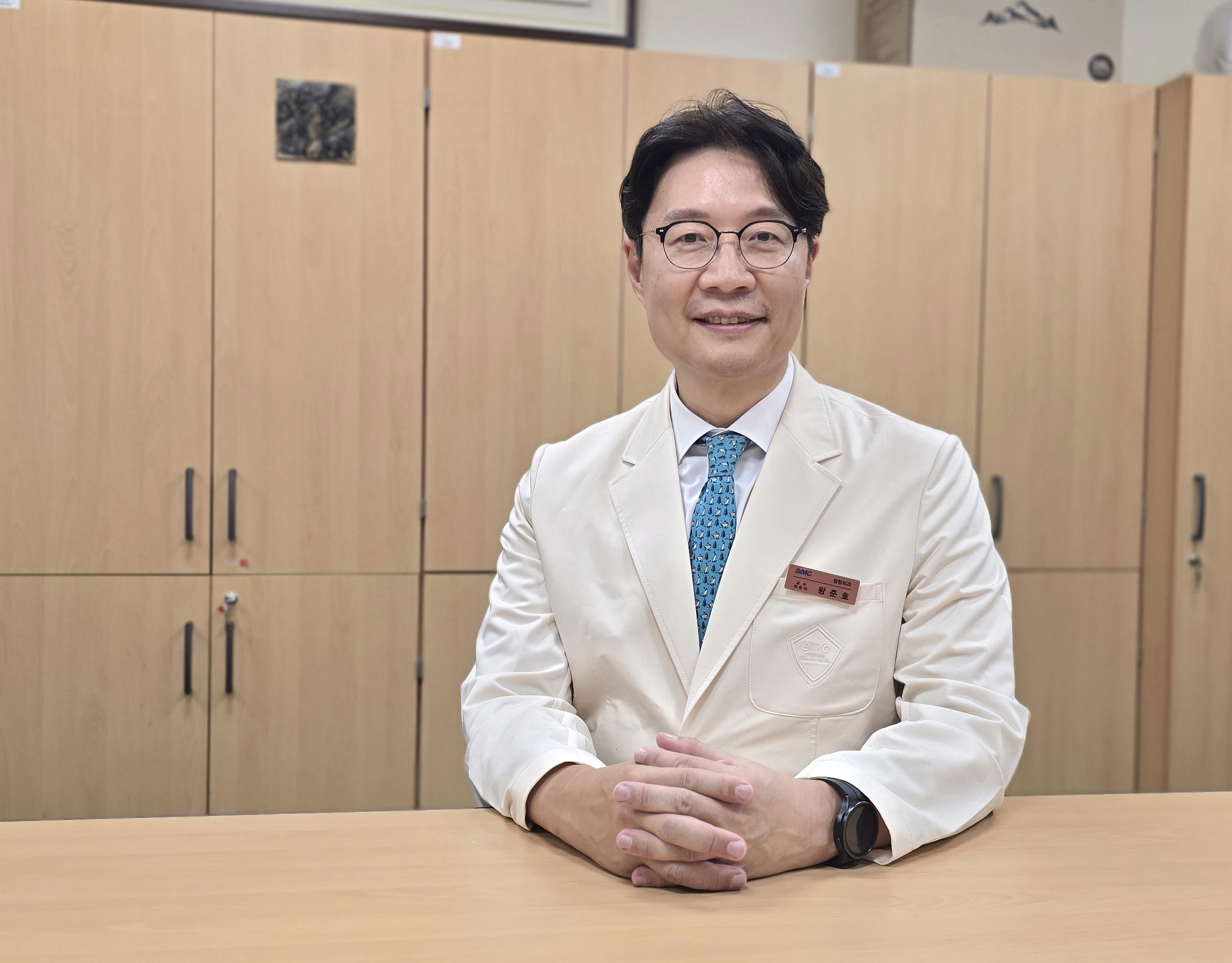
Professor Won Park of the Department of Radiation Oncology at Samsung Medical Center recently met with Daily Pharm to discuss shifts in prostate cancer radiotherapy and the SpaceOAR System's role in reducing rectal toxicity.
Prostate cancer cases increase… Critical role of radiation in the elderly
According to the 2023 National Cancer Registry statistics from the Ministry of Health and Welfare (MOHW), prostate cancer was the most frequently diagnosed cancer among Korean men, with 22,640 cases recorded.

The clinical setting has also changed. While urological cancers accounted for less than 10% of the patients Professor Park treated 15 to 20 years ago, that figure has now grown to approximately 80%. Among these, 70% to 80% are prostate cancer cases, reaching nearly 80% when looking solely at newly diagnosed patients.
Prostate cancer treatment is chosen from active surveillance, surgery, radiation therapy, or hormone therapy based on disease stage, grade of malignancy, patient age, and comorbidities. For early-stage patients with low-grade disease, clinicians sometimes monitor progression through follow-up examinations.
For localized prostate cancer requiring active treatment, surgery and radiation therapy are the primary options. In cases where the disease has progressed or exhibits high-grade malignancy, radiation therapy and hormone therapy may be administered concurrently.
Professor Park explained, "For early-stage disease, patients can choose between surgery and radiation therapy. While the therapeutic outcomes are equivalent, the procedures and side-effect profiles differ, requiring patients to make an informed choice."
Professor Park added, "Radiation can be applied from very early stages up to relatively contained prostate cancer without widespread metastases. As population aging continues, the role of radiation therapy will only expand."
Reducing rectal toxicity has led to fewer treatment sessions
The primary challenge of prostate cancer radiation therapy is that the prostate is located near the rectum and bladder. Delivering an adequate radiation dose to the tumor while avoiding exposure to adjacent normal organs is difficult, and rectal bleeding can occur post-treatment.
According to Professor Park, an analysis conducted by Samsung Medical Center on patients who previously underwent 28 fractions of radiation therapy revealed that approximately 20% experienced Grade 2 or higher rectal toxicity requiring interventions such as hemostasis or blood transfusions. To reduce this risk, the Samsung Medical Center adopted the SpaceOAR System approximately four years ago.
The SpaceOAR System creates a temporary separation by injecting a biodegradable hydrogel between the prostate and the rectum before radiation therapy. This decreases the radiation dose delivered to the rectum. However, patients whose cancer has invaded the rectum are excluded from this procedure.
In a follow-up analysis of approximately 280 early-stage patients monitored for more than two years, only one or two patients had Grade 1 rectal bleeding requiring no medical intervention, and no cases of Grade 2 or higher bleeding were identified.
Professor Park noted, "In the past, roughly two out of ten patients required additional intervention due to rectal bleeding," and added, "Since implementing the SpaceOAR System, observing bleeding that requires clinical intervention has become exceedingly rare."
Rectum protection also provided the clinical foundation for reducing treatment fraction frequency. Samsung Medical Center currently delivers radiation therapy in five fractions over a single week for a substantial proportion of early- to intermediate-stage patients. For patients who do not receive the SpaceOAR System or are ineligible because of rectal invasion, the dose per fraction is lowered, and the total number of treatment sessions is extended.
Professor Park explained that "Creating space between the prostate and the rectum allows the rectum to be protected even when administering high radiation doses per fraction," and added, "Patients can reduce their hospital visits, and the hospital can treat a larger volume of patients utilizing the same equipment."
Experience built based on 1,000 cases…Expanding application to complex cases
Samsung Medical Center recently surpassed 1,000 cumulative SpaceOAR System procedures. After acquiring dedicated equipment, weekly procedural volume increased from an initial two cases to up to 15 cases.
Professor Park attributed the significance of the 1,000-case milestone to gaining experience across a broad spectrum of patient profiles, accumulating clinical indications and limitations. The procedure was attempted even in patients presenting with tissue adhesions from recurrence following previous radiation therapy, adhesions posterior to the prostate following rectal cancer surgery, and recurrence after High-Intensity Focused Ultrasound (HIFU) therapy.
If adhesions are severe, the space between the prostate and rectum may fail to expand sufficiently, leading to procedural failure. Accumulated clinical experience now allows clinicians to assess feasibility accurately and counsel patients on procedural limitations beforehand.
Regarding the milestone of 1,000 cases, he reflected, "Extensive and varied experience has been established. It has instilled the confidence to attempt the procedure even when presented with highly challenging cases."
The SpaceOAR Vue System, introduced last year, incorporates an iodine tracer that allows hydrogel visualization via computed tomography (CT) and MRI. Unlike the conventional product, it enables more precise demarcation between the prostate and rectal boundaries and facilitates pre-treatment alignment.
Regarding this, Professor Park noted, "Patients do not need to undergo the insertion of gold fiducial markers, and clinicians can precisely target treatment areas," and added, "Verifying target positioning during actual treatment sessions has also become significantly more streamlined."
Equipment, interdisciplinary collaboration, and guidelines are the key
Patient access improved after National Health Insurance reimbursement for biodegradable material injection for prostate cancer radiotherapy was granted in 2023. However, reimbursement eligibility alone does not guarantee that every medical institution can implement the procedure.
The procedure requires transrectal ultrasound (TRUS) to visualize the trajectory of the needle relative to the prostate, along with a skilled clinical team. Samsung Medical Center also used equipment and procedural suites in the Department of Urology while acquiring specialized ultrasound techniques through the Department of Radiology.
Depending on the hospital, either the Department of Urology or the Department of Radiology may perform the procedure. Rather than which clinical department leads, wider adoption is dependent on securing the requisite equipment and expertise and building a multidisciplinary collaborative effort.
To increase introduction, Professor Park suggested, "It is challenging for a radiation oncology department to launch this program independently without equipment and prior procedural experience," adding, "Proactive efforts must be made to introduce the system through collaboration with urology or radiology departments."
Establishing standardized domestic clinical guidelines remains an unmet need. Although relevant procedural guidelines have been incorporated into international treatment standards and textbooks, this procedure was introduced in Korea approximately four years ago.
Professor Park emphasized, "Once clinical guidelines are firmly established in Korea, the number of adopting institutions will expand significantly," adding, "Expectations are high, as clinicians can alleviate concerns regarding rectal toxicity, while patients can complete their courses of treatment more rapidly with minimized adverse effects."
-

- 0
댓글 운영방식은
댓글은 실명게재와 익명게재 방식이 있으며, 실명은 이름과 아이디가 노출됩니다. 익명은 필명으로 등록 가능하며, 대댓글은 익명으로 등록 가능합니다.
댓글 노출방식은
댓글 명예자문위원(팜-코니언-필기모양 아이콘)으로 위촉된 데일리팜 회원의 댓글은 ‘게시판형 보기’와 ’펼쳐보기형’ 리스트에서 항상 최상단에 노출됩니다. 새로운 댓글을 올리는 일반회원은 ‘게시판형’과 ‘펼쳐보기형’ 모두 팜코니언 회원이 쓴 댓글의 하단에 실시간 노출됩니다.
댓글의 삭제 기준은
다음의 경우 사전 통보없이 삭제하고 아이디 이용정지 또는 영구 가입제한이 될 수도 있습니다.
-
저작권·인격권 등 타인의 권리를 침해하는 경우
상용 프로그램의 등록과 게재, 배포를 안내하는 게시물
타인 또는 제3자의 저작권 및 기타 권리를 침해한 내용을 담은 게시물
-
근거 없는 비방·명예를 훼손하는 게시물
특정 이용자 및 개인에 대한 인신 공격적인 내용의 글 및 직접적인 욕설이 사용된 경우
특정 지역 및 종교간의 감정대립을 조장하는 내용
사실 확인이 안된 소문을 유포 시키는 경우
욕설과 비어, 속어를 담은 내용
정당법 및 공직선거법, 관계 법령에 저촉되는 경우(선관위 요청 시 즉시 삭제)
특정 지역이나 단체를 비하하는 경우
특정인의 명예를 훼손하여 해당인이 삭제를 요청하는 경우
특정인의 개인정보(주민등록번호, 전화, 상세주소 등)를 무단으로 게시하는 경우
타인의 ID 혹은 닉네임을 도용하는 경우
-
게시판 특성상 제한되는 내용
서비스 주제와 맞지 않는 내용의 글을 게재한 경우
동일 내용의 연속 게재 및 여러 기사에 중복 게재한 경우
부분적으로 변경하여 반복 게재하는 경우도 포함
제목과 관련 없는 내용의 게시물, 제목과 본문이 무관한 경우
돈벌기 및 직·간접 상업적 목적의 내용이 포함된 게시물
게시물 읽기 유도 등을 위해 내용과 무관한 제목을 사용한 경우
-
수사기관 등의 공식적인 요청이 있는 경우
-
기타사항
각 서비스의 필요성에 따라 미리 공지한 경우
기타 법률에 저촉되는 정보 게재를 목적으로 할 경우
기타 원만한 운영을 위해 운영자가 필요하다고 판단되는 내용
-
사실 관계 확인 후 삭제
저작권자로부터 허락받지 않은 내용을 무단 게재, 복제, 배포하는 경우
타인의 초상권을 침해하거나 개인정보를 유출하는 경우
당사에 제공한 이용자의 정보가 허위인 경우 (타인의 ID, 비밀번호 도용 등)
※이상의 내용중 일부 사항에 적용될 경우 이용약관 및 관련 법률에 의해 제재를 받으실 수도 있으며, 민·형사상 처벌을 받을 수도 있습니다.
※위에 명시되지 않은 내용이더라도 불법적인 내용으로 판단되거나 데일리팜 서비스에 바람직하지 않다고 판단되는 경우는 선 조치 이후 본 관리 기준을 수정 공시하겠습니다.
※기타 문의 사항은 데일리팜 운영자에게 연락주십시오. 메일 주소는 dailypharm@dailypharm.com입니다.


-

- "SpaceOAR reduces rectal bleeding…major shift in radiation therapy"
- Prostate cancer is the most common cancer diagnosed in men…treatment demand increases among elderly patients