- LOGIN
- MemberShip
- 2026-09-17 11:54:48
- “Drug pricing intervention contributes to the crisis in essential healthcare and shortage of drugs”
- by Lee, Jeong-Hwan | translator Hong, Ji Yeon | 2026-07-28 08:57:30
Representative Jooyoung Lee of the Reform Party has proposed “separating the mandatory national health insurance designation system” and “expanding physician clinical autonomy” as core solutions to strengthen regional, essential, and public healthcare, a primary national policy agenda of the Lee Jae Myung administration.
To resolve chronic supply shortages of essential medicines, including pediatric formulations, and to prevent the global pharmaceutical giants from the so-called “Korea passing” phenomenon with ultra-high-cost innovative therapies, Rep. Lee emphasized the need to build a social consensus where the government, patients, and pharmaceutical companies share appropriate cost burdens. Rep. Lee stressed that the ultimate goal must be to establish a regulatory environment that aligns drug reimbursement prices with global standards.
According to Lee’s assessment, the fundamental cause behind both the supply disruptions of low-margin essential pediatric drugs and the “Korea passing” phenomenon by multinational pharmaceutical firms lies in the government’s excessively restrictive drug pricing policies.
Addressing the conflicts between medical doctors and traditional Korean medicine practitioners, Lee presented a bold policy proposal: applying strict, conservative, evidence-based licensing principles and removing evidence-lacking traditional Korean medicine interventions from National Health Insurance coverage, following a broader social consensus.
This proposal draws attention because of Lee’s firsthand experience as a pediatric emergency care specialist and her active legislative service on the Health and Welfare Committee during the first half of the 22nd National Assembly.
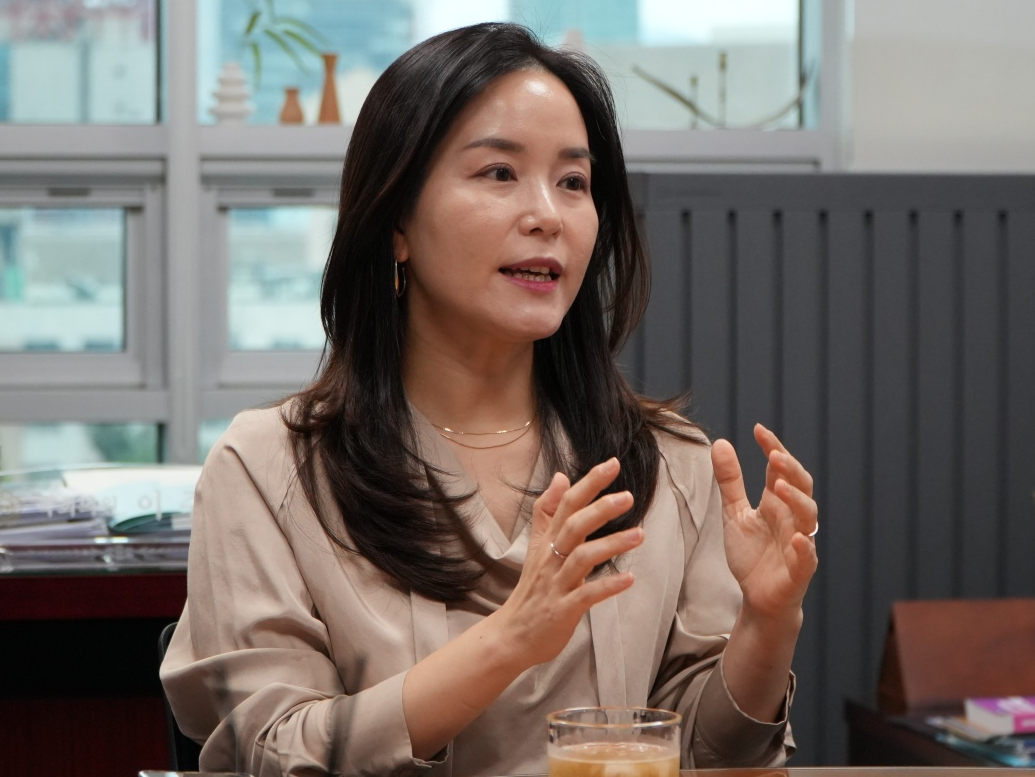
In an interview at the National Assembly Members’ Office Building in Yeouido on the 26th, Rep. Lee reflected on her achievements in the first half of the Assembly, outlined her goals for the second half, and detailed the path forward for modernizing South Korea’s public health policies.
“A policy objective that is not aimed at implementing…must separate the mandatory designation scheme and expand clinical autonomy”
Rep Lee criticized the establishment of the “Division of Regional, Essential, and Public Healthcare” within the Ministry of Health and Welfare (MOHW), led by Minister Jung Eun Kyeong, calling it “misnamed”.
Rep. Lee analyzed that regional, essential, and public healthcare represent distinct domains with differing mandates. However, the government consolidated them into a single senior executive office without clear conceptual definitions or targeted policy objectives.
Lee stated, “Simply consolidating these disparate sectors into a single administrative block prevents the implementation of effective, domain-specific policies.”
Rep. Lee further analyzed that the current crisis in essential medical care stems from the Health Insurance Review and Assessment Service's (HIRA) overall cuts to claims and a regulatory administration that is heavily focused on control.
In a system where physicians face arbitrary claims reductions even after delivering optimal care to intractable patients, while bearing total civil and criminal liability for clinical outcomes, few medical graduates will choose essential specialties.
Consequently, Lee stressed that policies should actively respect and compensate “medical autonomy.” On a broader scale, she urged social consensus around separating the mandatory health insurance designation system for healthcare providers. This would grant physicians active pricing autonomy for their specialized procedures, creating an environment in which they can deliver uncompromised, optimal patient care without resorting to defensive medicine.
Rep. Lee further criticized the recent implementation of “monitored reimbursement” schemes, such as those targeting manual therapy, describing them as excessive constraints on both physician autonomy and patient rights to treatment.
Lee stated, “Promoting essential healthcare requires giving physicians clinical and economic autonomy rather than pricing procedures individually. Medical students choose aesthetics over vital care because aesthetic medicine allows physicians to reap proportional rewards for excellence, set competitive prices based on skill, and operate in a market-driven environment,” and explained that “This market freedom is precisely why South Korea’s aesthetic and dermatological care became globally competitive and cost-effective.”
Medical students and residents currently choosing essential specialties cannot help but feel that their clinical autonomy and future income depend entirely on political shifts,” Rep. Lee stated. “This dynamic implies essential care physicians as ‘civil servants whose fees and procedures are dictated entirely by the government, yet who alone bear all legal liability.’ Calling for the revitalization of essential care while devaluing vital medicine is a fundamental irony.”
She noted, “Who would choose essential specialties if, after years of rigorous medical education, every clinical decision and prescription is audited by the Health Insurance Review and Assessment Service (HIRA), while physicians bear sole and disproportionate liability for patient outcomes?”, and added, “Crucially, withholding autonomy from essential care specialists causes clinical techniques to vanish. Today, pediatric surgical procedures have contracted to one-tenth of past levels, and specialists capable of conducting pediatric dialysis have effectively disappeared.”
Rep. Lee urged that “If the government intends to expand managed coverage, it must shrink the scope of mandatory benefits. She emphasized that HIRA’s operational structure—which currently incentivizes claims reductions—must shift to excuse cuts upon reasonable clinical justification,” and added, “If government intervention continues to intensify, unconventional and erratic medical practices will inevitably proliferate. It is time to guarantee medical autonomy and seriously consider decoupling from the mandatory health insurance designation system.”
“Essential medicines shortage is due to the government’s excessive control on drug pricing…new drugs must be fairly priced”
Rep. Lee pointed to excessive government price suppression as the root cause of chronic supply shortages of essential pediatric medications—such as Ativan—as well as the “Korea passing” phenomenon, in which global pharmaceutical firms bypass South Korea with clinically validated, ultra-high-cost novel therapeutics.
She warned that unless South Korea reimburses breakthrough therapies at prices aligned with global standards, the country will be thoroughly isolated from the influx of advanced novel drugs.
To address ultra-high-cost therapies without overwhelming limited National Health Insurance (NHI) reserves, Lee suggested that the government cover a reasonable portion of the cost while diversifying patient co-payments. This would allow overall pricing to meet global benchmarks without delaying domestic commercial launches.
“The supply instability surrounding pediatric and essential medicines, as well as the ‘Korea passing’ of ultra-high-cost, single-dose therapies, stems fundamentally from a failure to recognize fair drug value,” Lee stated. “While it may sound like a call for higher government spending, the price mechanism is the underlying driver. Resolving this requires aligned efforts between the government and the public to reach a broader social consensus.”
Rep. Lee noted, “Attempting to cover full drug costs exclusively through National Health Insurance severely strains public finances. Ultimately, South Korea must pay prices aligned with global averages. The government should reimburse what it can afford, while exploring mechanisms to diversify patient cost-sharing.”
Lee urged, “The government must recognize the urgency of failures in essential drug supply and delays in novel drug launches. It is time for decisive policy measures to guarantee appropriate pricing for low-margin essential drugs and breakthrough innovations alike. Providing adequate reimbursement and establishing a rational pricing environment will swiftly stabilize local supply chains and enhance patient access.”
“If South Korea is perceived globally as a market that aggressively slashes drug prices, domestic pharmaceutical companies will lack the capital required for novel drug R&D. At the same time, multinational firms will increasingly delay launches or exit the domestic market altogether,” Rep. Lee furthered stated, “For high-cost, life-saving drugs, an environment must be cultivated where patients also share an appropriate portion of the financial burden beyond the state-funded coverage limit.”
“These issues would not arise if health insurance reserves were sufficient,” Lee added. “For ultra-high-cost gene and cell therapies, calculating parameters like disease prevalence, life expectancy impact, and avoided downstream healthcare costs can inform the creation of a dedicated fund outside the main NHI budget. Establishing a separate funding pool supported by tax incentives would lighten the financial burden on the government, drugmakers, and patients alike, ensuring life-saving treatments reach pediatric patients without delay.”
Regarding professional conflicts and the integration of medical fields, Rep. Lee proposed using global scientific standards as the definitive benchmark. She argued that for traditional Korean medicine to achieve formal medical recognition and insurance reimbursement, it must independently demonstrate compliance with international evidence-based standards.
Noting that much of traditional medicine currently lacks rigorous scientific validation that meets global standards, Lee raised fundamental questions about universal health insurance coverage for traditional medicine, suggesting that discussions should begin to separate traditional medicine from the core National Health Insurance framework.
“First-half achievements in novel drug access…sustained health policy focus in second half”
Having served on the Health and Welfare Committee during the first half of the 22nd National Assembly, Rep. Lee will transition to the Education Committee for the second half. Despite leaving the committee, she affirmed that as Chief Policy Officer of the Reform Party and a practicing medical professional, she will continue to address critical healthcare issues rigorously.
Specifically, she expressed her intention to leverage her practical expertise on the Education Committee to scrutinize the impending fallout from the government’s expansion of medical school enrollment quotas.according
Reflecting on her legislative record, Lee noted, “The most memorable moments were those when my efforts delivered tangible help to patients in need.”
Rep. Lee’s key achievements include resolving regulatory deadlocks to expand patient access to combination oncology therapies, maintenance regimens for hematologic malignancies, and adult epilepsy medications. By convening policy forums and persistently pressing health authorities, her office opened new pathways to care for patients fighting critical illnesses.
“Receiving letters from patients stating that access to these therapies brought them closer to full recovery was deeply gratifying,” Lee recalled. “Patient advocacy groups that initially approached us with skepticism returned in subsequent years expressing confidence that working with our office yields real change. We also worked to reform perceptions surrounding excessive criminal prosecution in emergency and essential care, planting seeds for systemic change.”
Addressing concerns that moving to the Education Committee might distance her from healthcare issues, Lee drew a firm line.
“I will continue to speak out on essential health legislation, media discourses, and policy forums. Leaving the Health and Welfare Committee does not mean I will step back from health and welfare issues,” she noted. “My office will continue to champion healthcare and pediatric policies at the party policy committee level.”
Rep. Lee emphasized that her new assignment to the Education Committee remains directly intertwined with the healthcare crisis, as the operational and educational disruptions stemming from the medical school quota expansion will first manifest within academic institutions. “I am uniquely positioned to bring sharp, practical scrutiny to these challenges,” she concluded.
Although Rep. Lee's committee assignment in the National Assembly is set to shift in the second half of the term, Representative Lee’s focus remains steadfastly anchored on the “clinical frontlines and patients” and “future education.” This is why her upcoming legislative endeavors on the Education Committee is drawing attention.
-

- 30
댓글 운영방식은
댓글은 실명게재와 익명게재 방식이 있으며, 실명은 이름과 아이디가 노출됩니다. 익명은 필명으로 등록 가능하며, 대댓글은 익명으로 등록 가능합니다.
댓글 노출방식은
댓글 명예자문위원(팜-코니언-필기모양 아이콘)으로 위촉된 데일리팜 회원의 댓글은 ‘게시판형 보기’와 ’펼쳐보기형’ 리스트에서 항상 최상단에 노출됩니다. 새로운 댓글을 올리는 일반회원은 ‘게시판형’과 ‘펼쳐보기형’ 모두 팜코니언 회원이 쓴 댓글의 하단에 실시간 노출됩니다.
댓글의 삭제 기준은
다음의 경우 사전 통보없이 삭제하고 아이디 이용정지 또는 영구 가입제한이 될 수도 있습니다.
-
저작권·인격권 등 타인의 권리를 침해하는 경우
상용 프로그램의 등록과 게재, 배포를 안내하는 게시물
타인 또는 제3자의 저작권 및 기타 권리를 침해한 내용을 담은 게시물
-
근거 없는 비방·명예를 훼손하는 게시물
특정 이용자 및 개인에 대한 인신 공격적인 내용의 글 및 직접적인 욕설이 사용된 경우
특정 지역 및 종교간의 감정대립을 조장하는 내용
사실 확인이 안된 소문을 유포 시키는 경우
욕설과 비어, 속어를 담은 내용
정당법 및 공직선거법, 관계 법령에 저촉되는 경우(선관위 요청 시 즉시 삭제)
특정 지역이나 단체를 비하하는 경우
특정인의 명예를 훼손하여 해당인이 삭제를 요청하는 경우
특정인의 개인정보(주민등록번호, 전화, 상세주소 등)를 무단으로 게시하는 경우
타인의 ID 혹은 닉네임을 도용하는 경우
-
게시판 특성상 제한되는 내용
서비스 주제와 맞지 않는 내용의 글을 게재한 경우
동일 내용의 연속 게재 및 여러 기사에 중복 게재한 경우
부분적으로 변경하여 반복 게재하는 경우도 포함
제목과 관련 없는 내용의 게시물, 제목과 본문이 무관한 경우
돈벌기 및 직·간접 상업적 목적의 내용이 포함된 게시물
게시물 읽기 유도 등을 위해 내용과 무관한 제목을 사용한 경우
-
수사기관 등의 공식적인 요청이 있는 경우
-
기타사항
각 서비스의 필요성에 따라 미리 공지한 경우
기타 법률에 저촉되는 정보 게재를 목적으로 할 경우
기타 원만한 운영을 위해 운영자가 필요하다고 판단되는 내용
-
사실 관계 확인 후 삭제
저작권자로부터 허락받지 않은 내용을 무단 게재, 복제, 배포하는 경우
타인의 초상권을 침해하거나 개인정보를 유출하는 경우
당사에 제공한 이용자의 정보가 허위인 경우 (타인의 ID, 비밀번호 도용 등)
※이상의 내용중 일부 사항에 적용될 경우 이용약관 및 관련 법률에 의해 제재를 받으실 수도 있으며, 민·형사상 처벌을 받을 수도 있습니다.
※위에 명시되지 않은 내용이더라도 불법적인 내용으로 판단되거나 데일리팜 서비스에 바람직하지 않다고 판단되는 경우는 선 조치 이후 본 관리 기준을 수정 공시하겠습니다.
※기타 문의 사항은 데일리팜 운영자에게 연락주십시오. 메일 주소는 dailypharm@dailypharm.com입니다.


-
- "Leclaza, the best first-line option…expanded reimb will increase accessibility"
- PALOMA-2 recorded an objective response rate (ORR) of 90 and the 3-year overall survival (OS) rate of 70%…mOS has not yet been reached