- LOGIN
- MemberShip
- 2026-09-11 08:54:52
- Invossa still mired in legal battles 7 years after license revocation
- by Kim, Jin-Gu | translator Alice Kang | 2026-07-24 08:21:17
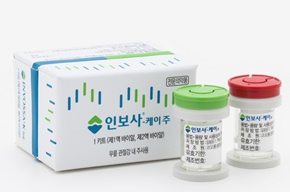
Kolon TissueGene's knee osteoarthritis candidate TG-C failed to demonstrate improvements in pain and physical function in its U.S. Phase III trial. The clinical setback is expected to have a significant impact on the ongoing litigation involving Invossa Invossa-K Inj (Invossa), which is being pursued against Kolon TissueGene and Kolon Life Science. The two companies are currently involved in a total of 55 Invossa-related lawsuits with claims exceeding KRW 100 billion.
Kolon TissueGene and Kolon Life Science in 55 damages lawsuits worth KRW 104.1 billion
According to Korea's Financial Supervisory Service on July 23, Kolon TissueGene and Kolon Life Science are currently involved in 55 lawsuits related to Invossa—32 involving Kolon Life Science and 23 involving Kolon TissueGene. Most are claims seeking damages related to Invossa, with the total amount in dispute near KRW 104.1 billion.
The plaintiffs who filed the lawsuit claim that they suffered physical and financial damages due to the change in Invossa's main cell line, which was revealed in 2019.
Invossa drew global attention after receiving approval from Korea's Ministry of Food and Drug Safety (MFDS) in July 2017 as the world's first gene therapy for knee osteoarthritis. TG-C is the product's US development name.
However, during the US Phase III trial in March 2019, it was discovered that one of the product's principal components, originally described as cartilage-derived cells, had in fact been replaced with kidney-derived cells that carry tumorigenic potential. The MFDS revoked Invossa's marketing authorization in April 2019, while the US Food and Drug Administration (FDA) placed the clinical trial on hold. The FDA later lifted the clinical hold in April 2020.
Kolon TissueGene is currently facing 16 shareholder lawsuits seeking damages for investment losses. A total of 2,048 shareholders are participating in these cases, with claims amounting to KRW 55.5 billion. In addition, 931 patients who received Invossa have filed 6 damages lawsuits against Kolon TissueGene for KRW 12.2 billion.
Kolon Life Science is also engaged in large-scale litigation with both shareholders and patients. Shareholders have filed 21 lawsuits seeking KRW 24.1 billion in damages, while 941 patients have filed 10 lawsuits seeking KRW 12.4 billion. The company is also being sued by multiple domestic insurers seeking reimbursement through subrogation claims.
Industry and legal experts expect the latest US Phase III results to have little direct impact on the outcome of the damages lawsuits. However, they say the failed trial could increase the companies' financial and legal burdens when courts determine damages or during settlement negotiations.
Most cases still await first-instance rulings at 7 years…Kolon loses first patient lawsuit
Although more than 7 years have passed since the first wave of litigation began, the vast majority of cases have yet to receive even a first-instance ruling.
A recent damages lawsuit filed by Invossa patients, however, resulted in the first trial court decision. On July 9, the Seoul Central District Court ruled entirely in favor of 139 patients who sued Kolon TissueGene and Kolon Life Science for damages.
The court found that Invossa had been manufactured using kidney-derived cells rather than the cartilage-derived cells identified in the original marketing application, recognizing this as a “manufacturing defect.” It also concluded that marketing and selling the product while labeling it as containing cartilage-derived cells violated both the Pharmaceutical Affairs Act and the Act on Fair Labeling and Advertising. Accordingly, the court held the companies liable for both economic damages and emotional distress suffered by the patients. It rejected Kolon's argument that the defect could not have been identified based on the scientific knowledge available at the time of manufacture.
Despite prevailing at trial, it will take more time for patients to receive compensation, as Kolon has appealed the ruling to the Seoul High Court. In addition, Kolon has blocked enforcement actions such as the seizure and collection of claims by patients by filing for a stay of execution.
Most shareholder lawsuits likewise remain at the first instance stage. Three lawsuits against Kolon TissueGene have already concluded after plaintiffs withdrew their claims or courts recommended settlement. In 4 of the company's 16 shareholder lawsuits, however, trial courts ruled in favor of Kolon. The plaintiffs have appealed, with those cases now before the appellate court.
By contrast, the dispute with Mitsubishi Tanabe Pharma over the return of upfront payments and damages arising from the terminated licensing agreement was resolved early on. In 2016, Kolon Life Science signed a technology licensing agreement with Mitsubishi Tanabe worth up to JPY 50 billion and received an upfront payment of JPY 2.5 billion. Mitsubishi Tanabe terminated the agreement in December 2017 and filed arbitration with the International Chamber of Commerce (ICC) the following April. After the changed cell line issue emerged in May 2019, it was added as an additional ground for termination. Ultimately, Kolon returned the JPY 2.5 billion upfront payment along with JPY 134 million in damages in April 2021.
Administrative appeal over ‘Invossa license revocation’ still pending before Supreme Court
Kolon Life Science is also pursuing administrative litigation in addition to the civil lawsuits. After the Ministry of Food and Drug Safety (MFDS) revoked Invossa's marketing authorization in 2019, the company filed an administrative lawsuit challenging the decision.
Both the Seoul Administrative Court (first instance) in February 2021 and the Seoul High Court (second instance) in February 2024 ruled in favor of the MFDS. The courts found that the discrepancy between the cell component described in the marketing authorization application and the one actually detected constituted a material defect, dismissing Kolon's claims. Kolon subsequently appealed to the Supreme Court, where the case remains pending.
In addition to the lawsuit over the revocation of Invossa's marketing authorization, Kolon Life Science also filed lawsuits seeking to ▲overturn the MFDS Commissioner's revocation of its clinical trial authorization, ▲ invalidate the Daejeon Regional Office of Food and Drug Safety's order to recall and dispose of Invossa, and ▲cancel the Ministry of Health and Welfare's and the Ministry of Science and ICT's orders to recover government research funding.
Among these, the lawsuits challenging the revocation of the clinical trial authorization and the recall and disposal order were voluntarily withdrawn by Kolon Life Science. Meanwhile, the lawsuit seeking to overturn the government's recovery of research funding ultimately ended in Kolon's favor after reaching the Supreme Court. The company had received KRW 1.25 billion in government funding during the development of Invossa.
Executives including former Chairman Woong-yeol Lee and CEO Woosok Lee were acquitted in criminal cases
Criminal proceedings against Honorary Chairman Woong-yeol Lee, former CEO Lee Woo-seok, and other Kolon Life Science executives concluded with acquittals.
Honorary Chairman Woong-yeol Lee and former CEO Lee Woo-seok were indicted on charges including violations of the Capital Markets Act and the Pharmaceutical Affairs Act. Prosecutors alleged that they concealed the US Food and Drug Administration's clinical hold order, attracted investment through the company's listing, manipulated the share price, and made false disclosures in violation of capital markets regulations.
Both the first- and second-instance courts acquitted the defendants. The trial court found that the evidence presented was insufficient to conclude that the defendants knowingly concealed the cell line change or intentionally made false disclosures to attract investment.
The appellate court (second instance) ruling was also handed down in February of this year. The Seoul High Court also upheld the acquittals. The appellate court ruled that the misunderstanding regarding the origin of the cells was recognized only after the product had already been manufactured and marketed, characterizing it as an error made during the development process rather than a deliberate cover-up. The acquittals became final after prosecutors decided not to appeal to the Supreme Court.
The former head of Kolon Life Science's Bio New Drug Research Center and its former medical team leader were also acquitted by the Supreme Court. They had been charged with obstruction of official duties by fraudulent means, fraud under the Act on the Aggravated Punishment of Specific Economic Crimes, and violations of the Subsidies Management Act.
The trial court ruled that there was insufficient evidence to conclude that they had interfered with the MFDS's review process or fraudulently obtained government R&D subsidies by deceiving government evaluators. However, the former medical team leader was found guilty of providing entertainment to an MFDS official and was fined KRW 10 million. The appellate court likewise found no evidence of intentional submission of false data or subsidy fraud, and the Supreme Court upheld those findings by dismissing the prosecution's appeal. The bribery conviction, however, was ultimately upheld, leaving the fine in place.
-

- 0
댓글 운영방식은
댓글은 실명게재와 익명게재 방식이 있으며, 실명은 이름과 아이디가 노출됩니다. 익명은 필명으로 등록 가능하며, 대댓글은 익명으로 등록 가능합니다.
댓글 노출방식은
댓글 명예자문위원(팜-코니언-필기모양 아이콘)으로 위촉된 데일리팜 회원의 댓글은 ‘게시판형 보기’와 ’펼쳐보기형’ 리스트에서 항상 최상단에 노출됩니다. 새로운 댓글을 올리는 일반회원은 ‘게시판형’과 ‘펼쳐보기형’ 모두 팜코니언 회원이 쓴 댓글의 하단에 실시간 노출됩니다.
댓글의 삭제 기준은
다음의 경우 사전 통보없이 삭제하고 아이디 이용정지 또는 영구 가입제한이 될 수도 있습니다.
-
저작권·인격권 등 타인의 권리를 침해하는 경우
상용 프로그램의 등록과 게재, 배포를 안내하는 게시물
타인 또는 제3자의 저작권 및 기타 권리를 침해한 내용을 담은 게시물
-
근거 없는 비방·명예를 훼손하는 게시물
특정 이용자 및 개인에 대한 인신 공격적인 내용의 글 및 직접적인 욕설이 사용된 경우
특정 지역 및 종교간의 감정대립을 조장하는 내용
사실 확인이 안된 소문을 유포 시키는 경우
욕설과 비어, 속어를 담은 내용
정당법 및 공직선거법, 관계 법령에 저촉되는 경우(선관위 요청 시 즉시 삭제)
특정 지역이나 단체를 비하하는 경우
특정인의 명예를 훼손하여 해당인이 삭제를 요청하는 경우
특정인의 개인정보(주민등록번호, 전화, 상세주소 등)를 무단으로 게시하는 경우
타인의 ID 혹은 닉네임을 도용하는 경우
-
게시판 특성상 제한되는 내용
서비스 주제와 맞지 않는 내용의 글을 게재한 경우
동일 내용의 연속 게재 및 여러 기사에 중복 게재한 경우
부분적으로 변경하여 반복 게재하는 경우도 포함
제목과 관련 없는 내용의 게시물, 제목과 본문이 무관한 경우
돈벌기 및 직·간접 상업적 목적의 내용이 포함된 게시물
게시물 읽기 유도 등을 위해 내용과 무관한 제목을 사용한 경우
-
수사기관 등의 공식적인 요청이 있는 경우
-
기타사항
각 서비스의 필요성에 따라 미리 공지한 경우
기타 법률에 저촉되는 정보 게재를 목적으로 할 경우
기타 원만한 운영을 위해 운영자가 필요하다고 판단되는 내용
-
사실 관계 확인 후 삭제
저작권자로부터 허락받지 않은 내용을 무단 게재, 복제, 배포하는 경우
타인의 초상권을 침해하거나 개인정보를 유출하는 경우
당사에 제공한 이용자의 정보가 허위인 경우 (타인의 ID, 비밀번호 도용 등)
※이상의 내용중 일부 사항에 적용될 경우 이용약관 및 관련 법률에 의해 제재를 받으실 수도 있으며, 민·형사상 처벌을 받을 수도 있습니다.
※위에 명시되지 않은 내용이더라도 불법적인 내용으로 판단되거나 데일리팜 서비스에 바람직하지 않다고 판단되는 경우는 선 조치 이후 본 관리 기준을 수정 공시하겠습니다.
※기타 문의 사항은 데일리팜 운영자에게 연락주십시오. 메일 주소는 dailypharm@dailypharm.com입니다.