- LOGIN
- MemberShip
- 2026-09-13 22:04:57
- Bispecific Ab for biliary tract cancer wins nod in KOR
- by Son, Hyung Min | translator Hong, Ji Yeon | 2026-03-23 08:42:14
A targeted therapy with a new mechanism of action has emerged in the treatment landscape for biliary tract cancer. There is a strong trend moving away from the existing chemotherapy-centered approach toward biomarker-based precision medicine strategies.
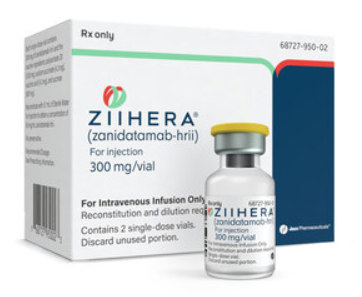
On the 19th, the Ministry of Food and Drug Safety (MFDS) approved BeOne Medicines' 'Ziihera (zanidatamab),' a treatment for human epidermal growth factor receptor 2 (HER2)-positive biliary tract cancer.
Ziihera was approved as a monotherapy for adult patients with unresectable or metastatic HER2-positive (IHC 3+) biliary tract cancer who have previously received at least one systemic therapy.
It is expected to become a new treatment option for a patient group that has had limited choices following previous therapies.
Ziihera is a bispecific antibody that simultaneously binds to two distinct sites (ECD2, ECD4) of the HER2 receptor.
The mechanistic characteristic of Ziihera is inducing tumor cell death by more potently inhibiting HER2 signaling while simultaneously activating various immune mechanisms such as antibody-dependent cellular cytotoxicity (ADCC), complement-dependent cytotoxicity (CDC), and antibody-dependent cellular phagocytosis (ADCP).
Ziihera is a new drug developed by the Canadian biopharmaceutical company Zymeworks. Subsequently, the U.S. company Jazz Pharmaceuticals licensed the development and commercialization rights for the substance from Zymeworks, and, under the contract, BeOne Medicines holds the commercialization rights in Asian regions, including Korea and China, excluding Japan.
This approval is highly significant, as it is the first bispecific antibody approved for biliary tract cancer. Analysis suggests that the treatment strategy targeting HER2 has become an option in clinical settings.
The approval was based on the results of the global Phase 2b 'HERIZON-BTC-01' study. According to the clinical results, the confirmed objective response rate (cORR) based on independent central review (BICR) in the HER2-positive IHC 3+ patient group (62 patients) was 52%.
The complete response (CR) was 3%, and the partial response (PR) was 48%.
The median duration of response (DOR) was 14.9 months, and among responding patients, 59% maintained the response for 6 months or longer, while 44% maintained it for 12 months or longer. In the overall HER2-positive patient group, the ORR was 41%, and the median overall survival (OS) was 15.5 months.
Regarding safety, the most commonly reported adverse events were diarrhea, infusion-related reactions, and anemia. Serious adverse events occurred in 47.7% of the subjects.
Biliary tract cancer, low survival rates·treatment gaps... will the shift to targeted therapy accelerate?
Biliary tract cancer occurs in the bile ducts through which bile is produced in the liver, and since early symptoms are not clear, a significant number of patients are diagnosed at an advanced stage. Because of this, it is considered a primary intractable cancer with a poor prognosis.
According to the South Korea Central Cancer Registry, the number of patients with biliary tract cancer in Korea increased by approximately 40%, from 5,444 in 2011 to 7,617 in 2021. Although the patient population is relatively small, treatment outcomes remain limited due to the difficulty of early diagnosis, rapid metastasis to surrounding organs, and high recurrence rates characteristic of the disease.
In fact, the 5-year relative survival rate (2017–2021) is only 28.9%, with more than 7 out of 10 patients reported to die.
Particularly in patients with unresectable locally advanced or metastatic biliary tract cancer, the limited treatment options available after the failure of first-line therapy have been pointed out as the largest unmet medical need in clinical settings.
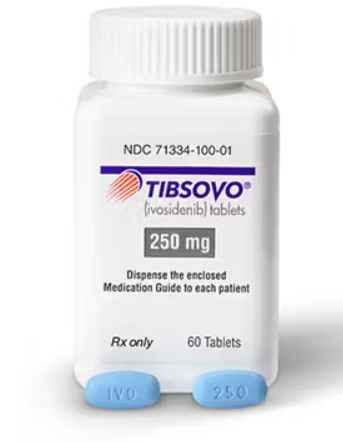
Amid these treatment gaps, targeted therapy-based strategies have been rapidly expanding. Representative examples include Handok’s targeted therapies 'Pemazyre (pemigatinib)' for patients with FGFR2 fusion or rearrangement, and 'Tibsovo (ivosidenib)' for patients with IDH1 mutations.
FGFR genetic abnormalities are known to be involved in tumor cell proliferation, survival, angiogenesis, and drug resistance, while IDH1 mutations are reported with relatively high frequency in intrahepatic cholangiocarcinoma.
In fact, Tibsovo, which targets IDH1, improved progression-free survival (PFS) in the global Phase 3 ClarIDHy study, establishing itself as the first targeted therapy to succeed in a Phase 3 clinical trial in the biliary tract cancer field. However, unlike Pemazyre, there has been no news regarding reimbursement for Tibsovo since its domestic authorization in 2024.
As treatments targeting specific genetic mutations are introduced one after another, the addition of a HER2-targeted treatment strategy is shifting biliary tract cancer treatment toward a biomarker-based, multi-layered approach.
Furthermore, additional bispecific antibodies are awaiting commercialization. The bispecific antibody candidate 'tovesimig (HDB001A)', being developed by Compass Therapeutics in the U.S., recently achieved efficacy in the topline results of its global Phase 2/3 study.
Tovesimig is a new biliary tract cancer drug candidate developed by the Korean company ABL Bio. Handok holds the domestic rights, and Compass holds the global rights. This drug candidate is a bispecific antibody that simultaneously targets delta-like ligand 4 (DLL4) and vascular endothelial growth factor (VEGF), both of which promote the formation of new blood vessels in the tumor microenvironment.
According to the topline results, the ORR set as the primary endpoint was 17.1% for the tovesimig + Paclitaxel group, which was higher than the 5.3% of the Paclitaxel group. Additionally, progressive disease (PD) was 16.2% in patients co-administered tovesimig + Paclitaxel, whereas it was 42.1% in patients administered Paclitaxel alone.
-

- 0
댓글 운영방식은
댓글은 실명게재와 익명게재 방식이 있으며, 실명은 이름과 아이디가 노출됩니다. 익명은 필명으로 등록 가능하며, 대댓글은 익명으로 등록 가능합니다.
댓글 노출방식은
댓글 명예자문위원(팜-코니언-필기모양 아이콘)으로 위촉된 데일리팜 회원의 댓글은 ‘게시판형 보기’와 ’펼쳐보기형’ 리스트에서 항상 최상단에 노출됩니다. 새로운 댓글을 올리는 일반회원은 ‘게시판형’과 ‘펼쳐보기형’ 모두 팜코니언 회원이 쓴 댓글의 하단에 실시간 노출됩니다.
댓글의 삭제 기준은
다음의 경우 사전 통보없이 삭제하고 아이디 이용정지 또는 영구 가입제한이 될 수도 있습니다.
-
저작권·인격권 등 타인의 권리를 침해하는 경우
상용 프로그램의 등록과 게재, 배포를 안내하는 게시물
타인 또는 제3자의 저작권 및 기타 권리를 침해한 내용을 담은 게시물
-
근거 없는 비방·명예를 훼손하는 게시물
특정 이용자 및 개인에 대한 인신 공격적인 내용의 글 및 직접적인 욕설이 사용된 경우
특정 지역 및 종교간의 감정대립을 조장하는 내용
사실 확인이 안된 소문을 유포 시키는 경우
욕설과 비어, 속어를 담은 내용
정당법 및 공직선거법, 관계 법령에 저촉되는 경우(선관위 요청 시 즉시 삭제)
특정 지역이나 단체를 비하하는 경우
특정인의 명예를 훼손하여 해당인이 삭제를 요청하는 경우
특정인의 개인정보(주민등록번호, 전화, 상세주소 등)를 무단으로 게시하는 경우
타인의 ID 혹은 닉네임을 도용하는 경우
-
게시판 특성상 제한되는 내용
서비스 주제와 맞지 않는 내용의 글을 게재한 경우
동일 내용의 연속 게재 및 여러 기사에 중복 게재한 경우
부분적으로 변경하여 반복 게재하는 경우도 포함
제목과 관련 없는 내용의 게시물, 제목과 본문이 무관한 경우
돈벌기 및 직·간접 상업적 목적의 내용이 포함된 게시물
게시물 읽기 유도 등을 위해 내용과 무관한 제목을 사용한 경우
-
수사기관 등의 공식적인 요청이 있는 경우
-
기타사항
각 서비스의 필요성에 따라 미리 공지한 경우
기타 법률에 저촉되는 정보 게재를 목적으로 할 경우
기타 원만한 운영을 위해 운영자가 필요하다고 판단되는 내용
-
사실 관계 확인 후 삭제
저작권자로부터 허락받지 않은 내용을 무단 게재, 복제, 배포하는 경우
타인의 초상권을 침해하거나 개인정보를 유출하는 경우
당사에 제공한 이용자의 정보가 허위인 경우 (타인의 ID, 비밀번호 도용 등)
※이상의 내용중 일부 사항에 적용될 경우 이용약관 및 관련 법률에 의해 제재를 받으실 수도 있으며, 민·형사상 처벌을 받을 수도 있습니다.
※위에 명시되지 않은 내용이더라도 불법적인 내용으로 판단되거나 데일리팜 서비스에 바람직하지 않다고 판단되는 경우는 선 조치 이후 본 관리 기준을 수정 공시하겠습니다.
※기타 문의 사항은 데일리팜 운영자에게 연락주십시오. 메일 주소는 dailypharm@dailypharm.com입니다.