- LOGIN
- MemberShip
- 2026-09-13 07:37:52
- Pharmaceutical union joins drug price reform battle
- by Cha, Ji-Hyun | translator Alice Kang | 2026-02-02 14:16:55
Tensions surrounding the government’s drug pricing system reform are increasingly shifting from a policy dispute to a matter of employment security. While opposition had previously been led by pharmaceutical industry associations and emergency response committees, labor unions on the ground that are concerned about potential restructuring have now begun to take direct action, significantly heightening the level of tensions. With even foreign-affiliated pharmaceutical sales unions joining the hardline response, observers predict the conflict could escalate into large-scale protests and coordinated collective action.
According to industry sources on the 30th, the Korea Democratic Pharmaceutical Unions (KDPU) held a placard protest on the 29th in front of the Health Insurance Review and Assessment Service (HIRA) headquarters in Seocho-gu, Seoul, formally declaring its opposition to the government’s proposed drug pricing reform.
The KDPU argued that the policy direction focuses solely on lowering drug prices without sufficiently reflecting the pharmaceutical industry's employment structure and unique characteristics. They also protested, stating that such reforms could lead to job insecurity, a decline in research and development (R&D), and disruptions in the supply of essential medicines.
The KDPU is an industry-wide labor union affiliated with the Federation of Korean Chemical Workers' Unions (FKCU) under the Federation of Korean Trade Unions (FKTU). Its membership is largely composed of sales organization employees at multinational pharmaceutical companies, including Allergan, Takeda, Mundipharma, and AbbVie. Kolon Pharmaceutical is the only Korean company included.

This issue was triggered when the government reported a drug pricing system reform plan to the Health Insurance Policy Deliberation Committee last November. The plan proposes lowering the drug pricing calculation standard for generics and off-patent drugs from the current 53% to around 40%.
The Ministry of Health and Welfare envisions reducing unnecessary drug expenditure by gradually lowering generic drug prices and adjusting the drug pricing calculation method. It plans to reinvest the secured funds into new drugs and innovative medicines to foster a new drug development ecosystem. In response, the pharmaceutical industry has repeatedly voiced opposition, citing concerns over sharp revenue declines, weakened R&D investment, and instability in the supply of essential medicines.
Gi-il Park, chair of the KDPU, whom reporters met at the protest site, cited employment instability as the most critical issue in the government’s proposed reform.
Park said, “The pharmaceutical industry already experienced large-scale restructuring at each company during the forced drug price cuts in 2012. For mid-sized and small pharmaceutical firms with limited profit margins, additional price cuts would render restructuring inevitable.”
Park also strongly questioned the government's argument that drug price cuts would lead to increased research and development (R&D) investment. He pointed out, “Companies can only increase R&D spending if they generate sales and profits. Forcing drug prices down leaves companies with no choice but to cut costs. Ultimately, drugs that become unprofitable will cease production, potentially leading to disruptions in the supply of essential medicines. Actual stakeholders, like pharmaceutical companies and workers, are excluded from drug pricing policy discussions. A consultative body involving labor, management, government, and experts is necessary.”
This marks the first time a pharmaceutical company union has staged a public protest directly targeting the drug pricing system reform.
Previously, opposition to the reform had been led primarily by industry associations and emergency response committees. Since the government unveiled the reform proposal, groups such as the Korea Pharmaceutical and Bio-Pharma Manufacturers Association and the Emergency Countermeasure Committee on Drug Pricing Reform have called for revisions and a postponement of implementation through press conferences and official statements.
More recently, the center of gravity in the debate has shifted toward the industry’s front lines. On the 22nd, a labor–management forum involving pharmaceutical companies and labor representatives was held at the Hyangnam Pharmaceutical Complex in Hwaseong, Gyeonggi Province. Representatives from the FKCU Pharmaceutical and Cosmetics Division and labor–management delegates from tenant companies jointly called for an end to unilateral drug price cuts.

At the forum, labor representatives from the FKCU Pharmaceutical and Cosmetics Division presented numerical estimates warning of an impending “employment shock.” They estimated that if the reform is implemented, annual revenue losses across the pharmaceutical and biotech sector would total KRW 1.2144 trillion, averaging KRW 23.3 billion per company. Operating profits could decline by an average of 52%, potentially wiping out more than half of industry earnings. Such profitability shocks, they argued, would inevitably push companies to prioritize labor cost reductions, leading to restructuring pressure across production, sales, and R&D functions.
A contraction in R&D and investment is also expected. The division forecasted that if drug price cuts are implemented, pharmaceutical and biotech companies' R&D expenses would decrease by an average of 25%, and facility investments by 32%. For small and medium-sized pharmaceutical companies, the investment reduction could reach as high as 52%. The subcommittee explained that this investment contraction could directly lead to workforce reductions of 1,691 employees (9%) out of the current 39,170 pharmaceutical industry workers, with mid-sized companies facing workforce reductions of up to 12%.
Sang-joon Oh, chair of the Gyeonggi South branch of FKCU, said, “Unstable employment makes it impossible to produce good drugs,” highlighting growing confusion on the ground. Deok-hee Lee, union chair at Ildong Pharmaceutical, warned, “Drug price cuts could ultimately lead to the conversion of regular employees to non-regular status and layoffs, threatening the very survival of the industry.” Given the concentration of small and mid-sized firms in the Hyangnam complex, concerns are mounting that the impact of price cuts could spread to a contraction of the local economy.
On the 27th, the Emergency Committee on Drug Pricing Reform for the Development of the Pharmaceutical and Biotech Industry visited the FKTU and met with its president, Dongmyeong Kim. This meeting further underscored the expansion of a joint labor–management response to the reform.
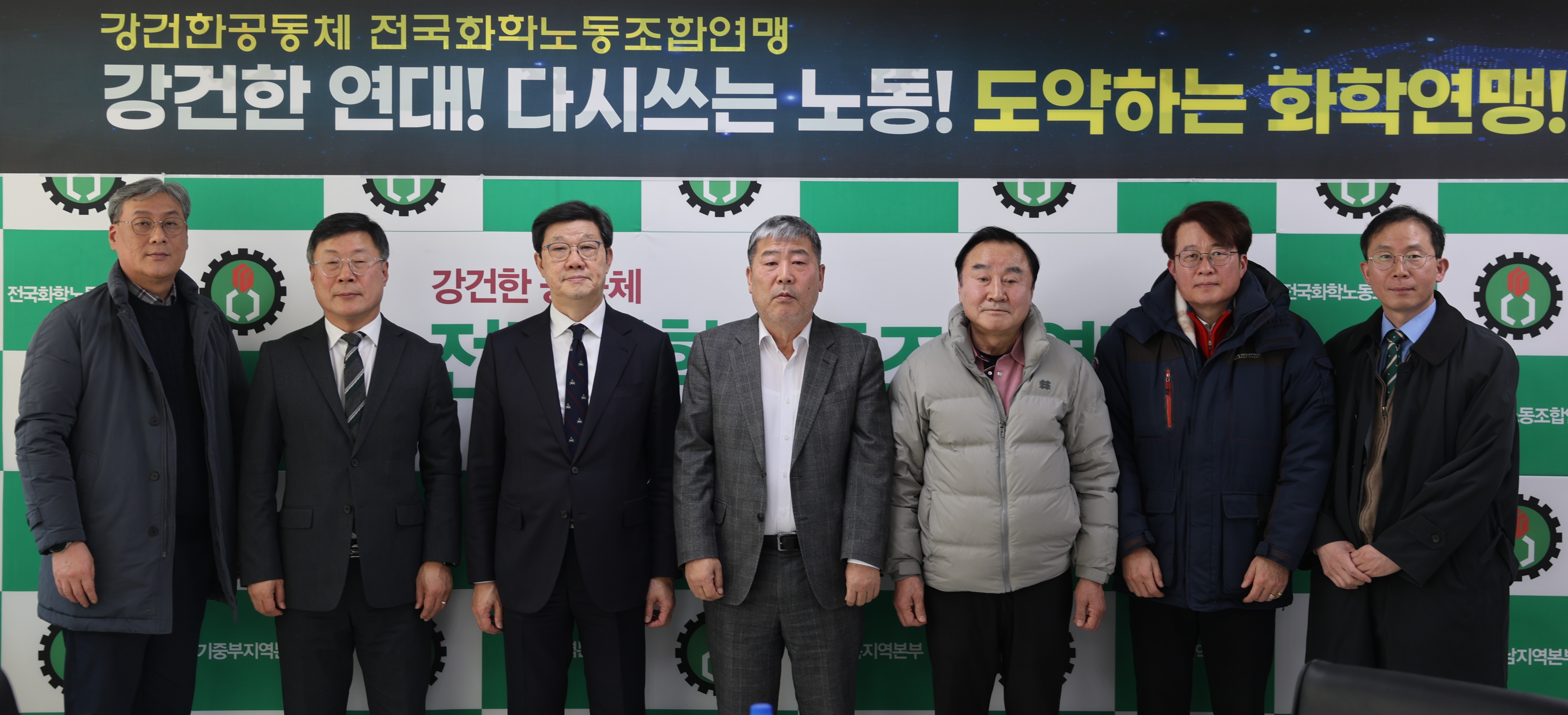
During the meeting, the emergency committee explained the potential impact of drug pricing reform on industrial competitiveness and employment stability. Both sides agreed that discussions on price cuts should not proceed in isolation from industry and labor considerations, and agreed to maintain close communication and cooperation in future response efforts.
Following these labor–management engagements, the labor movement’s response became more explicit. On the same day the KDPU held its protest, the FKTU released an official statement opposing the reform, marking the union’s first official stance at the central level regarding the reform, and the escalation in its level of response.
In its statement, the FKTU warned that “an approach aimed at short-term fiscal savings through drug price cuts is a dangerous one that could lead to job insecurity and restructuring. The government should take seriously the lessons of past drug pricing policies, which led to confusion on the ground and weakened the industrial base. The basis for reforming the drug pricing system and its fiscal effects must be transparently disclosed, and a social discussion framework where stakeholders' opinions are substantively reflected must be immediately established.”
Observations suggest that if this trend continues, the labor-management conflict surrounding the drug pricing system reform could escalate into a more confrontational phase.
The KDPU stated it is reviewing phased countermeasures, including joint responses with the FKCU Pharmaceutical and Cosmetics Division and the FKTU, or additional protests, depending on the progress of future policy discussions and the schedule of the National Health Insurance Policy Deliberation Committee.
Should demands for a social consensus mechanism go unmet, the possibility of extreme actions such as collective strikes has also been raised.
The FKTU warned, “We will fulfill our responsibility to ensure that the interests of health insurance subscribers and the survival rights of workers are harmoniously reflected in future discussions on drug pricing reform. We will not tolerate any attempt to use this policy as a pretext for deteriorating labor conditions or undermining employment stability.”
-

- 0
댓글 운영방식은
댓글은 실명게재와 익명게재 방식이 있으며, 실명은 이름과 아이디가 노출됩니다. 익명은 필명으로 등록 가능하며, 대댓글은 익명으로 등록 가능합니다.
댓글 노출방식은
댓글 명예자문위원(팜-코니언-필기모양 아이콘)으로 위촉된 데일리팜 회원의 댓글은 ‘게시판형 보기’와 ’펼쳐보기형’ 리스트에서 항상 최상단에 노출됩니다. 새로운 댓글을 올리는 일반회원은 ‘게시판형’과 ‘펼쳐보기형’ 모두 팜코니언 회원이 쓴 댓글의 하단에 실시간 노출됩니다.
댓글의 삭제 기준은
다음의 경우 사전 통보없이 삭제하고 아이디 이용정지 또는 영구 가입제한이 될 수도 있습니다.
-
저작권·인격권 등 타인의 권리를 침해하는 경우
상용 프로그램의 등록과 게재, 배포를 안내하는 게시물
타인 또는 제3자의 저작권 및 기타 권리를 침해한 내용을 담은 게시물
-
근거 없는 비방·명예를 훼손하는 게시물
특정 이용자 및 개인에 대한 인신 공격적인 내용의 글 및 직접적인 욕설이 사용된 경우
특정 지역 및 종교간의 감정대립을 조장하는 내용
사실 확인이 안된 소문을 유포 시키는 경우
욕설과 비어, 속어를 담은 내용
정당법 및 공직선거법, 관계 법령에 저촉되는 경우(선관위 요청 시 즉시 삭제)
특정 지역이나 단체를 비하하는 경우
특정인의 명예를 훼손하여 해당인이 삭제를 요청하는 경우
특정인의 개인정보(주민등록번호, 전화, 상세주소 등)를 무단으로 게시하는 경우
타인의 ID 혹은 닉네임을 도용하는 경우
-
게시판 특성상 제한되는 내용
서비스 주제와 맞지 않는 내용의 글을 게재한 경우
동일 내용의 연속 게재 및 여러 기사에 중복 게재한 경우
부분적으로 변경하여 반복 게재하는 경우도 포함
제목과 관련 없는 내용의 게시물, 제목과 본문이 무관한 경우
돈벌기 및 직·간접 상업적 목적의 내용이 포함된 게시물
게시물 읽기 유도 등을 위해 내용과 무관한 제목을 사용한 경우
-
수사기관 등의 공식적인 요청이 있는 경우
-
기타사항
각 서비스의 필요성에 따라 미리 공지한 경우
기타 법률에 저촉되는 정보 게재를 목적으로 할 경우
기타 원만한 운영을 위해 운영자가 필요하다고 판단되는 내용
-
사실 관계 확인 후 삭제
저작권자로부터 허락받지 않은 내용을 무단 게재, 복제, 배포하는 경우
타인의 초상권을 침해하거나 개인정보를 유출하는 경우
당사에 제공한 이용자의 정보가 허위인 경우 (타인의 ID, 비밀번호 도용 등)
※이상의 내용중 일부 사항에 적용될 경우 이용약관 및 관련 법률에 의해 제재를 받으실 수도 있으며, 민·형사상 처벌을 받을 수도 있습니다.
※위에 명시되지 않은 내용이더라도 불법적인 내용으로 판단되거나 데일리팜 서비스에 바람직하지 않다고 판단되는 경우는 선 조치 이후 본 관리 기준을 수정 공시하겠습니다.
※기타 문의 사항은 데일리팜 운영자에게 연락주십시오. 메일 주소는 dailypharm@dailypharm.com입니다.