- LOGIN
- MemberShip
- 2026-09-20 21:41:58
- 'Early diagnosis·3 combo therapy·tolerance' for COPD Tx
- by Whang, byung-woo | translator Hong, Ji Yeon | 2025-04-28 05:54:52
"With South Korea entering a super-aged society, the number of patients with chronic obstructive pulmonary disease (COPD) will continue to rise.
As the population ages, early detection and treatment to prevent high-risk patients from worsening are critically important." At the end of last year, the Korean COPD treatment guidelines were revised for the first time in six years, simplifying patient classification and adding blood eosinophil count criteria to treatment-strategy establishment.
The aim was to simplify the guidelines compared with the previous version, making treatment more straightforward in clinical practice.
The initial treatment strategies now categorize patients into low-risk and high-risk groups.
Dr.
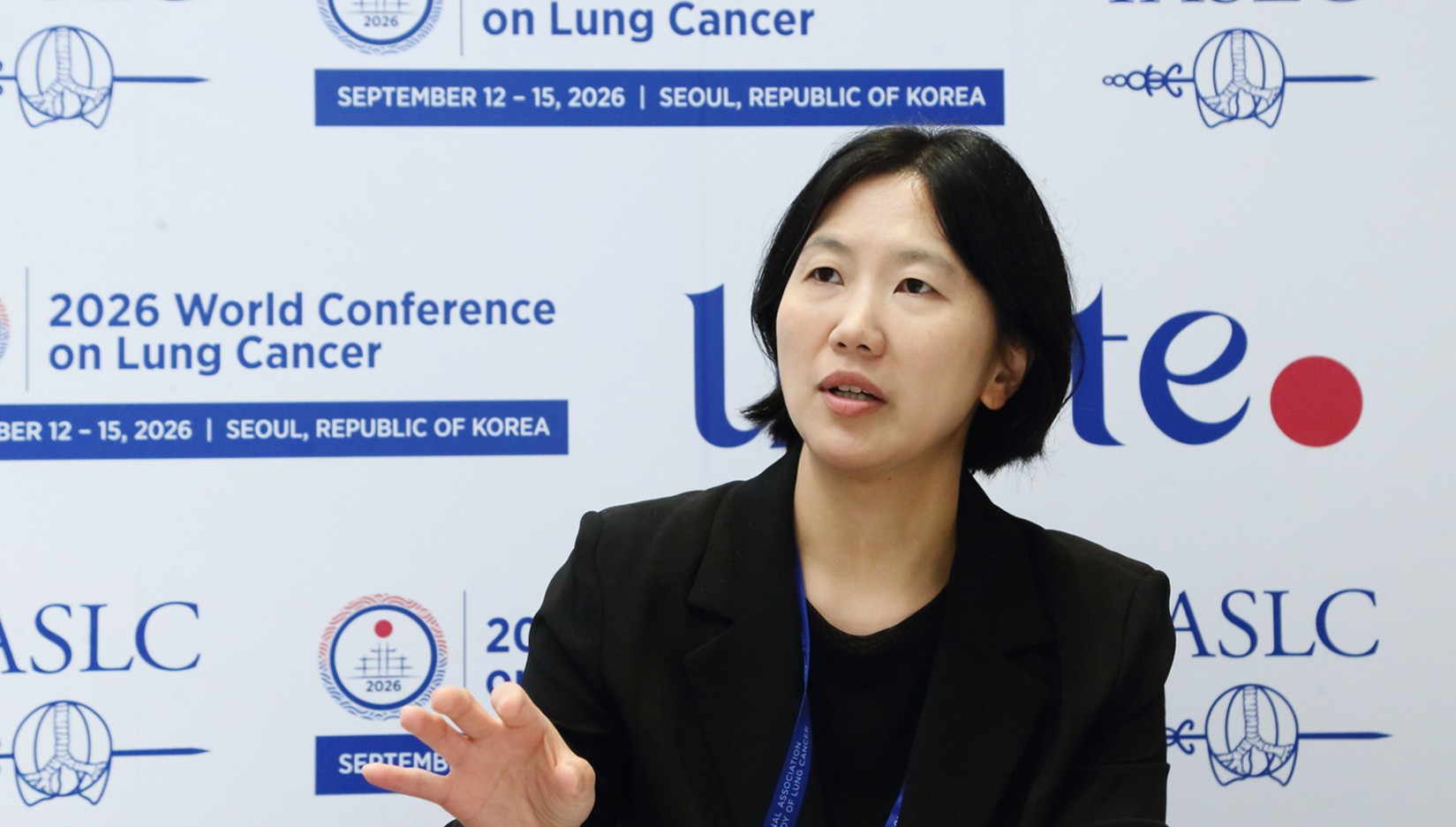
Yong Bum Park, Professor of the Pulmonary Department at Kangdong Sacred Heart Hospital (chair of the COPD guidelines revision committee), emphasized the need for appropriate treatment approaches and policy improvements in response to the growing COPD patient population.
COPD is a condition in which abnormalities occur in the 'airways' necessary for breathing or in the alveoli at the lung periphery, influenced not only by smoking but also by indoor and outdoor air pollution, occupational hazards, and genetic factors.

Yong Bum Park, Professor of the Pulmonary Department at Kangdong Sacred Heart Hospital Korea's National Health and Nutrition Examination Survey shows that approximately 13% of the population aged 40 and over has COPD.
With an aging population, it is reported that one in two men aged 65 and above in Korea suffers from COPD.
Dr.
Park explained, "Although COPD prevalence appears high at 12%, according to Health Insurance Review & Assessment Service (HIRA) criteria, at most 5% have been diagnosed with COPD, and of those, fewer than 2% are registered as patients and managed in hospitals." Therefore, the most critical aspect of COPD treatment is early diagnosis.
For this reason, the Korean Academy of Tuberculosis and Respiratory Diseases has proposed to the government that pulmonary function testing be included in the national health screening program.
It has been pointed out that if treatment is initiated at an advanced stage of the disease, more medications will be required, increasing not only the individual burden due to exacerbations but also the overall national burden.
In fact, a domestic study estimated the socio-economic burden of COPD patients at approximately KRW 1.4 trillion.
Dr.
Park said, "The socio-economic burden reaches about KRW 1.4 trillion for patients receiving care in hospitals alone, which is a substantial burden.
I believe it is crucial to detect these patients early." Even though COPD carries a significant socio-economic burden once diagnosed, the general public remains poorly informed about the disease, making early diagnosis through national screening necessary.
Dr.
Park emphasized, "If pulmonary function testing were implemented as part of the national health screening, it would detect COPD and all conditions associated with impaired lung function, such as asthma or pulmonary fibrosis.
With early diagnosis, patients with symptoms can receive pharmacotherapy or preventive measures, such as vaccinations, management of risk factors like smoking, and rehabilitation through exercise, to halt disease progression and exacerbations." Guidelines for COPD treatment were revised after six years…has been simplified categorizing patients from three patient groups to low-risk‧high-risk patient groups Not only in Korean but also in global COPD guidelines, pulmonary function testing is specified as essential for diagnosis.
In December 2024, the domestic COPD guidelines were revised for the first time in six years, simplifying patient classification and adding a blood eosinophil count criterion to inform treatment strategy for promptly managing diagnosed patients.
While the previous 2018 guidelines classified COPD patients into three groups based on FEV1 (forced expiratory volume in one second), number of exacerbations in the past year, the mMRC dyspnea scale, and the COPD Assessment Test (CAT), the revised guidelines now categorize patients into only two risk categories, high-risk and low-risk, based solely on the number of exacerbations in the past year.
Dr.
Park explained, "Over the past 3-4 years, combination therapy with LABA+LAMA is superior to LABA or LAMA monotherapy in terms of quality of life, lung function, symptom improvement, and reduction in exacerbation frequency, reducing the need for multiple low-risk subgroups.
Therefore, patients are now categorized into high-risk and low-risk groups, and the initial treatment strategies have been updated accordingly." Although the guideline revision is intuitive, key points are worth highlighting.
The revised guidance identifies exacerbation history as a crucial variable and incorporates a blood eosinophil count criterion for medications.
As a result, for high-risk patients, if the blood eosinophil count is below 300 cells/㎣, LABA+LAMA combination therapy is recommended.
If it is 300 cells/㎣ or higher, triple combination therapy with ICS+LAMA+LABA is advised.
Dr.
Park noted, "Patients in the high-risk group with a blood eosinophil count of 300 cells per microliter or more are known to respond well to inhaled corticosteroids (ICS), so ICS use is recommended.
Notably, triple combination therapy combining ICS+LAMA+LABA into a single inhaler has demonstrated efficacy in reducing mortality, improving lung function, and enhancing quality of life, which is why triple combination therapy is recommended for high-risk patients." "Training is crucial for COPD inhaler treatment…Triple combination therapy offers better drug tolerance" The most common COPD triple combination therapy is Trelegy Ellipta (fluticasone furoate/umeclidinium/vilanterol).
In the IMPACT Phase 3 trial, triple combination therapy with Trelegy reduced the treatment risk of all-cause mortality by 42% compared with LAMA+LABA therapy.
In a post-hoc analysis, patients receiving Trelegy triple combination therapy experienced a 38% reduction in on-/off-treatment all-cause mortality risk compared with those on LAMA+LABA therapy.
Dr.
Park mentioned, "Even in the overall trial results, about half of high-risk patients continue to experience symptoms, exacerbations, and dyspnea despite triple therapy," and added, "Nevertheless, compared with previous medications, the newer triple combination therapies, especially single-device formulations like Trelegy, are much more convenient for patients to use." One of the key issues in COPD treatment is drug adherence.
Unlike oral therapies for hypertension or diabetes, COPD treatment relies heavily on inhalers, making patient education and support more challenging.
Moreover, improper inhaler technique can reduce efficacy, underscoring the importance of training.
Dr.
Park said, "Previously, triple combination therapy required two separate inhalers, but now the advantage is that three medications can be delivered evenly through a single device.
In patients who had used two devices or LABA+LAMA dual combination therapy, switching to triple therapy improved symptoms and reduced exacerbation rates." Finally, Dr.
Park again emphasized the importance of early diagnosis in a growing COPD patient population.
"In South Korea, only about 2-5% of patients are currently managed, while the remaining 95-98% are not even aware that they have COPD," Dr.
Park added, "Once the disease progresses to severe stages and exacerbations begin, the socio-economic burden increases significantly, so we must establish methods for early COPD diagnosis."
-

- 0
댓글 운영방식은
댓글은 실명게재와 익명게재 방식이 있으며, 실명은 이름과 아이디가 노출됩니다. 익명은 필명으로 등록 가능하며, 대댓글은 익명으로 등록 가능합니다.
댓글 노출방식은
댓글 명예자문위원(팜-코니언-필기모양 아이콘)으로 위촉된 데일리팜 회원의 댓글은 ‘게시판형 보기’와 ’펼쳐보기형’ 리스트에서 항상 최상단에 노출됩니다. 새로운 댓글을 올리는 일반회원은 ‘게시판형’과 ‘펼쳐보기형’ 모두 팜코니언 회원이 쓴 댓글의 하단에 실시간 노출됩니다.
댓글의 삭제 기준은
다음의 경우 사전 통보없이 삭제하고 아이디 이용정지 또는 영구 가입제한이 될 수도 있습니다.
-
저작권·인격권 등 타인의 권리를 침해하는 경우
상용 프로그램의 등록과 게재, 배포를 안내하는 게시물
타인 또는 제3자의 저작권 및 기타 권리를 침해한 내용을 담은 게시물
-
근거 없는 비방·명예를 훼손하는 게시물
특정 이용자 및 개인에 대한 인신 공격적인 내용의 글 및 직접적인 욕설이 사용된 경우
특정 지역 및 종교간의 감정대립을 조장하는 내용
사실 확인이 안된 소문을 유포 시키는 경우
욕설과 비어, 속어를 담은 내용
정당법 및 공직선거법, 관계 법령에 저촉되는 경우(선관위 요청 시 즉시 삭제)
특정 지역이나 단체를 비하하는 경우
특정인의 명예를 훼손하여 해당인이 삭제를 요청하는 경우
특정인의 개인정보(주민등록번호, 전화, 상세주소 등)를 무단으로 게시하는 경우
타인의 ID 혹은 닉네임을 도용하는 경우
-
게시판 특성상 제한되는 내용
서비스 주제와 맞지 않는 내용의 글을 게재한 경우
동일 내용의 연속 게재 및 여러 기사에 중복 게재한 경우
부분적으로 변경하여 반복 게재하는 경우도 포함
제목과 관련 없는 내용의 게시물, 제목과 본문이 무관한 경우
돈벌기 및 직·간접 상업적 목적의 내용이 포함된 게시물
게시물 읽기 유도 등을 위해 내용과 무관한 제목을 사용한 경우
-
수사기관 등의 공식적인 요청이 있는 경우
-
기타사항
각 서비스의 필요성에 따라 미리 공지한 경우
기타 법률에 저촉되는 정보 게재를 목적으로 할 경우
기타 원만한 운영을 위해 운영자가 필요하다고 판단되는 내용
-
사실 관계 확인 후 삭제
저작권자로부터 허락받지 않은 내용을 무단 게재, 복제, 배포하는 경우
타인의 초상권을 침해하거나 개인정보를 유출하는 경우
당사에 제공한 이용자의 정보가 허위인 경우 (타인의 ID, 비밀번호 도용 등)
※이상의 내용중 일부 사항에 적용될 경우 이용약관 및 관련 법률에 의해 제재를 받으실 수도 있으며, 민·형사상 처벌을 받을 수도 있습니다.
※위에 명시되지 않은 내용이더라도 불법적인 내용으로 판단되거나 데일리팜 서비스에 바람직하지 않다고 판단되는 경우는 선 조치 이후 본 관리 기준을 수정 공시하겠습니다.
※기타 문의 사항은 데일리팜 운영자에게 연락주십시오. 메일 주소는 dailypharm@dailypharm.com입니다.