
- LOGIN
- MemberShip
- 2026-06-10 21:10:45
- InterView
- Law firm's entry into the pharmaceuticals is just beginning
- by Kim, Jin-Gu Mar 30, 2020 06:18am
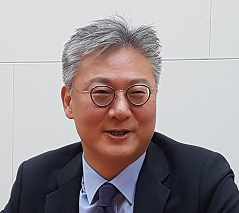
- The role of law firms has recently grown in the pharmaceutical bio industry. Some process was through law firms. Kim & Chang, Lee & Ko, Yulchon, HMP Law, and LK Partners are expanding their business areas in the healthcare field. The most prominent law firm is Lee & Ko. The overall evaluation is that, in terms of the health care team members, they compete for the first and second place in the industry with Kim & Chang, both quantitatively and qualitatively. Legal Counsel of Lee & Ko, Hyeong Gun LEE On the 24th, I met Hyeong Gun LEE, a representative lawyer (51), who leads the healthcare team at the office of the law firm in Jung-gu, Seoul. In the field of law, he is already considered one of the M & A experts. He was in charge of M&A, division, and sale of large corporations. Limited to the healthcare sector, Samsung Bioepis, joint venture of Samsung Biologics and Biogen's was established by him. When asked why the law firm is expanding so aggressively in the healthcare sector and how much more it will expand, he said that it's only now that the team is perfect and full-fledged activities are from now on. In fact, in 1994 (at that time, the US-Korea Law Firm) when he joined Lee & Ko, the law firm had a healthcare team. However, at that time, it dealt with traditional fields such as M & A, litigation, and patent issues. As the size of Lee & Ko grew, there were many healthcare tasks. In particular, the demand for customers was expected to surge in terms of insurance listing and application. Eventually, from 2017, the business in the field of reimbursement, drug price, and regulations began to expand. Lee & Ko has been recruiting talent very aggressively in recent years. Former executive director of AstraZeneca, Young-Sik Byun and former Novartis Director Sung-ju Kim, who were considered to be a master of the M&A field, newly settled in Lee & Ko. Kyung-soo Kang, former head of the HIRA, Wook Lee, former deputy head of the HIRA, and Young-sup Han, former head of the MFDS, joined Lee & Ko. Prior to that, Chae-min Lim and Gun-ik Son, former Deputy Minister of Health and Welfare were appointed as advisors. As a result, Lee & Ko’s health care team of about 50 people including lawyers and professional committees was established. Accordingly, other law firms are also competitively recruiting talent. In Kim & Chang, Kyung-Ho Lee, former Vice Minister of Welfare, Man-Bok Jeon, and Yong-Hyun Park, former Welfare Department Head, In-Beom Kim, and Jun-Ho Yang, former head of the Food and Drug Administration, and Byung-il Lee, former head of the HIRA, were recruited early. In Yulchon, Hee-jung Choi, former head of the Welfare Department, Yang-ji Ryu, former head of the Welfare Department, and Seong-jin Kim, former head of the Food and Drug Administration were recruited. “For a long time, it was planned to recruit experts with long practical experience. It may be the first in the industry. The effect of recruiting experts was more than expected. Customer satisfaction and awareness have increased considerably. We can get a good idea of what customers want. Now, it is the best in this field because the team has been built to some extent.” It is said that it is now complete as a team. As a result, Lee & Ko is able to cover virtually all healthcare sectors, from traditional tasks such as M&A, litigation, patent issues, and compliance to drug price and regulatory affairs. “Among the various tasks, the areas that I want to focus more on in the future are drug prices and regulations. It is also a matter of the individual companies we consult, but we want to put more focus on the institutional aspects. reimbursement and drug prices are directly related to national health. In fact, there are many parts of the drug price regulation that I can't understand even if I look at it as an attorney. It is said that regulation leads the industry, but the standards are too difficult and complicated. I want to be a little clearer and kinder.” It also suggested the goal of expanding its business area towards domestic pharmaceutical companies and bioventures. In fact, the main clients of Lee & Ko (especially in the pharmaceutical sector) were mainly foreign pharmaceutical companies. However, recently, a domestic company has a new drug lineup and is seeking global advancement. He also predicted that their demand would increase. “Recently, the size of domestic companies has grown. Previously, it was mainly focused on generics and sales, but recently it is developing new drugs and seeking global expansion. However, it is true that the experience of developing new drugs is insufficient. We expect it to help.In fact, inquiries from domestic companies have recently increased. I want to help with bioventure work. Many of these major contracts (M&A, investment, and funding) are thought to be unreasonable. I want to help you to solve this reasonably.” Unlike large-scale law firms, the long-term vision is different from what was expected to prioritize performance and ranking competition. In the field of healthcare, I want to be uniquely happy with the first place. We want our health care team to be happier than any other place, and we want our customers working with us to be happier. I think that unparalleled happiness is truly the number one value that cannot be counted by numbers. ”
- InterView
- CEO Cho Jeong Woo “Cenobamate U.S. release is all ready"
- by Lee, Tak-Sun Mar 13, 2020 06:30am
- CEO Cho Jeong Woo of SK Biopharmaceuticals A new anti-epileptic drug from SK Biopharmaceuticals, cenobamate (U.S. brand name Xcopri), has set a new milestone in the Korean history of pharmaceutical industry history as it independently won an approval by the U.S. Food and Drug Administration (FDA). To this date, a new drug developed in Korea has been licensed out to foreign pharmaceutical sales companies before receiving approval from the U.S. or EU health authorities. So the Korean drug developers had no experience in processing overseas approvals by themselves. Moreover, SK Biopharmaceuticals plans to independently market the drug in the U.S. market. During a recent interview with Daily Pharm, President and CEO of SK Biopharmaceuticals Cho Jeong Woo said, “In the second quarter, 120 specialists in sales would release the product in the U.S. market. We have already established a sales network that could cover all regions in the U.S. at the same time.” Cenobamate also completed the last administrative procedure for the launch as the U.S. Drug Enforcement Administration (DEA) has designated the drug as a Schedule V medicine. DEA reviews FDA-approved central nervous system (CNS) medicine based on medical indication, and risk of abuse and dependency to categorize them into five levels (from Schedule I to V). And cenobamate received Schedule V for lowest risk of abuse. Accordingly, the level of pharmaceutical management on the drug would not be as stringent. Solely owned by SK Holdings, SK Biopharmaceuticals has fully emerged as Korea’s top new drug developing company after FDA granted approvals on solriamfetol, a new drug for sleep disorder licensed out to Jazz Pharmaceutical, and new anti-epileptic drug cenobamate. Daily Pharm asked CEO Cho Jeong Woo of what has been SK Biopharmaceuticals’ driving force to win two FDA approvals in a year and to independently launch a drug in the U.S. market. Following is CEO Cho’s answer to Daily Pharm’s questions. Q. Cenobamate has received the FDA approval in last November, and was nominated for the 21st Korea New Drug Award. Please tell us about the development process of cenobamate. In 2001, the company explored candidate medicines with high potential for anti-epileptic drug and discovered cenobamate. Since then, the company took step-by-step process, including nonclinical study, Phase 1 to 3 clinical trials, preparation for new drug marketing approval application and post-review procedure. And last year, the U.S. FDA has approved the drug to treat partial-onset seizure for adults. The commitment to develop a new drug targeting the U.S. market was made from strategic call expecting that receiving the strict FDA approval and releasing it in the world’s largest pharmaceutical market would put us on an advantageous side. Now that we have the FDA approval, we plan to move forward to accommodate cenobamate to various countries’ approval regulation. Q. Please tell us in detail about the process of selecting candidate medicine, initiating clinical trial and applying for approval. Over 2,000 candidate medicines were explored from 2001, and cenobamate was selected as an investigational candidate. The drug’s clinical protocols for testing efficacy in anxiety and epilepsy were approved by FDA in 2005 and 2007, respectively. Studies were conducted to develop an innovative and new anti-epileptic drug. With over 1,900 patients, Phase 2, randomized, double-blinded, placebo-controlled trial (completed 2013 and 2015) and Phase 3, large-scale, multicenter, open-label trial (completed 2018) were conducted. On Nov. 21 of 2018, cenobamate submitted a New Drug Application (NDA) to FDA and acquired the agency’s approval on Nov. 21 of 2019 after a year-long review. In 2020, FDA also reviewed and cleared current good manufacturing practice (cGMP) on SK Biopharmaceuticals and SK Biotek that produces active pharmaceutical ingredient (API) of cenobamate. As a result, SK is now a full-fledged new drug developing company capable of researching, conducting clinical trial, manufacturing and sales. Q. The company is the first in Korea to independently handle candidate medicine exploration, clinical development, sales and regulatory approval process. What has driven the company to cruise on with the standalone development, despite the high-cost of global clinical trials and R&D? The biggest driving forces have been the ‘solid sense of purpose’ and ‘daring mind’ taking the road not taken. The R&D capacity was built on years of research, but also on the sense of purpose to develop a breakthrough anti-epileptic drug. And in the process, the company gained experience in developing global-scale new drug and confidence of new drug development by collaborating with global pharmaceutical companies on a different drug. To acquire global drug development capacity, SK also collaborated with multinational company on post-Phase1 development of Sunosi, which provided rich experience like the approval application procedure. From then on, we were confident enough to plan for a transnational clinical trial and took the ‘standalone development route,’ unprecedented at the time in Korea, by personally persuading Chairman Chey Tae-won. Q. Sources say the U.S. subsidiary SK Life Science is planning to release the drug in the second quarter. Could you elaborate on the commercialization plan in the U.S.? Cenobamate is aiming for the U.S market release in the second quarter. The company has finished planning for marketing strategies, hiring salespeople and setting direct sales network covering the whole U.S. market. Commercialization of the anti-epileptic drug would be executed through intricately designed marketing strategy as the existing options are mainly prescribed by neurologists. While there are approximately 13,000 working neurologists the U.S., some 120 neurology sales specialists, on par with the scale of sales force for other anti-epileptic drug, would promote the Korean-made drug everywhere in the U.S. Q. Is there any news about the drug in development for other parts of the world besides the U.S.? Is Korea one of them? To commercialize cenobamate in the European market, the company has signed USD 530 million worth license-out deal with Arvelle Therapeutics last year. We are planning to submit application for European market authorization approval by the end of June. Although we are solely taking care of commercialization in the world’s largest market in the U.S., we are marketing the drug in Europe based on strategic partnership with local companies to accommodate their diverse regulatory and marketing landscapes. As for Korean, Chinese and Japanese markets taking up over 90 percent of overall sales in Asian anti-epileptic market, the company is preparing clinical trial and other approval review procedure required for respective countries. Q. Aside from solriamfetol and cenobamate, is there any other highly potential candidate drug? SK Biopharmaceuticals have been focusing on CNS disease for last 27 years, and solidified distinctive pipeline in the industry. Another Phase 3 clinical trial is ongoing for cenobamate to expand indication to treat patients with generalized tonic-clonic seizure. Carisbamate, a Lennox-Gastaut syndrome (LGS) treatment, is currently in development but also received Orphan Drug Designation from FDA in 2017. A new candidate anti-epileptic medicine, SKL24741, is to start Phase I trial from this year as FDA cleared its IND in March last year.
- InterView
- On how Eisa’s intrapreneur ‘HeLpy’ is ‘happy’
- by Eo, Yun-Ho Feb 27, 2020 06:35am
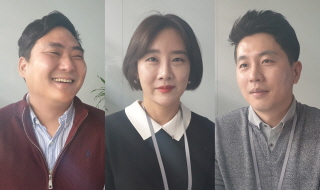
- Lately, companies emphasize a notion of internal entrepreneurship, also known as ‘intrapreneurship.’ For companies, innovation is not an option anymore. And this is the time when intrapreneurship becomes the source of internal innovation. So these days, ‘internal venture’ is popular among companies. Without massive investment, an internal venture can be incorporated with existing business, and also it could leave an impression of innovative and young brand image. Pharmaceutical industry recently had an impressive case of intrapreneurship. It is Eisai Korea’s ‘HeLpy’ team. Based on the management philosophy of ‘Human Health Care (HHC),’ all employees of Eisai around the world spend 1 percent of their working time every year to engage with patients looking for their issues and find an adequate solution. And Eisai has formed ‘Innovation’ team from 2016 to support intrapreneurs, who could actualize the solution proposed by Eisai Korea’s employees trying to create meaningful value for the community and the company, Senior Manager Sung Jong-seok, Deputy Director Kim Ah-reum and Senior Manager Ahn Woo-seok Started as a part of the corporate culture, HeLpy started with Senior Manager Ahn Woo-seok and Senior Manager Sung Jong-seok from the Sales developing a health management app after completing the second Innovation Academy. And recently the team added a new member, Deputy Director Kim Ah-reum, who has experience in app management. From then on, the HeLpy team became a small but fully fledged intraprenuer. Senior Manager Ahn Woo-seok said, “As I work at a pharmaceutical company, my father asked me often about his medication. Soon I realized drug information is searchable on portal websites but it was inconvenient to save them. I liked the idea that maybe I could improve it, so I applied for the Innovation Academy.” A Smartphone app, HeLpy, helps individuals to easily manage their medications by taking a photo of their dispensed drug packaging and prescription. Besides the basic medication management, the app also provides various functions for infants and toddler care, such as vaccine notification and baby growth percentile chart. And the users can also check their bio-age and health risk based on their medical check-up records accessible with one-off personal authentification. Launching an app with only a few developers was probably not the simplest task. Before the company decided to officially select the team’s project, HeLpy team members had to use their spare time to work on it. Senior Manager Sung Jong-seok smiled and reminisced, “Everyone trying to schedule spare time to work on the project was quite challenging as we each had our own business to tend. Regardless of whose fault it was, we had to walk on eggshells at the work. Although we had some hiccups, Ahn held us together tight to push on with the project.” Senior Manager Ahn explained, “Rather than ‘content with conviction,’ I’m perceived more as ‘stubborn.’ Continuing with the story, intrapreneurship has its perks. Although scheduling is difficult, intrapreneurship has irresistible advantage of requesting for company’s support and having comparatively less risk in failure than generic ventures struggling to find investors.” Deputy Director Kim Ah-reum joining the team late in the game actually expedited HeLpy’s launch. Certified as nutritionist and experienced in health management in previous company and National Cancer Center, Kim was the missing link for the team to finally meet the unmet needs. Deputy Director Kim said, “During my first year at the company, I was still concerned of adapting into the company well. But with two senior managers’ help, I was able to settle down soon. I focused on areas I could assist, like medical check-up data follow-up. I’m exhilarated that I can be a part of HeLpy’s launch.” HeLpy is just taking a baby step, now. The team is already in process of inking a partnership deal with a large insurance company, and also it is setting up marketing strategy with a marketing agency. The app’s download count has surpassed 125,000 recently, and 48,000 members have subscribed. HeLpy team commented, “We are still learning and figuring things out. We are shooting for 190,000 download count and 70,000 memberships in March by focusing on marketing. We want to become the success case of Eisai’s Innovation Project. We are happy doing what we like with the company’s support.”
- InterView
- I'm happy to introduce Spinraza to patients.
- by Eo, Yun-Ho Feb 21, 2020 06:36am
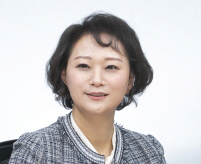
- Se-eun Hwang, Biogen Korea’s CEOBiogen, a bioventure company in the US and a smaller company in Korea. Last year, Biogen Korea, which has about 10 employees, registered and launched insurance benefits for its famous spinal muscular atrophy (SMA) treatment Spinraza (Nusinersen). Prior to listing, Biogen Korea's employees had only five employees. Spinraza, a high-priced new drug for rare diseases, did not go well due to its price. Hwang was the only representative of Biogen and introduced the only but necessary new drug, Spinraza. From the approval stage to the reimbursement adequacy evaluation by the HIRA and negotiations with the NHIS, the CEO of the corporation directly persuaded the government. .After approval from the MFDS in December 2017, the company went through two reimbursement-based subcommittees and was also presented twice to the pharmaceutical benefits advisory committee .After a long discussion, It was able to pass a deliberation by accepting the pre-approval system in the form of a refund/expenditure cap of risk sharing agreement (RSA) in last April .Dailypharm met with the CEO of Biogen, Se-eun Hwang who launched a new drug in Korea to hear about the company's future .-For the general public, Biogen is a unfamiliar company so far .Please introduce briefly Biogen is a global biotechnology company founded in 1978 by five scientists, including Nobel laureates Walter Gilbert and Philip Sharp .Although it is a young company with low recognition in Korea, it is widely known as a neuroscience specialist company with over 40 years of history in the United States .The mission of the company is 'At Biogen, our mission is clear, we are pioneers in neuroscience' .In particular, the aim is to provide solutions in areas where therapeutics have not yet been developed and where more effective therapeutics are still needed .Until now, we have been developing and supplying therapeutic drugs in a wide range of neuroscience fields such as rare diseases and multiple sclerosis, Lou Gehrig's disease, and Parkinson's disease, which are equivalent to the field of neuroscience .-What is Biogen's goal in Korea and its short-term and long-term goals ?The first purpose of the Korean subsidiary was to allow for the rapid introduction of SMA therapeutic Spinraza into Korea .A Korean subsidiary was established after FDA approval in the United States in 2016, and the goal was to focus on creating an environment in which spinal muscular atrophy patients could have treatment as soon as possible .The short term goal is to improve the environment so that patients can be diagnosed early and begin treatment .Although Spinraza was released in April last year, it is a rare disease treatment, so I think there are a lot of patients who are not aware of the disease .It is also important for medical staff to provide accurate information with more opportunities for Spinraza .The long-term goal is to build and promote a foundation for providing patients with new drugs that can be introduced into the country in the future .To provide Korean patients with as many clinical opportunities as possible and to expand their investment in domestic clinical research to create a win-win environment .-It has been 40 years since its establishment .It's not short, but the only drug introduced in Korea is Spinraza .Companies basically aim to bring together many talented people to achieve business goals and grow together .Biogen Korea is pursuing an efficient structure .The currently approved drug is Spinraza, which has an optimized staffing structure .In the future, the introduction of new drugs will expand the scope as well as human resources .-Even if there aren't many drugs yet, Isn't the size of the corporation quite small ?Biogen pursues a small but strong organization .Biogen Korea was established with the initial goal of supplying Spinraza to Korea .And Biogen is an organization where the best people are agile in many situations .This spirit of bioventure is what makes Biogen a success for 40 years .-What corporate culture do you want to build as a CEO, and how do you want to run it ?Biogen aims to be a 'Matrix Organization' as a way of collaborating organically with employees in different departments while maintaining existing departmental systems .The Korean subsidiary is also a horizontal organization, where employees work in a way that reports directly to their line manager, instead of going through a number of procedures for each area of expertise .Each employee is an expert in his field .Last week's employee workshops also highlighted the importance of collaborating with experts in each field .-Are there any preparations after Spinaza ?It is difficult to know exactly which drugs will be introduced first (including next year and the future) .Rare diseases are difficult to develop therapeutics and predict the clinical outcome .Biogen is currently in phase 1 to 3 clinical trials of more than 20 pipelines worldwide .Although it may not be decided immediately, Biogen Korea's role is to make it possible to provide domestic patients as soon as possible when new drugs are introduced .-Listing and launching Spinraza was not an easy process .Please give your impressions .There were various discussions before insurance coverage was applied .I think it's too early to say it's because I think it's on the reimbursed list but it's not over yet .However, compared to the first time I decided to join Biogen Korea and wondered whether I can introduce Spinraza to Korea, It is a pleasure to be able to apply the benefits quickly and to be able to receive treatment .-What was the hardest part of the listing process ?Personally, I think it was the hardest thing to solve one by one with everything uncertain .Spinraza, in particular, had to start reimbursement process right after I joined Biogen as the first employee, but it was the most difficult to predict because I had never had a big role in the reimbursement process before, so the prediction of the possibilities was the hardest .-I wonder what the process of coordination with the head office was like .I think it was the first branch of Korea and the process of coordinating with the head office was not easy .How much does Biogen headquarters consider the situation in Korea ?Until I joined Biogen, I was primarily responsible for commercial work, and I was not directly responsible for Market Access .However, in the light of industry stories and personal experiences, the support is clearly a big boost .Biogen understands the domestic situation at a high level .In particular, close negotiations between the government and the company are very important in drug price negotiations, and in the process, the head office supported a large portion of them, which led to a successful reimbursement listing .It is also a reason to feel proud as a member of the company and to thank the company .-You have marketing experience in 'Soliris' in Handok, and Spinraza in Biogen .The two types of pipelines that represent careers are rare diseases .Is there any reason to be particularly interested in the field of rare diseases ?I have been in the pharmaceutical industry for over 20 years, but until I worked in Handok, my major was chronic disease .At that time, I was proud of all my medications and worked with the conviction that patients taking medications were much more useful than their competitors .After joining Handok, I was responsible for treating rare diseases for the first time .Unlike in the chronic disease market, which was judged by market share, I was able to feel and think more closely about the changes in patients' lives than in the market for rare diseases.
- InterView
- 27 years in the HIRA, feeling worthwhile in public service
- by Lee, Hye-Kyung Feb 03, 2020 06:20am
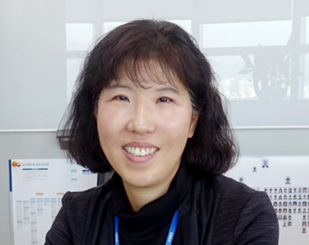
- There is a problem that the HIRA and the NHIS, which have completed the relocation to Wonju Innovation City, are worried. It is about recruiting professional personnel such as doctors and pharmacists. In particular, The number of pharmacist recruitment is 72 of the HIRA and 35 people in the NHIS, but both institutions cannot failed to fill the recruitment capacity. On the contrary, with the relocation of Wonju, pharmacists left one by one, and there are limits to filling up the vacancy even if the pharmacists are filled through the recruitment process from time to time. In this situation, let's hear about the advantages of public pharmacist from the director of Drug Management Information Center, Mi-young Yoo(54 years old, Duksung University 86)who returned from the Sejong Institute for the past year. Yoo joined the Medical Insurance Association (The HIRA Former) in 1993 and took charge of the Pharmaceutical Reimbursement Accreditation Standards, and in 2006, she continued his expertise as a pharmacist at the HIRA by applying for an open position as a director of the drug re-evaluation department. "It's been 27 years since I joined the HIRA. I worked as a pharmacist for 23 years in the pharmacy management departement, I was the head of the DUR management office and returned to the information center after dispatching to the Sejong Institute". In the first half of 2014, Yoo was the head of the Drug Registration Division, which was in charge of the core tasks of new drug reimbursement deliberation, including economic evaluation. She was a pharmacist at the time and followed the title of 'economic evaluation expert'. In January 2015, she went to Korea National Defense University (KNDU) for 1 year while she was promoted to general manager. In 2016, she was head of the dept. of therapeutic materials, and in 2017 after director of reimbursement department, she was returned to the head of DUR management, which is highly related to drugs. Pharmacist, Mi-young Yoo, is a young director who has been promoted to a director in her 40s after being recognized for her professionalism. Nowadays, she has been to the Graduate School of Defense and the Sejong Institute. It is like getting blood from a stone. "Life on the HIRA was a personally rewarding, opportunity to get a lot." The director Yoo has played an important role in the overall responsibility of drug distribution, reimbursement and patient safety management in the HIRA, from the Drug Management Office and the DUR Management Office to the current Information Center. She said, “The HIRA's role is to monitor pharmaceutical companies and wholesalers, but also to help the public receive better services, and as a pharmacist, I pride myself on the work of the public as well as pharmaceutical work. Because of this, I think I've been able to stay on the HIRA for a long time”. According to the recent complete relocation of Wonju, she said, "If you think that it is rewarding, fun and for the people, you will find the charm of a public pharmacist". In particular, she noted that the role of the pharmacist in the HIRA is more characteristic than other institutions. "The place where all the information of the medicine is gathered is the HIRA, and whatever role you play as a pharmacist, you will be in charge of all the important tasks related to the medicine. Nowadays, "work & life balance" is very important, and I feel that it is" work & life balance" that I can be rewarded and have fun". The director Yoo also said that while she was in her twenties and thirties, she was told by her colleagues why she works in public institutions with little pay and no treatment. However, she is in her 'activity' compared to her peers who are living in their usual patterns after their late 40s and 50s. "When I look at my colleagues around the world, they worked at drug companies, hospitals, etc., but most of the time, they work at retail pharmacies as they are getting older. I'm proud to say that I've done well when I look back on the work related to the health insurance and medicines that I've dedicated to youth“. The director Yoo said that the idea that our family and our people can receive proper health guarantees acted as a support. She emphasized that, unlike other public institutions, the HIRA, where there are many women, is also good for female pharmacists to work".
- InterView
- “Changing the public’s view on psoriasis patients”
- by An, Kyung-Jin Jan 22, 2020 06:27am
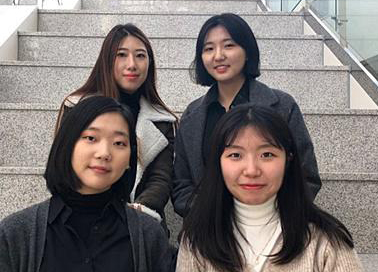
- (From upper left in clockwise) Manager Hwang Chae-rin, Reward Manager Kim Ye-ji, Public Relations Manager Jeon Se-bin, President Park Hye-won) “Too many people had no or wrong idea about psoriasis. We opened the crowd funding to raise awareness of psoriasis and to improve the public’s perception on the disease.” A university student-centered crowd funding union, ‘Wishtree’ opened a new funding project this month. The project aims to help patients with psoriasis. Although the non-infectious disease can get better with constant care, many psoriasis patients struggle with public’s inaccurate knowledge of the disease. Their small wish is for the people to see psoriasis as normally as they see atopic dermatitis. Daily Pharm interviewed Wishtree administration members—Park Hye-won (23, Sookmyung Women’s University), Kim Ye-ji (21, Sookmyung Women’s University), Jeon Se-bin (22, Dongguk University), and Hwang Chae-rin (22, Hongik University)—actively campaigning for a better social view on psoriasis. Met through crowd funding related class, the union has been operating for two years Wishtree is a university student group union formed in 2018 to create and operate crowd funding projects. Initially, the students taking crowd funding class came together to make a crowd funding project for a social cause. The first year of Wishtree funded for firefighters, patients with retinal degeneration and raising awareness of the East Sea. And the second year followed with funding for various social class including patients with complex regional pain syndrome (CRPS). The crowd funding project for psoriasis patient consists of 15 students including four administration members (President Park Hye-won, Reward Manager Kim Ye-ji, Public Relations Manager Jeon Se-bin, and Story Manager Hwang Chae-rin). The rest of the eleven members are participating under the following three teams; Reward Team in charge of selecting, making and pricing rewards; Story Team in charge of planning and setting up projects; and Public Relations Team in charge of promoting the funding project to reach the target amount. Members of Wishtree Regularly meeting every Saturday, the members learn about crowd funding in class and discuss about project topics first. And when the next topic is decided, the members specify activities in back story planning, reward selection, and PR activity planning. Further discussion flows as they each designate role in respective teams and share feedbacks on the team’s activities. Jeon Se-bin, a Public Relations Manager, explained “Wishtree’s crowd funding projects are not for profit, but for public interest and social cause. When recruiting for the group members, we value not only the students’ interest in crowd funding, but also their interest in social issues.” People misunderstanding the condition as an infectious disease, “Heart breaks as the patients feel isolated from the society " So what motivated them to select psoriasis as their funding topic out of all candidate diseases? The students answered, “Compared to other diseases we’ve talked about, psoriasis needed the most attention from the public. Even many of us did not know much about the condition, and some heard about the disease for the first time.” Psoriasis is a non-infectious chronic skin disease causing raised, red, scaly patches on skin and repeatedly worsens and recovers. With continuous care, a patient with the disease can improve the condition, but many miss their treatment timing because most of the people are clueless that it requires constant treatment. And majority of the patients are having difficulties in their social life due to people’s misunderstanding of the disease being infectious. Typically, a crowd funding project selects more popular topics to raise the funding success rate, but Wishtree saw the grave issue in the public’s inaccurate view about the disease. Apparently, the students interviewed psoriasis patients and truly felt the need to correct the common misunderstandings, when they heard a patient answering ‘We wish psoriasis would be taken as normally as atopic dermatitis.’ Manager Jeon said, “It broke our hearts when we studied about psoriasis from news articles and statistic data, and found how a lot of patients feel isolated from the society because of the people’s fear of the disease being infectious by judging if from visible condition.” She added, “We have decided to fund the patients as we discovered poor public awareness is hurting the psoriasis patients the most.” Personally designed mug as a reward for funding The crowd funding project has started calling for funders from Jan. 2 through a social venture, ‘Oh My Company.’ The funding participants would be rewarded with a personally designed mug, cup coaster, and sticker sets with hopeful messages. The fund raised via the project would be entirely donated to Korea Psoriasis Association, and used for survey research and publishing news articles through ‘Oh My Company’. President Park Hye-won of Wishtree showed her ambition for the project saying “We hope the funding raising project would help change the people’s inaccurate views about psoriasis patients,” and “in the long run, we also hope that Wishtree’s good influence would expand on in the future.”
- InterView
- “Why it took 20 years for new flu drug Xofluza to be out”
- by Eo, Yun-Ho Jan 16, 2020 03:07pm
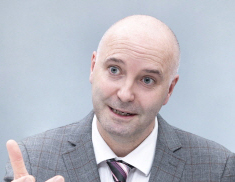
- Since the 2009 flu pandemic, Tamiflu became a prescription drug with household name like Viagra. Tamiflu (oseltamivir) is a good drug. It shifted the world’s paradigm on influenza management and became the symbol of neuraminidase inhibitor drug. However, the unmet medical needs still exist in the market. Antiviral agent can always develop resistance, but for influenza treatment, no other agent than neuraminidase inhibitor is recommended. In Korea, the influenza vaccination rate boasts a top world class level, but 2.26 million patients have been infected with influenza in 2018. After two decades since Tamiflu was commercialized, Roche has showcased Xofluza (baloxavir). The new drug has a novel mechanism of action that inhibits polymerase acidic endonuclease and treats influenza with only a single dose (Tamiflu requires a five-day treatment). Daily Pharm met with Roche’s Principal Global Medical Director, Aeron Hurt, and spoke with him about the meaning and possibility created by developing Xofluza. He used to serve as a senior research scientist at the World Health Organization (WHO) Collaborating Centre for Reference and Research on Influenza. -What was your role at WHO? And what motivated you to be interested in influenza out of all infectious disease to study? At WHO, I led a team of researchers to analyze and monitor antiviral agents and vaccine for patients with influenza. Analyzing antiviral agents and vaccines’ effect at a research center in Melbourne, Australia, I came to realize the necessity and urgency to mange influenza better and more effectively. And naturally, I got interested in and passionate about advocating the importance of antiviral agent and vaccine to effectively manage influenza. -When it comes down to ‘influenza management,’ it is divided into ‘prevention’ and ‘treatment’ blocking the viral transmission. What is your idealistic management plan incorporating the two factors? First, the National Immunization Program (NIP) has to generate the maximum effect with limited resource. Accordingly, the government could consider conducting or expanding NIP focusing on patient group with high risk of inducing complications or with possibility of optimal vaccination effect. As WHO recommends, patient groups of the highest priority for vaccination—the elderly, children, individuals at high risk of medical complications and pregnant women—should be provided with quadriavalent vaccine than trivalent vaccine for better coverage of influenza vaccination. As far as treatment goes, it is crucial to use an exceptional antiviral treatment as promptly and widely as possible when it is released. Same goes for Xofluza and other antiviral treatment to be released in the future. Instead of saving the new and effective antiviral treatment as a last resort for a pandemic, patients’ symptoms should be alleviated by treating the patient with effective antiviral from the beginning, while social and financial burden of influenza should be lowered. -It sounds like you have Xofluza in mind. Could you elaborate on the major clinical outcomes of the treatment for the readers to fathom its efficacy? Xofluza demonstrated its positive efficacy in CAPSTONE-1 study treating a healthy patient group aged 12 to 64 diagnosed with acute influenza symptoms and CAPSTONE-2 study treating patient group aged over 12 at high risk of serious flu complications. Top-line findings of CAPTSONE-1 study evaluating the flu treatment on healthy adult and adolescent, Xofluza reduced the median time to alleviation of symptoms by approximately 26.5 hours compared to the placebo group. And it also demonstrated comparatively faster cessation of infectious viral shedding than the placebo. Xofluza’s median time of viral shedding marking 24.0 hours (about a day) was meaningful, as the placebo group took 96.0 hours (about four days) and oseltamivir group took 72.0 hours (about three days). Meanwhile, the CAPSTONE-2 study evaluated the treatment’s effect on elderly patient and who are at a high risk for influenza-related complications. The study also found exceptional effect of Xofluza as its median time to alleviation of symptoms in high-risk patient group took 73.2 hours (about three days), cutting down around 29 hours from the placebo group (102.3 hours). Moreover, Xofluza reduced the time to cessation of viral shedding in 48.0 hours, which was about more than 50 percent improvement than the placebo (96.0 hours) and oseltamivir groups (96.0 hours). -In the CAPSTONE-1 study, pediatric patients aged 12 to 19 years did not receive Tamiflu. What was the reason? The study was conducted in the U.S. and Japan from December 2016 to March 2017. The reason why adolescent patients from 12 to 19 were not in the Tamiflu group was because Tamiflu was not recommended to adolescent patients in Japan when the study initiated. Currently, the limitation has been lifted. For your reference, CAPSTONE-1 study had to apply equivalent condition to all participants in the U.S. and Japan, so the U.S. participants from age 12 to 19 only received Xofluza and placebo. -The outcomes of CAPSTONE-1 does not seem to show significant difference between Xofluza and placebo arms’ time to alleviation of symptoms The time to alleviation of symptoms between two groups may not have shown exceptional difference as the evaluation of ‘symptom’ could be subjective. The severity of symptoms could differ from each individual. And a patient infected with influenza virus show cytokine response, which is induced regardless of decreased virus titer. Therefore, it would be quite difficult to reduce the time to alleviation of symptoms by 24 hours more than the available antiviral agents, despite the new antiviral agent considerably shortens time of viral shedding. The most important differences between Xofluza and existing antiviral treatment are reduced time of viral shedding and lessened risk of complications. -With Tamiflu, there was an issue with neuropsychiatric events. Was there any similar event reported from Xofluxa study? The company is closely monitoring patients who have taken Xofluza, and there has not been any report of adverse neuropsychiatric event so far. Influenza itself could affect patients in neuropsychiatric event. And also, the correlation between oseltamivir and neuropsychiatric event in treated patient has not been proven. So medical professionals should carefully consider treatment benefit and adverse reaction from antiviral treatment and prescribe Xofluza according to the patients’ individual conditions. The same applies to Tamiflu. Although there were reports of adverse reaction in Japan about a decade ago, but the Tamiflu prescription limitation has been lifted and the public’s perception has been changing as well. -The present indication for Xofluza is quite narrower than other available flu treatments. Are there any other ongoing clinical studies? A few studies have been completed, but the outcomes have not been officially announced, yet. They specifically were on post-exposure prophylaxis and pediatric patients. The prophylaxis study evaluated probability of a patient diagnosed with influenza transmitting the virus to their household members, who have been administered with Xofluza. The study result found the risk of influenza virus infection has gone down by 86 percent when administered with Xofluza. Another clinical study, MINISTONE evaluated virus titer and time to alleviation of symptoms in children aged one to less than 12. Also, there are three more clinical studies currently calling for participants. The first one is for infants younger than 12 months, whereas the second one named FLAGSTONE is evaluating the efficacy and safety of Xofluza in combination with the current standard of care, compared to the standard of care alone from hospitalised patients. The study would administer Xofluza not by single dose, but by total three times respectively on the first, fourth and seventh day of treatment. Lastly, the CENTERSTONE study is reviewing Xofluza’s effect on patient’s viral infectiousness. Unlike the previously mentioned post-exposure prophylaxis study, the treatment is administered not on the household members, but only on the patient. The study aims to not only confirm time to alleviation of symptoms, but also the infectiousness to household members. -Is there any other investigational drug in development at the moment? Xofluza blocks polymerase acidic endonuclease, an enzyme crucial for viral replication. Other candidate medicines inhibiting different enzymes are in R&D phase by other respective companies. If these investigational medicines have successful clinical trials, they would be commercialized as well. However, pharmaceutical companies, including Roche, have tried researching other mechanism of antivirus treatment like monoclonal antibody, but most of them have failed in clinical trial phase. Considering the challenges, release of Xofluza is particularly meaningful. The fact that Xofluza works in a novel mechanism of action, developed after twenty years, illustrates how the journey of developing an antiviral treatment is challenging and rough.

- InterView
- “Key to healthcare innovation is pharmaceutical industry"
- by Kim, Jung-Ju Jan 02, 2020 06:08am
- Korea’s Ministry of Health and Welfare (MOHW) has stated two core goals of the current administration are ‘creating an inclusive welfare state’ and ‘supporting innovative growth of emerging industry.’ The key is definitely the pharmaceutical industry. During a question and answer session with correspondents, Park Min-soo, a director of Health Insurance Policy Bureau under Office for Planning and Coordination at MOHW, said this year the ministry is committed to support all-around new drug development covering from basic science research to commercialization, and to strengthen industry competitiveness. Director Park, in charge of the ministry’s budget plan each year, allocated 12.9 trillion won on healthcare sector this year. The plan reflects the record-high National Health Insurance state funding of 1.86 trillion won, whereas 2.7 trillion won was allocated besides for healthcare. Director Park stressed the importance of pharmaceutical industry among the industries government is backing up. He elaborated, “Other than the goal of creating inclusive welfare state, the government is devoted to support innovative growth of emerging industry.” “The government is trying to find the hidden gem of the healthcare industry and create an environment to polish it. Among the emerging industries of IT, bio, pharmaceuticals, agriculture, and food the government is currently pushing on for innovation, the pharmaceutical industry is the most valuable key,” he continued. One of ongoing inter-ministerial programs supporting the key industry is the big data platform project. Director Park explained, “Big data utilization is expected to embody vast amount of data, but it needs the government to build a foundation to optimize utilization of the information, because it has a limitation of private information protection.” So apparently the director allocated budget to connect the dots between dispersed information. Government support for R&D is another highly expected project. He emphasized the investment value for R&D is high as Korea’s R&D investment rate against GDP is at worlds highest. “From basic science research to commercialization, we need to bridge the gaps to ultimately make a living out of the industry. To strengthen the industry competitiveness, the ministry would support new drug development in every step of the way and also train specialists to reinforce the industry strength,” Director Park said. He added, “Laying the groundwork for the R&D system would encourage more research activities and contribute on advancing technology further. The result may not be tangible immediately, but the government is committed to continue support it.” Moreover, Director Park explained about MOHW’s plan to open a tentatively named ‘Office for Health Policy’ that reinforces government’s preventive healthcare programs to reduce medical expense and solve the issue of increasing dependants in the aging society. Additionally, he emphasized the importance of preventive healthcare programs to get under way from this year. “The point of the policy in the end is to make people live their lives without dealing with serious health condition. Mobile Healthcare program providing high-risk chronic disease management would open 30 more centers this year, while the mental health sector would secure human resources and open Emergency Intervention Team with 39 percent increase in budget,” he said.
- InterView
- The key to drug development is not just safety and efficacy
- by Jung, Hye-Jin Dec 05, 2019 06:12am
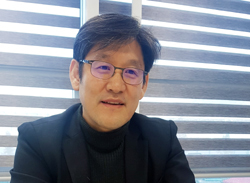
- 박영준 대표“In short, it is an area that is easy to miss even though it is important enough to be the core of new drug development. Most of the domestic companies that have applied for a permit with the US FDA or the European EMA are asked to submit additional data. As more and more pharmaceutical companies are attempting to penetrate overseas, Korean companies are also beginning to recognize the importance of quality data”. The reporter met with Park Young-jun, Ph.D. (55, Seoul National University) who is a professor of Ajou University, to hear about CosmaxIMD, IMDpharm joins a venture founded by CosmaxPharma. However, Professor Park emphasized the importance of Chemistry, Manufacturing and Controls (CMC) in the new drug development process. Professor Park has been developing medicine at pharmaceutical companies since graduating from pharmacy. After 17 years as head of product development at Yuhan Research Institute, he worked as research director at Samil Pharmaceuticals and CJ Healthcare. Korea's No. 30 new drug 'K-Cap' is a product that he developed as a CJ research director.Professor Park then set up a new drug research institute. IMDfarm stands for 'Innovative Medicine & Drug Delivery'. ◆Overlooking the importance of CMC to ensure 'quality of material' IMDpharm is a company researching new innovative new drugs, ▲At the same time as developing new innovative medicine for intractable diseases, ▲Improving absorption of poorly soluble drug solubilization, a pharmaceutical formulation technology ▲Sustained Release Drugs ▲Persistent Injectable Technology ▲Disease Targeted Nanoparticle Technology ▲ It is a company that develops convergent new drugs by holding technologies in various formulations such as eye drops and external preparation technologies and applying them to new drugs. However, at present, IMDpharm's cash cow is quality management, or CMC, which is an essential element in the process of leading clinical trials. Venture companies that are engaged in new drug development are the main customers of IMD Pharm CMC service. According to Professor Park, there is no company in Korea that offers a full range of CMC services from nonclinical to clinical. Most of the nation's top pharmaceutical and venture companies, which spend ₩billions on new drug development, use CMC companies in China or India. This is the result of the CMC not receiving attention in the domestic pharmaceutical industry. But the mood has changed recently. This is because CMC, the quality control of the substance, is considered as important as the efficacy and safety of the drug. "The first thing to notice when developing a new drug is the effectiveness, because any substance has a 'pharmacological effect' to get started. The next thing to notice is safety. It is marketable as a drug, 'Quality Control' covers the whole process, from the beginning to the end, demonstrating that all experiments and tests are made of the same substance and keeping this process as records and data". A typical case is 'Rolontis' by Hanmi Pharmaceuticals, . In March, the US FDA requested additional data from Hanmi Pharmaceuticals for marketing approval, which is CMC data. Overseas, the quality control of substances has already been considered important, and more quality control data are required for companies attempting to obtain a marketing license. Professor Park said, "The reason we have to conduct CMC thoroughly from the beginning of new drug development is that we can't do the same clinical trial again." "Even if you already have finished the clinical trial and submitted the results, if you should prove that you have tested all the animals and humans with the same substances and without impurities, can companies that haven't left their data back in time?" "CMC is important for finished products as well as new drugs, increased impurity risk " "Controversial impurity management is also an important part of CMC. With the development of analytical techniques and tightening impurity regulations, this poses a greater risk for pharmaceutical companies. CMC will become even more important throughout the production and distribution of finished products, and Valsartan, Ranitidine, and Nizatidine are all about this. " In this atmosphere, IMDpharm has recently expanded its business. Established in 2016 and started full-fledged business from 2017, the company expanded non-clinical CMC to clinical CMC from August. In September, the company established a joint venture with CosmaxPharma. Cosmax Pharma, which has a finished mass production facility, produces the formulation developed by IMDpharm. “CosmaxPharma and IMDpharm have combined to provide full-service services for CMC, and this year, non-clinical and clinical CRO, Dt & CRO (DTI & CRO), will join us to ensure the safety of materials at all stages of drug development, from non-clinical and clinical. The ultimate goal is to increase the success rate of new drug development for domestic companies”. Professor Park would like to help create a new drug development foundation so that all the processes and technologies necessary for drug development can be solved in Korea".

- InterView
- “Number one in Asia is what we are shooting for”
- by Kim, Jin-Gu Nov 26, 2019 07:15am
- “As far as dermatological treatment business goes, I think we have a shot at becoming the number one in Asian market”, Cho Yong-joon, CEO at Dongkoo Bio & Pharma (“Dongkoo”) commented. The CEO said ‘entering global market’ is the next long-term goal for the company while it gets closer to its 50th anniversary next year. CEO Cho was confident that Dongkoo’s two most prominent business sectors, dermatological treatment and contract manufacturing, would both be competitive in the global market. He explained the recent aggressive investment and company expansion have been executed with the global market in mind. Visiting his office on Nov. 18 for an interview, it has not even been 24 hours since came back from his business trip to the U.S. Apparently, Cho was already making moves for the global market. -What business took you to the U.S.? “It was to dip our toes in the water of global contract manufacturing organization (CMO) market. I shared some positive talks with a U.S. company especially on our strength, the soft capsule manufacturing. When we ink the deal, we would fully disclose the story. Next year would be Dongkoo’s 50th anniversary. Accordingly we would put forth our global market vision”. - Would it be safe to assume the latest Hwaseong plant expansion was a part of the vision? “We have invested ten billion won. The plant started running from this month. Our production capacity would go up half as much again as before or even double. The company’s CMO sector made 21 percent more last year with 33.1 billion won, compared to 15.3 billion won in 2014. We are expecting to make about 40 billion won this year. To date, the manufacturing factory could not catch up with orders pouring in. “When the manufacturing facility stabilizes from next year, the overall sales and profit would rise. Not only did we enhance production capacity, but also we are focusing on developing new technology on soft capsule. We gained expertise in dermatological treatment through our experience”. -After the valsartan incident, many are concerned of CMO industry “Korean CMO industry is faced with crisis and opportunity all at the same time. As the regulator decided to abolish the joint bioequivalence test system, and revived the gradual drug pricing system, I expect the industry would get the blow soon or later. That is what Dongkoo is preparing for. Specialization and differentiation is the key. The government is also encouraging companies to focus on specialized manufacturing. So far, Dongkoo has been doing well with soft capsule and ointment items. “But the opportunity lies in the global market. Korean CMO industry would be competent enough in the global market. I confirmed that at the CPhI Worldwide 2019. From now on production cost would heat up the already competitive generic market. Now it’s a matter of who sources drug the best. Korean companies could also easily source drug from other countries. We all need to target the global market competition”. -What are your visions on Dongkoo’s specialized sector, dermatological and urological treatments? “Not too different from others, we’re aiming for the global market expansion. First, we would tackle the Asian market. The company is carefully preparing for the leap. To be specific, we are considering opening an office in China. In Korea, our dermatological treatment prescription is ranked at the top with, and urological treatment prescription is at eighth place. Why not then go for the top rank in Asia? This is our goal. We have constantly introduced dermatological treatment. Some are ready to be released next year. For the long-run, we are in process of developing new drug and incrementally modified new drug”. -You’ve shown some notable moves not only on facilities but also on venture investment. “We have signed deals with Novacell Technology, D&D Pharmatech and BioNote. D&D Pharmatech is a bio venture led by a group of professors from the Johns Hopkins University School of Medicine. They are developing treatments for Parkinson’s disease, Alzheimer’s disease and rare fibrosis conditions. Dr. Lee Seulki from Johns Hopkins University School of Medicine is leading the R&D and clinical trials. “We have invested 3.1 billion won on D&D Pharmatech. The U.S. Food and Drug Administration (FDA) granted Orphan Drug Designation (ODD) for the venture company’s rare fibrosis treatment. Recently, the company successfully attracted 140 billion won worth of series B funding. We expect the company to go public next year. “Novacell Technology obtained its U.S. patent on atopic dermatitis peptide this year. And BioNote was the first Korean company to develop African Swine Flu diagnosis kit”. -Investment expansion comes with business profit drop. Seems like Dongkoo’s revenue has been falling for last two years. “It was given that operating profit would go down. We have spent much of capital on facility expansion investment, recruitment, clinical investment and marketing. But the actual sales revenue has constantly gone up. It verifies that the business is growing steadily. The last two years of decreased revenue was about preparing for the future ‘quantum jump’. The return on the investment is expected to show even from next year and on". -Some other business expansion on other sectors like cosmetics and medical device has been noticeable as well. “We’ve jumped into cosmetic market. ‘Cell Bloom’ is a brand based on 3D stem cell media skin care products. We are expecting the brand to generate synergy effect with our expertise in dermatological treatment. And we are taking this for a long run. A few home shopping TV channels have offered us a slot, but we turned them down. We could’ve gotten some instant sales hike, but we are planning to build the brand image centering hospitals and duty free shops first. “Besides Cell Bloom, we also have an ongoing development of bio medical device called ‘Smart X’. We are challenging the chronic disease sector with bio technology. There are unmet needs that cannot be resolved with drugs. An example would be diabetic foot (chronic foot condition derived from diabetic mellitus). Not many drugs treat diabetic foot. “Smart X is a convenient stem cell extraction kit. We have observed meaningful effect from extracting stem cell and injecting back into the ulcer on a foot. Clinical trial is in process to receive approval on the new medical technology. It would get approval in first half of next year at earliest, and generate expected sales from the latter half of the year. The approval application reviews are well on their ways in the U.S., China and Russia as well. And it’s already on sale in Spain”. -Celebrating the last 50 years of the business, what’s next for Dongkoo? “Bio sector is where Dongkoo would be investing on for the next 50 years. Cell Bloom and Smart X are on the same track as well. We would not superficially imitate bio technology, but strive for sustainable business with genuine bio technology, as I would reiterate at the company foundation ceremony. "For the goal, Dongkoo aims to transform from pharmaceutical and bio company into a total healthcare company. Dongkoo would generate great synergy effect with dermatological and urological treatments, as well as stem cell-applied healthcare technology, and reborn as a total healthcare company to cover from head to toe with diagnostic, preventive, treatment and maintenance products”.
