
- LOGIN
- MemberShip
- 2026-05-02 02:20:09
- Company
- Ono Pharma Korea appoints Kan Sato as new CEO
- by Eo, Yun-Ho Mar 31, 2025 05:58am
- Ono Pharma Korea has appointed a new leader. According to the related industry, Ono Pharma Korea recently appointed Sato Kano as its new CEO following the resignation of former CEO, Ho-jin Choi. Choi, who led the company for four and a half years since his appointment in October 2020, has stepped down. Choi joined Ono Pharmaceutical in 2014 as the head of sales and marketing and contributed to the launch and reimbursement of the PD-1 inhibitor immuno-oncology drug 'Opdivo' in Korea. He previously worked at J&J Korea, AstraZeneca Korea, and Allergan Korea, and completed an MBA at Thunderbird School of Global Management in the United States. Kan Sato, the newly appointed head of the Korean subsidiary, is a graduate of the Glovis University Graduate School of Management in Japan. He has previously worked as a manager in the International Business Department of Ono Pharmaceutical's Taiwan subsidiary and as a manager of the International Business Department at the company's headquarters, and has now taken on the role of leading the Korean subsidiary. With the appointment, Ono Pharmaceutical Korea has transitioned to a Japanese head system for the first time in about 6 years since the appointment of Min-yeol Yang as CEO in July 2019.
- Company
- Lotte Biologics’ CMO business makes smooth progress
- by Chon, Seung-Hyun Mar 28, 2025 06:38am
- Lotte Biologics has been making smooth progress, building a new plant since its launch. Three years after its launch, it has received a total of KRW 800 billion from its parent company and is speeding up the construction of its Songdo plant. The US plant, which was acquired 3 years ago, also generated more than KRW 200 billion in sales every year. On the 27th, according to the Financial Supervisory Service, Lotte Biologics decided on the 26th to issue KRW 210 billion in paid-in capital to its shareholders. The new shares will be issued to Lotte Biologics shareholders in the form of 3,231,000 shares. The new shares to be issued will account for 35.8% of the total number of shares issued before the capital increase, which is 9,017,500 shares. The issue price of new shares is KRW 65,000 per share. Lotte Biologics, which was launched in June 2022, is owned by Lotte Corporation and Lotte Holdings, which have 80% and 20% stakes, respectively. Lotte Corporation and Lotte Holdings are estimated to have invested KRW168 billion and KRW 42 billion, respectively, in this paid-in capital increase. Lotte Corporation said, “We will invest KRW 168 billion to maintain control over Lotte Biologics and enhance its business competitiveness.” Lotte Biologics Lotte Corporation entered the biopharmaceutical industry in May 2022 by acquiring the BMS plant in eastern New York for USD 160 million (about KRW 200 billion). The BMS plant is a production facility dedicated to biopharmaceuticals, with an annual production capacity of 35,000 liters. Lotte also signed a USD 220 million Contract Manufacturing Organization (CMO) contract with BMS for biopharmaceutical production. In June 2022, Lotte Holdings officially entered the biopharmaceutical business by launching Lotte Biologics. Lotte Biologics will use the funds it has raised this time to build a factory in the Songdo Bio Campus. Lotte Biologics signed a memorandum of understanding (MOU) with the Incheon Metropolitan City and the Incheon Free Economic Zone in June 2023 to build a mega plant in Songdo, Incheon. Lotte Biologics plans to build 3 mega plants with a total capacity of 360,000 liters by 2030. Lotte Biologics began construction of Plant 1 in the Bio Campus in Songdo, Incheon, in March last year, and aims to obtain GMP approval by the second half of 2026 and start operations in 2027. This is the fourth paid-in capital increase made since Lotte Biologics' launch. Lotte Biologics conducted a paid-in capital increase through allocation to shareholders of KRW 210.6 billion in December 2022. In March 2023, it raised KRW 212.5 billion through a paid-in capital increase. Lotte Biologics also decided to conduct a paid-in capital increase of KRW 150.1 billion in June last year. When this capital increase is completed, Lotte Biologics will have raised a total of KRW 783.2 billion from its parent company through 4 paid-in capital increases since its launch. Lotte Biologics was launched with a capital of KRW 13 billion and has received a total of KRW 796.2 billion in investment from its parent company. The company has been generating steady profits from the BMS plant it acquired at the time of its launch. Lotte Biologics inherited the existing CDMO contract when it acquired the BMS plant. The drugs that BMS was producing will continue to be produced for the next three years after Lotte acquired the plant. It is reported that the BMS's immuno-oncology drugs 'Opdivo' and 'Yervoy', the kidney transplant immunosuppressant ‘Nulojix,’ and the multiple myeloma treatment ‘Empliciti’ were produced at the Syracuse plant. Lotte Biologics has set a goal of achieving sales of KRW 1.5 trillion by 2030. Lotte Biologics recorded sales of KRW 234.4 billion and an operating loss of KRW 66.3 billion last year. Lotte Biologics generated its first sales of KRW 228.6 billion in 2023. The cumulative sales of Lotte Biologics since its launch have been tallied at KRW 463 billion. Lotte Biologics announced its CDMO business vision at the JP Morgan Healthcare Conference in January. CEO James Park presented the successful CDMO transformation of the Syracuse Bio Campus in New York and the blueprint for the Songdo Bio Campus. He expressed an ambition to accelerate Lotte Biologics’ leap into the global CDMO market, unveiling its innovative proprietary ADC platform SoluFlex Link, and announcing plans to provide an ADC one-stop service in collaboration with finished drug product partners in North America. SoluFlex Link is an ADC platform that uses a unique linker technology jointly developed by Lotte Biologics and Kanaph Therapeutics, a drug fusion technology bioventure. The company believes SoluFlex Link improves instability, which is a major drawback of antibody-drug conjugates (ADCs) and can be used with various antibodies and payloads. “New ADC drug developers can conduct various research and development with this technology,” said Lotte Biologics. “We believe that can offer an optimized solution for the development and production of next-generation ADCs because it can increase production yield and treatment efficiency.”
- Company
- Shaperon discusses licensing out Nugel technology to Europe
- by Lee, Seok-Jun Mar 28, 2025 06:38am
- On the 27th, Shaperon announced that it has recently entered into discussions with global pharmaceutical companies about licensing out its next-generation atopic dermatitis treatment, NuGel, at Bio Europe Spring 2025, which was held in Europe. The company emphasized that it is accelerating the process of securing the company’s fiscal soundness by generating revenue through the commercialization of its technology, especially since it has made considerable progress during discussions with some large pharmaceutical companies. Shaperon held partnering meetings with a total of 27 companies, including large global pharmaceutical companies and global leaders in the field of dermatology at Bio Europe. Discussions were made around Nugel, the company's core pipeline. The large European pharmaceutical companies that had first meetings at this event also showed interest in Nugel and Shaperon’s major pipelines, including its preclinical alopecia areata treatment and treatment for idiopathic pulmonary fibrosis. Through this conference, Shaperon received requests from a number of global pharmaceutical companies that it had previously been in contact with and received on-site inspection requests on Nugel’s technical data, moving past the confidentiality agreement stage. The company explained that its interest in Nugel has increased considerably since the results of Part 1 of the Phase IIb clinical trial, which was recently completed in the United States, were positively received by many pharmaceutical companies. Europe is a key market that accounts for about 28% of the global atopic dermatitis treatment market. Many of the companies leading the development of atopic dermatitis treatments are based in Europe. “As several companies have expressed interest and are actively discussing the matter, we expect to see tangible commercialization results in the near future,” said a Shapreon official. “We plan to further accelerate the commercialization of Nugel through follow-up discussions with the pharmaceutical companies that are currently in talks.” Nugel is a treatment for atopic dermatitis that targets the ‘GPCR19 receptor’. It is characterized by its superior efficacy and safety compared to existing treatments through the inflammatory complex modulating mechanism of action that encompasses innate and adaptive immunity. Shapreon has begun recruiting patients for Part 2 of the Phase IIb trial in the United States, which is currently being conducted on 177 atopic dermatitis patients and is expected to receive the final report on Phase IIb in the first half of next year.
- Company
- LigaChem Biosciences invests ₩36.6B in its UK partner
- by Cha, Jihyun Mar 27, 2025 05:54am
- LigaChem Biosciences announced on the 21st that it will invest USD 25 million (about KRW 36.6 billion) in its partner, UK-based Iksuda Therapeutics, to participate in management. The first USD 15 million was invested in the fourth quarter of last year. The additional USD 10 million will be invested in the middle of this year. After the investment is completed, LigaChem Biosciences will secure a 26.6% stake in Iksuda. In addition to this equity investment, LigaChem Biosciences has also secured the right to purchase the shares of Iksuda’s existing major investors and the actual rights to the Iksuda pipeline. LigaChem Biosciences has signed an agreement with existing major investors so that the company can purchase the investors’ shares within 3 years at the investment principal. This will enable LigaChem Biosciences to secure up to 73.9% of Iksuda’s shares. This means that LigaChem Biosciences will be able to substantially lead the management of Iksuda and the development of its pipeline. Based on this investment, LigaChem Biosciences plans to accelerate the clinical development of Iksuda's ADC pipeline to bring it to the global market sooner. In particular, the company plans to speed up the technology transfer of HER2-ADC and expand and conduct additional multinational clinical trials targeting patients resistant to existing ADC competitors in the market to increase the value of the pipeline. Iksuda has introduced technologies for multiple substances from LigaChem Biosciences. It has a number of pipelines, including LCB14 (HER2-ADC), LCB73 (CD19-ADC), and IKS04 (CanAg-ADC) and IKS012 (FRα-ADC) acquired through platform technology transfers. Iksuda is working to license out a number of programs in their clinical stages, including LCB14 and LCB73, which were developed by LigaChem Biosciences, to global pharmaceutical companies. “Through this investment, we plan to focus on early clinical development and commercialization of the pipelines of both companies by utilizing the abundant clinical development capabilities of Iksuda with its specialty in the ADC field,” said Yong-Zu Kim, CEO of LigaChem Biosciences. “In addition to this investment, we plan to further strengthen open innovation to secure future growth engines to achieve VISION 2030 sooner.”
- Company
- ADC mkt leader Daiichi-Sankyo's R&D drive
- by Whang, byung-woo Mar 27, 2025 05:54am
- Daiichi-Sankyo, a company leading the antibody-drug conjugate (ADC) market, is expanding its R&D capacity through the 'Expand & Extend'-based strategy. Daiichi-Sankyo plans to focus on expanding and strengthening access through the DXd-ADC platform, which is a basis for the company's chief pipeline. Daiichi-Sankyo's chief ADC drug is Enhertu (ingredient: trastuzumab deruxtecan). Currently, Enhertu is approved in most countries for the treatment of HER2-positive breast cancer, gastric cancer, and non-small cell lung cancer (NSCLC). Recently, Enhertu received an expanded indication from the U.S. Food and Drug Administration (FDA) for the treatment of patients with 'HER2-low metastatic breast cancer who have been treated with one or more endocrine therapy sessions' and expanded its market impact. The DXd-ADC platform has been the basis of this achievement. Daiichi-Sankyo, launched after a merger between Daiichi and Sankyo, strengthened ADC technology based on a synergy between Sankyo's monoclonal antibody (mAb) technology and Daiichi's anticancer agent payload and linker technology. Previously, conventional ADCs have been limited in therapeutic effects due to ▲Lack of payload diversity ▲Heterogeneity in drug conjugation sites ▲Linker instability ▲Restrictions on the number of drugs that can be conjugated. The DXd-ADC platform gained attention because it offered improved anticancer effects and overcame existing ADC limitations. The DXd-ADC platform has been used to expand the pipeline in addition to Enhertu based on seven technological strengths, including ▲High-potency payloads ▲High drug-to-antibody conjugation ratios ▲Uniform binding between the drug and antibody. Enhertu, jointly-developed by Daiichi-Sankyo and AstraZeneca, secured the most indications and ranked the top among new ADC drugs. Enhertu recorded the highest sales in the U.S. market last year, with U.S. sales reaching 282.4 billion yen, a 36.0% increase year-over-year, and the U.S. market is expected to account for 49.0% of Enhertu's total sales in 2024. In South Korea, Daiichi-Sankyo Korea recorded sales of KRW 274 billion in 2023, the highest among Japanese pharmaceutical companies operating in South Korea. Given Enhertu's growth, its overall sales are projected to exceed KRW 300 billion in 2024. Global Sales of Major ADCs in 2023 and 2024 (unit: KRW 100 million) Daiichi-Sankyo is preparing for a new drug that is Enhertu's follow-up…focusing on expanding the pipeline Daiichi-Sankyo has been employing a '5 DXd-ADC & Next Wave' strategy, focusing its R&D capacity on five ADCs in the oncology sector and the 'Next Wave' pipeline, including products for rare diseases and vaccines. Daiichi-Sankyo's chief pipeline includes ▲TROP2-directed Dato-DXd (datopotamab deruxtecan) ▲HER3-directed HER3-DXd (patritumab deruxtecan) ▲B7-H3-directed I-DXd (ifinatamab deruxtecan) ▲CDH6-directed R-DXd (raludotatug deruxtecan). A Trop-2-directed antibody drug, Datroway, is Enhertu's follow-up drug, and it was approved by the Food and Drug Administration (FDA) in January as a breast cancer medication. Datroway is soon to be launched. Datroway can be used as a treatment for hormone receptor (HR)-positive and human epidermal growth factor 2 (HER)-negative breast cancer. Furthermore, patritumab deruxtecan is a drug candidate that is expected to receive approval this year. Clinical trials of patritumab and ifinatamab are being conducted involving patients with lung cancer and ovarian cancer, respectively. In addition, Daiichi-Sankyo is focusing on securing next-generation growth drivers by developing innovative therapies in the specialty drug and vaccine sectors, leveraging its proprietary modality technology. Jeong-tae Kim, CEO of Daiichi-Sankyo KoreaDaiichi-Sankyo has unveiled its 'Expand & Extend' strategy to provide the DXd-ADC pipeline to patients quickly. The 'Expand' strategy aims to establish a DXd-ADC treatment approach for breast and lung cancers and subsequently expand its indications to earlier treatment stages and a broader range of cancer types. Meanwhile, the 'Extend' strategy encompasses the development of next-generation ADCs and new modalities that maximize platform effects through combination therapies and formulation changes. Thus ultimately providing additional treatment options beyond DXd-ADC therapy. Jeong-tae Kim, CEO of Daiichi-Sankyo Korea, stated, "As of 2024, over 40 of our global clinical studies have been conducted in South Korea, and two Korean medical institutions have been selected among 15 Phase 1 clinical sites across eight countries, contributing from the earliest stages of clinical research." "We plan to launch four ADCs and targeted cancer agents and have substantially prepared and put efforts into leaping as a leader in the oncology sector. For instance, providing treatment options to more patients," Kim added, "In addition to distributing pharmaceuticals, we will provide pragmatic hope by leading innovations in collaboration with Korean medical communities and acting as a bridge with the headquarters."
- Company
- Alopecia areata drug Litfulo may be prescribed hospitals
- by Eo, Yun-Ho Mar 27, 2025 05:54am
- The new drug for alopecia areata, Litfulo, has landed in general hospitals in Korea. According to industry sources, Pfizer Korea's new Janus kinase (JAK) inhibitor Litfulo (ritlecitinib) has passed the drug committees (DCs) of medical institutions such as Severance Hospital, Jeonbuk National University Hospital, and Chungnam National University Hospital. The company seems to be gradually expanding its prescription area upon the drug’s official launch earlier this month. As the first drug approved for the treatment of alopecia areata in Korea for adolescent patients, Litfulo was approved by the Ministry of Food and Drug Safety in September last year. Alopecia areata is an autoimmune disease that causes patchy or complete hair loss on the scalp, face, or body. It has underlying immune-inflammatory pathogenesis and occurs when the immune system attacks the body's hair follicles, causing hair loss. An increasing number of patients have been treated for alopecia areata over the past decade, from 154,380 in 2013 to 178,009 in 2023. In general, most patients with mild cases of alopecia areata recover naturally or respond well to treatment, but commonly recur, with about 40-80% of patients experiencing recurrence within one year. “The launch of a new treatment option has brought hope to patients who have been suffering from alopecia areata for a long time and have had an unmet need. For us as healthcare professionals, the fact that a new, safe option has emerged holds significance,” said Chong-Hyun Won, a professor of dermatology at Asan Medical Center in Seoul. Meanwhile, Litfulo was approved based on the global Phase IIb/III ALLEGRO trial. The proportion of patients with a score of 20 or less on the Severity of Alopecia Tool (SALT), the primary endpoint, at Week 24, was 23% for the treatment group, which was statistically significant compared to the 2% for the placebo group.
- Company
- Ja Q Bo ₩9B, K-CAB ₩8.2B, Fexuclue ₩4.7B
- by Chon, Seung-Hyun Mar 27, 2025 05:54am
- Homegrown P-CAB class new drugs for gastroesophageal reflux disease (GERD) have begun to generate export sales. Onconic Therapeutics’ Ja Q Bo generated significantly more overseas sales than domestic sales due to the effect of its licensing out deals. HK Inno.N's K-CAB and Daewoong Pharmaceutical's Fexuclue have begun to generate export sales in earnest with their overseas launch. As P-CAB class new drugs demonstrated their marketability in the domestic market through commercial success, overseas sales are expected to grow with the increase in the number of export countries. According to the Financial Supervisory Service on the 25th, Onconic Therapeutics' Ja Q Bo generated KRW 14.8 billion in sales last year. Onconic Therapeutics, which was established in May 2020, is a new drug developer subsidiary of Jeil Pharmaceutical. Onconic Therapeutics was launched after receiving technology transfer of new drug candidates for gastroesophageal diseases and a new drug candidate for anticancer drugs from Jeil Pharmaceutical. As of the end of last year, Jeil Pharmaceutical holds a 46.28% stake in Onconic Therapeutics. Onconic Therapeutics was listed on the KOSDAQ market in December last year. Onconic Therapeutics completed clinical trials for Ja Q Bo, a P-CAB (potassium-competitive acid blocker) class new drug, and received approval for the drug as the 37th homegrown new drug in April last year. Antiulcer drugs in the P-CAB class inhibit gastric acid secretion by competitively binding to proton pumps and potassium ions located at the final stage of acid secretion in gastric parietal cells. Annual export sales of homegrown P-CAB class new drugs Last year, exports accounted for 60.8% of Ja Q Bo's sales, amounting to KRW 9 billion. Ja Q Bo began domestic sales in October last year after being listed for reimbursement in the National Health Insurance, recording KRW 5.8 billion in domestic sales. Ja Q Bo's export performance last year was due to the inflow of milestone payments from the results of the licensing-out agreement. Onconic Therapeutics has signed licensing out deals for Ja Q Bo in 21 countries. Onconic Therapeutics signed a licensing out deal with the Mexican pharmaceutical company Laboratorios Sanfer in September last year. The contract is worth up to USD 127.5 million. Onconic Therapeutics will receive an initial non-refundable upfront payment of USD 15 million and up to USD 112.5 million in milestone payments for development, licensing, and commercialization milestones. Onconic Therapeutics transferred Ja Q Bo to an Indian company in May last year. The Indian company has secured exclusive rights to the development, licensing, production, and post-launch commercialization of Ja Q Bo. The terms of the contract with the other party have not been disclosed. Ja Q Bo generated KRW 21.1 billion in exports in 2023. Onconic Therapeutics signed a licensing-out agreement for Ja Q Bo with Livzon Pharmaceutical Group, a Chinese pharmaceutical company, in March 2023. The contract size is up to USD 127.5 million. Onconic Therapeutics will receive a USD 15 million non-refundable upfront payment and up to USD 112.5 million in milestone payments for development, licensing, and commercialization. Onconic Therapeutics generated KRW 19.7 billion in sales in the first quarter of 2023. Sales of K-CAB, a new P-CAB class drug that first entered the domestic market, and Fexuclue have also been increasing gradually overseas. HK Inno.N’s K-CAB recorded KRW 8.2 billion in exports last year. This is the overseas sales of the finished drug, excluding technology fees and milestone payments. Although the overseas sales share in K-CAB's total sales of KRW 168.9 billion is negligible, the export value is continuously increasing. K-CAB recorded its first export performance of KRW 900 million in 2022 and KRW 5.5 billion in overseas sales in 2023. K-CAB was approved as the 30th homegrown new drug in 2018. HK Inno.N signed a technology export agreement with the Chinese pharmaceutical company Luoxin in 2015 and has been pushing K-CAB's overseas expansion in earnest. The contract with Luoxin is conditional on receiving a total of USD 18.5 million in technology fees upon achievement of each stage specified in the contract, including the down payment, clinical development, licensing, and commercialization. HK Inno.N In February 2019, the company signed an agreement with the Mexican pharmaceutical company Carnot to export the finished K-CAB drug to 17 Latin American countries. The contract is worth USD 84 million over 10 years, including the product supply price. HK Inno.N has since signed export contracts for K-CAB with Indonesia, Thailand, the Philippines, Mongolia, Singapore, Vietnam, Malaysia, the United States, and Canada. In January of last year, it signed a contract with Australian pharmaceutical company Southern XP to export K-CAB to Australia and New Zealand. K-CAB has been launched in 15 countries. The countries where K-CAB has been launched include China, the Philippines, Mongolia, Mexico, Indonesia, Singapore, Peru, Chile, the Dominican Republic, Nicaragua, Honduras, Guatemala, El Salvador, and Colombia. K-CAB's export performance has been boosted by its start of sales in Mongolia, China, the Philippines, and other countries starting in 2022. K-CAB set new export records in the third and fourth quarters of last year, with exports of KRW 2.5 billion and KRW 3.8 billion, respectively. K-CAB's cumulative export performance from 2022 is estimated to total at KRW 13.9 billion. This is the sales volume of K-CAB supplied by HK Inno.N. Therefore, the company estimates that the sales generated from local prescriptions on-site would be much higher. K-CAB is considered to be making a smooth start in the overseas market based on its marketability recognized in Korea. K-CAB's domestic sales last year reached KRW 160.7 billion. Daewoong Pharmaceutical's Fexuclue recorded KRW 4.7 billion in exports last year. In 2023, the company recorded its first export value of KRW 400 million, which increased more than tenfold last year. Fexuclue is the second domestically developed P-CAB class drug introduced, following K-CAB. Fexuclue is a homegrown new drug that Daewoong Pharmaceutical has successfully developed with its proprietary technology for 13 years since 2008. Daewoong Pharmaceutical Fexuclue first went on sale overseas in the Philippines in August 2023 and has begun generating export sales. Fexuclue has also been launched in Mexico, Ecuador, and Chile. Fexuclue has entered the market in 30 countries, including South Korea, or is about to enter the market. The countries that have applied for product licenses are 11 countries, including China, Brazil, and Saudi Arabia. Daewoong Pharmaceutical has signed export contracts for Fexuclue in 14 countries, including India and the United Arab Emirates. Fexuclue also made a smooth start in the domestic market. Fexuclue obtained approval from the Ministry of Food and Drug Safety in December 2021 and began full-scale sales after being listed for reimbursement with the National Health Insurance in July 2022. Fexuclue posted KRW 97.2 billion in domestic sales last year. Combined with its export performance, the company posted a total sales of KRW 102 billion, exceeding KRW 100 billion in sales for the first time in 3 years since its launch.
- Company
- Abbott, the undisputed CGM leader seeks to expand mkt
- by Whang, byung-woo Mar 26, 2025 06:01am
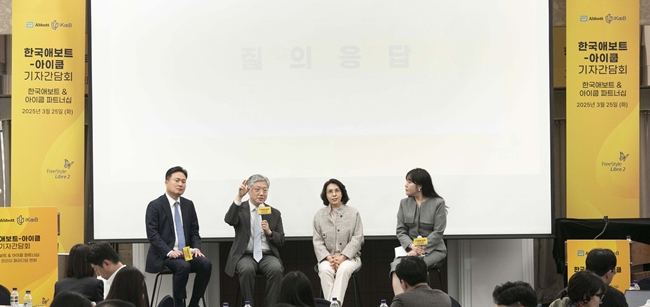
- Abbott, a leading player in the continuous glucose monitoring (CGM) market, is seeking to expand its influence through collaboration with a medical data platform. The goal is to provide an improved blood glucose management solution that goes beyond simply collecting data and provides a comprehensive analysis of the patient's condition. On the 25th of this month, Abbott Korea held a press conference and announced its data integration plan with Lab Connect, a medical data platform from the digital healthcare company iKooB. FreeStyle Libre 2 is a product from Abbott's Libre portfolio that allows users to check their blood glucose levels in real-time every minute, anytime, anywhere through Bluetooth. Currently, more than 6 million people in about 60 countries are using it, and is reimbursed in more than 40 countries. Nan Hee Kim, Department of Endocrinology and Metabolism, Korea University Ansan Hospital As it allows for continuous monitoring of blood sugar levels, patients can automatically receive a smartphone alarm when their blood glucose level is low or high, and can check changes in blood sugar levels according to your food intake and exercise, allowing patients to respond quickly and appropriately to changes in blood sugar levels. On this day, Professor Nan Hee Kim of the Department of Endocrinology and Metabolism at Korea University Ansan Hospital, said, “Diabetes is a chronic condition that must be managed throughout one's life, which is why steady management is important. The introduction of CGMs such as Freestyle Libre 2 has improved the quality of life of the patients and increased their understanding of blood sugar changes, enabling more efficient blood sugar management.” The company’s collaboration with iKooB is also aimed at reinforcing Freestyle Libre2’s blood glucose monitoring system. “Our partnership with iKooB is a demonstration of Abbott's commitment to providing a seamless blood glucose management solution,” said Seung-ho Kang, General manager of Diabetes Care at Abbott Korea. ”By integrating Freestyle Libre 2 and Lab Connect’s data, we will be able to further understand the patient's condition and provide treatment direction in the digital ecosystem.” Kang added, “When data-based, customized treatment becomes possible, this is expected to improve treatment efficiency and have a positive impact on preventing complications and improve the patients' quality of life.” iKooB and Lab Connect are both platforms that provide practical assistance to both medical staff and patients through a data-based approach. Jae Hyung Cho, CEO of iKooB (Department of Endocrinology, Seoul St. Mary’s Hospital) Through the partnership, healthcare professionals may comprehensively review patients' Freestyle Libre 2 data on the Lab Connect platform and establish an optimal, personalized treatment plan by analyzing the integrated health data. In addition, diabetic patients can receive a blood glucose-related data report and education from healthcare professionals, including a 14-day blood glucose trend analysis. “CGM is actively prescribed as a standard of care for patients with chronic diabetes, and its use can be maximized when integrated with other health data,” said Jae Hyung Cho, CEO of iKooB (Department of Endocrinology, Seoul St. Mary’s Hospital). ”The partnership between iKooB and Abbott will further enhance the efficiency of diabetes management.” Meanwhile, the reimbursement for Freestyle Libre 2 has been extended to cover continuous glucose monitoring systems for pregnant women with diabetes who require insulin treatment since November last year. This revision of the reimbursement standards and relevant notices has enabled for pregnant women with diabetes undergoing insulin treatment to use continuous glucose monitoring (CGM) devices, which provide real-time blood glucose levels, with reimbursement. Previously, CGM devices were only reimbursed for patients with type 1 diabetes.
- Company
- Cosentyx’s reimb for hidradenitis suppurativa unclear
- by Eo, Yun-Ho Mar 26, 2025 06:01am
- Discussions regarding the expansion of insurance reimbursement coverage for Cosentyx, a treatment option for hidradenitis suppurativa that emerged a decade after Humira, remain stalled. Novartis Korea applied then voluntarily withdrew the application for its interleukin (IL)-17A inhibitor Cosentyx (secukinumab) to extend its reimbursement to hidradenitis suppurativa (HS) in 2023 due to lack of progress. In November of the same year, the company submitted a reimbursement application again, after Cosentyx was recommended as a first-line biologic treatment option for patients with moderate-to-severe to hidradenitis suppurativa and those who have not responded sufficiently to existing systemic treatments in the European Hidradenitis Suppurativa Foundation (EHSF) guidelines that was presented at the 2024 European Association of Dermatology and Venereology (EADV 2024) Annual Congress. However, with the end of March 2025 near, discussions on expanding the reimbursement coverage of Cosentyx to hidradenitis suppurativa remain stalled. Currently, AbbVie Korea’s Humira (adalimumab) is virtually the only treatment option available for hidradenitis suppurativa in korea. Humira, a TNF-alpha inhibitor, may be prescribed with reimbursement ▲if there are lesions in two or more areas even after more than one year after diagnosis, or ▲if there is insufficient treatment effect or side effects even after 3 months of antibiotic treatment. As Cosentyx is a different IL inhibitor with a different mechanism of action that is also recommended as a first-line treatment, it can be a useful option for the management of hidradenitis suppurativa. Therefore, the industry’s eyes are on whether Cosentyx’s indication for the treatment of hidradenitis suppurativa, which has been approved for 3 years now, will be reimbursed this year. Meanwhile, Cosentyx has demonstrated its clinical utility through the Phase III SUNNY (SUNSHINE, SUNRISE) trial, which was conducted on 1,084 patients with moderate-to-severe hidradenitis suppurativa. Results showed that the HiSCR achievement rate in the Cosentyx’s group was 45% in the SUNSHINE study and 42% in the SUNRISE study when the drug was administered every 2 weeks at 16 weeks of treatment, which was a significant improvement compared to the placebo group’s 34% and 31%, respectively. In the SUNRISE study, even when the drug was administered every 4 weeks, the HiSCR achievement rate for Cosentyx was 46%, which was significantly higher than the 31% in the placebo group, and the HiSCR achievement rate of Cosentyx improved steadily until the 52nd week of treatment. Cosentyx also showed significant effects in improving patients' pain. According to the results of the SUNNY study, the NRS30 achievement rate at Week 16 of treatment was 39% in the group that received Cosentyx every 2 weeks and 36% in the group that received it every 4 weeks. On the other hand, only 27% of the placebo group achieved NRS30. Also, by week 52 of treatment, 79.6% of the Cosentyx arm who were administered Cosentyx every 2 weeks and 72.7% of those who were administered every 4 weeks did not experience disease exacerbation.
- Company
- Leclaza-Rybrevant combo rises as first-line treatment option
- by Moon, sung-ho Mar 26, 2025 06:01am
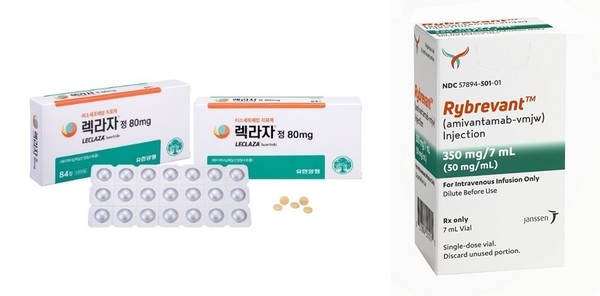
- The Leclaza-Rybrevant combination therapy, which has emerged as a standard treatment for lung cancer, is expected to be used in earnest in the domestic clinical market. This is because the larger hospitals have launched patient programs for the combination, based on results showing that the combination thearpy’s progression-free survival (PFS) period exceeds that that of Tagrisso (osimertinib, AstraZeneca) with longer overall survival (OS). # According to the medical community on the 24th, Janssen has launched a Patient Assistance Program (PAP) for the Leclaza (lasertinib, Yuhan Cor) and Rybrevant (amivantamab) combination therapy, which was approved by MFDS for the first-line treatment of adult patients with locally advanced or metastatic non-small cell lung cancer with epidermal growth factor receptor (EGFR) exon 19 deletion or exon 21 (L858R) substitution mutation. To improve patient access to this newly approved thearpy, the pharmaceutical company will provide partial support for drug costs with the approval of the Korea Blood Disease and Cancer Foundation. The Leclaza-Rybrevant combination therapy is attracting more attention because of the preannouncement of the Phase III MARIPOSA study, in which the combination therapy extended OS by more than a year compared to the existing standard treatment, Tagrisso monotherapy. According to the Phase III MARIPOSA trial abstract released by the European Lung Cancer Society prior to its annual congress (ELCC 2025) scheduled to be held from the 26th, the Leclaza-Rybrevant combination therapy was found to be superior to Tagrisso monotherapy in terms of OS by more than 12 months. Since Tagrisso recorded an OS of 38.6 months in the FLAURA study, which because the basis of its approval, this can be interpreted as that the OS of Leclaza + Rybrevant combo exceeds 50 months. The OS of the Leclaza + Rybrevant group had not reached the median value at 37.8 months of follow-up, but the OS of the Tagrisso monotherapy arm was 36.7 months, showing that the risk of death in the Leclaza + Rybrevant combination group was 25% lower. (HR=0.75, 95% CI 0.61-0.92, P
