
- LOGIN
- MemberShip
- 2026-05-01 23:44:13
- Company
- Olympus Korea appoints Tamai Takeshi as new head
- by Whang, byung-woo Apr 02, 2025 05:56am
- Tamai Takeshi, new Representative Director of Olympus Korea Olympus Korea, a global medical company, announced on April 1 that it has appointed Tamai Takeshi as its new Representative Director as of April 1. The new Representative Director Takeshi Tamai joined Olympus Korea in 2004 as a marketing manager in the medical business division and served as the General Manager of the medical division in 2012. In 2024, he served as the Vice President of Olympus Korea and has driven the growth of Olympus Korea based on his deep understanding of the Korean market. In addition to the Korean market, Takeshi led the medical endoscopy business in Asia and demonstrated strategic leadership in the global MedTech market. In 2011, he served as the Senior Manager of corporate innovation at the Olympus Group, where he oversaw corporate improvement efforts. In 2017, he was appointed the Vice President of the Asia-Pacific GI & Respiratory Business in the Asia-Pacific Region. At the time, Takeshi was regarded to have greatly contributed to the growth of Olympus as a global medical company, expanding regional sales and market share. As the new Representative Director of Olympus Korea, Takeshi Tamai will focus on leading the company's continued growth in the Korean market and realizing its vision as a global medical company that prioritizes patient safety and quality improvement. In addition, based on a deep understanding of the Korean healthcare environment, the company plans to focus on expanding solutions that can provide better value to healthcare professionals and patients. Tamai Takeshi said, “Olympus Korea is taking the lead in fostering a patient-centered medical environment utilizing its medical technology. We will continue our endeavors to achieve sustainable growth as a company trusted by domestic medical staff and patients, and contribute to the development of the Korean medical industry.” Meanwhile, Olympus Korea is a global medical company that provides diagnostic and therapeutic solutions such as medical endoscopes, laparoscopes, and surgical equipment and is contributing to the development of the domestic medical industry through products that have proven their efficacy and safety in clinical settings.
- Company
- Sanofi launches new dosage form of Praluent with reimb
- by Whang, byung-woo Apr 02, 2025 05:56am
- Pic of Praluent Sanofi announced on the 1st that a 300 mg dose form of its PCSK9 inhibitor Praluent (alirocumab) will be launched in April with health insurance reimbursement in Korea. According to this announcement, Praluent 300 mg may now be reimbursed when used in patients with primary hypercholesterolemia and mixed dyslipidemia who have been administered a combination of statins and ezetimibe but have not responded sufficiently (LDL-C levels have not decreased by 50% or more from the baseline or LDL-C ≥ 100 mg/dL) and in cases of statin intolerance. In addition, if a patient with atherosclerotic cardiovascular disease has received a combination of the maximum tolerated dose of a statin and ezetimibe but has not responded sufficiently (LDL-C level has not decreased by more than 50% from the baseline or LDL-C ≥ 70 mg/dL), the patient may be eligible for health insurance reimbursement for his/her additional use of Praluent. While maintaining the LDL-C lowering effect similar to the existing dose, Praluent 300 mg allows administration at 4-week (Q4W) intervals, increasing treatment convenience and patient compliance. With the reimbursed launch, Praluent has become the only PCKS9 inhibitor in Korea to offer 3 doses: 75 mg, 150 mg, and 300 mg. As a result, Praluent has been approved for the treatment of cardiovascular risk reduction in patients with atherosclerotic cardiovascular disease (ASCVD) at all doses. This will enable personalized treatment for patients, allowing healthcare professionals to select the appropriate dose according to the patient's treatment goals and individual characteristics. The LDL-C-lowering effect of Praluent 300 mg was confirmed through the PK/PD study. It showed an LDL-C-lowering effect from the third day after a single dose, recording a maximum average reduction of 73.7% on the 22nd day. This LDL-C lowering effect was maintained for 43 days, showing a longer-lasting effect than the existing Praluent 75 mg (lasting 8 days) and 150 mg (lasting 15 days). The background is that “LDL-C is a strong risk factor for cardiovascular disease, the number one cause of death worldwide, therefore thorough management is essential, especially in high-risk patients,” said Kyung-Eun Bae, General Manager of Sanofi Korea. “With the launch of the 300 mg dose of Praluent, we expect to provide a more effective and convenient additional treatment option for Korean patients who have been unable to sufficiently control their LDL-C levels with existing treatments or who have found it difficult to manage their medication schedules.” “Sanofi will continue to efforts save lives and improve the quality of life of patients in Korea through our integrated cardiovascular disease treatment portfolio, which includes Praluent,” added Bae.
- Company
- 'Rezurock' for cGVHD can be prescribed at 'Big 5' hospitals
- by Eo, Yun-Ho Apr 02, 2025 05:56am
- Product photo of Rezurock 'Rezurock,' a treatment for chronic graft-versus-host disease (cGVHD), is now being prescribed in general hospitals. According to industry sources, Sanofi Korea's ROCK2 inhibitor Rezurock (belumosudi) has passed the drug committees (DC) of the 'Big 5' tertiary general hospitals, including Samsung Medical Center, Seoul National University Hospitals, Seoul St. Mary's Hospital, Asan Medical Center in Seoul, Sinchon Severance Hospital, as well as medical institutes, including Korea University Anam Hospital, Seoul National University Bundang Hospital, Ulsan University Hospital, and Chonnam National University Hwasun Hospital. Rezurock is the process of reimbursement listing. Getting listed will lead to prescriptions on a full-scale. Sanfoi has recently applied for reimbursement of the drug. Rezurock was approved by the U.S. Food and Drug Administration (FDA) via an accelerated approval process. It was also approved in South Korea in August last year and launched in November with a non-reimbursement status. It works by selectively inhibiting ROCK2, a signaling pathway modulating chronic graft-versus-host disease (cGVHD)'s inflammatory response and fibrotic process. cGVHD is a complication that occurs in half of patients who received autologous stem cell transplantation. Patients with cGVHD may be few due to the disease's nature, but the disease occurs in half of the patients who receive the transfer. It is a severe and life-threatening disease that requires treatment. 70% of patients who do not experience adequate treatment effects with the steroids used in first-line treatment do not respond to second-line treatments. Therefore, almost half of patients require third-line treatment, indicating limitations in conventional therapies. Consequently, it is to be watched whether Rezurock, with its reimbursement, will be established as a new treatment option. Meanwhile, Rezurock's clinical trial involved patients who failed to respond to two or more lines of systemic therapy. Patients treated with Rezurock recorded an overall response rate (ORR) of 75%, demonstrating superior effects compared to conventional treatment. Notably, in areas where improvement is difficult with conventional therapy, such as joints, liver, and lung, it also showed ORR of 71%, 39%, and 26%, respectively. Professor Heeje Kim in the Department of Hematology at Seoul St. Mary's Hospital (Hematology Hospital's Director) said, "42% of patients with cGVHD have symptoms across the whole body, leading to significant worsening of quality of life. Since the host response that occurs in lung and liver can critically affect patients with blood cancer, treatments that would effectively manage such response have been in need."
- Company
- Vaxneuvance's 'immunogenicity' brings competitive edge
- by Whang, byung-woo Apr 02, 2025 05:56am
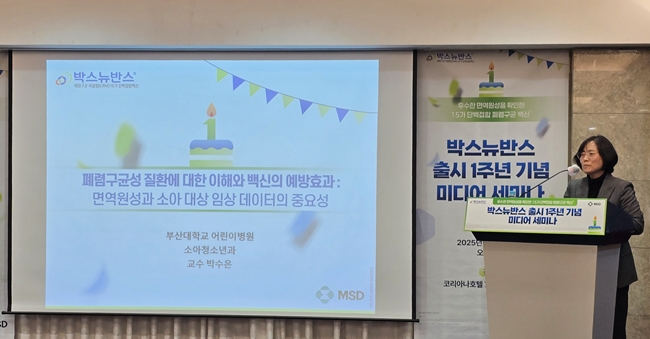
- Soo-Eun Park, Professor of pediatrics at Pusan National University Yangsan With changes in the market for pneumococcal vaccines ahead, MSD Korea has begun to defend its market share by highlighting the “immunogenicity” of Vaxneuvance. Last year, the product was launched and added to the National Immunization Program (NIP), accelerating its market penetration. Celebrating its first year in the NIP, the company has been emphasizing Vaxneuvance’s clinical benefits to gain a competitive edge. On the 1st, MSD Korea held a Vaxneuvance media seminar to highlight the changes and implications of Vaxneuvance’s first year as part of the NIP. Vaxneuvance, which was approved at the end of 2023, has the characteristics of a 15-valent vaccine, adding serotypes 22F and 33F to the existing 13-valent vaccine. The vaccine was added to the NIP a month after its approval, and NIP vaccination with the vaccine became available for children aged 2 months to under 5 years old upon its launch in April last year. At the time of its launch, it quickly expanded its market presence by highlighting the addition of a new serotype. The number of cross-vaccinations has also increased along with the initial vaccination with Vaxneuvance. Vaxneuvance has clinical data on cross-immunization with existing PCV13 vaccines, enabling cross-vaccination. Cross-immunization with the PCV13 vaccine and Vaxneuvance showed comparable immunogenicity and safety for 13 common serotypes compared to being vaccinated with a single 13-valent vaccine. At the media seminar, the company highlighted Vaxneuvance’s competitiveness as its immunogenicity. In other words, the company is emphasizing the need to choose a highly immunogenic product to prevent invasive pneumococcal disease (IPD), which has a high fatality rate in children. The standard for immunogenicity defined by the WHO is “the ability of a vaccine to induce a measurable immune response,” and the standard for specific serotypes of immunogenicity is “IgG concentration of 0.35 ㎍/mL or higher.” Vaxneuvance has confirmed superior immunogenicity in serotypes 3, 22F, and 33F compared to an existing vaccine in a global Phase III pediatric pivotal clinical trial. In addition, it showed superior immunogenicity compared to existing vaccines in serotype 3, which remains the main cause of invasive pneumococcal disease (IPD) in children, and clinical trials were also conducted on infants and toddlers in Korea to confirm its immunogenicity and stability. Soo-Eun Park, professor of pediatrics at Pusan National University Yangsan (President, the Korean Society of Pediatric Infectious Diseases), said, “IPD in children under the age of 5 has decreased significantly compared to before the introduction of PCV, but it occurs most frequently in infants under the age of 1, both in Korea and abroad. If the preventive effect of serotype 3 and others increases through the vaccination of infants with PCV15, we can also expect indirect prevention of IPD in the elderly.” The key is what strategy Vaxneuvance will adopt after the release of PCV20 Prevnar 20, which is expected to be released this year. According to industry sources, the Korea Disease Control and Prevention Agency recently reviewed the introduction of PCV20 in the NIP for children as a result of the first vaccination expert committee meeting. As a result of the deliberation by the Korea Expert Committee on Immunization Practices, it was decided that PCV20 would be introduced as a national immunization program (NIP) in the same way as PCV13 and Vaxneuvance (PCV15), which were previously covered by the NIP, in terms of the target population and standard vaccination timing. At this point, it seems that cross-immunization will be the key to the early market competition. Children under 6 months of age who have received one or more doses of the 13-valent vaccine can complete the vaccination schedule with Vaxneuvance. According to deliberation results of the Korea Expert Committee on Immunization Practices, Prevnar 20 can be administered as the 4th booster dose after completing the 3 initial doses with Prevnar 13. So infants aged 6 months or less that received their initial vaccine as Prevnar 13 will have the option to complete their vaccination with Prevnar 13 and complete their vaccination schedule with Vaxneuvance after or with an additional dose of Prevnar 20 after the basic vaccination with Prevnar 13. However, based on the approved indications, no indication allows administration with Prevnar 20 after Vaxneuvance. This means that it is not possible to cross-immunize with Vaxneuvance or Prevenar 20 when their initial vaccine is Vaxneuvance or Prevenar 20. In response, Professor Park said, “It is difficult to say which of the current 15-valent and 20-valent vaccines is the better choice on the premise that NIP will be applied to all, and the United States has not recommended any vaccine as a priority. Although the 20-valent vaccine prevents more serotypes, there are theoretical concerns about its immunogenicity over some serotypes, which require consideration. In the beginning, I think it will be divided according to market choice.”

- Company
- What are the remaining issues for Leclaza?
- by Moon, sung-ho Apr 01, 2025 05:53am
- The Leclaza-Rybrevant combination therapy has emerged as the new standard of care for lung cancer treatment and is now being actively implemented in South Korea's clinical settings. As results indicate improvements in progression-free survival (PFS) as well as overall survival (OS) compared to Tagrisso (osimertinib, AstraZeneca), Janssen has initiated patient programs at major hospitals. Then, can this globally emerging standard option be rapidly integrated into clinical settings? Analysis suggests the key factors for successful adoption are effective side effect management and the resolution of cost barriers. According to industry sources on March 31, the MARIPOSA Phase 3 study results presented at the European Lung Cancer Congress (ELCC 2025) in Paris have established combination therapy as a global standard. The study demonstrated that, compared to Tagrisso monotherapy, the combination therapy extended OS by more than one year, offering outstanding clinical benefits. Attention is shifting to how quickly this combination therapy can be adopted in clinical settings. In addition, the interim analysis of the 'Cocoon' clinical trial, also presented at ELCC 2025, deserves particular attention, as it may provide solutions to typical side effects associated with combination therapies, such as skin rash and periungual inflammation. The Cocoon study was designed for 200 patients with treatment-naïve metastatic non–small cell lung cancer (NSCLC) with EGFR mutations. In the interim analysis, 138 patients were included, with participants divided into a standard-of-care (SOC) group and a prophylactic management group, both receiving the combination therapy. The study's prophylactic group designated to receive 'Cocoon therapy' received a comprehensive prevention strategy including ▲Oral administration of doxycycline or minocycline at 100 mg for weeks 1 to 12 ▲Application of a clindamycin lotion to the scalp from weeks 13 to 52 ▲Chlorhexidine cleansing of the nails ▲Use of ceramide-based moisturizers on the body and face. The SOC (standard-of-care) group was managed reactively with ltreatments, such as topical steroids or antibiotics, as needed based on local clinical practices. The primary endpoint was the incidence of Grade ≥ 2 skin adverse events within 12 weeks after treatment initiation. At the interim analysis, over 70% of all patients had completed the 12‑week assessment. In the prophylactic 'Cocoon therapy' group, the incidence of Grade ≥ 2 skin adverse events was 38.6%, more than half that observed in the SOC group (76.5%). As a result, only 21% of patients in the prophylactic group required a dosage reduction of the combination therapy due to side effects, compared to SOC group (31%). Similarly, treatment discontinuation due to adverse events occurred in only 11% of patients in the prophylactic group versus 19% in the SOC group. Notably, for skin-related adverse events, only 7% of patients in the prophylactic group needed to reduce the dosage of Leclaza or Rybrevant compared to 19% in the SOC group, with discontinuation rates of 1% versus 4%, respectively. Patients who discontinued treatment due to adverse reactions were 11% versus 19%, which was nearly half. Overall, the study results demonstrate that the Cocoon therapy offers an effective solution for managing the skin-related side effects that have long been a significant concern with the combination therapy. Analysis suggests that it could potentially improve treatment continuity. Professor Byoung Chul Cho, Director of the Lung Cancer Center at Yonsei Cancer Hospital, said, "With the overall survival results for the combination therapy presented at ELCC 2025, there is a common view among experts that this therapy could be selected as the preferred therapy in the NCCN guidelines given its significant clinical benefit. Given these impressive clinical outcomes, the drug must manage the side effects effectively." "The Cocoon study has provided a viable approach for managing skin rashes," Professor Cho added, "In clinical practice when a combination therapy improves survival by one year over the current standard of care, we cannot dismiss it simply because it requires more intensive side effect management. With the drug's proven efficacy, further discussion is needed on adopting this more effective combination therapy." As for clinical practices in South Korea, the biggest hurdle for Leclaza-Rybrevant combination therapy is related to its cost. Leclaza monotherapy has been reimbursed with the National Health Insurance coverage since last year. However, Lecalza in combination with other drugs is still non-reimbursed. Professor Sun Min Lim (Division of Medical Oncology, Department of Internal Medicine, Yonsei Cancer Hospital), said, "Although the therapy is legally available since it has received domestic approval, the high cost makes it difficult to consider," adding, "Based on clinical data, treatment isn't limited to just one year. Patients may need to be treated for up to 50 months, a significant burden from the patient's perspective." Meanwhile, Janssen has initiated patient programs at major hospitals capable of utilizing the combination therapy, starting mid-March. Janssen has confirmed that the company will cover 72% of the drug price of Leclaza–Rybrevant combination therapy for the first 12 vials and 20% for each vial from the 13th onward. For Leclaza, the drug price is refunded to patients according to a risk-sharing agreement negotiated by Yuhan with the regulatory authorities last year. As a result, only Rybrevant's cost is supported through patient assistance programs. Professor Cho said, "Although there are price hurdles, compared to other options, the Leclaza-Rybrevant combination therapy preserves a chemotherapy option for future resistance," adding, "In comparison to treatments that are advanced from first-line therapy, it offers the advantage of providing viable second- and third-line treatment options for patients." Doctors voice that policy reforms are needed to address the increasing prevalence of combination therapies. In fact, over the past five years, 54 combination therapy for anticancer drugs have been approved, of which 26 involve combinations between two new drugs, similar to the Leclaza-Rybrevant combination therapy. The healthcare authorities have explained that reimbursement discussion is underway, considering the approvals of various anticancer combination therapies, the overall sequencing of treatment lines, and the number of administrations. Kim Gook-hee, Head of the Pharmaceutical Benefits Department at HIRA, said, "Anticancer drugs are clearly defined from the approval documentation regarding regimen and treatment sequence, and reimbursement criteria are set accordingly," adding, "However, with the recent surge in combination therapies, there are concerns about whether this approach can be maintained and whether all such combinations should be covered under reimbursement." Kim added, "For anticancer drugs, discussions are already underway in the Cancer Drug Review Committee considering the regimen, treatment line, and overall survival period," adding, " Although side effects have decreased, we must also comprehensively consider the toxicity issues that can arise when anticancer drugs are combined."

- Company
- Korea is a strategic key R&D site for Boehringer Ingelheim
- by Whang, byung-woo Apr 01, 2025 05:52am
- Boehringer Ingelheim, which has proposed integrated management of cardiovascular-kidney-metabolic syndrome (CRM) with Jardiance at the forefront, has been drawing on innovation through research and development (R&D) investment. Boehringer Ingelheim has already invested more than EUR 5 billion (KRW 7.9666 trillion) in R&D in 2022 globally and has been steadily increasing its R&D ratio, with a 14.2% increase to EUR 5.8 billion (KRW 9.2412 trillion) in 2023. In particular, the company has been continuing to forge active partnerships with the establishment of a new Business Development & Licensing (BD&L) department in Korea. Ana-Maria Boie, General Manager and Head of Human Pharma at Boehringer Ingelheim Korea Daily Pharm met with Ana-Maria Boie, General Manager and Head of Human Pharma at Boehringer Ingelheim Korea, who is celebrating her first anniversary in office, to hear about her thoughts on the past year and the company's plans for the future. Since entering the pharmaceutical industry after obtaining a medical license in Romania, Boie is a seasoned professional who has accumulated experience in various countries, including Europe, Latin America, the Middle East, Africa, and Asia, for 25 years. After working in marketing at AstraZeneca and Pfizer, Boie joined Boehringer Ingelheim in 2009 and took on roles in various areas including marketing, sales, and ESG. Since her appointment, Boehringer Ingelheim Korea has focused on three areas: ▲R&D, ▲organizational culture, and ▲pipeline expansion. “We are focusing on R&D to develop breakthrough treatments in therapeutic areas with unmet needs,” said Boie, ”We have 33 ongoing clinical studies in Korea, and with the establishment of the BD&L department, we have been actively promoting collaboration and open innovation with domestic pharmaceutical companies and biotech companies.” The company has been evaluated to have shown its determination to expand R&D by adding South Korea to the two existing innovation hubs it had in Japan and China. Boie explained that Korea is an important country in terms of strategic priorities at Boehringer Ingelheim and that the company is willing to develop the Innovation Landscape together based on its interest in Korea's innovative capability. In the future, the company plans to actively explore new opportunities through active support based on the newly established BD&L department in Korea. “In the last few years, Korea has emerged as a 'New Kid on the Block' in the biotech sector, becoming a country that is attracting attention on the global stage. In terms of R&D, Korea has established itself as one of the top 5 countries in the world, and so we at Boehringer Ingelheim have set a strategic goal to further expand our R&D in Korea,” said Boie. “The ultimate goal of the BD&L department is to discover and explore innovative new substances with Korean researchers and strengthen collaboration with Korean companies,” said Boie. “Its main role is to support and promote the discovery of new candidate substances in collaboration with Korean companies, conduct R&D, and support their global entry.” “Korea has limited access to new drugs compared to other countries, limitations in pharmaceutical industry’s innovation exist” From Boie’s perspective, South Korea is a country that leads the development of the pharmaceutical industry in Asia, owning the 4th largest pharmaceutical industry in the Asia-Pacific region and a top-tier medical system. She also positively evaluated Korea’s national health insurance system, which is a single-payer system that covers the entire population. However, Boie also mentioned that the single-payer system limits innovation in the pharmaceutical industry as it is affected by the limited national budget. Boie said, “Despite the fact that Korea has one of the best healthcare systems in the world, Korea is relatively slow in terms of introducing and gaining access to innovative drugs. The reason for this is that the innovativeness of innovative drugs is not given enough value.” She also cited the existence of various drug price reduction regulations post-approval and reimbursement as one of the factors limiting access to innovative drugs. “In terms of the drug life cycle, which goes from domestic approval to reimbursement approval and patent expiry, there is very limited time available to provide the drug to patients in Korea (especially when the drug supply is delayed),” said Boie. ”According to 2022 data, Korea is at least one to one and a half years behind other countries in launching new drugs.” In particular, only 33% of the 460 new innovative drugs developed and launched between 2012 and 2021 have been successfully launched in Korea. This is even lower than that of Germany (61%) and the UK (59%). She emphasized, “To address this issue, I am working with the KRPIA board of directors, the chairman of the Healthcare Committee of the European Chamber of Commerce in Korea, and other stakeholders, and discussing with the Korean government agencies, including the MFDS, HIRA, and the NHIS.” Boehringer Ingelheim selects Korea as a strategic key country... accelerates new drug introduction As the company is focusing on innovation through R&D, it is also focusing on expanding its influence in the domestic market through new drugs. According to Boie, the company plans to launch at least 20 new drugs or indications in several countries, including South Korea, within the next seven years. Among them, South Korea is one of the top 10 strategic countries for Boehringer Ingelheim, and the company has shown a strong willingness to actively introduce innovative treatment options to the South Korean market. Currently, the Human Pharma division of Boehringer Ingelheim focuses on the following areas: Cardio-Renal-Metabolic (CRM), Pulmonary Fibrosis, and Oncology. "We are looking to introduce two major new drugs that are currently undergoing clinical trials in Korea as soon as possible,” said Boie. The first is survodutide, a GLP-1/glucagon dual agonist, which has yielded positive research in treating fatty liver and metabolic-syndrome-associated fatty liver (MASH). We are receiving a review from the MFDS for the domestic approval of metalyse (tenecteplase), a next-generation thrombolytic agent for the treatment of acute ischemic stroke (AIS). In addition, Ofev (nintedanib), a drug for treating pulmonary fibrosis, which is expected to be approved for reimbursement as final discussions are underway, is also one product the company has high expectations for this year. In addition, nerandomilast, a follow-up drug to Ofev that has been designated as a Breakthrough Therapy by the US Food and Drug Administration (FDA), and the HER2 inhibitor zongertinib for the treatment of non-small cell lung cancer (NSCLC) are expected to be launched in Korea in the long term. “Boehringer Ingelheim does not settle; we have been continuing to develop new drugs and innovative treatment solutions to gradually replace the existing portfolio,” said Boie. ”The fact that we are reinvesting more than 20% of our sales in R&D means that we are focusing on developing and introducing innovative new drugs, rather than on existing products whose patents have expired.” Finally, Boie added, “All of our efforts at Boehringer Ingelheim are focused on developing innovative new drugs and improving patients‘ access to treatment. I to be remembered as a ’reliable and trustworthy person.' when I complete my work here.”
- Company
- Tepmetko granted reimb for METex14+ NSCLC
- by Whang, byung-woo Apr 01, 2025 05:52am
- Pic of Tepmetko On the 31st, Merck Korea announced that its Tepmetko (ingredient name: tepotinib), a treatment for MET-ex14 deletion-mutated non-small cell lung cancer, will be reimbursed as of the 1st of next month. Accordingly, Tepmetko is now covered by reimbursement for patients with locally advanced or metastatic non-small cell lung cancer with MET exon 14 deletion, regardless of the treatment line (first or later line). As a result, patients with MET exon 14 deletions may now use Tepmetko as a first-line treatment and receive reimbursement. MET mutations, which occur in 1.8-3.1% of NSCLC patients in Korea, are very rare. They cause resistance to other anticancer treatments and have a high rate of metastasis to bones and the brain, which leads to poor patient prognosis. In addition, most patients are elderly and have a low response rate to immune checkpoint inhibitors, and most patients relapse within 5 months. Tepmetko’s reimbursement is based on the Phase II VISION study in patients with MET-mutated NSCLC. In the 32.6-month follow-up of 313 patients diagnosed by liquid biopsy or tissue biopsy, Tepmetko showed an objective response rate (ORR) of 58.6%, median progression-free survival (PFS) of 15.9 months, median overall survival (OS) of 29.7 months, and median duration of response (DoR) of 46.4 months in patients diagnosed by tissue biopsy and with no previous treatment experience. These results were consistent regardless of treatment line, biopsy method, etc., and showed consistent efficacy in Asian patients, including Koreans. In a subgroup analysis of 106 Asian patients, the ORR of patients who were initially treated with Tepmetko was 64%, with a median PFS of 16.5 months, a median OS of 32.7 months, and a median DoR of 20.7. “Patients with MET mutations have a poor prognosis, with many being elderly patients dying within a year, and there are limitations to existing reimbursement options such as chemotherapy or immunotherapy, so domestic and international guidelines recommend first using TKIs that target the right mutations,” explained Jin Seok Ahn, Professor of Hematology-Oncology at Samsung Medical Center. “Tepmetko is a useful treatment that can prevent disease progression compared to the current standard of care in the first line,” said Professor Ahn. ”With the reimbursement approval greatly improving access to treatment, we should actively utilize next-generation sequencing that has a short average test time to provide effective treatment options for patients with MET mutations and provide personalized treatment for patients with MET mutations.”

- Company
- AbbVie Korea seeks to grow to ₩KRW 300B with biodrugs
- by Whang, byung-woo Mar 31, 2025 05:59am
- AbbVie Korea, which successfully passed on the risk of Humira (adalimumab) with its later products is aiming to make another leap forward with its innovative pipeline. The company is working to improve its capabilities by balancing the 3 key factors - sales growth, R&D, and social contribution. AbbVie Korea was established in 2013 as the Korean affiliate of AbbVie, headquartered in North Chicago, Illinois, USA. Its major business units include ▲the Immunology Business Unit (rheumatoid diseases, psoriasis, atopic dermatitis, inflammatory bowel diseases, etc.), ▲the Specialty Business Unit (hepatitis C, chronic migraine, etc.), and ▲the Oncology Business Unit, each of which has a solid portfolio. AbbVie eliminates the risk of Humira... Skyrizi and Rinvoq shows shared growth AbbVie’s representative product has long been Humira, a blockbuster immune disease treatment. It was a highly symbolic product as it has been the global No. 1 specialty drug in the market for the past 10 years. However, in recent years, Humira has also been AbbVie’s biggest concern as well. With the looming entry of Humira biosimilars upon the expiration of its patent, there were doubts about whether the company would be able to address Humira’s expected sales gap. In fact, when competition with biosimilar products intensified upon the expiry of Humira's North American patent in 2023, there were concerns about the company’s sales recovery, as sales fell by USD 5.4 billion (about KRW 7 trillion) year-on-year. To conclude, the company has eliminated Humira’s sales risk. Although sales of Humira were inevitably reduced, the loss was quickly made up due to the growth of the company’s follow-up drugs, next-generation immune disease treatments ‘Rinvoq’ (Upadacitinib) and ‘Skyrizi’ (Risankizumab). According to the 2024 Global Pharmaceutical Sales Rankings, Skzrizi recorded sales of USD 11.72 billion (KRW17.2237 trillion), a 50.9% increase from the previous year, ranking seventh among all products. This year, Skyrizi’s sales are expected to reach USD 13.72 billion (KRW 20.162.9 trillion) Rinvoq’s sales target is also up to USD 2 billion (about KRW 2.9 trillion) for this year and 2026, the success of these two follow-up drugs is demonstrating AbbVie’s strong foothold in the field of immune diseases. Thanks to the growth of Skyrizi and Rinvoq, AbbVie recorded USD 54.5 billion in sales in 2024, ranking second in the global pharmaceutical industry in terms of sales. The stock price also reflected this expectation of sales, recording a high growth of over 34% as of March 1, 2025, compared to two years ago, March 1, 2023. In response to this, Robert Michael, CEO of AbbVie, said, “We expect net profit to exceed the previous high, in just 2 years after the expiration of the Humira patent in the United States.” Unlike how other pharmaceutical companies usually take 9-11 years to recover sales after the expiration of their blockbuster patents, AbbVie’s sales are expected to recover in just two years, successfully turning the crisis of patent expiration into an opportunity. The company’s new drugs still lack influence in Korea... The cross-administration reimbursement approval for atopic dermatitis drugs expected to be beneficial Even in the domestic market, the sales fluctuations of Humira have decreased, while sales of Rinvoq and Skyrizi grew rapidly. According to the market research institution IQVIA, Humira recorded sales of KRW 104 billion in 2020 and surpassed the KRW 100 billion mark, but saw its sales drop to KRW 91.2 billion in 2021. This is the combined result of the drug price cuts and market competition following the launch of biosimilars in Korea in June 2021. Since then, Humira has recorded sales of KRW 85.8 billion in 2022 and KRW 86.6 billion in 2023 and entered a stable sales period. In this situation, Skyrizi recorded sales of KRW 27.9 billion in 2023, an increase of KRW 11.4 billion from KRW 16.5 billion in 2022, while Rinvoq also recorded sales of KRW 20.7 billion, an increase of KRW 9.2 billion from KRW 1.1 billion in 2022. Although the overall scale of the drugs’ sales is still small compared to Humira's, when considering that the sales of ‘Rinvoq+Skyrizi’ have reached half the level of Humira's, rising from KRW 28 billion in 2022 to KRW 48.6 billion in 2023, there is a good chance that it will overtake Humira's sales within a few years. In particular, there are high expectations on Rinvoq’s growth , as reimbursement for cross-administration between biological drugs and JAK inhibitors is now granted for severe atopic dermatitis in Korea. The reimbursement approval for cross-administration of the drugs is expected to change the monopoly made by the biological drugs that entered the market the earliest. Many predict that Rinvoq will be the biggest beneficiary, and the drug is expected to continue its strong growth. However, the company is concerned that the overall sales growth of AbbVie Korea is not as large as expected. According to the audit report disclosed on the Data Analysis, Retrieval, and Transfer System, DART, AbbVie Korea's posted KRW 234.7 billion in sales in 2023. Its operating profit was KRW 11.5 billion. This is an increase of about KRW 80 billion compared to KRW 154.6 billion in 2022, but this is no major change, considering its absorption merger with Allergan Korea last year. As such, the audit report released in early April is expected to be an indicator of whether the sales of Humira, which entered a stable period in 2024 and the growth of new drugs will be able to create synergies. AbbVie expands its portfolio... Strengthening global competitiveness Nevertheless, the reason why the industry has high expectations for the future of AbbVie is because it is expanding its pipeline along with its strong position in the field of immunology. Following the launch of Venclexta, a treatment for acute myeloid leukemia and chronic lymphocytic leukemia, the company is working to get Epkinly, a treatment for relapsed or refractory diffuse large B-cell lymphoma (DLBCL) it received approval last year, reimbursed in Korea. In addition, Elahere (mirvetuximab soravtansine), for which the company recently announced the results of a global Phase III clinical study, is also attracting attention as the first-in-class drug. Ovarian cancer is mostly detected in the late stages, and platinum-based chemotherapy is considered as its first-line treatment. However, there is no other available treatment option if resistance develops during the first treatment, so Elahere is expected to play an important role in the treatment of platinum-resistant ovarian cancer in the future. In addition, the company has signed a license agreement with the Danish company Gubra to develop a new drug for the treatment of obesity and secured GUB014295, a long-acting amylin analogue, which is regarded as the next generation of obesity treatment. AbbVie Korea Meanwhile, since its foundation, AbbVie Korea has been steadily practicing sharing and volunteer activities for patients with rare and intractable diseases and the underprivileged, striving to fulfill its corporate social responsibility. The company’s representative social contribution program is the “Week of Possibilities,” which has been participated in by employees around the world since its founding in 2013. Specifically, the company has been carrying out various activities, including pop art portraits that brightly depict patients with rare and incurable diseases whose self-esteem has been lowered due to a long period of illness, a mosaic of air-purifying plants (scandia moss) for climate-vulnerable groups, and tree planting to reduce global warming and create healthy forests together. In addition, A-Walk, which was launched in 2016, is a walking campaign by employees to help patients and has been praised for contributing to the improvement of employees' health and strengthening teamwork through innovative ideas. Under the program, when employees achieve their target number of steps, matching donations are made for patients. Last year, the event was expanded to include employees from 8 Asian countries who participated in A+Walk and donated to patient organizations in each country.
- Company
- Handok closer to commercialize new innovative drugs for BTC
- by Nho, Byung Chul Mar 31, 2025 05:59am
- Biliary tract cancer (BTC) is known for being difficult to treat. The five-year survival rate is 29.4%, which is the second lowest of all cancer types. Early diagnosis of BTC is difficult, and treatment for BTC is extremely limiting despite of the high risk. Fortunately, the situation is changing. New treatments are being approved in South Korea and new drugs are being developed actively. For instance, Handok's pharmaceuticals are showing potential for treating BTC. Currently, standardized second-line treatments are not available for BTC when the first-line treatment fails. Due to difficulties in early diagnosis, only 25% of the patients are operable at the diagnosis, and patients show a high recurrence rate of about 60%. The second-line treatment for BTC has been limited to chemotherapy in combination with a first-line treatment, used regardless of the patient's condition. Even if patients undergo second-line treatment, patients have poor prognosis due to low response rates and life expectancy. In 2023, Handok obtained the domestic approval of Pemazyre, which can be used as a second-line treatment for BTC. Pemazyre is indicated for patients with 'locally advanced or metastatic BTC who have FGFR2 gene fusions.' Pemazyre is the first BTC-targeted treatment approved in South Korea. Pemazyre demonstrated significant data based on the Phase 2 FIGHT-202 clinical trial. The primary endpoint, the combination therapy's Overall Response Rate (ORR), was 37%. Although the study involved patients with advanced disease after first-line treatment or above, the drug showed favorable effects. Pemazyre has been used in the U.S., Europe, and Japan. It is expected to be reimbursed this year. Handok has been putting efforts into introducing its new BTC treatment, HDB001A. In 2019, Handok entered into a strategic partnership with ABL Bio, the original developer of HDB001A, and secured domestic commercialization rights for the product. Subsequently, Handok made a US$ 5 million equity investment in the American biotech venture TRIGR Therapeutics, which had obtained global commercialization rights (excluding Korea and China) from ABL Bio in 2018. In 2021, TRIGR Therapeutics was merged into Compass Therapeutics. Handok and Compass Therapeutics are collaborating to develop HDB001A for BTC indication. Handok conducted a Phase 2 clinical trial in South Korea in 2021 involving BTC patients and secured significant data. The efficacy evaluation of this Phase 2 study showed that the ORR for patients receiving a combination of HDB001A and paclitaxel was 37.5% in second- and third-line treatments and a 63.6% ORR in second-line treatment. These results were presented at the 2023 ASCO GI Symposium. A view of Handok Future Complex, an integrated R&D center located in Magok district in Seoul. Building on the significant Phase 2 results of HDB001A (Compass Therapeutics project name: CTX-009) led by Handok, Compass Therapeutics has been conducting the U.S.-based Phase 2/3 trial COMPANION-002 to evaluate HDB001A (CTX-009) as a second-line treatment for BTC. COMPANION-002 is designed to compare the combination therapy of HDB001A (CTX-009) with paclitaxel against paclitaxel monotherapy in 150 patients with metastatic or recurrent BTC, with top-line results expected to be announced later this month. HDB001A (CTX-009) development is progressing rapidly. Handok has swiftly advanced its Phase 2 clinical trial in South Korea through close collaboration with researchers, providing the clinical protocol and data that enabled Compass Therapeutics to secure global Phase 2/3 approval from the FDA quickly. In addition, HDB001A (CTX-009) received Fast Track designation from the FDA in 2024, further accelerating its development. Handok plans to use the results from the COMPANION-002 study as clinical data for domestic approval of HDB001A (CTX-009) and launch it as Handok's proprietary anticancer therapy within two years. Handok also collaborates with global companies such as Jazz Pharmaceuticals and Incyte to introduce anticancer treatments in areas with unmet needs. Currently, it exclusively supplies the domestic market with its therapies for hepatic vein occlusion 'Defitellio,' high-risk acute myeloid leukemia 'Vyxeos,' intrahepatic cholangiocarcinoma 'Pemazyre,' and diffuse large B-cell lymphoma 'Minjuvi.' In addition, Handok is strengthening its internal research capabilities and developing new anticancer agents using its dual-targeting platform and targeted protein degradation platform. In April 2024, the company presented poster data on its new lung cancer therapeutic, 'HDBNJ-2812,' at the American Association for Cancer Research (AACR 2024). In April, another poster presentation on its in-house new drug development is scheduled for AACR 2025. Moreover, in March 2024, Handok launched collaborative research on next-generation innovative new drugs with partners Genexine and ToolGen.
- Company
- Novartis' 'Leqvio' for dyslipidemia lands at Big 5 hospitals
- by Eo, Yun-Ho Mar 31, 2025 05:58am
- Product photo of LeqvioThe new drug Leqvio, a twice-yearly treatment for dyslipidemia, is now available for prescriptions at tertiary general hospitals. According to industry sources, Novartis Korea's siRNA drug Leqvio (inclisiran) passed the drug committees (DC) of the 'Big 5' hospitals, including Samsung Medical Center, Seoul National University Hospital, Asan Medical Center in Seoul, and Sinchon Severance Hospital. Considering that the drug was approved in June last year, prescription settings are relatively established stably. The remaining issue is the drug's reimbursement status. Novartis applied for reimbursement listing immediately after obtaining approval for Leqvio. However, the company has shown a difference in opinion against the government regarding reimbursement criteria during the review process. The main issue under discussion for setting reimbursement criteria is whether the drug's indication to 'reduce cardiovascular events in patients with atherosclerotic cardiovascular disease (ASCVD)' would be approved. The competing product 'Repatha (evolocumab)' has already been reimbursed, so the government may not see expediting Leqvio's reimbursement as an urgent agenda. Repatha is currently approved in 41 countries, and Leqvio in 39 countries. Notably, Leqvio can be administered by healthcare professionals in hospitals twice a year. This reduces the number of required injections and ensures professional administration instead of self-injection. In fact, among patients (including those with atherosclerotic cardiovascular disease, ASCVD) who have received Leqvio for up to 6.8 years, 78.4% have reached their target LDL-C levels. A U.S. real-world study found that ASCVD patients with high drug adherence (fully adherent) experienced a 27% lower risk of major adverse cardiovascular events (MACE) compared to those with lower adherence. Moreover, the high-adherence group incurred lower annual healthcare costs than the low-adherence group, indicating that the dosing convenience provided by Leqvio not only reduces the risk of recurrent cardiovascular events but also alleviates the economic burden on ASCVD patients. If the reimbursement criteria for Leqvio in ASCVD are not set, official approval would eventually have to await the results of a cardiovascular outcome trial (CVOT), a process that could take several years. For instance, the market for statin-ezetimibe combination products alone is estimated at around KRW 1 trillion, and when combined with the funding allocated for statins and PCSK9 inhibitors, the total expenditure on LDL-C lowering could range from KRW 1.5 trillion to 2 trillion. Yet, only 24% of ASCVD patients in Korea are currently achieving their LDL-C targets. Professor Suh Jon of the Department of Cardiology at Soonchunhyang University Bucheon Hospital said, "For high-risk patients, drug adherence in lipid-lowering therapy is crucial. In reality, adherence to current treatment options is low, with only about 3 out of 10 patients reaching their LDL-C targets. It clearly shows an unmet need for a new treatment option in lipid-lowering therapy."
