
- LOGIN
- MemberShip
- 2026-05-07 20:43:12
- Company
- Leclaza P3T results unveiled... mPFS 20 months
- by Dec 02, 2022 06:07am
- The abstract data from a global Phase III trial on ‘Leclaza (lazertinib),’ the 31st homegrown novel drug developed by Yuhan Corp, has been released. In the trial, Leclaza improved progression-free survival (PFS) by 11 months compared to the existing treatment Iressa and met the primary endpoint. The study results of LASER301 above that assessed the safety and efficacy of Leclaza as first-line treatment in EGFR (epidermal growth factor receptor) mutant-positive NSCLC were released with other major study results on the 1st at the ESMO ASIA Congress 2022. LASER301 is a global Phase III trial that evaluated the efficacy and safety of Leclaza as first-line treatment in locally advanced or metastatic NSCLC patients with EGFR mutations. The trial enrolled 393 patients in 13 countries and compared Leclaza with the existing treatment, ‘gefitinib (brand name: Iressa).’ The primary efficacy endpoint was progression-free survival (PFS). The secondary endpoints were objective response rate (ORR), duration of response (DoR), disease control rate (DCR), and overall survival (OS). In terms of median PFS (mPFS), the primary efficacy endpoint, Leclaza’s mPFS was 20.6 months, a significant improvement over the 9.7 months in the control group. The drug also reduced the risk of disease progression and death by 55%. The PFS improvement was consistently observed in all predefined subgroups (Asians and non-Asians, Exon19del or L858R mutation, etc.). Leclaza’s DoR was 19.4 months, significantly longer than the 8.3 months in the control group. ORR was 76% in both treatment groups. The OS data has not matured yet (maturity 29%). At 18 months after administration, the lazertinib arm’s survival rate was 80%, higher than the 72% in the control group but did not reach statistical significance (p=0.116). Regarding its safety, lazertinib and Iressa showed a consistent safety profile with those that had been previously reported. The results of the LASER301 study will be presented at the ESMO ASIA Congress 2022 which will be held on the 3rd in Singapore. Leclaza is an NSCLC treatment that was approved as the 31st homegrown novel drug in January last year. It is a 3rd generation EGFR TKI that inhibits the proliferation and growth of lung cancer cells. It is currently approved as a second-line treatment for patients with locally advanced or metastatic NSCLC who developed resistance after being previously treated with 1st generation or 2nd generation EGFR-TKIs. Yuhan Corp conducted the global Phase III trial to expand the drug’s indication to first-line treatment in EGFR mutated lung cancer. The results greatly increased the possibility of the drug extending its indication to first-line in Korea. In Korea, Leclaza’s cumulative sales exceeded KRW 10 billion in only 1 year since its release with insurance reimbursement. If approved in the first line, its increase in sales is expected to accelerate further. Trials on its combined use with other drugs are also actively underway. Yuhan Corp had made a licensing deal with the global pharmaceutical company Janssen. Janssen has been developing the drug in combination with its own EGFR-MET bispecific antibody ‘Rybrevant (amivantamab).’
- Company
- Competition for chronic kidney disease following SGLT-2 I
- by Eo, Yun-Ho Dec 02, 2022 06:07am
- Competition for SGLT-2 inhibitors is expected to expand to the area of chronic kidney disease following heart failure. According to related industries, following AstraZeneca's Forxiga, Lilly and Beringer Ingelheim's Jardiance also succeeded in proving their effectiveness to secure chronic kidney disease indications. Forxiga is ahead in speed. After approval by the U.S. FDA in April, Forxiga immediately began the licensing process in major countries such as Korea and added chronic new disease indications in Korea and Europe in August. However, insurance benefits have not been applied so far. Forxiga's approval of chronic renal disease indication was based on phase 3 clinical DAPA-CKD study. Earlier this year, Forxiga was designated as a subject of the FDA-assigned Priority Review. According to the DAPA-CKD study, Forxiga reduced the relative risk of kidney failure compared to placebo, terminal kidney disease (ESKD), and death from cardiovascular or kidney by 39% in patients with stage 2-4 chronic kidney disease with increased UAE levels. ARR was 5.3% for 2.4 years, the median value of the study period. Jardiance recently announced the results of the EMPA-KIDNEY phase 3 at ASN's Kidney Week 2022. EMPA-KIDNEY was a study exclusively for a wide range of, large-scale SGLT-2 inhibitors, involving 6609 patients with various causes. Among them, many patients had cardiovascular, kidney, or metabolic-related comorbidities, and all kidney and cardiovascular results were evaluated according to the severity of various chronic kidney diseases. The previous SGLT-2 inhibitor study included the widest range of patients ever compared to a specific group with diabetes or high proteinuria among patients with chronic kidney disease. Looking at the study, Jardiance significantly reduced the risk of kidney disease progression or cardiovascular death by 28% compared to placebo. In addition, hospitalization due to all causes, one of the major complex secondary evaluation variables defined in advance, was significantly reduced by 14% compared to placebo. It was found that the results of hospitalization or cardiovascular death due to heart failure, a major secondary evaluation variable, or death reduction due to all causes were not statistically significant. Chronic kidney disease is a progressive disease, and it is investigated that up to 700 million patients around the world are distributed. Treatments that can be used in the patient group are limited, but it is necessary to enter new treatment options in that chronic kidney disease increases the incidence of cardiovascular events such as heart failure and affects early death.
- Company
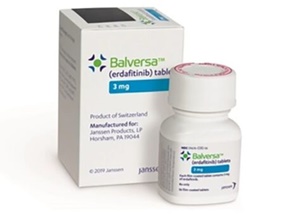
- Balversa, the first targeted anticancer drug for bladder can
- by Dec 02, 2022 06:07am
- BalversaTargeted options targeting specific genetic mutations in bladder cancer have emerged for the first time. The Ministry of Food and Drug Safety announced on the 24th that it had approved Janssen's Balversa. It is an indication of metastatic urinary epithelial cancer (cystic cancer) with at least one type of chemotherapy treatment, or FGFR2 or 3 mutations within 12 months of adjuvant treatment before and after surgery, including platinum-based chemotherapy. Bladder cancer is representative cancer that had no targeted anticancer drugs. Balversa has become the first targeted anticancer drug for bladder cancer with a new mechanism called FGFR inhibition. FGFR is one of the bio-signals involved in cancer cell growth and is associated with several carcinomas. In particular, FGFR mutations are commonly observed in bladder cancer, and about 20 to 30% of patients are known to have mutations. The phase 2 BLC2001 study, which served as the basis for Balversa approval, targeted 99 patients with local progressive and metastatic urinary tract epithelial cancer with FGFR mutations. The ORR of 87 people who can be evaluated was 32.2% based on the IRRC evaluation. The disease control rate was 78% and the median response duration was 5.4 months. The progression-free survival (PFS) median and OS median were 5.5 months and 13.8 months, respectively. The most commonly reported adverse reactions of Grade 3 or higher include canker soreness, hand toenail dystrophy, hand toenail disorder, corneal inflammation, and hyperphosphatemia. Significant adverse reactions occurred in 41% of patients, of which eye disorders were reported by 10%. The adverse reactions that resulted in fatal results occurred in 1% of patients due to acute myocardial infarction. Based on the second phase, the Balversa permit was approved in April 2019, three years earlier than Korea in the U.S. To diagnose FGFR3 mutations, QuantiFERON's Therascreen FGFR Kit was also approved as a companion diagnostic device. ◆ A treatment for bladder cancer that has not existed for decades Bladder cancer is cancer that has been stagnant for decades. Unlike other cancers where several targeted anticancer drugs appeared, bladder cancer has been the main treatment until recently. The development of new drugs was not easy because of the high effectiveness of early chemotherapy. However, in metastatic bladder cancer, chemotherapy reacts in the early stages, and most of them die within two years due to resistance. The birth of the first targeted anticancer drug for bladder cancer Recently, immuno-cancer drugs have emerged, causing changes in the treatment of bladder cancer. There are four immuno-cancer drugs, including Keytruda, Opdivo, Tecentriq, and Bavencio, and there is a slight difference in specific indications. Keytruda and Tecentriq can be used as primary treatments. However, it can be used only when PD-L1 expression is positive and Cisplatin-based chemotherapy is impossible. Bavencio can be used as a maintenance therapy without the disease progressing after using chemotherapy in the first round. Opdivo is used as a secondary treatment when the disease progresses after chemotherapy. Keytruda and Tecentriq can also be used in the second round. Immuno-cancer drugs have a high response rate of around 20%, but they have fewer side effects than chemotherapy and have the advantage of maintaining treatment responses for a long time. With Balversa's permission, patients with FGFR mutations can consider targeted anticancer drugs in secondary or higher treatment, which is expected to help improve their prognosis.
- Company
- Ajovy will it be possible to register this year?
- by Eo, Yun-Ho Dec 01, 2022 05:46am
- Attention is focusing on whether the second CGRP target migraine drug Ajovy will be able to apply for insurance benefits within this year. According to related industries, Teva Handok is conducting last-minute coordination in drug price negotiations between the NHIS and the Calcitonin gene-related peptide (CGRP) target migraine treatment Ajovy. Considering that the benefit of Emgality in September, a competitive drug and the first entry item, has been applied, the negotiations have been delayed more than expected. Currently, there is no big disagreement with the calculation of drug prices itself, but factors such as the expected amount of claims are known to be an obstacle. Considering the negotiation date, if it goes according to the procedure, it is possible to register within this year, so we have to watch Ajovy's progress. If Ajovy succeeds in registering, competition between the two drugs is expected to begin in earnest. Emgality and Ajovy are the same drugs, and they are selected according to the characteristics of severe migraine patients. Emgality is a method of administering 240 mg (two consecutive subcutaneous injections each of 120 mg) once at a loading dose, and then subcutaneous injections of 120 mg once a month. Ajovy is used by subcutaneous injection of 225 mg once a month or 675 mg (three consecutive times of 225 mg) once every three months. Ajovy proved its effectiveness through a 12-week HALO EM/CM clinical trial in 2,000 patients with EM and CM. In a HALOEM study conducted to verify the efficacy and safety of Ajovy compared to the placebo group, Ajovy was evaluated to meet the primary evaluation variable by significantly reducing the number of monthly migraine occurrences in both monthly and quarterly administration groups. The proportion of patients whose average monthly migraine days decreased by more than 50% was also higher at 47.7% in the Ajovy monthly administration group and 44.4% in the quarterly administration group compared to 27.9% in the placebo group. In the HALOCM study, the average number of monthly headache reduction days in the Ajovy administration group was 4.6±0.3 days, and the quarterly administration group was 4.3±03 days, showing a significant decrease compared to 2.5±0.3 days in the placebo group.
- Company
- Expansion of Roche Polivy's indication of primary therapy
- by Eo, Yun-Ho Dec 01, 2022 05:46am
- From the Ministry of Food and Drug Safety, Roche Korea announced on the 28th that Polivy and Rituximab+Cyclophosphamide, Doxorubicin, and Prednisone combination therapy has been approved to expand the indication as the primary treatment for adult patients with diffuse large B-Cell Lymphoma whose have no previous treatment experience. Diffuse large B-Cell Lymphoma is a blood cancer with aggressive tendencies and is the most common form of non-Hodgkin lymphoma. In Korea, it is estimated that the number of new patients diagnosed with diffuse giant B cell lymphoma reaches 5,000 every year. Although the majority of patients responded to initial treatment, 4 out of 10 patients were not treated with the current standard treatment, and there was a demand for more effective primary treatments due to poor prognosis when the number of treatments increased. The permission to expand the indication was based on the results of the POLARIX study in phase 3 clinical trials. The study was followed for more than 24 months for all patients, and in the first-line treatment of diffuse giant B cell lymphoma during a 28.2 month follow-up period, Polivy, and R-CHHP combination therapy reduced the likelihood of disease exacerbation or death by 27% compared to R-CHOP. The most frequently reported adverse reactions during Polivy treatment (30% or more) were peripheral neuropathy (52.9%), nausea (41.6%), neutrophil reduction (38.4%), and diarrhea (30.8%). Nic Horridge, CEO of Roche Korea, said, "We have continued to innovate to meet the unmet demand of patients, and finally we can provide improved treatments to Korean patients. Through Polivy, the expansion of this indication can provide better results for more patients with diffuse giant B-cell lymphoma."
- Company
- When will Xocova be approved in Korea?
- by Nho, Byung Chul Nov 30, 2022 05:53am
- With the new oral COVID-19 treatment Xocova starting prescriptions in Japan after obtaining emergency regulatory approval from the Ministry of Health, Labour and Welfare (MHLW), attention is rising on whether it will be approved in Korea as well. In Korea, the Korea Disease Control and Prevention Agency determines the need and grants Emergency Use Authorizations to drugs after expedited review, rather than choosing among companies that submitted applications. Although no news has been heard on whether Xocova is being officially undergoing approval processes yet, news has been heard that the government will start a review, and Ildong Pharmaceutical has started preparations for Emergency Use Approval. Xocova is an oral antiviral that contains ensitrelvir that selectively inhibits the viral 3CL protease and suppresses SARS-CoV-2 replication. Xocova demonstrated clinical symptomatic efficacy through a Phase II/III trial that was conducted in Japan and Korea. Trial results showed that the mean time to initial relief of COVID-19 symptoms in patients that received Xocova was 167.9 hours, a significant reduction from the 192.2 hours in the placebo group. Xocova also met its secondary endpoint — reduction in viral RNA — in the trial. Reduction in viral RNA on day 4 following the third dose in the ensitrelvir-treated group was 1.4 log10copies/ml more than that in the placebo group. Regarding its safety, no serious adverse events or deaths have occurred from the use of ensitrelvir, and was also found to be well tolerated. Its convenience in intake has also been regarded as an advantage. Unlike conventional treatments that are administered for 5 days, twice a day, and three tablets per administration, patients only need to take Xocova once daily for 5 days as a single tablet. With the opinion that the drug has shown a positive effect in Japanese hospitals after starting prescriptions, local healthcare professionals have been welcoming the diversification of COVID-19 treatment options. The fact that Xocova can be manufactured locally in Korea if it is granted marketing authorization in Korea is also an added advantage. Ildong Pharmaceutical had previously signed an agreement with Shionogi to jointly conduct Xocova’s clinical trial. After successful development, Ildong Pharmaceutical will directly be in charge of the local manufacturing and distribution of Xocova. In other words, Xocova will be locally manufactured. However, it is true that other treatments have been previously developed and imported and the need for COVID-19 treatments is not as urgent as before. But with more than 70,000 people still being confirmed as of the 1st, and further resurgences to come, many have stressed the need to establish treatment sovereignty by securing a treatment that can be manufactured in Korea. An industry official said, “A new COVID-19 treatment option is needed as there are considerable limitations on the use of existing treatments. In particular, if we can locally manufacture a COVID-19 treatment, it will be of great support in stably supplying treatments in cases of emergency.”
- Company
- Doveprella, the first new tuberculosis drug in 50 years,
- by Eo, Yun-Ho Nov 30, 2022 05:52am
- Doveprella, a new tuberculosis drug that appeared 50 years, is expected to be listed on the insurance benefit list. According to related industries, Viatris' multidrug-resistant tuberculosis treatment Doveprella recently concluded a drug price negotiation with the NHIS. After passing the HIRA's Drug Benefit Evaluation Committee in September, the negotiation process began as soon as possible, drawing positive results. As a result, if only the Health Insurance Policy Review Committee passes, the benefit will be applied without any major problems. Doveprella, which was approved domestically in October last year after U.S. approval in September 2019, can be used as a combination of Bedaquiline and Linezolid in adult patients with extensive drug-resistant pulmonary tuberculosis, treatment intolerance, or non-reactive multidrug-resistant pulmonary tuberculosis. This drug is the first new treatment in more than 50 years. The tuberculosis treatment market has been shunned by front-line pharmaceutical companies for its poor drug economy. In fact, Doveprella is a drug created through a collaboration between Viatris and a non-profit organization called TB Alliance. Multidrug-resistant tuberculosis (MDR-TB) is tuberculosis that is resistant to two or more tuberculosis treatments, including Isoniazid and Rifampin, which are the two most effective anti-tuberculosis drugs for the treatment of tuberculosis. The causes of the outbreak are divided into primary and acquired resistance, which is infected with tuberculosis bacteria, which are resistant from the beginning, and acquired resistance during the treatment process due to discontinuation of drug use and irregular administration. MDR-TB has only a 50% treatment success rate, so treatment efficiency is low and secondary drugs used for treatment have more side effects than primary drugs. The treatment period is also long, ranging from 18 to 24 months, so the cost is high, and in some cases, the lesion should be removed through surgery. The combined treatment of seven drugs, including Bdq, which is currently used for standard treatment of MDR-TB, is not well used in Korea due to high drug resistance, and the treatment period is still long at 9-12 months, making it difficult for patients to manage medication and high treatment failure rates. Doveprella proved its validity through a phase 3 clinical Nix-TB study. Doveprella confirmed its potential as a new short-term combination therapy, with a successful treatment effect of 92% in MDR-TB patients and 89% in a broad range of drug-resistant pulmonary tuberculosis patients in 6 months with Bedaquiline and Linezolid. The existing treatment period of 18 to 24 months was shortened to 6 months, and almost all extensive drug-resistant pulmonary tuberculosis and sputum culture-negative of MDR-TB patients were confirmed within 16 weeks. BPaL therapy was the first ready-to-use combination therapy consisting only of oral agents and showed complete data in about 90% of patients with extensively drug-resistant tuberculosis at 6 months of treatment.
- Company
- Oluminant's sales are higher than Xeljanz's
- by Kim, Jin-Gu Nov 30, 2022 05:52am
- (From left) Oluminant, Rinvoq, Xeljanz.Xeljanz lost its market lead by falling sales by 13% due to safety issues. The market for JAK inhibitors, an oral autoimmune disease treatment drug, is fluctuating. While long-time market leader Pfizer Xeljanz faltered, Lilly's Oluminant took the lead. On top of that, Abbvie Rinvoq quickly expanded its sales, signaling fierce competition. ◆↑ Olumiant 30% of sales According to IQVIA, a pharmaceutical market research firm, Oluminant's cumulative sales in the third quarter of this year were 11.7 billion won. It increased by 30% compared to the cumulative 9 billion won in the third quarter of last year. Oluminant is a drug used for autoimmune diseases such as rheumatoid arthritis and atopic dermatitis. In December 2017, it was approved in Korea as the second JAK inhibitor after Xeljanz. Sales have steadily increased since November 2018 when salaries were applied as a treatment for rheumatoid arthritis. In May last year, the scope was expanded due to atopic dermatitis. In the fourth quarter of last year, it surpassed the sales of Xeljanz, an existing market-leading product. Since then, it has consistently recorded higher sales than Xeljanz. The third JAK inhibitor, Rinvoq, has a steeper growth rate. Cumulative sales in the third quarter of this year were 8 billion won, up about six times in a year from the cumulative 1.4 billion won in the third quarter of last year. Domestic permits were the latest in June 2020, compared to competing drugs, but sales have risen vertically since benefits were applied as a treatment for atopic dermatitis in May last year with Oluminant. In the third quarter of this year, quarterly sales exceeded 3 billion won for the first time. The gap with Oluminant, the No. 1 product in the market, has narrowed to 700 million won. ◆ Oluminant·Rinvoq Rising, Additional Effects of Atopic Dermatitis Indication The growth of Oluminant and Rinvoq is interpreted as a result of active indication expansion. In particular, it is analyzed that it led to sales growth by securing atopic dermatitis, which is not in Xeljanz, as an indication. Oluminant was first licensed as a treatment for rheumatoid arthritis. In May last year, atopic dermatitis was added as an indication. Oluminant is seeking to expand the indication even with hair loss. Lilly applied for the expansion of the indication with severe circular hair loss last month. Rinvoq was also approved for rheumatoid arthritis, and in October last year, additional indications for ▲ psoriatic arthritis ▲ ankylosing spondylitis ▲ atopic dermatitis were approved. Ulcerative colitis was added this year. Rinvoq currently has the most indications of JAK inhibitors. ◆ Xeljanz sales dropped 13% in a year Xeljanz's cumulative sales in the third quarter of this year were 10.2 billion won, down 13% from 11.7 billion won a year earlier. After being released in March 2015, Xeljanz expanded its influence as the only oral autoimmune disease treatment until 2018. From 2019, sales of around 4 billion won were maintained every quarter. Sales plunged 16% year-on-year in the fourth quarter of last year. Since then, it has been maintaining quarterly sales in the early 3 billion won range. It is analyzed that safety issues affected the decline in sales in the fourth quarter of last year. Based on the results of a large-scale random safety study in September last year, the U.S. Food and Drug Administration (FDA) added a black box warning, saying that JAK inhibitors, including Xeljanz, increase the risk of heart attack, stroke, cancer, and death. The Ministry of Food and Drug Safety distributed the same safety letter. In October this year, the standards were changed to be limited to patients aged 65 or older, patients in high-risk groups in ▲ the cardiovascular system, and patients at risk of ▲ malignant tumors. Pfizer plans to once again expand its influence in the JAK inhibitor market through Xeljanz's follow-up drug, Cibinqo. Like Oluminq and Rinvoq, Cibinqo is targeting atopic dermatitis. It was approved in Korea in November last year and is currently being prescribed non-reimbursed. In August, it passed the HIRA and approached the application.
- Company
- Boryung, start patent challenge for liver cancer drug Lenvim
- by Kim, Jin-Gu Nov 30, 2022 05:52am
- Boryung challenged Eisai's patent for Lenvima, a liver cancer treatment. It is interpreted as a strategy to spur the anti-cancer drug business, which has been strongly driving since 2020. According to the pharmaceutical industry on the 29th, Boryung recently filed a passive judgment on the scope of rights and a judgment on invalidity in three Lenvima patents at the same time. Lenvima is a treatment for liver cancer in Eisai. It is used in the primary treatment of liver cancer along with Nexavar and Tecentriq+Avastin. According to IQVIA, a pharmaceutical market research firm, Lenvima's sales last year were 15.8 billion won. It has increased by 30% compared to 12.2 billion won in 2020. This year, it posted 11.1 billion won in sales until the third quarter. Lenvima is protected by a total of four patents. They include material patents that expire in April 2025, usage patents that expire in March 2028, salt and crystalline patents that expire in June 2028, and pharmaceutical patents that expire in March 2031. Boryung requested a trial for invalidation of a patent for use except for a material patent, and a trial for confirming the scope of passive rights to salt and crystalline patent and a formulation patent, respectively. If Boryung succeeds in targeting three patents, it will be eligible to release generic after 2025, when the material patent expires. Boryㅕng plans to further expand its anti-cancer drug portfolio by targeting Lenvima patents. Boryung's all-around anti-cancer drug patent challenge began in earnest after the independence of the "ONCO (anti-cancer) sector" in May 2020. Boryung has filed a patent trial for five original anticancer drugs in the past two years, including Lenvima. The number of patents amounts to 13. In May this year, Novartis filed a trial on four patents for Tasigna, a leukemia treatment. Prior to this, a patent trial was filed with Ibsen's liver cancer treatment Cabometyx in April this year, Pfizer's breast cancer treatment Ibrance in March, and BMS' acute lymphocytic leukemia treatment Sprycel in December last year.
- Company
- Samsung Bioepis occupies 25% of Avastin mkt 1yr since launch
- by Nov 30, 2022 05:52am
- Samsung Bioepis’s Avastin (bevacizumab) biosimilar ‘Onbevzi’ is enjoying its market preoccupation effect. In only one year since its release, the share of its similar reached nearly 25% in the market. With Alvogen and Celltrion’s biosimilars succeeding to be released with reimbursement from the next month, the competition between biosimilars is expected to intensify further. Onbevzi enjoys ‘first mover’ benefit... original’s sales reduced 35% Pic of Avastin On the 29th, according to the market research institution IQVIA, Samsung Bioepis’s Onbevzi raised sales of KRW 6.4 billion in Q3 this year. Such sales have been made only 1 year since its release. Onbevzi quickly took over the market as the only bevacizumab biosimilar for 1 year since its release. Onbevzi, which had been released in September last year, raised sales of KRW 1.8 billion in Q1. In Q2, its sales surged to KRW 4.1 billion. Its sales exceeded KRW 10 billion only 1 year after its release. Onbevzi is a biosimilar of Roche’s anticancer drug Avastin. Avastin, which is the first VEGF inhibitor ever introduced, is used in various cancer types including colorectal cancer, breast cancer, lung cancer, ovarian cancer, and renal cell carcinoma. Its annual sales last year reached KRW 112.3 billion. In Q3 this year, Onbevzi accounted for 24.2 % of the market. Samsung Bioepis’ Onbevzi has been enjoying the ‘first mover’ effect as the ‘first biosimilar.’ Onbevzi, which was released with reimbursement in September last year, has rapidly increased its share of the market with support from Boryung Pharmacuetical. Boryung Pharmacuetical, which opted to partner with Samsung Bioepis, is a company that is demonstrating its potential, achieving sales of KRW 100 billion in the second year of the establishment of its ONCO (oncology) division. Data: IQVIA Onbevzi’s lack of ovarian cancer indication had been pointed to as its weakness. However, after making an agreement with Genetech, Avastin’s original developer, Samsung Bioepis was able to obtain an additional indication for ovarian cancer last month. The delay in the reimbursement listing of the second biosimilar also worked as a favor for Onbevzi. However, sales of the original Avastin have remained stagnant since the introduction of the biosimilar. The biggest issue was in how sales of the original drug is cut by 30% ex-officio after the listing of generics or biosimilars. Since then, Avastin’s price was reduced further by 5% with its reimbursement extended to be used in combination with Tecentriq in May. Avastin’s current ceiling price is set at KRW 218.782 (0.1g/4mL) and KRW 712,093 (0.4g/16mL). Avastin's sales had seemed to gain momentum after being granted reimbursement as first-line treatment for liver cancer. However, the momentum was offset by further price cuts and has been analyzed to have made no significant changes to Avastin sales. In terms of its quarterly sales, Avastin’s sales had only increased slightly from KRW 19.3 billion in Q1, KRW 18.8 billion in Q2, then to KRW 20 billion in Q3. Alvogen·Celltrion succeeds in reimbursement listing...sparks 4-way race With Alvogen and Celltrion’s biosimilar being listed for reimbursement, competition between the original and its biosimilars is expected to intensify further in the bevacizumab market. Alvogen has succeeded in listing its Avastin biosimilar ‘Alymsis’ with reimbursement in October. Alymsis, which was approved in January, has canceled its reimbursement application once due to patent litigations. This was one reason why Onbevzi’s sole reign in the market had been extended. Alymsis was listed for reimbursement after deleting the ovarian cancer indication whose patent the company had not been able to overcome. Its ceiling price had been set at the same price as Onbevzi. Alvogen selected Daewoong Pharmaceutical as its local partner. Daewoong Pharmaceutical is selling, ‘Ogivri,’ its biosimilar of the breast cancer drug Herceptin. Adding Daewoong Pharmaceutical’s sales power, the company plans to rapidly increase Alymsis’s sales in the market. Celltrion will also jump into competition in the market in December. Celltrion succeeded in receiving reimbursement for the Avastin similar ‘Vegzelma’ on the 26th. Its price is set the same as Onbevzi and Alymsis. Celltrion plans to start its sales in earnest in December after it receives reimbursement.
