
- LOGIN
- MemberShip
- 2026-05-07 22:23:46
- Company
- “Immunotherapies take lead in liver cancer treatment"
- by Dec 09, 2022 06:04am
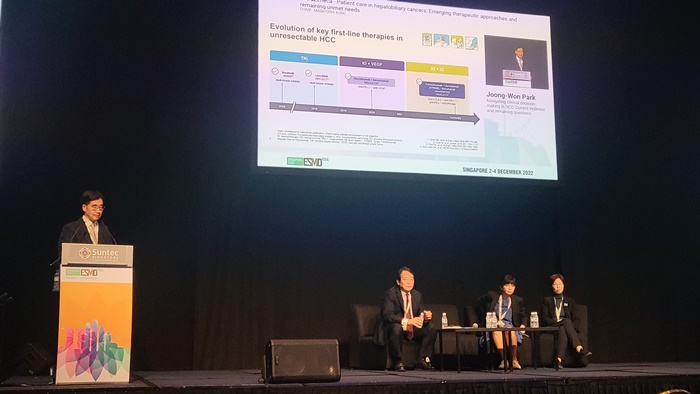
- “Immuno-oncology drugs have brought great advances in the treatment of unresectable advanced hepatocellular carcinoma. However, the unfortunate fact is that these are not well used in the field due to lack of later-line options.” Professor Joong-Won Park, Division of Gastroenterology, National Cancer Center Korea, said so to Dailypharm at the ‘ESMO Asia Congress 2022’ that had been held in Singapore. On the same day, Professor Park introduced the latest research trends in liver cancer treatment at a session held on ‘Patient care in hepatobiliary cancers: Emerging therapeutic approaches and remaining unmet needs.’ According to Professor Park, the treatment paradigm for unresectable advanced liver cancer (hepatocellular carcinoma) has been evolving quickly with the introduction of immuno-oncology drugs. Roche’s ‘Tecentriq’ had been granted as a first-line treatment for HCC in combination with the VEGF inhibitor ‘Avastin.’ It became the first immunotherapy approved for the systemic treatment of liver cancer. Following the combination, AstraZeneca’s immuno-oncology drug Imfinzi’ was also approved in combination with ‘Imjudo,’ another immuno-oncology drug with a different mechanism of action. The Imfinzi+Imjudo combination was approved in the US in October and is expected to be soon introduced to Korea as well. Through the STRIDE regimen (single dose of Imjudo as an initial dose followed by Imfinzi every four weeks), the Imfinzi+Imjudo combination improved the effect while minimizing safety risks. Another benefit of using Immuno-oncology drug combinations is that patients can worry less about the risk of hepatotoxicity that arises from the use of TKIs or bleeding from Avastin. Professor Park said, “We consider bleeding risk an important factor when selecting primary treatments. Patients with hepatic-portal hypertension must be tested for risk of hemorrhage. Slight concerns (adverse event) remain in the use of Imjudo in the Imfinzi+Imjudo combination, but it is only administered once, so if the patient well passes that period, the combination is well-tolerated." Its effect was also positive. According to the HIMALAYA Phase III trial, the Imfinzi+Imjudo combination using the STRIDE regimen recorded a median overall survival (mOS) of 16.4 months and reduced the risk of death over Nexavar by 22%. At 36 months of follow-up, the proportion of patients that reached OS in the Imfinzi+Imjudo group and Nexavar group was 30.7% and 20.2%, respectively, demonstrating an improvement in long-term survival with the use of Imfinzi+Imjudo. The Asian (excluding Japan) subanalysis results of the HIMALAYA trial were also disclosed at the ESMO Asia Congress. In Asians, the mOS of Imfinzi+Imjudo was 16.5 months, consistent with the global data. At 35 months, the OS was 32.2% in the Asian group. Professor Park explained, “It is encouraging that the data showed positive results in Asians, as we have a higher prevalence of hepatitis B than in the West. Immuno-oncology drugs came to the fore in this year’s guideline for HCC treatment in Korea. According to the '2022 Practice Guideline for Diagnosis and Treatment of Hepatocellular Carcinoma’ that was published by the Korean Liver Cancer Association, the Tecentriq + Avastin and Imfinzi + Imjudo combinations received A1 recommendations. This is the first time an immuno-oncology drug received a priority recommendation, overtaking Nexavar, which had been the standard treatment for liver cancer for a long time. The biggest challenge that remains for the use of these immunotherapy combinations is in receiving reimbursement. The key lies in how fast the Imfinzi + Imjudo combination will be able to receive reimbursement after it is introduced to Korea. The high prices of Tecentriq and Avastin had been the biggest barrier to their reimbursement in HCC. Fortunately, the introduction of Avastin biosimilars after the expiry of Avastin's patent lowered the drug price and allowed progress in their reimbursement. On the other hand, Imfinzi's partner, Imjudo, is expected to have a higher price barrier because it is a new immuno-oncology drug. The later-line therapies following the use of immunotherapy-based regimens also remain a barrier. The guidelines recommend physicians and patients consider the use of 6 drugs including Nexavar, Lenvima, Stivarga, and Cabometyx. However, in practice, the only realistic option is to use Nexavar without reimbursement. Lenvima is not approved for use in the second line in Korea. In the case of Stivarga and Cabometyx, they are only allowed for use after using Nexavar in the first line. Professor Park said, “Using Nexavar or Cabometyx in the second line is not an issue in the US or in Japan. It is even covered by insurance there. However, in Korea, reimbursement is strictly set for each line of therapy, therefore, it is difficult to use new drugs that are introduced in Korea due to the lack of later-line options. Using the recommended drugs in the later line as in the US or Japan is off-label and illegal or rejected from reimbursement. This is one of the biggest barriers in HCC treatment in Korea.”
- Company
- Ildong's new migraine drug Reyvow can be prescribed at gener
- by Eo, Yun-Ho Dec 09, 2022 06:04am
- According to related industries, Lilly and Ildong Pharmaceutical's Reyvow passed the Drug Commission (DC) of medical institutions such as Kangwon National University Hospital, Nowon-eulji Hospital, and Sinchon Severance Hospital, and advanced general hospitals such as Seoul National University Hospital, Asan Medical Center, and Seoul St. Mary's Hospital are also undergoing procedures. Reyvow is attracting attention as an expected replacement for tryptan-based drugs, which are most commonly used to treat migraines. This drug targets serotonin (5-HT) 1F receptors like conventional tryptan drugs, but has the advantage of not having cardiovascular side effects by acting selectively. On the other hand, tryptan-based drugs were limited in use because they contract blood vessels in the mechanism, causing cardiovascular diseases such as myocardial infarction and stroke. Reyvow proved its validity through a three-phase study. In two studies of 4,439 migraine patients, 28-39% of the Raybow administration group disappeared within two hours, and 41-48% were free from Most Bothersome Symptom (MBS) symptoms that overreacted to light, sound, and nausea. Reyvow is still unpaid. In August, the HIRA received a conditional salary judgment, but the company did not accept the offered drug price. Ildong Pharmaceutical plans not to give up the registration process afterwards. Meanwhile, Ildong Pharmaceutical signed a development partnership with Raybow developer CoLucid in 2013 to secure copyrights in eight ASEAN countries, including Taiwan, including domestic sales licenses.
- Company
- Enhertu seeks approval as 2nd-line tx in breast cancer
- by Eo, Yun-Ho Dec 08, 2022 06:05am
- The antibody-drug conjugate anticancer drug ‘Enhertu’ is attempting to extend its indication to the second line in breast cancer. According to industry sources, the Ministry of Food and Drug Safety is currently reviewing whether to expand the indication for the ADC drug Enhertu (trastuzumab deruxtecan). Its approval is expected in Q1 next year (2023) at the earliest. The indication extension is to treat adult patients with unresectable or metastatic HER2-positive breast cancer who have received a prior anti-HER2-based regimen either in the metastatic setting or in the neoadjuvant or adjuvant setting and have developed disease recurrence during or within 6 months of completing therapy. The drug has been approved to extend its indication to the second line by the US FDA in May and by the European Commission in July. In Korea, Enhertu is being jointly promoted by AstraZeneca and Daiichi Sankyo. The drug is considered a next-generation ADC drug that has been designed using DXd ADC technology. With the drug yet to be listed for reimbursement, what strategy the companies will implement to attract prescriptions after expanding indications remains to be seen. The efficacy of Enhertu in the second line had been identified through the Phase III DESTINY-Breast03 trial. DESTINY-Breast03 is a head-to-head trial that evaluated the efficacy and safety of Enhertu versus the first-generation ADC ‘Kadcyla (trastuzumab emtansine).’ The trial enrolled 524 patients to evaluate the efficacy and safety of Enhertu in patients with HER2-positive unresectable and/or metastatic breast cancer previously treated with trastuzumab and a taxane. The primary efficacy endpoint of DESTINY-Breast03 was progression-free survival (PFS) based on blinded independent central review (BICR). Secondary efficacy endpoints included overall survival (OS), objective response rate (ORR) based on BICR, duration of response (DoR), and PFS based on investigator assessment. Results showed that Enhertu reduced the risk of disease progression or death by 72% compared with Kadcyla in patients with HER2-positive unresectable and/or metastatic breast cancer previously treated with trastuzumab and a taxane.
- Company
- AbTis contracts ADC technology cooperation/ world's #1
- by Dec 08, 2022 06:05am
- ApTis, a company specializing in antibody-drug conjugate (ADC) development, announced on the 7th that it has signed a technology cooperation contract for antibody-drug combination platform for new drug development with global CDMO company Ron. With this cooperation, AbTis' "AppClick" platform technology will be included in Lonza's customized solution toolbox for developing antibody-binding candidate drugs. AppClick is a location-selective ADC linker platform technology that allows users to easily and quickly connect various drugs without antibody deformation. Appclick improved the chemical stability of ADCs by using cyclic peptides that irreversibly bind to specific sites of antibodies. By being included in Lonza's customized solution, AbTis has opened the way to expand technology partnerships with various ADC new drug development companies. In addition, AbTis will be able to receive integrated services on the development and manufacture of Lonza's antibody-binding drug. "The AppClick platform is expected to be used in various ways because it can selectively combine various drugs with existing antibodies," said Gene Christophe, president of Hibert Lonza's bio division. "When developing new treatments such as ADC, it is possible to provide effective technology to various customers who suffer from antibody modifications." In the process of realizing the entry of the AbTis ADC linker platform into the global market, we are very happy to cooperate with the global No. 1 CDMO investor, said Jeong Sang-jeon. "Through this cooperation with Lonza, many ADC new drug developers are expected to apply AbTis Technology to shorten the period of development."
- Company
- The power of FDA-approved new drugs
- by Chon, Seung-Hyun Dec 08, 2022 06:05am
- SK Biopharm announced on the 6th that it won the "Tower of Exporting $100 million" at the 59th Trade Day ceremony held at COEX in Gangnam-gu, Seoul on the 5th. SK Biopharm's independently developed innovative new drug, Cenobamate, surpassed $100 million in exports to the U.S. and Europe from July 1, 2021, to June 30, 2022. This is the first time that a domestic pharmaceutical company has won the top $100 million in exports with a single innovative new drug developed by itself. Cenobamate is a new drug for epilepsy that SK Biopharm has independently carried out the entire process from initial development to FDA approval. It is prescribed for adult epilepsy patients with partial seizure symptoms. It is an action mechanism that alleviates seizure symptoms by simultaneously controlling two targets related to excitatory and inhibitory signaling that cause epilepsy. Cenobamate has been licensed to market by the U.S. Food and Drug Administration (FDA) in 2019 and is being sold under the product name XCOPRI. Since May 2020, it has been selling directly through SK Life Science, a local subsidiary in the U.S. Cenobamate has been on the rise every quarter since its local release in the U.S. It exceeded 10 billion won in the first quarter of last year and exceeded 20 billion won in the fourth quarter of last year. It recorded 31.7 billion won in the first quarter of this year and achieved high gains in both the second and third quarters. Cenobamate's cumulative sales in the U.S. were estimated at 200 billion won. Last year, it joined hands with its partner Angelini Pharma to enter the European market under the product name "ONTOZRY." The Export Tower Awards are held on Trade Day on December 5 every year under the auspices of the Korea International Trade Association. The association awards the "Tower of Exports" to exporters who have contributed to Korea's international status and economic development over the past year.

- Company
- Immunotherapy shows effect as first-line treatment for BTC
- by Dec 08, 2022 06:05am
- Biliary tract cancer has long remained an area in which no new drug has been developed. Following targeted therapies, immunotherapies have led to remarkable advances in anticancer treatment, but biliary tract cancer has been neglected in terms of developing new drugs. This is because it has a lower prevalence rate than other cancers like lung cancer or stomach cancer, and even lower incidence in the West, which has been leading the development of new drugs. In this area with minimal progress, AstraZeneca’s cancer immunotherapy Imfinzi obtained indication in Korea and abroad as a first-line treatment in biliary tract cancer. In Korea and abroad, Imfinzi became the first immunotherapy to be approved as a first-line treatment in biliary tract cancer, and this latecomer among immunotherapies beating its competitors like Keytruda and Opdivo and won the “first” title. One thing to note is that a Korean medical team led to Imfinzi’s global approval in biliary tract cancer. Professor Do-Youn Oh’s persuasion was what moved the pharmaceutical company to pursue this unattended area. At the European Society of Medical Oncology (ESMO) Asia Congress 2022 that had been held on the 2nd (local time) in Singapore, Professor Oh said, “I believe the biggest achievement that has been made is that Imfinzi’s first approval as a first-line treatment in biliary tract cancer opened the stage for other immunotherapies to take on research into the field of biliary tract cancer.” Professor Do-Youn Oh Around 10 years ago, Professor Oh proposed an investigator-led trial to pharmaceutical companies that own cancer immunotherapies after finding out that immunotherapies show relatively higher effects in biliary tract cancer. However, companies at the time were more focused on cancers that have many patients and showed little interest and a low understanding of biliary tract cancer itself. Oh recalled, “I proposed a clinical trial on biliary tract cancer to all companies that own cancer immunotherapies at the time. I offered to test the drug myself to AstraZeneca’s clinical team. The company accepted my offer, and so began the investigator-led Phase II clinical trial. The trial went well thanks to the AstraZeneca team's active engagement. Professor Oh and AstraZeneca designed a detailed and thorough clinical trial after long discussions. They added 2 cohorts and enrolled more subjects. Based on the anti-tumor effect and safety confirmed in Oh’s trial, a global Phase III trial was initiated, and Professor Oh took the role of principle investigator (PI) in the Phase III TOPAZ-1 trial. The TOPAZ-1 trial was a success. The Imfinzi arm (Imfinzi+ gemcitabine + cisplatin) showed a 20% improvement in overall survival (OS) versus the placebo arm (placebo+ gemcitabine + cisplatin). Further analysis showed a higher OS improvement of 24% in the Imfinzi arm. At 2 years, the 2-year survival rate in the Imfinzi arm was 23.6% compared with 11.5% in the placebo arm. Median PFS (mPFS) was 7.2 months for the Imfinzi arm, a 25% improvement over the 5.7 months shown in the placebo arm. Also, the Imfinzi arm achieved an objective response rate (ORR) of 26.7% (91 cases), 2.1% (7 cases) of which showed complete response, and 24.6% (84 cases) showed partial response. Based on Oh’s investigator-led trial and TOPAZ-1 results, the US FDA approved Imfinzi for the treatment of biliary tract cancer. Furthermore, the National Comprehensive Cancer Network recommended Imfinzi as the standard (Category 1) first-line treatment in biliary tract cancer. For the first time, a cancer immunotherapy drug was listed as a standard of care in a field that only had chemotherapy options. This was a very unusual case where a clinical trial initiated by a Korean healthcare professional led to global approval and a standard-of-care designation. Professor Do-Youn Oh is presenting her findings at the ESMO Asia Congress 2022 Even after the approval, Professor Oh is busy conducting further analysis on TOPAZ-1. At the ESMO Asia Congress, Oh presented results on the impact of mutation status on efficacy outcomes in the TOPAZ-1 trial. The result of the study, which was the first to analyze the effect of cancer immunotherapies according to mutation status, was that there was no significant difference in the effect of cancer immunotherapies depending on the presence or absence of major mutations. Professor Oh referred to the entry of Imfinzi in biliary tract cancer as a ‘starting point’ that opens the stage and drives the development of biliary tract cancer treatments. In other words, an area that has not been tried due to lack of knowledge and lack of interest has opened up for research. Oh said, “With the TOPAZ-1 study, people have come to recognize that immunotherapies can be developed for biliary tract cancer as well. With so many cancer immunotherapies of various mechanisms of action in development, the biggest significance held by the success of the TOPAZ-1 trial is that the stage has been set for these to be tested in biliary cancer as well.” Above all, Oh expressed pleasure in providing new hope for biliary tract cancer patients. Professor Oh said, “Polarization of treatment options exists in the field of cancer as well. Some cancers offer many treatment options, others less than few. Biliary tract cancer was one of those that had almost no available treatment options. Whenever my patients asked why they can’t use immunotherapies, all I could do was tell them that a research was underway. With an immunotherapy option now available for biliary tract cancer, I look forward to more progress being made in the field and various more studies to come.”
- Company
- Oral Exon20 targeted Exkivity to apply for reimb in Korea
- by Eo, Yun-Ho Dec 06, 2022 07:55pm
- The EGFR Exon20 insertion mutation targeted oral therapy ‘Exkivity’ is attempting reimbursement listing in Korea. According to industry sources, Takeda Pharmaceuticals Korea is preparing to apply for reimbursement of ‘Exkivity (mobocertinib), its treatment for non-small cell lung cancer (NSCLC) with EGFR exon 20 insertion mutations. Although the drug targets the same biomarker as Janssen Korea’s ‘Ryvrevant (amivantamab),’ Exkivity is different as an oral formulation. EGFR Exon20 insertion mutation is a new biomarker that is newly receiving attention in the field of NSCLC. Targeted anticancer therapies that are currently available for prescriptions include those that target the Exon19 deletion or Exon21 L858R substitution mutations that are commonly found in EGFR mutations, but an unmet need had existed for EGFR Exon20 insertion mutations. Therefore, the industry’s eyes are on whether Exkivity will succeed in reimbursement listing with Ryvrevant failing to pass deliberations by the Health Insurance Review and Assessment Service’s Cancer Disease Deliberation Committee. Meanwhile, Exkivity demonstrated its efficacy through a Phase I/II trial which enrolled 114 patients with EGFR Exon20 insertion-positive NSCLC who received prior platinum-based therapy. In the trial, patients who were treated with a 160 mg dose of Exkivity showed an objective response rate (ORR) of 28% as well as a median duration of response (DoR) of 17.5 months per independent review committee (IRC). In particular, the median time to response after Exkivity treatment was 1.9 months, demonstrating the rapid effect it shows from the beginning of treatment. The median progression-free survival (mPFS) was 7.3 months, and the median overall survival (mOS) 24.0 months. The safety profile was also manageable. The most common adverse reactions were diarrhea, rash, fatigue, etc, and were manageable through dosage adjustments.
- Company
- ImmuneOncia targets niche market in cancer immunotherapy
- by Dec 06, 2022 05:57am
- “NK/T-cell lymphoma is a niche market that has no approved immunotherapy. After completing the trial in Q2 next year, we plan to promptly receive approval and extend our indication if we see good results.“ Heung Tae Kim, CEO of ImmuneOncia Therapeutics Inc On the 3rd (local time), Heung Tae Kim, CEO of ImmuneOncia Therapeutics, expressed his aspirations at the ‘ESMO Asia Congress 2022’ that was held in Singapore. ImmuneOncia is a new cancer immunotherapy drug-developing company that was established as a joint venture company between Yuhan Corp and the US bio-company Sorrento. The company owns various pipelines including the PD-L1 antibody IMC-001 and the CD47 antibody IMC-002, etc. The results that were presented were interim analysis results of a domestic Phase II trial that enrolled 13 patients with relapsed or refractory NK/T cell lymphoma who failed to see an effect with ‘L- asparaginase,’ the standard therapy. Professor Won-Seog Kim of the Hemato-Oncology Department at Samsung Medical Center presented the findings at the Mini Oral session on Haematological malignancies. Interim analysis efficacy results of Phase II IMC-001 trial (Source: ESMO Asia) Interim analysis results showed that of the 10 evaluable patients, 6 showed a response (ORR=60%), and all patients that showed a response had a complete response (CR=100%). 4 of the patients have continued treatment for at least 1 year. Based on the results, the evaluation was that the drug produced excellent results in terms of drug safety and continued response. The drug also was acceptable in terms of safety. No cytokine release syndrome hematologic toxicity that commonly arises with the use of immuno-oncology drugs was observed. Only 1 patient was observed with Grade 3 uveitis. During the clinical trial, 3 patients adjusted the medication period due to side effects, and 1 patient was delayed due to COVID-19 infection. The major adverse reactions were fatigue, headache, skin rash, and itching, most of which were mild and manageable. Interim analysis safety results of Phase II IMC-001 trial (Source: ESMO Asia) Professor Kim said, “Due to the small number of patients that were analyzed, we cannot conclude that IMC-001 is a far superior treatment, but I think it is at least similar or slightly superior (compared to existing immuno-oncology drugs). Although the survival period of recurrent patients is only 4-6 months, 4 out of 6 patients that responded to IMC-001 have survived long-term, receiving treatment for over a year. IMC-001 is a PD-L1 immunotherapy. Other drugs with the same mechanism of action include the global blockbuster ‘Keytruda (pembrolizumab)’ which sold over KRW 2.1 trillion and ‘Opdivo (nivolumab)’ which sold KRW 1 trillion globally. However, the two drugs do not indicate NK/T-cell lymphoma, the disease IMC-001 is being studied for. Professor Won-Seog Kim, Samsung Medical Center NK/T-cell lymphoma is a rare EBV-associated lymphoma. 90% of Asians are infected with the virus. Although an ordinary person would have no problem when infected, when immunocompromised, the dormant virus is activated and causes cancer. The current treatment option mainly consists of radiation and chemotherapy, but the 2-year recurrence rate is 75%. The company plans to start the approval process immediately after completing the clinical trial by Q2 next year and receiving the final data. ImmuneOncia will also actively promote the technical export of IMC-001 for its global entry. CEO Kim said, “We plan to first preoccupy the niche market through rapid domestic commercialization, then gradually expand its scope of indications. Also, we plan to promote technology exports to Asian regions including China, where many patients remain. We plan to reapply for the technical evaluation around Q3 next year."
- Company
- Concerns over Leclaza's sluggish secondary indicators
- by Dec 06, 2022 05:57am
- This is in contrast to the significant improvement in the primary indicator, the progression-free survival period (PFS). We cannot rule out the possibility that a similar situation to Tagrisso, whose effectiveness was questioned by the Asian OS, will be reproduced. The global clinical director (PI) explains that it is not easy to secure statistical significance due to the relatively high ratio of crossover converted to third-generation treatments due to confirmed resistance mutations among control patients. Cho Byung-chul, a professor of oncology at Yonsei Severance Hospital, who oversees LASER301 clinical trials, said at a press conference held in Singapore on the 3rd (local time), "Leclaza failed to meet the statistical significance of OS improvement because there was a high crossover rate of about 40 percent," adding, "There is no room for resistance change now." Professor Cho Byung-chul (left) and Professor Ross Su (right) explain the clinical results of phase 3 of Leclaza LASER301 is a global study that confirmed the effectiveness and safety of the first-generation treatment "Iressa" when Leclaza was used as the first treatment for EGFR-mutated non-small cell lung cancer patients. The first evaluation index was the progression-free survival period (PFS), and Leclaza recorded a 20.6-month PFS, which reduced the risk of disease progression and death by 55% compared to the control group, demonstrating high improvement. OS, the secondary indicator, has 29% data maturity, and sufficient data has not been collected. However, the survival rate of Leclaza at 18 months after administration was not statistically significant compared to the control group (p=0.116). At the time of 29% of data collection, 25% (49) of the Leclaza group died, and 32% (64) of the control group died. Looking at the trend of the graph of the total survival period released on this day, the survival rate of the Leclaza group and the control group becomes almost similar from 27 months after administration. The final OS data will be released at the end of next year. Leclaza phase 3 clinical overall survival graph (29% maturity). (Source: ESMO) Professor Cho explained that the high rate of crossover in the control group that received the first-generation treatment affected Leclaza's OS. Crossover refers to allowing patients classified as control groups to take other treatments at an ethical level if they do not see treatment effects due to resistance during the administration of control drugs. In phase 3 clinical trials, 24% (47) of 197 control groups changed the treatment to Leclaza through crossover. 12% (24) stopped clinical trials and administered other treatments. A total of 71 people (36%) stopped administering control drugs and switched to third-generation treatments. Tagrisso, the first 3rd generation EGFR formulation conducted earlier, was also affected by the OS by allowing crossover at the time of phase 3 clinical trials. Tagrisso Japan Real World Data The 40.9-month OS dispelled concerns caused by phase 3 data (Source: ESMO) Tagrisso demonstrated OS improvement over controls but failed to improve OS in Asian subgroups (HR=0.995). At that time, 85 (31%) of 277 patients in the clinical control group stopped administering first and second-generation treatments and received Tagrisso as a follow-up treatment, which caused "data bias." Because of this, Tagrisso's effectiveness was questioned by Asians. Concerns have been raised that Tagrisso's OS benefits are unclear in Asians. Tagrisso has also been pointed out as the main reason why it has not been listed on the domestic primary benefit so far. The effectiveness of Tagrisso is being proven in clinical practice. According to the recently released Real World data in Japan, Tagrisso recorded an OS of 40.9 months for more than three years. About 90% of EGFR-mutated non-small cell lung cancer patients in the United States and Europe as well as Japan are being treated with Tagrisso in the first round. Leclaza was also influenced by the clinical environment where the diagnosis of T790M mutations, the first and second generations of resistant mutations, became active. Professor Cho said, "At the time of phase 3 of Tagrisso, the T790M mutation itself was unfamiliar. Naturally, the diagnosis was not active. However, now, follow-up treatments have emerged and T790M tests are being actively conducted. Because of this, nearly 40% of patients were crossover. In other words, as resistance diagnosis was actively conducted, more patients were found to receive follow-up treatment. He added, "Leclaza's higher OS effect was observed when analyzed by applying the IPCW (Inverse Probability of Sensing Weight) technique." The IPCW technique refers to an analysis that minimizes "bias" by correcting crossover patient data. Professor Cho said, "I don't think the failure of OS to secure statistical significance will lead to concerns over the Leclaza effect." Ross A. Soo, a professor at the National Cancer Center in Singapore, also said, "It is still too early to evaluate OS, and the effectiveness of individual drugs can be confirmed by PFS indicators, and OS is an indicator of the entire treatment, including follow-up treatment."
- Company
- Rozlytrek can be prescribed at Big 5 hospitals
- by Eo, Yun-Ho Dec 06, 2022 05:57am
- Rozlytrek can be prescribed in big 5. According to related industries, Rozlytrek, a target anticancer drug for NTRK in Roche, Korea, passed the DC of Big 5, including Samsung Medical Center, Seoul National University Hospital, Seoul St. Mary's Hospital, and Sinchon Severance Hospital. Bayer Korea's Vitrakvi has already entered the Big 5 hospitals, and both drugs have been covered by insurance benefits since April this month, so competition for full-fledged prescriptions has begun. The two drugs can actually be applied to most carcinomas where the NTRK gene has been identified. However, there are restrictions on standards. The subjects of salary administration of the two drugs were limited to cancer types mentioned in the NCCN guidelines. Rozlytrek, approved in Korea as a rare drug in April 2020, can be prescribed for solid cancer in adults and children aged 12 or older with NTRK gene fusion without acquisition-resistant mutations, and local progressive or metastatic non-small cell lung cancer, which is positive for ROS1 in adults. Rozlytrek's permission was determined based on clinical Phase 1/2 STARTRK-NG trials in pediatric patients and data from STARTRK-2, a major phase 2 clinical trial, and STARTRK-1 and ALKA-372-001 trials in clinical phase 1. In the STARTRK-2 study, Rozlytrek reduced tumors in more than half to 56.9% of patients with solid cancer positive for NTRK fusion genes. Patients were conducted on 10 different solid cancer patients, and the response duration was observed to be 10.4 months. At the International Conference of the World Lung Cancer Society in August, the results of an additional integrated analysis of Rozlytrek's major clinical studies conducted on patients were released. In this integrated analysis, Rozlytrek's objective response rate (ORR) was 67.4% in all patients, 63.3% in patients with cerebral metastasis, 69.6% in patients with non-brain metastasis, and 68.7% in patients with first-treatment. The progression-free survival (PFS) and overall survival (OS) were 16.8 months and 44.1 months, respectively, but there was no significant difference between the first-treatment patient group and the entire patient group.
