
- LOGIN
- MemberShip
- 2026-05-05 11:35:57
- Company
- Yuhan Chemical completes FDA and ANVISA inspections
- by Nho, Byung Chul Feb 07, 2024 05:59am
- Yuhan Chemical’s manufacturing plant in Hwaseong. Yuhan Chemical (CEO & President: Sang-Hun Seo) has confirmed its global-scale capacity for manufacturing and quality management systems. Yuhan Chemical announced on the 5th that the company has successfully completed the inspections of the United States Food and Drug Associations (FDA) and the Brazilian Health Surveillance Agency (ANVISA). As a result, the current inspection likely verified that Yuhan Chemical has the global-scale capacity for manufacturing and quality management systems, firmly establishing its position as Korea’s top active pharmaceutical ingredient (API) manufacturing company. The current FDA inspection lasted five days, serving as a Pre-Approval Inspection and a routine inspection for APIs intended for U.S. exports. The FDA assessed the company’s compliance with stringent good manufacturing practice (cGMP) standards, and the inspection successfully concluded with only minor notifications issued. Yuhan Chemical also cleared Pre-Approval Inspection of Brazil’s ANVISA, known to be as stringent as the FDA approval, with no observations. Regarding the current inspections, Yuhan Chemical stated, “This round of inspections reaffirmed that Yuhan Chemical holds a strong position as an API company. We have demonstrated our superior manufacturing facility, quality system, and commitment to Data Integrity, utilizing an IT-based quality system while upholding the company’s values of honesty and integrity.” Yuhan Chemical, a subsidiary of Yuhan Corporation, is an API development and manufacturing company. Founded in July 1980, the company has been pursuing global quality standards. Yuhan Chemical received FDA approval for its Ansan manufacturing plant in 2002 and is certified to comply with the advanced GMP quality standards of regulatory agencies in various countries, including European EDQM, Japanese PMDA, Brazil ANVISA, and Australia TGA. In January 2016, the company established its second plant in Hwaseong, Gyeonggi Province. To expand its manufacturing capacity to achieve further growth, Yuhan Chemical completed the construction of a new facility, HB Dong, in November 2023. The facility has the capacity to produce 144,000 liters annually. With these developments, Yuhan Chemical has a total production capacity of 843,000 liters annually. The company expects to secure new contracts with potential clients with its expanded manufacturing capacity. With scheduled inspections by regulatory agencies and client companies, Yuhan Chemical aims to achieve high-quality growth and further development. “Yuhan Chemical is strengthening its competitive position in producing top-quality APIs. Our company is actively working to implement a Continuous Manufacturing system, which will become a new industry standard worldwide,” Yuhan Chemical stated. “Yuhan Chemical aims to overcome the difficulties posed by the diminishing domestic API manufacturing landscape due to low price competitiveness. The company will strive to become a global API CDMO leader.”
- Company
- Bayer partners with Chong Kun Dang to sell Kerendia
- by Nho, Byung Chul Feb 07, 2024 05:59am
- An upturn is expected in the KRW 20 billion markets for chronic kidney disease treatments, with Bayer and Chong Kun Dang joining forces to establish a joint sales front for its chronic kidney disease treatment, Kerendia Tab, According to industry sources, Bayer and Chong Kun Dang signed a joint sales agreement for Kerendia Tab today (February 6) and will challenge the market as a ‘first-line treatment’ for chronic kidney disease. Bayer's innovative new drug Kerendia Tab. 10-20mg (finerenone) was approved by the Ministry of Food and Drug Safety in April 2022 for indications including as chronic kidney disease and was listed for reimbursement on the 1st of this month. The drug price is KRW 1,670 for both the 10m and 20 mg doses. Although there had been some hypertension drugs, the CKD treatment market had been virtually dominated by HK Inno.N’s Kremezin and Daewon’s Renamezin. Although Kerendia (finerenone) and Kremezin (spherical sorbent) or Renamezin (spherical sorbent) do not contain the same active ingredient, in terms of their 'broad indications,’ Kerendia is likely to pull the brakes on the growth of existing products. Although the field of kidney disease treatment is not divided into first-line and second-line like diabetes or hypertension drugs, it is likely that Kerendia will be prescribed first due to its initial treatment efficacy. Kerendia is a treatment for adult patients with chronic kidney disease (CKD) and type 2 diabetes (T2D)that reduces the risk of end-stage kidney disease (ESKD) and a sustained decrease in estimated glomerular filtration rate (eGFR), and cardiovascular death, nonfatal myocardial infarction, and hospitalization for heart failure. Kremezin and Renamezin, on the other hand, has indications for improving uremia and delaying dialysis, which occurs in in later stage chronic kidney disease. However, the launch of Bayer's new treatment option Kerendia, which adds on to the previous options of Kremezin and Renamezin, is welcome news for the patients, given that the drug is intended to prevent hemodialysis, a major costly treatment that can cost up to KRW 30 million per year. In addition, the introduction of Daewon Pharmaceutical's new formulation, Renamezin Cap., is expected to quickly penetrate the existing market that consists of fine-grained and fast-acting tablets, building on its strength of improved dosing convenience. This, coupled with Chong Kun Dang’s strong sales and marketing capabilities, is expected to raise Kerendia into a dark horse in the market.
- Company
- KRW 40 bil JAKi market is in a fierce three-way race
- by Kim, Jin-Gu Feb 07, 2024 05:59am
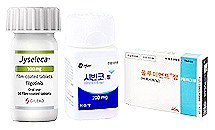
- (Clockwise) Jyseleca, Civinqo, Rinvoq, Olumiant, Xeljanz 제품사진. The competition is intensifying leadership in the Janus kinase (JAK) inhibitor market, an oral autoimmune disease treatment, in Korea. Lilly's Olumiant (baricitinib) became the market leader in Q2 last year, as sales of the longtime leader Pfizer's Xeljanz (tofacitinib) faltered. Then, in just 2 quarters, AbbVie's Rinvoq (upadacitinib) took over the lead. In addition, new drugs such as Pfizer's Civinqo (abrocitinib) and Eisai’s Jyseleca (filgotinib) have also been introduced to the market. This is why the pharmaceutical industry is competing to further intensify in the JAK inhibitor market. JAK inhibitor market amounts to KRW 40 bil last year…Rinvoq’s sales soar 61% YoY According to the market research institution UBIST on the 6th, the outpatient JAK inhibitor prescription market sold KRw 40 billion last year. This is a 19% increase from KRW 33.5 billion in 2022. JAK inhibitors are used for autoimmune diseases such as rheumatoid arthritis and atopic dermatitis. They block inflammation, pain, and cell activation by inhibiting inflammatory cytokines. Since the launch of Xeljanz in 2015, Olumiant and Rinvoq joined in the race in 2019 and 2021, respectively. Yearly prescriptions of major JAK inhibitors (Unit: KRW 100 million, Data: UBIST). By product, Olumiant, Xeljanz, and Rinvoq are in a three-way race. Last year, Olumiant’s prescriptions reached KRW 13.7 billion, Xeljanz KRW 13.3 billion, and Rinvoq KRW 12.4 billion. In particular, Rinvoq's rise in prescription sales stands out. Its sales rose 61% in 1 year, compared with the KW 7.7 billion it had posted in 2022. In the same period, Olumiant’s sales increased by 19% from KRW 11.5 billion and Xeljanz’s sales decreased by 8% from KRW 14.4 billion. Back and forth battle for the lead...Rinvoq tops the market in Q4 last year The quarterly battle for leadership in this market had been even more intense. Olumiant surpassed Xeljanz’s sales and rose to lead the market in Q2 this year with KRW 3.3 billion in prescription sales. It maintained its lead in Q3 with KRW 3.7 billion. However, in Q4, the lead changed hands. While Olumiant fared well in Q4 as well, posting prescription sales of KRW 3.7 billion, Rinvoq took the lead with KRW 4.1 billion. Rinvoq, which was released later than its competitors, Xeljanz and Olumiant, has been the most aggressive in expanding its indications and has grown rapidly. Changes in quarterly prescriptions of major JAK inhibitors (Unit: KRW 100 million, Data: UBIST). Rinvoq is indicated for the treatment of ▲rheumatoid arthritis, ▲psoriatic arthritis, ▲ankylosing spondylitis, ▲atopic dermatitis, ▲ulcerative colitis, and ▲Crohn's disease. Olumiant is indicated for ▲rheumatoid arthritis, ▲atopic dermatitis, and ▲alopecia areata, and Xeljanz is indicated for ▲rheumatoid arthritis, ▲psoriatic arthritis, and ▲ankylosing spondylitis. Among these, the atopic dermatitis indication is known to have led to the rise in the prescription performance of Rinvoq and Olumiant. However, the two products have different indications. Rinvoq is indicated for moderate-to-severe atopic dermatitis in adults and adolescents 12 years of age and older, while Olumiant is indicated for moderate-to-severe atopic dermatitis in adult patients. 4th and 5th JAKis – ‘Civinqo’ and ‘Jyseleca’ released to market…further heating competition in the market The pharmaceutical industry is expected to see fiercer competition in the market this year with the entry of 2 new drugs that joined the market last year. Last year, Pfizer launched Civinqo as a follow-up to its Xeljanz. Its prescriptions for the 6 months from July through the end of the year totaled at. KRW 700 million. Civinqo is approved for atopic dermatitis, an indication that has been driving prescription growth for Rinvoq and Olumiant. Civinqo’s sales are expected to grow rapidly as it is approved for moderate-to-severe atopic dermatitis in adults and adolescents aged 12 years and older, like Rinvoq. Last November, the 5th JAK inhibitor, Jyseleca, was released in Korea. Jyseleca is indicated for rheumatoid arthritis and ulcerative colitis. Prescription sales of the drug the 2 two months after its release amounted to KRW 20 million.
- Company
- Colorectal cancer drug Fruzaqla gets Orphan Drug Designation
- by Eo, Yun-Ho Feb 07, 2024 05:59am
- Fruzaqla (fruquintinib). The new colorectal drug ‘Fruzaqla’ received the Orphan Drug Designation in Korea. On the 1st, the Ministry of Food and Drug Safety (MFDS) announced this decision through the Orphan Drug Designation posting. Fruzaqla is indicated for the treatment of adult patients with metastatic colorectal cancer (mCRC) who have been previously treated with flouropyrimidine-, oxaliplatin-, and irinotecan-based chemotherapy, an anti-VEGF treatment, and if RAS wild-type, an anti-EFGR treatment (RAS); and at least one of trifluridine plus tipiracil or regorafenib treatment. Fruzaqla (fruquintinib) is a VEGFR-1, -2, -3 receptors inhibitor that Takeda Pharmaceutical acquired the rights to the drug from Hong Kong Hutchmed. The FDA designated Fruzaqla for priority review in May last year and approved the drug in November of the same year. The efficacy of Fruzaqla was evaluated based on the FRESCO clinical trial conducted in China and published in JAMA and the global FRESCO-2 clinical trial published in LANSET. These clinical trialss compared the combination therapy of Fruzaqla plus best supportive care (BSC) with placebo combination therapy in patients with previously treated metastatic CRC (mCRC). The FRESCO and FRESCO-2 clinical trials acheived primary endpoints and crucial secondary endpoints, demonstrating consistent effectiveness in 734 patients who received Fruzaqla treatment. In FRESCRO-2 clinical trial, the fruquintinib-treatment group yielded a median overall survival (OS) of 7.4 months, versus 4.8 months for the placebo group. In FRESCO clinical trial, the fruquintinib-treatment group yielded a median OS of 9.3 months, versus 6.6 months in the placebo group. In January last year, Takeda entered into an exclusive licensing agreement with Hutchmed, obtaining the rights for the further development and commercialization of Fruzaqla in territories outside of China. At that time, Takeda agreed to an upfront payment of $400 million (526.9 billion won) and $730 million (961.6 billion won) in additional payments related to milestones.
- Company
- Oral ulcerative colitis drug Zeposia is actively prescribed
- by Eo, Yun-Ho Feb 06, 2024 06:10am
- Prescription of new oral ulcerative colitis drug Zeposia is being actively promoted in general hospitals in Korea. According to industry sources, BMS Korea’s ‘Zeposia Cap (ozanimod)’ has passed drug committee (DC) reviews of major tertiary hospitals in Korea including Samsung Medical Center, Seoul National University Hospital, Seoul Asan Medical Center, as well as medical institutions including Yeungnam University Hospital, Wonkwang University Hospital, Wonju Severance Hospital, Chonnam National University Hospital, Chosun University Hospital, and Hanyang University Guri Hospital. The drug has been expanding its prescription area after receiving insurance reimbursement in January this year. Zeposia, which is taken once daily orally, was approved in February last year to treat moderate-to-severe active ulcerative colitis in patients who respond adequately to existing treatment or biological agents including corticosteroids, immunosuppressants, etc., or have no response, or have resistance The company applied for reimbursement after approval and passed the Drug Reimbursement Evaluation Committee in August of the same year and was listed for reimbursement this year. Zeposia is a sphingosine 1-phosphate (S1P) receptor modulator used to suppress inflammation by preventing self-reactive lymphocytes from moving to the stomach in ulcerative colitis where immunomodulatory abnormalities are observed. It confirmed the effect of its new mechanism of action in the True North study, which was conducted on adult patients with moderate-to-severe ulcerative colitis. In the study, when evaluating the efficacy of once-daily Zeposia 0.92mg for 10 weeks as induction therapy, 18.4% of ulcerative colitis patients that received Zeposia reached clinical remission at the 10-week mark, which was significantly higher than the 6.8% of patients on placebo. 47.8% of the patients in the Zeposia arm achieved clinical response, which was significantly higher than that of the placebo arm (25.9%). When observing patients who achieved clinical response on Zeposia induction therapy through week 52, at week 52, 37% of patients maintained remission at the 52-week mark of treatment, which was significantly higher compared with 18.5% of those who received placebo. Clinical response was also higher in the Zeposia group than in the placebo group. Tae Il Kim, President of the Korean Association for the Study of Intestinal Diseases (Department of Internal Medicine and Institute of Gastroenterology, Severance Hospital), said, “As ulcerative colitis is a disease that fluctuates between remission and exacerbation and requires long-term treatment, the more treatment options available, the easier it is to tailor a treatment strategy for each patient,” Kim added, "The addition of Zeposia, a novel mechanism of action, is significant because it gives patients another good treatment option to choose from. The advantages of a once-daily oral drug can be very beneficial for patients who are often burdened by the time, cost, and spatial requirements of injectable therapies due to the long-term nature of the disease."
- Company
- Growth hormone Ngenla can be prescribed in general hospitals
- by Eo, Yun-Ho Feb 05, 2024 05:54am
- The growth hormone ‘Ngenla’ can now be prescribed in general hospitals in Korea. According to industry sources, Pfizer Korea’s once-weekly growth hormone Ngenla (somatrogon) has passed the drug committee (DC) reviews of tertiary hospitals including Seoul Asan Medical Center and Sinchon Severance Hospital, as well as medical institutions including Kangdong Sacred Heart Hospital, Seoul National University Bundang Hospital, Bundang CHA Hospital, and Ajou University Hospital. Ngenla, which was listed for reimbursement since September last year, is reimbursed for pediatric patients who meet all of the following conditions: height falls below the 3rd percentile for their chronological age, is confirmed through two or more growth hormone stimulation tests, and is aged 3 or older with growth hormone secretion disorders where bone age is less than chronological age. A multicenter, randomized, open-label Phase III clinical study for Ngenla was conducted on 228 prepubertal children with growth hormone deficiency from April 2017 to August 2019 in 21 countries, including South Korea. In the study, 224 patients were randomized to receive once-weekly Ngenla (0.66 mg/kg/week) or somatropin (0.034 mg/kg/day). Study results showed that at 12 months, annual height velocity in the Ngenla arm was 10.10 cm/year, and 9.78 cm/year in the somatropin arm. The difference was 0.33cm/year between the two treatment arms. In pre-specified subgroup analyses, height growth rates in the Ngenla arm were similar to those in the somatropin group, regardless of age, gender, or growth hormone secretion levels. Hyun Wook Chae, Professor of Pediatrics at Severance Children's Hospital, said, "With its convenience of once-weekly dosing and prefilled pen formulation, Ngenla had a lower treatment burden compared to daily growth hormone formulations according to a Phase III crossover study on treatment burden, and increased treatment experience satisfaction, making it a preferred treatment option for patients and their caregivers.” He added, “With prescriptions now underway in practice, I believe Ngenla will contribute to improved treatment adherence in pediatric growth hormone deficiency patients and change the paradigm of treatment for growth hormone deficiency patients in Korea."
- Company
- Enhertu passes the DREC review in KOR
- by Eo, Yun-Ho Feb 05, 2024 05:54am
- Enhertu (trastuzumab deruxtecan). ‘Enhertu,’ which had faced difficulties in securing insurance reimbursement listing due to its exceptional effectiveness, has finally received approval from the Drug Reimbursement Evaluation Committee (DREC) of the Health Insurance Review and Assessment Service (HIRA). This approval comes eight months after Enhertu passed the review by the Cancer Disease Review Committee in May last year. Now, Daiichi Sankyo Korea and AstraZeneca Korea will enter the negotiations with the National Health Insurance Service (NHIS) for drug pricing of Enhertu (trastuzumab deruxtecan). Enhertu is at the final stage in the process for reimbursement approval. However, there is still a long journey ahead to complete negotiations for drug pricing with the NHIS and secure reimbursement listing. Previously, after clearing the Cancer Disease Review Committee, Enhertu was rejected eight times by the DREC. For an extended period, the Economic Evaluation Committee did not reach a conclusion regarding Enhertu's cost-effectiveness even though the price suggested by the company was the minimum globally. The delay in decision by the committee may have been due to difficulties in determining the appropriate price for Enhertu because Enhertu’s efficacy, based on Phase 3 clinical trial, differ significantly from that of existing medicine. In a positive turn of the situation, Enhertu received 50,000 votes in a national petition posted on Korea’s public petition website. As a result, the national assembly consistently raised the issue with the government. Under this pressure, Enhertu was likely to be considered for reimbursement listing. Given Enhertu’s limited flexibility in lowering drug pricing, the DREC's approval of this round suggests that the government may have proposed an ICER value in the mid-to-late-range. The remaining question is how much more ‘room’ is left for both sides in drug pricing negotiations. Although HIRA has proposed a flexible pricing range, it seems that negotiations for the company may be restricted. The potential approval of Enhertu for reimbursement is drawing significant attention due to its remarkable improvement in the survival period. The DESTINY-Breast03 clinical study compared Enhertu to trastuzumab emtansine (T-DM1) in patients with HER2-positive unresectable or metastatic breast cancer who have previously received one or more anti-HER2 therapy. Compared to T-DM1, Enhertu demonstrated an improvement in a progression-free survival (PFS) score. According to the interim analysis reported in 2022, median progression-free survival (mPFS) by blinded independent central review, which was the primary endpoint, was 28.8 months for Enhertu-treatment group. This result was 22 months longer than the 6.8 months mPFS observed in the T-DM1-treatment group. In terms of overall survival (OS), which was the secondary endpoint, the Enhertu-treatment group showed a reduction in the mortality risk by 36% compared to the T-DM1-treatment group. “Enhertu, a treatment for advanced gastric cancer in patients who have received Trastuzumab treatment, is the first and the only HER2 targeting treatment that has a proven record of OS of more than a year. Considering that a small group of patients can benefit from this treatment, I hope Enhertu will be approved for reimbursement soon,” said Rha, Sun Young, a professor from the Division of Medical Oncology in the Department of Internal Medicine at Yonsei Cancer Center.
- Company
- New drugs and biosimilars to compete in the PNH market
- by Chon, Seung-Hyun Feb 02, 2024 12:28pm
- New drugs and biosimilars have shifted the competitive landscape of the treatment market for paroxysmal nocturnal hemoglobinuria (PNH), which Soliris and Ultomiris have previously dominated. PNH is a rare, life-threatening disorder characterized by the destruction of red blood cells in the blood, leading to symptoms such as dark-colored urine and acute renal failure. According to industry sources on the 30th, Samsung Bioepis’s Epysqli, a biosimilar version of Soliris, has recently received approval in Korea. This marks the first domestic approval of a Soliris biosimilar. Following the European approval of Epysqli in May of last year, Samsung Bioepis has now secured approval in Korea. Samsung Bioepis’s Epysqli. AstraZeneca owns Soliris, an inhibitor of complement component 5 (C5), with global sales amounting to 5 trillion won (about $3.7 billion won). Soliris works by binding to the C5 protein, inhibiting complement activity and thereby preventing the destruction of blood cells. Samsung Bioepis conducted a global Phase 3 clinical trial from August 2019 to October 2021. The trial demonstrated the clinical bioequivalence of Epysqli to the original medicines. AstraZeneca and Samsung Bioepis form the competitive landscape of the Soliris market. However, Soliris distributor AstraZeneca is switching to the C5 complement inhibitor Ultomiris. AstraZeneca introduced Ultomiris as a replacement for Soliris, as it expects the European patent to expire in 2023 and the U.S. patent to expire in 2027. Ultomiris offers an extended dosing interval of once every 8 weeks, in contrast to the intravenous administration of Soliris, which requires dosing every 2 weeks. According to the drug market research company IQVIA, Soliris, which once had sales of 44 billion won in 2018, has experienced a steep decline in sales, with figures dropping to 31 billion won in 2020 and further down to 10.1 billion won in 2022. In Q3 last year, Soliris net sales saw a year-on-year drop of 23.7%. In the same period, Ultomiris sales showed rapid growth. Released in Q3 2021, Ultomiris topped sales of 43.2 billion won in 2022. In Q3 last year, Ultomiris sales saw a year-on-year increase of 14.2%. New drugs, beyond biosimilars, are waiting to be released in Korea A competitive landscape is expected in the PNH market as drugs other than Soliris and Ultomiris await release. One of the major pharmaceutical industry competitors is Novartis. Novartis' oral PNH treatment, Fabhalta, was recently approved in the United States. Fabhalta is a B-factor inhibitor that controls the destruction of red blood cells in the complement alternative pathway. Fabhalta's advantage is its formulation. Unlike existing intravenous formulations like Soliris and Ultomiris, Fabhalta is an oral medication that provides greater convenience. Novartis is currently conducting five Phase 3 clinical trials in Korea to evaluate the efficacy and safety profile of Fabhalta. The efficacy of Fabhalta was confirmed in patients who did not respond to C5 complement inhibitors or had not receive previous treatment. In clinical trials, Fabhalta treatment resulted in a hemoglobin level increase of more than 2 g/dL from baseline in the absence of red blood cell transfusions in 82% of the patients at 24 weeks. AstraZeneca has also achieved success in developing an oral treatment. On the 19th, AstraZeneca stated that their orally available inhibitor of D factor Voydeya received approval in Japan. Voydeya can be administered in combination with C5 inhibitors to adult patients with PNH who did not respond well to C5 complement inhibitors. Voydeya is assessed to help mitigate the side effects of C5 complement inhibitors, which can lead to extravascular hemolysis (EVH) and subsequent anemia in certain patients. The approval of Voydeya was based on a multi-national Phase 3 ALPHA clinical trial. In clinical trials, Voydeya met key assessment criteria, including hemoglobin levels, in patients who exhibited EVH when administered with C5 complement inhibitors. The safety profile evaluation has shown common side effects, including headaches and diarrhea. Voydeya has been granted Breakthrough Therapy designation by the US Food and Drug Administration (FDA) and PRIority MEdicines (PRIME) status by the European Medicines Agency. In addition to Voydeya, Roche is developing a new C5 complement inhibitor called crovalimab. Crovalimab is currently undergoing review for approval in the United States, Japan, and Europe. Under development as a subcutaneous (SC) delivery, crovalimab’s efficacy has been demonstrated in a once-every-four-week treatment.
- Company
- Ildong patents its new GLP-1 drug candidate in CN and JP
- by Lee, Seok-Jun Feb 02, 2024 12:28pm
- Ildong Pharmaceutical(CEO: Woongsup Yun) announced today that it has acquired substance patents for its metabolic disease drug candidate 'ID110521156' in China and Japan. ID110521156 is a new drug candidate being developed through Ildong’s subsidiary Yunovia ID110521156 is a glucagon-like peptide-1 receptor agonist class of medication that acts as an analog of the GLP-1 hormone, which regulates blood sugar levels by inducing insulin secretion in the body. GLP-1 hormone is produced in pancreatic beta cells and is known to be involved in insulin synthesis and secretion in the body, reduction of blood sugar level, regulation of gastrointestinal motility, and appetite suppression. According to Ildong Pharmaceutical, ID110521156 is a new small molecule compound that serves the same function as the GLP-1 hormone. It has the advantage of being relatively more stable structurally compared to biological agents such as peptides and is easy to design and synthesize in terms of commercialization. Ildong’s subsidiary, Yunovia, is conducting a Phase I trial to evaluate its tolerability, safety, and pharmacokinetic properties of 110521156. Depending on its commercialization progress including clinical development, the company plans to develop the candidate into a new drug targeting type 2 diabetes and obesity in the future. An Ildong official said, “We have acquired patents for our drug candidate in major markets such as Korea, the United States, China, Japan, India, and Australia, to facilitate a favorable environment for 110521156’s global commercialization. While securing rights to our new drug substance, we also plan to pursue business partnership strategies, such as licensing out and open innovation.
- Company
- Roche’s Crovalimab receives Orphan Drug Designation in KOR
- by Eo, Yun-Ho Feb 02, 2024 12:28pm
- The new PNH drug candidate 'crovalimab' has been designated as an orphan drug in Korea. The Ministry of Food and Drug Safety (MFDS) announced so through an orphan drug designation notice on the 1st. Crovalimab, which was discovered by Japanese drugmaker Chugai Pharmaceutical and developed by Roche, is a treatment for paroxysmal nocturnal hemoglobinuria (PNH) that is currently undergoing approval processes in the United States, Europe, and Japan. Crovalimab is a novel C5 inhibitor that is recycled within the bloodstream, enabling sustained complement inhibition through low-dose, subcutaneous (SC) administration every 4 weeks. The drug’s potential was confirmed in the pivotal Phase 3 COMMODORE2 trial, which directly compared crovalimab to AstraZeneca's Soliris (eculizumab) in PNH patients. Results from the study demonstrated that crovalimab, administered as SC injections every four weeks, achieved disease control and was non-inferior with comparable safety to eculizumab, a current standard of care, given intravenously every two weeks In the trial, 78% of patients who received crovalimab experienced adverse events (AEs) compared with 80% of those given Soliris, and the most common adverse AE was infusion-related reaction. Efficacy and safety data from a separate Phase III COMMODORE 1 trial also supported the favorable benefit-risk profile of crovalimab in PNH patients who switched to crovalimab from currently approved C5 inhibitors. Meanwhile, the competition in the PNH market is expected to intensify further. AstraZeneca had launched ‘Ultomiris (ravulizumab)’ as a successor to its Soliris, ahead of Soliris’s patent expiry in Europe in 2023 and in the U.S. in 2027. Ultomiris is administered intravenously every 8 weeks, compared with the once every 2 weeks administration required for Soliris. In the case of Novartis, it received approval for its oral PNH treatment, Fabhalta (iptacopan) in the U.S. Fabhalta is a Factor B inhibitor that acts proximally in the alternative complement pathway of the immune system, providing comprehensive control of red blood cell (RBC) destruction within and outside the blood vessels (Intra and extravascular hemolysis). Joining the competition, Samsung Bioepis’s Soliris biosimilar, ‘Epysqli’ was also approved in Korea recently. It was the first domestic approval granted to a Soliris biosimilar in Korea, and Samsung Bioepis also received approval for its Epysqli in Europe last year.
