
- LOGIN
- MemberShip
- 2026-05-01 13:10:07
- Policy
- Lunsumio receives marketing authorization in Korea
- by Lee, Hye-Kyung Nov 06, 2023 05:27am
- The Ministry of Food and Drug Safety (Minister: Yu-Kyoung Oh) announced that it had approved ‘Lunsumio (mosunetuzumab),’ which is used to treat follicular lymphoma, on the 3rd of this month. Lunsumio is used to treat adult patients with relapsed or refractory follicular lymphoma after two or more lines of systemic therapy. Lunsumio is an anti-CD20/CD3 T-cell engaging bispecific antibody that binds to CD3 on the surface of T cells and CD20 on the surface of B cells, and provides a new treatment opportunity for patients with relapsed or refractory follicular lymphoma. When it binds to CD3, T cells are activated, and when it binds to CD20, it positions B cells next to the activated T cells and induces lysis of B cells. In November last year, Lunsumio was designated as the first product subject to the Global Innovative Product on Fast Track (GIFT) program the MFDS has been operating. Drug subject to GIFT receives various support for the rapid commercialization of its product including shortening the review period by at least 25% (e.g. 120 → 90 working days), as well as rolling review that allows for the review of prepared materials first and provides opportunities for close communication between the reviewer and developer, as well as expert consulting on regulatory affairs, etc. MFDS said, “We will continue being committed to the rapid provision of safe and effective treatment for the Korean people based on its expertise in regulatory science.”
- Policy
- Pulmican & Pulmicort price increase discussed on the 9th
- by Lee, Tak-Sun Nov 06, 2023 05:26am
- The agenda to increase the prices of asthma drugs Pulmican and Pulmicort, suffering from supply and demand problems, will be discussed at the 12th Pharmaceutical Reimbursement Evaluation Committee held on the 9th. On this day, the appropriateness of the drug price increase will be reviewed. If it passes the Pharmaceutical Review Committee, it is expected that the drug price increase will be realized as early as December through adjustment negotiations with NHIS. Attention is being paid to whether supply will increase due to drug price increases and whether the supply-demand problem will be resolved. According to the industry on the 5th, Kunil Pharmaceutical and AstraZeneca Korea, suppliers of Pulmican and Pulmicort, applied to HIRA for adjustment of the upper limit of the drug, and the final review of the suitability of the application for adjustment will be held by the committee on the 9th. Both drugs are used as a suspension and nebulizer for treating bronchial asthma and acute laryngotracheobronchitis in infants and children. This is a representative drug whose supply and demand have been disrupted since last year as the number of respiratory patients has increased rapidly due to the impact of COVID-19. Recently, the need to increase the prices of two drugs was raised in a public-private consultative body in response to the unstable supply and demand of medicines, and the adjustment process began. The procedure for adjusting the upper limit amount is set when ▲ there is no alternative drug, ▲ a drug that is essential for medical treatment, ▲ a drug that is necessary for medical treatment but has a lower administration cost than a drug that can be replaced, ▲ or there is only one company in the drug with the same administration route and ingredients. The committee plans to review whether the two drugs meet the conditions. If it passes the committee, it will undergo adjustment negotiations with NHIS regarding the specific ceiling amount increase rate. Currently, the upper prices for Pulmican and Pulmicort are 946 won and 1,000 won per bottle, respectively. In the NHIS negotiations, an increase in supply is expected to be presented as a condition for increasing drug prices. Considering that the previous negotiations for adjustment of acetaminophen and pseudoephedrine preparations were concluded in a short period of time, this price increase for budesonide preparations is also expected to be applied as early as December after completing the negotiations this month if passed by the Pharmaceutical Review Committee. In the case of acetaminophen, for which a drug price increase was decided in December last year, the drug price increase is considered the most effective policy as a solution to the out-of-stock problem in that the supply and demand problem has gradually escaped after the upper limit amount was adjusted.
- Policy
- Prevenar competitor Vaxneuvance is approved in KOR
- by Lee, Hye-Kyung Nov 03, 2023 05:32am
- MSD Korea’s 15-valent pneumococcal vaccine ‘Vaxneuvance Prefilled Syringe (Pneumococcal/diphtheria CRM197 Protein conjugate vaccine) has been granted marketing authorization in Korea. Vaxneuvance, which is expected to rise as a strong competitor to ‘Prevenar 13,’ is a 15-valent pneumococcal conjugate vaccine, that induces active immunization for the prevention of invasive pneumococcal disease caused by streptococcus pneumoniae serotypes 1, 3, 4, 5, 6A, 6B, 7F, 9V, 14, 18C, 19A, 19F, 22F, 23F, and 33F. Vaxneuvance holds significance in demonstrating its effect in preventing serotypes 22F and 33F, the common serotypes that cause invasive pneumococcal disease (IPD) in adults. Serotypes 22F and 33F are not contained in Prevenar 13. The vaccine must be administered by intramuscular injection in children aged 6 weeks or older. Infants under 6 months of age who have previously received one or more doses of Prevenar 13 can complete their vaccination schedule with this drug. In the clinical trial, Vaxneuvance was non-inferior to Prevenar 13 (PCV13) for the 13 shared serotypes as assessed by opsonophagocytic activity (OPA) Geometric Mean Titers (GMTs). Also, its immune responses were superior to Prevenar 13 shared serotype 3 and for the two serotypes unique to Vaxneuvance, 22F and 33F. In particular, in the Phase III PNEU-AGE (V114-019) trial, Vaxneuvance demonstrated greater OPA GMT ratios for serotypes 22F and 33F. However, randomized controlled trials assessing the clinical efficacy of Vaxneuvance compared to Prevenar 13 have not been conducted. Meanwhile, Vaxneuvance was approved by the U.S. Food and Drug Administration (FDA) in October 2021 to prevent pneumococcal disease in adults 18 years of age or older. According to MSD, Vaxneuvance's sales last year amounted to $138 million. Meanwhile, Pfizer is also working to extend its indications by launching Prevenar 20, its successor to Prevenar 13, in the United States.
- Policy
- Tramadol classified as narcotics abroad but not in KOR
- by Lee, Hye-Kyung Nov 03, 2023 05:32am
- The Ministry of Food and Drug Safety stated that there is insufficient evidence to designate tramadol, a so-called narcotic painkiller, as a controlled narcotic in Korea. On the 1st, the MFDS submitted a written response to the written inquiry issued by Rep. Sun-Woo Kang of the Democratic Party of Korea regarding the need to designate tramadol as a narcotic. Since the Korean Pharmacists for Democratic Society proposed the designation of tramadol as a psychotropic drug in 2014, there has been ongoing controversy over the need for its designation as a narcotic. Accordingly, the Ministry of Food and Drug Safety recently conducted a 'Study on the misuse and abuse of opioids’ and concluded that there is insufficient evidence to designate tramadol as a narcotic based on the results. However, considering how some countries including the United States and the United Kingdom designate the drug as a narcotic, the MFDS said they will continue to monitor its misuse and abuse and whether it should designated as a controlled substance at the United Nations level and will consider designating it as a narcotic if necessary. However, as the survey in the research study was conducted only on doctors, Rep. Kang pointed out, "Talks on their side effects were raised by patients and pharmacists' groups. How credible would a survey only on doctors be from that aspect?” The MFDS responded, "Products containing tramadol are prescription drugs that can only be used with doctor's prescriptions, so the survey was conducted on doctors who regularly treat actual patients and prescribe tramadol. We will monitor adverse events including drug dependence and regulatory trends overseas and review the need to conduct a research service to survey various groups including pharmacists and patients if necessary.” Tramadol is a painkiller used for moderate-to-severe acute and chronic pain, but due to its structure, which is similar to narcotics, it can cause dependence, withdrawal symptoms, and respiratory depression. This is why it is classified and managed as 'Schedule IV' drug in the US. Recently, according to the monitoring group of the Seoul Pharmaceutical Association, one patient received prescriptions for a total of more than 200 tablets of the narcotic painkiller Tritol (Tramadol) and cough and phlegm medicine Cough Tab from 4 to 5 clinics over a period of 5 days under the names of several family members, raising the issue of misuse and abuse. Rep. Kang requested an explanation at the very least on the drug’s precautions, saying, “It is inconsistent to strengthen the labeling requirements by deleting the phrase ‘tramadol is less dependent’ from its precautions for use while stating that there is no need to designate it as a narcotic.” In the precautions for tramadol use, there is a phrase that goes 'mental and physical dependence may occur due to intolerance from long-term administration. For patients with drug abuse or dependence, it should be administered for a short period of time under strict supervision.’ To this, MFDS stated, “Tramadol can cause mental and physical dependence, so we believe that safety management for the drug should be conducted even though there is insufficient evidence to designate it as a narcotic. We strengthened its safety management by deleting the phrase on its dependence due to worry that it may raise misconceptions that it causes no problem due to low dependence.”
- Policy
- SR version of gabapentin enters Korean market
- by Lee, Tak-Sun Nov 02, 2023 05:35am
- The first sustained-release formulation of gabapentin, which is used for nerve pain, has been introduced to Korea. The drug is Alvogen Korea’s Gralise SR Tab. The drug will be reimbursed from November and is expected to improve the convenience of intake for patients. According to industry sources on the 1st, Gralise SR Tab 600mg will be listed at KRW 648/tablet. It has improved the dosage guidelines from the 3 times a day with existing immediate-release tablets to once a day. The drug may be taken once daily with dinner. The Gralise SR was recognized as a drug that offers a new dosing method and strength, and the drug price was calculated at 110% of the insurance price ceiling set for the development target products. Therefore, its listed price became 10% higher than the highest price of KRW 589 given to the existing gabapentin immediate-release tablet 600 mg. However, its scope of indication is narrower than those for existing immediate-release tablets. Gralise SR 600 mg is only indicated for pain associated with postherpetic neuralgia. The immediate-release versions were also allowed used for epilepsy and neuropathic pain. The original gabapentin is Neurontin from Viatris Korea. The drug was introduced to Korea in 2000, and 174 products are currently approved on the market, indicating the highly competitive market. Based on UBIST last year, the original Neurontin's outpatient prescriptions amounted to KRW 21.4 billion. In a clinical trial on 359 patients with postherpetic neuralgia, Gralise SR showed a higher Cmax (highest blood concentration after drug administration) and a lower steady-state AUC (blood drug concentration) than its immediate-release version. The time to reach maximum plasma concentration (Tmax) was 8 hours, about 4 to 6 hours longer than immediate-release gabapentin. Graliz SR is an imported product developed by the US pharmaceutical company Almatica Pharma. It was approved by the FDA in 2011. Attention is rising on whether this drug, which offers an improved convenience, will rise to become a rival to Neurontin.
- Policy
- There were more than 20 doses of Dapagliflozin 5mg
- by Lee, Tak-Sun Nov 02, 2023 05:35am
- Forxiga 5mg, it was withdrawn from the domestic market Even though there are 21 SGLT-2 series Dapagliflozin propanediol hydrate 5mg products listed for reimbursement, the stepped drug price was not applied to the newly listed items in November. Why? This is because all 21 products were viewed as first-time registered products. According to the industry on the 1st, Nexpharm Korea's 'Floga 5mg' met the standard requirements when it was listed for reimbursement in November, and was added to the 59.5% given to first generics to the existing highest price of the same drug, setting a price of 291 won per tablet. Even though there are already 21 generics on the benefit list, they were calculated using the highest price formula. The stepped drug price system implemented in 2020 is such that when generics enter the market with more than 20 already listed identical products, the price is capped at 85% of the lowest price for the same drug or 38.69%. However, this time, the stepped drug price was not applied. This is because, in the case of a first-registered product, multiple products are considered one. Dapagliflozin 5mg was listed for the first time in Korea on April 8. AstraZeneca's original drug, Forxiga 5mg, was listed on the reimbursement list in 2014 but was deleted in 2018, so there was no identical drug on the reimbursement list at the time of listing the generics. Therefore, all 21 products listed for reimbursement on April 8 were recognized as first-listed. However, for the same drug that will be registered in the future, a stepped drug price will be applied. From now on, drug prices will be calculated based on the total number of registered items, including the first listed products. Therefore, the next item listed for benefit is calculated at 85% of the lower of the lowest price for the same product or 38.69%, regardless of whether the standard requirements are met. Nexpharm Korea's Floga 5mg was listed for reimbursement 7 months later than competing drugs, but was fortunate enough to receive a high price. An industry official said, "The generic calculation standards themselves were complicated, so in the case of Dapagliflozin 5mg, it was not possible to know whether the stepped drug price would be applied in the field." He explained, “It was only later that I understood why Nexpharm products received the highest price plus extra.”
- Policy
- Complete deletion of Ranitidine from the list of benefits
- by Lee, Tak-Sun Nov 01, 2023 05:40am
- Most ranitidine products, which were suspended due to adulteration in September 2019, will be removed from the reimbursement list as of November. This is because there has been no production performance over the past three years or no insurance benefit claims over the past two years. There are only three Ranitidine products remaining on the November list. According to the industry on the 30th, unclaimed medicines were deleted and unproduced, and expired medicines were deleted from the November benefit list, leading to the expulsion of the majority of ranitidine preparations. Ranitidine preparations were suspended on September 26, 2019, after the impurity NDMA (N-nitrosodimethylamine) was detected. Although it has been on the benefits list with benefits suspended, it has been completely removed from the list due to the recent overhaul of unclaimed and unproduced medicines. In order to normalize the benefits, there is no choice but to apply for benefits again, but as it is analyzed that it will be difficult to maintain the license through renewal, it appears that it will virtually be permanently excluded from the market. Unclaimed medicines are those that have not been claimed for insurance benefits over the past two years (July 1, 2021 - June 30, 2023) and are subject to deletion from the benefits list. 125 items were deleted from the November list. Unproduced or expired medicines are medicines that have not been produced or imported for the past three years (January 1, 2020, to December 31, 2022) and are deleted from the benefit list if their expiration date or expiration date has expired. This time, 961 items were deleted. Ildong Pharmaceutical's Curan (5 products), which was the flagship product of a single ranitidine drug, was deleted due to non-production and expired expiration dates. Daewoong Pharmaceutical's Albis Tablet, which had the highest performance among combination drugs, was also removed from the benefits list due to non-production and expiration date. This time, 46 items identical to Alvis disappeared from the benefit list. Now, there are only three ranitidine products remaining on the payroll list. The combination drug is Anacid from Aju Pharmaceutical, and the single drug is Genupharma Latini Tablet and SCD Ranitidine 150mg. The three items were also suspended as of September 26, 2019.
- Policy
- Hanmi recieves 1st approval for aspirin+rabeprazole combo
- by Lee, Hye-Kyung Nov 01, 2023 05:40am
- With the development of aspirin and rabeprazole sodium combinations in active progress, Hanmi Pharmaceutical successfully obtained the first marketing authorization for its combination drug. The Ministry of Food and Drug Safety approved Hanmi Pharmaceutical's Raspirin Cap. 100/5mg (aspirin/rabeprazole) on the 30th. The combination of aspirin and rabeprazole is considered a way to minimize the side effects of aspirin and is proposed as an alternative to the combined use of low-dose PPI agents. The Ministry of Food and Drug Safety included the aspirin+rabeprazole combination as a subject for the new drug development support it provides for Korean incrementally modified drugs, which is expected to lead to continued approvals of such combinations in the future. The rabeprazole combination was developed to prevent the side effects of bleeding that follow the long-term use of aspirin in patients with gastric and duodenal ulcers who take aspirin to inhibit blood clot formation. Aspirin is indicated for patients with a history of gastric or duodenal ulcers who need to inhibit thrombus formation in myocardial infarction, cerebral infarction, and unstable angina; or inhibition of thrombus formation after coronary artery bypass graft (CABG) or percutaneous coronary coronary angioplasty (PTCA); or reduction of cardiovascular risk in high-risk patients (patients with complex risk factors such as family history of ischemic heart disease, hypertension, hypercholesterolemia, obesity, and diabetes) Rabeprazole is a proton pump inhibitor (PPI) that has a mechanism to suppress gastric acid secretion. The ingredient comes in various doses ranging from the lowest dose of 5 mg to 10-20 mg. Adults take 1 Raspirin capsule (aspirin/rabeprazole sodium 100/5mg) once a day. The total market for aspirin is worth about KRW 46 billion based on UBIST’s outpatient prescriptions last year. In addition to Hanmi Pharmaceutical, which received approval for the combination of aspirin and rabeprazole, domestic developers such as Youngjin Pharm and GL Pharm Tcch are preparing to receive approval for their drugs.
- Policy
- HIRA ‘Will advance CDDC result disclosure within the year'
- by Lee, Jeong-Hwan Oct 31, 2023 05:35am
- The Health Insurance Review and Assessment Service announced that it will pursue systemic advancement within the year so people can gain access to details such as the reasons for the evaluations made by the Cancer Disease Review Committee. HIRA also revealed plans to review the scope, method, and timing of disclosure of the details of the meeting results, on how they will only be disclosed when it has a ingsingificant impact on the Ministry of Health and Welfare's reimbursement policy or reimbursement order. In addition, the authorities announced that they will include experts recommended by consumer and patient groups as members in the next committee composition stage set for the end of the year. On the 27th, HIRA responded so to the criticism raised by the National Assembly’s Health and Welfare Committee at the NA audit. Rep. Jeoung-ae Han of the Democratic Party of Korea urged the committee to disclose the results of the CDDC meeting in more detail and prepare ways to better reflect patient opinion in the committee's decision-making process. HIRA responded that CDDC, which reviews the standards and methods to apply reimbursement to anticancer drugs prescribed and administered to seriously ill patients, has been disclosing the deliberation results on its website immediately after its meeting since 2021 in response to the rising social interest. However, the authorities also added that specific details are not being disclosed due to regulations that restrict their disclosure, including sensitive information such as the pharmaceutical company’s trade secrets or when follow-up procedures are in progress. Instead, HIRA promised to advance the system within the year to broaden the disclosed details such as specific evaluation stages and reasons for evaluation of applicants to improve the predictability of CDDC's review results. After advancing the system, HIRA will consult the MOHW to review ways to expand the disclosure of cancer information and improve it so that experts recommended by patient groups can participate in the committee. Regarding the composition of the committee, 4 experts recommended by consumer and patient groups can be added out of the total quota of 45, but only 1 expert is currently participating in the committee due to the insufficient number of recommendations made from related organizations when composing the current committee in 2021. So the improved system will seek to address this problem as well. HIRA said, “We will review the scope, method, and timing of disclosure of the meeting details, but only for those whose reimbursement standards have not been set, and their disclosure is met with a high level of social interest and has relatively little impact on the Ministry of Health and Welfare’s reimbursement policy or order. We will fill the quota of recommended experts by allowing consumer and patient groups to recommend cancer-related experts regardless of the relevant cancer type to fill the quota of recommended experts when forming the next committee.”
- Policy
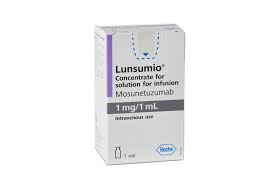
- Roche Lunsumio, domestic approval imminent
- by Lee, Hye-Kyung Oct 31, 2023 05:35am
- According to the pharmaceutical industry on the 30th, the Ministry of Food and Drug Safety completed the safety and effectiveness review of Lunsumio. Completing this review means that the product approval process will soon begin. Lunsumio was designated as a GIFT item as the urgency of its introduction to expand patient treatment opportunities was recognized as the target disease is relapsed or refractory follicular lymphoma and is a drug for which there is no existing treatment. When designated as a GITF target, the review period is shortened by at least 25% (e.g. 120 → 90 working days), the rolling review is applied to review prepared materials first, close communication between reviewers and developers through product briefing sessions and supplementary briefing sessions, and regulatory-related expertise. You will receive a variety of support for rapid productization, including consulting. Lunsumio was designated as a GITF on November 29th of last year, and it is understood that it would take about 11 months from review to approval if the approval announcement is made as early as the end of this month or at the latest in early November. The Ministry of Food and Drug Safety emphasized that the time taken may vary from pharmaceutical company to pharmaceutical company when requesting supplementary data as the reason why it took longer than the originally targeted shortened review period. There are a total of 17 items designated as GIFT targets, and GIFT approvals are expected to continue one after another, starting with the first, Lunsumio. Lunsumio was approved by the U.S. FDA in December last year as a treatment for adult patients with relapsed or refractory follicular lymphoma (FL) after receiving two or more systemic treatments. This drug is a bispecific antibody that engages CD20xCD3 T cells and has a mechanism to connect immune cells and cancer cells by selectively binding to T cells and malignant B cells, which are immune cells that attack cancer cells. Lunsumio confirmed its potential through Lunsumio's phase 2 clinical trial GO29781 study conducted on patients with follicular lymphoma. The study found that Lunsumio's ORR was 80% (72/90), with the majority (57%) having responses that lasted at least 18 months. The proportion of patients who achieved a complete response was 60% (54/90), and the mDOR of response for patients who responded to treatment was 22.8 months.
