
- LOGIN
- MemberShip
- 2026-04-30 20:22:03
- Policy
- Enhertu, G-tec will benefit from new govn't plan
- by Lee, Tak-Sun Dec 26, 2023 05:47am
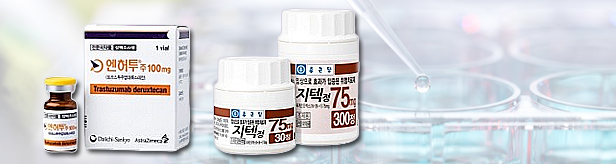
- According to the ‘Plan for the compensation of the innovative value of new drugs’ that the government announced on the 22nd, the breast cancer treatment ‘Enhertu (Daiichi Sankyo-AstraZeneca),’ and the new gastrointestinal botanical drug ‘G-tec (Chong Kund Dang)’ are being regarded as immediate beneficiaries. In the case of Enhertu, it is expected to receive a reimbursement and make way for its reimbursement according to the benefit plan for innovative new drugs according to preferential price awarded to new innovative drugs.' G-tec will receive preferential treatment as a new botanical drug. The burden of drug price cuts for new products produced by innovative pharmaceutical companies will also be reduced based on the eased Price-Volume Agreement system. The government decided to accept reimbursement of innovative new drugs that are recognized by the state. as an innovative new drug, even if they exceed the drug’s ICER threshold, an economic evaluation indicator. The new breast cancer drug Entertu is being evaluated as the only new drug that satisfies the government’s innovativeness standards. The criteria for innovativeness are ▲ there is no substitute or therapeutically equivalent product or treatment ▲ demonstrated clinically meaningful improvement, such as a significant extension in survival ▲ the new drug has been approved by the Ministry of Food and Drug Safety under Article 35(4)(2) of the Pharmaceutical Affairs Act (designation of priority review) and were approved through the fast-track (GIFT) or received a breakthrough therapy designation (BTD) by the US FDA or a priority review (PRIME) by the European Union’s EMA. Enhertu met all of these criteria and is expected be applied a flexible ICER threshold. Enhertu’s reimbursement process is stuck at the pharmacoeconomic evaluation stage because it improved life expectancy and rather increased treatment cost per patient. For example, if the ICER threshold exceeds KRW 50 million, its cost-effectiveness is not recognized, making it difficult to pass the pharmacoeconomic evaluation. However, in this improvement plan, a measure to accept drugs whose innovativeness is recognized, therefore, the drug’s reimbursement progress gains momentum. In addition, Chong Kun Dang’s new drug G-tec will likely benefit and be eligible for preferential drug pricing as a new botanical drug during the reimbursement process. G-tec is a cinnamon bark dried extract that was granted marketing authorization in July last year. The improvement plan reportedly includes preferential drug pricing for drugs developed by innovative pharmaceutical companies. for non-inferior new botanical drugs and new botanical drugs. As a result, there is a possibility that drug prices that were previously set below the weighted average price of alternative drugs or be set in between the highest weighted average price and the weighted average price of alternative drugs. This means that drug prices will be set slightly higher. Chong Kun Dang is an innovative pharmaceutical company, and G-tec is a new botanical drug, so it is likely that the two drugs will both benefit through reimbursement negotiations. On the other hand, Jeil Pharmaceutical’s new Gastroesophageal Reflux Disease (GERD) drug ‘zastaprazan,’ which is considered a potential novel homegrown drug candidate for commercialization next year, is not eligible for this improvement plan. This is because neither Jeil Pharmaceutical nor the drug’s developer, Onconic Therapeutics, is regarded as an innovative pharmaceutical company. Although not immediately eligible, new products from innovative pharmaceutical companies will be able to ease the burden of drug price cuts as they are applied to an eased PVA system. The improvement contains a plan that lowers the drug price cut rate for drugs produced by innovative pharmaceutical companies or an equivalent if the drug is subject to continued PVA price cuts - three times in five years, due to a continuous increase in usage. As a result, products that were subject to more than 3 out of 5 PVA price cuts will receive a reduced price cut rate next year. However, the key is the timing of implementation. The government plans to apply the measures sequentially from the beginning of next year, and the outline of eligible products is expected to be clarified depending on the timing of the revision. An official from the domestic pharmaceutical industry said, "The proposed new drug value compensation plan will at least induce the development of domestically developed drugs, increasing their motivation to develop new drugs.” "This is why domestic pharmaceutical companies have long desired preferential drug pricing for innovative pharmaceutical companies," he said.
- Policy
- Series of expectorant Prospan generics enter KOR mkt
- by Lee, Tak-Sun Dec 22, 2023 05:46am
- Generic versions of Prospan Syrup, a drug that dominated the phyto-expectorant market in the 2000s, are again being introduced to the market. Prospan Syrup, which has been resold by Kwangdong Pharmaceutical since 2012, is the only available 200mL bottle formulation of Prospan, and 7.5mL and bottle formulations of the drug are only available from Kwangdong Pharmaceutical and Youngjin Pharmaceutical. However, 500mL bottle formulations from Ildong Pharmaceutical, Sama Pharm, and Pharmgen Scien are available with reimbursement. In total, 5 companies are selling ivy leaf dried extracts (dried extract of ivy leaves (extraction solvent, 30% ethanol), the active pharmaceutical ingredient in Prospan Syrup. In this situation, four companies will be listed for reimbursement at once next month. According to the industry on the 21st, Ilsung Pharmaceuticals, Kuhnil Biopharm, and Daewoong Bio's Ivy Leaf 30% Ethanol Dried Ext 7.5mL package products will be listed on the reimbursement list from the 1st of next month. Also, Nexpharm Korea and Ilsung Pharmaceuticals’ 500mL vial product will be applied reimbursement. As there are more than 2 but less than 19 identical preparations available in the market, Prospa Syrup generic companies can receive the highest price if they meet the pricing criteria. The products on the list met all the requirements and received the highest price of KRW 240 per packet and 32 won per mL bottle. Prospan syrup was the leading phyto-expectorant with a market share of 25% in the 2000s. In 2010, UBIST statistics show that outpatient prescription sales for the drug alone reached KRW 37.8 billion. The frog character on the product package reflected the popularity of Prospan alone. The drug, which was introduced by Ahn-gook Pharm in 2010 from Germany's Engelhard, suffered a downturn due to its switch to an over-the-counter drug. In 2011, the drug was reevaluated by the Ministry of Food and Drug Safety (MFDS) and converted to an over-the-counter drug, and in that year, the was covered by health insurance only for people under 12 years of age based on the principles set for the oral liquid formulation. Ahn-gook Pharm released Synatura, a combination drug that contains Prospan in March 2011, and parted ways with Prospan in September of the same year. After seemingly ending its relationship with the domestic market, Prospan was reintroduced to the Korean market by Kwangdong Pharmaceutical in 2012 and has remained available ever since. However, Prospan failed to regain its former glory due to the rise of the use of combination drugs such as Synechura. According to IQVIA statistics, Prospan’s sales last year were only KRW 500 million. Nevertheless, there are reasons why generic companies are launching their respective versions. First of all, the number of generics is small, so there are no concerns about receiving discounted prices through the stepped pricing system. Moreover, over-the-counter syrups do not have to meet the ‘own bioequivalence testing’ requirements, so there is no burden on contract manufacturers. All of the pharmaceutical companies that have received the salary this time are being supplied the drug in consignment from Daewon Pharmaceutical. Another favorable factor is that adults can be prescribed Prospan with reimbursement following the change in reimbursement standards that were made in February 2019. In addition, Kwangdong Pharmaceutical's launch of a conveniently packaged product in 2021 has also contributed to the upward trend. Above all, the rise in demand for respiratory drugs after COVID-19 is likely to have attracted the entry of new generics. More Prospan syrup generics are expected to be introduced to the market. Three more pharmaceutical companies received approval for the product, including Daewon Pharmaceutical, Ilhwa, and Hutecs Korea Pharmaceutical.
- Policy
- Delayed re-evaluation of hyaluronic acid eye drops
- by Lee, Tak-Sun Dec 21, 2023 05:54am
- The re-evaluation of the reimbursement appropriateness of hyaluronic acid (HA) eye drops has ultimately been delayed. On the 7th, the Health Insurance Review and Assessment Service (HIRA)’s Drug Reimbursement Committee decided to conduct an additional review of the re-evaluation item. Similarly, on the 20th, the Ministry of Health and Welfare (MOHW)’s Health Insurance Policy Review Committee was unable to reach a decision. Experts who reviewed the re-evaluation item expressed concerns about the potential impact of limiting the amount of HA eye drops use on other single-use eye drops. As the re-evaluation process goes back to the beginning, it will take some time for the results to be determined. On the 20th, the Drug Reimbursement Committee stated during a meeting that, "Regarding HA eye drops, the evaluation results have indicated that establishing a comprehensive reimbursement criteria on single-use eye drops may be necessary, considering the transition to alternative single use eye drops. We will soon make a final decision on this matter." Initially, based on the initial evaluation report by the Drug Reimbursement Committee in September, HA eye drops were deemed unsuitable for reimbursement for conditions related to exogenous factors, such as post-surgery use, medication-related issues, trauma, and contact lens wear. On the other hand, endogenous conditions like Sjogren's syndrome, Stevens-Johnson syndrome, and dry eye syndrome were found to be appropriate for reimbursement. Yet, it was deemed necessary to establish reimbursement criteria, including restrictions such as limiting prescriptions to one per patient visit and setting an annual prescription limit per patient, to ensure appropriate usage. Considering that endogenous diseases make up more than 80% of all prescriptions, pharmaceutical companies were somewhat relieved by the outcomes of the initial review. In fact, no objections were raised by pharmaceutical companies in response to the initial results. However, there is concern about limiting the volume of use. Pharmaceutical companies have expressed concern about discussions to limit the amount of annual use to four from the current 60 annual uses, as it would reduce the track record by half. Despite these concerns, it is reported that no objections were filed as the re-evaluation results were not too bad. Additionally, revising the reimbursement criteria to limit the amount of use may not be straightforward due to opposing opinions among experts. In fact, some experts have suggested that the review of limiting the amount of use should be withdrawn. With the October parliamentary audit season season, there was a surge of concerns about weakened access for senior patients and potential for higher costs, creating an unfriendly atmosphere towards the HIRA. Despite HIRA's efforts to dispute media reports suggesting a more than tenfold increase in the cost of non-reimbursed drugs, there was an ongoing anxiety among the public. During the parliamentary audit season, there was a strong call from members of opposition party to maintain the reimbursement for HA, and the HIRA seemed preoccupied with appeasing the members. Amidst these developments, there were rumors circulating before the final decision in December that reimbursement might be retained for post-LASIK surgery and other exogenous conditions. This proposal would represent a reversal from the initial review. In these circumstances, it’s reported that consultations with experts regarding limiting the amount of usage have not advanced. Experts voiced concerns about a potential balloon effect after the Drug Evaluation Committee's final evaluation. They anticipated that limiting the amount of use of HA eye drops might increase volume of usage of other single-use eye drops. As a result, there is a prevailing opinion that a review of reimbursement criteria for all single-use eye drops should be conducted. However, it is perceived that if the committee were to review the reimbursement criteria for all single-use eye drops, including HA eye drops, it could be challenging to reaching a conclusion in a short time. "Revising the reimbursement criteria for all single use eye drops would pose challenges in terms of time and gathering expert opinions. Consequently, it is possible that the re-evaluation of HA eye drops may not reach a conclusion," said a representative from the pharmaceutical company. It appears that the HA eye drop companies, which had entered into preemptive contracts with prominent law firms at significant cost, have seen their desires fulfilled.
- Policy
- Braftovi Cap. & Bosulif tablets reimb for the New Year
- by Lee, Tak-Sun Dec 21, 2023 05:39am
- Starting on Jan 1 next month, two anti-cancer drugs will be reimbursed. These drugs include Ono Pharmaceutical Korea’s Braftovi Cap. 75mg (encorafenib) and the 3 Pfizer Korea’s Bosulif tablet tiems. Braftovi has been listed following drug price negotiation with the National Health Insurance Service, and Bosulif was not subject to maximum reimbursement amount negotiations. According to the industry on 19th, two anti-cancer drugs including Braftovi Cap. 75mg and Bosulif tablets in dosages of 100mg, 400mg, and 500mg will be listed for reimbursement starting on Jan 1, 2024. Braftovi tablets are used in combination with cetuximab for the treatment of adult patients who have previously received systemic therapy, with metastatic colorectal cancer (mCRC) harboring a BRAF V600E mutation. In August, both drugs successfully cleared the Health Insurance Review and Assessment Service (HIRA)’s Drug Reimbursement Evaluation Committee review, and in September, they initiated drug price negotiations with the National Health Insurance Service. The pharmaceutical companies agreed to apply the risk-sharing agreement (RSA) scheme, leading to their reimbursement approval. The drugs were applied a refund type and expenditure cap type RSA, with an agreement to submit data, such as duration of life for patients who used the drugs, at the end of the RSA period for evaluation. The maximum listed insurance price is reported to be 56,023 won per tablet. Bosulif is indicated for the second-line or later treatment of adult patients with chronic phase, accelerated phase, or blast phase Philadelphia chromosome-positive chronic myelogenous leukemia (Ph+ CML) who have previously demonstrated resistance or intolerance to neoadjuvant therapy including imatinib. In September, the drugs were cleared by the Drug Reimbursement Committee, and a decision was reached to accept an amount below the standard for negotiation exemption. As a result, negotiations on the maximum listed price with the National Health Insurance Service were bypassed, and agreement was reached only on the anticipated claim amount. The government set the maximum listed prices of Bosulif 100mg, Bosulif 400mg, and Bosulif 500mg at 23,552 won, 62,526 won, and 70,655 won, respectively, per tablet. Bosulif is a second-generation targeted anti-cancer drug available alongside Tasigna, Sprycel, and Supect. It received approval from the U.S. Food and Drug Administration in 2021 but has yet to enter the market in Korea. The competition between Pfizer and industry leaders like Novartis and Bristol-Myers Squibb, who currently dominate the chronic myelogenous leukemia (CML) treatment market, remains to be watched.
- Policy
- Bill pending on substituting dispositions for illegal rebate
- by Lee, Jeong-Hwan Dec 20, 2023 05:40am
- A bill that would allow companies to substitute the price cut/rebate suspension dispositions made on their respective drugs due to rebates has been put on hold at the Standing Committee’s Legislation and Judiciary Subcommittee stage. The review for the bill continued after the Ministry of Health and Welfare, the ministry in charge of the bill, turned down the subcommittee members’ suggestion that the current law should be amended to eliminate cases where third parties – such as patients or medical institutions - are harmed by the reimbursement suspension dispositions. As a result, the bill would need to pass the Health and Welfare Committee's subcommittee review before next year's general elections to be enacted during the 21st National Assembly's session. On the 19, the 2nd Legislation and Judiciary Subcommittee of the National Assembly's Health and Welfare Committee reviewed the partial amendment to the National Health Insurance Act presented by Representatives Min-Seok Kim of the Democratic Party of Korea and Jong-Seong Lee of the People’s Power Party. The subcommittee members determined that the bill should be further reviewed at the subcommittee stage and gave the agenda a pending ruling. The bill sought to improve the unreasonableness of administrative dispositions that require patients to change their existing medications to other drugs, such as the suspension of reimbursement imposed on rebate drugs. In particular, the bill includes a retroactive provision to replace administrative penalties with fines for drugs that provided rebates before the amendment of the Health and Welfare Act in 2018. During the subcommittee meeting, Rep Min-Seok Kim, who presented the bill as a representative, said to the MOHW, "Do you really believe there is no room for change in the current system? The original administrative penalty regulation imposes penalties on innocent patients rather than the errant pharmaceutical companies." Therefore, Kim’s argument is that the Health Insurance Act should be amended to allow for penalties to be substituted for fines to prevent unnecessary confusion in medical institutions and damage to patients. However, due to the MOHW’s nonacceptance, the bill was unable to pass the subcommittee review. MOHW Deputy Minister Min-soo Park said, “We already exclude reimbursement suspension dispositions for drugs that have no alternatives. Also, the reimbursement suspension dispositions are not permanent. Although re-registration may be difficult, this is more of an implementation problem in the field. We will negotiate with relevant stakeholders so that they are not punished more than what was purposed by the law.
- Policy
- Forxiga generics continue being released in the Korean mkt
- by Lee, Tak-Sun Dec 20, 2023 05:40am
- Generic versions of Forxiga’s salt-modified drug, which were released in April, will be reimbursed from next month. These generics were released later than other Forxiga generics because the original salt-modified drug obtained first generic exclusivity in Korea, banning the sales of other salt-modified drugs that contain the same ingredient until January 7 next year. According to industry sources on the 19th, Foxiga’s salt-modified generics, including Samjin Pharamcetucial’s Dapozin Tab 5mg, Kyungbo Pharm’s Dapakhan Tab 10mg, will be listed next month Fixe single-agent and 8 combination drugs will be listed at the time. Samjin Pharamcetucial’s Dapozin Tab 5mg is a non-salt dapagliflozin 5mg product. Chong Kun Dang’s Exiglu Tab 5mg is the only other same-ingredient and dosage drug available with reimbursement in Korea, but, Chong Kun acquired the first generic exclusivity for its Exiglu upon release and banned other same-ingredient same-dose drugs from being sold in the market until January 7 next year. To avoid this, Samjin Pharamcetucial released a different dosage of the same ingredient drug, Dapozin Tab 10mg, in April this year. Kyungbo Pharm’s Dapakhan Tab 10mg is a 15.27mg dapagliflozin anhydrous lactose mixture. The 5 other generics with the same ingredient had obtained first generic exclusivity at the same time. Therefore, the same-ingredient same-dosage formulation drugs like Dapakhan 10mg can only be sold from January 8th next year. In addition to Dapakhan 10mg, Guju Pharma’s ‘Dafarizin Tab. 10mg,’ Unimed Pharm’s ‘Sugapa Tab. 10mg,’ and Pharmgen Science’s ‘Daflozin Tab 10mg’ will also be listed for reimbursement on January 8th. With the exception of Daflozin Tab 10 mg, whose company decided to select a price, the other four single-agent drugs received a 59.5% markup to the highest price of the same ingredient drugs. However, the premium pricing is only applied temporarily for 3 months as their price will be adjusted in line with the price adjustment of the original salt-modified drug on April 8 next year. In the case of combination drugs, new salt-modified combination drugs will be listed for the first time. Eight items, including Sinil Pharm’s ‘Forxigly Duo ER Tab 10/500mg', will be reimbursed from next month. Forxigly Duo ER Tab 10/500 mg contains 15.27 mg of dapagliflozin anhydrous lactose mixture. and 500 mg of metformin hydrochloride, and there is no other equivalent currently listed on the reimbursement list. Along with Sinil, HLB Pharm, Kyungbo Pharm, and Samjin Pharm will also be granted reimbursement for 2 different dosage forms of the combination each next month. Meanwhile, 64 Korean pharmaceutical companies have entered the Foxiga generic market so far.
- Policy
- New drugs Zeposia, Koselugo, Trimbow are reimbursed
- by Lee, Tak-Sun Dec 19, 2023 05:53am
- New ulcerative colitis drug .that will be reimbursed from next year New drugs including Zeposia Cap, Koselugo Cap, and Trimbow Cap will be listed for reimbursement starting January next year. In addition, Dong-A ST's diabetes combination drug ‘Sugatree XR Tab’ will also be reimbursed, and the reimbursement standards for drugs that have undergone reevaluation of their reimbursement adequacy will be adjusted as well. On the 18th, the Ministry of Health and Welfare announced that it has issued an administrative notice of the 'Partial Amendment of Details on the Application Standards and Methods of Medical Benefits' that contain the matters above, for enforcement as of January 1 next year. Zeposia Cap is used to treat moderate-to-severe active ulcerative colitis in patients who respond adequately to existing treatment or biological agents including corticosteroids, 6-Mercaptopurine, or azathioprine, or have no response, or have no resistance and are contraindicated to use such drugs. Trimbow Inhaler is used in adults (over 18 years of age) to treat moderate-to-severe chronic obstructive pulmonary disease (COPD) and asthma. In COPD, Trimbow is used for maintenance treatment in patients whose disease is not adequately controlled despite treatment with a combination of two medicines consisting of a long-acting beta-2 agonist plus either an inhaled corticosteroid or a long-acting muscarinic receptor antagonist. In asthma, Trimbow is used for maintenance treatment in adults whose disease is not adequately controlled despite treatment with a long-acting beta-2 agonist plus a medium or high dose of inhaled corticosteroid, and who had one or more exacerbations within 12 months. Koselugo is used conditionally for the treatment of pediatric patients over 3 years but 18 or below with neurofibromatosis type 1 (NF1) who have symptomatic, inoperable plexiform neurofibromas (PN). The patient’s PN is regarded inoperable if the lesion cannot be surgically completely removed without risk for substantial morbidity due to: encasement of or close proximity to vital structures, invasiveness, or high vascularity of the PN. Dong-A ST’s triple antidiabetic combination ‘Sugatree XR Tab’ will also be listed for reimbursement. The drug is a combination of metformin hydrochloride, dapagliflozin, and evogliptin. The MOHW added Sugatree’s combination to the list of dapagliflozin+sitagliptin+metformin combinations that were previously granted reimbursement as part of a metformin+SGLT2i+DPP4i regimen since April this year. Meanwhile, the reimbursement standards for drugs that have undergone reevaluation of their reimbursement adequacy in 2023 will also be adjusted at the same time. The results of the subject substances were presented at the Health Insurance Review and Assessment Service's Drug Benefits Evaluation Committee in July. The drugs for which reimbursement standards will be revised are loxoprofen sodium, limaprost alfadex, and epinastine hydrochloride. Loxoprofen’s antipyretic and analgesic indications for acute upper respiratory tract infections and limaprost alfadex’s indication for the treatment of ischemic symptoms of Buerger's disease will be removed from the reimbursement standards. In addition, the use of epinastine hydrochloride for bronchial asthma will be removed from the reimbursement list. Meanwhile, HA eye drops, which the government decided to continue discussions on its reevaluation results, will not be included in the upcoming reimbursement standard revisions.

- Policy
- PVA price cut rate will be raised by up to 15%
- by Lee, Tak-Sun Dec 18, 2023 05:31am
- From next year, items with higher insurance claims will be subject to higher price cuts when negotiating prices through the Price-Volume Agreement (PVA) system. The maximum price cut rate is also expected to be raised to 15% from the current 10%. However, the exclusion limit will also be raised to KRW 3 billion from the current 2 billion won, which is expected to increase the range of small and medium-sized products that benefit. The National Health Insurance Service reportedly held a public-private consultative body meeting with the Korea Pharmaceutical and Bio-Pharma Manufacturers Association and shared the plans above on the 15th. With this public-private consultation meeting as its last, the NHIS will prepare a final draft with the Ministry of Health and Welfare and apply the changes from January next year. However, changes requiring revision of notifications will be implemented after April next year. A change that does not require revision of the notification – changing the formula to be applied differently according to the claims amount – will be implemented from January next year. Based on the threshold of KRW 30 billion, a higher reduction rate will be applied for higher claims amounts. However, the range of items that are exempt from being applied PVA will be expanded. Currently, drugs with insurance claims of less than KRW 2 billion are excluded, but the plan is to raise this criterion to KRW 3 billion. In addition, a measure has been put in place to adjust the reduction rate or provide refunds for items with temporarily increased usage due to infectious disease situations or unstable drug supply, such as in the case of respiratory drugs that were sued for COVID-19. Furthermore, the innovative drugs mentioned will be recognized for their fair value, and the reduction rate will be lowered for innovative new drugs. If an innovative drug is subject to negotiation 3 times in 5 years, the discount rate will be reduced further during the third negotiation. The maximum reduction rate will be raised from the current 10% to 15-20%, with 15% being the most likely rate considering the range deemed acceptable by the pharmaceutical industry. The rate is expected to be implemented after April next year as it requires revision of the notification. The PVA improvement plan has been discussed with the pharmaceutical industry through a public-private consultative body after the results of the ‘A study on the performance of the Price-Volume Agreement System and measures on its improvement’ that Professor SeungJin Bae from Ewha Womans University's College of Pharmacy participated as the principal investigator, was released in April. The contents shared during the final public-private consultative body meeting were also based on the results of the research service. However, the final draft excluded the research service’s proposal of adding items whose claims had increased by 10% and exceeded by over KRW 5 billion in Type A of the PVA system, which the pharmaceutical industry responded most sensitively to.
- Policy
- Global orphan drug Lamzede receives GIFT designation
- by Lee, Hye-Kyung Dec 15, 2023 05:51am
- 'Lamzede Inj (velmanase)’ received the Global Innovative Products on Fast Track (GIFT) designation and will receive an expedited review in Korea. Lamzede is an orphan drug for which Kwang Dong Pharmaceutical signed an exclusive sales and distribution agreement with Italy's Chiesi Farmaceutical in July this year. As the GIFT program seeks to shorten the review period by at least 25%, the drug could be granted within 90 working days if Kwang Dong Pharmaceutical thoroughly submits the required supplementary materials. The Ministry of Food and Drug Safety recently announced that it had designated Lamzede, an enzyme replacement therapy for the treatment of non-neurological manifestations in patients with mild to moderate alpha-mannosidosis (AM) to receive review through the GIFT program. The MFDS grants the GIFT designation and the expedited review to ▲ drugs aimed at treating serious life-threatening diseases such as cancer or rare diseases ▲ drugs aimed at preventing or treating infectious diseases that may cause serious harm to public health, such as bioterrorism infectious diseases or pandemics, ▲ new drugs developed by Korea Innovative Pharmaceutical Companies designated by the Ministry of Health and Welfare, ▲ drugs used in combination with medical devices subject to expedited review, ▲ drugs that showed clinically significant improvements in effect over existing treatments or for which no existing treatment exists. Lamzede is a global orphan drug for which there are no existing therapies and was granted Priority Review (PR) by the US FDA on February 16, and was granted approval under the Marketing Authorisation Under Exceptional Circumstances (MAEC) program by the European Medicines Agency (EMA) in March 2018. Kwang Dong Pharmaceutical signed an exclusive domestic sales and distribution contract with the Italy-based global pharmaceutical company Chiesi Farmaceutical in July this year. Under the agreement, Kwangdong Pharmaceutical partnered with Chiesi Farmaceutici, for the exclusive sales distribution of Chiesi’s three rare disease drugs – Lamzede, Leber's neuropathy drug Raxone, and Fabry disease treatment Elfabrio – in Korea. The company plans to introduce Chiesi’s diverse lineup to the Korean market through the partnership agreement. In March, before partnering with Chiesi, the company had also signed an agreement with a Hong Kong opathamology drug company Zhaoke Ophthalmology to introduce the latter’s new drug candidate for pediatric myopia, 'NVK002,’ to Korea. Since the commencement of the program in September last year, a total of 23 products have been designated as GIFT products until now. Meanwhile, the first GIFT drug, Lunsumio (mosunetuzumab)’ has been approved in November this year. Drug subject to GIFT receives various support for the rapid commercialization of its product including at least a 25% reduction in the review period (ex: 120 working days → 90 working days), support for preparing approval data, rolling review support, and opportunities for close communication between the reviewer and developer and expert consulting on regulatory affairs, etc.
- Policy
- HER2-positive metastatic breast cancer drug Tukysa approved
- by Lee, Hye-Kyung Dec 15, 2023 05:51am
- The Ministry of Food and Drug Safety (MInister: Yu-kyoung Oh) approved two dosage forms (50mg, 150mg) of MSD Korea’s new breast cancer drug Tukysa (tucatinib) on the 14th. The drug is used in combination with trastuzumab and capecitabine, for patients with locally advanced or metastatic HER2-positive breast cancer who have received two or more prior anti-HER2-based regimens in the metastatic setting. Tucatinib is a tyrosine kinase inhibitor (TKI) that is a selective and potent inhibitor of the HER2 receptor overexpressed on cancer cells. It blocks the intracellular signaling pathway of HER2 to inhibit the survival, proliferation, and metastasis of tumor cells and induce cellular apoptosis The drug is expected to provide new treatment opportunities for HER2-positive patients who have been difficult to treat with existing therapies. MFDS said, "Based on our expertise in regulatory science, we will continue to make our best efforts to ensure that therapies with sufficiently confirmed safety and effectiveness are promptly supplied to expand treatment opportunities for our patients in Korea.”
