
- LOGIN
- MemberShip
- 2026-06-10 20:06:13
- Policy
- INN Prescribing Bill may be excluded from April subcommittee
- by Lee, Jeong-Hwan Apr 22, 2026 08:54am
- The Health and Welfare Committee of the National Assembly has decided to hold a legislative subcommittee meeting on the 28th. However, as the ruling and opposition parties have agreed not to table bills under debates, the legislation that would partially mandate International Nonproprietary Name (INN) prescribing by physicians is expected to be excluded from the review agenda.The bill, a national task for the Lee Jae Myung administration and proposed by members of the ruling Democratic Party of Korea, is strongly opposed by the medical community. Furthermore, lawmakers from the main opposition People Power Party maintain a stance of cautious review or outright opposition. Consequently, the likelihood of reaching a bipartisan agreement to include the bill in this month's subcommittee has diminishedIf the bill is excluded this month, after failing to gain a review opportunity last month due to medical community resistance, the INN Prescribing Bill is expected to be considered during the subcommittee meetings held after the June 3 local elections.On the 20th, the executive secretaries of the Health and Welfare Committee agreed to hold the 1st and 2nd Legislative Subcommittees on the 28th. The plan involves reviewing bills under the jurisdiction of the 1st subcommittee in the morning and the 2nd subcommittee in the afternoon. On the following day, the 29th, a Petition Subcommittee will be held, followed by a plenary session to process the bills passed by the subcommittees.The executive secretaries have requested that individual members' offices submit the bills they wish to have reviewed. While the final agenda is determined through bipartisan consultation, the agreement to prioritize 'non-controversial bills' makes it highly likely that the bill mandating INN prescribing for national essential drugs and medicines in unstable supply, a major point of interest in the healthcare sector, will be excluded for the second consecutive month.The proposed amendments to the Medical Service Act and the Pharmaceutical Affairs Act, introduced by Rep. Jang Jong-tae and Rep. Kim Yun of the Democratic Party, would legally mandate physicians to use active ingredient names rather than brand names when prescribing national essential medicines or drugs with unstable supply.While the legislation aims to address social inconveniences, such as patients "pharmacy hopping" due to long-term drug supply instability, the medical community remains adamantly opposed. Kim Taek-Woo, president of the Korea Medical Association (KMA), has repeatedly stated that if the INN Prescribing Bill is tabled, the KMA will gather physicians nationwide for outdoor protests.Since the People Power Party sympathizes with the medical community's opposition, a bipartisan agreement is unlikely even if the Democratic Party requests a review.Furthermore, as this month's subcommittee is condensed into a single day for both the 1st and 2nd subcommittees, unlike the usual practice of dedicating a full day to each, the probability of tabling a highly contentious bill like INN prescribing is even lower.An official from a member's office on the Health and Welfare Committee explained, "We are currently at the stage of selecting bills for review as requested by each office. Since this subcommittee is being held just a month before the June 3 local elections, both parties have agreed to table and process only non-controversial bills."The official added, "The INN prescribing bill is an issue with significant disagreement, including opposition from doctors, making it difficult to include in this subcommittee's agenda. If it is not reviewed this time, it will likely only be possible after the National Assembly is formed in the second half of the year following the local elections."
- Policy
- Government mobilizes full effort to stabilize medical product supply
- by Kang, Shin-Kook Apr 22, 2026 08:54am
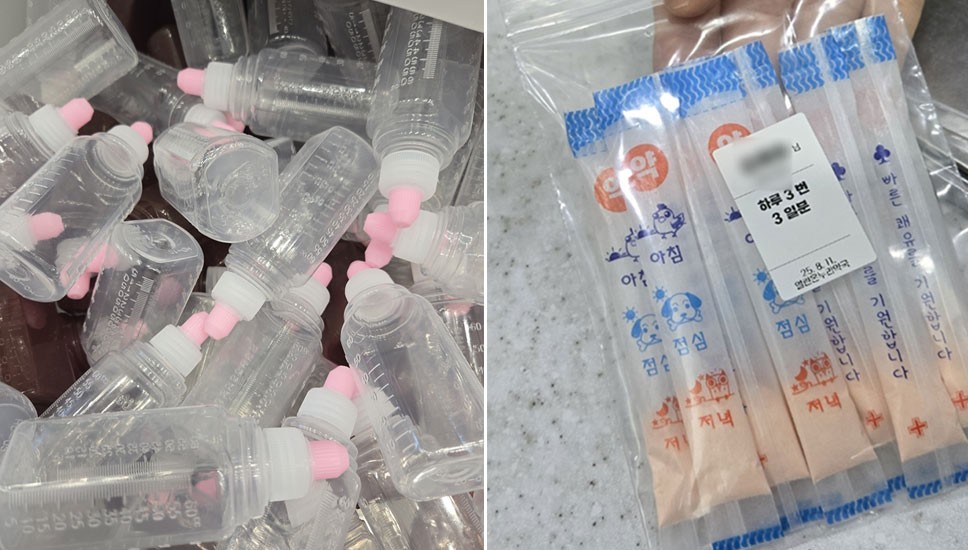
- The government is launching an all-out response, including additional syringe production and increases in fees for treatment materials, in order to resolve the supply instability of pharmaceuticals and medical devices caused by the prolonged war in the Middle East.The Ministry of Health and Welfare (Minister Eun-kyeong Jeong) held the “4th Meeting of Health and Medical Organizations in Response to the War in the Middle East” on the morning of the 21st at Conference House Dalgaebi in Jung-gu, Seoul, together with 12 health and medical organizations and relevant ministries, and discussed medical product monitoring results and future action plans.At present, production volumes of major medical products such as syringes, needles, medicine pouches, and syrup bottles are not much different from the previous year, but measures are being implemented to preemptively block concerns over supply instability.First, regarding syringes, which had raised significant concerns about supply instability, Korea Vaccine has agreed to produce an additional 500,000 units per week for seven weeks, totaling 3.5 million units, through special overtime work. The units produced in this manner will be prioritized for supply to hemodialysis clinics, pediatric and adolescent medicine clinics, and obstetric medical institutions via the Korean Medical Association’s ‘Syringe Hotline,’ and some will be distributed to medical institutions through online stores.Medicine pouches and syrup bottles are likewise not in short supply in the first quarter, but the government plans to continue supporting manufacturers so that raw materials can be supplied to them on a priority basis.Economic support measures have also been put in place to alleviate the cost burden on companies caused by the recent rise in exchange rates.The Ministry of Health and Welfare has decided to increase the average reimbursed health insurance fee by 2% for approximately 27,000 separately billed medical supplies to compensate for the rise in prices of imported raw materials.At the same time, it will respond strictly to acts that disrupt the distribution order. Beginning this week, the Ministry of Food and Drug Safety is deploying a 70-member ‘special syringe and needle crackdown team’ to intensively inspect hoarding and other illegal activities. It plans to take severe measures against any confirmed violations.Regulatory relief measures to alleviate on-site difficulties are also being pursued. The Ministry of Climate Change, Energy and Environment, and the Ministry of Health and Welfare are reviewing a plan to temporarily extend the disposal cycle for general medical waste, on the premise that management will be strengthened so that no infection risk occurs.Minister Eun-kyeong Jeong said, “Production volumes of key items such as syringes are being managed stably at last year’s levels. We will do our utmost to ensure that necessary medical services are provided to the public without disruption through close monitoring.”
- Policy
- Xtandi generics signal June showdown as patent expiry nears
- by Lee, Tak-Sun Apr 21, 2026 07:33am
- Astellas’ newly launched ‘Xtandi Tab’GL Pharma has thrown its hat into the ring for the generic market of Astellas Pharma Korea’s blockbuster prostate cancer treatment, ‘Xtandi (enzalutamide).’ With the compound patent set to expire in June, domestic pharmaceutical companies are securing approvals one after another, and fierce competition is expected in the second half of the year to gain market leadership.GL Pharma’s ‘Proenza’ approved… expands generic lineupAccording to industry sources on the 20th, the Ministry of Food and Drug Safety (MFDS) granted marketing authorization for GL Pharma’s ‘Proenza Soft Cap 40mg.’ This product is manufactured under a contract manufacturing (CMO) arrangement with Cosmax Pharma.With this approval, the number of domestic companies holding approvals for Xtandi generics has increased to include GL Pharma, joining existing holders Alvogen Korea (Anamide), Daewon Pharmaceutical (Enzadex), Hanall Biopharma (Enzaluta), Menarini Korea (Enzal-X), and Hanmi Pharmaceutical (Enzaron).In particular, following Hanmi Pharmaceutical’s approval last month for the first domestically manufactured product, GL Pharma has also secured a domestically produced product, improving supply stability.AI-generated imageFormulation patent through 2033 also avoided… launch barriers eliminatedThe patent barriers, which had been the biggest obstacle for generic companies, have in effect all been removed. Xtandi had been protected mainly by two patents.The compound patent (diaryl hydantoin compound) expires on June 27, 2026. Generic drugs are expected to enter the market starting at this point.The formulation patent (enzalutamide formulation) was scheduled to expire in September 2033. However, five domestic companies, including GL Pharma, Hanmi Pharmaceutical, Chong Kun Dang, JW Pharmaceutical, and Alvogen Korea, recently succeeded in circumventing it by securing a favorable ruling after obtaining favorable decisions in passive scope confirmation trials.As a result, domestic companies have fully secured the legal basis to launch generics early, from June 28.Astellas’ last stand “tablet conversion”… can it defend the market?The defense strategy of the originator company, Astellas Pharma Korea, is no less formidable. Astellas moved to defend the market by abruptly listing ‘Xtandi Tab (40 mg, 80 mg)’ for reimbursement this month, immediately before generic launch, which improves ease of administration.Compared to the existing 40 mg soft capsule, the 40mg tablet version is about half the size, and with the addition of the 80 mg high-dose product, the daily dosage has also been reduced. Consequently, the medication burden of patients who had to take four 40 mg capsules per day is expected to be significantly eased.The price for the 40mg product remains unchanged at KRW 14,167 per tablet, the same as the existing soft capsules, while the 80mg product is priced at KRW 21,251 per tablet. Notably, for the 80mg product, the monthly medication cost (based on 56 tablets) is approximately 25% lower than that of the existing 40mg capsules (112 capsules), which is expected to reduce the financial burden on patients.Astellas’ strategy is to use the tablet formulation to penetrate the generic drug market, which currently consists solely of capsule formulations.According to pharmaceutical market research firm UBIST, Xtandi recorded KRW 38 billion in sales last year, up 26% from KRW 30.2 billion the previous year. Industry attention is focused on whether Astellas can defend the market with the new tablet product.A pharmaceutical industry source said, “With GL Pharma joining the fray, the scale of generics to be launched in line with the June compound patent expiry has grown even larger. Going forward, who secures pricing competitiveness will be one of the decisive factors.”
- Policy
- HER2-mutated NSCLC treatment 'Hyrnuo Tab' approved
- by Lee, Tak-Sun Apr 21, 2026 07:33am
- The Ministry of Food and Drug Safety (MFDS, Minister Yu-Kyoung Oh) announced that it has approved the imported orphan drug 'Hyrnuo Tab (sevabertinib, Bayer Korea)' on the 20th.Hyrnuo Tab is a medication used to treat patients with locally advanced or metastatic non-squamous non-small cell lung cancer (NSCLC) who have HER2 (ERBB2) tyrosine kinase domain (TKD) activating mutations and have previously received systemic therapy.HER2 (Human Epidermal Growth Factor Receptor 2) is a protein involved in the regulation of cell growth. When a mutation occurs in the HER2 TKD (Tyrosine Kinase Domain), downstream signaling pathways involved in cell proliferation and survival are excessively activated, promoting the growth and survival of cancer cells.This drug is an oral reversible tyrosine kinase inhibitor (TKI) targeting HER2, exhibiting anticancer effects by inhibiting the growth of cancer cells expressing mutated HER2.The MFDS explained that it designated Hyrnuo Tab as the 43rd product under the 'Global Innovative Product on Fast Track (GIFT) support system' and conducted an expedited review to ensure its rapid introduction into the medical field.The GIFT system is a program designed to quickly review global innovative medical products with outstanding innovation in treatments for life-threatening, serious, or rare diseases.A MFDS official stated, "We will continue to put our efforts into ensuring that treatments with sufficiently confirmed safety and efficacy are reviewed and approved promptly based on our regulatory science expertise, thereby contributing to expanding treatment opportunities for patients."
- Policy
- Ginkgo biloba ·calcium dobesilate ·silymarin set for reimb re-eval this month
- by Jung, Heung-Jun Apr 17, 2026 09:03am
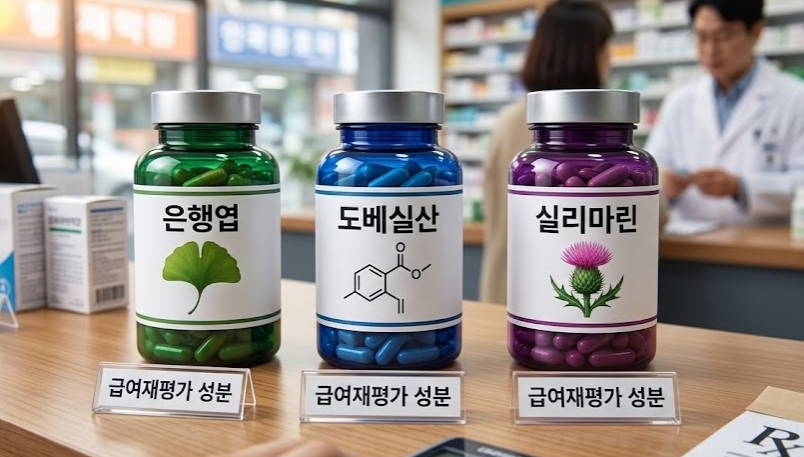
- Ginkgo biloba extract, calcium dobesilate hydrate, and silymarin are set to be discussed for the re-evaluation of reimbursement appropriateness during this month’s Health Insurance Policy Deliberation Committee (HIDC) meeting.Three ingredients, including the two reviewed by the Pharmaceutical Reimbursement Evaluation Committee (PREC) in January and silymarin (added this month), are expected to be considered. The HIDC's final decision process, which had been somewhat delayed following the drug pricing system reform, is anticipated to be finalized this month.According to industry sources on the 15th, the ingredients for this year's reimbursement re-evaluation are highly likely to pass through the HIDC subcommittee today (the 16th) and be presented at the plenary session on the 23rd.The list of ingredients for re-evaluation differs slightly from those discussed in last year's HIDC subcommittee. At that time, seven ingredients were under discussion, including kallidinogenase, meglumine gadoterate, diacerein, afloqualone, and octylonium bromide, as well as ginkgo biloba and calcium dobesilate.However, as the drug pricing system reform plan, which included a new set of criteria for appropriateness re-evaluation, passed the HIDC last November, re-discussions were held this year based on these updated standards.The requirements for claim amounts and registration in specific countries have been removed. The selection criteria have been changed tov include ▲ingredients for which health authorities in A8 countries have initiated clinical or reimbursement appropriateness re-evaluations ▲cases where data or clinical evidence contradicting previously reported efficacy has been published ▲drugs for which academic societies or experts have recommended a re-evaluation.Accordingly, ginkgo biloba and calcium dobesilate were reviewed as re-evaluation targets by the PREC in January. Typically, these should have been finalized at the January HIDC meeting following PREC approval, but the HIDC consideration was delayed alongside the postponement of the drug pricing reform.In the meantime, silymarin was added to the list of targets for review at this month's PREC meeting. Although a court had previously ruled to cancel the notification of silymarin's removal from the reimbursement list following an administrative lawsuit by pharmaceutical companies, the ruling was limited to procedural issues, leaving re-evaluation likely.The Health Insurance Review and Assessment Service (HIRA) plans to proceed with the re-evaluation again, this time acknowledging the literature previously pointed out by the court. Consequently, silymarin, which underwent reimbursement re-evaluation in 2021, will return to the evaluation table alongside ginkgo biloba and calcium dobesilate.Due to the government's reform of the drug pricing system, the follow-up measures following a reimbursement re-evaluation have been simplified to either exclusion from reimbursement or selective reimbursement. The bypass that allowed companies to maintain reimbursement by voluntarily lowering drug prices to demonstrate cost-effectiveness relative to alternative drugs has effectively been blocked.

- Policy
- New reimb criteria established for growth hormone Sogroya
- by Jung, Heung-Jun Apr 17, 2026 09:03am
- The government is establishing new reimbursement criteria following the new listing of growth hormone treatments. Additionally, self-injectable formulations of severe asthma treatments have been newly added to the list, allowing for switching between formulations.On the 16th, the Ministry of Health and Welfare issued an administrative notice regarding the amendment to the “Detailed Provisions on the Application Criteria and Methods for Medical Care Benefits.” The amendment is scheduled to take effect on May 1.Novo Nordisk’s Sogroya prefilled pen (somapacitan) will have new reimbursement criteria established for growth hormone deficiency in both pediatric and adult patients.The drug is administered at a maximum of 8 mg per week in accordance with the approved indications, and patients must bear the full cost if they exceed specific height criteria (153 cm for females, 165 cm for males). Coverage may be extended if growth hormone deficiency is confirmed after 3 years of treatment. Self-injection prescriptions are also permitted.Reimbursement criteria have also been newly established for emergency imported drugs supplied through the Korea Orphan & Essential Drug Center. The skeletal muscle relaxant Takeda Lysthenon Inj is now covered for use during general anesthesia to alleviate spasms associated with endotracheal intubation or electroconvulsive therapy (ECT).For the anti-atherosclerotic agent Epic Cholestyramine Powder for Susp, coverage criteria have been established solely for the purpose of 'Reducing serum cholesterol levels’ within the scope of approval by the Ministry of Food and Drug Safety. However, patients must bear the full cost when the drug is administered for other purposes, such as treating pruritus.Reimbursement criteria have been established for the vasodilator Viatris Isoptin Inj for the treatment of angina and arrhythmia, and Centa 5-HT-P Cap is now covered for the treatment of patients with BH4-deficient phenylketonuria. For GSK’s severe asthma treatment Nucala, the self-injectable autoinjector formulation Nucala Autoinjector was added, allowing switching with the existing formulation.Additionally, for Nucala Autoinjector, long-term prescriptions of up to 24 weeks are permitted for patients who have shown stable disease activity and no side effects 6 months after the initial dose.’With the listing of new combination drugs for diabetes and hypertension/dyslipidemia, general reimbursement principles have been partially revised. The empagliflozin + linagliptin combination has been added for diabetes with the new listing of K-Glito Tab, and the fimasartan + atorvastatin + ezetimibe combination has also been added for hypertension and hyperlipidemia with the new listing of Kanarbzet Tab.Gliptide Tab, which failed to demonstrate usefulness during the Ministry of Food and Drug Safety’s clinical reevaluations, will be removed from the reimbursement list.
- Policy
- Free HPV vaccination for 12-year-old boys to begin in May
- by Lee, Jeong-Hwan Apr 17, 2026 09:03am
- Starting this May, 12-year-old boys will also be eligible for free human papillomavirus (HPV) vaccinations.The Korea Disease Control and Prevention Agency announced on the 16th that it will launch a new national HPV vaccination support program targeting 12-year-old male adolescents (born in 2014) starting May 6.With this change, the existing HPV free vaccination program for female adolescents aged 12–17 and low-income women aged 18–26 will now include male adolescents, who will receive two HPV vaccine doses at six-month intervals.Starting with those born in 2014 this year, those born in 2015 will be newly supported next year. Even if those born in 2014 do not complete both doses this year, they will still be eligible for free vaccination next year.The KDCA plans to expand the program gradually, broadening the target group by one age group each year.HPV vaccination is included in national immunization programs in 147 countries worldwide, including 37 of the 38 member nations of the Organization for Economic Cooperation and Development (OECD).According to the U.S. Centers for Disease Control and Prevention (CDC), 90% of cervical cancers and 70% of anogenital and oropharyngeal cancers are caused by HPV infection. The KDCA believes that expanding free HPV vaccination will help prevent related diseases such as cervical cancer, anal cancer, genital warts, and anal intraepithelial neoplasia.The KDCA maintains that since HPV can infect not only women but also men, and since the HPV vaccine’s efficacy in preventing related diseases has been confirmed in men as well, vaccination can reduce future infections and the incidence of related diseases.The Advisory Committee on Immunization also determined that HPV vaccination is effective in preventing diseases such as genital warts and anal cancer in men. Based on domestic and international research and vaccination experience, which have confirmed the safety and efficacy of the HPV vaccine, the agency recommended expanding support for HPV vaccination among male adolescents.Eligible individuals can visit a nearby designated medical institution or public health center to receive the HPV vaccine (quadrivalent HPV vaccine) free of charge. The KDCA plans to provide information on medical institutions through the Vaccination Assistant website and support vaccination history tracking and management.Commissioner Seung-Kwan Lim stated, “HPV vaccination is an effective means of preventing future cancers and related diseases. We hope that this expansion of the target group will enable more adolescents to receive the vaccination in a timely manner.”
- Policy
- GLP-1 obesity drugs designated as medicines at risk of misuse
- by Lee, Tak-Sun Apr 16, 2026 02:26pm
- Eun-hee Moon, Director of the Pharmaceutical Management Division at the Ministry of Food and Drug Safety, explains the details of the plan to designate GLP-1 obesity drugs as drugs at risk of misuse or abuse to reporters on the 14th.The Ministry of Food and Drug Safety (MFDS) has officially stated that its proposal to designate GLP-1 class obesity treatments as drugs at risk of misuse or abuse passed the Central Pharmaceutical Affairs Council review on the 8th, and that implementation may begin within as little as 2 to 3 months.According to the MFDS, all participating members of the Central Pharmaceutical Affairs Council agreed to the designation of GLP-1 obesity treatment drugs as being at risk of misuse or abuse. However, it was noted that no representatives from obesity societies or specialists attended the committee meeting.Eun-hee Moon, Director of the Pharmaceutical Management Division at the MFDS, made the announcement during a briefing for specialized media reporters held at the MFDS headquarters in Osong on the 14th.Director Moon explained that prior to the council meeting, the MFDS had consulted with the Ministry of Health and Welfare to designate GLP-1 obesity treatments as drugs at risk for misuse or abuse, and proceeded with the designation process by collecting data on usage and distribution patterns for relevant products.The target ingredients are liraglutide, semaglutide, and tirzepatide formulations indicated for obesity treatment. At present, that means Saxenda, Wegovy, and Mounjaro are included. However, because Mounjaro has indications for both diabetes and obesity, the misuse-risk warning is expected to appear on the packaging of the diabetes treatment product as well.Once designated as drugs at risk for misuse or abuse, these products may be sold in pharmacies located in areas exempt from the separation of prescribing and dispensing, and only with a doctor’s prescription.In addition, pharmaceutical companies will be required to display the phrase “drug at risk of misuse and abuse” on containers, packaging, and package inserts.Director Moon stated, “We expect that labeling GLP-1 obesity treatments as ‘drug at risk of misuse and abuse’ will serve as a reminder to patients and healthcare professionals, ensuring the drugs are used only by those who truly need them.” Moon added that the agency plans to continuously provide guidelines and information materials to promote appropriate use.She explained that the decision to designate these GLP-1 obesity treatments as drugs at risk of misuse and abuse was based on surveys regarding Koreans’ perceptions of obesity. Moon said, “We took into account many of the social phenomena highlighted by the media following the launch of Wegovy in 2024. In particular, we referred extensively to survey data on obesity rates and public perceptions.”She explained, “According to a survey by the Korea Disease Control and Prevention Agency, while Korea’s obesity rate is lower than the OECD average, the proportion of citizens who perceive themselves as obese is relatively high. Although only about one-third of the population exceeds the BMI threshold for obesity, the subjective perception of being obese stands at 54%,” noting that these factors served as the basis for designating GLP-1 obesity drugs as misuse-risk medicines.The reason only GLP-1 obesity treatments were selected for designation was that the authorities took into account the broader social issue of misuse and abuse, along with increasing trends in usage and import volume. Consequently, other obesity treatments besides GLP-1 agonists and psychotropic drugs were excluded from this designation.Regarding concerns that the designation could lead to counterfeit drugs entering through illegal distribution routes, Moon said the ministry plans to communicate with manufacturers, continue monitoring overseas cases, and urge the public to exercise caution.Moon emphasized, “The Central Pharmaceutical Affairs Council discussed all controversies, including the use of these drugs for pediatric obesity that may require treatment. The members focused on the fact that there are cases in which patients are able to obtain prescriptions too easily, including online, and all agreed that GLP-1 obesity drugs should be designated as misuse-risk medicines.”In response to a reporter’s question, Moon also clarified that no representatives from obesity academic societies or obesity specialists had attended the committee meeting.Moon stated, “We will proceed with the ‘Regulations on the Designation at Risk of Misuse and Abuse’ (MFDS Notification) to designate GLP-1-based obesity treatments accordingly. Following regulatory review and consultation, we expect to complete the revision of the notice and implement it within two to three months at the earliest.”
- Policy
- NA Health and Welfare bill subcommittee schedule uncertain
- by Lee, Jeong-Hwan Apr 14, 2026 08:53am
- As negotiations between the ruling and opposition floor members over the schedule for the National Assembly Health and Welfare Committee’s April bill review subcommittee drag on, the prospects for the meeting remain uncertain.If the subcommittee does not convene due to a failure to reach an agreement, bills of interest to the medical and pharmaceutical sectors, including the bill mandating limited international nonproprietary name (INN) prescribing, will be delayed until after the June 3 local elections.On the 13th, a ruling-party official on the Health and Welfare Committee explained, “Since the beginning of this month, we have been continuing discussions with the opposition over the schedule for the April bill subcommittee, but we have not yet reached an agreement.”As an agreement between the ruling and opposition party floor leaders on the subcommittee schedule remains elusive, some are predicting that holding the meeting in April is practically impossible.This is because it would be difficult for the Democratic Party of Korea to convene the subcommittee unilaterally, given that opposition parties, including the People Power Party, are not showing much enthusiasm for the meeting.Moreover, the bill on the limited mandatory use of INN prescribing, which is one of the hottest issues in the healthcare sector, falls under the jurisdiction of the first legislation subcommittee, whose chair is Rep. Mi-ae Kim of the People Power Party, making it even less likely that the meeting will be held if a consensus between the ruling and opposition parties is not reached.This bill had already been placed on the agenda at the March subcommittee, but was postponed once after failing to secure an opportunity for review.If the subcommittee does not convene this month, the probability of it being held before the June 3 local elections is effectively close to zero.This is because scheduling for the subcommittee can only be coordinated through bipartisan consultations in late June, after the local election results are announced.Given the current state of negotiations between the ruling and opposition parties on the Welfare Committee, it seems unlikely that the bill on mandatory limited INN prescribing, a source of intense conflict within the medical community, will be reviewed by the subcommittee this month.In particular, the medical community, led by the Korean Medical Association, has stated that if the Welfare Committee subcommittee places the INN prescribing bill on April’s agenda, it will again stage an outdoor rally this month, following a similar protest last month. This appears to be having some effect on whether the subcommittee is convened.The medical community maintains that it will remain on constant standby to organize protests against the bill in accordance with the subcommittee’s schedule and agenda.Accordingly, some are questioning whether the parties would really choose to convene the subcommittee now, ahead of local elections, given that it could divert attention away from the election campaign.A ruling party official on the Welfare Committee stated, “The Democratic Party continues to appeal to the opposition, the need to convene the April bill subcommittee to expedite the review of bills related to people’s livelihoods. We are currently waiting as we have not yet received a clear response, so whether the meeting will be held remains undecided.”
- Policy
- Smoking-cessation drug varenicline continues to exit the market
- by Lee, Tak-Sun Apr 14, 2026 08:53am
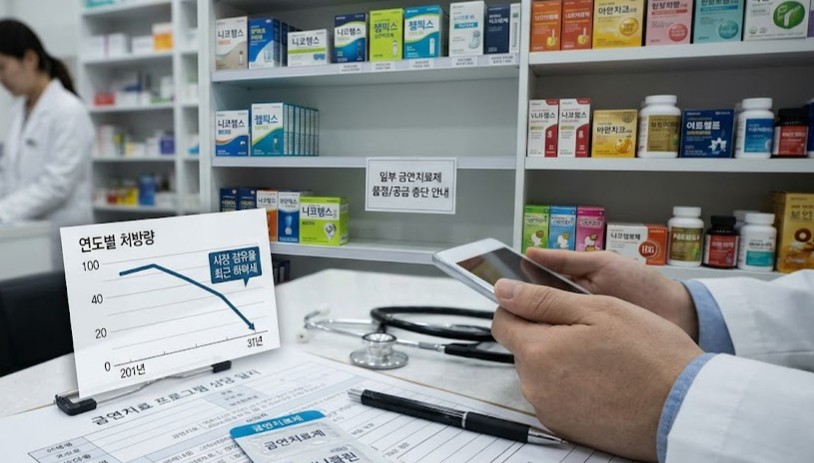
- AI-generated imageThe market presence of varenicline-based smoking cessation treatments is steadily contracting. Following the withdrawal of the original Champix from the domestic market, CTC Bio’s “Nicobreak Oral Disintegrating Film” (active ingredient: varenicline), which had garnered attention as the country’s only film-type smoking cessation treatment, has also been removed from the list of approved products.According to the Ministry of Food and Drug Safety on the 13th, the approvals for two strengths of CTC Bio’s smoking-cessation aid ‘Nicobreak ODF,’ 0.5 mg and 1 mg, expired on that date and were removed from the list of approved medicines. This comes 5 years after the product became the first oral dissolving film (ODF) formulation of varenicline approved in Korea in April 2021.At the time of approval, Nicobreak positioned itself as a ‘dark horse’ capable of targeting a niche market, particularly among the elderly who have difficulty swallowing pills and smokers with active lifestyles, by highlighting its convenience of being able to take the medication without water, as a break away from Pfizer’s original varenicline, ‘Champix,’ which comes in tablet form.However, the actual market trend proved harsh. The industry points to several reasons behind the expiration of Nicobreak’s approval: ▲ failure to secure market share, ▲ contraction of government-supported smoking-cessation programs, ▲ the shrinking position for varenicline-based therapies overall, and cutthroat competition among generics.The domestic varenicline market is currently understood to be led by Jeil Health Science’s ‘Nicochamps,’ with Hanmi Pharmaceutical’s ‘Nocotin’ following behind. The assessment is that the ODT formulation lacked sufficient marketing force to break the tablet-centered prescription practice.Changes in the government’s anti-smoking policy also worked against it. The Ministry of Health and Welfare’s budget for the National Smoking Cessation Support Service has steadily declined each year, from approximately KRW 143.5 billion in 2015 to KRW 91.6 billion in 2025. These budget cuts led to reduced participation by medical institutions and a decline in patient referrals, which became a decisive factor in pharmaceutical companies losing interest in the smoking cessation treatment market.Furthermore, the market shrank even further when Champix faced a supply suspension due to the nitrosamine impurity issue that arose in 2021.After Pfizer Korea voluntarily withdrew the approval for its original product, ‘Champix,’ and exited the Korean market in 2024, major pharmaceutical companies such as Daewoong Pharmaceutical and Kwangdong Pharmaceutical have also been successively surrendering approvals for their varenicline generics.An industry official analyzed the situation as follows: “Although the market was reorganized after the varenicline impurity issue, the reduction in government support has made it difficult to attract new patients. For a specialized formulation like Nicobreak ODT, if sales are not sufficient, the practical benefit of maintaining the product would have been even lower.”With Nicobreak’s exit, the market for varenicline-based treatments is expected to become even more concentrated around a few leading products. In addition, with the disappearance of a specialized formulation that can be taken without water, the range of choices available to patients seeking smoking cessation treatment is likely to narrow somewhat.
