
- LOGIN
- MemberShip
- 2026-04-28 05:53:14
- Policy
- 30-day negotiation window for essential medicines
- by Lee, Tak-Sun Dec 04, 2024 05:57am
- The National Health Insurance Service (NHIS) has started revising guidelines related to the government's initiative to improve the drug pricing system to 'reflect on the new drug innovative value.' First, the NHIS announced to introduce Risk Sharing Agreement (RSA) types and has reduced the time required to negotiate pricing adjustments for national essential medicines. The NHIS has recently drafted a revision to the guidelines for drug price negotiations and detailed matters for RSA drug price negotiations, collecting public opinions. The deadline for submitting opinions is December 4. Regarding revision to the guidelines for drug price negotiations, the NHIS established a basis for shortening the time required for drug price negotiation and pre-negotiating the national essential medicines. In detail, the NHIS decided that the negotiating period for drugs evaluated at the Drug Reimbursement Evaluation Committee (DREC) to require assistance from the central administrative agency for drug supply issues, such as crisis for infectious diseases or emergency drug shortages, will be 60 days instead of 30 days. Also, pre-negotiation is possible, and the pre-negotiation application will be the same as a submitted document to the Health Insurance Review and Assessment Service (HIRA). For detailed matters for RSA drug price negotiations, the NHIS announced introducing an early-stage treatment cost refund type and an achievement-based refund type. The early-stage treatment cost refund type is for applicants seeking refunds from NHIS for a portion of the initial administration cost. Also, the achievement-based refund type is for applicants requesting refunds of a portion of the total claim amount of the drug from NHIS when an individual does not meet the predetermined treatment effects after a follow-up·monitoring for a specified time. Recently, these two types have been applied to high-priced drugs. With the newly added types, contract additions·changes will be permitted during negotiations, and post-management procedures will be officially incorporated. Additionally, the current revision will simplify the procedure required at RSA termination. Previously, the NHIS requested an evaluation of the RSA-approved drug's clinical usefulness and cost-effectiveness before the contract termination. The current revision will skip the drug procedure under the third contract for RSA. Also, the NHIS will request confirmation from the HIRA director related to changes to RSA drugs, including substitute drugs or reimbursement criteria. "The revision has been established to bring improvements to the drug pricing system to reflect on new drug innovative value and to ensure healthcare security," the NHIS explained regarding the current revision. "To promote innovative new drug value and incentivize innovative growth, the NHIS aims to support sustainable, innovative systems for the pharmaceutical and biotech industry. This includes ensuring stable drug supplies by setting reasonable drug prices for essential pharmaceuticals required by patient treatments and establishing a foundation for essential healthcare." The current revision is a follow-up to the 'Specific evaluation criteria of new drugs and medicines in consideration for negotiation,' which was established by the HIRA in August, and the 'Pharmaceutical Approval and Adjustment Criteria,' which was announced in October. The government plans to promote new drugs' innovative value and to improve the drug pricing system to ensure healthcare safety by favoring the national essential medicine. The government will expand the number of pharmaceuticals for RSA and provide benefits for the drug pricing of the national essential medicines that use domestic raw materials. An NHIS employee explained, "We plan to implement the revised draft by hearing public opinions alongside the announced draft by the Ministry of Health and Welfare (MOHW).
- Policy
- Legislation of ‘INN prescriptions’ for drugs begin
- by Lee, Jeong-Hwan Dec 04, 2024 05:56am
- The government is promoting legislation to recommend international non-proprietary name prescriptions for national essential medicines and drugs with unstable supply and demand and to encourage the use of 'product name and the international non-proprietary name’ when obtaining a marketing authorization. The bill also includes a provision that requires the government to establish a policy to resolve stockouts by legislating the definition of unstable drugs and giving them the same status as national essential medicines. The legislation recommends that the government prescribe and approve the use of ingredient names only for drugs with unstable supply and national essential medicines, which are frequently out of stock and cause inconvenience to pharmacies and patients. On the 2nd, Rep. Yoon Kim, a member of the Democratic Party of Korea, introduced a bill as representative to amend the Pharmaceutical Affairs Act. First, the bill defines an unstable supply drug as a drug designated by the Minister of Health and Welfare and the Minister of Food and Drug Safety in consultation as a drug that needs to secure a stable supply due to unstable supply and demand. The amendment puts unstable drugs on the same level as national essential medicines. The Minister of Welfare and the Minister of Food and Drug Safety are obligated to carry out support tasks to promote the production and utilization of drugs with the same ingredients as drugs with unstable supply and demand. The Minister of Welfare and the Minister of Food and Drug Safety are required to establish and promote comprehensive measures to stabilize the supply of drugs with unstable supply and demand and to support the establishment of a stable supply base, research and development, and safe use. Recommendation of international non-proprietary name prescriptions and approving ingredient-containing product names In particular, the law recommends doctors prescribe ingredient names for national essential medicines and drugs with unstable supply and demand and encourages pharmaceutical companies to receive marketing authorization based on ingredient-containing product names. Specifically, the Minister of Welfare is required to establish a policy to activate the use of ingredient names for nationally essential medicines and drugs with unstable supply and demand in prescriptions. This provision has the effect of encouraging the prescription of nationally essential medicines and drugs with unstable supply and demand. In addition, the Minister of Food and Drug Safety recommends the use of international non-proprietary names for those who intend to sell or import national essential medicines and drugs with unstable supply and demand. The Minister of Food and Drug Safety can provide administrative and financial support for those who want to sell and import nationally essential medicines, etc. Through the provision, the government recommends pharmaceutical companies planning to sell and import drugs with domestic marketing authorizations to include the names of ingredients in the product names. The law also stipulates that the MFDS National Council for Stable Supply of Essential Drugs shall consult on matters related to national essential medicines. The Korea Orphan & Essential Drug Center will manage drugs with unstable supply along with national essential medicines. The amendment is expected to create a government organization dedicated to drugs with unstable supply and demand. “In recent years, the problem of unstable supply and demand of certain drugs has not been easily resolved and is often prolonged,” said Rep Yoon Kim. ”This causes problems within the drug supply process, from distribution to consumer purchases, such as stockpiling, issuing long-term prescriptions, and over-the-top trading between pharmacies.” “Therefore, the government will establish a stable supply mechanism for drugs with unstable supply and demand and promote the use of international proprietary names for nationally essential medicines to lay the foundation for stable and timely supply of drugs to consumers.” Yoon Kim was joined in the bill by Democratic Party members Gi-Pyo Kim, Nam-Geun Kim, Nam-Hee Kim, Seung-won Kim, In-soon Nam, Ji-won Park, Hae-Cheol Park, Hee-Seung Park, Seung-A Bak, Hoon-Gi Lee, and Mi-ae Lim.
- Policy
- 17 drugs receive essential medicine designations
- by Lee, Hye-Kyung Dec 03, 2024 05:53am
- Seventeen medicines that are essential for pediatric patients, cancer patients, and others, but require government support due to unstable supply, have been newly designated as national essential medicines. The Ministry of Food and Drug Safety (MFDS, Yu-Kyung Oh) announced on the 29th that it held a meeting on the stable supply of national essential medicines and newly designated 17 items (ingredients and formulations) as national essential medicines. Newly designated national essential medicines include cisplatin injection, an anti-cancer drug used for testicular and bladder cancer; clofarabine injection, a treatment for pediatric leukemia; and citric acid-sodium citrate-glucose mixtures, which prevents blood from clotting in blood donations. Newly designated national essential medicines Formoterol dry syrup, a cold medicine used to relieve bronchitis symptoms, whose designation has been discussed since last year at the 'Public-Private Consultative Committee that Responds to the Unstable Supply and Demand of Drugs' jointly run by the Ministry of Food and Drug Safety and the Ministry of Health and Welfare, was also newly designated as a national essential medicine. This new designation brings the total number of National Essential Medicines to 473, an increase of 17 from 456. The National Council for Stable Supply of Essential Medicines, which discusses issues related to the stable supply of medicines at the pan-governmental level, has been establishing comprehensive measures for the stable supply of essential drugs and discussing important matters necessary for the operation of the system, such as the designation or removal of new essential drugs. At this meeting, they shared information on the stable supply system of national essential medicine and discussed ways to collaborate between organizations to operate the national essential medicine system more efficiently. The MFDS said it will continue to actively cooperate with related ministries and medical sites to ensure a stable supply of nationally essential drugs, and will do its best to provide institutional and administrative support to ensure the timely and stable supply of drugs essential for patient treatment. "The National Essential Medicine Designation System, which designates and supports medicines that require stable supply, is essential for securing national health security," said MFDS deputy minister Yumi Kim, who chairs the council. "We will work together to create an environment where people can use medicines with peace of mind without supply insecurity."
- Policy
- Janssen’s Tremfya’s price cut 2yrs due to increased use
- by Lee, Tak-Sun Dec 03, 2024 05:52am
- The upper limit price of Tremfya, Janssen's autoimmune disease treatment, is expected to be reduced under the price-volume agreement system for the second consecutive year. According to industry sources, the National Health Insurance Service and Janssen recently finalized PVA negotiations for the reimbursement of Tremfya on the 1st. In December last year, Tremfya’s upper price limit was also lowered from KRW 1.59 million to KRW 1.55 million under the price-volume agreement Type I negotiations. If the price of the drug is reduced again this year, it will be the second consecutive year that the upper limit has been adjusted under the PVA system. As the first interleukin-23 inhibitor, the drug was approved as a treatment for adult patients with plague psoriasis in April 2018. In September of the same year, the indication was applied to reimbursement benefits. The drug has been increasing its indications and expanding its market size. The drug’s reimbursement was extended to cover pustular in adults in May 2021, and psoriatic arthritis in May 2022. The Ministry of Food and Drug Safety had previously approved the drug to treat active psoriatic arthritis in adult patients who had responded inadequately or were intolerant to disease-modifying anti-rheumatic drugs (DMARDs). Also, Tremfya is reimbursed in patients with active or advanced psoriatic arthritis who show an inadequate response to TNF-α inhibitor or IL-17 inhibitor or need to discontinue the use of such drugs due to contraindications or adverse events. The reimbursement extension has been driving domestic sales. According to IQVIA, domestic sales of Tremfya increased from KRW 6.1 billion in 2019 to KRW 12.5 billion in 2020, KRW 18.2 billion in 2021, and then KRW 24.3 billion in 2022. In May 2021, the upper price limit of Tremfya was first lowered through Type A of the price-volume agreement. At that time, it was reduced by 4.5% from KRW 1.6364 million to KRW 1.589 million. Type A negotiations are triggered when a drug’s insurance claims increase by over 30% more than the expected amount, so it is expected that Tremfya’s insurance claims have already exceeded expectations in 2020. After the Type A negotiations last year, the drug was again subject to Type B negotiations this year and became a regular in the PVA system. Drugs are subject to Type B negotiations if the claims amount increased by more than 60% from the previous year after a drug’s insurance ceiling price was adjusted through Type A negotiations, or if the increase was more than 10% and the amount over KRW 5 billion. This is a testament to the year-over-year growth of Tremfya’s domestic sales.
- Policy
- Concerns about National Bio Committee's foreign pharma exec
- by Lee, Jeong-Hwan Nov 29, 2024 05:54am
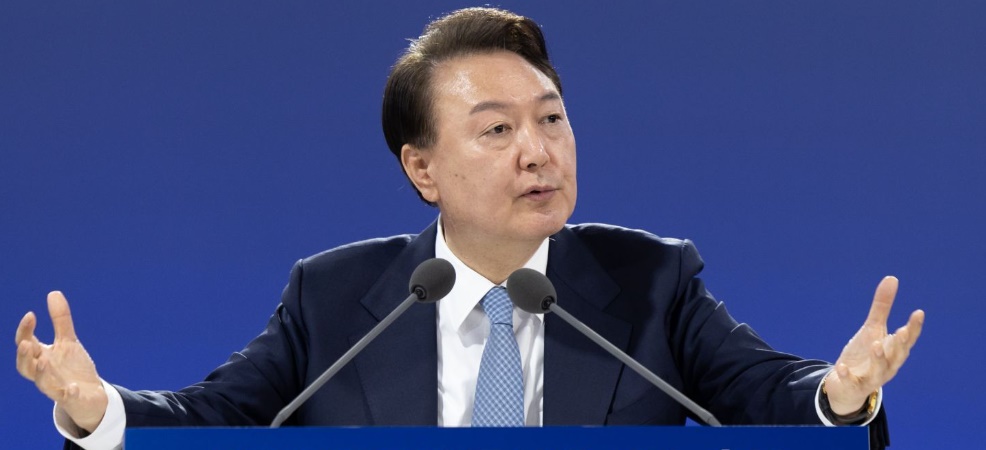
- President Yoon Suk Yeol has been appointed as chair of the National Bio Committee. The National Bio Committee, chaired by President Yoon Suk Yeol, is set to launch in December. However, reports indicate that a global pharmaceutical company executive has been included as a committee member, raising concerns. The committee comprises up to 40 members, including the chair, vice-chair, various ministers, and officials from the National Security Office. One of the appointed committee members is an executive from a foreign pharmaceutical company. Given that the committee's primary role is to formulate national strategies for the pharmaceutical and biotechnology industries, critics have argued that appointing an executive from a major multinational pharmaceutical company has the potential for government policies or confidential information to be leaked externally. According to the pharmaceutical industry on November 27, the list of committee members of the National Bio Committee included an executive from a multinational pharmaceutical company. President Yoon Suk Yeol was appointed as chair of the National Bio Committee, and Lee Sang-yeop, vice president of the Korea Advanced Institute of Science and Technology (KAIST), will serve as vice-chair. Civilian committee members include 20 experts, including Kim Bit-naeri, Director of the Institute for Basic Science, Koh Han-seung, CEO of Samsung Bioepis, and Kim Young-tae, President of Seoul National University Hospital. The first meeting is scheduled for next month. An issue has arisen from including an executive from a multinational company who has worked for nearly 20 years in a global pharmaceutical company. Criticism has been raised about including an executive from a foreign-based company representing global big pharma to the National Bio Committee for the Korean pharmaceutical industry is inappropriate. The National Bio Committee is responsible for reviewing South Korea's overall biotechnology policies, including research and development (R&D) and new drug approvals, to foster the high-tech pharmaceutical and biotechnology industry as a next-generation key sector. The committee comprises up to 40 members, including the President as Chair, a vice chair, ministers from various government departments, the senior secretary for Science and Technology, the Third Deputy Director of the National Security Office, and private experts from the field and academia. Criticism have been raised about including an executive from a multinational pharmaceutical company. Critics argue that such an appointment contradicts the committee's purpose of promoting domestic pharmaceutical innovation. They state that allowing a global "Big Pharma" executive to participate in discussions about policies shaping South Korea's pharmaceutical R&D, regulatory·pricing strategies undermines the committee's intent. Concerns also extend to potential security risks, as sensitive government policies or information on the pharmaceutical and biotechnology sectors critical to national security could be inadvertently·deliberately leaked externally. "The National Bio Committee is responsible for unveiling, formulating, discussing, and deciding on South Korea's R&D strategy in the pharmaceutical and biotechnology sectors. Including a multinational pharmaceutical company executive in a committee chaired by the President Yoon, where vaccine and pharmaceutical security issues may be discussed, is illogical. It is comparable to handing over our home territory," a representative from the domestic pharmaceutical industry said.
- Policy
- KIPO opposes to objections to new drug patent extended cap
- by Lee, Jeong-Hwan Nov 28, 2024 05:55am
- The Korean Intellectual Property Office (KIPO) The Korea Research-based Pharma Industry Association (KRPIA) and others have submitted an opinion disagreeing with the proposed legislation that would introduce a maximum cap for terms of patent protection for new drugs. The proposed legislation is intended to facilitate an earlier market launch for Korea-made new drugs. The Korean Intellectual Property Office (KIPO) stated its opposition to this issue at the 21st National Assembly. At that time, KIPO stressed that the original draft instead of a revised Patent Law that would limit the number of patents to a single (1 patent). A similar proposed legislation has been submitted to the 22nd National Assembly. Therefore, it is highly likely that KIPO would state an opinion agreeining with the original draft. On November 26, the Trade, Industry and Energy Small and Medium Venture Business Committee is scheduled to hold a small committee for legislative review. Rep. Koh Dong-jin, a member of the People Power Party, will review the draft of the revision to the Patent Law. Rep. Koh Dong-jin's proposal contains key messages, including ▲legislating a 14-year maximum (cap) on the effective duration of patent rights and ▲ limiting the number of patents eligible for extension to a single patent per drug. The proposed legislation is based on concerns that the current patent term extension system under Korean patent law differs from those in advanced countries such as the United States and Europe, potentially reverse discriminiate the domestic pharmaceutical industry. KRPIA "It worsens individual access to medications…disagreeing with the legislation" In Rep. Koh Dong-jin's draft of the revision, the Korean Research-based Pharmaceutical Industry Association (KRPIA), the Japan Pharmaceutical Manufacturers (JPMA), the Pharmaceutical Research and Manufacturers of America (PhRMA), the European Federation of Pharmaceutical Industries and Associations (EFPIA), the Biotechnology Innovation Organization (BIO), the International Federation of Pharmaceutical Manufacturers and Associations (IFPMA), and the Patent Information Initiative for Medicines (Pat-INFORMED) have shared opposing views. The opposing group argues that adopting only selective features of overseas practices regarding patent term extensions, rather than improving the entire system, could worsen public access to medicines and disrupt international collaboration. Specifically, regarding introducing a patent term cap, they highlight that South Korea recognizes only the 'domestic clinical trial period' for patent extensions, excluding the 'overseas clinical trial period' from the calculation of extension durations. They also argued that the scope of extended patent rights in South Korea is narrower compared to major countries. Specifically, there are conflicting court rulings on whether extended patent rights are limited to the indications approved at initial approval. It also remains to be seen whether the extended rights apply to all approved uses of the extended product. They also stated that there is almost no chance of appealing a rejection decision concerning patent term extension applications in South Korea. Before Rep. Koh Dong-jin's draft of the revision, KRPIA and others have previously opposed the bill proposed by Democratic Party Rep. Jung Il-young during the 21st National Assembly, which was abandoned because the legislative term expired. KIPO disagrees by citing U.S. examples During the 21st National Assembly, KIPO presented counterarguments to the objections raised against Rep. Jung Il-young's bill, advocating for the retention of the original proposal. KIPO will likely maintain the same position regarding Rep. Ko Dong-jin's proposal in the 22nd National Assembly. KIPO states that it cannot accept the opposing arguments, including the claim that South Korea does not include overseas clinical trial periods in calculating patent extension durations and the assertion that the scope of extended patent rights in South Korea is unclear compared to major countries. However, regarding the opposing argument that there is no opportunity to appeal rejection decisions on extension applications, KIPO partially accepted this concern, suggesting the need to review the introduction of a related system. KIPO disputed the claim that South Korea excludes overseas clinical trial periods and uniformly excludes the Ministry of Food and Drug Safety's (MFDS) approval supplementation period when calculating patent extension durations, stating, "Other countries do the same." KIPO explained, "The U.S. system, similar to South Korea's patent extension calculation method, includes only half of the clinical trial period and does not recognize overseas clinical trial periods." It emphasized that "maintaining the current practice for calculating extension durations is appropriate." "Considering the Supreme Court ruling, which excludes the applicant's compensation period during the MFDS's review of approval documents, we believe that the current method for calculating extension durations should remain unchanged," KIPO stated. "The length of the extension period is primarily influenced by variations in domestic clinical trial durations, which are affected by factors such as a country’s drug development capabilities and the size of its pharmaceutical market, rather than differences in extension systems." Regarding the opposition's argument that the scope of patent rights should be expanded to include the 'active ingredient' and included into patent law, KIPO countered by saying that the legislation should proceed as originally proposed. "The Supreme Court, considering the protection of patent holders and the purpose of the extension system, has ruled that the scope of extended patent rights should be determined based on the 'active ingredient and drug use based on the Patent Law,' similar to major countries," KIPO stated. KIPO partially agreed with the opposing view that there is no opportunity to contest rejection decisions on extension applications. "It is necessary to establish various concrete measures to contest rejection decisions to secure procedural rights for patent holders," KIPO stated. "However, these remedies should be introduced alongside measures to address rejection decisions related to delays in registration, which will require a more thorough review."
- Policy
- Trial for targeted drug 'VERT-002' for NSCLC begins in KOR
- by Lee, Hye-Kyung Nov 28, 2024 05:55am
- A clinical trial of 'VERT-002,' an innovative targeted treatment for degrading a c-MET gene, will begin in South Korea. C-MET gene is known as one of the cancer-inducing factors of non-small cell lung cancer (NSCLC). On November 27, the Ministry of Food and Drug Safety (MFDS) has granted approval of 'a first-in-human (FIH) multi-center, dose-escalation, dose-expansion Phase I/II clinical trial with VERT-002 for patients with locally advanced or metastatic solid tumors, including NSCLC.' This clinical trial will be conducted at the Asan Medical Center in Seoul and the Severance Hospital. The VERT-002 candidate product was developed by Vertical Bio, a Swiss-based biotechnology company specializing in developing antibodies for cancer treatment. The French pharmaceutical company Pierre Fabre Laboratories acquired Virtual Bio last year, adding a pipeline of cancer agent discovery. A degrader of MET, VERT-002 is a monoclonal antibody with a unique and differentiating mechanism of action. The company anticipates that VERT-002 will likely become a best-in-class treatment for cancer associated with MET alterations. Global clinical trials for the candidate are being conducted worldwide, including in South Korea. The Phase ½ clinical trial for a first-in-human (FIH) multi-center, dose-escalation, and dose-expansion in patients with NSCLC harboring MET alterations began in October. NSCLC is the most common form of lung cancer, accounting for about 85% of newly diagnosed lung cancer cases. Also known as the hepatocyte growth factor receptor (HGFR), MET is a factor regulating tumor genes in a patient sub-group with NSCLC. 1-4 MET exon 14 (METex14) skipping mutations and MET amplification have been identified as the major tumor gene, and MET amplification appears to be mechanisms of tolerance to selected targeted treatment. With its unique and differentiating mechanism of action, VERT-002 works by targeting clinically proven tumor-inducing factors and induces degradation of the c-MET tumor gene. Meanwhile, Pierre Fabre recorded sales of 467 million euros in 2020 just with anticancer agents.
- Policy
- Handok’s thrombocytopenia drug Doptelet approved in KOR
- by Lee, Hye-Kyung Nov 28, 2024 05:54am
- Handok's new rare disease drug ‘Doptelet (avatrombopag)' was approved in Korea on the 26th. The Ministry of Food and Drug Safety approved Doptelet as a treatment for thrombocytopenia for patients with liver disease. Handok is reaping the benefits of forging a strategic partnership with the global biopharmaceutical company Sobi-Handok last year. At that time, the company decided to introduce two new drugs, Empaveli (pegcetacoplan) and Doptelet, a rare disease treatment, into the country, both of which have now been approved in Korea. Doptelet is an orally administered second-generation thrombopoietin receptor agonist (TPO-RA) approved in the U.S. for the treatment of thrombocytopenia in adult patients with liver disease. Patients with moderate-to-severe thrombocytopenia are at increased risk for serious or fatal bleeding events. Patients with thrombocytopenia are commonly known to receive platelet transfusions to increase their platelet count prior to surgery. The approval of Doptelet was based on safety and efficacy data from two Phase III clinical trials on 435 patients. Doptelet is the first oral treatment option for patients with chronic liver disease which offers the advantage of eliminating the need for platelet transfusions prior to surgery for many patients. Meanwhile, Handok formed a joint venture with Sobi in April this year, following a strategic partnership last year. Sobi-Handok will be responsible for developing and selling Sobi’s rare disease drugs in Korea, with a 49:51 shareholding ratio between Handok and Sovi, respectively.
- Policy
- Lagevrio prescription age raised from 60 to 70
- by Kang, Shin-Kook Nov 28, 2024 05:54am
- The prescription age for the government-supplied COVID-19 treatment, Lagevrio, will be raised from 60 to 70 from the 27th. According to the Korea Disease Control and Prevention Agency (KCDA), the three COVID-19 drugs (Paxlovid, Lagevrio, Veklury Inj) that were initially supplied by the government, were planned to be included in Korea’s national health insurance system and transitioned to a general drug status within the year. Accordingly, Paxlovid and Veklury Inj have already been granted marketing authorization in Korea and have been covered by Korea’s health insurance since the 25th of last month. Change in prescription target for Lagevrio On the other hand, Lagevrio has not completed the marketing authorization process in Korea yet and is still being used under emergency use authorization. A considerable period of time may be needed before the approval process is resumed due to the need for additional evidence. The KDCA stated that although a marketing authorization is required to include Lagevrio in the general medical system, it plans to continue supplying Lagevrio on a limited basis within the scope of the government inventory for the time being, considering the COVID-19 winter epidemic and expert opinions. However, the government will limit prescriptions to those for whom domestic and international studies have shown increased efficacy, and will only allow Lagevrio prescriptions to those aged 70 years and older. National support for Lagevrio will continue throughout the winter season, after which the government will monitor the COVID-19 pandemic and comprehensively review the situation, including adjustments to the COVID-19 crisis phase, which is currently in the “interest” stage of concern. Youngmee Jee, Commissioner of KDCA, said, “We will continue to work to ensure a stable supply of COVID-19 drugs, including Lagevrio, to effectively protect high-risk populations from the COVID-19 winter pandemic.”
- Policy
- Limiting new drug patent term extensions would be beneficial
- by Lee, Jeong-Hwan Nov 25, 2024 05:53am
- The domestic pharmaceutical industry's attention is focused on whether the proposed amendment to the Patent Act, which would limit the drug patent term to 14 years and stipulate the number of patent rights that can be extended to one (singular), will pass the Bill Review Subcommittee of the National Assembly's Standing Committee review. The proposed amendment to the bill aims to address the issue of how pharmaceutical companies with new drugs have been operating a de facto “market monopoly” on new drug patents by 'overlapping' the patent term extension system, delaying the timing of generic launches, infringing on the public's right to choose medicines, and causing losses to health insurance finances. The legislation, which institutionalizes the drug patent system that is being used by a number of countries overseas including the United States, Europe, and China, is expected to harmonize domestic standards with patent laws deemed as world standards while strengthening the foundation for fostering the domestic generic industry. On the 24th, the Trade, Industry, Energy, SMEs, and Startups Committee announced that it would review the Patent Act amendment bill introduced by Rep Dong-Jin Koh of the People Power Party at a bill subcommittee scheduled for the 26th. A similar bill had been introduced during the 21st National Assembly by Representative Il-Young Jung of the Democratic Party of Korea but was abandoned upon the NA term expiry. 14-year cap set for patent extensions in the US, Europe…Extension limited to 1 patent The main amendments to Rep Koh’s bill, which will soon be reviewed, are ▲ establishing a 14-year cap on the patent term, and ▲ limiting the number of patents that can be extended to a single drug. The reasoning behind the bill is that the patent term extension system prescribed by Korea’s Patent Act is different from that of developed countries such as the United States and Europe, which may cause reverse discrimination against the domestic pharmaceutical industry. Specifically, the United States, Europe, and China limit the number of patents that can be extended for a single drug to a singular patent - just one. Korea and Japan, on the other hand, allow an unlimited number of patents to be extended for a single drug. For example, if a drug has a product patent, a use patent, and a formulation patent, the U.S., Europe, and China only allow extensions for the product patent, while Korea and Japan allow extensions for each of the substance, use, and formulation patents. Korea also does not stipulate a separate cap period for patent extensions. This differs from the U.S., which allows patents to be extended for up to 14 years from the date of approval, and Europe, which allows patents to be extended up to 15 years. If Koh’s bill passes review, it is expected that Korea's domestic law on drug patent extension will be harmonized with those in the U.S. and Europe, and an environment will be fostered where patients can opt to use cheaper and high-quality generic versions quickly. If Korea trims Korea’s excessive drug patent protection laws being granted to global pharmaceutical companies in Korea to the global level, patients will have greater rights and access to generics without having the need to pay for expensive original drugs. Korea’s pharmaceutical industry “New drug patents cause market monopoly side effects...a legislation is needed” The Korean pharmaceutical industry is concerned that the current patent law in Korea grants too wide a right for new drugs patent term extensions, which has caused the unexpected side effect of guaranteeing market monopoly. The industry has been arguing that legislation should be enacted as soon as possible to limit the new drug patent term extension period to no more than 14 years from the date of approval, and to stipulate the number of patent rights that can be extended for a single new drug as a singular number in order to eradicate the side effects of market monopoly and foster the domestic health and pharmaceutical industries. In particular, their logic is that if the regulations to protect unreasonable patent extension rights for new drugs are improved, the launch of quality generics will be accelerated, expanding the public's choice of medicines while saving healthcare finances. The domestic pharmaceutical industry's position is that international harmonization of the regulations with those of the U.S. and Europe is also needed to allow only a singular patent extension for a single new drug. The current system that allows multiple patent extensions puts too much pressure on pharmaceutical companies that seek to launch generics early by forcing them to bear litigation costs and long litigation periods until the final invalidation ruling. A Korean pharmaceutical industry official said, “Korea’s patent law has strongly protected the patent extension rights of new drug patent holders. This is the reason why the launch of generics is unreasonably delayed in reaching the market. We should adopt the U.S. and European regulations that limit the duration of the patent to 14 years, including the extension period, and limit the allowed number of extensions to a single patent.” “If the launch of generics by domestic pharmaceutical companies are delayed due to Korea’s stronger new drug patent protection laws than in developed countries, there is a greater risk of deteriorating public health finances,” the official said, adding, ” To invalidate multiple patent extensions, pharmaceutical companies bear the burden of litigation costs and endure a long time until the final invalidation ruling, which in result lacks practicality.”
