
- LOGIN
- MemberShip
- 2026-04-27 18:30:48

- Policy
- ‘Govt will resolve the supply issue of rare disease drugs’
- by Lee, Jeong-Hwan Apr 23, 2025 06:10am
- A private-public policy consultative body will be established to discuss support measures for manufacturers and sellers of rare disease drugs, medical devices, and special foods. The Korea Disease Control and Prevention Agency announced that a partial amendment to the Enforcement Decree of the Rare Disease Management Act, which provides the basis for the formation and operation of the “Consultation Body for Rare Disease Support Policies,” was approved at the Cabinet Meeting on the 22nd. The amendment was prepared to provide administrative and financial support to manufacturers and distributors to ensure a stable supply of drugs, medical devices, and special foods related to the diagnosis and treatment of rare diseases. Key provisions include the establishment and operation of a “Consultative Body for Rare Disease Support Policies” comprised of relevant central administrative agencies and related institutions to determine necessary matters such as the scope, procedures, and criteria for administrative and financial support for manufacturers and sellers of rare disease medications, medical devices, and special foods. The consultative body will be chaired by the Director-General of the Chronic Disease Control Bureau of the KDCA and consist of no more than 10 members, including officials from relevant central government agencies such as the Ministry of Economy and Finance, the Ministry of Agriculture, Food and Rural Affairs, the Ministry of Health and Welfare, and the Ministry of Food and Drug Safety, as well as other officials from relevant organizations and groups. The task force will discuss and coordinate matters such as: ▲preparing and reviewing detailed support measures for administrative and financial support; ▲sharing and utilizing information on the current status of support for rare diseases among relevant agencies; and ▲determining the scope, procedures, and other necessary matters related to administrative and financial support for the diagnosis and treatment of rare diseases. KDCA Commissioner Young-mi Jee said, “We hope that practical support for those who produce and sell medicines, medical devices, and special foods for the diagnosis and treatment of rare diseases will be strengthened. We will continue to expand cooperation with relevant ministries and private organizations to establish a management system for the entire process that includes the diagnosis, treatment, and support for patients with rare diseases.”

- Policy
- MFDS turns down Jeffty’s integrated Phase II/III trial
- by Lee, Hye-Kyung Apr 22, 2025 05:59am
- The Ministry of Food and Drug Safety has rejected the clinical trial protocol for Hyundai Bioscience's COVID-19 drug Jeffty that the company submitted last year. According to the minutes of the MFDS's Central Pharmaceutical Affairs Council meeting that was released on the 17th, the council agreed that the integrated Phase II/III clinical trial protocol submitted by Hyundai Bioscience was not valid and that a separate Phase II clinical trial was necessary. Hyundai Bioscience plans to respect the regulating authority's judgment and comprehensively review the regulatory standards, scientific evidence, and global strategy within 60 days of the appeal period and prepare a response. During the COVID-19 pandemic, Hyundai Bio conducted a Phase II dose-finding clinical trial for emergency approval of Jeffty. At the time, the company submitted a clinical trial plan for 300 patients for two dose groups of Jeffty 0 300mg and 450mg - and completed the clinical trial with the participation of 11 institutions and the consensus approval of the Data & Safety Monitoring Committee. Based on the results, Hyundai Bioscience submitted an integrated Phase II/III clinical trial protocol for the 300 mg monotherapy dose last year. In this regard, a CPAC member pointed out that “the design proposed by the applicant is Phase II/III trial, but the trials are not connected. The Phase II and III trials are separate. Even if the applicant tries to quickly approach approval with a Phase II/III design, it is not a COVID-19 emergency situation anymore, and the drug itself does not seem to have a basis for urgent use.” Most CPAC members felt that it would be appropriate to conduct a separate Phase II trial, rather than a Phase II/III trial and reapply for a Phase III trial after confirming its effect. “Phase II/III designs have the advantage of saving time and money over traditional designs, but they also have disadvantages,” said one committee member. Phase II/III trials are not used for vaccines or therapeutics, but it has been used for anticancer drugs. The MFDS explained that “Phase II/III trial is limited to cases where anticancer drugs are rare and difficult to recruit patients or require a long period of time to evaluate. The Phase II/III design used in such cases is different from the plan set for Jeffty, which is a Phase II/III design that validates the drug’s efficacy mid-trial and discontinues the trial if it is not effective.” In the case of Jeffty, it was suggested that a Phase IIa dose-finding trial should be conducted first, as the existing Phase II trial did not confirm efficacy or adequately explore the dose. “A Phase IIa trial should at least explore the dose in order to determine the feasibility of advancing to the next stage, but the current application design is not appropriate in the absence of dose exploration,” said one member. Therefore, the CPAC unanimously concluded that a Phase II trial should be conducted independently for Jeffty first, and a justification for the dose setting should be provided. “This administrative procedure is not an evaluation of the efficacy or safety of the treatment, but a request for adjustments to the clinical approach,” said Hyundai Bioscience. “We will prepare a strategy that is in line with global standards.”
- Policy
- Boryung's follow-on drug referencing 'Lenvima' to be reimb
- by Lee, Tak-Sun Apr 22, 2025 05:59am
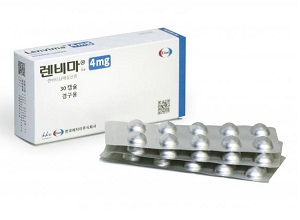
- Product photo of LenvimaThe first follow-on medicines developed by Boryung similar to Lenvima (lenvatinib mesylate) is expected to be added to the reimbursement listing in May. This drug is made by addition of the new dimethyl sulfoxide (DMSO) solvate to the original Lenvima. The drug's supporting document has been submitted and it was approved by the Ministry of Food and Drug Safety (MFDS) in February. The original Lenvima's patent has been expired, but the follow-on patents, including usage patent, are still effective. Lenvima's company is still fighting Boryung regarding this, so future responses from two companies are gaining attention. According to industry sources on April 21, Lenvanib Cap 4 mg (lenvatinib mesylate dimethyl sulfoxide) This drug references Eisai's Lenvima Cap 4 mg (lenvatinib mesylate). Lenvima Cap 4 mg is reimbursed for KRW 29,739. Lenvanib Cap 4 mg was priced at 90% of the original drug because pharmaceuticals that submit supporting documents and are developed by changing salt or as isomer are priced at 90% of the ceiling cap of the targeted product. The MFDS concluded that adding new solvate (dimethyl sulfoxide) can be categorized into new salt, so it approved Lenvanib Cap 4 mg as a pharmaceutical with an active ingredient containing new salt. At the time of obtaining MFDS approval in February, Boryung was approved for Lenvanib Cap 4 mg, Lenvanib Cap 10 mg, and Lenvanib Cap 12 mg. Among these, 12 mg is not available for the original drug. However, only the 4 mg product will likely be added to the reimbursement list in May. The rest of the products will be considered for the reimbursement process later. Lenvanib Cap 4 mg's addition to the reimbursement list was possible because the original product's substance patent expired on the 4th of last month. Boryung continues to challenge other follow-on patents, including usage patent, through patent trials. The final patent dispute outcome is expected to impact Lenvanib sales. The approval indication for Lenvanib Cap 4mg is the same as that of the original Lenvima Cap 4 mg. Both drugs are approved for multiple indications, including 1. the treatment of radioiodine‑refractory, locally recurrent or metastatic progressive differentiated thyroid cancer; 2. first‑line therapy for unresectable hepatocellular carcinoma; 3. in combination with pembrolizumab in patients with advanced endometrial cancer, without the conditions of MSI-H (microsatellite instability-high) or dMMR (mismatch repair deficient) mismatch repair–proficient, who have progressed on prior systemic therapy and are ineligible for surgery or radiotherapy; 4. first‑line treatment of advanced renal cell carcinoma. A legal dispute between the companies is anticipated because number 3 and 4 indications are related to usage patents. Lenvatinib mesylate is a tyrosine kinase inhibitor that blocks vascular endothelial growth factor (VEGF) and fibroblast growth factor (FGF) receptors to suppress angiogenesis and tumor proliferation. It is currently reimbursed for the treatment of hepatocellular carcinoma and differentiated thyroid cancer. The original Lenvima's sales in 2023 amount to KRW 10.3 billion, based on IQVIA.

- Policy
- Comb cancer therapy issue has been resolved
- by Whang, byung-woo Apr 21, 2025 05:53am
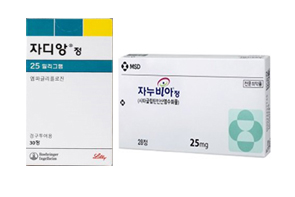
- Changes will be brought to the health system as a patient's existing co-payment amount will remain the same for ongoing chemotherapy when a reimbursed cancer drug combined with a newly developed, non-reimbursed new drug. Previously, insurance coverage for combination therapy comprising two drugs was unavailable, placing a financial burden on patients. The recent changes to this policy are viewed positively. However, as more combination therapies with new drug-new drug combinations are being approved, there are discussions about the need to establish procedures. The Ministry of Health and Welfare (MOHW) has recently issued an administrative notice proposing partial revision to the 'Detailed Criteria and Methods for Applying Reimbursement (Drugs),' which included details on combination cancer therapy. Previously, if a non‑reimbursed drug was added to a regimen already covered by reimbursement, even the previously reimbursed drugs would lose their coverage, increasing patients' out‑of‑pocket costs. After the announcement, patient organizations and academics have proposed suggestions. In response, the Health Insurance Review and Assessment Service (HIRA) convened a Cancer Drug Review Committee (CDRC) meeting in October 2024 to establish a review policy for determining the reimbursement status of major combination therapies. Under the revisions, adding a non‑reimbursed anticancer drug to an existing reimbursed regimen will not affect the co-payment rate for the reimbursed drugs. In detail, a new clause states, 'When combining a reimbursed chemotherapy regimen with another anticancer drug, the existing co-payment for the previously initiated chemotherapy shall continue to apply to that regimen.' A pharmaceutical industry employee remarked, "The combination anticancer therapy included in this notice are first-line treatments that account for a relatively small share of the National Health Insurance expenditure, so there have been calls for improvement," and added, "We were expecting changes after the April 30 CDRC meeting, but it's good news to see the draft notification issued so quickly. From a pharmaceutical company perspective, this change is truly significant." The partial revision notice announced by the MOHW exemplifies the case of AstraZeneca’s immuno‑oncology drug Imfinzi (durvalumab), which was under discussion for biliary tract cancer reimbursement last year. At that time, the CDRC maintained Imfinzi as non‑reimbursed for first‑line treatment of biliary tract cancer while recognizing reimbursement only for the other combination therapy drugs, gemcitabine and cisplatin chemotherapy (GemCis). New drug+new drug combination therapy gains attention, demands for improving the reimbursement process↑ As issues for combination therapy comprising an existing first‑line chemotherapy agent with a new drug are likely to be resolved, interest is growing in whether a reimbursement process for "new drug + new drug" combinations can be established. In fact, with more multinational companies having applied for reimbursement of combination therapies that include innovative anticancer agents, requests for a formalized process have continued. According to discussions at the March 'Policy forum on improving cancer patient access to combination therapies,' 54 anticancer combination therapies have been approved in South Korea over the past five years. Of these, 28 cases add a new drug to an existing therapy, and 26 are combinations of two new drugs. In other words, roughly half of the recently approved combination therapies involve two novel agents. There are suggestions for institutional policies to ensure that reimbursement can be reviewed quickly and rationally when a combination therapy includes drugs from different companies. The Korea Research-based Pharmaceutical Industry Association (KRPIA) has formed a working group to devise solutions. (From left) Product photos of MSD Korea The government acknowledges the need to improve the system…limitations exist to mandating private companies A closer look reveals the challenges. When two new drugs from different companies are used for combination therapy, each company's circumstances, such as volume‑based pricing or price-volume agreement, make simultaneous reimbursement applications difficult. Currently, there is no basis for the two companies to coordinate their reimbursement status. If only one company applies, proving cost‑effectiveness can be problematic, and the therapy may remain split between reimbursed and non‑reimbursed drugs, contrary to the system's intent to reduce patient burden. While the government acknowledges the need for reforms, it also recognizes that it cannot mandate private pharmaceutical companies to comply. At the forum, Hee‑Yeon Park of the MOHW explained, "When combining new drugs+new drugs, we need additional measures. We are reviewing various approaches for reimbursement mediation, but there are aspects we cannot mandate due to each company's circumstances." Several ideas have been proposed similar to official notifications regarding generic drug pricing application cases. According to pharmaceutical industry sources, generics that enter the market after a delay instead of immediately after the patent expiry file for drug pricing review, HIRA will notify the original manufacturer, allowing the company to decide its response strategy. There is also a proposal to have HIRA notify other manufacturers when one company applies for an anticancer combination therapy reimbursement. Because companies do not publicly disclose their reimbursement applications, having HIRA coordinate and guide the review could aid in setting the directions. Additionally, experts have suggested applying a more flexible ICER threshold for combination therapies, recognizing that such regimens typically involve longer treatment durations than monotherapies. Therefore, proven innovative combinations should warrant a relaxed ICER criterion. A KRPIA official commented, "Several companies have agreed on the need to establish a clear process for combination therapy. We are gathering exemplary cases from abroad and will propose recommendations once we agree on the necessary steps."
- Policy
- CKD approved for Januvia+Jardiance+metformin combo
- by Lee, Hye-Kyung Apr 18, 2025 05:59am
- Chong Kun Dang, which launched a combination drug that combines the DPP-4 inhibitor 'Januvia (sitagliptin)' and the SGLT-2 inhibitor 'Jardiance (empagliflozin),' has received approval for a triple combination drug that adds metformin to the same combination just one week later. On the 16th, the Ministry of Food and Drug Safety approved three dosage forms of Emsiformin XR (empagliflozin, sitagliptin, metformin): 5/50/750 mg, 12.5/50/750 mg, and 25/100/1000 mg. Earlier, on the 7th, the first combination of Januvia and Jardiance in Korea, Empamax S Tab (empagliflozin, sitagliptin), in two dosages forms—10/100 mg and 25/100 mg—was approved. Previously, the industry was focused on developing two-drug combination products combining sitagliptin with the SGLT-2 inhibitor ‘Forxiga (dapagliflozin),’ with 116 products currently listed in the approved product list. However, with the expiration of the empagliflozin substance patent approaching on October 23, domestic companies are developing various two- and three-ingredient combination drugs using sitagliptin and empagliflozin. In addition to empagliflozin monotherapy, “Jardiance Duo” (empagliflozin+metformin) and “Esgliteo” (empagliflozin+linagliptin) are also subject to much interest by domestic companies. In particular, in the case of Jardiance Duo, Korean companies have been featuring a sustained-release formulation not available in the original product, leading to the emergence of various new diabetes treatments that offer new combinations and formulations. In the case of Chong Kun Dang, after securing all rights including domestic distribution and manufacturing rights for Januvia from MSD in 2023, the company has developed and obtained approval for a three-drug combination that adds metformin to the sitagliptin+empagliflozin combination. For empagliflozin, Chong Kun Dang successfully avoided patent infringement by modifying the salt crystalline form of empagliflozin to L-proline, an amino acid, creating “empagliflozin L-proline.” The newly approved three-drug diabetes combination, Emsiformin XR Tab, stands out for being approved as a sustained-release formulation, allowing once-daily administration instead of the twice-daily regimen required by the immediate-release formulations. Meanwhile, according to the MFDS's list of notified drugs, more than 12 items are currently in the application process for approval as a triple combination drug (sitagliptin+empagliflozin+metformin) in addition to Chong Kun Dang.

- Policy
- Original-generic collusion prevention law introduced
- by Lee, Jeong-Hwan Apr 18, 2025 05:59am
- A bill has been proposed in the National Assembly to prevent collusion between original drug manufacturers and generic drug manufacturers from maintaining the domestic sales status of original drugs through illegal means. On the 17th, Representative Young-Seok Seo (Gyeonggi Province, Bucheon City, National Assembly Health and Welfare Committee) proposed a partial amendment to the National Health Insurance Act to reduce the price ceiling set for medical expenses reimbursed for drugs related to collusion and unfair trade practices. The current law stipulates that when a generic drug with the same ingredients is released, the price of the original drug that was first registered must be reduced. As more generic drugs are released, the price of the original drug will fall further, which will reduce corporate sales but improve the financial health of the health insurance system and consumer welfare. However, if the original drug manufacturer and generic drug manufacturers engage in unfair collusion or unfair trade practices to refrain from manufacturing or supplying generic drugs, the original drug can retain its status. While the companies may continue to maintain sales based on the existing drug price, the health insurance budget deteriorates, and consumers lose the opportunity to benefit from lower drug prices. In particular, even if unfair collusion activities or unfair trade practices that disrupt market order are detected and subject to government sanctions, the original drug's status is not revoked, allowing the continued acquisition of unfair sales and profits, which has also been pointed out as an issue. Rep. Young-Seok Seo has introduced a bill to address these issues by allowing the reduction or suspension of the drug price reimbursement granted for drugs related to unfair collusion actions or unfair trade practices. The bill also includes provisions to prevent pharmaceutical companies not involved in problematic actions from suffering losses due to reductions in the original drug's insurance price ceiling when launching generic drugs. Rep Seo emphasized, “The revised bill aims to prevent companies that violate market order in the pharmaceutical market, which is critical to public health and safety, from reaping unfair profits through distorted market structures. We hope that the revised bill will reduce the practice of pharmaceutical companies disrupting market order, thereby worsening the health insurance budget and increasing the consumers’ burden of medication costs.”
- Policy
- Co-payments retained for non-reimb drug+reimb drug comb
- by Lee, Jeong-Hwan Apr 18, 2025 05:57am
- The Ministry of Health and Welfare (MOHW) has decided that, even if an additional or combination anticancer drug is added to a chemotherapy regimen already covered by health insurance, the initial chemotherapy will continue to be subject to the patient’s existing co-payment. Boehringer Ingelheim’s idiopathic pulmonary fibrosis and fibrosing interstitial lung disease treatment Ofev (nintedanib) will have new reimbursement criteria established, while the reimbursement standards for donepezil oral tablets and patches, such as Aricept tablets and Donerion patches, will be revised. The reimbursement criteria for rituximab injections (such as MabThera), ceftazidime (such as vancomycin), and ganciclovir injections (such as Cytovene IV) will also be updated. On April 17, the MOHW issued an administrative notice proposing partial revisions to the 'Detailed Criteria and Methods for Applying Reimbursement (Drugs).' The revision is aimed to take effect on May 1, and a public comment submission will run through April 21. Previously, if a non‑reimbursed drug was added to a regimen already covered by reimbursement, even the previously reimbursed drugs would lose their coverage, increasing patients' out‑of‑pocket costs. Under the revisions, adding a non‑reimbursed anticancer drug to an already reimbursed regimen will not change the co-payment rate for the reimbursed drugs. In detail, a new clause states, 'When combining a reimbursed chemotherapy regimen with another anticancer drug, the existing co-payment for the previously initiated chemotherapy shall continue to apply to that regimen.' The MFDS approved Ofev's new reimbursement coverage for chronic fibrosing interstitial lung disease among the indications. The coverage will be provided to patients with chronic fibrosing interstitial lung disease confirmed by high‑resolution chest CT (HRCT), excluding idiopathic pulmonary fibrosis. The reimbursement criteria include cases where ▲predicted forced vital capacity (FVC) ≥ 45% ▲ predicted diffusing capacity for carbon monoxide (DLco) ≥ 30% and < 80% ▲despite prior treatment (steroids, immunosuppressants), within the past 24 months one of the following: a relative decline in predicted FVC ≥ 10%; a relative decline of greater than 5% or less than 10% with worsening respiratory symptoms; or a relative decline of greater than 5% or less than 10% with HRCT documented fibrosis progression. Patients must be re‑evaluated every 12 months after treatment initiation (HRCT and pulmonary function tests), and if disease progression is confirmed (predicted FVC decline ≥ 10% within 12 months with HRCT worsening), administration must be discontinued. The reimbursement criteria for donepezil formulations state the dosage and duration for 3 mg oral tablets. The reimbursement criteria for 3 mg tablets indicate that ▲an initial dose of 3 mg once daily may be started to reduce adverse gastrointestinal reactions if needed, but use should not exceed 1–2 weeks ▲in underweight women (BMI < 18.5 kg/m²) aged ≥ 85 years who require ongoing 3 mg once‑daily dosing, reassessment should determine continuation based on evaluation methods. Moreover, if dosing at 3 mg once daily must continue beyond 6–8 weeks, a dosing justification form must be submitted. Reimbursement criteria for rituximab injections have been expanded to include myasthenia gravis. Eligible patients are those who are MuSK antibody–positive because they are refractory to at least one prior therapy (corticosteroids, azathioprine, cyclosporine, mycophenolate mofetil, tacrolimus, etc.) or unable to receive such therapies due to ▲serious adverse effects, and who have either moderate to severe myasthenia gravis (MGFA class IIa or higher) or ▲at least two myasthenic crises within the past year. Reimbursement is covered for rituximab at 375 mg/m² weekly for four doses or 1 g every two weeks for two doses, with retreatment permitted upon relapse. For vancomycin and ceftazidime, reimbursement has been expanded beyond their approved indications to include adult bacterial endophthalmitis. Vancomycin is reimbursed for intravitreal injection of 1 mg/0.1 mL administered at intervals of 3 days or more based on clinical findings (inflammation and infection control), and ceftazidime is reimbursed for intravitreal injection of 2 mg/0.1 mL or 2.25 mg/0.1 mL at intervals of 2 days or more. If combination use is clinically required, each drug's reimbursement criteria apply. For ganciclovir, reimbursement criteria have been added for acute retinal necrosis syndrome (ARN) and CMV retinitis (CMVR), expanding the reimbursement scope. Eligible patients are those ▲who are nonresponsive or intolerant to systemic antiviral therapy or ▲who have rapidly progressive, vision‑threatening retinal lesions; dosage is 2 mg/0.1 mL intravitreally once to three times weekly, with dose reductions permitted based on patient status.

- Policy
- Will a 'Duodart' generic for prostatate drug be available?
- by Lee, Hye-Kyung Apr 16, 2025 05:55am
- Product photo of Duodart A generic version of GSK's benign prostatic hyperplasia (BPH) combination product 'Duodart Capsule (dutasteride·tamsulosin hydrochloride),' which drove the success of the combination drug market for urology in Korea, is now under development. On the 14th, the Ministry of Food and Drug Safety (MFDS) approved an open-label, randomized, two-group, two-period, fasting, single-dose, oral, crossover study in healthy adult male subjects for the biological equivalence evaluation of Aprogen Biologics' 'Dutatams Capsule' and the original 'Duodart Capsule.' Duodart is a fixed-dose combination of the 5α-reductase inhibitor dutasteride and the α‑blocker tamsulosin, which was first approved in Korea in 2021. It was subsequently listed on the reimbursement drug list the following year. According to market research firm UBIST, Duodart surpassed KRW 10 billion in outpatient prescription sales in its second year of market launch in 2023 and reached KRW 23.2 billion last year. Until earlier this year, before four fixed-dose combination products of dutasteride and tadalafil were released, the prostate hyperplasia combination market was considered unchallenged. Apart from Duodart, Hanmi Pharmaceuticals had launched 'Gugutams,' a product combining tamsulosin and tadalafil. Despite various ingredients such as tamsulosin·finasteride·dutasteride for prostate hyperplasia treatment; mirabegron·solifenacin for overactive bladder treatment; and sildenafil·tadalafil for erectile dysfunction having lost their patents, there had been no updates to new fixed-dose combinations launches. Among these, only Duodart was performing well. Duodart is designed for the treatment of moderate to severe BPH and is administered orally once daily as a single capsule. Combining the two active ingredients into one capsule achieves rapid symptom improvement and reduces the long-term risks associated with disease progression. Furthermore, it minimizes dosing frequency, improves patient adherence, such as the likelihood of missed doses, and simplifies treatment regimens.

- Policy
- Global pharma proposes 'indication-based pricing system'
- by Lee, Jeong-Hwan Apr 16, 2025 05:55am
- Overseas global pharmaceutical companies with subsidiaries in Korea are currently voicing the adoption of policies aimed at resolving 'reimbursement inequities' for therapies for severe and rare diseases and implementing an 'indication-based pricing system' amid an early presidential election. While the Korean government maintains that an indication-based pricing system should be carefully reviewed over the long term due to various potential challenges, global pharmaceutical companies have begun gathering public opinion on the issue at a parliamentary forum. On the 15th, Rep. Seo Mi-hwa of the Democratic Party, a National Assembly's Public Healthcare Committee member, is preparing to hold a 'Discussion Forum on Resolving Inequalities in Innovative New Drugs and Regulatory Reforms.' It is intended to highlight that only 22% of innovative new drugs, such as those changing the treatment paradigm for severe and refractory diseases like cancer drugs, are reimbursed in Korea, leaving patients without timely access to therapies. In particular, the forum will also discuss measures to introduce an indication-based pricing system in Korea to expand reimbursement for new drugs. The introduction of an indication-based pricing system was an issue raised by the Korea Research-Based Pharma Industry Association (KRPIA), which requested a pilot project from the Ministry of Health and Welfare (MOHW) and other government agencies overseeing national health insurance. The KRPIA requested that the government initiate a pilot project applying a 'weighted average price by indication' and 'differentiated reimbursement rates by indication' for drugs under risk-sharing agreements (RSA). Furthermore, KRPIA is reportedly planning to propose to the candidate camps of parties such as the Democratic Party and the People Power Party policies to expand patient treatment opportunities through the implementation of an indication-based pricing system during this early presidential election cycle. The request is based on the fact that some overseas countries, including Italy, France, and Switzerland, are already implementing policies that evaluate the therapeutic value of drugs with multiple indications separately by indication, by determining different insurance prices or applying differential discounts at reimbursement. The KRPIA is urging these measures to be adopted as a commitment to enhancing patient access to medications. The request aligns with a presidential policy proposal that will coincide with a parliamentary debate later this month. However, the MOHW has stated that the indication-based pricing system should be carefully reviewed from a long-term perspective. While they agree with the rationale for introducing the system, the MOHW believes that further long-term discussions are necessary, such as financial impact analysis, establishment of legal grounds, and development of billing and settlement systems to prevent circumvention and distorted prescribing practices among some patients, must be addressed first. The rep. office responsible for preparing for the forum stated, "At the discussion forum, we will look for solutions to the prolonged processing period following reimbursement listing and the delays in reimbursement payments occurring within the approved indications," and added, "We will review the regulatory improvement policy agenda from the perspective of treatment disparities among patients."
- Policy
- DPK’s election pledge includes substitution dispensing
- by Lee, Jeong-Hwan Apr 15, 2025 05:54am
- The Democratic Party of Korea will include a policy to support domestically developed new drugs through a drug pricing system that links the investment rate (amount) of research and development (R&D) by pharmaceutical companies with a drug’s insurance price ceiling and drug price reduction rate in its presidential election pledge. DPK’s intention is to lead the development of the pharmaceutical and bio-industry, which is a future growth engine for the country, by enabling pharmaceutical companies that are constantly striving to evolve and create new drugs to benefit from the government's efforts rather than those intent on generic sales. In particular, since the Korean pharmaceutical industry is still dominated by generic drug manufacturing, the Democratic Party of Korea is also looking into whether maintaining the current tiered drug pricing system would be of practical help to the industry's development. The DPK is also considering ways to reasonably legislate the Seok-yeol Yoon administration's pilot project for unlimited non-face-to-face medical care and ways to resolve the supply and demand instability of medicines, including the promotion of alternative dispensing, to adopt them as presidential campaign pledges. Recently, Won-Joon Cho, the senior expert advisor for health and welfare at the Democratic Party of Korea(and the head of the presidential election pledge task force for the policy committee) held a meeting with the Press Corp and revealed the direction of the presidential election pledges related to the pharmaceutical and bio-industry and the health industry. ◆Pharmaceutical and bio-industry promotion measures=The Democratic Party of Korea (DPK) agreed that the pharmaceutical and bio-industry is an industry that drives future growth of South Korea, but also recognized that it is a field that has a dual nature that requires regulation due to safety concerns. This is why there are differences in the views of pharmaceutical and bio industries among government ministries such as the Ministry of Health and Welfare (MOHW), the Ministry of Food and Drug Safety (MFDS), the Ministry of Science and ICT, and the Ministry of Trade, Industry and Energy (MOTIE). In this situation, Cho said, “The Democratic Party of Korea will definitely improve unnecessary administrative procedures or excessive regulations that hinder the promotion of the pharmaceutical and bio-industry and the creation of new domestic drugs. However, we will make sure that excessive deregulation does not lead to distrust of products or the industry as a whole.” This is because the pharmaceutical industry is directly linked to the lives and safety of the people, and at the same time, it has the special characteristic of being the future food of the nation. Cho said that he has been preparing pledges based on 3 principles: ▲expanding investment and support, ▲reorganizing the current support system, and ▲strengthening social responsibility to promote the pharmaceutical and bio industry. “We will come up with a concrete performance-based R&D policy and adopt a system that rewards drug prices in proportion to the R&D investment ratio,” said Cho, adding, ”We are also paying attention to the opinion that the tiered drug pricing system needs to be improved to make it more intuitive and reasonable.” He added, “Even when a pharmaceutical company wants to contribute to society, in many cases, the scope is narrow. We are considering making pledges to support the diversification of social contribution methods by improving the innovative pharmaceutical company certification system, among others. We will include a policy to support pharmaceutical companies that export domestically produced new drugs overseas, rather than for Korea’s industry structure built around generics, as our presidential election pledges.” In particular, he said, “As we operate a generic-based industrial structure, there is a side to the issue of illegal rebates that cannot be abolished no matter how much the system is improved. I believe we should put support for overseas expansion and export pharmaceuticals into a separate package of pledges. There are also big concerns in the pharmaceutical industry about the Trump administration, and DPK is looking at countermeasures for the pharmaceutical industry from a broader perspective of trade.” ◆Seeking solutions to the instability of non-face-to-face medical care and drug supply = Cho said that DPK escapes criticism that it pretends to seek progressive politics but is hindering technological progress. The point is that DPK often has to consider what attitude it should take when faced with social and public demands for medical policies that are integrated with the IT industry, such as non-face-to-face medical care. Nevertheless, Cho emphasized that healthcare policies that are closely related to the health and lives of the people cannot be focused solely on fostering and promoting them as an industrial framework. The current government was criticized for conducting non-face-to-face medical care as a tool for industrial development for an unlimited period - for years - based on the enforcement decree without amending the law, which is regarded abnormal. “The healthcare sector is also making technological progress together with the high-tech IT industry. However, due to the nature of healthcare, if the basic premise of public safety is not secured, the foundation of the policy may be shaken,” said Cho. ”It is difficult to lead healthcare policy with an overly industrial frame. However, it is necessary to make pledges that reflect the reality and accept new systems and environmental changes with a flexible attitude.” He also criticized the former government, saying, “IT was a pilot project, so the biggest problem was that it is allowing non-face-to-face medical care that goes beyond the actual project without any legal basis.” He added, “There were no restrictions on the target, standards, scope, region, or time limit. I have never seen a pilot project like this. Serious illegal activities are continuing.” In response, the Democratic Party said that it will establish a legal basis as soon as possible so that the principle of non-face-to-face medical care can be established in this presidential election, and will hold the current government accountable for the background of the pilot project. “The policy-making process that led to the current pilot project should be thoroughly investigated and held accountable,” said Cho, ”Non-face-to-face medical care is intended to supplement the public's access to medical care, but the results of the pilot project have become a tool and a window for prescribing anti-hair loss drugs and emergency contraception. It is being used in a way that is completely different from its original purpose.” Regarding DPK’s direction for legalizing non-face-to-face medical care, he said, “Legislation is needed that includes not only the target, scope, and standards, but also the management and supervision of intermediary platforms. Delivery of medicine is not an immediate problem. It is not too late to decide on this issue when the basis for the Medical Service Act for Non-face-to-face medical care is created and additional discussions on the Pharmaceutical Affairs Act are held.” He also added, “We need to think about whether to adhere to the principle of non-face-to-face medical care that DPK proposed for the 21st National Assembly. This is because we cannot ignore the fact that many people have experienced or are using non-face-to-face medical care.” He also emphasized, “Even if we adopt the principle of allowing only people with limited mobility and residents of remote areas, the law should cover areas where there is a great social demand, such as pediatric patients.” Finally, regarding the issue of instability in the supply of pharmaceuticals, he summarized it as “It is still a difficult problem to solve and an urgent task. Policy-wise, we need to come up with alternatives.” “It is important to decide what policy agenda to adopt to address the issue of supply and demand instability. For example, the ingredient-specific prescription is a very sensitive issue between different medical schools, so it is politically difficult to tackle,” said Cho. ”We will introduce the agenda of vitalizing substitute dispensing, which is inevitable to resolve supply and demand instability, even if we would need to discuss the conflict that may arise in the future.” He added, “There will be more and more direct conflicts over the scope of practice, and the DPK will strengthen the governance structure under the Healthcare Workforce Support Act to achieve consensus and social compromise among the professions in a consultative body with the participation of the relevant parties.” This is interpreted as the party’s intention to actively utilize the Healthcare Workforce Scope Adjustment Act, which is pending in the Legislative and Judicial Committee, initiated by Democratic Party member Yoon Kim.
