
- LOGIN
- MemberShip
- 2026-04-27 08:54:47
- Policy
- Will the external reference pricing reevals gain momentum?
- by Lee, Jeong-Hwan Jul 18, 2025 06:35am
- Eun-Kyung Jeong, nominee for Minister of Health and Welfare, said that “it is important to manage drug prices at an appropriate level given the limited health insurance resources” regarding the post-marketing price review system to lower generic drug prices through “external reference pricing evaluations,” suggesting the possibility of its introduction upon her final appointment. Jeong also revealed plans to review policies such as improving the certification system for innovative pharmaceutical companies and expanding incentives to encourage pharmaceutical companies to invest in R&D for innovative new drugs. On the 17th, nominee Eun-Kyung Jeong revealed her position on the external reference pricing reevaluation system in written questions during her confirmation hearing with Representative Yoon Kim of the Democratic Party of Korea and Representative Jong-heon Baek of the People Power Party. Representative Yoon Kim pointed out that the external reference pricing reevaluation of generic drug prices, which the MOHW announced last year, has been postponed indefinitely, and raised the need for its prompt implementation. On the other hand, Representative Jong-heon Baek questioned the need to introduce a system to lower drug prices by comparing them with overseas prices, arguing that it is unreasonable to lower domestic generic drug prices solely based on drug prices overseas, given that each country's insurance system, drug price determination process, and level of social consensus differ. On this, Jeong replied, “The demand for drugs is constantly increasing due to the growing number of elderly people and patients with chronic disease. In order to provide optimal drug reimbursement with limited national health insurance finances, it is important to manage drug prices at an appropriate level.” Jeong explained, “We will carefully review the current status of domestic and international drug pricing systems and policy improvements, and consider acceptability by gathering opinions from the field to manage drug prices reasonably after listing. We will also actively gather opinions through regular communication with the pharmaceutical industry, relevant agencies, and experts on the direction of drug pricing system improvements.” Regarding measures to encourage R&D for innovative new drugs, Jeong said, “The pharmaceutical and biotechnology industry is a national strategic industry that can serve as Korea’s next growth engine, so it is time to scale it on a national level. To this end, we will strengthen compensation for the innovative value of new drugs and reform the compensation system to encourage R&D investment, thereby supporting the cultivation of pharmaceutical companies with global new drug development capabilities.” Jeong added, “We plan to improve the certification system for Korea Innovative Pharmaceutical Companies to encourage their R&D investment in innovative new drugs. We will also consider expanding incentives for companies that strengthen their R&D efforts.”

- Policy
- When will Keytruda’s reimb be reviewed by DREC?
- by Lee, Tak-Sun Jul 17, 2025 06:13am
- Attention is focused on when Keytruda, for which reimbursement standards were set for 11 indications in February, will be submitted to the Drug Reimbursement Evaluation Committee (DREC) for review. This is because, although the reimbursement standards were established by the Health Insurance Review and Assessment Service's Cancer Review Committee, the barrier of DREC remains. According to industry sources on the 15th, HIRA is currently evaluating the estimated additional claims for Keytruda. This process is conducted to decide whether to apply the preliminary drug price reduction system for drugs with an expanded scope of use. The preliminary drug price reduction system for drugs with expanded scope of use is a system designed to quickly increase patient access to treatment by omitting cost-effectiveness evaluations. It applies a pre-determined reduction rate to reduce the insurance price ceiling for drugs by up to 5% in consideration of the estimated additional claims resulting from the expansion of reimbursement criteria. However, this system is applied only when the expected claims amount is between KRW 1.5 billion and KRW 10 billion. If the expected claim amount exceeds KRW 10 billion, the drug price is adjusted through negotiations between the National Health Insurance Service regarding the expansion of the drug's approved indications. In February, the National Health Insurance Service set reimbursement criteria for 11 additional indications for Keytruda. MSD requested reimbursement expansion in 2023, and after 5 attempts, the expansion was finally approved by the National Health Insurance Service on the company’s 6th attempt. At that time, the reimbursement criteria were set for stomach cancer, esophageal cancer, endometrial cancer, colorectal cancer, squamous cell carcinoma, cervical cancer, breast cancer, small intestine cancer, and bile duct cancer. After setting the reimbursement criteria, HIRA reported it to the MOHW. After review, MOHW requested HIRA to review the preliminary drug price reduction for drugs with an expanded scope of use. It is expected to take some time before the application can be submitted for DREC review, as the relevant work must be completed first. Some predict that it will be difficult for the matter to be submitted to the DREC even in August. This is because the analysis of the expected claims amount will take a long time due to the large number of indications, and the pharmaceutical companies must also go through the process of accepting the preliminary drug price reduction. Even if it passes DREC review, negotiations with the National Health Insurance Service remain, and it is uncertain whether its reimbursement will be granted and listed within the year. Due to the complicated reimbursement process, some in the industry believe that the introduction of indication-specific pricing should be considered. However, health authorities remain cautious about introducing such a system. Whichever the cause, the patients are likely to face a long wait. However, it is a positive sign that HIRA recently added 12 indications for Keytruda to the partial reimbursement list as part of anticancer combination therapies, reducing the financial burden on patients. With the partial reimbursement, the other therapies included in the combination, excluding Keytruda, are covered by health insurance.

- Policy
- Will the general diabetes criteria be revised after 14 yrs?
- by Lee, Tak-Sun Jul 16, 2025 06:09am
- The National Health Insurance Service (NHIS) is currently reviewing a comprehensive revision of the general principles for diabetes drug reimbursement criteria, which have been in place for 14 years. It is garnering significant attention from the industry. Following recent trends, significant changes are anticipated, including the removal of metformin and sulfonylurea (SU) as first-line agents and a reorganization of approved dual therapies. However, concerns about increased national health insurance expenditure make the government's ultimate decision an attention. According to industry sources, on July 14, the Health Insurance Review & Assessment Service (HIRA) is reviewing a comprehensive revision of the general principles for diabetes drug reimbursement criteria, as requested by organizations such as the Korean Association of Internal Medicine. The current general principles for diabetes drugs, which designate metformin and SU as first-line agents, were first established in 2011. At the time, the Ministry of Health and Welfare (MOHW) formulated these principles to align with prescription patterns, encourage cost-effective drug use, and reduce the financial burden on the national health insurance. However, after 14 years, the general principles for diabetes drugs are now considered outdated. Indeed, this year, the Korean Diabetes Association revised its "9th Edition Diabetes Treatment Guidelines," removing the detail that metformin is the first-line treatment for type 2 diabetes. Instead, the guidelines recommended prioritizing the use of the latest drugs based on the patient's pathophysiology and clinical characteristics. The Korean Diabetes Association explained that this revision is an evidence-based guideline with clear levels of evidence and benefits. Not only in Korea but also in developed countries like the United States, metformin is no longer recommended as a first-line agent. The Korean Diabetes Association is said to have gathered these opinions and requested a comprehensive revision from HIRA earlier this year. HIRA is reportedly reviewing the comprehensive revision proposal. The pharmaceutical industry is also requesting a comprehensive revision, arguing that the current general principles are contrary to the latest medical practices and trends. Analysis suggests that the revised principles are highly likely to include comprehensive changes to the general principles, from the status of metformin and SU as first-line treatments to the approved dual therapies. However, if SGLT-2 inhibitors, DPP-4 inhibitors, or GLP-1 analogues are recommended as first-line treatments instead of metformin or SU, there is a high possibility of a significant increase in national health insurance expenditure.Therefore, health insurance authorities are expected to review the cost-effectiveness of these measures closely. An official from the pharmaceutical industry said, "If the current general principles for diabetes drug reimbursement criteria are comprehensively revised, it will have a significant impact on the market, and pharmaceutical companies will inevitably have to consider their profit and loss," and added, "I believe the NHIS will also establish measures to minimize financial expenditure."

- Policy
- Gov't pursues 'project to produce unstable supply drugs'
- by Lee, Jeong-Hwan Jul 15, 2025 06:08am
- The Ministry of Health and Welfare (MOHW) plans to continue its project of providing government funding for the production of drugs with unstable supply. The MOHW plans to proceed with the currently budgeted project to support one item, while also working to secure additional budget to support more items. A MOHW official recently met with the Korea Special Press Association to explain the direction of the project to support the production of drugs with unstable supply. The MOHW has selected 'Questran Powder for Suspension Boryung,' a bile acid sequestrant class hyperlipidemia treatment from Boryung, as an unstable supply drug to be stabilized and has decided to provide KRW 900 million in funding. This drug is the only hyperlipidemia treatment in South Korea that pregnant women and children can safely use, but its supply was halted in 2023 due to declining profitability. In response, Boryung will resume production with KRW 900 million in government support and KRW 900 million in-house investment, totaling KRW 1.8 billion. The National Assembly is also calling for budget increases in the project to support the production of drugs with unstable supply. Last year, the National Assembly's Health and Welfare Committee advocated for an additional budget increase of KRW 900 million to expand the supported items from one to two, as part of a national health security strategy to support domestic drug production and supply chains. However, the budget increase review did not happen, and the proposal was rejected. The MOHW plans to use 'Questran Powder for Suspension Boryung' as a starting point to secure the basis for the unstable drug supply support project and will maintain the project while increasing the number of supported items in the future. For 'Questran Powder for Suspension Boryung,' the company must meet a mandatory condition that it must complete the production of the requested quantity within three months if a production request from the MOHW follows within five years after the government budget support project ends. A MOHW official stated, "Only two pharmaceutical companies applied for this year's support project. It seems the promotion was insufficient." They added, "Although this is the first year of implementation, it will not be a one-off project." The official explained, "While the government provides KRW 900 million in funding and the private pharmaceutical company matches the same amount, it's not easy to fully equip production facilities with this budget. I do feel it's not a large sum," and added, "Nevertheless, I believe starting the drug supply shortage project with this item has significance." The MOHW also added, "The evaluation·verification of budget project investment returns will be based on whether the government's required production volume is met, which will be considered as having contributed to alleviating supply shortage to some extent." They concluded, "Research on resolving unstable supply chains has also been allocated a budget of KRW 50 million, and this will also begin in the second half of the year."
- Policy
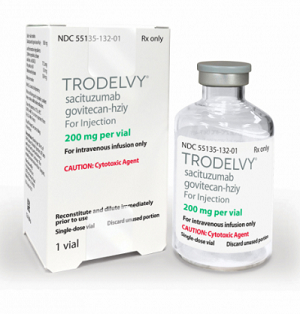
- How Trodelvy was applied flexible ICER for innovativeness
- by Lee, Tak-Sun Jul 14, 2025 06:04am
- The ADC breast cancer drug Trodelvy (sacituzumab govitecan, Gilead), which was reimbursed in June for triple-negative breast cancer, was the first case in which the ICER (incremental cost-effectiveness ratio) threshold was flexibly applied in recognition of its innovation. So how did the Drug Reimbursement Evaluation Committee (DREC) of the Health Insurance Review and Assessment Service at the time evaluate the innovativeness of this drug? According to the recently released evaluation results, Trodelvy was found to satisfy all criteria for innovative treatment, including the absence of alternative treatments, clinical improvement, and the criteria for expedited review. According to industry sources on the 11th, in the recently released DREC evaluation results for Trodelvy, the committee members recognized its reimbursement as appropriate despite the high cost-effectiveness ratio, taking into account the drug’s innovativeness." In August last year, the Health Insurance Review and Assessment Service established new requirements for the innovation of drugs subject to flexible ICER threshold assessment. According to the newly established criteria, the innovation of a new drug is recognized when ▲there are no substitute products or treatments with equivalent therapeutic positions, ▲significant clinical improvement can be recognized in the final outcome indicators, such as prolonged survival, ▲the new drug is a new drug approved by the Ministry of Food and Drug Safety through an expedited review process in accordance with Article 35-4, Paragraph 2 of the Pharmaceutical Affairs Act, or a drug recognized by the committee as equivalent to such a drug. All three requirements must be met for a new drug to be recognized as innovative. Trodelvy became the first drug to be recognized as innovative under these criteria. At the time, the DREC members evaluated that Trodelvy satisfied all three requirements. First, they determined that it satisfied the first requirement as the first antibody-drug conjugate (ADC) approved for triple-negative breast cancer, with no products or treatments with equivalent therapeutic positions. In addition, they evaluated that the second requirement was also satisfied, as clinical improvement (mOS HR=0.51) was recognized in the final outcome indicators, such as prolonged survival. Finally, considering that it was approved by the FDA as a breakthrough therapy and designated as a Global Innovative product for Fast Track item by the MFDS, the committee deemed that the third requirement was also satisfied. In terms of cost-effectiveness, the committee concluded that Trodelvy is significantly more cost-effective than existing anticancer drugs and breast cancer drugs that have been reviewed in the past. However, considering that it is a drug used for diseases that threaten survival in the third or further line of administration, that it has been recognized for improving the social burden of disease and quality of life, and that it is the first antibody-drug conjugate (ADC) approved for triple-negative breast cancer, the committee accepted its reimbursement as adequate. In other words, the high price was accepted in recognition of its innovation. Another factor was that the number of patients eligible for treatment was small, so the drug’s financial impact was not significant. According to the DREC evaluation results, Trodelvy is a drug used by approximately 200 patients, and the decision was made after comprehensive consideration of factors such as the number of patients eligible for treatment and the financial impact. In the end, Trodelvy was listed for reimbursement under two types of risk-sharing agreements (RSA) with the National Health Insurance Service. Among the types of RSA contracts that were applied, one was a Refund-Type agreement, where the pharmaceutical company reimburses a certain percentage of the claimed amount to the NHIS, and the other was the Utilization Cap/Fixed Cost per Patient Refund Type agreement, where the usage limit per patient is set in advance, and a certain percentage of the excess amount is reimbursed to the NHIS if the limit is exceeded. The listed price (maximum amount) is KRW 1,052,300 per vial, but due to the dual pricing system applied under the reimbursement-type contract, the actual price is higher. The estimated number of patients receiving Trodelvy annually is approximately 282, with an estimated fiscal expenditure of approximately KRW 12.5 billion. However, the actual fiscal expenditure is expected to be lower if the risk-sharing agreement is applied. At a 5% coinsurance rate, patients will only need to pay approximately KRW 2.21 million per year for its administration.
- Policy
- Orphan drug 'Bylvay Cap' wins reimb approval after reeval
- by Lee, Tak-Sun Jul 14, 2025 06:03am
- 'Bylvay Cap,' which is being considered for the expedited reimbursement listing process as a designated drug for 'Pilot Project for Integration of Product Approvals, Reimbursement Coverage Reviews, and Drug Price Negotiations,' received reimbursement appropriateness decision after reevaluation. Consequently, Bylvay Cap will be subjected to negotiation with the National Health Insurance Service (NHIS) before its inclusion in the reimbursement list. Health Insurance Review and Assessment Service (HIRA) stated that it has held the 7th Drug Reimbursement Evaluation Committee (DREC) meeting on July 10 and decided as such. During the meeting, the DREC decided on the reimbursement appropriateness for Bylvay Cap 200, 400, 600, and 1200 μg (odevixibat sesquihydrate). Drug Reimbursement Evaluation Committee (DREC) Bylvay Cap is used to treat progressive familial intrahepatic cholestasis (PFIC). This drug was designated as the first concurrent approval-evaluation-negotiation pilot project in 2023. The criteria for the concurrent approval-evaluation-negotiation pilot project were drugs with sufficient efficacy intended for treating cancer or rare diseases with a life expectancy of less than one year, as well as those proving superior survival·treatment effectiveness for over two years when alternative treatments are not available. Bylvay Cap obtained marketing authorization from the Ministry of Food and Drug Safety (MFDS) in August 2024 and entered into the reimbursement evaluation process. Yet, the reimbursement evaluation process has been uneasy. A complaint was heard from an expert who attended the reimbursement review meeting from the evaluation stage. In the DREC meeting held last April, a conclusion was not reached, and it was decided to re-evaluate. It was only today, three months later, that it passed the DREC review. As drugs under the concurrent approval-evaluation-negotiation pilot project undergo a one-stop process without following separate stages, Bylvay is likely to have already entered negotiations with the NHIS. If the NHIS negotiations are completed, patients will be able to receive National Health Insurance coverage for this drug immediately after review by the Health Insurance Policy Review Committee. Meanwhile, the DREC decided on HLB Pharma's Citrelin ODT to receive a conditional approval, stating that reimbursement appropriateness if the company accepts a price below the evaluated amount. This drug is used for 'improving ataxia caused by spinocerebellar degeneration.'

- Policy
- Will drugs subject to reimbursement reevals be expanded?
- by Lee, Tak-Sun Jul 11, 2025 06:11am
- The government is reportedly planning to tighten the selection criteria ahead of the second phase of the drug reimbursement adequacy reevaluations, which is set to begin next year. As a result, it is expected that the number of ingredients subject to reassessment may be expanded. According to industry sources on the 10th, the Health Insurance Review and Assessment Service (HIRA) is currently collecting feedback from the pharmaceutical industry before finalizing its second-phase drug reimbursement adequacy reevaluation plan. The first phase will conclude this year. Since the pilot reevaluation was conducted for choline alfoscerate in 2020, HIRA has completed four full reevaluation rounds from 2021 to 2024, and the fifth round is currently underway. Thus far, the reassessment has focused on ingredients listed for reimbursement from 1998 to 2006, before the positive listing system was implemented, and ingredients currently undergoing clinical reevaluation by the Ministry of Food and Drug Safety. Also, ingredients with an annual total reimbursement claim exceeding 0.1% (approximately KRW 20 billion), and those reimbursed in only one foreign country among the A8 reference countries was the criteria. Industry observers anticipate that the selection criteria stated above will change significantly from the second phase of reevaluations. In particular, the strengthened criteria may lead to the inclusion of ingredients that were previously excluded from reevaluations. It is reported that authorities are considering expanding the annual claims threshold to identify ingredients that have remained in a regulatory blind spot. The criteria under discussion include lowering the reimbursement claim threshold from KRW 20 billion to KRW 10 billion, and expanding the eligibility from being listed in only one A8 country to fewer than three. As in the first phase of reevaluations, the second phase will also continue to target drugs listed before the implementation of the positive listing system, making it likely that previously excluded products will be included. If the criteria are expanded as proposed, pharmaceutical companies will likely begin reviewing their product portfolios to identify those that may be subject to reevaluation. Unlike in the first phase, drugs with lower claims may also be included, posing new challenges for the companies preparing for reevaluations. However, as the selection criteria are still under review, companies are expected to limit their response until the final criteria are confirmed. Given the delay in finalizing the criteria and scope for the second phase, the industry is calling for the 2025 revisions to be postponed to allow sufficient preparation time.
- Policy
- Pfizer discontinues the supply of 'Viviant' in KOR
- by Lee, Tak-Sun Jul 11, 2025 06:09am
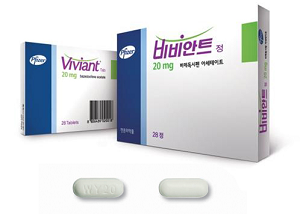
- Product photo of ViviantPfizer announced of discontinuing the supply of its 'Viviant Tab (bazedoxifene acetate)' in Korea. They stated that supply discontinuation is due to the difficulty in securing a stable and continuous supply. Viviant had previously been out of stock in May due to delays in the manufacturing site. An analysis suggests that Viviant's market competitiveness has also weakened following the emergence of generics and fixed-dose combinations in the Korean market, as well as the arrival of biologics. According to industry sources on July 10, Pfizer Korea recently sent an official letter to its distributors and other trading partners, stating its decision to discontinue the supply of Viviant Tablet 20mg (28BLP formulation). Pfizer stated, "This supply discontinuation was an unavoidable decision due to difficulties in securing a continuous and stable supply," and explained, "The estimated depletion date for the current inventory is by December." The inventory depletion date could be brought forward depending on market demand. Viviant obtained domestic product approval in November 2011. Pfizer Korea launched it in the Korean market the following year. This drug is a once-daily selective estrogen receptor modulator (SERM) class osteoporosis treatment, which garnered attention as Pfizer's first osteoporosis drug. Until its patent expiration in 2018, Viviant gained significant success with approximately KRW 10 billion in prescription sales. However, its performance has been declining since the introduction of domestic pharmaceutical companies' generics and fixed-dose combinations. Currently, 15 fixed-dose combinations containing bazedoxifene acetate, Viviant's active ingredient, and Vitamin D are listed for reimbursement, and 5 generic drugs with the same active ingredient are also reimbursed. Last year, Viviant's outpatient prescription sales amounted to KRW 2.4 billion, a 9.4 percentage point decrease from the previous year. The osteoporosis treatment market is now dominated by biologics like Prolia, which offer both efficacy and convenience of administration, leading to a diminished market competitiveness for Viviant compared to previous years. Consequently, analysis suggests that not only the stated reason of supply source instability but also a decline in performance in Korea likely influenced Pfizer Korea's withdrawal from the market.

- Policy
- Hanmi’s BTK inhibitor poseltinib approved for P1T in KOR
- by Lee, Hye-Kyung Jul 11, 2025 06:09am
- Hanmi Pharmaceutical's BTK inhibitor ‘poseltinib,’ which was licensed out to Nobo Medicine last year, will enter Phase I clinical trials in Korea as a monotherapy. On the 7th, the Ministry of Food and Drug Safety approved an open, multicenter, monotherapy, dose escalation Phase I clinical trial of NB02 (poseltinib) for patients with relapsed or refractory non-Hodgkin lymphoma. Following the approval granted last year to initiate a Phase II clinical trial for NB02 (poseltinib) in combination with rituximab and lenalidomide as a salvage therapy for patients with relapsed or primary central nervous system lymphoma (PCNSL), this marks the first Phase I clinical trial for poseltinib as a monotherapy. The Phase II trial is expected to enroll 18 patients in South Korea and will be conducted at Seoul National University Hospital until June 2028. Poseltinib is an oral drug candidate for autoimmune diseases and blood cancers that selectively inhibits BTK (Bruton's Tyrosine Kinase), an enzyme related to B lymphocyte activation signals in the human body. Hanmi Pharmaceutical first developed the drug and licensed it out to Eli Lilly in 2015 for USD 690 million, but the rights were returned in January 2019 after the drug failed to demonstrate efficacy in a Phase II clinical trial for rheumatoid arthritis patients. Hanmi Pharmaceutical continued developing poseltinib after the rights were returned and in October 2021, the company signed a joint development agreement with Genome Opinion, which became Nobo Medicine. In June last year, Hanmi Pharmaceutical signed a license-out agreement with Nobo Medicine for poseltinib. The total contract value and license fee are undisclosed, as agreed by both parties. Under the agreement, Nobo Medicine secured the global exclusive rights to poseltinib. Nobo Medicine was established in October 2017 under the name Genome Opinion and changed its name to Nobo Medicine in April last year. In addition to poseltinib, the company’s pipeline includes candidates for cardiovascular and ophthalmic diseases.
- Policy
- Discussion on "Indication-specific drug pricing system"
- by Lee, Tak-Sun Jul 10, 2025 06:09am
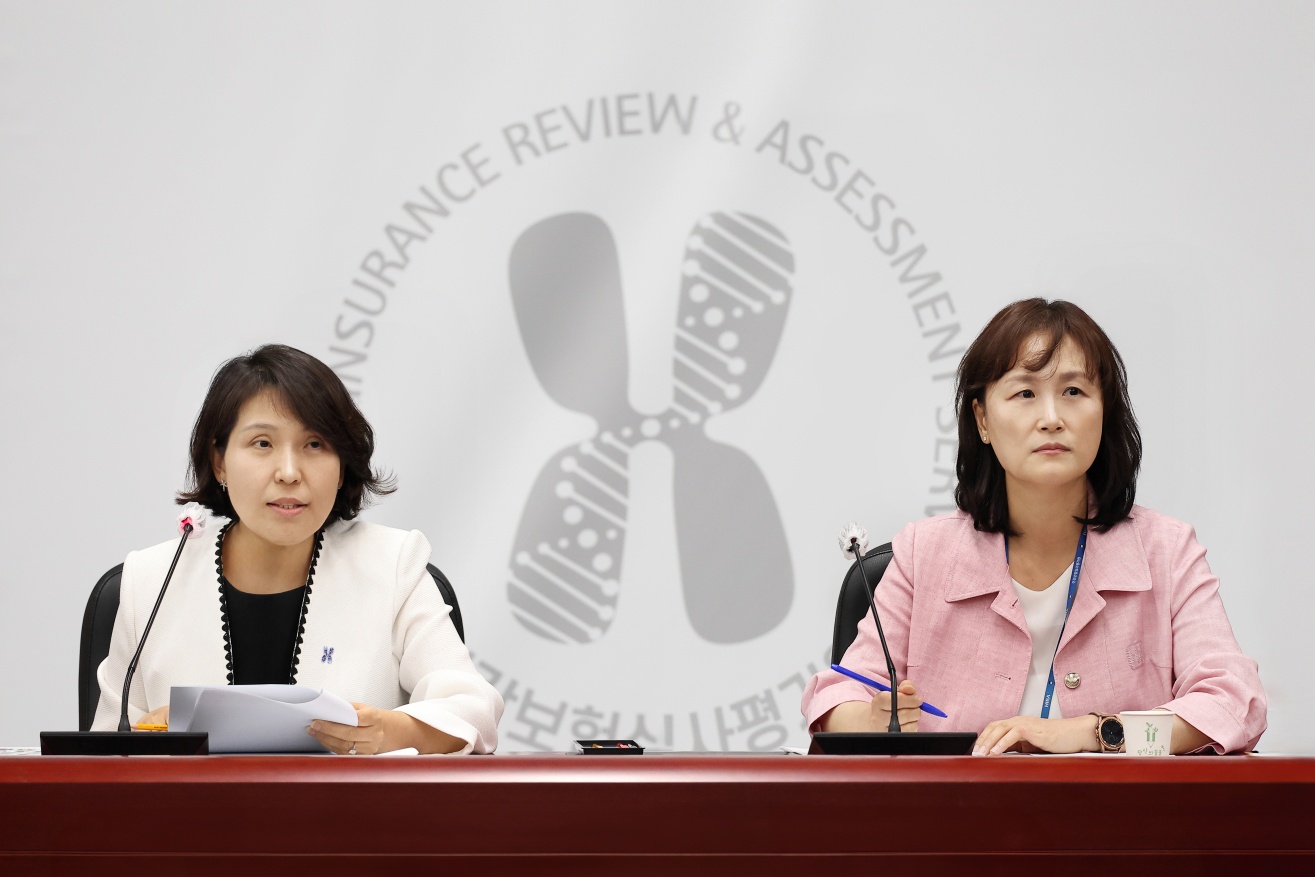
- Kim Gook-hee, Director of the Pharmaceutical Benefits Department at HIRA (left) and Lee So-young, Director of the Pharmaceutical Performance Assessment Department, (right) are answering to questions during the Q&A session. The Health Insurance Review & Assessment Service (HIRA) announced that the issue of 'indication-specific drug pricing system' proposed by the pharmaceutical industry may require further discussion, and the immeditate implementation is difficult. They explained that further discussion is needed, particularly regarding the prevention of confusion in clinical practice and post-market management. Kim Gook-hee, Director of the Pharmaceutical Benefits Department at HIRA, stated this at a press conference with specialized journalists held on July 8th at the main office in Wonju. The press conference was held with the Pharmaceutical Management Department and the Pharmaceutical Performance Assessment Department (TF), with Director Kim and Lee So-young, Director of the Pharmaceutical Performance Assessment Department, participating in the Q&A session. Kim explained the need for introducing an indication-specific drug pricing system: "Multi-indication drugs refer to cases where 'a single product has two or more indications,' and the current system applies a single reimbursement cap regardless of the number of indications." She added, "I understand that the need for an indication-specific drug pricing system is emerging due to the increasing trend of adding indications after approval and expanding reimbursement after listing, especially for anticancer drugs." Kim emphasized, "Regarding this system, it is necessary to review it cautiously, considering the appropriateness of setting different drug prices per indication and its actual applicability." Currently, countries that have adopted an indication-specific drug pricing system either apply differentiated refund rates per indication or calculate a weighted average price based on the prices of individual drugs per indication. Countries applying differentiated refund rates per indication include Italy, Switzerland, Australia, and Belgium. Countries using weighted average prices per indication include Italy, France, Australia, and Japan. Kim stated, "Measures to minimize confusion in clinical settings, such as issues of fairness among patients and concerns about prescription distortion that could arise if a single product's drug price varies by indication, must be prepared concurrently." Kim also added, "Even when applying a single weighted average price, careful discussion must precede regarding data collection methods for weighted average price calculation, drug price setting methods, and post-market management." Regarding the criticism that domestic natural new drugs are included in the re-evaluation targets for drug reimbursement appropriateness this year, which is contrary to industrial promotion policies, Kim stated there is no issue. She explained, "When reviewing clinical usefulness, we comprehensively examine not only overseas data but also domestic materials such as local medical textbooks, clinical practice guidelines, and domestic clinical literature listed in SCIE journals." Furthermore, regarding the reimbursement application for combination therapies of new drugs, Kim explained, "Combination therapies of new drugs lead to a significant cost increase compared to monotherapies. Therefore, reimbursement will only be possible in cases where a clear improvement in clinical efficacy is demonstrated." Kim also stated, "Regarding the reimbursement evaluation of new drugs used in combination with already listed drugs from other companies, if one pharmaceutical company applies for reimbursement, we request relevant data from the other company involved in the combination. However, if the other company has no intention of expanding reimbursement, it is difficult to mandate reimbursement under the current selective listing system." Meanwhile, Lee So-young, Director of the Pharmaceutical Performance Evaluation Office, stated that re-evaluation of drugs exempted from cost-effectiveness evaluation has not yet been specifically reviewed. Lee added, "A commissioned research study on 'Guidelines for Generating Real-World Evidence (RWE) for Pharmaceutical Performance Evaluation' has been underway since March and is expected to conclude in November." She explained, "We plan to prepare the guidelines through sufficient discussion with stakeholders during the research process." Once the research results are available, the plan is to discuss specific implementation directions with relevant organizations, including the Ministry of Health and Welfare (MOHW), as well as pharmaceutical companies. The following is a summary of the Q&A session: 1. Related to Proposals for Improving Medical Reimbursement Criteria Last year, 57 improvement suggestions were submitted by 7 associations and academic societies (including 7 sub-associations/societies). This year, 42 suggestions were submitted by 8 associations and academic institutions (including 21 sub-associations/societies). All 57 improvement suggestions submitted last year have been reviewed. Among them, 28 items have either had their notices or announcements revised, or are undergoing subsequent procedures. For other items involving misunderstandings, the medical community has been properly informed. Among the 42 improvement suggestions submitted this year, 32 related to general drugs were proposed. For instance, the Korean Association of Internal Medicine requested a general revision of the principles governing diabetes medications, and the Korean Hospital Association requested clarification of the diagnostic criteria for osteoporosis. For anticancer drugs, a total of 10 suggestions were made. These included the Korean Association of Internal Medicine (KAIM)'s opinion on the need to improve the eligibility criteria for treatment regimens to align with clinical reality, and requests to clarify phrases like 'refractory' or 'surgical or local treatment impossible' where interpretation differences might arise. In response, HIRA prioritizes reviewing items where numerous claim adjustments occur due to unreasonable or unclear criteria, or where prompt guidance is needed to address misunderstandings in interpretation. 2. Related to Indication-Specific Drug Pricing System Multi-indication drugs refer to cases where 'a single product has two or more indications,' and the current system applies a single reimbursement cap regardless of the number of indications. Recently, I am aware that the need for an indication-specific drug pricing system is emerging due to the increasing trend of adding indications after approval and expanding reimbursement after listing, particularly for anti-cancer drugs. Regarding this system, it is necessary to review it cautiously, considering the appropriateness of setting different drug prices per indication and its actual applicability. Measures to minimize confusion in clinical settings, such as addressing issues of fairness among patients and concerns about prescription distortion that could arise if the drug price of a single product varies by indication, must be prepared concurrently. Even when applying a single weighted average price, careful discussion must precede regarding data collection methods for weighted average price calculation, drug price setting methods, and post-market management. 3. Related to Requests for Reimbursement of Combination Therapies The trend of increasing anticancer combination therapies has been significant recently. To expand treatment opportunities for patients, the Ministry of Health and Welfare's notice in May and HIRA's announcement in June improved the system to allow reimbursement for existing anticancer drugs when combined with new anticancer drugs, thereby strengthening access to anticancer combination therapies. Combination therapies of new drugs incur a significant cost increase compared to monotherapies, etc. Therefore, reimbursement will only be possible in cases where a clear improvement in clinical efficacy is demonstrated. Combination therapies of new drugs incur a significant cost increase compared to monotherapies, etc. Therefore, reimbursement will only be possible in cases where a clear improvement in clinical efficacy is demonstrated. Furthermore, regarding the reimbursement evaluation of new drugs administered in combination with already listed drugs from other companies, if one pharmaceutical company applies for reimbursement, relevant data is requested from the other company involved in the combination. However, if the other company has no intention of expanding reimbursement, it is difficult to mandate reimbursement under the current selective listing system. 4. Related to Re-evaluation of Reimbursement Appropriateness for Domestic Natural New Drugs Eight ingredients are targeted for reimbursement appropriateness re-evaluation in 2025. Currently, a practical review is underway based on data submitted by pharmaceutical companies, relevant evidence, and academic opinions. The Drug Reimbursement Evaluation Committee (DREC)'s review is scheduled for the second half of this year. The re-evaluation targets include all drugs that meet the selection criteria and are not selected based on the original country of development of the ingredient. Among the 8 ingredients targeted for re-evaluation this year, Clematis root, Trichosanthes root, Prunella spike, and Mugwort extract are classified as natural new drugs. Even if these drugs are selected for evaluation, their reimbursement will be maintained if clinical usefulness is recognized during re-evaluation. Additionally, when reviewing clinical usefulness, not only overseas data but also domestic materials such as local medical textbooks, clinical practice guidelines, and domestic clinical literature listed in SCIE journals are comprehensively examined. 5. Related to Delays in Drug Evaluation for Concurrent Approval-Evaluation-Negotiation Pilot Program The 'Concurrent Approval-Evaluation-Negotiation Pilot Program' was initiated to expedite the reimbursement listing time by simultaneously conducting the review processes of the Ministry of Food and Drug Safety, HIRA, and the National Health Insurance Service. It primarily selected drugs that showed superior efficacy for life-threatening diseases without alternative treatments, and reimbursement for the pilot program's target drugs was not a prerequisite. However, if changes occur during the approval and reimbursement evaluation process or supplementary data is submitted after a drug has been selected as a pilot program target based on the pharmaceutical company's application data, additional review time may be required. Unlike medical procedures or treatment materials, drugs are subject to a selective listing system that applies health insurance coverage to drugs with excellent therapeutic and economic value. This is operated through HIRA's reimbursement evaluation and the National Health Insurance Service's negotiation procedures. 6. NHIS's Stance on Participation in DREC As the NHIS is the insurer and a direct party to negotiating drug reimbursement caps with pharmaceutical companies, if the NHIS were to participate in the committee's composition, concerns might arise regarding the fairness and objectivity of the decisions made. Currently, the NHIS attends and monitors every meeting of the DREC, and relevant data is shared periodically. We will continue to collaborate with the NHIS for efficient drug management. 7. Related to Revision of Indirect Comparison Guidelines If a clinical study has been conducted to evaluate the clinical usefulness of a new drug, such as its improvement in efficacy, as a single-arm study of the applicant drug, or if there is no direct comparison data with an alternative drug, objective evidence derived through a valid indirect comparison is required. To this end, HIRA conducted the "Research on Revising Indirect Comparison Guidelines (March-December 2024)" in 2024, and the final research report was published on our website in February this year. Furthermore, an expert advisory meeting regarding the guideline revision was held in early May. Based on this, a draft will be prepared, and the guideline revision will be pursued this year after gathering internal and external opinions. 8. Pharmaceutical Performance Assessment Department Organization and One-Year Achievements Last year, the Pharmaceutical Performance Assessment Division operated with one department, the Pharmaceutical Performance Evaluation Department. However, starting this year, it has been reorganized into a one-office, two-department system. A new Pharmaceutical Performance Assessment Department was established to strengthen development functions, including RWD data analysis methods, performance evaluation models, and guidelines for generating real-world evidence (RWE). We have focused on establishing a system to ensure patient access to high-cost severe disease treatments while managing evidence uncertainty through post-listing performance evaluation. Following the review stage of a drug reimbursement application, the head of the Pharmaceutical Performance Assessment Department participates in discussions within the relevant three subcommittees to select target drugs for performance evaluation. To date, performance evaluations have been conducted for drugs such as Kymriah and Zolgensma, and we have efficiently managed high-cost severe disease treatments. Based on the revised risk-sharing agreement (RSA) type notification in March this year, the system is being operated to create good models for pharmaceutical performance evaluation, aiming for complete system completion by appropriately selecting and reviewing evaluation targets. We will also strive to standardize the entire performance evaluation review process to establish it as a rational and acceptable system. 9. Related to RWD Drug Evaluation Procedures If the DREC approves a submitted drug with a condition for post-marketing collection of RWD. In that case, the pharmaceutical company must submit a performance evaluation plan, detailing specific conditions such as collection period, frequency, and indicators, after consultation with the Pharmaceutical Performance Assessment Department. Subsequently, the pharmaceutical company periodically submits the collected data (RWD) to HIRA, and HIRA cross-validates it with claims and review data to verify reliability. Before the end of the risk-sharing agreement period, the pharmaceutical company submits the performance evaluation results, analyzing the collected data (RWD) according to the predefined plan, to HIRA. After that, the DREC then evaluates these results. 10. Related to RWE Guidelines and Re-evaluation of Cost-effectiveness Evaluation Exempted Drugs The commissioned research on 'Guidelines for Generating Real-World Evidence (RWE) for Pharmaceutical Performance Evaluation' has been underway since March and is expected to conclude in November. We plan to develop the guidelines through thorough discussions with stakeholders during the research process. Once the research results are available, the plan is to discuss specific implementation directions with relevant organizations, including the MOHW and pharmaceutical companies. The re-evaluation of drugs exempt from cost-effectiveness evaluation has not yet been specifically reviewed.
