
- LOGIN
- MemberShip
- 2026-04-27 00:24:25
- Policy
- K-API·listed essential medicine to get preferential price
- by Lee, Jeong-Hwan Oct 30, 2025 06:11am
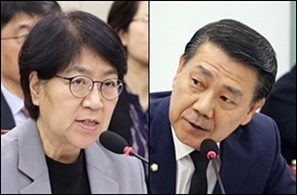
- Minister Jeong Eun Kyung promised Rep. Baek Jong-heon to implement the The Ministry of Health and Welfare (MOHW) has decided to expand eligibility for the 68% preferential drug price for National Essential Medicines that use domestic active pharmaceutical ingredients (API). The MOHW aims to foster the domestic industry by incentivizing the use of domestically sourced API. The MOHW is shifting its initial stance—which applied the 68% preferential drug price only to essential medicines that received marketing authorization after the policy's implementation in March of this year—to granting the 68% preferential price to already listed products. Notably, the MOHW will also add the measure of domestic API self-sufficiency to its ongoing research on advanced policies for drugs with unstable supply. Furthermore, it plans to review the need for a preferential drug price for combination drugs using domestic API at a later stage. This is a follow-up measure by the MOHW after Rep. Baek Jong-heon (People Power Party) criticized Minister Jeong Eun Kyung during a parliamentary inspection this year, pointing out a policy failure: not a single pharmaceutical company had applied for or benefited from the 68% preferential prices of essential medicines. This announcement is from the 'Roadmap for Fostering Domestic Active Pharmaceutical Ingredients' submitted by the MOHW to Rep. Baek Jong-heon's office on October 29. According to the documents submitted to the representative's office, the MOHW will expand the eligibility for the 68% domestic API preferential drug price, currently applied only to newly listed National Essential Medicines, to include 'already listed essential medicines.' To establish this, the MOHW stated that it initiated a survey on the status of domestic API-using drugs held by domestic pharmaceutical companies on the 20th, through organizations such as the Korea Pharmaceutical and Bio-Pharma Manufacturers Association and the Korea Biomedicine Industry Association. Rep. Baek explained that, based on the survey results, essential medicines that were already listed and had obtained National Health Insurance drug prices before the implementation of the preferential policy in March are expected to receive a retroactive application of the 68% price hike. The MOHW also decided to include strategies for API self-sufficiency in the ongoing research service to analyze trends and stabilize the supply of drugs with unstable supply (from September to November 2025). Upon completion of this research, the ministry will consider commissioning additional research to develop an API self-sufficiency roadmap. The MOHW plans to increase the Korea Health Industry Development Institute (KHIDI) budget by KRW 100 million next year for this purpose. The MOHW stated, "Next year's project to strengthen API self-sufficiency will address the excessive reliance on specific countries for imported APIs, such as China (35%) and India (15%)," and stressed, "We are also pursuing the expansion of the 68% preferential drug price for National Essential Medicines using domestic API to include already listed essential medicines. We are currently confirming the status and gathering opinions through the pharmaceutical and biotech organizations."
- Policy
- Jardiance generics listed late October…but not CKD
- by Jung, Heung-Jun Oct 30, 2025 06:09am
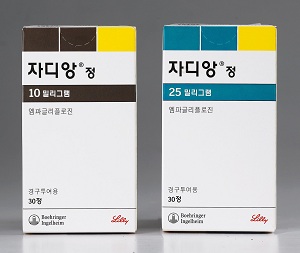
- As the substance patent for Jardiance expired on October 24, a total of 235 products—both single-agent and combination formulations—were simultaneously added to Korea’s reimbursement list. However, Chong Kun Dang chose a different approach, applying for sequential listing of its single-agent and combination products. The company first listed its single-agent Empamax Tab (10 mg, 25 mg) on the reimbursement list in line with the patent expiration date this month and plans to add 13 combination formulations in November. According to industry sources on the 29th, unlike other generic manufacturers, Chong Kun Dang owns a salt-modified single-agent formulation, which led to this stepwise, sequential reimbursement strategy. Chong Kun Dang’s Empamax Tab (10 mg, 25 mg) contains empagliflozin L-proline. It is a salt-modified version of the original compound, unlike other generics. By conjugating L-proline, an amino acid, the company successfully avoided patent infringement. After review by the Health Insurance Policy Deliberation Committee, the products have been reimbursed since October 24 at the same price as their planned sales price. Starting in November, 13 additional combination formulations—both dual and triple combinations—will be listed. A total of 11 products, that are combinations of empagliflozin and metformin-Empamax XR Tab (10/1000 mg, 12.5/1000 mg, 25/1000 mg), Empamax M Tab (12.5/500 mg, 12.5/850 mg, 12.5/1000 mg, 5/500 mg, 5/850 mg, 5/1000 mg), and Empamax S Tab (10/100 mg, 25/100 mg- will be granted reimbursement. In addition, two triple-combination formulations containing empagliflozin + sitagliptin + metformin—marketed as Emsiformin XR Tab—will also be added. A Chong Kun Dang official explained, “We modified the salt form to enhance safety. Unlike other generics, we first listed the single-agent product, and our combination products are being reimbursed subsequently based on the single-agent drug data.” Chong Kun Dang has received marketing approval for a total of 18 products, including both single-agent and combination versions, but has submitted reimbursement applications for only 15. Some triple-combination formulations and specific dosages were not included in the application. The company plans to prioritize products with higher prescription potential. The official added, “We are first launching the dosages expected to have higher prescription volume, and will apply for additional listings depending on market conditions.”
- Policy
- Non-reimbursed approvals of off-label drugs
- by Jung, Heung-Jun Oct 29, 2025 06:10am
- The number of non-reimbursed approvals of off-label drugs: while 208 applications for off-label use were rejected, 2,186 were approved between 2020-2025.The number of approvals for non-reimbursed use of drugs beyond their authorized indications (off-label) has been more than 10 times the number of rejections over the past six years. While 208 applications for off-label use were rejected, 2,186 were approved, often because the benefits outweighed the risks. On October 27, the Health Insurance Review & Assessment Service (HIRA) publicly disclosed, for the first time, the number of non-reimbursed approvals for off-label drugs, including over-the-counter (OTC) medicines. Applications for non-reimbursed off-label drug use must first be reviewed by an IRB (Institutional Review Board) established in a hospital or by an academic society. For OTC medicines, HIRA commissions the Ministry of Food and Drug Safety (MFDS) to review safety and efficacy, while anti-cancer drugs are approved by the Cancer Disease Review Committee (CDRC), which holds monthly. Unlike anti-cancer drugs, only the records of rejections for OTC medicines had been disclosed until now. This had been criticized as a problem, making it difficult for healthcare institutions to file applications for off-label non-reimbursed use. There was also a persistent request to disclose approval records for OTC medicines to ensure fairness. HIRA pre-announced a partial amendment to the 'Partial Revision to Operational Regulations for Approval of Non-Reimbursed Off-Label Drug Use' in September and proceeded with public consultation. The newly disclosed approval cases totaled 2,186 from 2020 to the present, broken down as follows: 472 cases in 2020, 572 in 2021, 266 in 2022, 485 in 2023, 276 in 2024, and 115 this year. Meanwhile, a total of 377 rejection cases were disclosed over 13 years, from 2013 to 2025. Specifically, from 2020, when approval cases began to be disclosed, 208 cases were rejected. Examining the trend of rejections by year shows: 33 rejections in 2020, 86 in 2021, 38 in 2022, 44 in 2023, 6 in 2024, and 1 this year. This data indicates a significant reduction in rejection cases over the last two years. The disclosed rejection data for this year includes one additional rejection for Mabthera (rituximab). The application was filed citing expectations that the drug would be more cost-effective, have fewer side effects, and offer higher therapeutic efficacy than alternative drugs. Yet, it was denied because the submitted evidence did not substantiate the claims.
- Policy
- MOHW ‘will support pharma amid U.S. drug tariff plans’
- by Lee, Jeong-Hwan Oct 29, 2025 06:10am
- The Ministry of Health and Welfare (MOHW) has pledged to strengthen support measures for Korean pharmaceutical and biotech companies potentially impacted by the U.S. Trump administration's drug tariff policy. However, no specific policies or systems have been announced yet. The government plans to respond once the details of the U.S. administration's proposed drug tariff measures are announced. The MOHW also stated it is implementing various budget projects to foster and localize the materials, parts, and equipment (MPE) industry, which includes active pharmaceutical ingredients for biopharmaceuticals. This information comes from reviewing the Ministry's response submitted to the National Assembly's Health and Welfare Committee on the 27th for its NA audit. In response to concerns over potential damage from the U.S. plan to impose 100% tariffs on pharmaceuticals, the ministry said, “We will expand measures to strengthen export competitiveness, including financial support and new market development for affected companies.” The ministry explained that while President Trump mentioned plans for a 100% drug tariff, no official government announcement specifying the scope or items subject to the tariff has been made yet. The ministry elaborated, “If high tariffs are imposed, it will inevitably impact exports to the U.S. by domestic pharmaceutical and biotech companies. We need to confirm the details of the U.S. administration's specific drug tariff announcement.” It further announced, “The Ministry of Health and Welfare, together with the Ministry of Trade, Industry and Energy, held an emergency meeting with export companies on September 29 regarding the announcement of pharmaceutical tariffs to gather industry opinions. We will strengthen countermeasures for companies affected by tariffs in the biohealth sector to minimize the impact on domestic companies.” Regarding plans to foster the bio-materials and equipment sector as the “second semiconductor MPE” industry, the ministry emphasized that “this holds high importance from a national health security perspective.” The ministry stated it is supporting companies with costs for performance evaluations, such as testing, analysis, and certification, as well as consulting for overseas approvals, to promote the domestic production of vaccines and raw materials, which Korea is currently heavily import-dependent. For 2024, KRW 2.1 billion was allocated to support performance testing of domestically produced vaccine APIs. The ministry also announced new initiatives for the next year, pledging to continue nurturing the bio-materials and equipment sector. “The government's plan for next year includes new projects for the domestic production of bio raw materials and components, reflecting our ongoing commitment to fostering the bio MPE industry. We will provide support through budgeted projects, including KRW 10 billion for stabilizing the supply of bio raw materials and components, KRW 1.5 billion for diversifying raw material procurement, KRW 500 million for stockpiling essential medicines, and KRW 8.1 billion for advancing the manufacturing of export-oriented pharmaceuticals.”
- Policy
- HIRA “Low-price drug incentive brings ₩2.7 savings'
- by Lee, Jeong-Hwan Oct 29, 2025 06:10am
- The Health Insurance Review and Assessment Service (HIRA) defended its position regarding the argument against the ‘low-price drug purchase incentive’ payment system, stating that the system has consistently contributed to national health insurance cost savings. However, it acknowledged that improvements are needed regarding the unresolved issue of incentives being disproportionately concentrated on medical institutions at the general hospital and tertiary hospitals. HIRA's policy is to expand the cost-saving effect on the health insurance budget by devising a plan to allow hospital-level medical institutions and primary care clinics to participate in the low-price drug purchase incentive system. On the 26th, HIRA disclosed this plan regarding the low-price purchase incentive to the office of Representative Joo-young Lee of the Reform Party, Rep Lee raised concerns about the systemic contradictions and low effectiveness of the low-price drug purchase incentive policy. The low drug price purchase incentive system provides incentives to medical institutions based on the difference between the actual purchase price of drugs and the upper limit set for drug costs. Ultimately, this policy incentivizes lowering the actual transaction price of drugs in the market relative to the NHI drug price ceiling. This directly leads to reductions in the actual transaction prices of drugs, affecting pharmaceutical companies' cash cows. Rep Lee believes this incentive system hinders the development of the domestic pharmaceutical industry and diminishes the cost-saving effects of the national health insurance program because it focuses on price rather than drug quality. The pharmaceutical industry and drug wholesalers also argue that the low-price purchase incentive system is inherently flawed because it is linked to reductions in the actual transaction price of drugs. Critics argue that the lower the actual transaction drug price becomes for low-price purchase incentives, the more directly it leads to subsequent reductions in actual transaction drug prices, discouraging all from voluntarily lowering drug prices. Medical institutions have long pointed out that for small and medium-sized hospitals, neighborhood clinics, and pharmacies—not tertiary hospitals—the actual volume of low-price purchases is small, resulting in a low perceived incentive effect. In response to Rep. Lee's criticism that the low-price purchase incentive system is ineffective and undermines drug quality, HIRA stated, “It has the effect of reducing national health insurance finances.” HIRA explained that the low-price purchase incentive program was introduced to motivate healthcare institutions to purchase low-priced drugs and manage drug costs appropriately. It further elaborated, “The financial savings effect through this system is being sustained, as evidenced by the steady influx of new institutions participating in each round.” In fact, new institutions accounted for an average of 31.5% of all institutions receiving low-price purchase incentives recently. The low-price purchase incentive program has reduced national medical expenses by KRW 2.7012 trillion over the past decade, yielding annual savings of approximately KRW 200 to 300 billion. While recognizing the financial benefits, HIRA also admitted that the incentives are concentrated on medical institutions at the general hospital level or above, noting that improvement is needed to ensure fairer participation. HIRA concluded, “Since institutions with strong purchasing power, such as general hospitals, receive most of the incentives, we will seek ways to encourage participation from smaller hospitals and clinics, thereby contributing to the appropriate management of drug costs in Korea.”
- Policy
- How did CPAC evaluate Wegovy's adolescent indication?
- by Lee, Tak-Sun Oct 28, 2025 06:13am
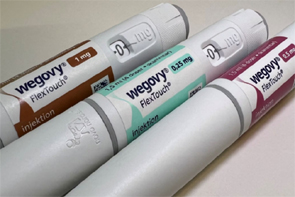
- The Ministry of Food and Drug Safety (MFDS)'s Central Pharmaceutical Affairs Council (CPAC) meeting report on the approval of Wegovy (semaglutide, Novo Nordisk) for a 12-and-above adolescent indication has been released, garnering attention. While CPAC members generally acknowledged the need for the adolescent obesity indication for Wegovy, they agreed that stringent post-marketing safety monitoring is required. The MFDS recently added Wegovy's indication for use as an adjunct to chronic weight management in adolescents aged 12 and older. Wegovy can now be used for obese adolescent patients aged 12 or older with an initial Body Mass Index (BMI) corresponding to the adult threshold of 30 kg/m2 or higher, and whose body weight exceeds 60 kg. The CPAC advisory report, held on July 24, was released on that day. Nine of the twelve members who attended the meeting unanimously agreed on the validity of the efficacy and safety for the adolescent obesity indication. One member stated, "Although there are concerns about misuse and abuse, this is a necessary drug for severely obese adolescents." Another member said, "The adverse events for the GLP agonist class will likely be similar," adding, "Obesity is a disease, and as it is expected to increase, there is a medical necessity." The consensus favored the benefits to patients outweighing concerns about misuse. Another member noted, "While the adult indication includes overweight patients with comorbidities, the adolescent indication is limited to obese patients, which suggests the risk of misuse and abuse might be lower than in adults. However, thorough management in clinical settings appears necessary." Consequently, the MFDS stated it would review the suggestion to include warnings about suicidal ideation in the drug's approval information. In fact, warnings regarding suicidal ideation have been included in the precautions for use. A clause was added to the general precautions stating: "Suicidal behavior and ideation have been reported in clinical trials of other medicines for the treatment of obesity or overweight. Patients receiving this drug for chronic weight management must be monitored for the emergence or worsening of depression, suicidal ideation or behavior, and/or any abnormal changes in mood or behavior. Use of this drug should be discontinued in patients who experience suicidal ideation or behavior. This drug should not be used in patients with a history of suicidal behavior or active suicidal ideation." Furthermore, a plan for post-marketing surveillance (PMS) in adolescents was also approved. The expansion of Wegovy's adolescent indication was primarily driven by the STEP TEENS Phase 3 clinical study. Thiswas a multi-center, randomized, double-blind study involving 201 adolescents aged 12 to less than 18 who were obese or overweight with at least one weight-related comorbidity. The clinical results met the primary endpoint. The percentage change in BMI showed a 16.1% reduction in the Wegovy 2.4mg group (134 patients), compared to a 0.6% increase in the placebo group (67 patients). The percentage of patients achieving 5% or more weight loss, a secondary confirmatory endpoint, was higher in the Wegovy 2.4 mg group (72.5%) compared to the placebo group (17.7%). Additionally, the secondary exploratory endpoint of weight change (kg) showed a 15.3 kg decrease in the Wegovy 2.4 mg group, compared to a 2.4 kg increase in the placebo group. The proportion of patients achieving 15% or more weight loss was also higher in the Wegovy 2.4 mg group (53.4%) than in the placebo group(4.8%). Novo Nordisk Korea stated, "Wegovy is the first GLP-1-based, once-weekly obesity treatment to be approved for adolescents," stressing that it "will improve treatment access for adolescents."
- Policy
- NHIS actively reviews unifying drug price-reduction system
- by Jung, Heung-Jun Oct 27, 2025 06:09am
- The National Health Insurance Service (NHIS) expressed its intent to actively review improvements to unify the timing of various post-market drug price-reduction systems, which are currently applied inconsistently. However, regarding introducing the International Nonproprietary Name (INN) name prescribing, it offered a general response stating that a cautious approach is necessary, requiring social consensus and policy judgment. On the 24th, the NHIS responded so to an inquiry from Rep. Jia Han of the People Power Party regarding the rationalization of the post-market drug price management system. The criticism is that various drug price reduction systems—such as actual transaction price reductions, price-volume agreement negotiations, and reimbursement reevaluation—are applied at different times, causing confusion and unpredictability in the field. The NHIS stated, “The post-listing control system is crucial for sustainable NHIS finances and drug cost management. However, we are aware of concerns that differing application timings between systems hinder predictability in the field.” It added, “In accordance with the Second Comprehensive National Health Insurance Plan, the government is conducting policy research to explore rational improvements to the post-listing control system. The NHIS will actively review and support reasonable improvement measures.” Rep. In-soon Nam of the Democratic Party of Korea inquired about the NHIS's stance on introducing INN prescribing. The NHIS appeared to take a cautious step back, stating it is a matter requiring prudence. The NHIS stated, “While prioritizing patient safety, we need to review limited and gradual adoption centered on essential medicines prone to supply instability, based on feedback from experts, academic societies, and stakeholders. Rep. Nam also inquired about the reasons for opposition from the medical community, such as infringement on doctors' prescribing rights and distrust regarding bioequivalence testing. In response, the NHIS stated, “Given the differing opinions, sufficient discussion among stakeholders and expert review are required. The matter must be approached with social consensus and careful policy judgment.”
- Policy
- "Long-waited patent expiration"…17 Xeljanz generics
- by Jung, Heung-Jun Oct 24, 2025 06:16am
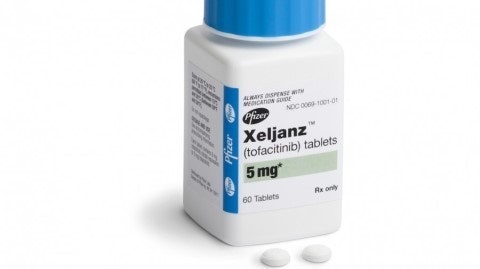
- Product photo of Xeljanz Pfizer Korea's rheumatoid arthritis treatment 'Xeljanz (tofacitinib)' is set to be included on the National Health Insurance reimbursement list next month, joining the market competition. According to the industry on October 23, 12 pharmaceutical companies and 17 items will receive reimbursement coverage as of November 23, the next day after Xeljanz's substance patent expiration. The products to be listed include Daewoong's Xeltofa Tab (5mg, 10mg), Il-Yang Pharms' Ellanz Tab 5mg, Tofacell Tab. Chong Kun Dang's Tofacell Tab (5mg, 10mg), Sam Il's Tofajakt Tab 5mg, SK Chemicals' Tocinib Tab 5mg, Hanlim Pharm's Zekpaz Tab 5mg, HLB Pharma's HLB Tofacitinib Tab (5mg, 10mg), Samjin Pharm's Tofanus Tab (5mg, 10mg), Unimed Pharm's Ziae K Tab 5mg, Alvogen Korea's Gencinib Tab (5mg, 10mg), Whan In Pharm's Tofasiz Tab 5mg, and Genu Pharma's Zakmoon Tab 5mg. Overall, the list includes five high-dosage (10mg) and twelve 5mg items. Chong Kun Dang's Tofacell Tab and HLB Pharma's HLB Tofacitinib 10mg are priced at KRW 10,859, positioning them at the highest ceiling price. Of these 5mg items, SK Chemicals' Tocinib Tab and Hanlim Pharm's Zekpaz received a high ceiling price estimation of KRW 7,697. Low-dosage items were approved for ▲rheumatoid arthritis ▲psoriatic arthritis ▲ankylosing spondylitis ▲ulcerative colitis, whereas high-dosage items were approved for ulcerative colitis only. A total of 68 items have received approvals. As several generic drugs are set launch and be included in the reimbursement list, the market for Xeljanz is expected to become more intense. According to UBIST, Xeljanz's sales last year amounted to KRW 14.4 billion, up 8.3% from the previous year's KRW 13.3 billion.

- Policy
- NA presses for reimb of Vyloy, Imjudo, Yescarta
- by Jung, Heung-Jun Oct 24, 2025 06:14am
- The National Assembly directly mentioned drugs for severe diseases like Vyloy, Imjudo, Yescarta, and pressed the Ministry of Health and Welfare to promptly grant the drug’s reimbursement expansions. The Ministry responded, “We will expedite the process,” which is expected to act as a tailwind for HIRA's reimbursement decision discussions. In written inquiries on the 22nd, lawmakers In-soon Nam, Myung-ok Seo, and Bo-yoon Choi each called for broader and faster access to high-cost treatments for severe diseases. Rep. In-soon Nam of the Democratic Party of Korea stated, “The government promised in its last presidential election pledge to reduce patient burdens through strengthened early diagnosis and treatment for severe disease patients, along with rapid coverage listing,” and inquired about plans for priority coverage of CAR-T therapy used as second-line treatment in blood cancers. The MOHW responded, “Yescarta applied for reimbursement as a second-line treatment last August, and the Health Insurance Review and Assessment Service (HIRA) is currently processing the decision on reimbursement eligibility. We will expedite the process for determining reimbursement eligibility for blood cancer treatments.” Rep Myeong-ok Seo of the People Power Party asked the Ministry about its commitment to pursuing reimbursement for targeted therapies for advanced or metastatic gastric cancer. The MOHW stated, “Vyloy applied for reimbursement this July as a first-line treatment for CLDN18.2-positive, HER2-negative advanced or metastatic gastric cancer. HIRA is currently processing the decision on reimbursement eligibility,” and expressed its intent to expedite the process. Rep. Bo-yoon Choi of the People Power Party inquired whether there are plans to expand the reimbursement evaluation method for the liver cancer treatment Imjudo. The criticism was that the current system, centered on periodic cost comparisons by treatment cycle, does not sufficiently reflect the unique characteristics of single-dose, one-shot treatments. In response, the MOHW stated, “The company applied for reimbursement in March, and HIRA is currently processing the decision on its reimbursement eligibility. In September, HIRA’s Drug Reimbursement Evaluation Committee raised the need to review the drug cost comparison criteria, and we are currently reviewing the details.”
- Policy
- "Will establish preferential pricing for drug R&D"
- by Lee, Jeong-Hwan Oct 23, 2025 06:12am
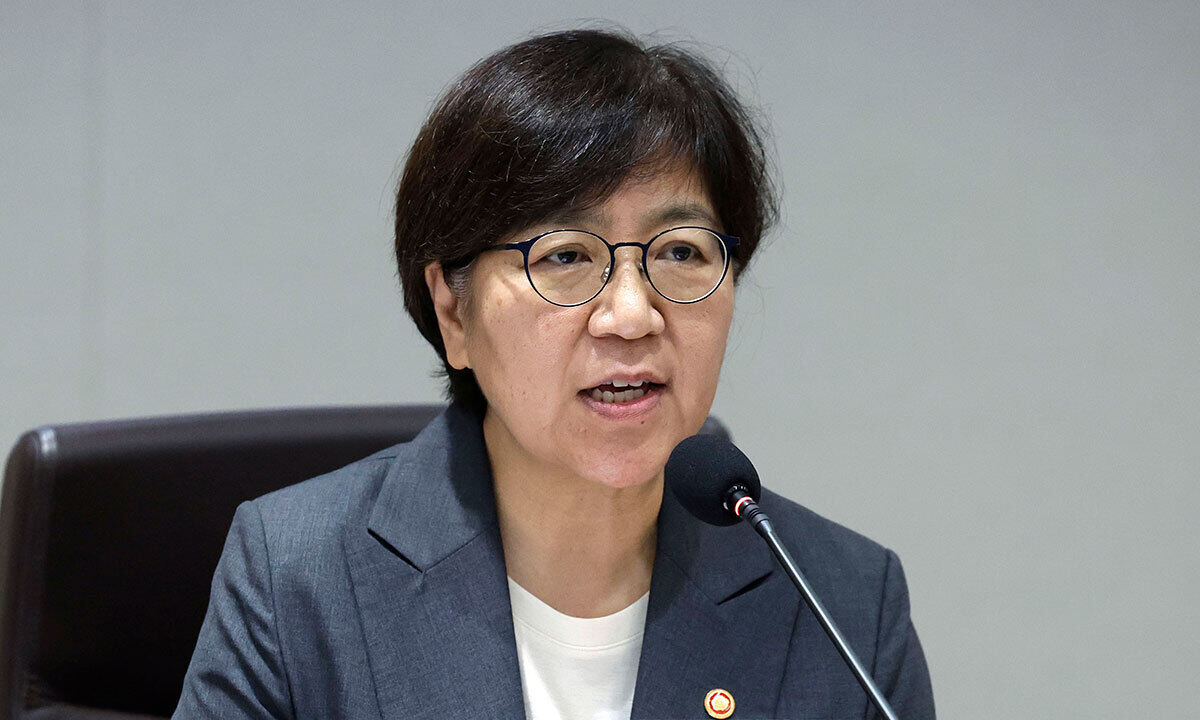
- Minister of Health and Welfare Jeong Eun Kyeong Minister of Health and Welfare Jeong Eun Kyeong is drawing attention after stating, "It is necessary to reform the pharmaceutical company compensation system through a drug pricing system linked to R&D investment. The Ministry will prepare measures to improve the drug pricing system." Minister Jeong also promised, "The Ministry will prepare multi-faceted support measures, including finance, tax, and human resources, for domestic pharmaceutical companies, including those designated as Innovative Pharmaceutical Companies." Regarding plans to reduce drug prices through the Re-evaluation of Foreign Drug Prices and the Reimbursement Appropriateness Re-evaluation, Minister Jeong acknowledged the following: the high level of domestic generic drug prices compared to major overseas countries, and the need for appropriate drug price management within limited National Health Insurance finances to ensure optimal drug coverage. She responded, "The Ministry will review drug price management after consulting with citizen groups, patient organizations, the pharmaceutical industry, and academic societies to ensure fair management and acceptance." Minister Jeong made these statements on October 22 in response to written inquiries during the parliamentary inspection from Democratic Party Representatives Nam In-soon and Lee Kai Ho, and People Power Party Representative Suh Myeong-ok. Rep. Nam and Rep. Suh pointed out the necessity of drug price incentives to encourage domestic pharmaceutical companies' New Drug R&D investment. The Ministry of Health and Welfare stated that the pharmaceutical and bio-industry is a national strategic industry and that national-level investment expansion is needed for it to become the next growth engine. In particular, the Ministry agreed on the need to reform the drug pricing system and compensation structure to strengthen the reward for the innovative value of new drugs and incentivize R&D investment, aiming to foster pharmaceutical companies with global new drug development capabilities. Minister Jeong stated, "We will prepare drug pricing system improvement measures after gathering opinions from industry experts and academic societies." She added, "We will comprehensively review the sound growth of the pharmaceutical and bio-industry and the sustainability of National Health Insurance finances by closely examining the status of domestic and foreign drug pricing systems, policy improvement areas, and global trade situations, while considering social acceptance." Regarding plans to foster domestic pharmaceutical and biotech companies, Minister Jeong explained, "The government has established three core tasks to achieve the vision of making Korea a global top 5 nation in the K-BIO and Pharmaceutical sector," and added, "We will shift to consumer-oriented regulations, accelerate innovative growth by linking technology, human resources, and capital, and support the co-growth of anchor and biotech companies to strengthen global competitiveness." Minister Jeong further stated, "We plan to establish detailed implementation plans for each task through consultation with relevant ministries and will execute follow-up measures without fail, reviewing opinions gathered from forums," and added, "We will improve the Innovative Pharmaceutical Company Designation System to reflect changes in the industry ecosystem. We will support the strengthening of domestic companies' competitiveness through field-centered workforce training and support programs for attracting overseas talent." Regarding the push for the Re-evaluation of Foreign Drug Prices and the Reimbursement Appropriateness Re-evaluation, Minister Jeong gave a principled answer, stating that the Ministry will consider industry opinions during the review process. Minister Jeong said, "Drug expenditure in Korea continues to increase due to the growing number of elderly and chronic disease patients." She added, "Domestic generic drug prices are high compared to major overseas countries. We will reasonably manage drug prices after listing by gathering feedback from the field, including the pharmaceutical industry." She concluded, "The Ministry is currently conducting the reimbursement appropriateness evaluation for eight APIs this year," and added, "We are preparing a fairer and systematic implementation plan based on the results of the five-year re-evaluation effort. We will review it after sufficient consultation to ensure social acceptance."
