
- LOGIN
- MemberShip
- 2026-05-06 03:11:48

- Policy
- PVA guidelines are about to be revised
- by Lee, Hye-Kyung Jan 27, 2022 05:43am
- The NHIS is internally reviewing a revision to the guidelines that includes a 100 → 90% change in the arithmetic average exclusion standard and a 15 → 2 billion won increase in the claim exclusion standard from this year's "Type Da" negotiations. NHIS' Senior director Lee Sangil said at the Korea Special Press Association briefing held on the 25th, "The guidelines amendment is currently under internal review and will be revised so that it can be applied from this year's Type Da negotiations." On December 2 of last year, the NHIS announced a plan to improve the PVA negotiation system at the 10th public-private consultative body involving the MOHW, the NHIS, the HIRA, KRPIA, and KPBMA. According to the revision to the PVA guidelines, the same product group and upper limit price with the total annual claims of the same product group of less than 2 billion won are items with an arithmetic average of less than 90%. Director Lee said, "The expansion of the arithmetic average price standard is aimed at strengthening the management of large items excluded from the list because of the high insurance financial burden but lower than the arithmetic average," adding, "The upward revision to 2 billion won is to exclude items with small claims from PVA." Regarding the pharmaceutical industry's criticism that the revision of the guidelines was made to "lower prices as the pharmaceutical industry sells more," Director Lee said, "From an economic perspective, it is appropriate to cut prices because fixed costs for drug research and development will decrease costs if actual usage increases." In particular, he stressed that the more companies sell, the lower the price is in line with the purpose of PVA, which cuts the drug price of drugs that are a financial burden on insurance. Director Lee added," Jung Hae-min, head of the drug management office, also said, "As the revision of the guidelines was announced at the end of last year and the implementation date of this year was postponed, I think the pharmaceutical industry is curious about the change in details." It will be roughly released next month, he said. In addition, the NHIS has not yet delivered a review opinion to the MOHW on how to raise the maximum PVA cut rate from the current 10% to 15%. Director Chung said, "We have not yet made a proposal to raise the maximum cut rate by 15%."
- Policy
- The NHIS will begin research on improving the PVA system
- by Lee, Jeong-Hwan Jan 27, 2022 05:43am
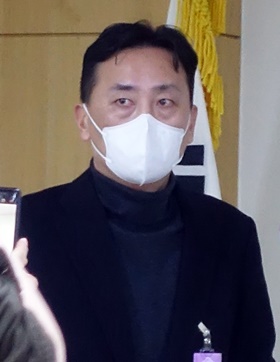
- Manager Kim HyundukHealth insurance authorities have announced plans to place an order for research services to evaluate the PVA system and prepare improvement measures. It is said that it will further specify the targets for drug cuts and health insurance financial savings through PVA as large items. However, she replied that it is difficult to accept immediately the standard for PVA exclusion from the current 1.5 billion won to 5 billion won or 10 billion won desired by the pharmaceutical industry. On the 25th, Kim Hyun-deok made the remarks at the National Assembly's policy meeting on "Rational Improvement Plan for PVA." The NHIS said the pharmaceutical industry, pharmaceutical society, the National Assembly, and the Board of Audit and Inspection have agreed on the need to improve the PVA system, one of the ways to reduce drug costs. Kim said she is pursuing the direction of discussions on PVA amendments targeting large items and plans to order research services to prepare overall system improvement measures. Director Kim said that she is aware of the problem of applying the PVA cut formula to all medicines collectively regardless of the absolute amount of increase. Director Kim said, "We are aware of the industrial problem of reviewing only the growth rate without taking into account the absolute increase in claims," adding, "We agree that it is necessary to evaluate PVA in general and prepare improvements." We plan to order research services this year, she explained. Director Kim said, "Many demands for PVA improvement have been raised not only by pharmaceutical and pharmacist societies, but also by the Board of Audit and Inspection and Inspection, no matter how much use increases, it is unreasonable to limit it to 10% with PVA. We will review it through research, she said. "The study also plans to discuss changing the standard amount excluding PVA from 1.5 billion won to 2 billion won, but we have to go step by step," she said adding, "The pharmaceutical community talks about 5 billion won and 10 billion won, but it is difficult to go so quickly." It was originally scheduled to take effect on January 1 this year, but it seems to have been delayed to collect opinions from the pharmaceutical industry, she added.
- Policy
- PVA price reduction needs to be improved
- by Lee, Jeong-Hwan Jan 26, 2022 05:57am
- Professor Lee Jonghyuk of Chung-Ang University.There is a problem that the reduction rate of small items relatively increases compared to the financial impact by using the same formula for PVA negotiations. It was pointed out that the current PVA is operating too rigidly without reflecting the reality that medicines affect health insurance finances. Critics say that drugs that reduce health insurance finances are not considered or that the criteria for excluding PVA drug prices are unreasonable, adversely affecting sales of some drugs. Professor Lee Jong-hyuk of Chung-Ang University, who was in charge of the presentation at the National Assembly's policy meeting on the 25th, made the remarks. The current PVA cuts and adjusts prices within the range of up to 10% through negotiations if the amount of drug claims listed as benefits increases by more than a certain percentage. With the health insurance authorities announcing their plan to partially revise the current PVA, the pharmaceutical community pointed out some irrationalities in the system and asked to actively reflect their opinions in the revision. Professor Lee believes that it is necessary to examine whether the current PVA is fully considering drugs that contribute to fiscal savings as usage increases. He also said that the validity of the claim amount standard excluding PVA negotiations should be discussed aggressively now as the need for revision is emerging. In particular, Professor Lee believes that it is reasonable to apply the same formula regardless of the financial impact of health insurance or change the exclusion criteria to less than 90% of the arithmetic average during the PVA negotiations. Professor Lee said, "It is pointed out whether it is right to cut drug prices by applying collective standards to drugs that have contributed to financial savings." "We need to think about how to reasonably apply financial savings drugs to PVA negotiations," he explained. Professor Lee said, "It is necessary to fully explain the reasons and grounds for the health insurance authorities to change and revise the standard for claims excluding PVA negotiations from the current 1.5 billion won to 2 billion won." He added, "There is also an evaluation that the annual fiscal savings are about 120 million won when revised." Seo Jung-sook, the People Regardless of the financial impact, there is a problem that the reduction rate of small items is relatively large in fiscal impact by using the same formula in PVA negotiations, he said. "Change of standards excluding negotiations changes rules, so many discussions and agreements between health insurance authorities and pharmaceutical circles are needed." Rep. Seo Jung-sook of the People's Power pointed out that the current PVA is unreasonable due to the application of a uniform system and is causing reverse discrimination against innovative pharmaceutical companies in Korea. She said, "Small and medium-sized pharmaceutical products, whose claims have increased by 600 million won from 1 billion won to 1.6 billion won, have to cut their drug prices, but products with an increase of 4.9 billion won from 10 billion won to 14.9 billion won will be excluded from the cut." Unlike global new drugs that are released after fully equipped with a product line, there is also a side effect of reversely lowering the price of innovative new drugs in Korea, she pointed out.
- Policy
- The presidential candidate's pledge to expand NIP is fierce
- by Lee, Jeong-Hwan Jan 26, 2022 05:57am
- 3 HPV vaccines that have been approved for sale in Korea The expansion of free HPV vaccine vaccination is spreading to a competition for pledges of presidential candidates between the ruling and opposition parties. As the ruling party candidate adopted the application of the NIP of the bivalent and HPV vaccine as a pledge, the opposition candidate is fiercely fighting, promising to support the cost of vaccination of the expensive 9-ga HPV vaccine. On the 23rd, politicians of the ruling and opposition parties are busy promoting their pledge to strengthen health and welfare, which includes free HPV vaccine vaccination. Currently, HPV vaccine NIP targets 12-year-old female adolescents, and NIP applications are Cervarix, a divalent vaccine, and Gardasil, a quadrivalent Influenza Vaccines. As President Moon Jae In announced last year, the health insurance authorities plan to expand the age of free HPV vaccine vaccination in the first half of this year to 12 to 17 years old. Furthermore, Democratic Party of Korea candidate Lee Jae-myung and the people's power candidate Yoon Seok-yeol are determined to increase the number of HPV vaccine NIP targets and expand free vaccination items. Democratic candidate Lee Jae-myung has repeatedly emphasized the pledge since announcing the policy of expanding the HPV vaccine NIP beyond female youth to male youth as his first pledge on the first day of the new year. As candidate Lee's pledge is to expand the existing HPV vaccine vaccination age and gender, the items to be applied are expected to be divalent Cervarix and tetravalent Gardasil. In a recent video, candidate Yoon Seok-yeol promised to apply the NIP of Gadasil 9 that is more expensive than other vaccines. Candidate Yoon predicts vaccination insurance benefits for women aged 9 to 45 and men aged 9 to 26, which is the recommended age for Gadasil 9, so in some cases, it is expected to require significantly greater financial expenditure compared to the expansion of NIP. Except for the NIP application age group, the cost of inoculation of Cervarix, Gardasil, and Gardasil 9 varies considerably. Candidate Lee Jae-myung of the Democratic Party of Korea and candidate Yoon Seok-yeol of the People Cervarix's total cost is about 300,000 won, Gardasil's cost is about 400,000 won, and Gardasil 9's cost is about 600,000 won, which is about 1.5 times more expensive than other Gardasil products. The presidential candidates of the ruling and opposition parties plan to receive public support for their pledge to expand the relatively expensive HPV vaccine NIP. The National Assembly is also steadily proposing a bill to expand the HPV vaccine NIP to support pledges for presidential candidates. Rep. Han Moo-kyung of the People's Power submitted a revision to the Infectious Disease Prevention and Management Act on the 21st, which provides HPV vaccinations to all children aged 12 regardless of gender. Prior to this, Baek Jong-heon of the same party also proposed a bill in December last year to expand the scope of HPV vaccine NIP to 11-year-old and 12-year-old children regardless of gender. In addition, Rep. Choi Hye-young of the Democratic Party of Korea also proposed a bill in November 2020 to expand the target of HPV vaccine NIP to all children and adolescents under the age of 18. As a result, the policy to expand the HPV vaccine NIP after the upcoming presidential election in March is going smoothly. This is because both ruling and opposition candidates have made pledges, and specific directions for NIP expansion and applicable items are expected to be determined according to the results of the presidential election and details of subsequent pledges.
- Policy
- The MOHW has won the original drug price lawsuit
- by Lee, Jeong-Hwan Jan 25, 2022 05:55am
- The government won all dozens of lawsuits to cancel drug prices due to the expiration of original drug patents, but no civil lawsuits have been filed to get back drug benefits paid during the suspension period. The government says it is practically impossible to file a civil suit against individual pharmaceutical companies against dozens of drug price reduction lawsuits and get back the loss of health insurance finances. In response, the pharmaceutical community is confronting the need for the government to dispute in court over the feasibility of the redemption through a separate civil suit, rather than enacting the retroactive redemption of drug benefits already paid under the drug price reduction refund bill. On the 24th, the MOHW and the pharmaceutical industry disagree over some amendments to the National Health Insurance Act, which includes provisions for the return and refund of drug prices. Of a total of 64 lawsuits from 2011 to last year, a total of 20 lawsuits were filed to cancel drug prices due to the first generic registration after the expiration of the original patent. The MOHW was recognized by the court that the disposition of drug price reduction was valid without losing 20 original drug price reduction lawsuits. The MOHW did not file a civil lawsuit for redemption to receive the drug benefits paid within the suspension period after winning the case. The MOHW believes that recovering drug benefits through additional lawsuits is not a solution to preserve fundamental health finances, and that it is reasonable to stipulate the regression and refund provisions of drug prices as legislation. The MOHW said, "It is difficult to apply it in practice to file a civil lawsuit." The MOHW said, "It is inefficient and virtually impossible to file multiple civil lawsuits against each pharmaceutical company for each dozens of drug lawsuits." The MOHW said, "Excessive administrative power consumption, litigation costs are triggered, and the government has a burden of causing additional judicial disputes over cases that have already been filed," and added, "It is reasonable to clearly define health insurance losses by law to prevent waste of cost and administrative and cost." Some in the pharmaceutical industry say that the MOHW needs to file a separate civil suit for redemption rather than legalizing refunds according to the results of the administrative dispute over drug prices. The judiciary's decision to suspend the execution of drug cuts applied by pharmaceutical companies should be recognized separately from the original ruling, and whether or not drug benefits already paid can be redeemed retroactively due to winning the original bill should be judged again by the court. A pharmaceutical company's pharmaceutical manager said, "The decision to suspend execution is the authority of the judiciary, and the MOHW, the executive branch, should not affect that authority. If the drug price reduction refund bill is implemented, the court's decision to suspend execution itself could become meaningless." In particular, the judiciary has not determined whether the MOHW has the authority to recover drug benefits paid to pharmaceutical companies during the suspension period in line with the results of the lawsuit on the merits. The bill to redeem drug prices is feared to cause excessive damage to the pharmaceutical industry,"he added.
- Policy
- MFDS has completed verification of the efficacy of Retevmo
- by Lee, Tak-Sun Jan 25, 2022 05:55am
- The RET (Rearranged during transfection)) gene target anticancer drug developed by Lilly seems to be at the end of the domestic approval process. It is a drug called Retevmo (Selpercatinib), which began licensing last year, and safety and efficiency evaluation have recently been completed and is about to be approved. According to the pharmaceutical industry on the 21st, Retevmo's safety and efficiency evaluation by Lilly applied for permission, has recently ended. Analysts say that the end of safety and efficiency evaluation has further increased the possibility of product approval. In the case of new drugs, the MFDS will conduct GMP review to check safety, effectiveness, product quality, and compliance with manufacturing process standards through analysis of result data such as clinical trials to determine final product approval. The termination of safety and efficiency evaluation, which verifies drug efficacy, is interpreted as meaning that it is almost done. Retevmo is highly likely to obtain a domestic product license in that it has already received approval from the U.S. FDA based on multinational clinical trials such as data on safety and efficiency evaluation by the MFDS. At the time of FDA approval in May 2020, the drug was approved for use in adult patients with metastatic RET fusion-positive non-small cell cancer, medullary thyroid carcinoma over the age of 12, and Radioiodine-Refractory Thyroid Cancer. The RET gene is a phosphate enzyme that can cause cancer and is known to promote the proliferation of cancer cells when mutated or combined with other genes. About 2% of non-small cell carcinoma patients are found to have RET gene mutations. As RET gene mutations are also found in various carcinomas, Lilly is conducting an expanded study on Retevmo's indications. Retevmo was also designated as a rare drug in Korea by the MFDS in February last year. In addition to Retevmo, Roche's Gavreto (Pralsetinib) targeting the RET gene is also being introduced in Korea. In addition, among domestic pharmaceutical companies, HK inno.N introduced the RET target anticancer drug "VRN061782" from Voronoi in February last year and began commercialization development.
- Policy
- Xeloda in breast cancer patients is also reimbursed
- by Lee, Hye-Kyung Jan 24, 2022 05:55am
- The stage and target of administration of Roche Korea's breast cancer treatment Xeloda (Capecitabine) and Korean Pfizer's acute lymphocyte leukemia treatment Besponsa (Inotuzumab Ozogamicin) will be changed. With the establishment of a new chemotherapy benefit standard that has deleted the classification of anticancer drugs in the first and second groups, six new items, eight changes, and eight deletion items will be made in the case of urological cancer-related anticancer drug benefit standards The HIRA announced on the 18th that it will disclose the "Amendment of Announcement (proposal) according to drugs prescribed and administered to cancer patients" and conduct an opinion inquiry until the 24th. According to the revision to the announcement, on June 1, Xeloda, which "single therapy first or higher, formal chemotherapy" was changed to "second or higher" in consideration of permission and current benefit status, requested the re-establishment of the benefit standard. Xeloda is a drug licensed as a local progressive or metastatic breast cancer treatment without an anthracycline treatment plan as a result of the HIRA review that failed both chemotherapy and 'Anthracycline' drugs, and there were no authorized countries related to the first use of the administration phase. However, the textbook mentions the advantages as an oral drug and minimization of hair loss, and the NCCN guideline recommends [I,A] (consensus 71%) when prioritizing avoiding hair loss in the 'preferred category 2A' and ESMO guidelines regardless of order. The HIRA was judged as a necessary drug for treatment at the clinical site, and the administration stage and subjects of administration were changed to patients with primary metastasis and recurrent breast cancer. Besponsa is a drug licensed under the treatment of recurrent or refractory precursor B-cell acute lymphocytic leukemia (ALL) adult patients with 'the patient with relapse or refractory precursor B-cell acute lymphocytic leukemia should have failed at least one tyrosine kinase inhibitor (TKI). The NCCN guidelines recommend category 2A for Philadelphia chromosome-positive recurrence or refractory B-cell acute lymphocyte leukemia, and the HIRA also judged it as a necessary drug for treatment and provided induction therapy (500) for "philadelphia chromosome-positive recurrence or refractory precursor B-cell acute lymphocyte." Considering that Besponsa's permission from the MFDS states that the recommended administration period is 2 cycles for patients performing hematopoietic stem cell transplantation (HSCT), CR or CRi after remission induction therapy, and an additional 1 cycle will be paid 30/100. The HIRA reorganized the standards for "details on the application standards and methods of medical care benefits for drugs prescribed and administered to cancer patients" related to urinary cancer. Since last year, the HIRA has been setting up a new anti-cancer treatment benefit standard that deleted the classification of anticancer drugs in the first and second divisions after preparing a standard (draft) in related fields and collecting opinions from related societies. When the anti-cancer drug benefit standard was enacted in 2006, drugs subject to retrial, rare drugs, or abuse were classified as second-tier anticancer drugs and used within the scope of each drug's benefit standard, and clinicians were required to properly judge and administer them. A total of 21 items were revised, including 6 new items (6 therapy), 8 changed items (26 therapy), and 8 deleted items (22 therapy). According to the specific changes by cancer type, 1 kidney cancer, 1 change (10 therapy), 2 delete (10 therapy), 5 urinary epithelial cancer (6 therapy), 3 change (10 therapy), 4 delete (3 therapy), 4 prostate cancer change (6 therapy), and 2 delete (9 therapy) were carried out
- Policy
- Improve the reimb system to accommodate high-priced drugs
- by Lee, Hye-Kyung Jan 21, 2022 05:56am
- The government expressed its will to reform the reimbursement management system with the emergence of super-expensive new drugs. At the ‘Forum for the reimbursement management of high-priced pharmaceuticals,’ Yoon Seok Yang, Director of Ministry of Health and Welfare’s Division of Pharmaceutical Benefits, said, “Concern is what I first feel when a deputy director in charge reports that a new high-priced drug was released. This is why we have no choice but to agree at least in direction that we need to improve the reimbursement system, such as the risk-sharing system and the pharmacoeconomic evaluation exemption system to ensure access for the patients.” With Novartis Korea's ‘Kymriah inj (tisagenlecleucel)’ that passed deliberation by the Drug Reimbursement Evaluation Committee of the Health Insurance Review and Assessment Service marking the start, the imminent entry of ultra-high-priced one-shot treatments that cost 500 million to 2 billion won per shot including ‘Zolgensma (onasemnogene abeparvovec)’ are increasing government’s concerns. The government’s basic plan is to use the current systems in place, including the RSA and PE exemption system, to improve access to such ultra-high-priced new drugs. Yang said, “We are assessing what factors to prioritize when evaluating the cost-effectiveness of such drugs. In other words, a well-established post-management system would be most important in terms of policy.” Yang added, “As it would cost hundreds of millions of won per administration, the pharmaceutical companies would first need to present reasonable grounds for the use of such drugs, and from the perspective of managing reimbursement, we have no choice but to focus on post-management. HIRA and NHIS would have to establish a reimbursement management system.” Viewers show interest in the reimbursement listing of ultra-high-priced drugs and its post-managemen at the live YouTube forum on high-priced new drugs Ae-Ryun Kim, NHIS’s Deputy Minister of the Pharmaceutical Management Division, said “High-priced new drugs have been granted reimbursement using various systems, including the approval-reimbursement linkage system or RSA. In particular, the cost-effectiveness of high-priced drugs that were applied the PE exemption system is difficult to determine, and this is why the need for a post-management system has been continuously raised.” Kim added, “When establishing a post-management system, we need to consider the subjects, method and use and collection of data in its design. For example, HIRA believes that tighter management would be needed in the future for Kymirah, as the measure to refund a certain amount of the cost when patients do not see an effect as well as an expenditure cap was set for the use of the drug.” DREC Chair Jung Shin Lee. Emeritus Professor of Oncology at Asan Medical Center, said “Times have changed. In the past, it was all about the quality of the drug, but now discussions are focused on patient results, and end with its cost.” “Spinraza marked the start of this discussion, and more expensive drugs will continue to be introduced. As Phase III data isn’t sufficient, the only way for us to cover the drugs is by using post-management.” At the forum, criticism also arose regarding introducing ultra-high-priced drugs through the PE exemption system. Eun-Young Bae, Professor of Pharmacy at Gyeongsang National University, said “In terms of value assessment, rather than PE exemptions, work should be done to evaluate insufficient information, identify which parts are important, and collect relevant data. Also, reevaluations should be conducted for PE exemption drugs.” Patient groups on the other hand expressed that the approved drugs should be promptly listed rather than be managed for reimbursement, even if they are ultra-high-priced. Eun-Young Lee, Director of the International Alliance of Patients Organizations, said, “Safety measures and patient protection needs to be discussed thoroughly, and I know HIRA and NHIS are contemplating on how to manage reimbursement of such high-priced drugs. For high-priced drugs, prompt access to the drugs is of utmost importance, even more so than patient accessibility in general. If the patients do not get access to the drugs in time, it wouldn’t be effective. Promptness is most important.”
- Policy
- Alvogen targets the Korean market with a Spanish biosimilar
- by Lee, Tak-Sun Jan 21, 2022 05:56am
- Alvogen’s Korea is attempting to target the domestic anticancer drug market with a Spanish biosimilar. Its product is the third Avastin (bevacizumab) biosimilar to enter the market after Samsung Bioepis and Pfizer. On whether the new biosimilar will become a new sensation among latecomers in the market and is gaining attention. On the 19th, the Ministry of Food and Drug Safety approved Alvogen Korea’s ‘Arimsis inj.’ a monoclonal antibody treatment for cancer that contains the same ingredient as Roche Korea’s ‘Avastin inj.’ A clinical trial on 625 healthy male adults or patients with advanced or metastatic non-squamous non-small-cell lung cancer was conducted to assess the drug’s equivalence in pharmacodynamics and efficacy to its comparator. The drug's pharmacodynamic equivalence was demonstrated in 114 healthy male adult participants who received 'Arimsis' and its comparator Avastin. Also, the efficacy of the drug was verified through a study on 511 patients with advanced or metastatic non-squamous non-small-cell lung cancer. Results showed that the objective response rate (ORR) of the patients was statistically equivalent to that of its comparator. Until now, only a few biotech companies attempted to develop biosimilars due to the large-scale facilities required. Through active investment in such facilities, the Korean companies Celltrion and Samsung Bioepis have been dominating the global biosimilar market. However, global pharmaceutical companies have also recently joined in the competition. Amgen&Allergan and Pfizer received US FDA's approval for their Avastin biosimilars. Also, Samsung Bioepis and Celltrion are attempting to receive FDA approval for their Avastin biosimilars. In Korea, Samsung Bioepis’ ‘Onbevzi,’ and Pfizer’s ‘Zirabev’ received approval one after another and are soon to compete in the domestic market. Alvogen’s biosimilar ‘Arimsis’ was developed by a less well-known Spanish pharmaceutical company, mAbxience Research. mAbxience is a biotech company that specializes in the development of biosimilars. The company, which was established in 2020, had been developing biosimilars of Mabthera (rituximab) and Avastin (bevacizumab). Its Avastin biosimilar was first approved in Latin America in 2016, then approved by the European Commission last year. The company has applied for the drug’s approval to the US FDA in June last year. Alvogen succeeded in becoming the third Avastin biosimilar to be approved in Korea using mAbxience’s product that had already been approved overseas. In particular, this product has the same indication as Avastin. Avastin and Arimsis are indicated for ▲metastatic colorectal cancer ▲metastatic breast cancer ▲non-small cell lung cancer ▲ advanced or metastatic renal cell carcinoma ▲glioblastoma ▲epithelial ovarian cancer, fallopian tube, or primary peritoneal cancer, and ▲cervical cancer. On the other hand, the indication for Samsung Bioepis’s ‘Onbevzi inj.’ excludes second-line treatment of epithelial ovarian cancer, fallopian tube, or primary peritoneal cancer to evade Avastin’s use patent. Alvogen first filed a trial to invalidate the use patent of Avastin in August. Samsung Bioepis also joined in the patent challenge after Alvogen filed the claims.
- Policy
- Pt management is required to provide high priced 1 shot tx
- by Lee, Hye-Kyung Jan 21, 2022 05:56am
- Starting with Kymriah of Novartis Korea, which recently passed the HIRA Drug Reimbursement Evaluation Committee, the search for management measures for ultra-high-priced one-shot treatments has begun with Zolgensma, which is expected to enter Korea. In the end, the government's plan to manage the benefits of expensive drugs is a contract that uses treatments as DLBCL, but turns the benefits for patients who do not work into sharing by pharmaceutical companies. Kymriah, which passed the Drug Reimbursement Evaluation Committee on the 13th, was also recognized for his eligibility, but conditions for applying DLBCL and Expenditure Cap have been attached, and all expensive drugs are likely to follow the contract in the future. Byun Ji-hye, a deputy researcher at HIRA, announced domestic benefit plans such as expensive drugs using actual clinical grounds at the "Expensive Drug Benefit Management Forum" held on the 19th, saying, "We need to think about how to manage patients who have administered but are ineffective. I think pharmaceutical companies should also bear the list." In the case of the SMA treatment Spinraza (Nusinersen), which is managed by the pre-approval system, Spinraza has been administered for two years, but there are several cases where the exercise function evaluation score continues to be "0". She said, "In Korea, there are no specific standards for maintaining and improving exercise functions." She said, "We believe that performance-based benefit management is necessary by setting the minimum score for improving exercise function, which is clinically meaningful, and considering clinical improvement scores." Spinraza is an ultra-high-priced new drug with an insurance cap of 92.35 million won per bottle of 5ml, and nursing institutions that want to take it must apply for pre-approval and submit monitoring reports every four months after approval of benefit. When drug price negotiations with the NHIS are completed soon, Kymriah, which is scheduled to be registered, and Zolgensma, which is expected to enter Korea, will have to use the pre-approval system like Spinraza. The HIRA's high-drug benefit management plan also suggested approval and monitoring of patients subject to administration using the pre-approval system, financial management using risk-sharing systems (RSA), benefit standards based on revaluation results, and domestic clinical guidelines. Deputy researcher Byun said, "Expensive drugs should be administered to optimal target patients for efficient use of limited resources. Monitoring and re-evaluation should be conducted through patient-level data collection by establishing a disease-level registry." It also came up with financial management plans such as refunding patients' events during the monitoring period of pharmaceutical companies, adjusting the refund ratio reflecting the evaluation results after the end of the contract period, and setting the total amount considering the financial impact. Deputy researcher Byun emphasized, "benefit standards and domestic clinical guidelines are also needed, such as collecting essential clinical information for screening and evaluation and analyzing it with related clinical societies when re-evaluating in connection with health care big data such as billing data."
