
- LOGIN
- MemberShip
- 2026-05-03 04:08:12
- Policy
- CPAC 'Reducing PMS cases for Zerbaxa deemed valid'
- by Lee, Hye-Kyung Apr 21, 2023 05:56am
- Experts in Korea have agreed that it is valid for MSD Korea to change its post-marketing surveillance plan for ‘Zerbaxa inj (ceftolozane/tazobactam),’ which is used to treat severe multidrug-resistant Pseudomonas aeruginosa infections, in consideration of its usefulness and usage. The biggest reason was due to the company’s difficulty in collecting cases for surveillance caused by its low use due to long-term out-of-stock status, reimbursement restrictions after receiving marketing authorization, and a voluntary recall measure. According to the minutes of the Central Pharmaceutical Affairs Council that was recently disclosed by the Ministry of Food and Drug Safety, the CDDC decided to reduce the required number of cases from 3,000 to 460, and change the surveillance period from 6 years to '6 years + 4 years'. The minutes showed that one committee member said, “The drug is an essential medicine that is necessary for the treatment of carbapenem-resistant patients, and its reason for the sluggish collection of surveillance cases is reasonable. The company's PMS plan that was submitted includes efforts to collect cases in the future, therefore it is deemed appropriate for the council to allow the company to reduce the number of required surveillance cases.” Another member said, “ceftolozane and tazobactam formulations had been voluntarily recalled for a considerable amount of time. Considering its narrow scope of reimbursement and indication, I agree on changing its PMS plan." MSD Korea had previously recalled its products as a precautionary measure due to the non-conformity of sterility tests before shipping them to overseas manufacturing plants in 2020. Also, the drug was granted reimbursement approval only in October 2022, although it was approved in 2017. One committee member said, “I agree on the usefulness of the drug as a national essential drug used to treat patients with multidrug-resistant bacteria. I also agree that the sluggish case collection rate is attributable to the low prevalence rate of its indication, supply disruptions, and non-reimbursement matters.” In other words, experts saw that it was necessary to adjust the drug’s PMS plan and order the collection of 460 cases and extend the surveillance period by 4 years, and wait for the company’s efforts on the low prevalence and supply disruption part. In response, the CPAC said due to its non-reimbursement until recently and out-of-stock issue, it was difficult to report 3,000 cases of Zerbaxa use in the current 6-year period and agreed that around 100 patients commonly register in trials for efficacy evaluation, etc. for ceftolozane and tazobactam use.
- Policy
- SGLT2 Domestic new drug/combined drug market
- by Lee, Tak-Sun Apr 20, 2023 05:58am
- Forxiga, Jardiance, Suglat, and Steglatro have been market-leading SGLT-2 inhibitors as weight-loss diabetes drugs. Domestic pharmaceutical companies are also fighting back. Domestic pharmaceutical companies that have relaxed with Generic for Forxiga are anticipating a full-fledged offensive from next month with Daewoong Pharmaceutical's new domestic drug and LG Chem's DPP4+SGLT2 complex. ◆ Daewoong Pharmaceutical's Envlo= SGLT-2 inhibitor, which appears at an amazing timing, selectively inhibits sodium-glucose cotransporter 2 (SGLT2), which plays a major role in glucose reabsorption and discharges excessive glucose in the blood to lower blood sugar. Weight loss can also be seen in this process. Envlo is the only SGLT-2 inhibitor developed by a domestic pharmaceutical company. It was approved on November 30th and will be on the market in almost 5 months. The timing of the release is amazing. Envlo passed HIRA on March 2nd under the condition of accepting less than the appraisal amount. The evaluation amount is the weighted average price of commercially available SGLT-2 inhibitors. If Forxiga had passed the committee after April, after the patent expired, the weighted average price would have been much lower. Daewoong Pharmaceutical agreed to negotiate with NHIS on the 10th, skipping upper limit negotiations by accepting 90% of the weighted average price. It is expected to be on the payroll list on the 1st of next month. The benefit standard changed in April is also applied. Envlo has proven its combined effect with a DPP-4 inhibitor through clinical trials, so a combination of met + Envlo + DPP-4 is possible. However, since there is no verification data for TZD combination use, combination use of 3 drugs including met+TZD is not possible. It can be seen that pharmaceutical companies with other SGLT-2 inhibitors and DPP-4 inhibitors were registered for reimbursement at an amazing time in that they had to lower their drug prices on their own in accordance with the expansion of the standard for concurrent use. Generic for Forxiga has also been released less than a month, so Envlo's promotion is expected. ◆133 billion won performance LG Chem's Zemidapa = LG Chem, which first introduced a domestically produced DPP-4 inhibitor, is not a new SGLT-2 drug, but Forsyga is expanding its market area with a combination drug in line with the patent expiration. LG Chem is recording 133 billion won (Uvist 2022 standard) of outpatient prescriptions in the 1 trillion won diabetes treatment market only with the Zemiglo product line. LG Chem went further than Zemiglo and released Zemidapa with Forxiga's Dapagliflozin attached. On the 4th of this month, the non-payroll was released, and the payroll will be applied next month. LG Chem verified the effectiveness of met + Zemiglo + Dapagliflozin through a clinical trial in which more than 20 billion won was invested. The three-drug combination therapy showed a greater improvement in blood glucose than met+Dapagliflozin or met+Zemiglo. Since the benefits of the met+ddp4i+sglt2i 3 system will be applied from April, Zemidapa, a ddp4i+sglt2i combination drug, is also expected to benefit. ◆Dong-A ST, the first player in the Generic for Forxiga market, has a diverse lineup = Dong-A ST has been approved for 9 SGLT-2 drugs. Dong-A ST, which launched Dapapro, a prodrug of Forxiga through a patent strategy, as the first late-breaking drug in December of last year, received reimbursement for six late-breaking drugs of Forxiga and Jardiance this month. In addition to eight products, Sugadapa, a combination of Suganon and Dapagliflozin, an in-house developed drug, is expected to be released as reimbursements in June. With only nine dapagliflozin, the lineup is the most solid among pharmaceutical companies. Dong-A ST recently announced that it had applied for permission for 'Sugadapa met', a combination of metformin and Sugadapa. The product is planned for release next year. Dong-A seems to have established itself in the diabetes treatment market with Suganon, a domestically developed DPP-4 drug. However, although it is sluggish compared to competing drugs, it seems to be trying to expand its market share with dapagliflozin.
- Policy
- NA presses for Targrisso’s reimb in the first line
- by Lee, Jeong-Hwan Apr 20, 2023 05:58am
- The NA Health and Welfare Committee decided that reimbursement for AstraZeneca's lung cancer drug ‘Tagrisso (osimertinib)’ in the first line is necessary and requested its prompt reimbursement listing to the government. Min-soo Park, the 2nd vice minister of the Ministry of Health and Welfare, and the Health Insurance Review and Assessment Service also agreed to the National Assembly's decision and promised to promptly go through the reimbursement procedure. On the 18th, the Health and Welfare Committee's Petition Review Subcommittee (Chair Young-Hee Choi) reviewed the petition which requested reimbursement of the lung cancer drug Tagrisso as a first-line treatment. The subcommittee members decided to continue to review such drug-related issues including Tagrisso without immediately deciding whether to refer the petition for consideration to the plenary session. Its aim seems to be to closely monitor the progress of the petition until the results of the drug petition issues including Tagrisso's first-line reimbursement are confirmed. In Korea, Tagrisso is putting a heavy burden on cancer patients and their families due to its high drug price and non-reimbursement even though it has a superior effect as a first-line treatment in lung cancer. This is why the issue was submitted to the petition subcommittee, after achieving 50,000 National Assembly petition consents. Tagrisso had received marketing authorization from the Ministry of Food and Drug Safety as a first-line treatment for EGFR-positive non-small-cell cancer patients diagnosed with exon 19 deletion or exon 21 L858R substitution mutations and as a second-line or higher therapy for NSCLC patients with positive EGFR T790M mutations. However, its reimbursement has only been approved as a second or higher line of treatment since December 5, 2017. Currently, the reimbursement standards for Tagrisso as a first-line treatment were set to be established in March this year at the Cancer Disease Review Committee, and the agenda is being deliberated by the Economic Evaluation Subcommittee. The drug must still undergo Drug Reimbursement Evaluation Committee evaluations, HIRA-pharmaceutical company negotiations, and review by the Health Insurance Policy Review Committee to receive reimbursement. In response to the petition, the Health and Welfare Committee's expert members acknowledged the need for Tagrisso’s reimbursement in the first line. The experts believed that there is a need to improve public health and ease the economic burden by reinforcing patient access to new drugs for severe diseases. Also, MOHW and HIRA announced that it agrees on the need for Tagrisso's reimbursement in the first line and will make efforts to deliberate it as soon as possible. The MOHW said, “The agenda is currently under HIRA review, and HIRA will be reviewing the reimbursement extension after fully considering its cost-effectiveness." HIRA said, “Our Economic Evaluation Subcommittee and Drug Reimbursement Evaluation Committee will conduct deliberations based on data that will be submitted by the pharmaceutical company. We will work to proceed with the deliberation as soon as possible.” The validity and urgency of the first-line reimbursement of Tagrisso have also been known to have been stressed during the Petition Subcommittee’s review. The members of the subcommittee had asked Vice Minister Park to “conduct the reimbursement review as quickly as possible,” and Vice Minister Park accepted the request and promised their prompt reimbursement.
- Policy
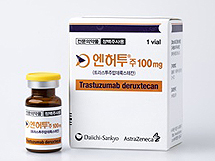
- Enhertu, re-discussing with supplementary materials
- by Lee, Tak-Sun Apr 19, 2023 05:51am
- Attention is focusing on whether the reimbursement standards for Enhertu, an anti-cancer drug from Daiichi Sankyo Korea, will be prepared through re-discussion by the Cancer Disease Review Committee. The drug has received more than 50,000 national petitions and is currently accelerating its reimbursement review. However, at the HIRA held last month, it was decided to discuss again without reaching a conclusion on the setting of the salary standard. According to the industry on the 14th, Enhertu's Daiichi Sankyo recently submitted complementary data to HIRA. Previously, at the review committee held on the 22nd of last month, supplementary data was requested on the grounds that the level of evidence for Enhertu's gastric cancer indication was low and that additional supplementation of financial sharing was necessary for the applied drug price. The indications for Enhertu, whose reimbursement criteria were discussed by the review committee, are ▲the treatment of patients with unresectable or metastatic HER2-positive breast cancer who have previously received two or more anti-HER2-based therapies, and ▲two or more therapies including prior anti-HER2 therapies. Treatment of locally advanced or metastatic HER-2-positive gastric or gastroesophageal junction adenocarcinoma. Among the two, the review committee explains that the basis for gastric cancer indication is weak and the price of the applied drug is high, so it is difficult to set the reimbursement standard right away. However, there is still the possibility of prompt reimbursement as the company decided to re-discuss it through supplementary data rather than deciding not to set the standard for reimbursement. As the pharmaceutical company submitted additional supplementary data, attention is focused on whether Enhertu's reimbursement standard will be successful in the next review committee. Cancer screening is scheduled for the 26th of this month. The key is also the price of the drug. It is known that Daiichi Sankyo applied for 2.4 million won per bottle as a salary indicator, which costs about 160 million won per year. It is explained that the key to passing the reimbursement standard is how the insurance authorities and pharmaceutical companies will share the financial burden because the health insurance budget is high. The health authorities seem to have the willingness to pay for this drug. Another positive factor for Enhertu's reimbursement is that the approval review for drugs that have been referred to the National Assembly is speeding up, with more than 50,000 petitions for reimbursement through the National Consent Petition website. Among the drugs referred to the Welfare Committee as a result of a national application, Crysvita, a treatment for pediatric rickets, is expected to be listed as a benefit next month, and Tagrisso, a first-line treatment for non-small cell lung cancer, has passed the review committee. Enhertu is a next-generation ADC (antibody-drug conjugate) drug that selectively acts only on cancer cells to increase treatment effects and minimize side effects. In clinical trials, it showed higher efficacy than existing drugs, raising expectations as a second-line treatment for HER2-positive breast cancer and a third-line treatment for gastric cancer. Enhertu applied for reimbursement to the HIRA in December of last year and launched non-reimbursement in January.
- Policy
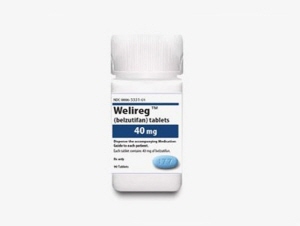
- MSD Welireg is about to be approved in Korea
- by Lee, Hye-Kyung Apr 19, 2023 05:51am
- Domestic approval of Welireg, an oral hypoxia-inducible factor-2 alpha (HIF-2α) inhibitor, is imminent. According to the pharmaceutical industry on the 18th, the Ministry of Food and Drug Safety completed the safety and efficacy review of MSD Korea's Welireg. This drug was approved in Korea in August of last year and was designated as an orphan drug for Von Hippel-Lindau indications in January of last year prior to MSD Korea's application for approval. Welireg obtained approval from the US FDA in August 2021 as an adult VHL treatment that does not require urgent surgery but requires the treatment of RCC, CNS hemangioblastoma, or pNET. Welireg, approved in the United Kingdom and Canada, starting with the United States, has a mechanism that reduces the transcription and expression of HIF-2α target genes related to cell proliferation, angiogenesis, and tumor growth. VHL is a rare genetic disease that occurs in about 1 in 36,000 people. Patients with VHL are known to be at high risk of developing some cancerous diseases, including benign hemangioma and renal cell carcinoma. The recommended dose for Welireg 40 mg tablets is 120 mg daily until tumor progression or unacceptable toxicity. Indications for application for domestic approval are also for the treatment of VHL adult patients who do not require immediate surgery but need treatment for VHL-related renal cell carcinoma, central nervous system hemangioblastoma, and pancreatic neuroendocrine tumor.
- Policy
- As a result of the PMS of Entresto·Xnepri,
- by Lee, Hye-Kyung Apr 18, 2023 05:38am
- As a result of a post-marketing investigation of the chronic heart failure treatment ingredient 'Sacubitril Valsartan Sodium Hydroxide', the incidence rate of adverse events was 24.62% regardless of the causal relationship. The MFDS prepares an order (draft) to change permission items based on the results of post-marketing surveillance (PMS) conducted by pharmaceutical companies on 3,075 people for 6 years for re-examination in Korea and proceeds with opinion inquiry by the 28th. do. The items in question are Novartis Korea 'Entresto Film Coated Tab' 50mg, 100mg, and 200mg and Sandoz 'Xnepri Film Coated Tab' 50mg, 100mg, and 200mg, which received product approval on April 14, 2016. As a result of a post-marketing survey conducted on 3,075 people for 6 years for re-examination in Korea, the occurrence rate of adverse events was reported to be 24.62% (757/3075 people, 1133 cases) regardless of a causal relationship. Among them, 0.29% (9/3075 patients, 11 cases) of serious adverse drug reactions that could not rule out a causal relationship and 1.33% (41/3075 patients, 47 cases) of unexpected adverse drug reactions that could not rule out a causal relationship ) appeared. Serious adverse reactions included congestive cardiomyopathy, acute myocardial infarction, exacerbation of congestive heart failure, bradycardia, pleural effusion, appendicitis, asthenia, acute renal injury, hypertension, and hypotension. Palpitations, dyspnoea, chest pain, and chest discomfort were uncommon occurrences, and indigestion, vomiting, abdominal discomfort, constipation, oral disorders, and edema were rare. The MFDS requested that if there is an opinion on the proposed change order, it should be submitted with specific reasons and related data attached.
- Policy
- Kyowa Kirin accepted the evaluation results for Nephoxil
- by Lee, Tak-Sun Apr 17, 2023 05:58am
- It is known that Kyowa Kirin Korea's hyperphosphatemia treatment 'Nephoxil 500mg' accepted the HIRA evaluation results. Accordingly, this drug is expected to move to the negotiation stage with the NHIS. Nephoxil is used for the treatment of hyperphosphatemia in patients with chronic kidney disease undergoing hemodialysis. Expectations are high because it is a product of Kyowa Kirin Korea, which stands out in the chronic kidney disease patient treatment market with Nesp·Regpara. Currently, non-calcium drugs such as Renvela are preferred in the hyperphosphatemia treatment market for hemodialysis patients, and the introduction of Nephoxil is expected to change the market structure. According to the industry on the 16th, Korea Kyowa Kirin of Nephoxil Capsule, which received conditional pass results at the Pharmaceutical Review Board meeting on the 6th, accepted the evaluation results. The HIRA judged that it was appropriate to receive reimbursement for this drug, which is used for hyperphosphatemia in patients with chronic kidney disease undergoing hemodialysis when it was accepted below the estimated amount. In other words, it is interpreted that the Korea Kyowa Kirin side accepted less than the estimated amount suggested by HIRA. The proposed valuation seems to have been based on the price of non-calcium-based drugs like Nephoxil. Calcium-based drugs and non-calcium-based drugs are used to treat hyperphosphatemia in dialysis patients. Although calcium-based drugs are relatively inexpensive, non-calcium-based drugs are increasing in use due to the risk of causing vascular calcification. Representative items of non-calcium-based drugs include Renvela, Invela (SK Chemicals), and Fosrenol (JW Pharmaceutical). As domestic drugs containing Sevelamer are released one after another, the price has become much cheaper. Accepting this evaluation result, Nephoxil will proceed with negotiations with NHIS in the future. When the negotiations are completed, they will go through a report to the Health Insurance Policy Deliberation Committee of the Ministry of Health and Welfare and be listed on the list of benefits. In the market, as Kyowa Kirin Korea stands out in the domestic chronic renal failure drug market, Nephoxil is also expected to settle down early. Kyowa Kirin Korea is recording a high market share with Nesp, a treatment for anemia in patients with chronic kidney disease, and Regpara, a treatment for secondary hyperparathyroidism in patients with chronic kidney disease. Furthermore, Kyowa Kirin took the top spot in the hyperphosphatemia treatment market with Renagel before Renvela was launched in Korea. The domestic supply of Renagel was discontinued in 2015. Renagel and Renvela are drugs developed by Genzyme, and it is rumored that Renagel withdrew from the market after Renvela was supplied through Sanofi in Korea. From the perspective of Kyowa Kirin Korea, Nephoxil is expected to serve as an opportunity to further strengthen its position in the chronic renal failure patient treatment market. Meanwhile, Nephoxil received domestic approval in May last year.
- Policy
- Obesity treatment Mounjaro, soon to launch in Korea
- by Lee, Hye-Kyung Apr 14, 2023 05:49am
- Eli Lilly's Mounjaro, called a 'game changer' for obesity treatment, is imminent in Korea. Maunjaro GLP-1 agonists act on GLP-1, a hormone that makes patients feel full by acting on the hypothalamus of the brain, activates incretin, an intestinal hormone, and promotes insulin production to lower blood sugar levels. In this process, it slows down the movement of food from the stomach to the small intestine, increases satiety, and has been proven to be effective, becoming a 'hot' obesity treatment in the United States. According to the pharmaceutical industry on the 14th, the Ministry of Food and Drug Safety completed a safety and efficacy review of Maunjaro. Completing this review means that sooner or later, the product approval process will begin. Mounjaro is a successor to Lilly's blockbuster diabetes treatment 'Trulicity,' and was approved by the US FDA in May of last year as a dietary and exercise supplement to improve blood sugar control in patients with type 2 diabetes. The dosage includes 5mg, 10mg, and 15mg, and it can be used as monotherapy or combination therapy with 'Metformin', 'SGLT2 inhibitor', 'Sulfonylurea', and 'Insulin Glargine'. Last year, Lilly conducted a phase 3 clinical trial to study the effect of reducing morbidity and mortality in obese adults, including in Korea. The phase 3 clinical trial was a randomized, double-blind, placebo-controlled trial involving 15,000 participants worldwide and 60 obese and overweight patients in Korea. Meanwhile, representative drugs such as GLP-1 agonists include Novo Nordisk's 'Saxenda' and 'Wegovy'.
- Policy
- SGLT2+DPP4 combinations are to be released next month
- by Lee, Tak-Sun Apr 14, 2023 05:49am
- Domestic DPP-4·SGLT-2 diabetes complex ZemidapaAs the three-drug regimen of diabetes treatment Metformin + SGLT2i + DPP4i is also covered from this month, the SGLT2i + DPP4i complex is expected to be released next month. A total of five items are expected to hit the market in May. However, according to the reimbursement standard, these drugs are reimbursed only when used in combination with Metformin. According to the industry on the 13th, MSD Stegluzan, Boehringer Ingelheim Esglito, AstraZeneca Qtern, LG Chem Zemidapa, and Dong-A ST Sugadapa are expected to release benefits in May. Since April, regardless of ingredients, the three-drug regimen of Metformin + SGLT2i + DPP4i has been applied, allowing these items to enter the market. However, these combinations are difficult to use as monotherapy. This is because the three-drug regimen, including metformin, in the clinical trial for approval proved the blood sugar-enhancing effect, and the SGLT2i + DPP4i two-drug regimen is not covered under the reimbursement standard. The competitiveness of the combination drug, which contains two ingredients in one pill and enhances the convenience of taking it, has not been revealed due to the additional intake of metformin. This is because benefits are applied even if a DPP-4 single drug is added to the commercially available Metformin + SGLT2 complex. Metformin + SGLT2 combinations have been pouring out in droves due to the expiry of Dapagliflozin's patent on the 8th. Perhaps conscious of this, some SGLT2i+DPP4i combinations, such as Qtern and Zemidapa, all of a sudden went on non-reimbursement sales this month. Discussions on the two-drug regimen of SGLT2i + DPP4i are highly likely to resurface starting in September when Januvia's patent expires. This is because many domestic pharmaceutical companies have received approval for the combination of Dapagliflozin + Sitagliptin and are aiming to release a benefit when the patent expires. This is because the two-drug regimen of Dapagliflozin + Sitagliptin can still be used according to the approval. However, the full co-payment is applied to one of the two drugs. It is expected that there will be many reimbursement inquiries about the two-drug therapy in the field, conscious of confusion, and it is expected that the insurance authorities will somehow sort it out. Meanwhile, the domestic SGLT-2i new drug Envlo, developed by Daewoong Pharmaceutical, recently concluded negotiations with the NHIS. By accepting 90% of the price of this drug compared to alternative drugs, only the expected billing amount is negotiated without negotiation of the upper limit, and the reimbursement list is expected to be accelerated.
- Policy
- Domestic approval of Pemazyre is imminent
- by Lee, Hye-Kyung Apr 13, 2023 05:45am
- Domestic approval of Pemazyre, a treatment for advanced or metastatic cholangiocarcinoma, is imminent. According to the pharmaceutical industry on the 13th, the Ministry of Food and Drug Safety recently completed a safety and efficacy review of Pemazyre. Completing the safety and efficacy means that sooner or later, the product approval process will begin. Pemazyre is approved in the United States, Europe, and Japan for treating adult patients diagnosed with locally advanced or metastatic cholangiocarcinoma with a fusion or rearrangement of the FGFR2 gene who have received at least one prior systemic therapy. In Korea, after being designated as an orphan drug in November 2021, it has been designated as a treatment for life-threatening or serious diseases since December. Previously, the US FDA designated Pemazyre as a breakthrough therapy for the treatment of previously treated patients with advanced, metastatic, or unresectable FGFR2 translocation cholangiocarcinoma, and designated it as an orphan drug, conducting an expedited review through a priority review program. Cholangiocarcinoma is a rare type of cancer and is classified according to its anatomical origin into intrahepatic cholangiocarcinoma (iCCA) arising from the bile duct existing inside the liver and extrahepatic cholangiocarcinoma arising from the bile duct outside the liver. Cholangiocarcinoma is often diagnosed at an advanced or advanced stage with a poor prognosis. FGFR2 fusions or rearrangements are found in 10-16% of patients with intrahepatic cholangiocarcinoma. FGFRs play important roles in the proliferation, survival, migration, and angiogenesis of tumor cells. FGFR fusion, rearrangement, translocation, and gene amplification activities are closely related to the development of various cancers. Pemazyre is an oral FGFR inhibitor and is the first and only treatment approved by the FDA for this indication. After the domestic approval of Pemazyre, Handok will exclusively take charge of domestic distribution and supply.
