- LOGIN
- MemberShip
- 2026-07-27 11:10:40
- "Fastest review in the world…K-bio global competitiveness"
- by Lee, Tak-Sun | translator Hong, Ji Yeon | 2026-06-05 09:36:19
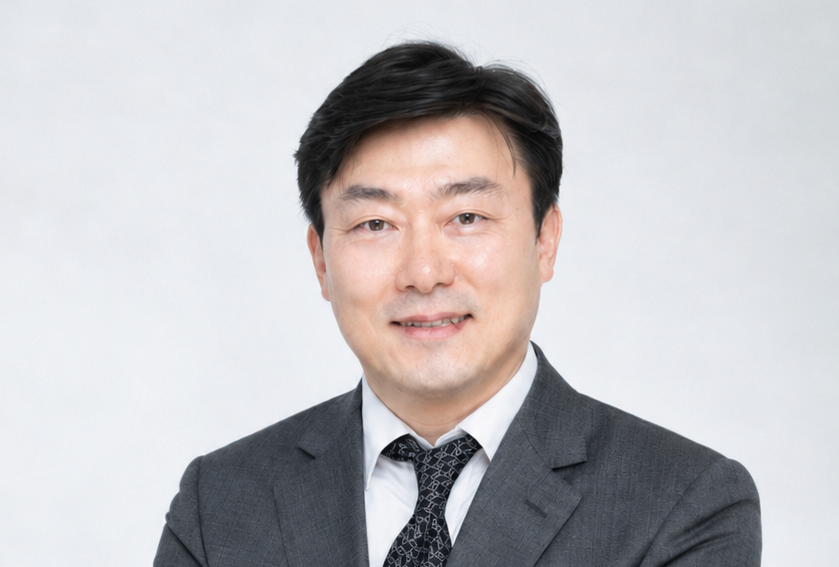
Minister Yu-Kyoung Oh of the Ministry of Food and Drug Safety (MFDS) highlighted milestones of her ongoing regulatory reform initiative, stating a robust commitment to driving the global expansion of the South Korean pharmaceutical-biotech sector. In an exclusive interview marking the anniversary of Daily Pharm, Minister Oh said 'regulation is not operational hurdles' but 'protective boundaries and a support system,' highlighting goals of establishing a virtuous cycle of patient safety and industrial growth.
Addressing a long-standing industry bottleneck, the MFDS finalized its 'Medical Product Marketing Authorization and Review Innovation Plan,' which dramatically compresses the review timeline for novel drugs to a world-class standard of 240 days. The plan was officially enacted on June 1, Daily Pharm's founding anniversary. The initiative deploys 195 highly qualified new personnel across core technical divisions to significantly elevate review expertise.
In accordance with the innovation plan, the MFDS began accepting applications for 'pre-submission face-to-face consultations' on June 1. Selected applications will be managed under the dedicated review teams. To maximize administrative efficiency, the MFDS is shifting away from legacy sequential review workflows, previously necessitated by workforce constraints, toward a concurrent, parallel review matrix where multiple specialists evaluate technical dossiers simultaneously across distinct disciplines.

Furthermore, the MFDS is accelerating its digital transformation by integrating artificial intelligence (AI) into the complex, voluminous drug approval process. Following the establishment of the 'Food and Drug AI Transformation Task Force' in February, the MFDS launched a three-year, multi-phase initiative dedicated to constructing an advanced AI-driven regulatory review framework.
The initial phase will be launched this October, utilizing AI tools to evaluate CMC (Chemistry, Manufacturing, and Controls) and quality data for both active pharmaceutical ingredients (APIs) and finished drug products, with plans to progressively expand AI utilization across the entire novel drug evaluation spectrum by 2028.
Minister Oh emphasized that the international credibility of a domestic regulatory body directly correlates with a nation's industrial competitiveness. The MFDS recently achieved full functional listing on the WHO List of Authorities (WLA) register for both medicines and vaccines. Excluding traditional benchmark jurisdictions such as the US, EU, Canada, and Switzerland, South Korea's MFDS is the sole regulatory authority globally to provide comprehensive validation across all functional parameters for both therapeutic sectors.
Based on this enhanced global reputation, the MFDS was recognized as a reference regulatory authority by the UAE in January and Lebanon in April, expanding South Korea's footprint to seven reference nations, which also include the Philippines, Paraguay, Egypt, Ecuador, and Nigeria.
The following is a summary of the interview with Minister Oh.
Q. The pharma-biotech industry holds high expectations for the MFDS's regulatory overhauls. What are the ongoing initiatives and public-private collaborative strategies for this year?
The MFDS has consistently driven regulatory overhauls to fortify public trust while empowering commercial developers. It is encouraging to see positive feedback from the field.
This year, we remain dedicated to actively capturing industry feedback and executing agile reforms that yield immediate, palpable results.
Primarily, we have instituted a 240-day review cap for novel therapeutics, compressing what was historically a lengthy and frustrating process to match the fastest international standards, effective June 1.
By expediting the review cycle for innovative drugs, biosimilars, and cutting-edge medical devices, we aim to expand patient access to treatment while significantly enhancing the global market standing of our domestic life sciences sector.
Furthermore, the CDMO Act, designed to underpin the biomanufacturing ecosystem, will be implemented this December. The framework introduces a new export manufacturing registration registry to stimulate cross-border commerce, complemented by structured regulatory consultations on GMP compliance for contract manufacturing facilities to accelerate K-Bio's international expansion.
The 'Innovative Product Pre-consultation Hotline' has also been operational since March, offering a streamlined, one-stop advisory portal that provides customized feedback and preliminary evaluations from early discovery through the formal filing stage.
Additionally, we have improved orphan drug designation criteria to facilitate rapid market entry for rare disease therapeutics and expanded expedited import mechanisms for self-administered medications to ensure timely patient access to critical therapies.
These systemic overhauls are fundamentally rooted in gathering public opinions. We continue to operate our policy-linking open forums to translate corporate and public feedback directly into regulatory directives, with a parallel focus on emerging entrepreneurs and small business operators.
Since May, we have initiated a series of regional forums across six major domestic clusters to capture localized industrial needs. This feedback will be synthesized into a formalized regulatory roadmap slated for public disclosure this July.
We plan to intensify our stakeholder-centric administrative model by ensuring absolute transparency in our policy implementation metrics and running continuous post-hoc audits to confirm that these reforms are operating successfully on the ground.
Q. Following recent breakthroughs such as the WHO Listed Authorities (WLA) listing, the international stature of the MFDS has risen. What are your strategic plans for international engagement to further promote export growth?
In the global market, commercial products are evaluated alongside the capabilities and scientific rigor of the regulatory bodies that oversee them. Because regulatory trust maps directly to asset valuation and national competitiveness, the MFDS has successfully become a premier global regulator.
Achieving a comprehensive listing across all functional blocks on the WHO WLA register for both medicines and vaccines establishes South Korea as the only nation outside the traditional quad of the US, EU, Canada, and Switzerland to secure such a validation.
This milestone serves as an objective, international endorsement of the expertise of our regulatory framework.
Based on this global achievement, we secured reference authority status in the UAE and Lebanon this year, bringing our total to seven reference nations.
This institutional credibility translates into reduced transactional friction, lower operational costs, and smoother market entry for domestic developers expanding overseas, demonstrating that regulatory diplomacy serves as a practical trade facilitator.
Furthermore, South Korea's selection as host of the International Coalition of Medicines Regulatory Authorities (ICMRA) Summit this November reflects our growing leadership.
We intend to spearhead international regulatory harmonization in emerging areas such as AI and advanced therapeutics, reinforcing our regulatory leadership to champion the global commercialization of K-Pharma actively.
Q. To sustain the 240-day novel drug review mandate, 195 new personnel have been deployed. Are the core operational pillars, including the pre-submission face-to-face consultations launching this June, executing on schedule?
The revised framework went live on June 1, structured around three core operational shifts designed to grant patients rapid access to innovative therapies while preserving safety margins.
There are three main items to this innovation plan. First, we will introduce a preemptive regulatory support service starting from the 'submission dossier preparation phase' to support systematic data compilation by the industry.
In the 'application submission phase', a new 'pre-submission face-to-face consultation' will be introduced to preemptively identify and resolve hurdles to marketing authorization, and a dedicated review team will be established to build a tailored, close communication system throughout the entire marketing authorization and review process.
In the review phase, we plan to dramatically increase review speed by transitioning from sequential reviews, which were previously unavoidable due to limited review personnel, to concurrent and parallel reviews, where multiple reviewers evaluate dossiers simultaneously within their respective specialized disciplines.
Starting June 1, the industry can apply for the 'pre-submission face-to-face consultation', and the submitted items can receive marketing authorization within 240 days through relevant procedures after the consultation.
The MFDS will continue to promote innovation in medical product marketing authorization and review without a hitch, ensuring greater safety while accelerating review speed to the fastest in the world, thereby spearheading the global competitiveness of the K-Bio industry and expanding treatment opportunities for the public.
Q. What is the current status of integrating AI technology to shorten the marketing authorization review timeline, and what are the countermeasures regarding data security concerns?
The MFDS established an Information Strategy Plan (ISP) last year to preemptively utilize AI in massive and complex pharmaceutical marketing authorization and review workflows, and created the 'Food and Drug AI Transformation Task Force' this February to centralize its capabilities.
A project to construct an AI-driven review system will be executed for three years starting this year, launching services this October with CMC and quality (drug substance, drug product) evaluation data for novel drugs, and progressively expanding the scope to cover comprehensive novel drug reviews by 2028.
We anticipate that reviewers will be supported during the marketing authorization and review process by AI functionalities, such as large-scale document translation, summarization, historical precedent searches, and draft generation of review reports, enabling a more meticulous yet expedited review process.
Furthermore, the AI review system will install AI servers and models within the secure internal government network to prevent the leakage of proprietary submission data and ensure impeccable security management.
The MFDS will lay the foundation for securing international-standard review quality by optimizing marketing authorization and review workflows using AI, such as automating simple, repetitive tasks in real time.
Q. Achieving two objectives of 'ensuring safety' and 'industry revitalization' concurrently does not seem easy. As the longest-serving Minister, we would like to hear about your expertise and the challenges you face.
It is common for people to view regulation as a financial cost or an operational hurdle. Indeed, there were such aspects in the past, and the logic that emphasizing safety directly translates into a barrier to industrial development used to prevail. However, with technological innovations like AI increasingly part of daily life, the regulatory paradigm is shifting.
Sustainable industry growth is only possible when it is backed by safety. We frequently observe historical cases in which a failure to secure safety downstream has led to catastrophic risks, such as large-scale product recalls or severe erosion of brand equity.
Safety is like a perimeter fence. When the fence is strong, the industry can grow healthily within it. We are striving to ensure that MFDS regulatory validation guarantees product credibility and translates into product competitiveness, serving as a springboard to clear global regulatory barriers.
Another point I would like to emphasize is that when novel technologies like AI emerge, the industry can easily fall into disarray if there are no laws or frameworks in place. Preemptive codification of rational baselines by the regulator is necessary to enable market players to operate with confidence.
The MFDS is supporting the formation and challenges of new industries by proactively providing benchmarks, such as enacting the world's first Digital Medical Products Act and publishing review guidelines for generative AI-driven medical devices.
Furthermore, if domestic standards converge with global standards, they can serve as a powerful promotional mechanism to drive international market expansion. To this end, the MFDS is broadening the horizon of regulatory diplomacy by leading the Asia-Pacific Food Regulatory Authority Summit (APFRAS), hosting the 'International Coalition of Medicines Regulatory Authorities (ICMRA) Summit (November), and driving the launch of the Global Cosmetics Regulatory Authority Summit (GCORAS) this September.
The MFDS will ensure that creative innovation can occur freely within the protective boundary of safety. We will cultivate a rational regulatory ecosystem where regulation opens pathways for innovation to advance safely.
Q. Lastly, Daily Pharm was founded on June 1, 1999, and marks its 27th anniversary this year. The objectives pursued by a specialized media outlet like Daily Pharm, public health enhancement and industrial development, seem to parallel your own considerations. Could you offer your advice on the future direction and role of specialized pharmaceutical journalism?
First, I extend my sincere congratulations to Daily Pharm on its 27th anniversary. Over the past 27 years, Daily Pharm has dedicated itself to enhancing public health and advancing the pharmaceutical industry. It has served as a benchmark for specialized media, delivering information from a balanced perspective so the public can easily understand the rapidly changing pharma-biotech industry and the institutional frameworks driven by advanced technology.
The opinions and sharp analysis from the pharmaceutical industry are a major asset to the MFDS's policy formulation, and you continue to perform your role as a constructive critic. In particular, functioning as a policy microscope that does not overlook even the minor issues that might go unnoticed, you are helping the MFDS draw closer to the public.
We hope Daily Pharm will continue elevating the public's right to know by professionally identifying the latest trends in the pharmaceutical industry, at a level the public can understand. The MFDS will also collaborate with Daily Pharm through communication to collectively build a world where food and drug safety becomes an everyday reality.
-

- 0
댓글 운영방식은
댓글은 실명게재와 익명게재 방식이 있으며, 실명은 이름과 아이디가 노출됩니다. 익명은 필명으로 등록 가능하며, 대댓글은 익명으로 등록 가능합니다.
댓글 노출방식은
댓글 명예자문위원(팜-코니언-필기모양 아이콘)으로 위촉된 데일리팜 회원의 댓글은 ‘게시판형 보기’와 ’펼쳐보기형’ 리스트에서 항상 최상단에 노출됩니다. 새로운 댓글을 올리는 일반회원은 ‘게시판형’과 ‘펼쳐보기형’ 모두 팜코니언 회원이 쓴 댓글의 하단에 실시간 노출됩니다.
댓글의 삭제 기준은
다음의 경우 사전 통보없이 삭제하고 아이디 이용정지 또는 영구 가입제한이 될 수도 있습니다.
-
저작권·인격권 등 타인의 권리를 침해하는 경우
상용 프로그램의 등록과 게재, 배포를 안내하는 게시물
타인 또는 제3자의 저작권 및 기타 권리를 침해한 내용을 담은 게시물
-
근거 없는 비방·명예를 훼손하는 게시물
특정 이용자 및 개인에 대한 인신 공격적인 내용의 글 및 직접적인 욕설이 사용된 경우
특정 지역 및 종교간의 감정대립을 조장하는 내용
사실 확인이 안된 소문을 유포 시키는 경우
욕설과 비어, 속어를 담은 내용
정당법 및 공직선거법, 관계 법령에 저촉되는 경우(선관위 요청 시 즉시 삭제)
특정 지역이나 단체를 비하하는 경우
특정인의 명예를 훼손하여 해당인이 삭제를 요청하는 경우
특정인의 개인정보(주민등록번호, 전화, 상세주소 등)를 무단으로 게시하는 경우
타인의 ID 혹은 닉네임을 도용하는 경우
-
게시판 특성상 제한되는 내용
서비스 주제와 맞지 않는 내용의 글을 게재한 경우
동일 내용의 연속 게재 및 여러 기사에 중복 게재한 경우
부분적으로 변경하여 반복 게재하는 경우도 포함
제목과 관련 없는 내용의 게시물, 제목과 본문이 무관한 경우
돈벌기 및 직·간접 상업적 목적의 내용이 포함된 게시물
게시물 읽기 유도 등을 위해 내용과 무관한 제목을 사용한 경우
-
수사기관 등의 공식적인 요청이 있는 경우
-
기타사항
각 서비스의 필요성에 따라 미리 공지한 경우
기타 법률에 저촉되는 정보 게재를 목적으로 할 경우
기타 원만한 운영을 위해 운영자가 필요하다고 판단되는 내용
-
사실 관계 확인 후 삭제
저작권자로부터 허락받지 않은 내용을 무단 게재, 복제, 배포하는 경우
타인의 초상권을 침해하거나 개인정보를 유출하는 경우
당사에 제공한 이용자의 정보가 허위인 경우 (타인의 ID, 비밀번호 도용 등)
※이상의 내용중 일부 사항에 적용될 경우 이용약관 및 관련 법률에 의해 제재를 받으실 수도 있으며, 민·형사상 처벌을 받을 수도 있습니다.
※위에 명시되지 않은 내용이더라도 불법적인 내용으로 판단되거나 데일리팜 서비스에 바람직하지 않다고 판단되는 경우는 선 조치 이후 본 관리 기준을 수정 공시하겠습니다.
※기타 문의 사항은 데일리팜 운영자에게 연락주십시오. 메일 주소는 dailypharm@dailypharm.com입니다.


- Samoh Pharm’s expansion after Voxzogo reimb…orphan drug portfolio
- Reporter's view | Hwang, byoung woo